Daily Listening Assignments ~ June 28

Korobeiniki is a nineteenth-century Russian folk song that tells the story of a meeting between a peddler and a girl, describing their haggling over goods in a veiled metaphor for courtship.

Outside Russia, “Korobeiniki” is widely known as the Tetris theme.

Piano duet:

Orchestral version:

For Boomwhackers:

Vocal:

Ragtime:

Balalaika:

Two bassoons:

The Red Army Choir:

Korobeiniki/Tetris is available in Piano Maestro on the iPad and I have several levels of sheet music for anyone who is interested.

Enjoy!

Daily Listening Assignments ~ June 26

Today’s piece is Antonin Dvořák’s Humoresque #7.

Humoresques Op. 101 (B. 187), is a piano cycle by the Czech composer Antonín Dvořák, written during the summer of 1894. One writer says “the seventh Humoresque is probably the most famous small piano work ever written after Beethoven’s Für Elise.

Orchestra:

Ragtime:

Jazz with Wynton Marsalis on trumpet

Zez Confrey gave this a makeover and included Way Down Upon the Swanee River:

Find the original Humoresque on IMSLP. The O’Connor Music Studio Lending Library has versions of Humoresque available at several levels and Confey’s Humorestless played in the video above.

Daily Listening Assignments ~ June 7, 2025

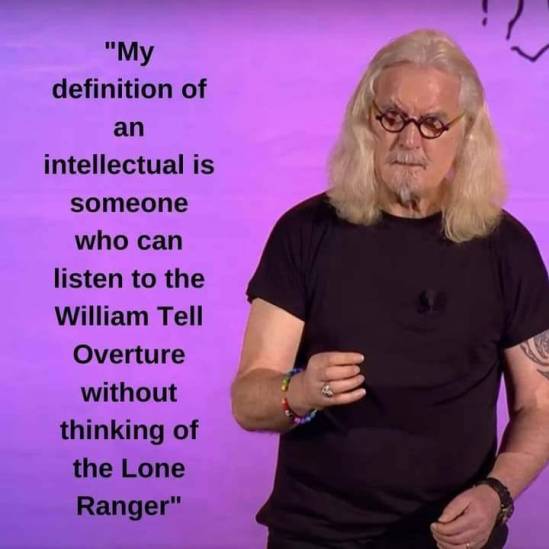
Today, we’ll be listening to the end of the William Tell Overture by Gioachino Rossini.  This piece, originally the overture to an opera, has been arranged for piano and is in several method books, including Piano Pronto Movements 1 and 2.  It’s also in Bastien Book 4 and Piano Maestro.
The original story

Maybe your grandparents watched the original Lone Ranger

Or you saw the newer Lone Ranger with Johnny Depp

Here’s the entire William Tell Overture played by an orchestra

Piano Solo

Franz Liszt made a really hard version for piano solo. See if you can follow along!

Piano Duet (1 piano, 4 hands)

Piano Duet arranged by Louis Moreau Gottschalk

Piano Duo (2 pianos, 8 hands)

Piano Quartet (4 pianos, 16 hands)

For pipe organ

For synthesizer

And then things get nuts with cartoons. Lots of cartoons used this music. Here are Mickey Mouse and friends

And Spike Jones

Handbells…

Poor Rossini – I think he’d have a fit if he knew how is music was being used.

Have a nice day!

Daily Listening Assignments ~ June 6, 2025


What can I say about John Cage’s 4′33″?  Pretty much anyone can play this anytime.

It consists of the pianist going to the piano, and not hitting any keys for four minutes and thirty-three seconds. (He uses a stopwatch to time this.) In other words, the entire piece consists of silence or rests.

On the one hand, as a musical piece, 4’33” leaves almost no room for the pianist’s interpretation: as long as he watches the stopwatch, he can’t play it too fast or too slow; he can’t hit the wrong keys; he can’t play it too loud, or too melodramatically, or too subduedly.

On the other hand, what you hear when you listen to 4’33” is more a matter of chance than with any other piece of music — nothing of what you hear is anything the composer wrote.

With orchestra and soloist

Next time you come to a lesson and haven’t practiced, just tell me you’re playing Cage’s 4’33”!

May 27: Today’s Music History

• 1638 ~ Nicolas Forme, Composer, died at the age of 71

• 1652 ~ Jacques Huyn, Composer, died at the age of 39

• 1690 ~ Giovanni Legrenzi, Italian Composer, died at the age of 63

• 1708 ~ Jacques Danican Philidor, Composer, died at the age of 51

• 1738 ~ Bonaventura Furlanetto, Composer

• 1796 ~ James S McLean patented his piano

• 1799 ~ Jacques-François-Fromental-Elie Halévy, French composer whose five-act grand opera La Juive (1835) was, with Giacomo Meyerbeer’s Les Huguenots, the prototype of early French grand opera.

• 1806 ~ Charles-Joseph Tolbecque, Composer

• 1819 ~ Julia Ward Howe, Battle Hymn of the Republic
More information about Howe

• 1822 ~ Joseph Joachim Raff, German composer and teacher, greatly celebrated in his lifetime but nearly forgotten in the late 20th century.

• 1822 ~ Henry Wylde, Composer

• 1840 ~ Niccolò Paganini Composer and violinist died at the age of 57. He wrote six concertos for violin.
Read quotes by and about Paganini
More information about Paganini

• 1849 ~ “Blind” Tom Bethune, Pianist and composer

• 1878 ~ Isadora Duncan, Dancer

• 1878 ~ Carlo Marsili, Composer, died at the age of 49

• 1884 ~ Bax Brod, Composer

• 1888 ~ Louis Durey, Composer

• 1891 ~ Claude Adonai Champagne, Composer

• 1900 ~ Leopold Godowsky, Jr., American musician and photographic technician primarily known as a co-developer of Kodachrome film (1935).

• 1902 ~ Celius Dougherty, Composer

• 1906 ~ First outlining of Gustav Mahler’s 6th Symphony

• 1907 ~ Felix de Nobel, Dutch orchestra leader

• 1908 ~ Harold Rome, Composer

• 1909 ~ Isador Goodman, Composer

• 1914 ~ Hugh Le Caine, Composer

• 1915 ~ Mario del Monaco, Italian opera singer famed for Verdi and Puccini

• 1928 ~ Thea Musgrave, Scottish composer, best known for her concertos operas and choral and other vocal works.

• 1929 ~ Donald Howard Keats, Composer

• 1930 ~ Eino Tamberg, Composer

• 1931 ~ Veroslav Neumann, Composer

• 1932 ~ Jeffrey Bernard, Singer

• 1935 ~ Ramsey Lewis, American jazz pianist, composer and bandleader

• 1935 ~ Elias Gistelinck, Flemish Composer

• 1939 ~ Don Williams, Country singer

• 1940 ~ Rene Koering, Composer

• 1942 ~ Priscilla Anne McLean, Composer

• 1947 ~ Liana Alexandra, Composer

• 1950 ~ Frank Sinatra made his TV debut as he appeared on NBC’s “Star-Spangled Review” with show biz legend, Bob Hope.

• 1957 ~ Siouxsie Sioux (Susan Dallion), Singer with Siouxsie and the Banshees

• 1957 ~ That’ll be the Day, by The Crickets and featuring Buddy Holly, was released by Brunswick Records. On September 14th, the tune became the most popular record in the U.S. It was the first hit for Holly and his group after two previous releases went nowhere on Decca Records in 1956.

• 1961 ~ Singer Johnny Cash turned TV actor. He appeared on the NBC drama, “The Deputy”.

• 1972 ~ “Applause” closed at the Palace Theater in New York City after 900 performances

• 1975 ~ Paul McCartney released Venus & Mars

• 1975 ~ Andre 3000. One half of the famous hip hop duo Outkast, Andre 3000 (born Andre Lauren Benjamin), began his music career in the 1990s. He and Big Boi (Antwan Andre Patton) formed the hip hop group Outkast in 1992 and released their debut album in 1994. Andre 3000 had continued success with Outkast, becoming one of the most well-regarded rappers of the 1990s and 2000s and has won 7 Grammys.

• 1983 ~ Arnoldus Christian Vlok van Wyk, Composer, died at the age of 67

• 1988 ~ Melvin J “Cy” Oliver, American jazz composer and orchestra leader died at the age of 77

• 1994 ~ Red Rodney, Bebop-trumpeter died at the age of 66

• 1995 ~ C W Stubblefield, Music Promoter died at the age of 64

• 1995 ~ Ulysses Simpson Kay, Composer, died at the age of 78

• 1996 ~ Albert “Pud” Brown, Clarinetist and saxophonist died at the age of 79

• 1996 ~ Ivan Sutton, Concert Promoter died at the age of 82

• 2017 ~ Gregg Allman, the soulful singer-songwriter and rock n’ blues pioneer who founded The Allman Brothers Band with his late brother, Duane, and composed such classics as “Midnight Rider,” “Melissa” and the epic concert jam “Whipping Post,” died at age 69

April 12: Today’s Music History

. 1684 ~ Nicolo Amati, member of a family of violin makers in Cremona, Italy, died.

. 1904 ~ Lily (Alice) Pons, Singer

. 1905 ~ The Hippodrome opened in New York City with the gala musical revue, A Yankee Circus on Mars.

. 1913 ~ Lionel Hampton, American jazz vibraphonist, pianist, drummer and bandleader; played with Benny Goodman and recorded with Louis Armstrong. He was responsible for introducing the vibraphone into jazz.

. 1914 ~ George Bernard Shaw’s play “Pygmalion” opened in London with Mrs. Patrick Campbell as Eliza Doolittle and Sir Herbert Tree as Professor Higgins. This would later become the musical My Fair Lady by Lerner and Loewe.

. 1916 ~ Russ Garcia, Musician, composer, orchestra leader

. 1931 ~ Billy (Richard) Vaughn, Musician, orchestra leader, music director

. 1932 ~ Tiny Tim (aka Darry Dover, Larry Love) (Herbert Khaury), Ukulele playing, a falsetto singer, best known for Tiptoe Through the Tulips. Like many performers the persona on stage was very different to the real one, he had a comprehensive knowledge of pre-rock popular music and also a deep baritone voice, he was also a conservative with a traditional belief system about religion and marriage.

. 1933 ~ Monserrat Caballé (1933) Spanish opera singer and a leading Verdi and Donizetti soprano

. 1938 ~ Fedor Chaliapin, foremost Russian operatic bass singer and one of opera’s greatest performers, died.

. 1939 ~ One of the classic theme songs of the Big Band era was recorded for Decca. Woody Herman’s orchestra recorded Woodchopper’s Ball.

. 1940 ~ Herbie Hancock, Oscar-winning American jazz/fusion musician, pianist and composer

. 1950 ~ David Cassidy, Singer

OCMS 1954 ~ Bill Haley and His Comets recorded Rock Around the Clock for Decca Records. The song was recorded at the Pythian Temple, “a big, barnlike building with great echo,” in New York City. “Rock Around the Clock” was formally released a month later. It sold an estimated 25 million copies worldwide, making it the second biggest-selling single at the time behind Bing Crosby White Christmas
More information about Rock Around the Clock

. 1999 ~ BoxCar Willie, Country singing star, who blended a mellow voice with a rough-hewn hobo persona, died. He was 67.

April 7: Today’s Music History

today

. 1826 ~ Johann Hermann Berens, composer

. 1858 ~ Anton Diabelli, Austria publisher and composer, died at the age of 76. Diabelli was most familiar today as the composer of the waltz on which Ludwig van Beethoven wrote his set of thirty-three Diabelli Variations.

. 1899 ~ Robert Casadesus, French pianist and composer

. 1908 ~ Percy Faith, Grammy Award-winning orchestra leader, composer

. 1915 ~ Billie Holiday, American jazz singer, born as Eleanora Fagan. She sang with all the American big band leaders of her day while developing her own intimate style.

. 1919 ~ Ralph Flanagan, Bandleader

. 1920 ~ Ravi Shankar, Indian sitarist and composer

. 1925 ~ David Carr Glover, Piano Educator

. 1934 ~ Victor Feldman, British jazz pianist and drummer

. 1949 ~ Opening day of Rogers and Hammerstein’s Pulitzer Prize-winning musical “South Pacific”. It was a musical classic of love and war, and it unfolded on a lush tropical island swarming with Seabees, nurses, natives and coconut trees on this night in 1949. Actually, it was not a tropical island, but the stage of the Majestic Theatre in New York City. Ezio Pinza starred as the suave French plantation owner with a shady past and Mary Martin portrayed the bubbly, pretty, but naive Navy nurse. Mary Martin washed her hair a zillion times as she sang, I’m Gonna Wash that Man Right Out of My Hair in 1,925 performances.

. 1950 Tony Awards went to the show and its producers, performers, director (Joshua Logan) and composers nine statuettes. It also earned a Pulitzer Prize in the same year and in 1958 was made into a movie.
More about Mary Martin

. 1951 ~ Janis Ian, Singer-songwriter

. 1954 ~ Gee, by The Crows, became the first rhythm and blues single to gain attention on pop music charts.

. 1970 ~ Leif Ove Andsnes, Norwegian pianist

. 1973 ~ Vicki Lawrence got her number one single as The Night the Lights Went Out in Georgia made it to the top of the pop charts on this day.

. 1987 ~ Maxine Sullivan (Marietta Williams) passed away

March 19: On This Day in Music

. 1872 ~ Sergei Diaghilev, Russian impresario; founder of the Ballets Russes
More information about Diaghilev

. 1873 ~ Max Reger, German composer
Read quotes by and about Reger
More information about Reger

. 1900 ~ Charles-Louis Hanon, French piano pedagogue and composer, died
More about Hanon’s exercises

. 1917 ~ Dinu Lipatti, Rumanian pianist and composer
More information about Lipatti

. 1923 ~ Janine Dacosta, French pianist

. 1930 ~ Ornette Coleman, American jazz alto saxophonist and composer
More information about Coleman

. 1941 ~ Jimmy Dorsey and his orchestra recorded one of their biggest musical successes. It became one of Decca Records’ all-time greats. Green Eyes featured vocalists Helen O’Connell and Bob Eberly.

. 1946 ~ Ruth Pointer, Singer from The Pointer Sisters

. 2001 ~ Cuba-born entertainer Tony Alvarez of “El Show de Olga y Tony” died at age 85. Alvarez was best known for the television and radio programs he hosted with his wife, singer Olga Chorens. He began his career in Cuba in the 1940s as a singer and model, starring in a tango program on Channel Azul. In the 1960s, Alvarez and Chorens moved to Puerto Rico, where they began “El Show de Olga y Tony.” They later moved to New York, where they performed on WABC-TV, WPIX-TV and WNJU-TV from 1965 to 1972.

. 2001 ~ Elena Del Rubio, whose 60-year singing career with her sisters as the Del Rubio Triplets got a boost with campy covers of 1980s tunes, died of cancer. She was believed to be in her 70s. “It was a terrible blow to me,” said Milly, the only surviving sister. “Now I’m left alone.” Another triplet, Eadie, died in 1996. The sisters lived together in a mobile home overlooking the ocean. The trio that promoted itself as “3 Gals 3 Guitars 1 Birthday” performed for six decades in showcases ranging from television comedy to retirement homes. The three were in their 60s when they hit the Hollywood scene, dressed in identical miniskirts, go-go boots and big blonde hairdos. Calling themselves “song stylists,” the sisters’ diverse acts included mariachi strolling, country western music, Hawaiian-Calypso and holiday theme music.

. 2001 ~ Randall Hylton, a bluegrass performer who wrote Room at the Top of the Stairs, died in St. Thomas Hospital after suffering an aneurysm. He was 55. Hylton, who played guitar in the fingerpicking style of Chet Atkins and Merle Travis, was known for his ability to instantly write songs to fit any occasion. The 6-foot-6-inch performer also told jokes, did impersonations and could do guitar tricks, such as playing a song backward or two songs at once. Hylton’s songs were performed by more than 150 singers, including Ralph Stanley, Vern Gosdin, Mac Wiseman, Leo Kottke and Lester Flatt.

. 2001 ~ Herbie Jones, a jazz musician who worked with Duke Ellington and Billy Strayhorn, died of complications from diabetes. He was 74. Jones, a jazz trumpeter, composer, arranger and educator, toured five continents with the Ellington band. His recorded arrangements for the band were El Busto, Cootie’s Caravan, The Prowling Cat and The Opener, and he contributed to Ellington’s first and second Sacred Concerts. After leaving the Ellington band, Jones became the first director of Arts and Culture Inc., a New York City alternative school, and as a volunteer directed the Bugle Corps of the Police Athletic League in Harlem. In Ellington’s 1973 memoir, “Music Is My Mistress,” he called Jones “a great asset” to his orchestra in the 1960s. Jones often played first trumpet but rarely soloed.

. 2015 ~ Peter Katin died.  He was a British classical pianist and pedagogue.

March 6: Today’s Music History

today

. 1808 ~ The first college orchestra ever, organized at Harvard College.

. 1925 ~ Wes Montgomery, American jazz guitarist

. 1930 ~ Lorin Maazel, American conductor
More information on Maazel

. 1941 ~ Les Hite and his orchestra recorded The World is Waiting for the Sunrise on Bluebird Records. The instrumental became Hite’s most popular work. A decade later, Les Paul and Mary Ford added a vocal to the tune, making it one of their biggest-selling hit songs.

. 1944 ~ Dame Kiri Te Kanawa, New Zealand soprano
More information on Te Kanawa

. 1962 ~ Frank Sinatra recorded his final session for Capitol Records in Hollywood. Sinatra had been recording for his own record label, Reprise, for two years. His final side on Capitol was I Gotta Right to Sing the Blues, with Skip Martin’s orchestra.

. 1966 ~ Richard Hageman, Dutch-born American pianist, composer and conductor, died at the age of 84

. 1967 ~ Nelson Eddy passed away

. 1967 ~ Zoltán Kodály, Hungarian composer died

. 1985 ~ Yul Brynner played his famous role as the king in “The King and I” in his 4,500th performance in the musical. The actor, age 64, opened the successful production on Broadway in 1951.

. 2001 ~ Michael Smith, the drummer for the 1960s rock band Paul Revere and the Raiders, died in Kona, Hawaii, of natural causes at the age of 58. Smith, who played the part of the madcap jokester on stage, joined the band in 1962. The Raiders were known for their tri-cornered hats, colonial costumes and wild stage act. The Raiders were signed by CBS’ Columbia Records in 1963, and in 1965 they were hired to host “Where the Action Is,” a daily afternoon television show on ABC produced by Dick Clark Productions. The Raiders’ hit singles included Just Like Me, Kicks, Good Thing and Indian Reservation.

. 2018 ~ Arthur Foote, American classical composer, and a member of the “Boston Six” (Suite for Strings in E), died at the age of 83

February 28: On This Day in Music

today

. 1876 ~ John Alden Carpenter, American composer

. 1882 ~ Geraldine Farrar, American soprano

. 1890 ~ Vasalav Nijinsky, Ballet dancer

. 1903 ~ Vincente Minnelli (Lester Anthony Minnelli), Director, Judy Garland’s husband and Liza Minnelli’s father

. 1915 ~ Lee Castle (Castaldo), Trumpet, bandleader, led Jimmy Dorsey’s band during time of smash hit, So Rare

. 1926 ~ Seymour Shifrin, American composer

. 1930 ~ Ted Lewis and his orchestra recorded On the Sunny Side of the Street for Columbia Records on this day. Mr. Lewis was heard as the featured vocalist as well, on the tune that has been recorded hundreds of times and is an American music standard.

. 1939 ~ Tommy Tune, Tony Award-winning dancer, actor, director of musical theater

. 1942 ~ Brian Jones (Lewis Hopkin-Jones), Singer, rhythm guitar with The Rolling Stones

. 1948 ~ Bernadette Peters, Singer and actress

. 1959 ~ Cash Box magazine, a trade publication for the music/radio industry, began using a red ‘bullet’ on its record charts to indicate those records that have the strongest upward movement each week. The phrase, “Number one with a bullet” designates those hits that have reached the pinnacle of statistical chartdom. To be so means to be at the top of the list and still climbing higher.

. 1960 ~ Dmitri Capyrin, Russian composer of contemporary classical music.

. 1966 ~ The famous Cavern Club in Liverpool, England closed because of financial difficulties. During its peak of success, the club was best known as the home of The Beatles.

. 1968 ~ Frankie Lymon passed away.  He was an American rock and roll/rhythm and blues singer and songwriter.

. 1984 ~ It was Michael Jackson Night at the Grammy Awards in Los Angeles. He set a record for most wins by taking home eight of the gramophone statuette honors. He broke the previous record of six awards set by Roger Miller in 1965. The reason: the biggest selling album of all time, Thriller, which sold more than 35-million copies around the world soon after its release in 1983.

. 1993 ~ Ruby Keeler passed away.  She was a Canadian-born American actress, dancer and singer most famous for her on-screen coupling with Dick Powell in a string of successful early musicals at Warner Brothers, particularly 42nd Street.

. 2019 ~ André Previn, German-American pianist, conductor, and composer died at the age of 89. Previn won four Academy Awards for his film work and ten Grammy Awards for his recordings (and one more for his Lifetime Achievement).