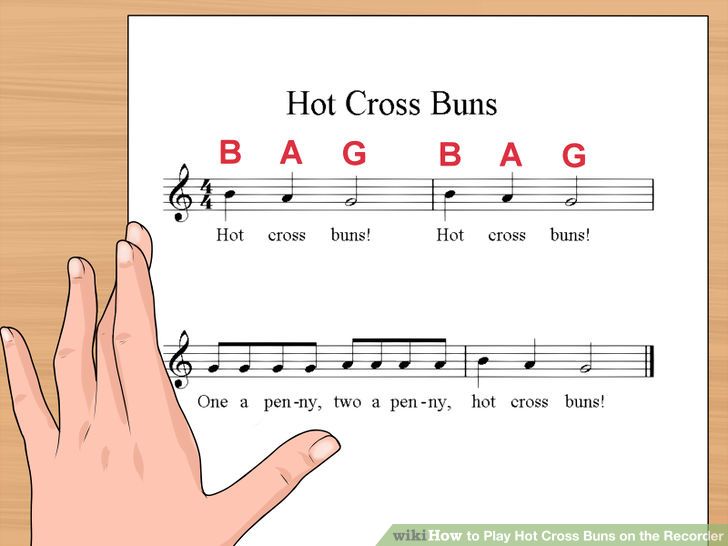
Today we listen to Hot Cross Buns. “Hot Cross Buns” is an English language nursery rhyme, Easter song, and street cry referring to the spiced English bun known as a hot cross bun, which is associated with the end of Lent and is eaten on Good Friday in various countries.
Today we listen to Beethoven’s “Moonlight Sonata”. The real name for this work is The Piano Sonata No. 14 in C♯ minor “Quasi una fantasia”, Op. 27, No. 2. It was completed in 1801 and dedicated in 1802 to his pupil, Countess Giulietta Guicciardi
The piece is one of Beethoven’s most popular compositions for the piano, and it was a popular favorite even in his own day.
It’s in the Piano Pronto Beethoven book as well as many compilations of classical music.
Arranged for piano and orchestra
An animation
The above were all of the first movement only. Here’s the whole sonata played by Valentina Lisitsa:
Today’s piece is called the British Grenadiers and I’ve included it because most students today haven’t heard of the piece OR know what a grenadier is. Find this in Keyboard Kickoff, Prelude and many other piano method books.
“The British Grenadiers” is a traditional marching song of British, Australian and Canadian military units whose badge of identification features a grenade. The original melody dates from the 17th century.
Some talk of Alexander, and some of Hercules
Of Hector and Lysander, and such great names as these
But of all the world’s great heroes
There’s none that can compare
With a tow, row row row, row row row
To the British Grenadiers
When e’er we are commanded to storm the palisades
Our leaders march with fuses, and we with hand grenades;
We throw them from the glacis about the enemies’ ears
With a tow, row row row, row row row
For the British Grenadiers
Then let us fill a bumper, and drink a health to those
Who carry caps and pouches, and wear the louped clothes
May they and their commanders live happy all their years
Sing tow, row row row, row row row
For the British Grenadiers
In the examples below you can hear the steady marching drumbeat.
The band of the Highlands and Lowlands plays “The British Grenadiers” at Edinburgh Castle
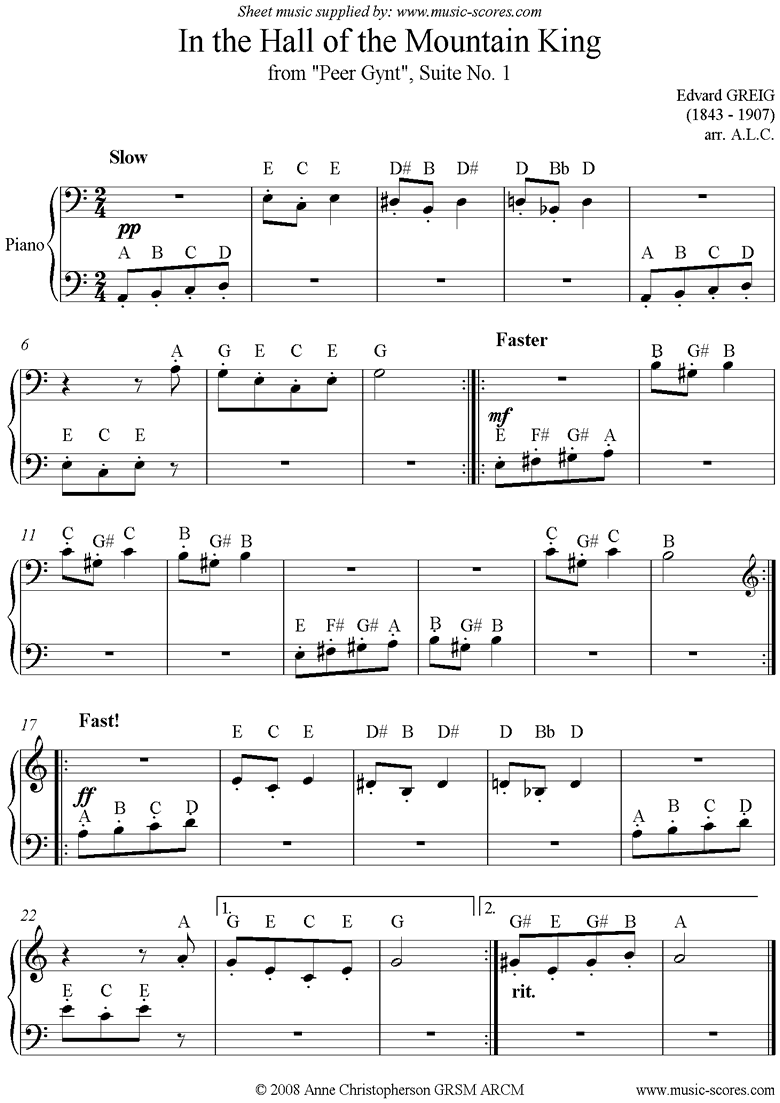
“In the Hall of the Mountain King” is a piece of orchestral music composed for the sixth scene of act 2 in Henrik Ibsen’s 1867 play Peer Gynt. It was originally part of Opus 23 but was later extracted as the final piece of Peer Gynt, Suite No. 1, Op. 46. Its easily recognizable theme has helped it attain iconic status in popular culture, where it has been arranged by many artists, including for the piano.
Borrow a copy of the sheet music from the O’Connor Music Studio. I have this arranged for piano, duet, 2-piano, simplified…
8 part vocal orchestra (plus a tiny pair of cymbals)
“The Entertainer” is a 1902 classic piano rag written by Scott Joplin. It was sold first as sheet music, and in the 1910s as piano rolls that would play on player pianos.
It was used as the theme music for the 1973 Oscar-winning film The Sting by composer and pianist Marvin Hamlisch.
The Sting was set in the 1930s, a full generation after the end of ragtime’s mainstream popularity, thus giving the inaccurate impression that ragtime music was popular at that time.
Find the sheet music in a variety of levels including Songs I Love to Play, Volume 1 and Alfred Premier Piano Course Book 4. It’s also available in Piano Maestro and to borrow from the O’Connor Music Studio
Today’s piece is based on a collection of tales known as the One Thousand and One Nights or Arabian Nights.
The story, which was written many hundreds of years ago, tells of a Persian king who married a young girl every night. Every morning he would send his new wife to have her head chopped off. He had already killed 3000 women in this way.
When Scheherazade heard about this, she wanted to spend the night with him. She spent all night telling him a story. At the end of the night, she stopped the story at an exciting moment, like a modern-day soap opera.
The next night she finished the story and began another one, which she again stopped when it was dawn. The king had to wait another night to hear the rest of the story. Scheherazade kept this up for 1001 nights. By then, the king had fallen in love with Scheherazade and he let her live.
Rimsky-Korsakov’s best-known work is Scheherazade, an orchestral piece that describes in music the stories told by Scheherazade.
The work consists of four movements:
The Sea and Sinbad’s Ship
The Kalandar Prince
The Young Prince and The Young Princess
Festival at Baghdad. The Sea. The Ship Breaks against a Cliff Surmounted by a Bronze Horseman
Today, we’re focusing on The Young Prince and The Young Princess which can be found in Piano Pronto Movement 4
Today, we’ll listen to the Symphony No. 5 in C minor, Op. 67, of Ludwig van Beethoven. It was written between 1804–1808. It is one of the best-known compositions in classical music, and one of the most frequently played symphonies. As is typical of symphonies in the classical period, Beethoven’s Fifth Symphony is in four movements.
I’m sure you’ve heard the first 8 notes before…
Since it was written for orchestra, each instrument has its own line:
A piano version, transcribed by Liszt
From Disney’s Fantasia 2000:
Pink learns to play the violin, and interrupts a performance of Beethoven’s Fifth Symphony with the Pink Panther theme played on various instruments.
Beethoven’s Wig:
Arrangements of Beethoven’s Fifth Symphony can be found in Piano Maestro and lots of books including Piano Pronto’s Movement 2, Movement 5 (Victory Theme) and Beethoven: Exploring His Life and Music.
Today’s Listening Assignment is Country Gardens by Percy Grainger.
“Country Gardens” is an English folk tune collected by Cecil Sharp from the playing of William Kimber and arranged for piano in 1918 by Percy Grainger.
The tune and the Grainger arrangement for piano and orchestra is a favorite with school orchestras, and other performances of the work include morris dancing.
A piano version:
Piano duet (four-hands)
Clarinet solo
Orchestra
The Ambrosian Children’s Choir
From the Muppets
And, how a Morris Dance is done:
Find Country Gardens on IMSLP, Piano Maestro (under the method book section) and Piano Pronto: Movement 2