World Pianist Day, celebrated on November 8, is a symphony of joy for pianists and music lovers alike. It’s a day dedicated to tickling the ivories, embracing the melodies, and having a grand ol’ time celebrating the magic of the piano and the talented souls who make it sing.
In the world of piano, we’re transported on a musical journey, where the notes and chords create a tapestry of emotions that tug at our heartstrings. Pianists, those maestros of the keys, have the power to move us to the rhythm of ultimate joy. And how do we revel in this melodious merriment? Well, we throw a piano party, of course! From dazzling classical compositions to the jazzy, bluesy tunes, pianists have a treasure trove of styles to choose from, and they’re ready to share their musical gifts with the world. And guess what? You don’t have to be a seasoned pianist to join in the fun – it’s the perfect day to tinkle those ivories if you’ve never tried before!
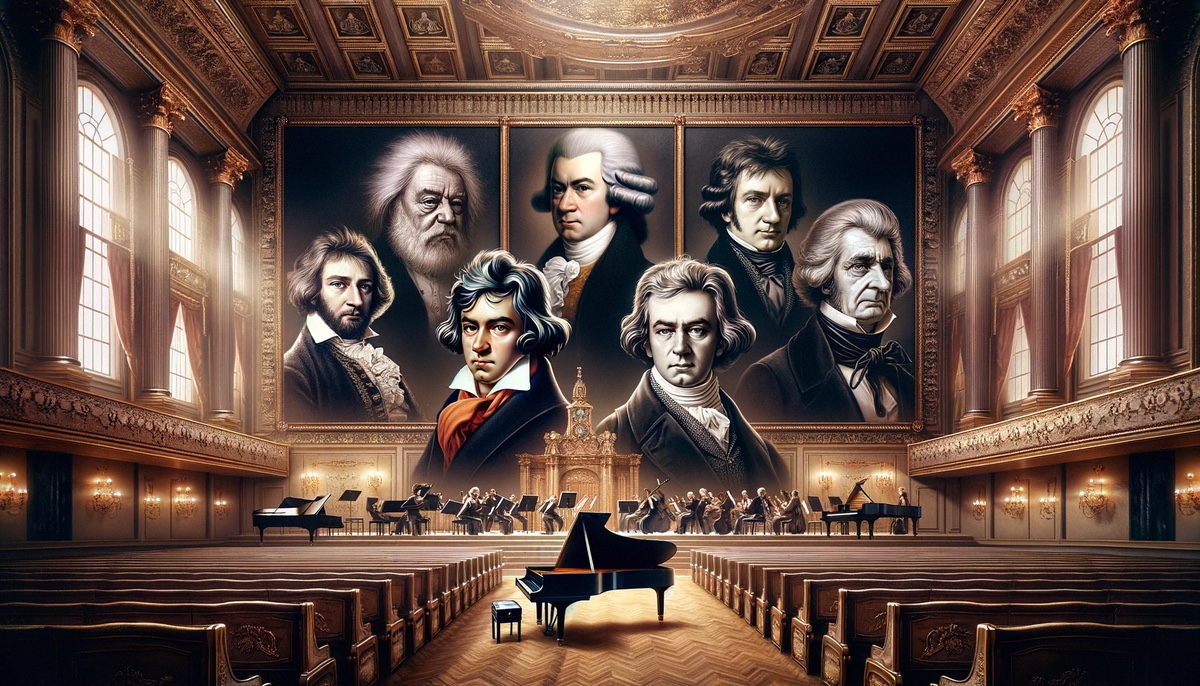
Now, let’s take a little trip down the history of World Pianist Day. Picture the greats like Mozart, Beethoven, Clementi, Liszt, Brahms, Chopin, Mendelssohn, Rachmaninoff, and Schumann. They’re like the rockstars of classical piano, setting stages ablaze with their virtuosity. These ivory-ticklers aren’t just known for their compositions; they were the original piano showstoppers, dazzling audiences far and wide.
And then there’s the fabulous world of jazz pianists, where spontaneity reigns supreme. It’s like a jam session where they dance to the rhythm of their own tune, improvising and weaving musical stories on the spot. Names like Bill Evans, Art Tatum, Duke Ellington, Thelonious Monk, Oscar Peterson, and Baden Powell are the jazz legends who’ve made the keys sing with swing.
So, how can you join the grand celebration of World Pianist Day? Here are some jazzy suggestions:
1. **Concert Time:** Hit up a piano concert and let the melodies sweep you off your feet. It’s like a musical rollercoaster that you won’t want to end.
2. **Movie Magic:** Watch “The Pianist” movie, a deep dive into the intricate and fulfilling life of a pianist and composer. You’ll be mesmerized by the world of music.
3. **Tickle the Ivories:** If you’ve always wanted to try your hand at piano, seize the moment on World Pianist Day. Grab an instrument, play your favorite tune, and let the music flow through your fingertips.
So, here’s to a day of musical wonder, where the piano takes center stage, and joyous melodies fill the air. Whether you’re a seasoned pianist or a newbie, let the piano keys be your guide to an enchanting musical journey.
Clara Schumann (1819-96) was much more than the wife of composer Robert Schumann. She was, quite simply, one of the greatest pianists of all time. A child prodigy, her technique and musicianship as a mature artist led to her being regarded as the equal of giants of the keyboard such a Franz Liszt, Sigismond Thalberg and Anton Rubinstein.
And from her girlhood until the end of her marriage she composed wonderful music, mostly solo piano music, but other works as well, including a concerto, a large number of songs and a sublime piano trio.
In her later years, she was an internationally famous teacher, and her performing career lasted more than six decades. She was, quite simply, a phenomenon.
The Piano Puzzlers book is available in the O’Connor Music Studio library if you’d like to give any a try. Piano Puzzlers as heard on American Public Media’s “Performance Today.” Includes 32 tunes with songs by Gershwin, Berlin, Arlen, Porter, Rodgers, Fats Waller, Lennon & McCartney, and others disguised in the styles of Bach, Handel, Haydn, Mozart, Beethoven, Brahms, Schubert, Schumann, Chopin, Janacek, Debussy, Ravel, Rachmaninoff, Stravinsky, Prokofiev, Bartok, and Copland.
Includes an introduction by Fred Child, host of “Performance Today” as well as background info by Bruce Adolphe. “Bruce Adolphe has taken a common musician’s party game and elevated it to high art and truly funny musical slapsticks. The Piano Puzzlers are a unique combination of extraordinary insight into the styles of many composers subtle, expert workmanship and great, great fun!”
If you’re a music geek (like me), I have a program for you. Now, let me be clear, to fully qualify as a music geek…you must have a fond appreciation for classical music (no, Poison, Quiet Riot, and Zepplin do not count as classical music). So, if you’re a “music geek” without an appreciation for classical music…well, I hate to burst your bubble…but, you’re not truly a music geek. Instead, you’re a music appreciator, but not a geek. So, if you just listen to indie music and scowl at anything on a label larger than Matador…don’t bother following the link I’ll provide…the fun will be lost on you…And, you probably won’t have a chance.
Every Wednesday night, on my way home from WNL, I turn on my local NPR station to listen to Piano Puzzlers on Performance Today. It’s absolutely incredible. A pianist/composer (Bruce Adolphe) takes a familiar folk or pop tune and sets it inside a classical masterpiece (or in the style of a particular composer). Sometimes it’s easy…sometimes it’s ridiculously difficult. There are days when I say, “got it” on the first pass. Then there are days when I say, “what the heck?” And, more often than not, I’m able to get either the popular/folk tune or the composer.
This is sad to admit, but there are nights when I’ll slow down on the drive home or sit in the car in the driveway to finish an episode. In fact, I get a little worked up if someone stops me after WNL…as I might miss the beginning of Piano Puzzlers (it usually hits around 8:20pm on our local station).
Take a listen to some of the archives and see if you can figure it out! It’s really cool…but probably only appreciated by music geeks (the kind of people that listen to NPR for their musical programs and not just the snipets of cool indie rock between segments on All Things Considered…which is a great show too).
• 1856 ~ Robert Schumann passed away. Schumann was a German composer and influential music critic. He is widely regarded as one of the greatest composers of the Romantic era. Schumann left the study of law, intending to pursue a career as a virtuoso pianist.
• 1887 ~ Sigmund Romberg, Hungarian-born American operetta composer, founding member of ASCAP. He was famous for his operettas “Desert Song”, “Maytime” and “Student Prince”
• 1916 ~ Charlie Christian, American guitarist and blues singer
• 1917 ~ Homer (Henry D. Haynes), Comedy singer, duo: Homer and Jethro
• 1925 ~ Mikis Theodorakis, Composer
• 1930 ~ Paul Taylor, Dancer with the Martha Graham Dance Company, New York City Ballet, Paul Taylor Dance Company, Emmy Award-winning choreographer, Kennedy Center Honors in 1992 “…for enhancing the lives of people around the world and enriching the culture of our nation.”
• 1933 ~ Randy Sparks, Folk singer, songwriter with the New Christy Minstrels
• 1935 ~ Peter Schreier, German tenor
• 1946 ~ Neal Doughty, Keyboards with REO Speedwagon
• 1953 ~ Geddy Lee, Bass, singer with Rush
• 1965 ~ The Queen of England attended the premiere of the motion picture, Help!, starring The Beatles. The command performance was held at the London Pavilion. The film later earned first prize at the Rio De Janeiro Film Festival in Brazil. The Beatles later said the film was shot in a “haze of marijuana”. According to Starr’s interviews in The Beatles Anthology, during the Austrian Alps film shooting, he and McCartney ran off over the hill from the “curling” scene set to smoke a joint.
• 1966 ~ Martina McBride, Country singer
• 1967 ~ The Doors score their first #1 hit with “Light My Fire”
• 1970 ~ Sir John Barbirolli died. He was the British conductor of the Halle Orchestra, and was a famous interpreter of English music, Mahler and Italian opera.
• 1984 ~ Fred Waring, American musician and conductor died at the age of 84. He was also a promoter, financial backer and eponym of the Waring Blendor, the first modern electric blender on the market.
• 2018 ~ Tomasz Stańko, Polish trumpeter (Astigmatic), died at the age of 76
• 1742 ~ Omobono Stradivari, Italian viol maker, son of Antonio, died at the age of 62
• 1753 ~ Nicolas-Marie Dalayrac, Composer
• 1783 ~ Joseph Lincke, Composer
• 1796 ~ Felice de Giardini, Composer, died at the age of 80
• 1805 ~ Luigi Ricci, Composer
• 1810 ~ Robert Schumann, German composer best known for his song cycles and piano music.
Read quotes by and about Schumann
More information about Schumann
• 1812 ~ Spyridon Xyndas, Composer
• 1814 ~ Friedrich Heinrich Himmel, Composer, died at the age of 48
• 1834 ~ George Garrett, Composer
• 1837 ~ Jan Kleczynski, Composer
• 1856 ~ Natalia Janotha, Composer
• 1858 ~ Antonio Nicolau, Spanish Composer and conductor
• 1876 ~ George Sand (Armandine-Aurore-Lucile Dupin), French author and romantic companion of the composer of Chopin, died at the age of 71
• 1881 ~ Prospero Bisquertt, Composer
• 1884 ~ Henry Clay Work, Composer, died at the age of 51
• 1888 ~ Poul Julius Ouscher Schierbeck, Composer
• 1906 ~ Christian Frederik Emil Horneman, Composer, died at the age of 65
• 1908 ~ Johan Lindegren, Composer, died at the age of 66
• 1913 ~ Janos Jagamas, Composer
• 1918 ~ Robert Preston [Meservey], American actor
• 1919 ~ Jacob Fabricius, Composer, died at the age of 78
• 1923 ~ Karel Goeyvaerts, Flemish Composer of Summer Games
• 1926 ~ Anatol Vieru, Composer
• 1927 ~ Paul Whiteman and his orchestra recorded When Day is Done on Victor Records.
• 1928 ~ Jiri Dvoracek, Composer
• 1930 ~ Yannis Ioannidis, Composer
• 1932 ~ Hans Gunter Helms, Composer
• 1936 ~ James Darren (Ercolani), Singer
• 1940 ~ Frederick Shepherd Converse, American Composer, died at the age of 69
• 1940 ~ Sherman Garnes, Rock vocalist with Frankie Lymon and The Teenagers
• 1940 ~ Nancy Sinatra, Singer
• 1942 ~ Chuck Negron, Singer with Three Dog Night
• 1942 ~ Bing Crosby recorded Silent Night and “Adeste Fideles”. He also achieved a great deal of fame with his popular rendition of “White Christmas.”
• 1944 ~ “Boz” (William) Scaggs, American rhythm-and-blues singer and songwriter
• 1946 ~ “Lute Song” closed at Plymouth Theater NYC after 142 performances
• 1892 ~ Richard Tauber (Ernst Seiffert), Austrian-born British tenor. He sang a wide range of music and was as equally at home in opera, notably Mozart, as in Austrian operetta.
• 1913 ~ Woody (Woodrow Charles) Herman, American jazz clarinetist, bandleader and composer
• 1919 ~ (Walter) (Wladziu Valentino) Liberace, American concert pianist and showman. His trademark was a candelabra on his piano.
More information about Liberace
• 1929 ~ The first Academy Awards were presented on this night, hosted by Douglas Fairbanks and William C. de Mille. This first awards ceremony of the Academy of Motion Picture Arts and Sciences was held at the Hollywood Roosevelt Hotel in Los Angeles. It attracted an audience of 200 people.
• 1929 ~ Paul Whiteman and his orchestra backed Bing Crosby for the tune, Sposin’, which ‘Der Bingle’ recorded for Columbia Records. Betty Carter (Lillie Mae Jones) (1930) Jazz singer: toured with Lionel Hampton & Miles Davis
• 1930 ~ Friedrich Gulda, Austrian pianist/composer
• 1946 ~ The Irving Berlin musical, Annie Get Your Gun, at New York’s Imperial Theatre. One of the most successful shows presented on a Broadway stage, the show ran for 1,147 performances.
• 1947 ~ Barbara Lee, Singer with The Chiffons
• 1947 ~ Darrel Sweet, Drummer, singer
• 1953 ~ Bill Haley and His Comets made it to the Billboard music charts for the first time with Crazy Man Crazy. The tune went to number six and became the first rock ’n’ roll record to make the pop music chart.
• 1965 ~ The Roar of the Greasepaint, The Smell of the Crowd, a Broadway musical starring Anthony Newley, made its premiere at the Shubert Theatre in New York City. Cyril Ritchard appeared in the production which entertained audiences for 231 performances.
• 1966 ~ Janet Jackson, Singer
• 1990 ~ Jim Henson, the famous creator who of the Muppets, a cast of puppets including Kermit the Frog, Big Bird, Elmo, Ernie and Bert, died at the age of 54.
• 1990 ~ The entertainer who could do it all, Sammy Davis, Jr., died this day, in Beverly Hills, California, USA. From vaudeville at age three (with his father and uncle) to the star of Broadway’s “Mr. Wonderful”, from Las Vegas nightclubs to hit records, the actor, singer, dancer, impersonator, and musician performed his way into the hearts of young and old everywhere. The world mourned the passing of Sammy Davis, Jr. at age 64 of throat cancer.
• 1993 ~ Marv Johnson passed away. He was an American R&B and soul singer.
• 1995 ~ Lola Flores, fiery Spanish dancer and singer, died. She made many films but was best known for her flamenco movements and passionate songs.
• 2010 ~ Hank Jones, American jazz pianist and composer, died at the age of 91
. 1687 ~ Jean-Baptiste Lully, French composer, died. He was an Italian-born French composer, instrumentalist, and dancer who spent most of his life working in the court of Louis XIV of France. He is considered the chief master of the French baroque style.
. 1840 ~ Clara Wieck wrote a letter dated today to Robert Schumann. Part of it said: “When I heard Liszt for the first time…I was overwhelmed and sobbed aloud, it so shook me.”
. 1842 ~ Carl August Nicolas Rosa, German violinist and composer. In 1873 he founded the Carl Rosa Opera Company.
. 1865 ~ Theophile Ysaye, Belgian composer and pianist
. 1911 ~ Herman Jadlowker became the first opera singer to perform two major roles in the same day at the Metropolitan Opera House in New York City.
. 1920 ~ Fanny Waterman, DBE is a piano teacher and the founder, Chairman and Artistic Director of the Leeds International Pianoforte Competition. She is also president of the Harrogate International Music Festival.
. 1925 ~ The first Japanese radio station, Tokyo Shibaura, began broadcasting.
. 1930 ~ Stephen Sondheim, American composer and lyricist of musicals More information about Sondheim
. 1936 ~ Glen Campbell, Singer and studio guitarist
. 1937 ~ Johnny Ferguson, Singer
. 1943 ~ Keith Relf, Recording artist of The Yardbirds
. 1943 ~ George Benson, American jazz and pop guitarist and singer
. 1944 ~ Jeremy Clyde, Singer with Chad & Jeremy
. 1947 ~ Harry Vanda, Guitarist with The Easybeats
. 1948 ~ Andrew Lloyd Webber, British composer More information about Lloyd Webber
. 1948 ~ Randy Hobbs, Bass with The McCoys
. 1948 ~ The Voice of Firestone was the first commercial radio program to be carried simultaneously on both AM and FM radio stations.
. 1956 ~ Sammy Davis, Jr. starred in the play, Mr. Wonderful, in New York City. The critics were unkind, saying that they didn’t care for the production. Audiences, however, gave it ‘thumbs up’ and the show went on to be one of Broadway’s more popular musicals — catapulting Davis into the limelight. His father had already launched him into the vaudeville spotlight when Sammy was just three years old. By the time he was Mr. Wonderful, Sammy Davis, Jr. had played vaudeville and the nightclub circuit singing and dancing his way to the top over a twenty-eight-year period. He entertained us for sixty-two years!
. 1956 ~ Perry Como became the first major TV variety-show host to book a rock and roll act on his program. The ‘Incomparable Mr. C.’ booked Carl Perkins for the show and Perkins sang Blue Suede Shoes. 1962 ~ The play, I Can Get It For You Wholesale, opened on Broadway. It featured a 19-year-old named Barbra Streisand. She stopped the show at the famed Shubert Theatre in New York City. Streisand starred as Miss Marmelstein. Audiences kept coming back for more of Barbra for 300 performances.
. 1980 ~ The first CD (compact disc) was put on sale by RCA. The first major artist to have his entire catalog converted to CD was David Bowie, whose 15 studio albums were made available by RCA Records in February 1985, along with four greatest hits albums.
. 1980 ~ Pink Floyd started a 4-week run in the #1 slot on the pop charts with their smash, Another Brick in the Wall. When the boys popped open their gold record and threw it on the stereo, they heard Flowers on the Wall by the Statler Brothers.
. 2015 ~ Norman O. Scribner, founder and artistic director of the Choral Arts Society of Washington, one of the region’s preeminent symphonic choirs, died
. 1760 ~ Jan Ladislav Dussek, Czech composer and pianist. Along with his friend, famed piano maker John Broadwood, Dussek made important design improvements to the piano, allowing for the more dynamic style of playing that his highly original compositions required. Beethoven himself later used a Broadwood piano with Dussek’s innovations. This helped pave the way for Romanticism and Dussek’s influence on Beethoven’s piano writing has been well documented.
Dussek’s Piano Sonata Op. 77 in F minor (“L’invocation”), from 1812, is the last work he ever composed, and he saved the best for last. This is a neglected masterpiece that foreshadows Schubert, Chopin, Schumann, and Brahms.
. 1881 ~ Anna (Pavlovna) Pavlova, Russia’s premier ballerina
. 1894 ~ Hans von Bülow, German pianist and composer died (b. 1830)
More about von Bulow
. 1898 ~ Roy Harris, American composer
. 1904 ~ Ted Mack (William Maguiness), TV host of The Original Amateur Hour, The Ted Mack Family Hour
. 1914 ~ (Gordon) Tex Beneke, Bandleader, singer, tenor sax in the Glenn Miller Orchestra
, 1915 ~ Charles Emile Waldteufel, composer, died at the age of 77
. 1918 ~ All theatres in New York City were shut down in an effort to conserve coal.
. 1923 ~ Mel Powell, American jazz pianist and composer. One of his works is Mission to Moscow for Benny Goodman. He was also Dean of Music at California Institute of Arts.
. 1923 ~ Franco Zeffirelli, Italian director and producer of opera, theatre, film and television
. 1924 ~ Bandleader Paul Whiteman presented his unique symphonic jazz at the Aeolian Hall in New York City. The concert marked the first public performance of George Gershwin’sRhapsody in Blue. The composer, himself, was at the piano this night. Distinguished guests included John Philip Sousa and Jascha Heifetz.
. 1942 ~ Mildred Bailey recorded More Than You Know on Decca Records.
. 1948 ~ Joe Schermie, Bass with Three Dog Night
. 1949 ~ “Annie Get Your Gun” closed at the Imperial Theater in New York City after 1147 performances
. 1964 ~ The Beatles played two concerts at Carnegie Hall in New York City, concluding a very successful American tour.
. 1968 ~ Singer and famed guitarist, Jimi Hendrix, received an honorary high school diploma from Garfield High School in Seattle, WA, where he had dropped out at the age of 14.
. 1972 ~ Al Green’s Let’s Stay Together knocked American Pie out of the top spot on the music charts. The record stayed at the top for one week, before giving way to Nilsson’s Without You. Green returned to his gospel roots in 1980 and is a minister in Memphis, TN. Green recorded 14 hit songs with six of them making it to the Top 10.
. 1976 ~ Sal Mineo, singer, died
. 1983 ~ Eubie Blake, US ragtime-composer/pianist (Memories of You), died at the age of 96
. 2011 ~ Elizabeth “Betty” Garrett, American actress, comedian, singer and dancer (All in the Family), died of an aortic aneurysm at the age of 91
Michael Joe Jackson
A star was born on August 29, 1958 in Gary, Indiana. Singer, songwriter, dancer, actor Michael Joe Jackson started on the road to stardom while at Garnett Elementary School in Gary. Michael performed for his class by singing Climb Every Mountain. Within just a few years, he took his act to the stage joining his brothers as The Jackson Five. They were entertaining at Mr. Lucky’s, also in Gary, Indiana. Michael was only 8. By the time he was 11, Michael, the youngest of the five brothers, was the lead singer of the group.
And their hits were hitting the top of the charts: I Want You Back, ABC, The Love You Save, I’ll Be There. Then young Michael started recording solo hits like Ben, also #1.
And the hits just kept on coming … and the awards came with them: A Grammy for Best Male R&B Vocal in 1979 for Don’t Stop ’Til You Get Enough, 5 Grammy Awards in 1983 — Best Male Pop Vocal and Album of the Year (Thriller), Best Male R & B vocal and Best R & B song (Billie Jean), and Best Recording for Children: E.T., the Extraterrestrial; 2 in 1984 — Record of the Year and Best Male Pop Vocal (Beat It); another in 1985 with Lionel Richie for Song of the Year (We are the World); a Best Music Video/Short Form Grammy in 1989 for Leave Me Alone; and finally, The Legend Award Grammy — for the living legend in the music industry, Michael Jackson.
Whether Michael sings with his brothers, his sisters, alone or in duets with fellow performers, the results are hit, after hit, after hit … The Girl is Mine and Stay, Stay, Stay with Paul McCartney; I Just Can’t Stop Loving You with Siedah Garrett; Rock with You, Bad, Smooth Criminal … Ease on Down the Road with Diana Ross (from Broadway’s The Wiz in which Michael played the scarecrow). Michael, the actor, was also seen as a hologram, Captain Eo in Epcot Center’s multimedia show.
A celebrity for most of his life, he is both magic and tragic … the gloved one’s fame and infamy well-known throughout the world: he made $70 million from Thriller; he paid $50 million for the rights to the Beatles’ 251 songs; his Bad album was number one in 23 countries; he has an amusement park and zoo at his California estate; he married and divorced Lisa Marie Presley, the daughter of the King of Rock.
He remarried, became a father … and the rest of the story is still being written …. To date, Michael Jackson remains the King of Pop.
Janácek
Leos Janácek lived from 1854 until 1928. It was relatively late in life that the Moravian composer Janácek won more than local recognition. He made his early career in the capital of his native province, Brno, coupling an interest in regional folk music with a study of speech intonations, echoed in his instrumental as well as vocal writing. His opera Jenufa was first staged in Brno in 1904, but it was the performance in Prague in 1915 that brought the work of the composer a much wider public. The seven operas that followed have formed a very idiosyncratic part of current operatic repertoire, culminating in From the House of the Dead, completed in 1928, the year of Janácek’s death, and based on the novel by Dostoyevsky.
The best known of Janácek’s music for orchestra is the Sinfonietta, derived from an original festival piece of 1926. To this may be added the rhapsody based on the work of Gogol, Taras Bulba, and the Lachian Dances, based on folk-dances.
Joachim
Joseph Joachim lived from 1831 until 1907. He was a Hungarian violinist, conductor and composer whose exceptional talent was recognized by Mendelssohn. He was also a close friend of Brahms. His music had much in common with the music of Schumann.
John
Elton Dwight John was born in 1947 and is a rock singer and pianist. He was born in Pinner, NW Greater London, England. He played the piano by ear from age four, and studied at the Royal Academy of Music at 11. From 1967, he and Bernie Taupin began writing songs such as “Rocket Man’ (1972), “Honky Cat’ (1972), and “Goodbye Yellow Brick Road’ (1973). Their publisher pressed John to perform them, for which he obscured his short, plump, myopic physique in a clownish garb that included huge glasses, sequined and fringed jump suits, and ermine boots. The top pop star of the 1970s, he later became chairman (1976 to 1990) and then honorary life president in 1990 of the Watford Football Club and a stock-market speculator. Despite health problems in 1993 brought about by his stressful lifestyle he continues to perform live across the world.
Johnson
James Price Johnson, Ragtime composer
Jolivet
André Jolivet lived from 1905 until 1974. Versatile in the arts, André Jolivet was a pupil of Le Flem and later of Varèse and was, with Olivier Messiaen, Daniel Lesur and Yves Baudrier, a member of the composers grouped together as Jeune France. As director of music for the Comédie française he wrote a quantity of incidental music and elsewhere based his work on principles that stemmed from his interest in the magical and incantatory element fundamental to human music.
Jolivet wrote a number of concertos, all demanding considerable virtuosity from the soloist. These include a concerto for the ondes Martenot, an electronic instrument developed in France in the 1920s, and concertos for trumpet and piano, for flute, for piano, for harp, for bassoon and harp, for percussion, for cello and for violin.
In addition to his varied incidental music, whether for Molière, Claudel, Corneille or Plautus, Jolivet wrote music for the ballet and for marionette plays.
Jolivet made an early impression on Messiaen with the six piano pieces that constitute Mana. Chamber music includes music involving the flute, an instrument he particularly favoured for its primitive human associations.
Joplin
Scott Joplin (1868-1919) was the most influential and famous composer of the ragtime era, and one of the most daring pioneers in the history of American music. He was known as the Father of Ragtime. At first, the musical establishment absolutely refused to acknowledge ragtime as a worthy means of musical expression, dismissing it as catastrophic noise that had little musical meaning at all. Only within the last few decades has his work finally been truly appreciated and accepted as a truly great form of art, and as a unique and substantial contribution to music.
Ragtime, which first emerged in the 1890’s, is a style of piano playing with an up-and-down “ragged time” rhythm. Joplin made ragtime an international dance craze with “Maple Leaf Rag”. “The Maple Leaf Rag”, became the first song to sell over one million copies of sheet music.
The remarkable part of his success as a musician was the fact that he was African American. His success paved the way for all black musicians who would come after him, breaking a long-standing race barrier: acceptance as a performer.
Joplin’s music enjoyed renewed popularity with the use of “Solace” in the 1973 movie The Sting. Solace was not a typical rag, although it does have similar rhythmic elements.
Treemonisha was an opera composed by Joplin, although it was not produced until 1975, 58 years after his death.
Some other ragtime composers were Joseph Lamb and James Scott. Eventually, ragtime was replaced by jazz.
Camille Saint-Saëns’ Carnival of the Animals is featured in Disney’s Fantasia and the newly released Fantasia 2000.
Salieri
Antonio Salieri lived from 1750 until 1825. Born in Legnago, he was brought as a boy to Vienna by Florian Gassmann, his predecessor as court Kapellmeister who supervised his musical training and education. He owed much to the influence and patronage of Gluck, to whom he seemed a natural successor in the field of opera. He won similar success to the latter also in Paris with his operas for the French stage. His pupils included Beethoven and Schubert, Czerny, Hummel, Moscheles and one of Mozart’s sons. He was a prolific composer, principally in vocal music of all kinds.
Thanks to Pushkin and Rimsky-Korsakov, as well as Shaffer and the film Amadeus, Salieri has been cast as the villain in the tragedy of Mozart’s early death. Antonio Salieri occupied a position of great importance in the music of Vienna. From 1774 he was court composer and conductor of the Italian opera, serving as court Kapellmeister from 1788 until 1824.
Salieri wrote some 45 operas, ranging from Tarare, with a libretto by Beaumarchais, for Paris and settings of libretti by Lorenzo da Ponte for Vienna to the Shakespearean comedy Falstaff and the operetta Prima la musica poi le parole (First the Music then the Words), staged at the imperial palace of Sch?nbrunn in 1786 on the same evening as Mozart’s German Singspiel Der Schauspieldirektor (The Impresario).
Salieri wrote a quantity of church music, as well as oratorios. He left still more secular vocal music, ranging from cantatas and choruses to duets and solo arias.
Rather less instrumental music by Salieri survives. This includes music for the ballet, sinfonias, concertos and music for various smaller ensembles.
As well as a significant quantity of ballet music, Salieri wrote concertos, including an organ concerto and a piano concerto, a Birthday Symphony and a set of variations on La folia di Spagna, (The Folly of Spain) the dance tune used by Corelli and many other Baroque composers.
Salieri’s chamber music consists principally of serenades, cassations and marches.
Satie
Erik Satie lived from 1866 until 1925 and was a French composer whose spare, unconventional, often witty music represents a first break with 19th century French Romanticism.
Scarlatti, Alessandro
(Pietro) Alessandro (Gaspare) Scarlatti lived from 1660 until 1725 and was the father of Domenico Scarlatti. Allessandro was a leading composer of early Italian opera and one of the most important figures in developing classical harmony.
Scarlatti, Domenico
Domenico Scarlatti (1685-1757) is an important Baroque composer from Italy. He composed more than 500 keyboard sonatas, many of which are in one movement. Occasionally, he wrote them in pairs of similar or contrasting mood. Scarlatti used interesting melodies and combined them with a rhythmic vitality.
Scharwenka
Franz Xaver Scharwenka was born near Posen, Germany. He lived from 1850 until 1924 and was a pianist and composer. In 1881 he started a music school in Berlin, and spent the years from 1891 until 1898 in New York City directing the Scharwenka Music School. He composed symphonies, piano concertos, and Polish dances.
Schickele
Peter Schickele is a composer in his own right, in addition to “discovering” P.D.Q. Bach He recently arranged Elgar’s Pomp and Circumstance for the new Disney movie Fantasia 2000.
Schoenberg
Arnold Schoenberg lived from 1874 until 1951. He was a German composer whose revolutionary method of composition (based on a series of 12 tones called 12-Tone Music) influenced many later composers.
Schubert
Franz Peter Schubert lived between 1797 and 1828. He is considered to be a romantic composer. He was an Austrian composer who was one of the greatest creators of melody and foremost writer of ‘lieder’ (German songs).
Although he only lived for 31 years, Schubert composed more than 600 songs, 22 piano sonatas and many short piano pieces. This melodic output has never been equaled either in quantity of quality. He was one of the first musicians to earn a living from the sale of his music.
Schubert’s Ave Maria was featured in the Walt Disney movie Fantasia.
Schumann, Clara Wieck
Clara Wieck Schumann was a fine pianist and composer. She married Robert Schumann.
Schumann, Robert
Robert Schumann was born in Zwickau, June 8, 1810 and died in Endenich, near Bonn, July 29, 1856. He was a German composer and pianist. With Chopin and Liszt he developed much of the technique of Romantic piano music.
He was a child prodigy, but his parents wanted him to become a lawyer. He did attend law school for a while but soon left to become a musician.
His earliest compositions were piano pieces, but he also wrote a popular piano concerto, several symphonies, and chamber music.
A master of the more intimate forms of musical compositions, Schumann is unique in music history as being one of the great composers who concentrated on one musical genre at a time, with the bulk of his earliest compositions being for the piano. Schumann’s piano music (and later his songs) remain supreme examples of the Romantic style of the second quarter of the nineteenth-century. Immensely influenced by literature and poetry, it is the dreamy nature of his music which most affects the listener, as can be heard in the fifth movement from the piano suite entitled Carnaval. Aside from three piano sonatas, most of his work for the instrument is in the form of suites comprising short, poetic pieces, each expressing a different mood.
Schumann composed his 13-piece collection Scenes from Childhood in 1838, shortly after he became engaged to Clara Wieck, who also was a fine musician and the most celebrated woman pianist of her time. Clara Wieck was the daughter of his first music teacher, who had opposed their union.
In 1840, Schumann was finally able to marry Clara Wieck. Schumann’s happiness found an outlet in the great number of Lieder he wrote during that year. The first number from his song cycle Dichterliebe, Im wundersch?nen Monat mai (A Poet’s Love: “In the beautiful month of May” ) is another example of the composer’s harmonic and melodic style.
In order to publicize his own music and to stimulate and improve the musical tastes of the burgeoning concert-going public, Schumann founded Die Neue Zeitschrift f?r Musik (The New Journal for Music) in 1834, and remained active as its editor for ten years. In the pages of this publication, Schumann considerably raised the standards of music criticism and did much to promote the careers of young composers such as Fr?d?ric Chopin, Hector Berlioz, and especially Johannes Brahms, who was to become a very close friend of Schumann. Throughout his life, Schumann felt himself divided by two contrasting natures: the gentle, poetic, Apollonian side, which he called “Eusebius”; and the more forthright, dramatic and stormy side he named “Florestan”. Because of this rift in his personality, he feared insanity for much of his life, and eventually did spend his last years in an asylum.
Scott, Cyril
Cyril Meir Scott lived from 1879 until 1970. He was a composer, born in Oxton, Cheshire, NWC England, UK. As a child he studied the piano in Frankfurt, later returning there to study composition. His works won a hearing in London at the turn of the century, and in 1913 he was able to introduce his music to Vienna. His opera, The Alchemist, had its first performance in Essen in 1925. He composed three symphonies, piano, violin, and cello concertos, and numerous choral and orchestral works, but is best known for his piano pieces and songs.
Scott, James
James Scott (1886 to 1938) was a Ragtime composer along with Scott Joplin and Joseph Lamb.
Although an extremely important figure in ragtime, Scott was always viewed as second to Scott Joplin in terms of musical expertise and prowess. However, Scott developed a very unique sound within the form of ragtime. He received lessons as a boy from John Coleman, a Missouri pianist, who recognized the boy’s genius. Soon after, he gained the attention of both the respected composer Charles Dumars, and the ragtime master himself, Scott Joplin, and the rest is history.
Seals, Son
Born in Osceola, Ark., Son Seals learned guitar from his father, a former minstrel show performer and juke joint operator. He initially established himself professionally as a drummer, working with guitarist Earl Hooker and appearing behind Albert King on the 1968 Stax album “Live Wire/Blues Power.”
Seals moved to Chicago in 1971 and began fronting his own groups on the city’s South Side.
Seals helped establish Chicago-based Alligator Records as the era’s premier blues label with a run of albums featuring his tough songs, brooding vocals and spikey guitar work. Signed to Alligator, he made an immediate impression with his impassioned 1973 debut “The Son Seals Blues Band.” After the release of its 1977 sequel “Midnight Son,” the New York Times called Seals “the most exciting young blues guitarist and singer in years.”
He won three W.C. Handy Blues Awards, and received a Grammy Award nomination in 1980 for his work on the live compilation “Blues Deluxe.”
Seals had a tempestuous relationship with Alligator and its founder-owner Bruce Iglauer, who also managed him; he departed the label in the mid-’80s, but returned to the fold in the ’90s. His last album “Lettin’ Go” was cut for Telarc in 2000.
He toured widely, despite the loss of a leg to diabetes. Late in his career he opened several shows for the jam band Phish, who covered his song “Funky Bitch.”
Seals had 14 children.
Segovia
Andrés Segovia lived from 1894 until 1987. He was a guitarist who was born in Linares, Spain. Largely self-taught, he gave his first concert in 1909, and quickly gained an international reputation. Influenced by the Spanish nationalist composers, he evolved a revolutionary guitar technique permitting the performance of a wide range of music, and many modern composers wrote works for him. He was created Marquis of Salobrena by royal decree in 1981
Shaw, Artie
Artie Shaw was born Arnold Jacob Arshawsky to a seamstress mother and photographer father in New York City on May 23, 1910, Shaw was about as restless a jazz star as one could find.
He formed and reformed bands, married and divorced eight times, gave up music for more than 30 years and put down his clarinet in 1954 never to play it in public again, quitting at age 44.
Critics dismissed his work at first. But soon they hailed him as a unique voice in swing-era jazz, especially for his beautiful tone and control of his instrument’s top register.
The Down Beat critic Howard Mandel once wrote: “In Shaw’s lips and hands the clarinet bent as pliantly as a blade of grass; it thrilled him to make glissandi, fast or sad melodies, and wonderful virtuosic turns.”
Among his famous songs were a 1938 rendition of “Begin the Beguine,” which made him a national star and chief rival to legendary clarinetist Benny Goodman, “Oh, Lady Be Good,” “Stardust,” “Indian Love Call” and “Frenesi.”
He once said the success of “Begin the Beguine” was like an anchor around his neck.
As smooth as his tone was, Shaw was a man at war with himself. A crusty, self-declared perfectionist, Shaw gave up the clarinet because he said could not reach the level of artistry he desired.
In 1981, he ended a long musical intermission by reorganizing a band that bore his name and played his music — but with another clarinetist, Dick Johnson, leading the orchestra and playing the solos Shaw made famous.
Shaw traveled with the orchestra as a guest host and sometime conductor of the band’s signature opening number, “Nightmare.”
Shaw’s bands in the 1930s and 1940s featured a who’s who of jazz greats including Billie Holiday, Buddy Rich, Roy Eldridge and “Hot Lips” Page. At the height of his popularity, he earned $30,000 a week, a huge sum for the Depression Era.
He was one of the few white bandleaders who sought out black talent. Decades after Billie Holiday sang with him, Shaw still marveled at the sound of her voice.
“When she sang something, it came alive. I mean that is what jazz is all about,” he once said.
Shaw called himself a difficult man, a view his eight former wives, including novelist Kathleen Winsor and actresses Evelyn Keyes, Ava Gardner and Lana Turner might have agreed with. He recalled once almost erupting when a woman asked if he could play something with a Latin beat.
Of Shaw’s string of former wives, manager Curtis recalled, “He said he never had to pay any alimony because they were all as rich as he was.”
It was once a national joke to have as many wives as Artie Shaw had.
In a 1985 interview with Reuters, Shaw said he gave up playing when he decided he was aiming for a perfection that could kill him.
“I am compulsive. I sought perfection. I was constantly miserable. I was seeking a constantly receding horizon. So I quit,” he said.
“It was like cutting off an arm that had gangrene. I had to cut it off to live. I’d be dead if I didn’t stop. The better I got, the higher I aimed. People loved what I did, but I had grown past it. I got to the point where I was walking in my own footsteps,” he said in that interview.
Shaw spent his time as a guest on television game shows, writing an autobiography and a novel, traveling and lecturing.
But starting in the 1980s, Shaw returned to the road with his revived band as its host and sometime conductor of its opening number before turning over to Johnson.
Sibelius
Jean Sibelius (1865 until 1957) was the most famous composer in Finland. He is the best known of the Finnish composers chiefly remembered for his seven symphonies (Finlandia). In 1897, at the age of 32, Sibelius was awarded a lifelong pension by the Finnish government so that he could devote all his time to composing.
Shostakovich
Dmitri Shostakovich (1906 to 1975) was a Russian composer renowned for his brilliant symphonies. His daring and experimental style brought him often in conflict with authorities.
Shostakovich’s Piano Concerto number 2 is featured in Disney’s newly released Fantasia 2000.
Schuetz
Heinrich Schuetz (1585- 1672) was a German composer who was born in Koestritz, Germany. Schuetz travelled to Italy to study in Venice. After his return he played an important role in bringing the Italian baroque style of music to Germany.
His compositions include church music, psalms, motets, passions, a German requiem, and the first German opera, Dafne, produced in Torgau in 1627. As a German Protestant Schuetz contributed greatly to German cultural unity after the 30-year war.
Smetana
Bedřich Smetana lived from 1824 until 1884. He wrote national music based on Bohemian folk tunes. Smetana was a child prodigy, playing is a string quartet by the age of 5 and composing by the age of 8.
He had to teach to support himself, but he maintained his Like Beethoven, Smetana did not allow his loss of hearing to stop him from composing. One of his greatest works was composed after his hearing was gone.
In The Bartered Bride he produced one of the greatest of all comic operas.
Smith
Bessie Smith (1894 to 1937) was perhaps the most influential female blues singer to ever live, so much so that she was given the nickname “the Empress of the Blues”. She was born into poverty in the 1890s, and started her singing career young. She was blessed with a deep, expansive voice that was powerful yet still had a very expressive quality to it. She rose to fame in the 1920s during the Depression, after she moved to New York City and began recording with jazz greats such as Louis Armstrong and Benny Goodman. Sadly, she was killed in a tragic automobile accident in 1937, after her career was in shambles, and she had began turning to alcohol.
Sondheim
(Joshua) Stephen Sondheim was born in 1930 in New York City. Is is a composer, lyricist who received tutoring from family friend Oscar Hammerstein II and at age 17 was a production assistant for Richard Rodgers and Hammerstein. He wrote some music for television shows and for the play Girls of Summer (1956) before making his debut on Broadway by writing lyrics for Leonard Bernstein’s West Side Story (1957) and Jule Styne’s Gypsy (1959). He first wrote music as well as words for the successful farce, A Funny Thing Happened on the Way to the Forum (1962). With producer-director Harold Prince he wrote both words and music for a string of innovative works, including A Little Night Music (1973) – which contained his best-known song, “Send in the Clowns” – and Pacific Overtures (1976), which combined elements of the Broadway musical with Japanese Kabuki theater. He won the 1985 Pulitzer Prize in drama for Sunday in the Park with George (1984).
Known for their often complex wordplay, evocative music, and unconventional subject matter, his works for stage, screen, and television mark him as one of the true artists of modern musical theater, one of the few who could inspire fans to wait overnight in freezing weather for tickets to merely a revue featuring his songs. He himself remains a private person, never courting publicity, and about all the public knows of him is that he enjoys word-based puzzles and party games.
Sor
Fernando Sor lived from 1778 until 1839. He is a Catalan composer chiefly known for his many compositions for guitar, his own instrument. Although originally opposed to the Napoleonic invasion of Spain, he later accepted a position under the French government and was, in consequence, obliged to seek refuge abroad, in London, and in Paris, where he established himself as a successful performer, teacher and composer.
Sor published a quantity of music for guitar, some of it pedagogical in purpose and some of it for concert performance. His Methode pour la guitarre, published in 1830, is among the most important books on guitar technique.
Sor wrote a number of boleros and seguidillas for voices and guitar, in addition to Spanish, Italian and English songs and duets for voice and piano.
Sor’s opera Telemaco nell’isola de Calipso (Telemachus on the Island of Calypso) was staged in Barcelona in 1797. Sor’s other theatre music was principally for the ballet, including a successful Cendrillon (Cinderella), a march from which he arranged for guitar.
SPEBSQSA
The SPEBSQSA (Society for the Preservation and Encouragement of Barber Shop Quartet Singing in America) was founded April 11, 1938 by 26 singing, striped-shirted gentlemen. Now we know that’s 6 quartets worth, but that?s what it took to get the organization humming. So, let?s head for the barbershop and ask for a “shave & a haircut, two bits!” or a refrain of Sweet Adeline.
By the way, Sweet Adeline, the love song that became a favorite of barbershop quartets, was written in 1903 by Richard Gerard and Henry Armstrong and there really was a sweet Adeline. She was opera singer Adelina Patti.
Today, female barbershop quartets are called Sweet Adelines.
Stern
Isaac Stern is a violinist who was born in Kremenets, Russia in 1920. Brought in infancy to the U.S.A. by his family, he grew up in San Francisco and took up the violin at age eight, later studying at the city’s conservatory from 1928 until 1931 and debuting with the orchestra at age 11. After years of further study and growth, he achieved an outstanding success at his Carnegie Hall debut in 1943. He went on to a career in the highest rank of international violinists – the only one to have been entirely trained in America. From 1961 he often played chamber music with pianist Eugene Istomin and cellist Leonard Rose; for many years he was president of New York’s Carnegie Hall, which he helped save from demolition. An intense and individual player, he both mastered the standard repertoire and introduced many new works. As a cultural ambassador he made tours of Russia in 1956 and of China in 1979.
Still
William Grant Still lived from 1895 until 1978. He was a composer who was born in Woodville, Miss. He has been called “the dean of Afro-American composers”. Still worked with W. C. Handy and graduated from Oberlin College. His music, while classical in technique, grew out of black life; his works include the Afro-American Symphony (1931).
Stockhausen
Karlheinz Stockhausen was born in 1928 and has been among the leading avant-garde figures in German music since the 1950s. In spite of material difficulties, he studied in Cologne with Frank Martin and was subsequently strongly influenced by attendance at Darmstadt, where summer sessions contributed largely to the development of new music. He went on to study with Messiaen in Paris. Parallel to his work in electronic music, he explored the human element in performance, moving from total serialism, in which every aspect of a piece is controlled by a predetermined serial pattern, to a more flexible approach.
The numbering of Stockhausen’s works allows his earlier compositions the numbering of fractions, with his Kontre-Punkte of 1952 as the first whole number, No. 1. A varied and fascinating series of compositions includes Stimmung for electronically treated voices, Mantra, for two pianos, woodblocks and crotales, the result of a visit to the Osaka World Fair, at which his music was featured. Zyklus has an important part in modern percussion repertoire, while work continues on Licht, a project divided into seven days and involving dramatic use of instrumental performance. The size of this work, calculated to reach completion in 2002, is characteristic of the composer’s Wagnerian tendencies.
Of particular interest in the development of Stockhausen’s ideas is Gruppen, first performed in 1958, and using three orchestras surrounding the audience. Use of short-wave radio occurs in Hymnen, Spiral and his celebration of the bicentenary of Beethoven’s birth, Kurzwellen mit Beethoven (Short-Wave with Beethoven). Aus den sieben Tagen (From the Seven Days), a series of fifteen compositions, is written without notes but with verbal directions to performers, on whose particular imagination and ability he as so often relies. His continuing work Licht (Light) allows a significant dramatic element for solo trumpet in Donnerstag (Thursday), but all in all the comprehensive nature of Stockhausen’s work and its development over the last forty years defy succinct summary.
Stokowski
Leopold (b. Antoni Stanislaw Boleslawowicz) Stokowski lived from 1882 until 1977. He was a conductor who born in London, England. After musical studies in London, Paris, and Germany, Stokowski came to America in 1905 and four years later was named conductor of the Cincinnati Symphony. He left that post in 1912 for a long and celebrated tenure as conductor of the Philadelphia Orchestra, in which he cultivated a popular but later dated creaminess of sound. Stokowski became the great matinee idol of conductors – that despite his bold championing of advanced composers including Varese, Berg, and Schoenberg – and was for awhile linked with Greta Garbo. Resigning from Philadelphia in 1938, he went on to conduct for shorter periods orchestras including the NBC Symphony, Hollywood Bowl Symphony, New York Philharmonic, Houston Symphony (1955 to 1962), and American Symphony (1962 to 1973), the latter of which he founded. His popularity is reflected in the fact that he appeared in several movies, notably One Hundred Men and a Girl (1937), Fantasia (1940) and Disney’s newly released Fantasia 2000.
Strauss, Johann Jr.
Johann Strauss Jr. (1825 – 1899) was the most famous of a musical family. He formed his own orchestra in Vienna and became known as The Waltz King.
Although his father wanted him to become a bank clerk, the supremely talented and devastatingly handsome Johann Strauss, Jr, was drawn to music. At the age of 19 he started his own orchestra, eventually providing orchestras for 14 of Austria’s ballrooms.
The Blue Danube was one of the more than 500 waltzes he composed and it became his “theme song”.
When Strauss visited the United States in 1872, he conducted 20,000 musicians and singers in a huge performance of The Blue Danube at the Boston Peace Jubilee.
Strauss, Johann Sr.
Johann Strauss, Sr. was an Austrian composer, best known for his “Radetzky March.”
Strauss, Richard
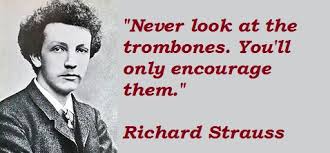
Richard Strauss was born June 11, 1864 in Munich, Germany. He died on September 8, 1949 in Garmisch-Partenkirchen, Germany. He was a German composer and conductor known for his intense emotionalism in his symphonic poems. He characterized himself as ‘composer of expression’ which is born out in his colorful orchestration. In his operas he employed Wagnerian principles of music drama, but in a more compact form.
Strauss was composing by the age of six, having received basic instruction from his father, a virtuoso horn player. This was, however, his only formal training. The elder Strauss instilled in his son a love of the classical composers, and his early works follow in their path. Strauss’ first symphony premiered when he was seventeen, his second (in New York) when he was twenty. By that time, Strauss had directed his energies toward conducting, and in 1885 he succeeded Hans von B?low as conductor of the orchestra in Meiningen. For the next forty years, he conducted orchestras in Munich, Weimar, Berlin and Vienna.
As a conductor, Strauss had a unique vantage point from which to study the workings of the orchestra. From this vantage point he developed a sense for orchestration that was unrivaled. He immediately put this sense to use in a series of orchestral pieces that he called “tone poems”, including Macbeth, Don Juan, Tod und Verklärung, Till Eulenspeigels lustige Streiche and Don Quixote. These works are intensely programmatic, and in the last two, Strauss elevated descriptive music to a level not approached since the techniques of text painting during the Renaissance. He also used his knowledge of orchestral techniques to produce a revised version of Hector Berlioz’s important orchestration treatise; this edition remains a standard to this day.
After the turn of the century, Strauss began to shift his focus to opera. With his principal librettist Hugo von Hofmannsthal, he created two forward-looking and shocking works: Salome, based on Oscar Wilde’s controversial play, and Elektra, Hoffmannsthal’s version of the classical Greek tragedy. In these works, the intense emotions and often lurid narrative elicited a more daring and demanding musical language full of extreme chromaticism and harsh timbres. But with his next opera, Der Rosenkavalier, Strauss seems to have left this aside, turning to a more focused, almost neoclassical approach in his later works. With this, Strauss settled into a comfortable place in German musical society, perhaps too comfortable, given his willingness to acquiesce to the artistic maneuverings of the rising Nazi regime. In the end, he broke with the Nazis on moral grounds, and died virtually penniless in the aftermath of the Second World War.
Musical Examples:
Don Quixote
Suite from Le Bourgoise gentilhomme, Op.60, Prelude
Also Sprach Zarathustra
One of Richard Strauss’ most popular works is Also Sprach Zarathustra since it was made popular in the 1968 Stanley Kubrick science-fiction movie 2001: A Space Odyssey.
Also sprach Zarathustra, Op. 30 (Thus Spoke Zarathustra or Thus Spake Zarathustra) is a tone poem by Richard Strauss, composed in 1896 and inspired by Friedrich Nietzsche’s philosophical treatise of the same name. The composer conducted its first performance on 27 November 1896 in Frankfurt. A typical performance lasts half an hour.
The work has been part of the classical repertoire since its first performance in 1896. The initial fanfare — entitled “Sunrise” in the composer’s program notes — became particularly well known to the general public due to its use in Stanley Kubrick’s 1968 film 2001: A Space Odyssey, and as the theme music of the Apollo program. The fanfare has also been used in many other productions.
The piece starts with a sustained double low C on the double basses, contrabassoon and organ. This transforms into the brass fanfare of the Introduction and introduces the “dawn” motif (from “Zarathustra’s Prologue”, the text of which is included in the printed score) that is common throughout the work: the motif includes three notes, in intervals of a fifth and octave, as C–G–C (known also as the Nature-motif). On its first appearance, the motif is a part of the first five notes of the natural overtone series: octave, octave and fifth, two octaves, two octaves and major third (played as part of a C major chord with the third doubled). The major third is immediately changed to a minor third, which is the first note played in the work (E flat) that is not part of the overtone series.
“Of Those in Backwaters” (or “Of the Forest Dwellers”) begins with cellos, double-basses and organ pedal before changing into a lyrical passage for the entire section. The next two sections, “Of the Great Yearning” and “Of Joys and Passions”, both introduce motifs that are more chromatic in nature.
“Of Science” features an unusual fugue beginning in the double-basses and cellos, which consists of all twelve notes of the chromatic scale. It is one of the very few sections in the orchestral literature where the basses must play a contra-b (lowest b on a piano). “The Convalescent” acts as a reprise of the original motif, and ends with the entire orchestra climaxing on a massive chord. “The Dance Song” features a very prominent violin solo throughout the section. The end of the “Song of the Night Wanderer” leaves the piece half resolved, with high flutes, piccolos and violins playing a B major chord, while the lower strings pluck a C.
One of the major compositional themes of the piece is the contrast between the keys of B major, representing humanity, and C major, representing the universe. Because B and C are adjacent notes, these keys are tonally dissimilar: B major uses five sharps, while C major has none.
Works:
Orchestral music, including symphonic poems: Macbeth (1888), Don Juan (1888-1889), Tod und Verklärung (Death and Transfiguration, 1889), Till Eulenspiegels lustige Streiche (Till Eulenspiegel’s Merry Pranks, 1895), Also sprach Zarathustra (Thus Spake Zarathustra, 1896), Don Quixote (1897) and Ein Heldenleben (A Hero’s Life, 1898); 2 symphonies (Domestic, 1903 and Alpine, 1915); 3 concertos (2 for horn, 1 for oboe)
15 operas, including Salome (1905), Elektra (1909), Der Rosenkavalier (The Cavalier of the Rose, 1911), Ariadne auf Naxos (1912) and Die schweigsame Frau (The Silent Woman, 1935)
Choral works (with and without orchestra), chamber works
Stravinsky
Igor Stravinsky lived between 1882 and 1971. He is considered to be a twentieth century composer. Both Stravinsky and Prokofiev were students of Rimsky-Korsakov. Stravinsky is a Russian composer renowned for his ballet scores beginning with Firebird, and Petrushka for the Ballets Russes in Paris.
Rite of Spring created a scandal because of its complex rhythms and polytonal harmonies. Despite this, Stravinsky’s music greatly influenced contemporary music. After residing in France he moved in 1939 to the U.S. where he continued writing music for the stage.
His most famous works are for the ballet. His two most popular are The Firebird (featured in Fantasia 2000), based on a legend of a prince capturing a Firebird and receiving a magic feather, and Petrushka, in which a lovable doll is brought to life.
Stravinsky’s The Rite of Spring was featured in the Walt Disney movie Fantasia.
Suk
Joseph Suk lived from 1875 until 1935. He was born in Krhaechaovice, Czech Republic and was a composer and violinist. He studied in Prague under Dvorák, whose daughter he married, and carried on the master’s Romantic tradition by his violin Fantaisie (1903), the symphonic poem Prague, and particularly by his deeply felt second symphony, Asrael (1905), in which he mourned the deaths of his master and of his wife. He was for 40 years a member of the Czech Quartet, and in 1922 became professor of composition in the Prague Conservatory.
Sullivan
Arthur (Seymour) Sullivan was an operetta composer. He teamed up with Sir William Gilbert to write H.M.S. Pinafore, The Mikado, Pirates of Penzance and others. A recent movie about Gilbert and Sullivan, Topsy-Turvey, won an Oscar in 2000.
von Suppé
Franz von Suppé was an Austrian composer of light operas, notably “Poet and Peasant”. He lived from 1819 until 1895.
Suzuki
Shin’ichi Suzuki was born in 1898 in Nagoya, Japan and is a very famous music teacher. He studied in Tokyo and Berlin, and with three of his brothers founded the Suzuki Quartet. His mass instruction methods of teaching young children to play the violin have been adopted in many countries, and adapted to other instruments.


 Be sure your student reads and listens to