Humoresques Op. 101 (B. 187), is a piano cycle by the Czech composer Antonín Dvořák, written during the summer of 1894. One writer says “the seventh Humoresque is probably the most famous small piano work ever written after Beethoven’s Für Elise.
Orchestra:
Ragtime:
Jazz with Wynton Marsalis on trumpet
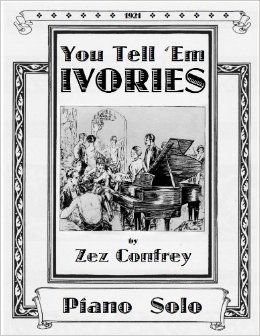
Zez Confrey gave this a makeover and included Way Down Upon the Swanee River:
Find the original Humoresque on IMSLP. The O’Connor Music Studio Lending Library has versions of Humoresque available at several levels and Confey’s Humorestless played in the video above.
Today’s piece is one of those that piano students often try to learn on their own – or a friend will teach them the first 9 notes. It’s usually played too fast and, often in the wrong octave, or the first couple notes are repeated too many times.
This is one of two pieces that are so often played incorrectly that they have the distinction of being banned from competition in Northern Virginia Piano Teacher competitions.
Stay tuned for the other one!
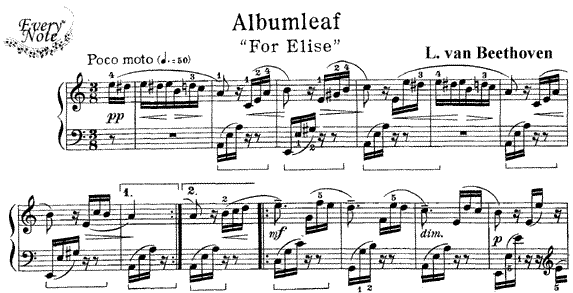
Für Elise was not published during Beethoven’s lifetime, having been discovered by Ludwig Nohl 40 years after the composer’s death. The identity of “Elise” is unknown.
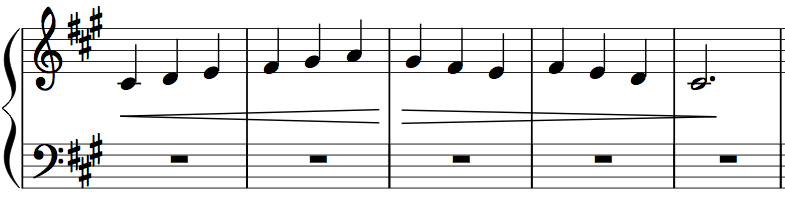
The very basic melody:
From Wunderkeys – The Elise Session
The actual beginning is a little more involved.
And, there’s more!
If you’d like to learn to play this piece correctly, find the sheet music at IMSLP, Beethoven: Exploring His Life and Music, and countless compilations of classical music available at the O’Connor Music Studio.
Follow along:
By Valentina Lisitsa:
Ragtime!
The Big Piano at FAO Schwartz in NYC:
Glass harp:
The Mystery Behind Für Elise:
Youtube has many, many more versions. Beethoven would probably go nuts!
‘The Magic Flute’ (German name: Die Zauberflöte) is Wolfgang Amadeus Mozart’s final opera, and it contains one of the most well-known arias in music. But what is ‘The Magic Flute’ all about?
An animated version:
Played as a piano/organ duo:
Arranged by Ferruccio Busoni for 2 pianos:
Why Mozart’s Magic Flute is a masterpiece – an introduction (The Royal Opera)
The accordion version:
Find this in Piano Pronto: Movement 3, Encore, Mozart: Exploring His Life and Music
The other day, a student and I were looking at a piece with a l-o-n-g crescendo marking on it and she wondered how long the longest crescendo was in any piece.
For those who don’t remember, crescendo means to get louder and decrescendo means to get softer. The sample below gets louder, then softer.
But I got a bit off-track. While my student was trying her hand (no pun intended!) and the long crescendo, I looked up how long the longest one might be and found…
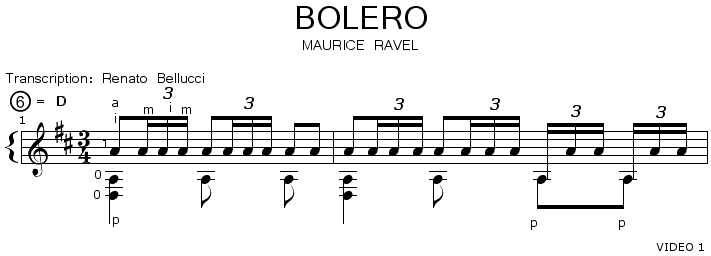
The longest crescendo in music is probably Ravel’s “Bolero,” which is, in fact, one long crescendo. Another very long crescendo occurs in the first movement of Shostakovich’s “Leningrad” Symphony. … “Rossini crescendos” are much shorter but quite effective. Jul 26, 2013
Most everyone, including my student, knows that this is possibly my least favorite piece of music but I still played a bit of it for her anyway.
Although not really a piano piece
From Russia
I like this flashmob version best
In a video that looks just like a segment of Disney’s Silly Symphonies or Fantasia, artist Simon Brethé animates the pentagram, making the notes of Ravel’s Bolero do feats ranging from charming a snake (the oboe) to serenading a girl at her window (the saxophone). At one point of the performance, one member of the string ensemble gets his bow tangled in the pentagram, a distraction that, subsequently, wreaks havoc in the entire orchestra.
This is a more advanced piece but I really like it. Some students may have heard this since it’s an alarm tone on my phone. My dog, Mimi, recognized this music as her signal to go out for a walk!
I just love Zez Confrey’s music. It’s not overplayed like some of Scott Joplin’s works but it’s just as much fun.
This is a piece I have often played in recitals and just for fun.
If any of my students are interested in tackling this piece, just let me know and we’ll start learning!
In 1921 Confrey wrote his novelty piano solo “Kitten on the Keys”, inspired by hearing his grandmother’s cat walk on the keyboard of her piano. It became a hit, and he went on to compose many other pieces in the genre.
Considered to be one of the fastest and most challenging of all “novelty” piano solos, “Dizzy Fingers” was composed in 1923. and was Confrey’s other biggest seller.
He left behind more than a hundred piano works, songs and miniature operas, and numerous piano rolls, music publications and sound recordings.
Not surprisingly, this piece is not available on Piano Maestro!
“This collection represents a cross-section of Confrey’s works and encompasses the broad range of his styles. Besides his famous 1920s novelty works (including Kitten on the Keys), there are many wonderful, lesser-known gems of remarkable quality included here from later in his career. Appearing for the first time in print are transcriptions of one of his disc recordings (Poor Buttermilk) and two of his player piano roll arrangements (My Pet and Humorestless). Many of Confrey’s later works have long been out of print and are included here for the first time in decades.”
What can I say about John Cage’s 4′33″? Pretty much anyone can play this anytime.
It consists of the pianist going to the piano, and not hitting any keys for four minutes and thirty-three seconds. (He uses a stopwatch to time this.) In other words, the entire piece consists of silence or rests.
On the one hand, as a musical piece, 4’33” leaves almost no room for the pianist’s interpretation: as long as he watches the stopwatch, he can’t play it too fast or too slow; he can’t hit the wrong keys; he can’t play it too loud, or too melodramatically, or too subduedly.
On the other hand, what you hear when you listen to 4’33” is more a matter of chance than with any other piece of music — nothing of what you hear is anything the composer wrote.
With orchestra and soloist
Next time you come to a lesson and haven’t practiced, just tell me you’re playing Cage’s 4’33”!
• 1638 ~ Nicolas Forme, Composer, died at the age of 71
• 1652 ~ Jacques Huyn, Composer, died at the age of 39
• 1690 ~ Giovanni Legrenzi, Italian Composer, died at the age of 63
• 1708 ~ Jacques Danican Philidor, Composer, died at the age of 51
• 1738 ~ Bonaventura Furlanetto, Composer
• 1796 ~ James S McLean patented his piano
• 1799 ~ Jacques-François-Fromental-Elie Halévy, French composer whose five-act grand opera La Juive (1835) was, with Giacomo Meyerbeer’s Les Huguenots, the prototype of early French grand opera.
• 1822 ~ Joseph Joachim Raff, German composer and teacher, greatly celebrated in his lifetime but nearly forgotten in the late 20th century.
• 1822 ~ Henry Wylde, Composer
• 1840 ~ Niccolò Paganini Composer and violinist died at the age of 57. He wrote six concertos for violin.
Read quotes by and about Paganini
More information about Paganini
• 1849 ~ “Blind” Tom Bethune, Pianist and composer
• 1878 ~ Isadora Duncan, Dancer
• 1878 ~ Carlo Marsili, Composer, died at the age of 49
• 1884 ~ Bax Brod, Composer
• 1888 ~ Louis Durey, Composer
• 1891 ~ Claude Adonai Champagne, Composer
• 1900 ~ Leopold Godowsky, Jr., American musician and photographic technician primarily known as a co-developer of Kodachrome film (1935).
• 1915 ~ Mario del Monaco, Italian opera singer famed for Verdi and Puccini
• 1928 ~ Thea Musgrave, Scottish composer, best known for her concertos operas and choral and other vocal works.
• 1929 ~ Donald Howard Keats, Composer
• 1930 ~ Eino Tamberg, Composer
• 1931 ~ Veroslav Neumann, Composer
• 1932 ~ Jeffrey Bernard, Singer
• 1935 ~ Ramsey Lewis, American jazz pianist, composer and bandleader
• 1935 ~ Elias Gistelinck, Flemish Composer
• 1939 ~ Don Williams, Country singer
• 1940 ~ Rene Koering, Composer
• 1942 ~ Priscilla Anne McLean, Composer
• 1947 ~ Liana Alexandra, Composer
• 1950 ~ Frank Sinatra made his TV debut as he appeared on NBC’s “Star-Spangled Review” with show biz legend, Bob Hope.
• 1957 ~ Siouxsie Sioux (Susan Dallion), Singer with Siouxsie and the Banshees
• 1957 ~ That’ll be the Day, by The Crickets and featuring Buddy Holly, was released by Brunswick Records. On September 14th, the tune became the most popular record in the U.S. It was the first hit for Holly and his group after two previous releases went nowhere on Decca Records in 1956.
• 1961 ~ Singer Johnny Cash turned TV actor. He appeared on the NBC drama, “The Deputy”.
• 1972 ~ “Applause” closed at the Palace Theater in New York City after 900 performances
• 1975 ~ Andre 3000. One half of the famous hip hop duo Outkast, Andre 3000 (born Andre Lauren Benjamin), began his music career in the 1990s. He and Big Boi (Antwan Andre Patton) formed the hip hop group Outkast in 1992 and released their debut album in 1994. Andre 3000 had continued success with Outkast, becoming one of the most well-regarded rappers of the 1990s and 2000s and has won 7 Grammys.
• 1983 ~ Arnoldus Christian Vlok van Wyk, Composer, died at the age of 67
• 1988 ~ Melvin J “Cy” Oliver, American jazz composer and orchestra leader died at the age of 77
• 1994 ~ Red Rodney, Bebop-trumpeter died at the age of 66
• 1995 ~ C W Stubblefield, Music Promoter died at the age of 64
• 1995 ~ Ulysses Simpson Kay, Composer, died at the age of 78
• 1996 ~ Albert “Pud” Brown, Clarinetist and saxophonist died at the age of 79
• 1996 ~ Ivan Sutton, Concert Promoter died at the age of 82
• 2017 ~ Gregg Allman, the soulful singer-songwriter and rock n’ blues pioneer who founded The Allman Brothers Band with his late brother, Duane, and composed such classics as “Midnight Rider,” “Melissa” and the epic concert jam “Whipping Post,” died at age 69
• 1813 ~ (Wilhelm) Richard Wagner, German composer
Read quotes by and about Wagner
More information about Wagner
Happy Birthday Wagner-Style
• 1820 ~ Alexander Ernst Fesca, Composer
• 1850 ~ Johann Schrammel, Composer
• 1852 ~ Emile Sauret, Composer
• 1865 ~ Enrique Morera, Composer
• 1879 ~ Eastwood Lane, Composer
• 1879 ~ Jean Emile Paul Cras, Composer
• 1884 ~ Alceo Toni, Composer
• 1885 ~ Julio Fonseca, Composer
• 1900 ~ Edwin S. Votey of Detroit, MI patented his pianola, a pneumatic piano player. The device could be attached to any piano. Batteries not included.
• 1914 ~ Sun Ra (Herman Blount), American jazz composer and keyboard player who led a free jazz big band known for its innovative instrumentation and the theatricality of its performances. He passed away in 1993.
• 1916 ~ Gordon Binkerd, Composer
• 1924 ~ Charles Aznavour, French chanteur and composer
• 1924 ~ Claude Andre Francois Ballif, French composer
• 1926 ~ Elaine Leighton, Drummer, played with Billie Holiday
• 1966 ~ Iva Davies (1955) Guitarist, singer with Icehouse
• 1958 ~ Wedding vows were taken by rock ’n’ roll star, Jerry Lee Lewis and his thirteen-year-old cousin, Myra.
• 1965 ~ The Beatles got their eighth consecutive number one hit as Ticket to Ride rode to the top of the singles list. The song topped the charts for one week and became their eighth consecutive number one hit.
• 1966 ~ Bruce Springsteen recorded his very first song at the age of 16, along with his band, The Castilles. It was titled, That’s What You’ll Get. The song was never released.
• 2003 ~ The final manuscript of Beethoven’s Ninth Symphony, which was annotated by the composer, sold at auction for $3.47 million.
Each year on May 22 we observe National Buy a Musical Instrument Day. The day is all about playing music. If you are a musician, it might be time for a new instrument. Maybe you can learn to play a second or third one. If you have never played an instrument before, National Buy A Musical Instrument Day might be the motivation you need to start.
Naturally, here at the O’Connor Music Studio, a piano, keyboard with weighted keys (and 88 of them!) or organ is recommended but this day is for all types of instruments and is for people of all ages. Grandpa can play his ukulele while the grandkids play the drums, trombone, and flute. Together they can all make terrific music!