Korobeiniki is a nineteenth-century Russian folk song that tells the story of a meeting between a peddler and a girl, describing their haggling over goods in a veiled metaphor for courtship.
Outside Russia, “Korobeiniki” is widely known as the Tetris theme.
Piano duet:
Orchestral version:
For Boomwhackers:
Vocal:
Ragtime:
Balalaika:
Two bassoons:
The Red Army Choir:
Korobeiniki/Tetris is available in Piano Maestro on the iPad and I have several levels of sheet music for anyone who is interested.
“Ode to Joy” was written in the summer of 1785 by German poet, playwright, and historian Friedrich Schiller and published the following year in Thalia. A slightly revised version appeared in 1808, changing two lines of the first and omitting the last stanza.
“Ode to Joy” is best known for its use by Ludwig van Beethoven in the final (fourth) movement of his Ninth Symphony, completed in 1824. This was Beethoven’s final symphony and lasts over an hour for the whole thing.
The entire final movement:
Beethoven’s text is not based entirely on Schiller’s poem, and introduces a few new sections. His melody (but not Schiller’s words) was adopted as the Anthem of Europe by the Council of Europe in 1972 and subsequently by the European Union.
If your student is in Wunderkeys, this is a classical pop piano solo based on Beethoven’s 9th Symphony. This Level 4 piano solo is from the book The Beethoven Sessions; a collection of 7 classical pop piano solos inspired by the music of Beethoven.
It is often called Joyful, Joyful We Adore Thee (You) in hymnbooks.
Find Ode to Joy in Piano Maestro, Prelude, Beethoven: Exploring His Life and Music and several hym books.
By now, you know I love flashmobs:
And Muppets (note the metronome going wild!):
And Barbershop:
An animated score:
Boomwhackers:
The Piano Guys combined Ode to Joy with Joy to the World for a new Christmas arrangement:
As the European Anthem:
And, finally Joyful, Joyful we Adore Thee by the Mormon Tabernacle Choir.
Do a search on youtube – lots and lots of people have played this famous Beethoven melody.
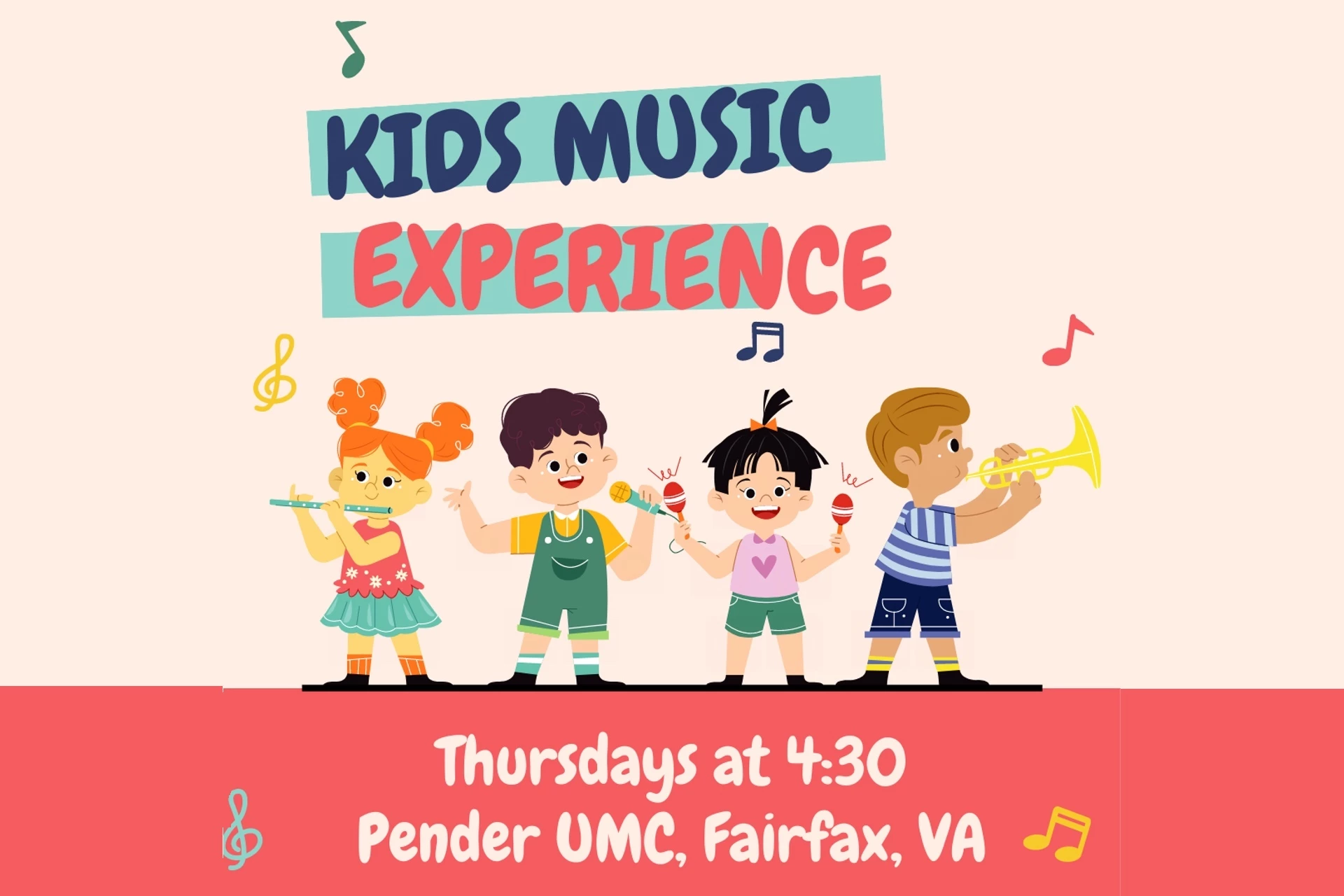
The Music Experience is a weekly 45 minute session for third through sixth grade children. Children can perform, read, compose, and experience music, no prior music knowledge necessary.
Cost is $25 for the first child and $15 for additional family members. POC: Jane McKee and Mary O’Connor.
Miss Jane has a BME in Music Education and has taught music and directed choirs for all ages. She sings, rings bells, plays piano and flute, and plays autoharp in the Pender Praise Band.
Miss Jane is presently a teacher for FCPS schools. She is looking forward to meeting you in our Music Experience!
Miss Mary has a BA in Music Education and has taught piano lessons for many years as well as directed handbell/chime choirs for children. She plays piano, sings, rings handbells, and plays in a recorder quartet. She has sung bass in a woman’s Barbershop Chorus.
Miss Mary is currently a private piano teacher and she’s very excited to meet you in our Music Experience!
Practice sessions will be held in the choir room and sanctuary.
The Music Experience is a weekly 45 minute session for third through sixth grade children. Children can perform, read, compose, and experience music, no prior music knowledge necessary.
Cost is $25 for the first child and $15 for additional family members. POC: Jane McKee and Mary O’Connor.
Miss Jane has a BME in Music Education and has taught music and directed choirs for all ages. She sings, rings bells, plays piano and flute, and plays autoharp in the Pender Praise Band.
Miss Jane is presently a teacher for FCPS schools. She is looking forward to meeting you in our Music Experience!
Miss Mary has a BA in Music Education and has taught piano lessons for many years as well as directed handbell/chime choirs for children. She plays piano, sings, rings handbells, and plays in a recorder quartet. She has sung bass in a woman’s Barbershop Chorus.
Miss Mary is currently a private piano teacher and she’s very excited to meet you in our Music Experience!
Practice sessions will be held in the choir room and sanctuary.
“Ode to Joy” was written in the summer of 1785 by German poet, playwright, and historian Friedrich Schiller and published the following year in Thalia. A slightly revised version appeared in 1808, changing two lines of the first and omitting the last stanza.
“Ode to Joy” is best known for its use by Ludwig van Beethoven in the final (fourth) movement of his Ninth Symphony, completed in 1824. This was Beethoven’s final symphony and lasts over an hour for the whole thing.
The entire final movement:
Beethoven’s text is not based entirely on Schiller’s poem, and introduces a few new sections. His melody (but not Schiller’s words) was adopted as the Anthem of Europe by the Council of Europe in 1972 and subsequently by the European Union.
It is often called Joyful, Joyful We Adore Thee (You) in hymnbooks.
Find Ode to Joy in Piano Maestro, Prelude, Beethoven: Exploring His Life and Music and several hym books.
By now, you know I love flashmobs:
And Muppets (note the metronome going wild!):
And Barbershop:
An animated score:
Boomwhackers:
The Piano Guys combined Ode to Joy with Joy to the World for a new Christmas arrangement:
As the European Anthem:
And, finally Joyful, Joyful we Adore Thee by the Mormon Tabernacle Choir.
Do a search on youtube – lots and lots of people have played this famous Beethoven melody.
Korobeiniki is a nineteenth-century Russian folk song that tells the story of a meeting between a peddler and a girl, describing their haggling over goods in a veiled metaphor for courtship.
Outside Russia, “Korobeiniki” is widely known as the Tetris theme.
Piano duet:
Orchestral version:
For Boomwhackers:
Vocal:
Ragtime:
Balalaika:
Two bassoons:
The Red Army Choir:
Korobeiniki/Tetris is available in Piano Maestro on the iPad and I have several levels of sheet music for anyone who is interested.
“Ode to Joy” was written in the summer of 1785 by German poet, playwright, and historian Friedrich Schiller and published the following year in Thalia. A slightly revised version appeared in 1808, changing two lines of the first and omitting the last stanza.
“Ode to Joy” is best known for its use by Ludwig van Beethoven in the final (fourth) movement of his Ninth Symphony, completed in 1824. This was Beethoven’s final symphony and lasts over an hour for the whole thing.
The entire final movement:
Beethoven’s text is not based entirely on Schiller’s poem, and introduces a few new sections. His melody (but not Schiller’s words) was adopted as the Anthem of Europe by the Council of Europe in 1972 and subsequently by the European Union.
It is often called Joyful, Joyful We Adore Thee (You) in hymbooks.
Find Ode to Joy in Piano Maestro, Prelude, Beethoven: Exploring His Life and Music and several hym books.
By now, you know I love flashmobs:
And Muppets (note the metronome going wild!):
And Barbershop:
An animated score:
Boomwhackers:
The Piano Guys combined Ode to Joy with Joy to the World for a new Christmas arrangement:
As the European Anthem:
And, finally Joyful, Joyful we Adore Thee by the Mormon Tabernacle Choir.
Do a search on youtube – lots and lots of people have played this famous Beethoven melody.
Korobeiniki is a nineteenth-century Russian folk song that tells the story of a meeting between a peddler and a girl, describing their haggling over goods in a veiled metaphor for courtship.
Outside Russia, “Korobeiniki” is widely known as the Tetris theme.
Orchestral version:
For Boomwhackers:
Vocal:
Ragtime:
Balalaika:
The Red Army Choir:
Korobeiniki/Tetris is available in Piano Maestro on the iPad and I have the sheet music for anyone who is interested.
“Ode to Joy” was written in the summer of 1785 by German poet, playwright, and historian Friedrich Schiller and published the following year in Thalia. A slightly revised version appeared in 1808, changing two lines of the first and omitting the last stanza.
“Ode to Joy” is best known for its use by Ludwig van Beethoven in the final (fourth) movement of his Ninth Symphony, completed in 1824. This was Beethoven’s final symphony and lasts over an hour for the whole thing.
The entire final movement:
Beethoven’s text is not based entirely on Schiller’s poem, and introduces a few new sections. His melody (but not Schiller’s words) was adopted as the Anthem of Europe by the Council of Europe in 1972 and subsequently by the European Union.
It is often called Joyful, Joyful We Adore Thee (You) in hymbooks.
Find Ode to Joy in Piano Maestro, Prelude, Beethoven: Exploring His Life and Music and several hym books.
By now, you know I love flashmobs:
And Muppets (note the metronome going wild!):
And Barbershop:
An animated score:
Boomwhackers:
The Piano Guys combined Ode to Joy with Joy to the World for a new Christmas arrangement:
As the European Anthem:
And, finally Joyful, Joyful we Adore Thee by the Mormon Tabernacle Choir.
Do a search on youtube – lots and lots of people have played this famous Beethoven melody.
Pender’s annual summer Music Camp will be held on July 6-10 from 12:30pm-3:30pm. Our theme this year is “The Amazing Grace Race.” Children in rising 2nd through rising 6th grade are invited to participate. Rising 7-12th graders who are interested in volunteering can also sign up online through the Pender UMC website.
The cost is $25 per child, $50 per family (siblings only).




 MaryO'Studio