Daily Listening Assignments ~ June 5, 2025

Happy Birthday is a song that I like to have each of my students learn at various levels appropriate to their level. When a friend or family member has a birthday, it’s great to be able to sit down and play.

It’s only been fairly recently that piano students could have this music in their books.

“Happy Birthday to You”, more commonly known as simply “Happy Birthday”, is a song that is traditionally sung to celebrate the anniversary of a person’s birth. According to the 1998 Guinness World Records, “Happy Birthday to You” is the most recognized song in the English language, followed by “For He’s a Jolly Good Fellow”.

The melody, or part you sing, of “Happy Birthday to You” comes from the song “Good Morning to All”, which has traditionally been attributed to American sisters Patty and Mildred J. Hill in 1893, although the claim that the sisters composed the tune is disputed.

Patty Hill was a kindergarten principal and her sister Mildred was a pianist and composer.  The sisters used “Good Morning to All” as a song that young children would find easy to sing.  The combination of melody and lyrics in “Happy Birthday to You” first appeared in print in 1912, and probably existed even earlier.

“Happy Birthday” in the style of Bach, Mozart, Beethoven, Mendelssohn, Chopin, Liszt, Dvorak, and Stravinsky.  Find the melody!

Lots of legal stuff below which you can skip…

None of the early appearances of the “Happy Birthday to You” lyrics included credits or copyright notices. The Summy Company registered a copyright in 1935, crediting authors Preston Ware Orem and Mrs. R. R. Forman. In 1988, Warner/Chappell Music purchased the company owning the copyright for US$25 million, with the value of “Happy Birthday” estimated at US$5 million. Based on the 1935 copyright registration, Warner claimed that the United States copyright will not expire until 2030, and that unauthorized public performances of the song are illegal unless royalties are paid to Warner. In one specific instance in February 2010, these royalties were said to amount to US$700. By one estimate, the song is the highest-earning single song in history, with estimated earnings since its creation of US$50 million.In the European Union, the copyright for the song expired on January 1, 2017.

The American copyright status of “Happy Birthday to You” began to draw more attention with the passage of the Sonny Bono Copyright Term Extension Act in 1998. When the U.S. Supreme Court upheld the Act in Eldred v. Ashcroft in 2003, Associate Justice Stephen Breyer specifically mentioned “Happy Birthday to You” in his dissenting opinion. American law professor Robert Brauneis, who extensively researched the song, concluded in 2010 that “It is almost certainly no longer under copyright.”

In 2013, based in large part on Brauneis’s research, Good Morning to You Productions, a company producing a documentary about “Good Morning to All”, sued Warner/Chappell for falsely claiming copyright to the song.  In September 2015, a federal judge declared that the Warner/Chappell copyright claim was invalid, ruling that the copyright registration applied only to a specific piano arrangement of the song, and not to its lyrics and melody.

In 2016, Warner/Chappell settled for US $14 million, and the court declared that “Happy Birthday to You” was in the public domain.

Legal stuff is finished and people can now sing and play “Happy Birthday to You” whenever and wherever they want.

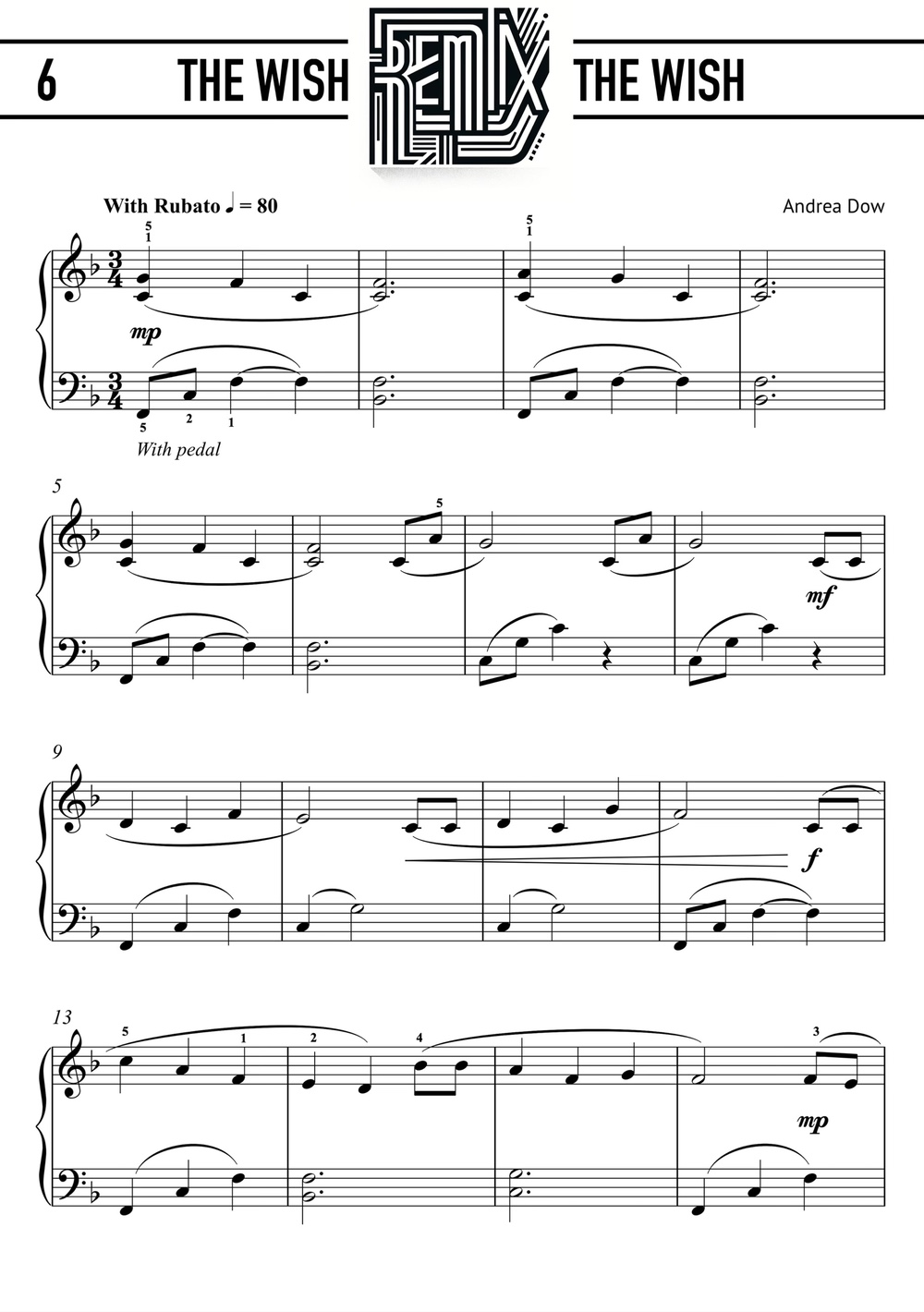
Students in Wunderkeys may play this version from Remix: Teen Hits from Kids Tunes
One of my all-time versions of Happy Birthday, in duet form – and I have the music if you want to tackle it.

Daily Listening Assignments ~ June 4, 2025

I’m sure many have you have learned Twinkle, Twinkle Little Star by now.  Did you know its’ the same melody as the ABC Song?  You know…

Don’t believe it? Sing them both in your head or out loud.

The French melody first appeared in 1761, and has been used for many children’s songs, such as “Twinkle, Twinkle, Little Star”, “Baa, Baa, Black Sheep” and the “Alphabet Song”.

This is one of the first pieces a student learns in piano methods, since it has them reach just a bit outside their accustomed hand position on the word “little”.

Twinkle

I try to remember to let students know that Wolfgang Amadeus Mozart composed a set of twelve variations on the theme “Ah, vous dirai-je, Maman” for the piano and it started as the same basic Twinkle tune.

The sheet music is available at the O’Connor Music Studio if you want to borrow it or download it here about 1/3 of the way down the page under “Scores”.

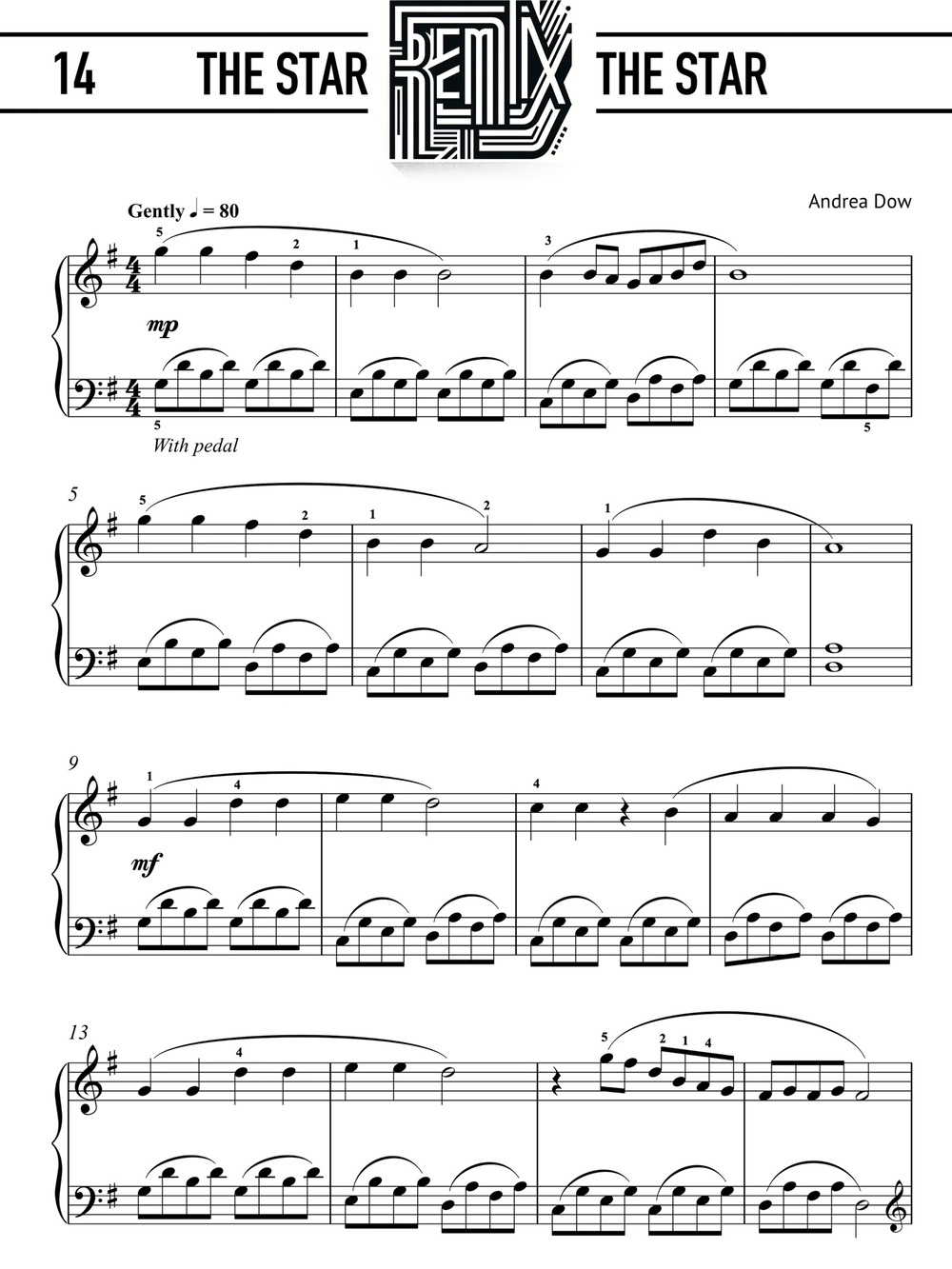
Students in Wunderkeys may play this version from Remix: Teen Hits from Kids Tunes:

I always enjoy these graphical scores.  Watch the colors as the melody gets more and more complex:

Who knew?  There’s an accordion version.

Have a great day!

Daily Listening Assignments ~ June 1, 2025

Today, we start with Spring from the Four Seasons by Vivaldi.  Many OCMS students have played this already in one of their Piano Pronto books.  It’s also available in Piano Maestro.

If you have it in your piano book, today would be a great day to review it. (HINT – there might be a quick review at your next lesson!)

Vivaldi was born in Venice, Italy, March 4, 1678 and spent most of his life there. His father taught him to play the violin, and the two would often perform together.

He taught at an orphanage for girls and wrote a lot of music for the girls to play. People came from miles around to hear Vivaldi’s talented students perform the beautiful music he had written.

Many people think Vivaldi was the best Italian composer of his time. He wrote concertos, operas, church music and many other compositions. In all, Antonio wrote over 500 concertos.

His most famous set of concertos is The Four Seasons which is a group of four violin concerti.  Each of which gives a musical expression to a season of the year. They were written about 1721 and were published in 1725 in Amsterdam.

Here’s a piano version similar to the one in Movement 1 but in a different key.

Students in Wunderkeys may get this version:

And the original with Itzhak Perlman playing and conducting!

Want to play a version of this but aren’t using these books? Just ask!

Daily Listening Assignments 2025

This summer, I’ve decided to add a new feature to piano lessons.  I know that many families travel during the summer months and it’s sometimes difficult to practice.

These daily assignments, June through August will help you and your students learn a bit more about the pieces they’re learning during the year – or maybe give ideas for something that they’d like to learn.

Each piece has a bit of composer info and several different interpretations, some of which are very humorous.  Some of the assignments appear in Piano Maestro so be sure to have that handy, if your student uses that.

Some days give hints that the assignment of the day may be played (or reviewed) at the next lesson so please be sure that your student takes note of that (no pun intended!)

Find them here, under Daily Listening Assignment starting June 1 at 9:00 am.

Have a safe and musical summer!

Today is National Buy a Musical Instrument Day

Piano 8


Each year on May 22 we observe National Buy a Musical Instrument Day.  The day is all about playing music.  If you are a musician, it might be time for a new instrument.  Maybe you can learn to play a second or third one.  If you have never played an instrument before, National Buy A Musical Instrument Day might be the motivation you need to start.

Naturally, here at the O’Connor Music Studio, a piano, keyboard with weighted keys (and 88 of them!) or organ is recommended but this day is for all types of instruments and is for people of all ages.  Grandpa can play his ukulele while the grandkids play the drums, trombone, and flute. Together they can all make terrific music!

Adapted from http://www.nationaldaycalendar.com/national-buy-a-musical-instrument-day-may-22/


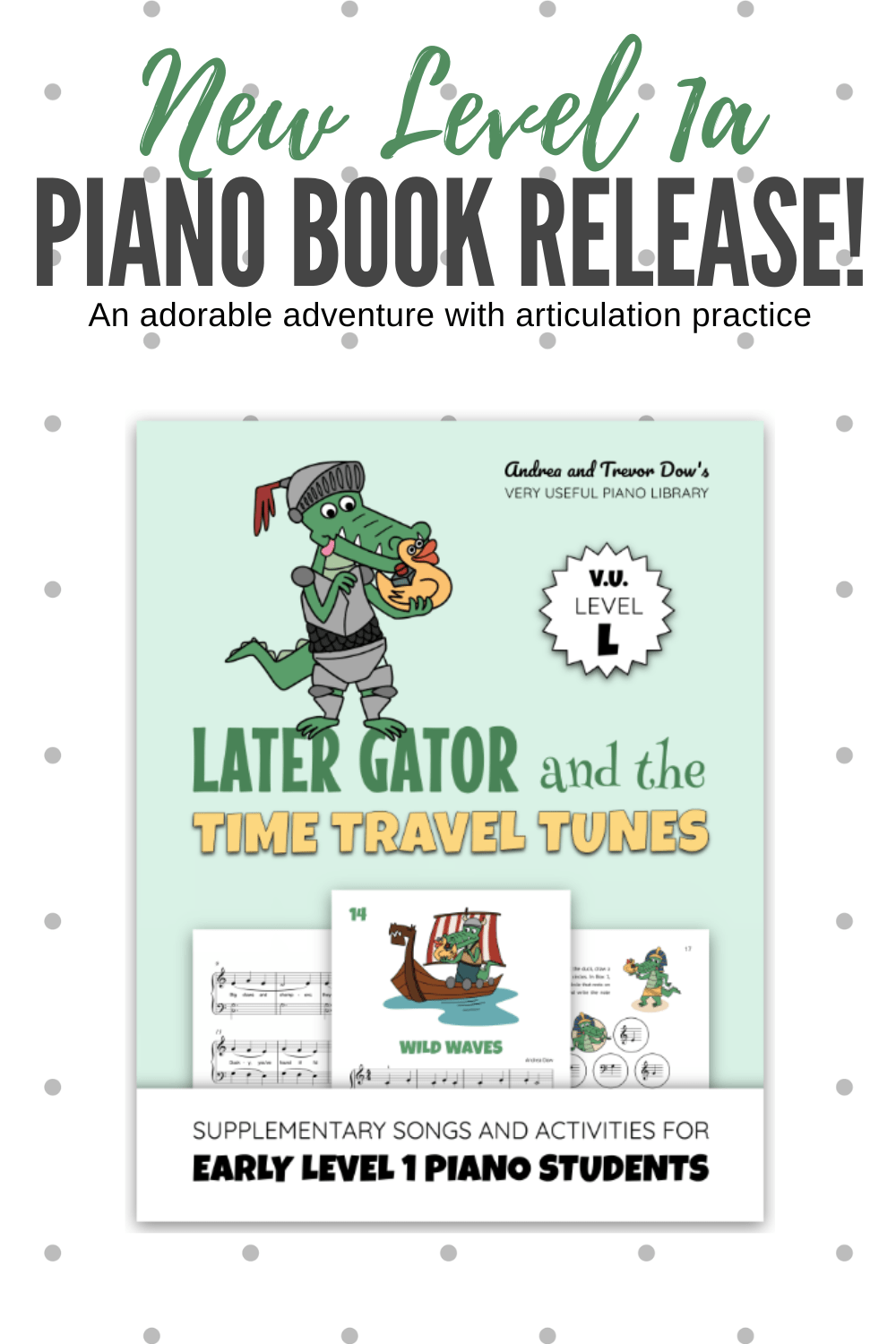
New Book: Later Gator and the Time Travel Tunes


An Early Level 1 Piano Book For End-Of-Year Success

In Later Gator and the Time Travel Tunes, a lonely alligator stumbles upon a squeaky duck and suddenly finds himself zipping through time on a wild and hilarious adventure.

From dinosaur stomping grounds to medieval castles, ancient Egyptian pyramids to Viking voyages, your students will tag along with Gator while reinforcing key piano skills:

  • C 5-finger scales
  • Hands-together coordination
  • Staccato and legato articulation
  • Introductory left-hand accompaniments

This early level 1 piano book is designed to keep lessons exciting while targeting the exact skills students need at this crucial stage.

It’s a story-driven approach that turns essential early learning into an irresistible experience — exactly what students need when attention spans are pulled in a dozen directions.

As always, O’Connor Music Studio students are provided with all books at no charge as appropriate.  Later Gator and the Time Travel Tunes is also available on amazon.

Why Bi-weekly Lessons Don’t Work

Every now and then, I get asked if I offer bi-weekly lessons. Theoretically, it makes sense that if you take a piano lesson every other week, you have half the number of trips into the studio, you have double the amount of time to practice, and you can save some money, right?

WRONG.

Aside from the fact that it is a scheduling nightmare for the teacher and studio, I’d like to outline a few reasons why (in most cases) bi-weekly lessons do not work.

1) **Playful Piano Planning!** 🎹✨
Okay, picture this: Your piano lesson gets zapped by life’s little hiccups – a sneeze fest, a car with an attitude, surprise overtime, the school bus doesn’t show up, or a snow-in. Our studio is all about the makeup magic, but hey, not everyone’s as cool with rescheduling. Miss a beat with last-minute changes and you could be on a piano-less streak for a whole month!

2) **Dodge the Oops-Did-It-Again Dilemma** 🎶😅
Usually, MrsO is there to catch those sneaky wrong notes before they move in and get cozy in your practice. Skip a week, and you might find those wrong notes have thrown a two-week house party in your head. Breaking up that party? Twice as tricky!

3) **The Practice Time Warp** ⏳🔄
Got two weeks until the next lesson? Time to double down on practice, right? But somehow, time turns sneaky, and suddenly it’s a mad dash to remember what you’re even supposed to be playing right before you’re back on the bench. Binge-practicing is like cramming for a test – and trust me, it’s not a chart-topper.

4) **Keep the Piano Momentum Rolling** 🚀🎹
Weekly lessons are like a rhythm – learn, practice, show off, repeat! Cut that down to bi-weekly, and you’re halving your chances to hit those high notes of progress over a year. Who wants to slow-mo their piano prowess?

5) **Stay Tuned In!** 📅🎼
When piano lessons are a regular event, they’re like your favorite weekly show – you can’t wait for the next episode. Stretch it out, and the storyline starts to get fuzzy. Keep the tempo up, and stay keyed into your music mission.

6) **No More Calendar Chaos!** 📆🎉
Juggling bi-weekly lessons can turn your schedule into a game of musical chairs, where everyone’s scrambling for a seat. Studios might do the time-tango, fitting in other students to fill the gaps, but it’s a dance best avoided if you want to keep the beat.

7) **Plan Like a Piano Prodigy** 📝🎶
Riding the bi-weekly wave? Get your planner game strong. Stay in sync with MrsO and don’t let any holidays or special days sneak up on you.

Teachers, on their part, turn into maestros of lesson planning, ensuring every note and nuance is clear for the two-week solo ahead. They’ll balance the scales perfectly so you won’t be yawning or yelping in practice frustration.

**And If You’re Still All for Bi-Weekly:** 🌟👇
– Master the art of organization. Sync those calendars with your studio like a pro.
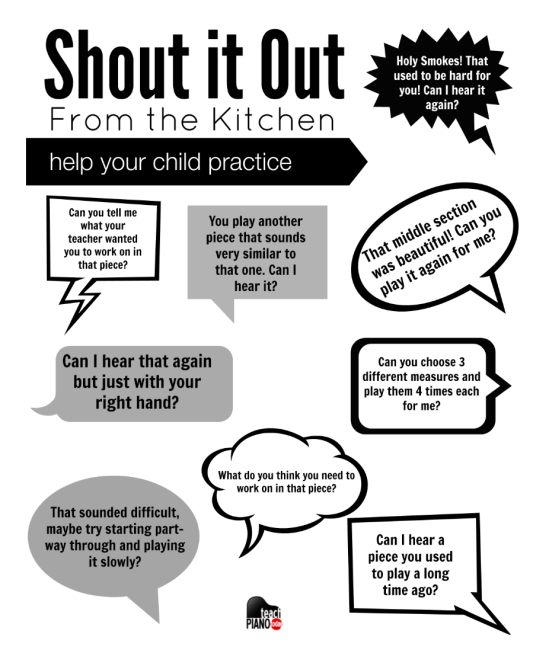
– Treat practice like your favorite habit. Daily doses, no matter the next lesson date.
– Scribble down the wisdom your teacher drops – and drop into practice pronto. OR, check your lesson notes in your Practice Portal.
– Post-lesson practice is your golden hour. What you play today, you slay tomorrow!

So, whether it’s a bi-weekly fiesta or a weekly wonder, keep those keys singing and the fun flinging!

All About Music Theory

theory


As all my students know, I teach theory with all piano and organ lessons.  Sometimes, it’s from a theory book that matches a lesson book, sometimes on the fly on an “as needed” basis.

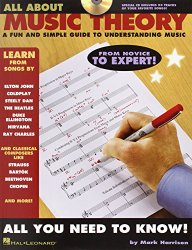
This book looks like it would be interesting to use as a review or to look ahead and see what’s coming.  I have just ordered a copy for the studio if you want to check it out at the next lesson.

From amazon.com:

 If you wish there was a fun and engaging way to help you understand the fundamentals of music, then this is it. Whether it’s learning to read music, understanding chords and scales, musical forms, or improvising and composing, this enjoyable guide will help you to finally start understanding the structure and design of music.

This fun-filled, easy-to-use guide includes:
* Music notation
* Scales and modes
* Melody harmonization and counterpoint
* Chord progressions
* Song form and structure

Listen and learn with the CD that has 90 tracks, including over 50 popular songs such as:
* Beauty and the Beast
* Candle in the Wind
* Imagine
* In the Air Tonight
* Killing Me Softly with His Song
* Let It Be
* Message in a Bottle
* Misty
* Satin Doll
* Take the ‘A’ Train
* Unchained Melody
* What’d I Say
* and more!

maryOivoryandroses