‘The Magic Flute’ (German name: Die Zauberflöte) is Wolfgang Amadeus Mozart’s final opera, and it contains one of the most well-known arias in music. But what is ‘The Magic Flute’ all about?
An animated version:
Played as a piano/organ duo:
Arranged by Ferruccio Busoni for 2 pianos:
Why Mozart’s Magic Flute is a masterpiece – an introduction (The Royal Opera)
The accordion version:
Find this in Piano Pronto: Movement 3, Encore, Mozart: Exploring His Life and Music
Today, we’ll be listening to the end of the William Tell Overture by Gioachino Rossini. This piece, originally the overture to an opera, has been arranged for piano and is in several method books, including Piano Pronto Movements 1 and 2. It’s also in Bastien Book 4 and Piano Maestro.
The original story
Maybe your grandparents watched the original Lone Ranger
Or you saw the newer Lone Ranger with Johnny Depp
Here’s the entire William Tell Overture played by an orchestra
Piano Solo
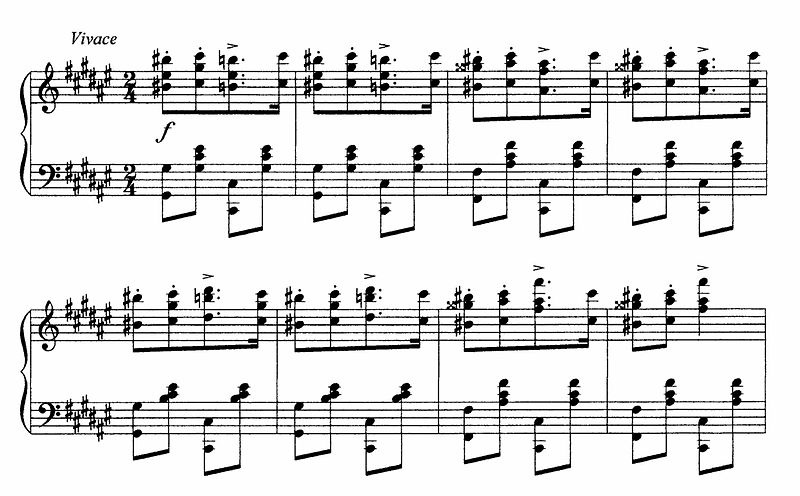
Franz Liszt made a really hard version for piano solo. See if you can follow along!
Piano Duet (1 piano, 4 hands)
Piano Duet arranged by Louis Moreau Gottschalk
Piano Duo (2 pianos, 8 hands)
Piano Quartet (4 pianos, 16 hands)
For pipe organ
For synthesizer
And then things get nuts with cartoons. Lots of cartoons used this music. Here are Mickey Mouse and friends
And Spike Jones
Handbells…
Poor Rossini – I think he’d have a fit if he knew how is music was being used.
Today, we start with Spring from the Four Seasons by Vivaldi. Many OCMS students have played this already in one of their Piano Pronto books. It’s also available in Piano Maestro.
If you have it in your piano book, today would be a great day to review it. (HINT – there might be a quick review at your next lesson!)
Vivaldi was born in Venice, Italy, March 4, 1678 and spent most of his life there. His father taught him to play the violin, and the two would often perform together.
He taught at an orphanage for girls and wrote a lot of music for the girls to play. People came from miles around to hear Vivaldi’s talented students perform the beautiful music he had written.
Many people think Vivaldi was the best Italian composer of his time. He wrote concertos, operas, church music and many other compositions. In all, Antonio wrote over 500 concertos.
His most famous set of concertos is The Four Seasons which is a group of four violin concerti. Each of which gives a musical expression to a season of the year. They were written about 1721 and were published in 1725 in Amsterdam.
Here’s a piano version similar to the one in Movement 1 but in a different key.
And the original with Itzhak Perlman playing and conducting!
Want to play a version of this but aren’t using these books? Just ask!
Student books in 5 different categories are available now in both digital and hardcopy. There is now “To the Lake”, “Outdoor Adventure”, “To the Farm”, “Country Carnival” and two levels of “Rockstar Rally”.
Ideal for students ages 4 and up.
On the staff from the start
Music is a mix of familiar tunes and original pieces
Multi-key approach
18 songs that can be learned by note or rote
Clean easy-to-follow pages (great for special needs students!)
Two levels of Roadtrip! are currently available in Piano Maestro.
Register for Roadtrip! Students (ages 4-5) are scheduled for half-hour lessons with their parents present.
Hungarian Rhapsody No. 2, S.244/2, is the second in a set of 19 Hungarian Rhapsodies by composer Franz Liszt, and is by far the most famous of the set. Few other piano solos have achieved such widespread popularity, offering the pianist the opportunity to reveal exceptional skill as a virtuoso, while providing the listener with an immediate and irresistible musical appeal.
In both the original piano solo form and in the orchestrated version this composition has enjoyed widespread use in animated cartoons. Its themes have also served as the basis of several popular songs.
It is probable that you have heard this piece of music somewhere at one time or another because it is perhaps the most prominent piece of classical (romantic, actually) music featured in animated cartoons across the years.
Now, let the anvils fall and dynamite explode!
And, in real life, Valentina Lisitsa plays Liszt’s Hungarian Rhapsody No. 2
This piece is available in Piano Pronto Movement 5 and several anthologies of classical music.
Today’s piece is Solfeggietto by Carl Philipp Emanuel Bach (aka C.P.E. Bach). The piece is commonly assigned to piano students and appears in many books because it fosters the playing of an even sixteenth note rhythm by alternating hands.
Bass guitar
Clarinet starting about a minute in:
On harp
Find it on IMSLP, in several anthologies of music at the O’Connor Music Studio, in Piano Pronto: Encore
Today’s Listening Assignment is Country Gardens by Percy Grainger.
“Country Gardens” is an English folk tune collected by Cecil Sharp from the playing of William Kimber and arranged for piano in 1918 by Percy Grainger.
The tune and the Grainger arrangement for piano and orchestra is a favorite with school orchestras, and other performances of the work include morris dancing.
A piano version:
Piano duet (four-hands)
Clarinet solo
Orchestra
From the Muppets
And, how a Morris Dance is done:
Find Country Gardens on IMSLP, Piano Maestro (under the method book section) and Piano Pronto: Movement 2
Today, we’ll listen to the Symphony No. 5 in C minor, Op. 67, of Ludwig van Beethoven. It was written between 1804–1808. It is one of the best-known compositions in classical music, and one of the most frequently played symphonies. As is typical of symphonies in the classical period, Beethoven’s Fifth Symphony is in four movements.
I’m sure you’ve heard the first 8 notes before…
Since it was written for orchestra, each instrument has its own line:
A piano version, transcribed by Liszt
From Disney’s Fantasia 2000:
Pink learns to play the violin, and interrupts a performance of Beethoven’s Fifth Symphony with the Pink Panther theme played on various instruments.
Beethoven’s Wig:
Arrangements of Beethoven’s Fifth Symphony can be found in Piano Maestro and lots of books including Piano Pronto’s Movement 2, Movement 5 (Victory Theme) and Beethoven: Exploring His Life and Music.
Johann Sebastian Bach’s towering monument of organ music, with its deep sense of foreboding, will forever be associated with Halloween.
Get a free copy of the sheet music at IMSLP or borrow a copy from the O’Connor Music Studio. I have this arranged for organ, piano, duet, 2-piano, simplified…
It’s also available in Piano Maestro, Piano Pronto Encore and Coda
Today is a great day for patriotic music and there’s nothing better than John Philip Sousa’sStars and Stripes Forever
A part of every Fourth of July program at the Esplanade in Boston involves a giant American flag unfurling from the ceiling during the Stars and Stripes. Can you find it?
Piano arrangement by Vladimir Horowitz:
With Horowitz playing:
Marching band:
The Muppets version of Stars and Stripes forever
The animated graphical score:
The Band of the Grenadier Guards
The same melody can be heard with these words:
John Philip Sousa’s Stars and Stripes Forever is never part of a regular circus program. It is reserved for emergency use – sometimes called the “Disaster March”. If a major problem happens — an animal gets loose, a high wind threatens the tent, or a fire breaks out — the band plays the march as a warning signal to every worker on the circus lot that something is wrong.
Find piano arrangements of the Stars and Stripes Forever in Movement 2
Closing out today, enjoy The Year 1812, Festival Overture in E♭ major, Op. 49, popularly known as the 1812 Overture by Peter Ilyich Tchaikovsky






 MaryO'Studio