

Category Archives: Students
Student Schedule Change!
I WILL be teaching next Monday, March 30 (even though it’s Fairfax County School break) if you can come.
I WILL NOT be teaching Monday, April 6 instead.
A Day in the Life of a Piano Teacher

Four students.
The Model Student and the Bored Teenage Student:
The Can’t-Stop-Playing-Even-When-the-Teacher-Is-Talking Student and the Whiny Student:
Piano Pronto
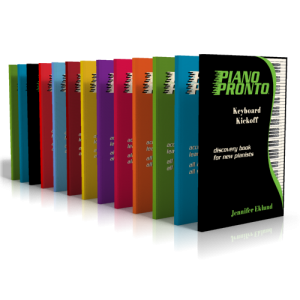
Some of you have noticed that I am switching your students (or yourself!) over to Piano Pronto and may have wondered why.
It was one of the first “method book series” to be integrated into Piano Maestro, so some of the songs have already been worked on using this iPad app.
I am in a Facebook group with the author/composer and many other participants have said that once their students have started in Piano Pronto, the students “forget” the other books at home or in the music bag.
So, a simple experiment was started here and the same thing happened. Only the Piano Pronto book (Keyboard Kickoff) came out of the bag.
Then, another student got hooked, and another…
Even the young boys seem to love the duets, which are excellent at helping with counting and listening to other musicians.
A minor point but one that makes life easier for the teacher. All books are $10.00 (plus shipping) Other method books have varying prices in hard to find locations, some hidden in codes on the back.
Piano Pronto books can be ordered online at https://www.pianopronto.com/ and they are available at our local Music and Arts store in Oakton. If something is needed fast, digital copies are available to print (or add to the iPad)
If you would like to look through any of the books, just ask!
From the composer, Jennifer Eklund, on Facebook:
Let me give you my fast 5 “things that makes us different from everyone else”:
#1 – On the staff reading day one (I take what I call a “total immersion” approach to note-reading/learning – watch the webinar for the full scoop)
#2 – Aurally pleasing music from very early on. I challenge you to find better and/or more consistently solid arranging in another method series. I don’t wait 2 years to introduce 8th notes. The tunes used in the series are strong and familiar and therefore we can get to more of the fundamentals earlier in the lesson process. Students practice with confidence at home because they recognize the melodies and therefore progress faster.
#3 – All-in-one integrated books (i.e. there aren’t 4 separate books per level the most you ever need is the method and maybe one supplement book)
#4 – The material is age and gender neutral. Clean layout with no illustrations to distract.
#5 – We start teaching how to *effectively* practice from the get-go with our “Pronto Prep” sections that pull out the difficult portions of pieces *before* a student learns the piece.
Other less important stuff:
#6 – The supplements are rooted in my “pop/jazz” background so while the method books are very “classically-based” the supplements are full of pop-style stuff that really creates well-rounded students
#7 – I challenge you to find more varied/interesting teacher duet parts.
#8 – I’m actively writing/creating new items constantly. I really listen to my customers and am writing to suit the needs of the market. If you need something and I don’t have it odds are I’ll probably end up filling your request.
#9 – I stay out of your way as a teacher. The material is extremely flexible. I wanted to give you a solid curriculum that is paced thoughtfully and you can augment the series with all the tools available in your toolbox. You will not feel restricted in any way by the material.
#10 – You can SEE and HEAR everything before you buy. There is NO guesswork involved with shopping with Piano Pronto.
Yamaha Piano Factory Tour
An insight into the Yamaha factory in Japan where a large range of pianos are hand crafted and completed to be ready for sale.
The grand piano in the O’Connor Music Studio is a Yamaha. I have had it for many years and it has served me and my students well.
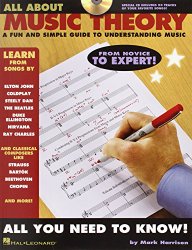
All About Music Theory: A Fun and Simple Guide to Understanding Music
As all my students know, I teach theory with all piano and organ lessons. Sometimes, it’s from a theory book that matches a lesson book, sometimes on the fly on an “as needed” basis.
This book looks like it would be interesting to use as a review or to look ahead and see what’s coming. I have just ordered a copy for the studio if you want to check it out at the next lesson.
From amazon.com:
If you wish there was a fun and engaging way to help you understand the fundamentals of music, then this is it. Whether it’s learning to read music, understanding chords and scales, musical forms, or improvising and composing, this enjoyable guide will help you to finally start understanding the structure and design of music.
This fun-filled, easy-to-use guide includes:
* Music notation
* Scales and modes
* Melody harmonization and counterpoint
* Chord progressions
* Song form and structureListen and learn with the CD that has 90 tracks, including over 50 popular songs such as:
* Beauty and the Beast
* Candle in the Wind
* Imagine
* In the Air Tonight
* Killing Me Softly with His Song
* Let It Be
* Message in a Bottle
* Misty
* Satin Doll
* Take the ‘A’ Train
* Unchained Melody
* What’d I Say
* and more!

What’s better than one piano? Eight of them at University of Akron MonsterPianos! concert – Local – Ohio

One piano is grand.
Eight being played in unison?
Well, that’s much, much grander.
The University of Akron School of Music hosted its sixth MonsterPianos! concert Sunday at E.J. Thomas Hall.
The special show featured eight grand pianos arranged in a semicircle, 39 pianists dressed in tuxedos and black gowns — not all playing at the same time, mind you — a conductor, and a giant video screen broadcasting all the action.
“It’s an adventure,” admitted conductor Galen Karriker, UA director of bands and associate professor of music.
It’s also immensely popular in the community, as evidenced by the audience of nearly 1,300 people.
UA music professor Philip Thomson founded MonsterPianos! in 2006, borrowing the concept from the late pianist Eugene List.
The concert, organized by Thomson and fellow faculty member Mayumi Kikuchi, is a treat for the musicians as well as the audience, because it’s rare to have so many pianists playing together at the same time.
The piano is typically a solo instrument, after all, and pianists aren’t used to watching a conductor for direction.
The concert poses several challenges for the musicians.
One of the biggest is just the fact that they aren’t used to playing together as a group. They had practiced only six times before the final dress rehearsal Sunday.
Another challenge is that pianists are familiar with hearing themselves play. With so many other pianos, the sound blends together — of course, it’d be weird if it didn’t.
“You have to trust your eyes and not your ears,” said Ann Usher, UA professor of music and director of the School of Music, who performed at the event.
The concert, which lasted about an hour and a half, included Valse Brilliante by Moritz Moszkowski, Rondo a capriccio by Ludwig van Beethoven and the Battle Hymn of the Republic.
There also were some moments of levity such as when Zippy, the UA kangaroo mascot, led a piano-arrangement of the school fight song Win For Akron.
The concert featured faculty, students, alumni and invited guests. Some of those folks traveled from as far away as Massachusetts, Pennsylvania, New York and Texas just to perform.
One of the guests was Juliette Streeter, 14, of Akron, a student at the Miller South School for the Visual and Performing Arts.
She was excited to be chosen to participate.
“It’s not what I’m used to,” Streeter said. “It’s very fun getting used to all the different people and different styles and the ways they play.”
Karriker, who has conducted all six of the MonsterPianos!, said the concert sets UA apart.
“It truly makes us distinctive as far as a School of Music to have this kind of event,” he said. “There’s a lot of folks who love piano music in this community and they are fascinated by seeing that many pianos on stage and hearing what it sounds like.”
Icy Weather and Piano Lessons
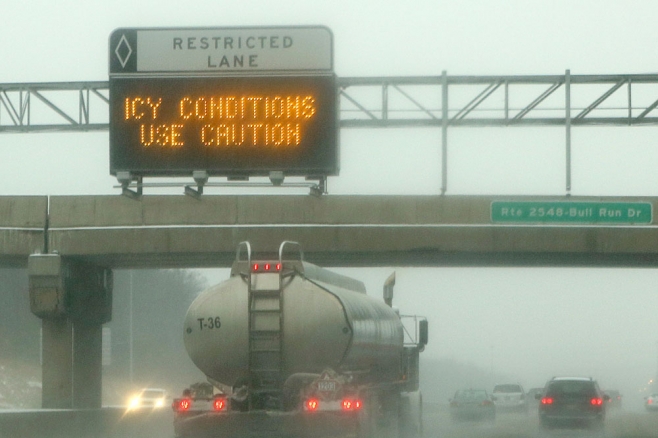
Fairfax County has just closed school again, so, technically, I’m not teaching. But it’s been too many Mondays off.
So, I leave it up to you if you want to come for lessons today or not.
Please let me know if you intend to be here today – or not.
Thanks!
My husband was out last night and said that the roads were ok but our driveway was icy. He used the last of our salt but didn’t know if it would be melted or not.
Sooner or later there WILL be another Monday piano lesson, I hope.
Stay warm, dry and keep practicing.

Behind the Scenes: Chinese New Years songs for Piano Maestro
Musical director Yigal Kaminka and our music wizard Yaniv Hefetz gave us a peek into how they chose the Chinese New Year songs.
A little behind the scenes look, for our amazing community of teachers!
Scales and Arpeggios

PDF Article on Scales and Arpeggios
In music, a scale is any set of musical notes ordered by fundamental frequency or pitch.
An arpeggio (it. /arˈpeddʒo/) is a musical technique where notes in a chord are played or sung in sequence, one after the other, rather than being played together like a chord. This word comes from the Italian word “arpeggiare”, which means “to play on a harp”. An alternative translation of this term is “broken chord”.

