Why Bi-weekly Lessons Don’t Work

Every now and then, I get asked if I offer bi-weekly lessons. Theoretically, it makes sense that if you take a piano lesson every other week, you have half the number of trips into the studio, you have double the amount of time to practice, and you can save some money, right?

WRONG.

Aside from the fact that it is a scheduling nightmare for the teacher and studio, I’d like to outline a few reasons why (in most cases) bi-weekly lessons do not work.

1) **Playful Piano Planning!** 🎹✨
Okay, picture this: Your piano lesson gets zapped by life’s little hiccups – a sneeze fest, a car with an attitude, surprise overtime, the school bus doesn’t show up, or a snow-in. Our studio is all about the makeup magic, but hey, not everyone’s as cool with rescheduling. Miss a beat with last-minute changes and you could be on a piano-less streak for a whole month!

2) **Dodge the Oops-Did-It-Again Dilemma** 🎶😅
Usually, MrsO is there to catch those sneaky wrong notes before they move in and get cozy in your practice. Skip a week, and you might find those wrong notes have thrown a two-week house party in your head. Breaking up that party? Twice as tricky!

3) **The Practice Time Warp** ⏳🔄
Got two weeks until the next lesson? Time to double down on practice, right? But somehow, time turns sneaky, and suddenly it’s a mad dash to remember what you’re even supposed to be playing right before you’re back on the bench. Binge-practicing is like cramming for a test – and trust me, it’s not a chart-topper.

4) **Keep the Piano Momentum Rolling** 🚀🎹
Weekly lessons are like a rhythm – learn, practice, show off, repeat! Cut that down to bi-weekly, and you’re halving your chances to hit those high notes of progress over a year. Who wants to slow-mo their piano prowess?

5) **Stay Tuned In!** 📅🎼
When piano lessons are a regular event, they’re like your favorite weekly show – you can’t wait for the next episode. Stretch it out, and the storyline starts to get fuzzy. Keep the tempo up, and stay keyed into your music mission.

6) **No More Calendar Chaos!** 📆🎉
Juggling bi-weekly lessons can turn your schedule into a game of musical chairs, where everyone’s scrambling for a seat. Studios might do the time-tango, fitting in other students to fill the gaps, but it’s a dance best avoided if you want to keep the beat.

7) **Plan Like a Piano Prodigy** 📝🎶
Riding the bi-weekly wave? Get your planner game strong. Stay in sync with MrsO and don’t let any holidays or special days sneak up on you.

Teachers, on their part, turn into maestros of lesson planning, ensuring every note and nuance is clear for the two-week solo ahead. They’ll balance the scales perfectly so you won’t be yawning or yelping in practice frustration.

**And If You’re Still All for Bi-Weekly:** 🌟👇
– Master the art of organization. Sync those calendars with your studio like a pro.
– Treat practice like your favorite habit. Daily doses, no matter the next lesson date.
– Scribble down the wisdom your teacher drops – and drop into practice pronto. OR, check your lesson notes in your Practice Portal.
– Post-lesson practice is your golden hour. What you play today, you slay tomorrow!

So, whether it’s a bi-weekly fiesta or a weekly wonder, keep those keys singing and the fun flinging!

Is Your Tune Piano in Tune?

piano-tuning

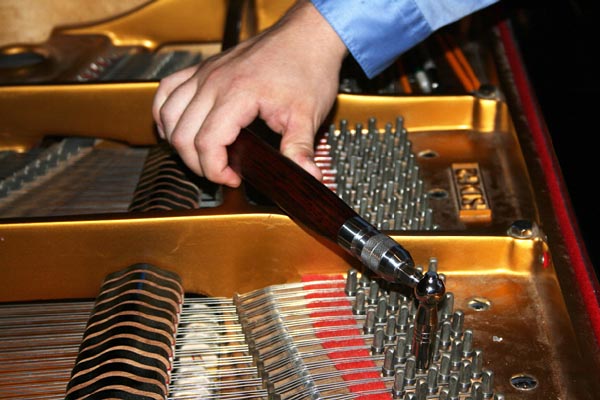
When it comes to tuning, every piano is different, even two pianos of the same style and make are different, and the humidity of the room makes a big difference, he said.

High humidity causes the sound board to swell, stretching the strings and causing the pitch to go sharp, while low humidity has the opposite effect.

In Minnesota, humidity can easily range from 80 percent in the summertime to 10-15 percent in the winter, if the home doesn’t have a humidifier. Wood-heated homes tend to be especially dry, he said.

“Pianos like it between 40 and 50 percent humidity in the house,” he said.

Even places that are supposedly “climate-controlled,” aren’t always. The heat might get turned down substantially evenings and weekends, for example.

A new piano needs a few weeks to settle into its new home before tuning, Fry said.

“If they get a new piano, generally they call us the day before it gets in the house,” he said. “It should sit in the house a couple weeks just to acclimatize it to its new surroundings … brand new pianos stretch for a while. They go out of tune quicker. The wire stretches and they settle into themselves.”

Some people think they have to let a new, or recently moved older piano, sit six months or a year before it gets tuned. That’s not true, Fry said, but it does need a few weeks.

He recommends that pianos be tuned at least once a year (he tunes his own piano once a year, even though he no longer gives lessons) and the busiest time for him is before the holidays — September through December.

“Piano-tuning is something people can put off,” he said. “We noticed a real drop in tuning when gas got over $3 a gallon. I didn’t think it would make that much of a difference, but it did.”

Fry said he is looking for some kind of work to do in the summertime when his other businesses are slow.

He doesn’t give piano or guitar lessons anymore, but does enjoy tuning all types of pianos.

“It takes me a couple of hours. I have time,” Fry said. “I’m going to do the job that I like to do, and do it right.”

Read the entire article at Keeping pianos, life in tune | Detroit Lakes Online.

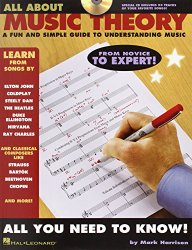
All About Music Theory

theory


As all my students know, I teach theory with all piano and organ lessons.  Sometimes, it’s from a theory book that matches a lesson book, sometimes on the fly on an “as needed” basis.

This book looks like it would be interesting to use as a review or to look ahead and see what’s coming.  I have just ordered a copy for the studio if you want to check it out at the next lesson.

From amazon.com:

 If you wish there was a fun and engaging way to help you understand the fundamentals of music, then this is it. Whether it’s learning to read music, understanding chords and scales, musical forms, or improvising and composing, this enjoyable guide will help you to finally start understanding the structure and design of music.

This fun-filled, easy-to-use guide includes:
* Music notation
* Scales and modes
* Melody harmonization and counterpoint
* Chord progressions
* Song form and structure

Listen and learn with the CD that has 90 tracks, including over 50 popular songs such as:
* Beauty and the Beast
* Candle in the Wind
* Imagine
* In the Air Tonight
* Killing Me Softly with His Song
* Let It Be
* Message in a Bottle
* Misty
* Satin Doll
* Take the ‘A’ Train
* Unchained Melody
* What’d I Say
* and more!

maryOivoryandroses

Piano Maestro Parent’s Guide

Piano Mania


It will be fun watching your child improve their piano skills all while having fun using Piano Maestro in lessons each week!

As your child’s teacher (or YOUR teacher!), I’m looking forward to seeing the progress they will make when they start using it at home each day. This guide will help you understand how this app will benefit your child and how to get it set up on your own iPad.

Overview
What is Piano Maestro?

Piano Maestro is the ultimate piano practice tool that will have students quickly playing their favorite classical, pop, rock, TV and video game songs and themes. It is available in the App Store and works on the iPad.

What skills does it improve?
• Note reading
• Sight reading
• Rhythm
• Inner pulse
• Confidence

What makes it so fun?
• Upbeat background tracks
• Stunning graphics
• Instant rewards and feedback
• Satisfaction of playing REAL music

It works with an acoustic piano?

Yes! Your child practices on your real acoustic or digital piano. Piano Maestro listens from the iPad’s built-in microphone. No wires needed.

I’m already paying for lessons. What value does this add?

Sometimes I wish I could be there with your child to encourage them to keep practicing daily. I’m sure it’s not always easy, as unforeseen challenges will arise.

Since our time each week is just too short, this app will give me eyes on the ground and it will keep them practicing longer and improving more quickly.

How will it be used in lessons?

I will spend a few minutes of each lesson helping your child master a couple of new songs all while having fun! I will also teach them how to use the practice options at home.

At the end of the lesson, we will choose Home Challenge assignments within the app that will show up in your account at home. I’ll get updates when progress is made.

Getting Started
Wow, this sounds awesome. Now, how do I get started?

1) Download Piano Maestro on your iPad from the AppStore
2) Create a JoyTunes account with a parent’s email, under which, you can have multiple profiles for each member of the family.
3) Create a profile for each family member (that means you too Mom and Dad!) inside the Parent/Teacher zone (top right-hand corner of the main screen)
4) Connect to your teacher, me! After creating a profile in the “profiles” tab of the parent/teacher zone, select the student’s profile and click “connect to teacher.” Once I approve the connection to your child, they will receive full access to all content for FREE! I will then also begin receiving weekly progress reports.
5) Start Playing – I will now start assigning you homework, meanwhile, get started on Journey Mode.

When you connect to the O’Connor Music Studio, Piano Maestro is free for as long as you study here.

Practice Pie: The Step-By-Step Guide To Helping Your Child Enjoy Their Music Practice


Music practice arguments in families are seemingly so ubiquitous that it’s become a trope used in sitcoms. But it doesn’t have to be this way. Your child can have a wonderful experience with music and you can enjoy watching their progress without practice becoming a battlefield.

In Practice Pie, I’ll teach you how to support your child in their musical journey. I can’t promise it will be as easy as pie (but then, is pie really easy?) but I can promise to make it quick and practical, with a little humour thrown in for good measure.

You signed your child up for lessons because you wanted them to enjoy and appreciate music. You deserve a taste of that fun, too. Let’s get baking so we can take a bite of some delicious music practice pie!

Practice Pie is a charming and accessible book that teachers, parents and students will gain immense benefit from reading! It is full of wisdom and practical advice. I plan to make it required reading for all my piano families!
– Katherine Fisher, co-author of Piano Safari, pianosafari.com

“Learning to play an instrument takes practice and learning to practice takes practice. Nicola Cantan’s ‘Practice Pie’ is the perfect recipe for showing parents how to create tasty practice sessions at home with their children.”

– Shelly Davis, Piano Parent Podcast, pianoparentpodcast.com

Music lessons spur emotional and behavioral growth in children, new study says – The Washington Post

From the Washington Post, but we knew this already, right?

Music training not only helps children develop fine motor skills, but aids emotional and behavioral maturation as well, according to a new study, one of the largest to investigate the effects of playing an instrument on brain development.

Using a database produced by the National Institutes of Health Magnetic Resonance (MRI) Study of Normal Brain Development, researchers at the University of Vermont College of Medicine analyzed the brain scans of 232 healthy children ages six to 18 specifically looking at brain development in children who play a musical instrument. (The original study did not indicate specific instruments.)

“What we found was the more a child trained on an instrument,” said James Hudziak, a professor of psychiatry at the University of Vermont and director of the Vermont Center for Children, Youth and Families, “it accelerated cortical organization in attention skill, anxiety management and emotional control.”

Read the entire article at Music lessons spur emotional and behavioral growth in children, new study says – The Washington Post.