“Ode to Joy” was written in the summer of 1785 by German poet, playwright, and historian Friedrich Schiller and published the following year in Thalia. A slightly revised version appeared in 1808, changing two lines of the first and omitting the last stanza.
“Ode to Joy” is best known for its use by Ludwig van Beethoven in the final (fourth) movement of his Ninth Symphony, completed in 1824. This was Beethoven’s final symphony and lasts over an hour for the whole thing.
The entire final movement:
Beethoven’s text is not based entirely on Schiller’s poem, and introduces a few new sections. His melody (but not Schiller’s words) was adopted as the Anthem of Europe by the Council of Europe in 1972 and subsequently by the European Union.
If your student is in Wunderkeys, this is a classical pop piano solo based on Beethoven’s 9th Symphony. This Level 4 piano solo is from the book The Beethoven Sessions; a collection of 7 classical pop piano solos inspired by the music of Beethoven.
It is often called Joyful, Joyful We Adore Thee (You) in hymnbooks.
Find Ode to Joy in Piano Maestro, Prelude, Beethoven: Exploring His Life and Music and several hym books.
By now, you know I love flashmobs:
And Muppets (note the metronome going wild!):
And Barbershop:
An animated score:
Boomwhackers:
The Piano Guys combined Ode to Joy with Joy to the World for a new Christmas arrangement:
As the European Anthem:
And, finally Joyful, Joyful we Adore Thee by the Mormon Tabernacle Choir.
Do a search on youtube – lots and lots of people have played this famous Beethoven melody.
• 1920 ~ Michel-Gaston Carraud, Composer, died at the age of 55
• 1936 ~ Erroll Garner (1921) ASCAP Award-winning American jazz pianist
and composer
• 1922 ~ John Veale, Composer
• 1926 ~ Jan Carlstedt, Composer
• 1929 ~ Geoffrey Penwill Parsons, Piano accompanist
• 1929 ~ Nigel Pickering, Guitarist
• 1934 ~ Alfred Bruneau, Composer, died at the age of 77
• 1936 ~ Al Jolson and Ruby Keeler starred in Burlesque on the Lux Radio Theatre.
• 1937 ~ Rolf Riehm, Composer
• 1937 ~ Waylon Jennings, American country music singer, songwriter and guitarist, won the Country Music Association Award in 1974
• 1938 ~ Jean-Claude Eloy, French Composer
• 1940 ~ Willem Frederik Bon, Dutch Composer
• 1941 ~ Harry (Edward) Nilsson III, Singer
• 1944 ~ Terri Gibbs, Singer
• 1945 ~ Rod Argent, English keyboardist for the Zombies
• 1946 ~ Janet Lennon, Singer with the Lennon Sisters
. 1946 ~ Artemios “Demis” Ventouris Roussos (June 15 1946-January 25, 2015) was a Greek singer and performer who had international hit records as a solo performer in the 1970s after having been a member of Aphrodite’s Child, a progressive rock group that also included Vangelis. He has sold over 60 million albums worldwide.
• 1956 ~ Sixteen-year-old John Lennon of the music group, The Quarrymen, met 14-year-old Paul McCartney and invited him to join the group. In a few years, the group became The Beatles.
• 1957 ~ “Ziegfeld Follies of 1957″ closed at Winter Garden NYC after 123 performances
• 1962 ~ Alfred Cortot, French pianist, died at the age of 84
• 1963 ~ Kyu Sakamoto from Kawasaki, Japan, reached the number one spot on the pop music charts with Sukiyaki. The popular song captivated American music buyers and was at the top of the Billboard pop chart for three weeks. In Japan, where Sakamoto was enormously popular, Sukiyaki was known as Ue O Muite Aruko (I Look Up When I Walk). The entertainer met an untimely fate in 1985. Kyu (cue) Sakamoto was one of 520 people who perished in the crash of a Japan Air Lines flight near Tokyo. He was 43 years old.
• 1963 ~ “Sound of Music” closed at Lunt Fontanne Theater NYC after 1443 performances
• 1965 ~ Bob Dylan recorded Like a Rolling Stone
• 1968 ~ Wes Montgomery, Jazz guitarist, died of a heart attack at 48
• 1982 ~ Art (Arthur E) Pepper, American alto saxophonist, died at the age of 56
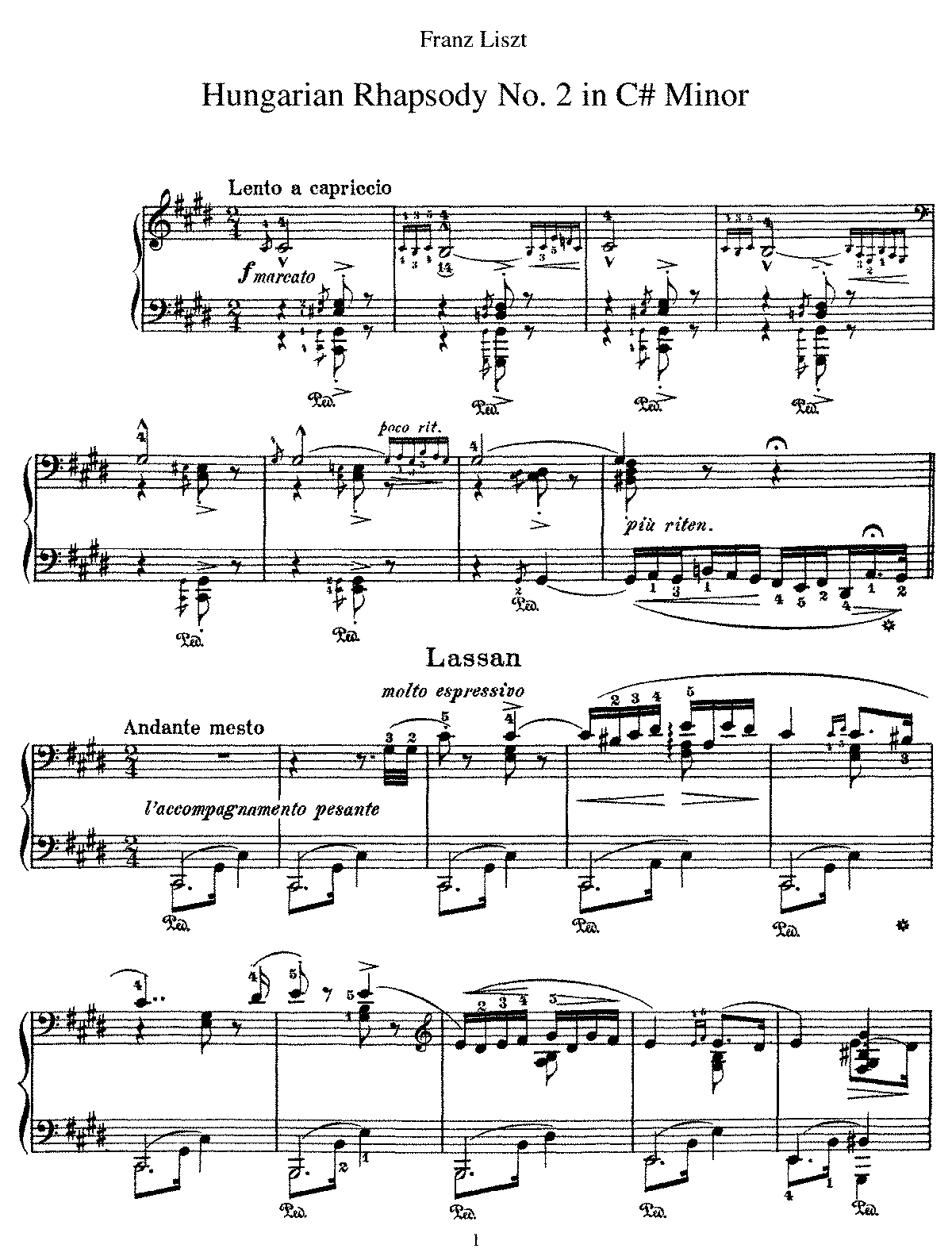
Today’s assignment is Hungarian Rhapsody No. 2 in C-sharp minor. It is the second in a set of 19 Hungarian Rhapsodies by composer Franz Liszt, and is by far the most famous of the set.
In both the original piano solo form and in the orchestrated version this composition has enjoyed widespread use in animated cartoons. Its themes have also served as the basis of several popular songs.
Above, Danish comedian and pianist Victor Borge gives every impression of having been asked to play a duet with someone whom he not only doesn’t know but doesn’t particularly like. Forced to come up with a mutually agreeable way of sharing the musical workload, he settles on the most difficult route possible.
It’s not clear why two pianists were needed for this performance of Liszt’s Hungarian Rhapsody No.2, S.244/2. I think that they did it just for the fun of it. The result is hilarious.
They’re not the only ones to tackle Liszt’s Hungarian Rhapsody No.2 as a piano duo.
We also have these guys:
The “history” of this piece in several cartoons:
This is very interesting:
As he often did, Horowitz arranged it more for his liking:
• 1594 ~ Orlandus Lassus, Composer (Prophet sybillarum), died at about 61
• 1671 ~ Thomoso Albinoni, Italian composer and violinist
More information about Albinoni
• 1691 ~ Jan Francisci, Composer
• 1709 ~ Gottfried Wegner, Composer, died at the age of 65
• 1744 ~ André Campra, Composer, died at the age of 83
• 1750 ~ Franz Anton Maichelbeck, Composer, died at the age of 47
• 1760 ~ Candido Jose Ruano, Composer
• 1763 ~ Johannes Simon Mayr, Composer
• 1769 ~ Dominique Della-Maria, Composer
• 1789 ~ Johann Wilhelm Hertel, Composer, died at the age of 61
• 1835 ~ Nikolay Rubinstein, Composer
• 1854 ~ Frederik Rung, Composer
• 1891 ~ Auguste Jean Maria Charles Serieyx (1865) Composer
• 1881 ~ The player piano was patented by John McTammany, Jr. of Cambridge, MA.
• 1882 ~ Michael Zadora, Composer
• 1884 ~ John McCormack, Irish/American singer of Irish folksongs
• 1891 ~ Nicolo Gabrielli, Composer, died at the age of 77
• 1895 ~ Cliff Edwards “Ukulele Ike”, Singer of When You Wish Upon a Star
• 1904 ~ Benno Ammann, Composer
• 1909 ~ Burl Ives, American folk singer, banjo player, guitarist and Oscar-winning actor. His gentle voice helped popularise American folk music. He played powerful dramatic roles in movies including “The Big Country,” for which he won an Acadamy Award for best-supporting actor, and “Cat on a Hot Tin Roof.”
• 1910 ~ Nappy (Hilton Napoleon) Lamare, Musician with Bob Cats
• 1911 ~ Johan Severin Svendsen, Composer, died at the age of 70
• 1916 ~ Karl-Rudi Griesbach, Composer
• 1916 ~ MIT and the American Telephone and Telegraph Company attempted the largest transcontinental telephone circuit of the time at Symphony Hall!
• 1918 ~ Carter Harman, Composer
• 1920 ~ Helmer-Rayner Sinisalo, Composer
• 1923 ~ Theodore Bloomfield, Composer
• 1923 ~ It was the beginning of the country music recording industry. Ralph Peer of Okeh Records recorded Fiddlin’ John Carson doing The Little Old Log Cabin in the Lane— and the first country music recording was in the can.
• 1929 ~ Cy Coleman (Seymour Kaufman), American composer of popular music and pianist
More information about Cy Coleman
• 1932 ~ Coleridge-Taylor Perkinson, Composer
• 1933 ~ Albert Ross Parsons, Composer, died at the age of 85
• 1940 ~ John Mizelle, Composer
• 1943 ~ Muff (Mervyn) Winwood, Singer, songwriter, bass with The Spencer Davis Group
• 1945 ~ Rod Argent, Keyboard
• 1948 ~ Ernst Henrik Ellberg, Composer, died at the age of 79
• 1948 ~ John Blackwood McEwen, Composer, died at the age of 80
• 1953 ~ Elvis Presley graduated from L.C. Humes High School in Memphis, TN. Within three years, the truck driver-turned-singer had his first number-one record with Heartbreak Hotel.
• 1960 ~ Vladimir Nikolayevich Kryukov, Composer, died at the age of 57
• 1962 ~ Boy George, Singer
• 1965 ~ Guido Guerrini, Composer, died at the age of 74
• 1965 ~ The Beatles released the album “Beatles VI”
• 1965 ~ John Lennon’s second book “A Spaniard in the Works” was published
• 1968 ~ Karl-Birger Blomdahl, Swedish opera composer, died at the age of 51
• 1969 ~ John & Yoko appeared on David Frost’s British TV Show
• 1974 ~ Knud Christian Jeppesen, Composer, died at the age of 81
• 1975 ~ America reached the top spot on the Billboard pop music chart with SisterGolden Hair. The group had previously (March, 1972) taken A Horse With No Name to the number one spot. The trio of Dan Peek, Gerry Beckley and Dewey Bunnell had received the Best New Artist Grammy in 1972. America recorded a dozen hits that made it to the popular music charts in the 1970s and 1980s. Though number one, Sister Golden Hair did not qualify for gold record (million-seller) status.
• 1975 ~ Janis Ian released At 17
• 1976 ~ The Beatles were awarded a gold record for the compilation album of past hits titled, Rock ’n’ Roll Music.
• 1978 ~ Theodore Karyotakis, Composer, died at the age of 74
• 1980 ~ Theme From New York, New York by Frank Sinatra hit #32
• 1986 ~ Alan Jay Lerner, Broadway librettist, died in NY at 67
More information about Lerner
• 1989 ~ Carole King got a star in Hollywood’s walk of fame
• 1994 ~ Henry Mancini passed away at the age of 70
More information about Mancini
• 1994 ~ Lionel Grigson, Professor of jazz, died at the age of 52
• 1994 ~ Harry “Little” Caesar, blues singer/actor (City Heat), died at the age of 66
• 1996 ~ Thomas Edward Montgomery, drummer, died at the age of 73
• 2002 ~ Marvin Paymer, Pianist, composer, musicologist and author, died of cancer. He was 81. His son, actor David Paymer, told the Los Angeles Times that Paymer died in San Diego. In 1977, he co-founded and, until his retirement in 1993, served as associate director of the Pergolesi Research Center at City University of New York Graduate Center. Pergolesi was 18th century Italian composer Giovanni Battista Pergolesi. Paymer authenticated 13 Pergolesi compositions among hundreds of fakes attributed to the posthumously famous composer, who died at 26.
National Flag Day is celebrated annually in the United States on June 14. This day commemorates the adoption of the United States flag on June 14, 1777.
On National Flag Day, Americans show respect for the U.S. Flag and what it represents. Our independence and unity as a nation is represented by our flag. The flag has become a powerful symbol of Americanism and is flown proudly.
Betsy Ross is given credit, by many, for creating the first American flag. Since 1977, the design of the flag has been officially modified 26 times. For 47 years, the 48-star flag was in effect. In 1959, the 49-star version became official on July 4. President Eisenhower ordered the 50-star flag on August 21, 1959.
Seventeen-year-old Robert G. Heft of Ohio is credited with designing the 50-star American flag. Of the more than 1,500 designs that were submitted to President Dwight D. Eisenhower, his was chosen.
Today’s Daily Listening Assignment is a little different. Pop Goes the Weasel was chosen today because somehow, somewhere someone chose today as National Pop Goes the Weasel Day.
June 14 is set aside to observe National Pop Goes the Weasel Day. On this day people dig back into their memories to the nursery rhymes they learned as children and celebrate the day singing “Pop Goes the Weasel”.
The origins of this nursery rhyme are believed to date back to the 1700′s.
The following lyric was printed in Boston in 1858:
All around the cobbler’s house,
The monkey chased the people.
And after them in double haste,
Pop! goes the weasel.
In 1901 in New York the opening lines were:
All around the chicken coop,
The possum chased the weasel.
The most common recent version was not recorded until 1914. In addition to the three verses above, American versions often include some of the following:
All around the mulberry bush,
The monkey chased the weasel.
The monkey stopped to pull up his sock, (or The monkey stopped to scratch his nose)
Pop! goes the weasel.
Half a pound of tuppenny rice,
Half a pound of treacle.
Mix it up and make it nice,
Pop! goes the weasel.
A Piano Version:
And another one…
‘Pop Goes the Weasel’ is played by the oboe while Elgar’s ‘Enigma’ Theme is performed on piano.
If you want to play it, you know where to find it 🙂
• 1911 ~ “Petrushka”, one of the earliest works of Russian composer Igor Stravinsky, was first performed in Paris.
• 1917 ~ Sy (Simon) Zentner, Bandleader, trombonist with the Boyd Raeburn Orchestra
• 1919 ~ Leif Kayser, Composer
• 1927 ~ Knut Wiggen, Composer
• 1928 ~ Damaso Ledesma, Composer, died at the age of 60
• 1929 ~ Kurt Equiluz, Austrian tenor
• 1938 ~ Gwynne Howell, British opera singer
• 1939 ~ Lionel Hampton and his band recorded Memories of You for Victor Records.
• 1940 ~ Bobby Freeman, Singer
• 1944 ~ The wire recorder was patented by Marvin Camras. Wire recorders were the precursor of much easier to use magnetic tape recorders.
• 1948 ~ Liz Phillips, Composer
• 1948 ~ Dennis Locorriere, Musician, guitarist, singer
• 1954 ~ Nikolai Obouhov, Composer, died at the age of 62
• 1954 ~ Jorge Santana, rocker
• 1958 ~ Frank Zappa graduated from Antelope Valley High School in Lancaster, California
• 1959 ~ “Sammy Kaye Show,” last aired on ABC-TV
• 1960 ~ Alley-Oop by Dyna-Sores peaked at #59
• 1962 ~ Eugene Goossens, British Composer (Perseus), died at the age of 69. A member of a famed musical family, he spent his later years conducting in Australia where he trained many musicians.
• 1970 ~ The Summertime by Mungo Jerry hit #1 in England
• 1970 ~ The Beatles’ “Let It Be,” album went #1 & stayed #1 for 4 weeks
• 1970 ~ The Beatles’Long & Winding Road, single went #1 & stayed #1 for 2 weeks
• 1970 ~ The song Make It with You, by David Gates and Bread, was released. It turned out to be a number-one hit on August 22, 1970. Though Bread had a dozen hits, including one other million-seller (Baby I’m-A Want You, 1971); Make It with You was the soft-pop group’s only number one tune.
• 1971 ~ Singer Francis Albert Sinatra made an attempt to retire from show business following a performance this night at the Music Center in Los Angeles, CA. ‘Ol’ Blue Eyes’ got a bit restless in retirement, however, and was back in Sinatra – The Main Event at Madison Square Garden in November 1973.
• 1972 ~ Clyde L Mcphatter, American singer with the Drifters, died at the age of 39
• 1973 ~ Alvin Derold Etler, Composer, died at the age of 60
• 1973 ~ Frantisek Suchy, Composer, died at the age of 82
• 1976 ~ Bob Marley performed in Amsterdam
• 1980 ~ Billy Joel’sGlass Houses hit #1
More information on Joel
• 1984 ~ Marinus de Jong, Dutch Composer, died at the age of 92
• 1986 ~ Benny Goodman, American Jazz clarinetist, composer and bandleader died
More information on Goodman
• 1988 ~ George Harrison released This is Love
• 1989 ~ Jerry Lee Lewis got a star on the Hollywood Walk of Fame
• 1990 ~ “Les Miserables” opened at South Alberta Jubilee Centre, Calgary
• 1993 ~ “Someone Who’ll Watch Over Me” closed at Booth NYC after 232 performances
• 2001 ~ Makanda McIntyre, a jazz musician and educator, died at the age of 69. McIntyre’s best-known album was “Looking Ahead” (1960). He taught music in Manhattan schools and at Wesleyan University, Smith College, Fordham University and the New School. He was the founder and chairman of the American music, dance and theater program at the State University at Old Westbury, N.Y. McIntyre was born in Boston. After serving in the Army, he studied at the Boston Conservatory of Music and later earned a doctorate from the University of Massachusetts. Formerly Ken McIntyre, he changed his name to Makanda after a stranger in Zimbabwe handed him a piece of paper on which was written, “Makanda,” a word in the Ndebele and Shona languages meaning “many skins.”
• 2012 ~ Graeme Bell, Australian pianist and composer, died at the age of 97
Today’s piece is slow and easy-going. The name “Largo” itself means slow. Antonin Dvorák wrote this as a part of his Symphony No. 9 in E minor, also known as From the New World, Op. 95, B. 178, or just the New World Symphony.
Popularly known as the New World Symphony, it was composed in 1893 while Dvořák was the director of the National Conservatory of Music. It is by far his most popular symphony, and one of the most popular of all symphonies. In older literature and recordings, this symphony was often numbered as Symphony No. 5.
Astronaut Neil Armstrong took a tape recording of the New World Symphony along during the Apollo 11 mission, the first Moon landing, in 1969.
Find Largo in Keyboard Kickoff, Prelude (it’s called River Road), Movement 2 and Piano Maestro
And orchestra
The theme from the Largo was adapted into the spiritual-like song “Goin’ Home”, often mistakenly considered a folk song or traditional spiritual, by Dvořák’s pupil William Arms Fisher, who wrote the lyrics in 1922.
.
Pipe Organ
Recorder
And sung
Whenever I think of slow things, I’m reminded of this clip from the old TV Show, Taxi
If your student is in the Wunderkeys series, “Enchanted” from Elementary 2A s a pop twist on the New World Symphony by Dvořák. In this solo students explore dotted quarter rhythms, two half-notes as a LH accompaniment, and gain further comfort in the G Major pentascales.
• 1928 ~ Vic Damone (Vito Farinola), American singer of popular music
• 1930 ~ Jim Nabors, Singer
• 1935 ~ Ella Fitzgerald recorded her first sides for Brunswick Records. The tunes were Love and Kisses and I’ll Chase the Blues Away. She was featured with Chick Webb and his band. Ella was 17 at the time and conducted the Webb band for three years following his death in 1939.
• 1938 ~ Ian Partridge, British tenor
• 1941 ~ “Chick” Corea, American Grammy Award-winning (4) Jazz musician and composer
• 1942 ~ Walter Leigh, Composer, died at the age of 36
• 1942 ~ Paul Whiteman and his orchestra recorded Travelin’ Light on Capitol Records of Hollywood, California. On the track with Whiteman’s orchestra was the vocal talent of ‘Lady Day’, Billie Holiday.
• 1944 ~ Reg Presley, Singer with Troggs
• 1947 ~ Jazeps Medins, Composer, died at the age of 70
• 1948 ~ William Tell Overture by Spike Jones (originally an opera by Rossini) peaked at #6. See the Daily Listening Assignment for more videos.
Original:
• 1951 ~ Bun Carlos (Brad Carlson), Musician, drummer with Cheap Trick
• 1951 ~ Brad Delp, Musician, guitarist, singer with Boston
• 1957 ~ James F “Jimmy” Dorsey, American orchestra leader, died at the age of 53
• 1962 ~ John N Ireland, English Composer/pianist, died at the age of 82
• 1965 ~ The Queen of England announced that The Beatles would receive the coveted MBE Award. The Order of the British Empire recognition had previously been bestowed only upon British military heroes, many of whom were so infuriated by the news, they returned their medals to the Queen. In fact, John Lennon wasn’t terribly impressed with receiving the honor. He returned it (for other reasons) four years later.
• 1965 ~ Rolling Stones released Satisfaction
• 1965 ~ Sonny and Cher made their first TV appearance, “American Bandstand”
• 1966 ~ Hermann Scherchen, German conductor and music publisher, died at the age of 74
• 1966 ~ The Dave Clark Five set record as they appear for twelfth time on Ed Sullivan
• 1968 ~ Fidelio Friedrich Finke, Composer, died at the age of 76
• 1968 ~ “What Makes Sammy Run?” closed at 84th St Theater NYC after 540 performances
• 1977 ~ “Pippin” closes at Imperial Theater NYC after 1944 performances
• 1982 ~ Paul Simon and Art Garfunkel performed in Rotterdam
• 1989 ~ Peter Conrad Baden, Composer, died at the age of 80
• 1992 ~ “Batman Returns”, music by Danny Elfman, was released in America
• 1993 ~ Three Little Pigs by Green Jelly hit #17
• 1994 ~ Cab Calloway suffered a massive stroke at his home White Plaines NY
• 1995 ~ Arturo Benedetti Michelangeli, Italian Pianist, died at the age of 75. He was hailed as one of the greatest pianists of the 20th century.
• 1996 ~ MacKenzie John, Pipe major, died at the age of 83
• 2000 ~ Robert J. Lurtsema, a classical music show host with a sonorous voice and unique delivery who became a fixture of the Boston radio scene over nearly three decades, died of lung disease. He was 68. Lurtsema, who worked at WGBH-FM for more than 28 years, is well-known to classical music buffs as the host of “Morning pro musica”, which could be heard throughout the Northeast.
• 2006 ~ György Ligeti, Hungarian classical composer (Le Grand Macabre), died at the age of 83
Since we had the Bridal Chorus a couple days ago, it’s time to march the bride and groom back up the aisle with the Wedding March by Felix Mendelssohn.
This Wedding March comes from Mendelssohn’s incidental music to A Midsummer Night’s Dream. It became customary to play this at marriage ceremonies from about the mid 19th Century, and particularly after the daughter (also called Victoria) of Queen Victoria chose the piece for her own wedding in 1858.
Notice all the triplets (3)! If you don’t know what they are, be sure to ask at your next lesson.
Find this in Movement 2 and Piano Maestro.
Franz Liszt and Vladimir Horowitz added some variations





 MaryO'Studio