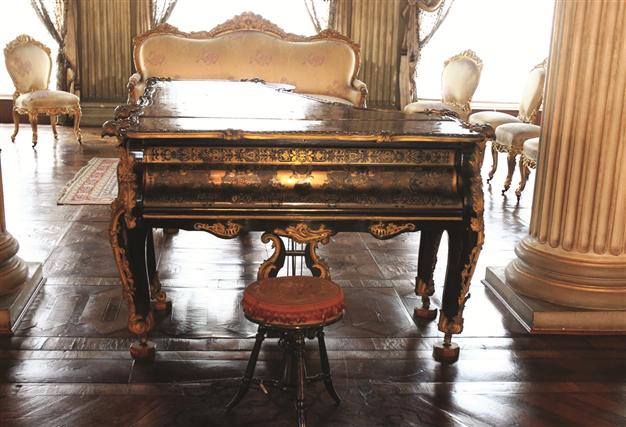
A different music from this piano

Renowned pianist and conductor Daniel Barenboim has unveiled a new type of piano, which he says is a “sound alternative” to the standard concert grand piano that has not undergone much change over a century.

Barenboim, 72, launched the instrument at the Royal Festival Hall here on Tuesday, in advance of his Schubert recital series.

Declaring the new piano a “sound alternative”, Barenboim said: “I’ve fallen in love with it and I want to spend as much time with it as possible.”

The exterior of the new piano looks much the same as any other modern concert grand piano, but inside, there are some dramatic differences, The Guardian reported.

Designed by the Belgian instrument-maker Chris Maene, the Barenboim has straight parallel strings instead of the diagonal-crossed ones of a contemporary piano. The wooden soundboard veins go in different directions. The bridges, ribs and bracings are specially designed and the hammers and strings have been repositioned.

Barenboim, currently heading Berlin’s flagship opera house, the State Opera, said he intended to perform the entire series on the new piano.

Modern pianos have become highly standardised, with few changes to their fundamental design over the past 100 years.

They are largely cross-strung, with the bass strings crossing over the middle and treble strings in an “X” pattern, allowing the sound to be concentrated on the centre of the soundboard.

He developed his idea with Belgian instrument maker Chris Maene, with support from Steinway & Sons.

via A different music from this piano.

As well as the straight strings, the Barenboim-Maene piano features a double bridge and horizontal soundboard veins.

According to a press release, the piano “combines the touch, stability, and power of a modern piano with the transparent sound quality and distinguishable colour registers of more historic instruments”.

Pianist Gwendolyn Mok, who plays an 1875 straight-strung Erard piano, has said that such instruments possess superior clarity.

“If you look inside your own piano, you will notice that the strings are all crossing each other,” she told the San Francisco Examiner in 2013.

“With the straight strung piano you get distinct registral differences – almost like listening to a choir where you have the bass, tenor, alto, and soprano voices.

“It is very clear and there is no blending or homogenizing of the sound. It therefore gives you huge opportunities in experimenting with colour.”

Via http://www.bbc.com/news/entertainment-arts-32885683

May 27 ~ Today in Music History

today


• 1638 ~ Nicolas Forme, Composer, died at the age of 71

• 1652 ~ Jacques Huyn, Composer, died at the age of 39

• 1690 ~ Giovanni Legrenzi, Italian Composer, died at the age of 63

• 1708 ~ Jacques Danican Philidor, Composer, died at the age of 51

• 1738 ~ Bonaventura Furlanetto, Composer

• 1796 ~ James S McLean patents his piano

• 1799 ~ Jacques-François-Fromental-Elie Halévy, French composer whose five-act grand opera La Juive (1835) was, with Giacomo Meyerbeer’s Les Huguenots, the prototype of early French grand opera.

• 1806 ~ Charles-Joseph Tolbecque, Composer

• 1819 ~ Julia Ward Howe, Battle Hymn of the Republic
Read about Julia Ward Howe
Read about the Battle Hymn of the Republic
More information about Howe

• 1822 ~ Joseph Joachim Raff, German composer and teacher, greatly celebrated in his lifetime but nearly forgotten in the late 20th century.

• 1822 ~ Henry Wylde, Composer

• 1840 ~ Niccolò Paganini Composer and violinist died at the age of 57. He wrote six concertos for violin.
Read quotes by and about Paganini
More information about Paganini

• 1849 ~ “Blind” Tom Bethune, Pianist and composer

• 1878 ~ Isadora Duncan, Dancer

• 1878 ~ Carlo Marsili, Composer, died at the age of 49

• 1884 ~ Bax Brod, Composer

• 1888 ~ Louis Durey, Composer

• 1891 ~ Claude Adonai Champagne, Composer

• 1900 ~ Leopold Godowsky, Jr., American musician and photographic technician primarily known as a codeveloper of Kodachrome film (1935).

• 1902 ~ Celius Dougherty, Composer

• 1906 ~ First outlining of Gustav Mahler’s 6th symphony

• 1907 ~ Felix de Nobel, Dutch orchestra leader

• 1908 ~ Harold Rome, Composer

• 1909 ~ Isador Goodman, Composer

• 1914 ~ Hugh Le Caine, Composer

• 1915 ~ Mario del Monaco, Italian opera singer famed for Verdi and Puccini

• 1928 ~ Thea Musgrave, Scottish composer, best known for her concertos operas and choral and other vocal works.

• 1929 ~ Donald Howard Keats, Composer

• 1930 ~ Eino Tamberg, Composer

• 1931 ~ Veroslav Neumann, Composer

• 1932 ~ Jeffrey Bernard, Singer

• 1935 ~ Ramsey Lewis, American jazz pianist, composer and bandleader

• 1935 ~ Elias Gistelinck, Flemish Composer

• 1939 ~ Don Williams, Country singer

• 1940 ~ Rene Koering, Composer

• 1942 ~ Priscilla Anne McLean, Composer

• 1947 ~ Liana Alexandra, Composer

• 1950 ~ Frank Sinatra made his TV debut as he appeared on NBC’s “Star-Spangled Review” with show biz legend, Bob Hope.

• 1957 ~ Siouxsie Sioux (Susan Dallion), Singer with Siouxsie and the Banshees

• 1957 ~ That’ll be the Day, by The Crickets and featuring Buddy Holly, was released by Brunswick Records. On September 14th, the tune became the most popular record in the U.S. It was the first hit for Holly and his group after two previous releases went nowhere on Decca Records in 1956.

• 1961 ~ Singer Johnny Cash turned TV actor. He appeared on the NBC drama, “The Deputy”.

• 1972 ~ “Applause” closed at the Palace Theater in New York City after 900 performances

• 1975 ~ Paul McCartney released Venus & Mars

• 1983 ~ Arnoldus Christian Vlok van Wyk, Composer, died at the age of 67

• 1988 ~ Melvin J “Cy” Oliver, American jazz composer and orchestra leader died at the age of 77

• 1994 ~ Red Rodney, Bebop-trumpeter died at the age of 66

• 1995 ~ C W Stubblefield, Music Promoter died at the age of 64

• 1995 ~ Ulysses Simpson Kay, Composer, died at the age of 78

• 1996 ~ Albert “Pud” Brown, Clarinetist and saxophonist died at the age of 79

• 1996 ~ Ivan Sutton, Concert Promoter died at the age of 82

Studying for Exams?

study-music


Listening to music can help you while you’re studying for your exams.

This is  3.5 Hours of the Best Classical Music – Mozart, Beethoven, Bach, Chopin – Beautiful Piano, Violin & Orchestral Masterpieces by the greatest composers of all time.


May 22 ~ Today in Music History

today

• 1722 ~ Johannes Schmidlin, Composer

• 1759 ~ Gervais-François Couperin, Composer

• 1780 ~ Jan Emmanuel Dulezalek, Composer

• 1783 ~ Thomas Forbes Walmisley, Composer

• 1813 ~ (Wilhelm) Richard Wagner, German composer
Read quotes by and about Wagner
More information about Wagner

• 1820 ~ Alexander Ernst Fesca, Composer

• 1850 ~ Johann Schrammel, Composer

• 1852 ~ Emile Sauret, Composer

• 1865 ~ Enrique Morera, Composer

• 1879 ~ Eastwood Lane, Composer

• 1879 ~ Jean Emile Paul Cras, Composer

• 1884 ~ Alceo Toni, Composer

• 1885 ~ Julio Fonseca, Composer

• 1900 ~ Edwin S. Votey of Detroit, MI patented his pianola, a pneumatic piano player. The device could be attached to any piano. Batteries not included.

• 1914 ~ Sun Ra (Herman Blount), American jazz composer and keyboard player who led a free jazz big band known for its innovative instrumentation and the theatricality of its performances. He passed away in 1993.

• 1916 ~ Gordon Binkerd, Composer

• 1924 ~ Charles Aznavour, French chanteur and composer

• 1924 ~ Claude Andre Francois Ballif, French composer

• 1926 ~ Elaine Leighton, Drummer, played with Billie Holiday

• 1928 ~ Jackie (Jacqueline) Cain, Singer

• 1930 ~ Kenny Ball, Musician, trumpeter, bandleader

• 1933 ~ John Browning, American pianist
More information about Browning

• 1934 ~ Peter Nero (Nierow), Pianist

• 1950 ~ Bernie Taupin, Elton John’s lyricist

• 1966 ~ Iva Davies (1955) Guitarist, singer with Icehouse

• 1958 ~ Wedding vows were taken by rock ’n’ roll star, Jerry Lee Lewis and his thirteen- year-old cousin, Myra.

• 1965 ~ The Beatles got their eighth consecutive number one hit as Ticket to Ride rode to the top of the singles list. The song topped the charts for one week and became their eighth consecutive number one hit.

• 1966 ~ Bruce Springsteen recorded his very first song at the age of 16, along with his band, The Castilles. It was titled, That’s What You’ll Get. The song was never released.

• 2003 ~ The final manuscript of Beethoven’s Ninth Symphony, which was annotated by the composer, sold at auction for $3.47 million.

Clementi Added to Piano Maestro!

Piano Mania


New song just released!

After receiving many requests for more early intermediate songs JoyTunes has added:

Sonatina in C Major (Op.36) By Muzio Clementi.

Although the song has 3 movements, they’ve added only the first movement and hope to add the other 2 soon!

You can find the piece in the Library under “Classical and Opera”.

clementi

The O’Connor Music Studio has several editions of Clementi’s Sonatinas available in the Lending Library.

Piano lessons possibly on the decline

piano-teacher

Growing up, many people remember taking piano lessons, or having several friends who learned the instrument.

But as generations change, some hobbies evolve too…

When it comes to the amount of people learning to play the piano, is it really on the decline?

“I don’t think you see it quite as much today just because there’s so much more distraction nowadays,” Steve Buckman, a piano instructor at Vancil Performing Arts Center said.

Buckman says when it comes to taking lessons it’s very different than 50 years ago.

He says between video games, social media, and other hobbies, the piano can sometimes take a back seat when it comes deciding what to spend your free time on.

Another factor is something that typically has a large weight in our decision making…money.

Read more at Piano lessons possibly on the decline : News : ConnectTriStates.com.

Why Work on Music Theory?

Music_Theory


Students at the O’Connor Music Studio know that music theory is always a part of lessons.  I strongly believe that theory is needed so that students understand what they are playing and why.

To me, theory work is just as important as playing.  A firm knowledge of musical structure makes playing everything easier.

Music knowledge learned through piano lessons transfers easily to other  musical activities.  Students in Fairfax County Public Schools, students learn to play recorder.  Students are sometimes surprised to learn that they already know all the notes – from their piano lessons!

When you sing in a choir, harmonize with Sweet Adelines, play an instrument in your school or community band/orchestra, join your church’s handbell choir (note:  Pender UMC has an excellent Handbell program), teach yourself guitar – theory will help in every instance. By learning to read, write, and understand this musical language, many more musical opportunities will be made available the rest of your life.

Most piano methods come with a theory book that matches page by page what concepts are being learned in the lesson books.  I actually recommend that students do the theory first when they get home, while the concepts are still fresh in their minds.

If the student is not in a piano method, I’m starting to use the Theory Time series.  Book One covers music alphabet, introduction to keyboard and staff, stem rule, steps & skips on a keyboard and staff, repeated notes, dynamics, treble clef lines & spaces, bass clef lines & spaces, quarter note & rest, half note & rest, whole note & rest, dotted half note, bar lines, double bar line, measures, time signatures, rhythm drill, vocabulary, ear training and a review test. Free ear training videos for each ear training exercise are hosted on the Theory Time YouTube channel. The Grade One workbook is appropriate for beginning 1st, 2nd or 3rd grade students. This workbook includes 51 pages, 13 lessons and 8 Fun Sheets.

For adults and more advanced students, I have a copy of All About Music Theory: A Fun and Simple Guide to Understanding Music which can be used as a review or a “try before buy”.

Stop procrastinating and go do your theory!

Liszt is dead, long live the piano recital

On Monday, Google’s homepage ran a picture to celebrate the 360th birthday of Bartolomeo Cristofori, inventor of the piano and keeper of instruments for the Medicis in Florence. The instrument Cristofori invented was originally called a “harpsichord with soft and loud” even though the distinction between the two is large (the harpsichord produces sound by plucking strings, the piano by striking them with a hammer). Only three of the newfangled instruments he made – all of them dating from the 1720s – survive.

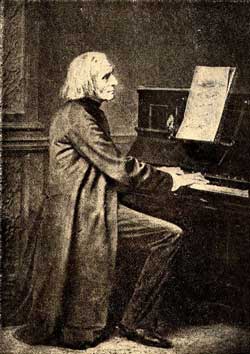
liszt-recitalMore than a century later the piano recital was devised. It was Liszt who first decided to have the whole stage to himself, and set the fashion for dispensing with the mixture of celebrities and supporting acts that had prevailed up to that time. As he wrote about his audacity to a friend: “Le concert, c’est moi!” And he called his appearance at the Hanover Square Rooms in London in June 1840 not a concert but a recital.

The composer-pianists of the day concentrated on their own works. Liszt set a marker in this regard, too, choosing music that ranged from Bach through Beethoven and up to Chopin. He set the pattern for playing from memory, and cemented the platform layout we know today by turning the then-conventional position of the instrument on the stage through 90 degrees. He was what we would now call a sex symbol as well as a star musician, and the new arrangement allowed the audience to see his impressive profile as well as to hear the instrument more clearly. The standards he set have survived without significant alteration right up to the present.

via Liszt is dead, long live the piano recital.

Who Invented the Piano? Bartolomeo Cristofori’s Birthday Celebrated in Today’s Google Doodle

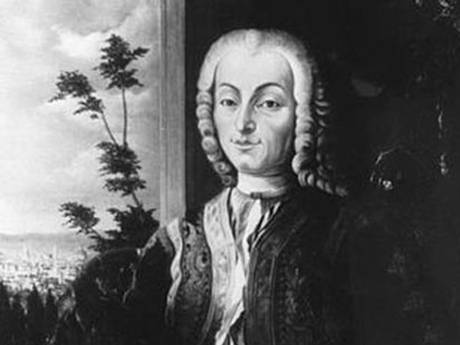
The inventor of the piano, Bartolomeo Cristofori, is celebrated in today’s Google Doodle.

Born on 4 May, 1655 in Padua, northern Italy, Cristofori initially worked making harpsichords and clavichords and was employed by Prince Ferdinando de Medici, son of the duke of Tuscany.

He is believed to have started work on what would become a piano in the 1690s and the first one is thought to have been made in 1709.

In a harpsichord the strings are plucked, so it is not possible to play the notes softer or louder. Cristofori managed to design a mechanism that transferred the pressure placed on the keys to the hammers that hit the strings.

He called his invention a “gravecembalo col piano e forte” – a clavichord with soft and loud. The name was shortened to pianoforte and then simply piano.

Francesco Mannucci, a musician at the Medici court, described one early version as “a large ‘Arpicembalo’ [the name of a type of harpsichord] by Bartolomeo Cristofori, of new invention that produces soft and loud, with two sets of strings at unison pitch, with soundboard of cypress without rose”.

Bartolomeo Cristofori

Bartolomeo Cristofori di Francesco was an Italian maker of musical instruments, generally regarded as the inventor of the piano.


While other musical instrument makers had attempted to solve the same problem with the harpsichord, Cristofori’s invention is generally regarded as the first real piano.

However, the piano was not popular at first and many felt it was too difficult to play. Cristofori died largely uncelebrated for an invention that would later change the musical world in 1731 – a year before the first sheet music for the piano appeared.

via Who invented the piano? Bartolomeo Cristofori’s birthday celebrated in today’s Google doodle – News – Gadgets and Tech – The Independent.

April 30 ~ Today in Music History

today


. 1717 ~ Guillaume Gommaire Kennis, composer

. 1792 ~ Johann Friedrich Schwencke, composer

. 1837 ~ Alfred Gaul, composer

. 1852 ~ Anton Rubinstein’s opera “Dmitri Donskoi”, premiered in St Petersburg

OCMS 1870 ~ Franz Lehar, Austrian composer of operettas. He achieved worldwide recognition for “The Merry Widow”.
More information about Lehar

. 1883 ~ David John de Lloyd, composer

. 1884 ~ Albert Israel Elkus, composer

. 1885 ~ The Boston Pops Orchestra forms

. 1885 ~ Luigi Russolo, composer

. 1886 ~ Frank Merrik, composer

. 1900 ~ Train engineer Casey Jones was killed when trying to save the Cannonball Express as it highballed its way through Vaughn, MS. The famous song about Jones is based on this train accident.

. 1903 ~ Victor Records made its first Red Seal recording this day. The premiere disk featured Ada Crossley, an opera contralto.

. 1916 ~ Robert Shaw, American conductor, Robert Shaw Chorale; music director of Atlanta Symphony Orchestra and Chorus

. 1923 ~ Percy Heath, Jazz musician: bass: founder of Modern Jazz Quartet, The Heath Brothers

. 1933 ~ Willie Nelson, American country-music singer, songwriter and guitarist

. 1940 ~ Jimmy Dorsey and his band recorded the bandleader’s signature song, Contrasts, for Decca Records. The song went on to become one of the most familiar big band themes of the era.

. 1941 ~ Johnny Farina, Musician: rhythm guitar with Santo & Johnny

. 1943 ~ Bobby Vee (Velline), Singer

. 1944 ~ Richard Schoff, Singer with The Sandpipers

. 1953 ~ Frank Sinatra and Nelson Riddle became a team this day at Capitol Records in Hollywood. Sinatra’s new musical style, under Riddle’s direction, brought the crooner to the top of the record world for the second time in his illustrious career.

. 1953 ~ Merrill Osmond, Singer with The Osmonds: Alan, Donny, Jay, Marie, Wayne,Jimmy

. 1954 ~ Darius Milhaud’s Fourth Concerto for piano and orchestra premiered in Haifa

. 1956 ~ Richard Farina, folk singer: Reflections in a Crystal Wind

. 1983 ~ Muddy Waters (McKinley Morganfield) passed away.  He was an American blues musician.

. 1987 ~ Three more compact discs of music by The Beatles went on sale for the first time. The discs were Help!, Rubber Soul and Revolver. All became hits again for the Fab Four.

. 2000 ~ Bill Woods, a band leader who helped Buck Owens, Merle Haggard and other country music stars launch their careers, died. He was 76. In the 1950s, Woods ran The Blackboard country music club in Bakersfield. The club attracted many country music stars and helped develop what became known as the Bakersfield Sound. Woods also could play many instruments, including piano, guitar, fiddle, drums, and the banjo.

. 2000 ~ Jonah Jones, a Grammy award-winning jazz trumpet player who began his career on a Mississippi riverboat and became a star playing with Cab Calloway, died at the age of 90.

. 2001 ~ Herman “Rock” Johnston, a musician known for his innovative work on steel drums, died of prostate cancer. He was 63. Johnston gained acclaim in the early 1960s with an innovation that stretched the musical range of the instrument from 24 to 36 notes. During his career, the Trinidad native appeared at the United Nations, Lincoln Center and Radio City Musical Hall in New York City, and with the Boston Symphony at its summer festival in Tanglewood. His repertoire spanned rock, spiritual, classical, show tunes and Caribbean folk music.

. 2003 ~ Bill Napier, a clarinetist who rose to prominence with the premier San Francisco jazz bands of the 1940s and 50s, died. He was 76. Napier helped create a catchy West Coast style with a Dixieland sound and a San Francisco vibe. He played with jazz stars including trombonist Turk Murphy, Lu Watters and Bob Scobey’s Frisco Jazz Band. Though he took some lessons, Napier essentially taught himself to play. His talent, and his love of music, brought him to an eclectic mix of venues – from cable car turnabouts to halftime of Harlem Globetrotters’ games to Silicon Valley soirees at the height of the dot-com boom. His last show was December 30, 2002.