From the Way-Back Machine

ocms-logo

Today, since it’s a “teaching day”, I’m thankful for my piano studio, my students, and my pianos 🙂

When I was growing up, my dad was a minister, meaning we lived in whatever parsonage the church chose to let us live in.  The one we had in Pawcatuck, CT had an upright piano that someone had put out in the sunroom.  Not the best place for a piano, but I digress.

Since we had the piano already, someone – probably my mom – decided that I would take lessons.  We had the organist from the Baptist church just across the river in Westerly, RI

Apparently, Clara Pashley was fondly remembered at the church (now Central Baptist Church) since she was mentioned in an article from 2010.

screenshot-2016-11-04-10-04-33
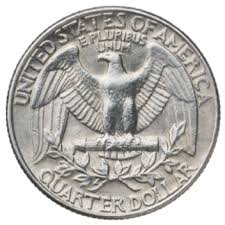
25-centsMiss Pashley walked to our house each week and taught me (and my mom who was always listening in) piano for the grand sum of 25 cents.

I started with Ada Richter’s classic Teaching Little Fingers to Play, which has now been morphed into the John Thompson library.

From there, it was the Michael Aaron series, and some sheet music.

There was no music store in our town, so I have no idea where any of this music came from – but I still have it all.

My parents did very well for their quarter a week investment, especially since my mom paid good attention and was able to beef up lessons she’d had as a child.  Later on, she played well enough that she was church organist for a local Roman Catholic Church.

But I digress…

In those days, kids couldn’t do a whole lot of activities, so in 6th grade, I decided I wanted to be a Girl Scout.  Bye, bye Clara.

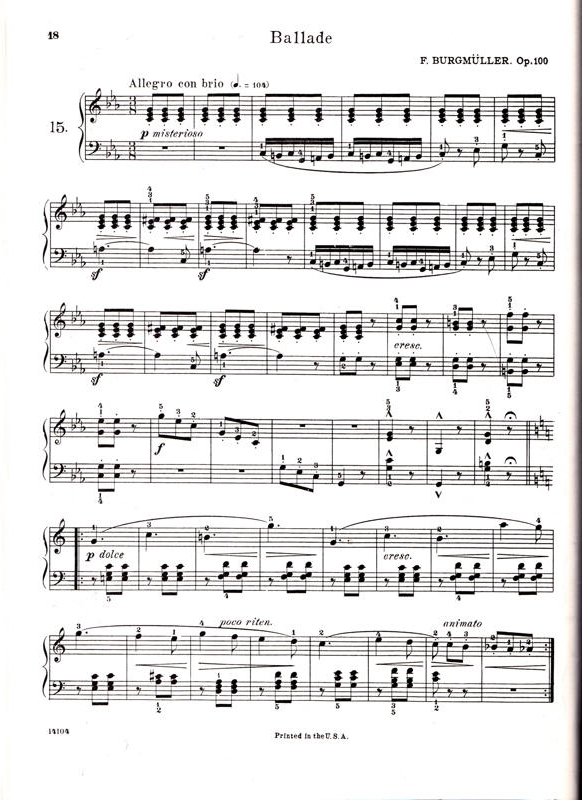
Girl Scouts didn’t last long but I did play piano in a talent show.  I remember, I carefully cut Burgmüller’s Ballade out of my Michael Aaron book and made a nice construction paper cover.  (I still have this, too)

balladeburgmuller

I doubt that I played this well but here’s what it was supposed to sound like:

A few years intervened and we moved to Springfield, MA.  The parsonage piano there was in terrible shape and in the dark, never-used basement.  But I decided to make it mine and cleared up the area around it and started “practicing”.

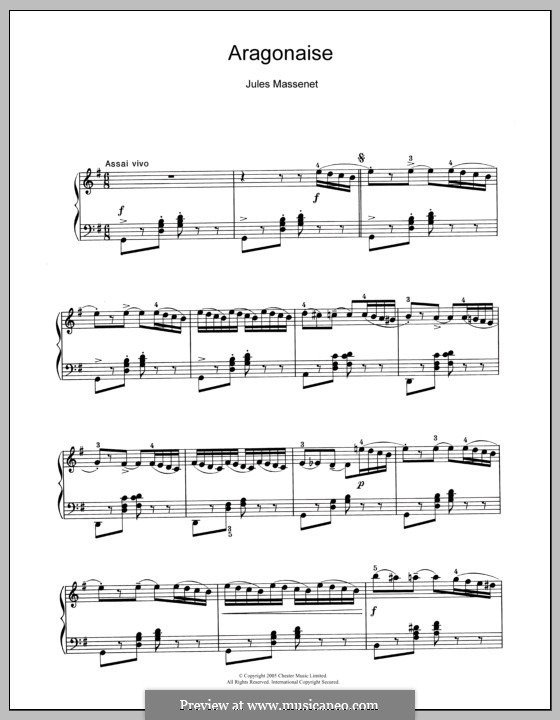
My Junior or Senior year of High School I decided I wanted to major in music in college.  I decided to learn, on my own, a piano arrangement of Aragonnaise by Jules Massenet.  I have no idea why or where that sheet music came from but I started working furiously on this piece.

aragonnaise

Hopefully, at some point, it should have sounded like this:

I started pedaling (no pun intended!) my music to the Universities of Connecticut and Massachusetts and ended up at UMass Amherst since we were state residents.

Early morning gym classes (usually swimming), then wet hair traipsing across campus to music theory in winter 5 days a week.  AARRGGH!

But I stuck it out.

My wonderful piano teacher, Howard Lebow, was killed in a car accident my sophomore year and I was devastated.  There was about him in a post on January 26, 2018 here: https://oconnormusicstudio.com/2024/01/26/in-memory-howard-lebow/

I took yet another break from piano lessons – but I kept playing.

After DH graduated, we moved to Milwaukee, WI for his graduate school.  Besides working 2 jobs, I found time to commandeer the practice rooms at the University of Wisconsin.  I also found a teacher at the Schaum School of Music.  She was amazed that I had no piano at home to practice on.

When we later moved to Alexandria, VA my DH gave me a choice of new car or piano. So, I found a used piano.  The owner had acquired it in a divorce and wanted it gone.  Yesterday.  She even paid to move it out of her apartment.

The new-to-me piano took up half our living room.  When my parents came to visit, their feet were under my piano as they slept on cots.

I found yet another new piano teacher and she is still my best friend to this day.

That piano moved to several locations before I bought a brand new Yamaha grand piano.  The movers accidentally brought in the wrong one and I made them return it.  The people who lived in an apartment were probably unhappy when they had to return my piano and take their own new baby grand back.

I started teaching as a traveling piano teacher in Silver Spring, Maryland.  I continued that in Wilmington, DE.

When we got to Fairfax, VA I decided no more traveling.  Students would come to me.  And so they have since 1973.

What is supposed to be our living room is filled with music books, electric keyboards, the grand piano, 2 organs, 2 violins, 2 clarinets, balalaika, electric saxophone, a hand-made (by me!) dulcimer, tenor and soprano recorders, and other musical “stuff”.

Piano playing has gotten me through the worst times of my life.  Teaching has been a lifeline for me, as well.

I am so thankful for the students who have stayed with me over the years.

Daily Listening Assignments ~ July 2

toccata-d-minor

Johann Sebastian Bach’s towering monument of organ music, with its deep sense of foreboding, will forever be associated with Halloween.

Get a free copy of the sheet music at IMSLP or borrow a copy from the O’Connor Music Studio.  I have this arranged for organ, piano, duet, 2-piano, simplified…

It’s also available in Piano Maestro, Piano Pronto Encore and Coda

If you want this in a book with other Bach transcriptions, amazon has this: Toccata and Fugue in D minor and the Other Bach Transcriptions for Solo Piano, arranged by Ferruccio Busoni.

Here, Virgil Fox performs it on his Allen Digital Touring Organ.

Diane Bish plays the Massey Memorial Organ at the Chautauqua Institution and talks about this instrument.

Animated organ:

Glass harmonica

Accordion

Cartoon:

Daily Listening Assignments ~ July 1

Today’s piece is the other one of two pieces that are so often played incorrectly that they have the distinction of being banned from competition in Northern Virginia Piano Teacher competitions.

The first was Fur Elise.  This one is Spinning Song by Albert Ellmenreich.  It’s in many, many piano method books.  When I was in 5th or 6th grade, I tore it out of my book, put it in a construction paper cover and played it for some Girl Scout talent show.  I have no idea why I couldn’t leave it in the book.

The left hand is supposed to sound like the foot pumping the wheel to make it move

This is part of a larger work called Musikalische Genrebilder, Op.14 which can be downloaded at IMSLP:

Spinnliedchen (Spinning Song), the best known item from the set, seems to be universally referred to as number four. The announcement of the first edition in Hofmeister’s Monatsberichte lists it as the fifth item. In Schirmer’s 1878 edition (see cover: here) of Op.14 it appears that items two and three were possibly combined into one number (entitled Sorrow and Consolation) so that Spinnliedchen became number four. Perhaps, this is the origin of the re-numbering.

To learn this sheet music, it’s available in Piano Pronto Movement 4 and Alfred Premier Piano Course Book 6

Here’s a sample:

A tutorial

With scrolling sheet music

For organ

How to conduct(?)

While this piece is not usually popular with other instruments, a trumpet quartet gave it a try

The DMS Percussion Ensemble

Singers from the Londonderry Middle School gave it a try:

The first half of this video is flute tuning. After that is a lovely flute duet.

I can’t take any more of these!

Daily Listening Assignments ~ June 18


‘The Magic Flute’ (German name: Die Zauberflöteis Wolfgang Amadeus Mozart’s final opera, and it contains one of the most well-known arias in music. But what is ‘The Magic Flute’ all about?


An animated version:

Played as a piano/organ duo:


Arranged by Ferruccio Busoni for 2 pianos:


Why Mozart’s Magic Flute is a masterpiece – an introduction (The Royal Opera)


The accordion version:

Find this in Piano Pronto: Movement 3, Encore, Mozart: Exploring His Life and Music

Today is National Buy a Musical Instrument Day

Piano 8


Each year on May 22 we observe National Buy a Musical Instrument Day.  The day is all about playing music.  If you are a musician, it might be time for a new instrument.  Maybe you can learn to play a second or third one.  If you have never played an instrument before, National Buy A Musical Instrument Day might be the motivation you need to start.

Naturally, here at the O’Connor Music Studio, a piano, keyboard with weighted keys (and 88 of them!) or organ is recommended but this day is for all types of instruments and is for people of all ages.  Grandpa can play his ukulele while the grandkids play the drums, trombone, and flute. Together they can all make terrific music!

Adapted from http://www.nationaldaycalendar.com/national-buy-a-musical-instrument-day-may-22/


April 24: Today’s Music History

today

. 1706 ~ Giovanni Battista Martini, Italian music scholar and composer

. 1792 ~ La Marseillaise composed by French army officer Claude Joseph Rouget de Lisle

. 1913 ~ Violet Archer, Canadian pianist and composer

. 1916 ~ Stanley Kauffmann, Theatre critic for the New York Times

. 1922 ~ (Samuel) Aaron Bell, Jazz musician, bass, composer

. 1923 ~ Freddy Scott, Singer

. 1928 ~ Johnny Griffin, Jazz musician, tenor sax

. 1934 ~ Shirley Boone (Foley), Singer, married to singer Pat Boone since 1953

. 1934 ~ Shirley MacLaine, Entertainer, Academy Award-winning actress, sister of actor Warren Beatty

. 1934 ~ Laurens Hammond, in Chicago, IL, announced the news that would be favored by many churches across the United States. The news was the development of the pipeless organ — and a granting of a U.S. patent for same.
Read more about the Hammond Organ

. 1936 ~ Benny Goodman and his trio recorded China Boy for Victor Records. Gene Krupa, Teddy Wilson and Goodman recorded the session in Chicago.

. 1937 ~ Joe Henderson, Musician, composer. He played live in sextet at San Francisco’s Keystone Korner and also played with Blood Sweat and Tears

. 1942 ~ John Williams, Guitarist

. 1942 ~ Barbra Streisand, American actress and singer of popular music, Grammy Award-winning Best Female Pop Vocalist (1963-1965, 1977, 1986), Best Songwriter in 1977, Academy Award-winning Best Actress, Oscar for Best Song (Evergreen in 1976)
Read a news item about Barbra Streisand

. 1943 ~ Richard Sterban, Musician: bass, singer with The Oak Ridge Boys

. 1945 ~ Doug Clifford, Drummer with Creedence Clearwater Revival

. 1954 ~ Billboard magazine, the music industry trade publication, headlined a change to come about in the music biz. The headline read, “Teenagers Demand Music with a Beat — Spur Rhythm and Blues” … a sign of times to come. Within a year, R&B music by both black and white artists became popular.

. 1959 ~ Your Hit Parade ended after a nine-year run on television and many more years on radio. The show debuted in 1935. On the final show, these were the top five songs on Your Hit Parade:
1 Come Softly to Me
2 Pink Shoelaces
3 Never Be Anyone Else but You
4 It’s Just a Matter of Time
5 I Need Your Love Tonight

. 1965 ~ Game of Love, by Wayne Fontana and The Mindbenders, made it to the top spot on the Billboard music chart. Game of Love stayed for a short visit of one week, before Peter Noone and Herman’s Hermits took over the top spot with Mrs. Brown You’ve Got a Lovely Daughter.

. 1968 ~ Climaxing his birthday celebration, the Who’s drummer, Keith Moon, accidentally drove a Lincoln Continental into a hotel swimming pool in Flint, Mich.

. 1969 ~ The singing family, The Cowsills, received a gold record for their hit single, Hair, from the Broadway show of the same name.

. 2000 ~ Singer and pianist George Paoa, whose smooth voice and mellow style introduced generations of tourists to Hawaiian music, died. He was 65. For more than 40 years, Paoa entertained vacationers at isle hotels with a repertoire of old Hawaiian standards, light jazz and hapa-haole music, a tourist favorite with its blend of English lyrics and Hawaiian melodies. Paoa played with the jazz recording star Martin Denny in the 1960s and two of his children sang on his 1994 album, “Walking in the Sand.”

. 2001 ~ Jazz singer Al Hibbler, who was known for his rich baritone and exaggerated phrasing, died at the age of 85. Hibbler is best remembered as one of Duke Ellington’s most colorful vocalists. Hibbler went solo in the 1950s and enjoyed his biggest hit, Unchained Melody. Another of his hit songs was After the Lights Go Down Low. The Mississippi native, who was blind from birth, joined Ellington’s band in 1943 and became popular for singing tunes with the band that included Do Nothing Till You Hear From Me and I’m Just a Lucky So and So. Hibbler’s penchant for distorted vocal effects were described by Ellington as “tonal pantomime.” Hibbler started his professional singing career in the 1930s, after vocal studies at the Conservatory for the Blind in Little Rock, Ark. After winning amateur concerts in Memphis, Tenn., he led a group in Texas and toured with Kansas City bandleader Jay McShann in 1942. Hibbler went on to record with Ellington’s son, Mercer Ellington, Billy Taylor, Count Basie, Gerald Wilson and Rahsaan Roland Kirk. He sang When the Saints Go Marching In at Louis Armstrong’s funeral.

. 2016 ~ Billy Paul [Paul Williams], American singer (Me & Mrs Jones), died at the age of 81

In Memory of Bob Chiralo, OrganMaster

From https://pendernews.org/2013/04/12/bob-chiralo-organmaster/

I’ve been thinking a bit about shoes lately, specifically organ shoes. Many people probably don’t know that organists usually use special shoes to help them play the pedals on an organ. When I’m learning a new piece, I play barefoot to help feel where my feet should go but when playing in church I always have my Organmaster shoes on.

The About Us page of the Organmaster website says in part:

Organmaster Shoes began in 1976 when an organist, Carol Carlson, struggled to find shoes that would work for organ.  Organmaster Shoes began in 1976 when an organist, Carol Carlson, struggled to find shoes that would work for organ pedaling. She knew that many organists, like herself, were playing in bare feet or slippers. Normal dress shoes did not allow the organist to FEEL what note the foot was touching and were too slippery on the pedals. After years of searching, she finally decided to design the perfect organ shoes and sell them herself!

Her shoes for Toe-Heel Pedal Technique have a FULL HEEL providing solid contact with the pedals and 1 ¼ inches high to avoid injuring a leg muscle.

The shoes are very secure on the foot while playing the pedals. The women’s shoe has an elasticized strap with a buckle and the men’s shoe is a lace-up dress oxford.

However, it is the SUEDE LEATHER SOLES on the bottom of the shoes which make her shoes so special and which her customers rely on to tell what note the foot is touching. The shoes slide over the pedals, but don’t slip off because the suede provides just the right amount of grip allowing the organist to FEEL his or her way across the pedal board. The shoes also play silently on the pedals.

The shoes were an immediate hit producing an overwhelming response by organists. Very soon the shoes were being shipped all over the world. Many organ teachers tell us they require their students to wear our shoes as well.

Organ legend Virgil Fox took organ shoes to the extreme when he studded the heels with diamonds so that they would sparkle as he was playing Bach’s Gigue Fugue, or as he said “…when I dance the gigue.”

Anyway, shortly after Thanksgiving 2010 our church organist, Bob Chiralo AKA “Mr. Bob” to the kids, learned that he had cancer. During his surgery and treatment, his organ shoes sat neatly behind the organ and I would see them every week at choir rehearsal and Sunday services.

His shoes being there always gave me the hope that he might be back to use them soon.

Tuesday, April 12, 2011, Bob lost his battle with cancer and at choir rehearsal I noticed that his shoes were gone, too. That struck me as so final.

Bob won’t be back with us but I’m sure he’s putting those shoes to good use playing in heaven.

Thanks for all those years of service you provided to our church!

From Bob Chiralo’s online obituary:

bob-chiraloRobert Philip Chiralo died on April 12, 2011 of brain cancer. His wife was at his side, as was Father Alexander Drummond, who administered the Sacraments of the Church and a dear family friend, Jeanne Dalaba.

Bob was born on May 8, 1949 in Reading, Pennsylvania. He was an honor student throughout his school years there and began studying piano at age 8. At age 16, he was certified by the Lutheran Church to serve as an Organist/Choir Director. He continued his organ studies through his undergraduate years and was a lifetime member of the American Guild of Organists, serving in various capacities in that organization. In his deep devotion as a church musician he continuously served at various churches in Pennsylvania, California and most recently as organist at Pender UMC in Fairfax, Virginia.

He was an active Republican grassroots pro-life volunteer, member of the Fairfax County Republican Committee and spent several years as a tour guide at Manassas Battlefield Park. He was a student of world history, particularly military history.

Bob Chiralo had over thirty-five years of technical, management, and business development experience in intelligence and defense with the Federal Government. This began with his early work at the Aerospace Corporation, continued through his employment at Logicon Geodynamics and Logicon Ultrasystems (both now part of TASC, Inc.), and led to his current position at SRI International. Bob established a professional reputation as a pioneer in the area of Measurement and Signature Intelligence, especially in applying the science of sensors to the growing field of overhead sensing systems support for our national security and intelligence communities. This included extensive involvement in the evaluation of new remote sensing and hyperspectral detection technologies and culminating in his role in helping establish the Spectral Information Technology Applications Center (SITAC) to better formalize the evaluation of various new methods in these arenas. Bob’s expertise also led to one of the more interesting assignments of his professional career, his service as a technical advisor on imagery processing in connection with the House of Representatives 1978 investigation of the assassination of President John F. Kennedy.

Bob joined the Washington Office of SRI in 1998 as Intelligence Community Program Development Manager; his responsibilities included support of the company’s business development efforts and Intelligence Community Program Development, including project and program management spanning nearly the entire spectrum of the intelligence and national security communities. He was also quite active professionally. He was a founding member of the Measurement and Signature Intelligence Association, and an officer and past Chairman of the organization, and played a key role in its 2008 reorganization as the Advanced Technical Intelligence Association (ATIA). He was also an active member of the Institute for Electrical and Electronic Engineers (IEEE), the American Society of Photogrammetry and Remote Sensing (ASPRS), the North American Remote Sensing Industries Association (NARSIA) and the National Military Intelligence Association (NMIA). He held a B.A. in Physics from Wittenberg University (1971) and an MS in Electrical Engineering from the University of Pennsylvania (1973) in addition to other ongoing professional studies connected to his work.

He is survived by his wife of 30 years, Monica Dolle Chiralo of Centreville, VA; daughter and son-in-law Monette and Michael Johnstone with grandchildren Melissa Mae and Maxfield Alexander Johnstone of Seattle, WA; parents Anthony Philip and Mary Jane Chiralo of Reading, PA; and brother Joel Anthony Chiralo of Carney, MD.

The Funeral Mass will be held at Saint Andrew the Apostle Catholic Church in Clifton, VA on Monday morning, April 18 at 11:30 with burial following in the Garden of the Blessed Mother at Fairfax Memorial Park. A celebration of his life and music ministry will follow at Pender United Methodist Church in Fairfax. In lieu of flowers, it was his desire that donations be made to The Jeanne Bussard Center, 555 South Market St., Frederick, MD 21701. This is a facility which serves mentally and physically handicapped adults. It was dear to his heart.

~~

Addendum:
1) Monica says:

“Bob is, indeed, using them (his shoes) – because he is wearing them, with his black cassock, a rosary in his hands and a Phillies’ hat on his head. Sure hope St. Peter isn’t a Yankees fan!”

2) This interview Virgil Fox shows his shoes even better in the first few minutes.

Addendum 2

From http://lis.virginia.gov/cgi-bin/legp604.exe?112+ful+HJ5031

Virginia’s Legislative Information System

2011 SPECIAL SESSION I

11200137D
HOUSE JOINT RESOLUTION NO. 5031Offered April 25, 2011

Celebrating the life of Robert Philip Chiralo.

———-Patron– Hugo———-Unanimous consent to introduce———-WHEREAS, Robert Philip Chiralo of Centreville, a highly respected professional who played a pioneering role in the development of measurement and signature intelligence, died on April 12, 2011; and

WHEREAS, a native of Pennsylvania, Robert “Bob” Chiralo received a bachelor’s degree from Wittenberg University and a master’s degree from the University of Pennsylvania; and

WHEREAS, Bob Chiralo enjoyed a successful career that spanned more than three decades and involved technical, management, and business development work in intelligence and defense with the federal government; and

WHEREAS, Bob Chiralo began his distinguished career at the Aerospace Corporation before moving to Logicon Geodynamics and Logicon Ultrasystems (both now part of TASC, Inc.); in 1998 he joined the Washington Office of SRI International; and

WHEREAS, a brilliant innovator, Bob Chiralo recognized the role that the science of sensors could play in the growing field of overhead sensing systems support for the national security and intelligence communities; and

WHEREAS, Bob Chiralo became actively involved in the evaluation of new remote sensing and hyperspectral detection technologies, eventually helping to establish the Spectral Information Technology Applications Center; and

WHEREAS, highly regarded for his technical expertise, Bob Chiralo proudly served his country in a variety of ways, including working as a technical advisor on imagery processing during the investigation of the assassination of President John F. Kennedy; and

WHEREAS, Bob Chiralo made numerous contributions to his profession through his affiliation with different organizations; he was a founding member of the Measurement and Signature Intelligence Association and played a key role in its 2008 reorganization as the Advanced Technical Intelligence Association; and

WHEREAS, Bob Chiralo was also an active member of the Institute for Electrical and Electronics Engineers, the American Society of Photogrammetry and Remote Sensing, the North American Remote Sensing Industries Association, and the National Military Intelligence Association; and

WHEREAS, Bob Chiralo was a gifted musician who learned to play the organ as a young boy; at the age of 16, he received certification from the Lutheran church as an organist/choir director and continued his organ studies as an undergraduate; and

WHEREAS, a lifetime member of the American Guild of Organists, Bob Chiralo took great pride in serving as a church musician, most recently at Pender United Methodist Church in Fairfax; and

WHEREAS, an active member of the community, Bob Chiralo was a stalwart member of the Fairfax County Republican Committee and spent several years as a tour guide at Manassas National Battlefield Park; and

WHEREAS, a devoted family man, Bob Chiralo will be greatly missed by his wife of 30 years, Monica; daughter, Monette and her family, including two grandchildren; parents, Anthony Philip and Mary Jane; and numerous other family members, friends, and admirers; now, therefore, be it

RESOLVED by the House of Delegates, the Senate concurring, That the General Assembly hereby note with great sadness the loss of a pioneering leader in the intelligence community and respected community supporter, Robert Philip Chiralo; and, be it

RESOLVED FURTHER, That the Clerk of the House of Delegates prepare a copy of this resolution for presentation to the family of Robert Philip Chiralo as an expression of the General Assembly’s respect for his memory.

Addendum 3 Monica Chrialo died on January 6, 2023.

Monica Dolle Chiralo Major completed her journey to Our Lord on Jan 6th, 2023, after a lengthy battle with Carcinoid Cancer and Chronic Lymphocytic Leukemia (CLL) since 1999. She is the daughter of the late John Arnold Dolle and Lova Lea Reynolds Dolle. She is survived by her husband Arthur Major, daughter Monette Claire Northcutt Johnstone and grandson Maxfield Alexander Johnstone of Seattle, Washington, and sister Merrielea Zabia Dolle of Hawaii; also, stepchildren Jason Major, James Major, and Lisa Krebs and step grandson Roland Krebs. She is the widow of Robert Chiralo, who preceded her in death after 31 years of marriage.

She was born in Santa Monica, CA, in 1948 and graduated with a history major from California State University Dominguez Hills and attended Notre Dame Graduate School majoring in theology and eventually settled in Virginia, then later, Arizona. She had hundreds of books, was a voracious reader and was fluent in three languages; was an accomplished flute and guitar player, dancer, singer, and pianist. She taught piano, guitar, and flute lessons to dozens and maintained close friendships with many of her former students and their families. She was a clothing designer, knitter, and seamstress, making many items for friends and family and designed unique patterns and products which she sold under the “Miss Monette” label; and excelled at photography with many framed pictures around her home. Monica had a spirited personality and many fascinating life experiences including a brief time in the USAF, working at the US embassy in Nigeria, and much overseas travel and cruises.

She was a dedicated and determined volunteer in the Virginia Republican Party at the county and state levels, always willing to work for the causes she held dear and sponsoring many events which proved vital to her party’s success. She was an enthusiastic and devout communicant of the Roman Catholic church, had an amazing – comprehensive knowledge of scripture, high standards, and always demonstrated Christian values as a role model. She touched a lot of people, both directly and indirectly by thoughtful contributions and personal interactions with many including countless strangers. This was purposeful on her part – in her 60’s she completed two years of Spanish language lessons at a community college just so she could communicate with, and better help, the immigrant community. She was the dearest of friends, a perceptive listener, and a caring and loving advisor who will be sorely missed by many.

A Mass of Christian Burial will be held at 11 a.m. on Wednesday, January 25, 2023 at St. Benedict Catholic Church, 300 N Sheppard St., Richmond, VA 23221. A reception will follow after Mass at 12:30 p.m. at Bliley’s – Central, 3801 Augusta Ave., Richmond, VA 23230. Interment will be held at 1 p.m. on Thursday, January 26, 2023 at Fairfax Memorial Park, 9900 Braddock Rd., Fairfax, VA 22032. A memorial service will be announced at a later date and time in Sun City, Az.

In lieu of flowers please contribute “In honor of Monica Dolle Major” at “https://www.carcinoid.org/about/contributing-to-our-foundation/

All About Music Theory

theory


As all my students know, I teach theory with all piano and organ lessons.  Sometimes, it’s from a theory book that matches a lesson book, sometimes on the fly on an “as needed” basis.

This book looks like it would be interesting to use as a review or to look ahead and see what’s coming.  I have just ordered a copy for the studio if you want to check it out at the next lesson.

From amazon.com:

 If you wish there was a fun and engaging way to help you understand the fundamentals of music, then this is it. Whether it’s learning to read music, understanding chords and scales, musical forms, or improvising and composing, this enjoyable guide will help you to finally start understanding the structure and design of music.

This fun-filled, easy-to-use guide includes:
* Music notation
* Scales and modes
* Melody harmonization and counterpoint
* Chord progressions
* Song form and structure

Listen and learn with the CD that has 90 tracks, including over 50 popular songs such as:
* Beauty and the Beast
* Candle in the Wind
* Imagine
* In the Air Tonight
* Killing Me Softly with His Song
* Let It Be
* Message in a Bottle
* Misty
* Satin Doll
* Take the ‘A’ Train
* Unchained Melody
* What’d I Say
* and more!

maryOivoryandroses

Lenten Hymn and Devotion, Week 2

Brian Stevenson, Pender UMC Director of Music, presents a series of hymn-based devotions at noon on Wednesdays during Lent.

The Second Hymn-based Devotion is Ah, Holy Jesus

Ah, holy Jesus, how hast Thou offended,

That man to judge Thee hath in hate pretended?

By foes derided, by Thine own rejected,

O most afflicted.

Who was the guilty- Who brought this upon Thee?

Alas, my treason, Jesus, hath undone Thee.

Twas I, Lord, Jesus, I it was denied Thee!

I crucified Thee.

For me, kind Jesus, was Thine incarnation,

Thy mortal sorrow, and Thy life’s oblation;

Thy death of anguish and Thy bitter passion,

For my salvation.

Lo, the Good Shepherd for the sheep is offered;

The slave hath sinned, and the Son hath suffered;

For our atonement, while he nothing heedeth,

God intercedeth.

Therefore, kind Jesus, since I cannot pay Thee,

I do adore Thee, and will ever pray Thee,

Think on Thy pity and Thy love unswerving,

Not my deserving.

The United Methodist Hymnal Number 289

Text: Johann Heermann

Music: Johann Crüger (1640)

Tune: HERZLIEBSTER JESU

Brian conducts the choir and handbells as well as plays a variety of instruments every Sunday at 9:00 am online and in person at Pender UMC, 12401 Alder Woods Drive, Fairfax, VA US 22033

Happy Birthday to Mozart!

mozart-birthday

Wolfgang Amadeus Theophilus Mozart lived between 1756 and 1791. He is considered to be a classical composer. Mozart, born in Salzburg, Austria, began composing before most children go to kindergarten. By the time he was six he had played the piano and violin in public.

A Wunderkind, a prodigy of the first rank before the age of five, Mozart astounded the musical world with compositions of unsurpassed brilliance. His father Leopold had recognized his talent at the age of three and immediately set out to teach him to play the harpsichord, violin, and organ. Mozart and his sister made their debut in Munich when he was just six and traveled about Europe together, performing at courts and before royalty, always with success. While still a little child Mozart was inventing symphonies, sonatas, and his first opera. Legends abound about how Mozart could hear an entire work in his head and write everything down without making even one change.

As a child performer he was often treated as a freak. People would cover his hands as he played the piano, make him compose tunes on the spot and perform all sorts of other musical tricks.

In 1787 Mozart became court composer to Joseph II. He played for royalty, received commissions from aristocrats and in his short lifetime composed nearly a thousand masterpieces, including symphonies, operas, serenades, sonatas, concertos, masses, vocal works, and church works.

Mozart was a prolific composer writing masterpieces using every form of music, including his operas “The Marriage of Figaro” (based on a play by Pierre Beaumarchais), “Don Giovanni”, “Cosi fan tutte” and “The Magic Flute”. His mastery of instrumental and vocal forms, from symphony to concerto and opera, was unrivalled in his own time and perhaps in any other.

Composing the Requiem Mass commissioned for Count Walsegg, he felt he was writing his own requiem and he died before it was finished.

Wolfgang Amadeus Mozart, composer, died in Vienna Austria at the age of 35, penniless, on December 5th, 1791, of malignant typhus. Mozart, the precocious child prodigy, composed several pieces that are deemed central to the classical era. Though he ranked as one of the greatest musical genius, he did not live a life of affluence as none of his compositions earned him a decent commission but the world is forever enriched by such works as Eine Kleine Nachtmusik, the Symphonies No. 38 through 41 and the Coronation Mass.

In the year 2000, there have were some new discoveries about Mozart’s death

     Mozart’s birthday

     Mozart’s son, Wolfgang Amadeus Franz Xavier Mozart

     Listen to Mozart’s music.

You might be surprised to hear what “Ah Vous Dirais-je Maman” is!


     Read quotes by and about Mozart

     In Praise of Pianos and the Artists Who Play Them

     Guess what my li’l Chopin played today

     History of the Piano

     Mozart’s first public concert with his sister

     Books and CD’s by Mozart

         Mozart for Children

     Read Amazon.com’s Get Started in Classical feature

University offers opera instead of traditional discipline