WRONG – this post, and others in this category, isn’t about ornaments at Christmas but about those funny looking marks over your music and how to play them.
The trill (or shake, as it was known from the 16th until the 19th century) is a musical ornament consisting of a rapid alternation between two adjacent notes, usually a semitone or tone apart, which can be identified with the context of the trill.
A trill provides rhythmic interest, melodic interest, and harmonic interest. Sometimes it is expected that the trill will end with a turn or some other variation. Such variations are often marked in the music.
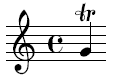
A trill in your music can look like this
Or like this tr~~~~~~~~~~~~~
Trills can be played differently, depending on the period in which the composer was living so it is important to know the time period of your piece.
Baroque trills (aka shakes in this time period) have several ways to be played as shown in this chart:
A table depicting how to perform different types of trills (or shakes) when playing music from the Baroque period (1600-1750).
The Baroque trill continuing through Mozart’s time usually begins on the note above the main note.
In music after the time of Mozart, the trill usually begins on the principal note.
Often, your music will have suggestions about how they should be played written above the music. If not, ASK!
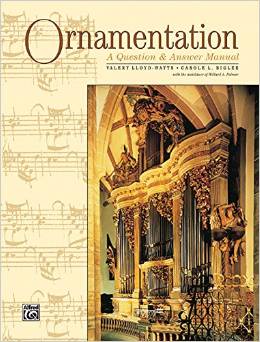
A really good book which explains about the trill and other ornaments is this one, available as a reference book in the O’Connor Music Studio:
Some trill exercises:
Questions? Write them down and don’t forget to ask at your next lesson!
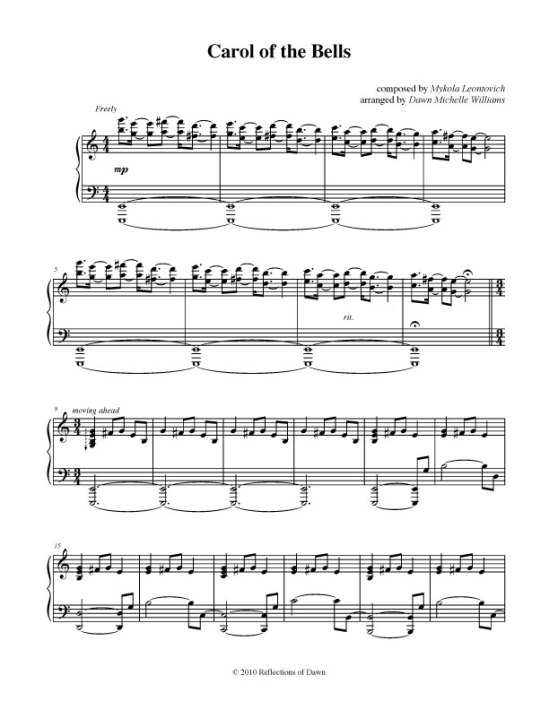
Carol of the Bells was composed by Mykola Dmytrovych Leontovych (1877-1921) in 1916. Originally titled Shchedryk, this Ukrainian folk song is sometimes called Ukrainian Bell Carol. “Shchedryk” which was associated with the coming New Year, originally celebrated in April.
Leontovych used this tune in 1904 along with lyrics by Peter J. Wilhousky to create the version that everyone knows today. It gained popularity during the 1920s and 1930s, and was introduced to an even wider audience when it was used in the movie “Home Alone”.
It was first performed in the Ukraine on the night of January 13, 1916, on the Julian calendar this is considered New Year’s Eve. In the United States the song was first performed on October 5, 1921 at Carnegie Hall.
This video is from the Christmas special of the Mormon Tabernacle Choir, presented at the BYU channel. Very beautiful sound of bells, the orchestra and choir, enjoy the video!
Not the standard version –
The O’Connor Music Studio has several versions of this Christmas Carol available for loan, including this version from the Mannheim Steamroller:
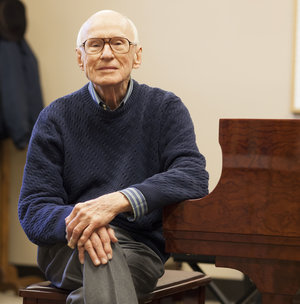
I have always respected Dr. Hinson’s work and his music. So much so that I went to Connecticut to take a class on Piano Pedagogy with him several years ago. I have also attended several local piano teacher workshops with him. At one of them, he claimed to remember me from that Connecticut class. Whether true or not, I treasure that comment and the signature on a piano book he gave me.
We have several of his books at the O’Connor Music Studio and many are available for loan. If you are interested in buying any for yourself, amazon.com has a great selection. In addition to those books he has authored, he has edited the works of many composers. Amazon lists 270 works edited and annotated by Dr. Hinson.
One of America’s most respected authorities on piano literature, Dr. Maurice Hinson received the Lifetime Achievement Award from the Music Teachers National Association at its Washington, D.C. convention in the spring of 1994, the Outstanding Alumni Award from the University of Florida in 1990, and the Outstanding Alumni Award from the University of Michigan in the fall of 1995. Hailed as a specialist in American piano music, some of his articles appear in the New Grove Dictionary of American Music in the United States.
Dr. Hinson received his Bachelor of Arts degree from the University of Florida and his Master of Music and Doctor of Musical Arts degrees from the University of Michigan. He also studied at The Juilliard School and the Conservatoire National in Nancy, France.
While a Senior Professor of Piano in the School of Church Music at the Southern Baptist Theological Seminary in Louisville, Kentucky, Dr. Hinson’s curriculum included teaching piano, piano literature, and piano chamber music. He performed, lectured, and gave masterclasses worldwide. His books and editions have become classic standards in the studios of serious piano teachers and students the world over.
Hinson, Dr. G. Maurice, age 84 died November 11, 2015 in the company of his family. Dr. Hinson was Professor and Senior Professor of Piano at the Southern Baptist Theological Seminary from 1957 to 2015, and a member of Broadway Baptist Church. He was also organist-choirmaster of churches in Florida, Michigan and Kentucky from 1943 to 1980. Dr. Hinson received his BA degree from the University of Florida and his MM and DMA degrees from the University of Michigan, and also studied at The Julliard School and the University of Nancy, France (Conservatoire National).
He was the first president of the Greater Louisville Music Teachers Association, and president of the Kentucky Music Teachers Association as well as the Southern Division of the MTNA. He also taught “The Dorsey Class,” a group of selected piano teachers from 1963 to 2015.
Dr. Hinson is the author of 14 books mostly published by Indiana University Press, plus over 100 articles for music publications. He was a senior editor for The Alfred Publishing Company of California. He edited more than 300 editions of classical piano music and recorded five DVDs of piano music.
As Professor of Piano at the Southern Baptist Theological Seminary for 58 years, he taught and nurtured many pianists who now hold distinguished positions in churches and universities throughout the world.
Dr. Hinson received many awards in piano pedagogy and performance. He was awarded the Liszt Commemorative Medal by the Hungarian Government and the Medal of Excellence by the American Liszt Society for his research on the music of Franz Liszt. He was hailed as a specialist in American Piano music and some of his most recent articles appeared in the NEW GROVE DICTIONARY OF AMERICAN MUSIC. He gave recitals, lectures, and master classes in five continents and 50 states.
Hinson was the founding editor of the JOURNAL OF THE AMERICAN LISZT SOCIETY, past editor of THE AMERICAN MUSIC TEACHER, and contributing editor of THE PIANO QUARTERLY and PIANO AND KEYBOARD.
Johann Sebastian Bach’s towering monument of organ music, with its deep sense of foreboding, will forever be associated with Halloween.
Get a free copy of the sheet music at IMSLP or borrow a copy from the O’Connor Music Studio. I have this arranged for organ, piano, duet, 2-piano, simplified…
None of the companies that have collected royalties on the “Happy Birthday” song for the past 80 years held a valid copyright claim to one of the most popular songs in history, a federal judge in Los Angeles ruled on Tuesday.
In a stunning reversal of decades of copyright claims, the judge ruled that Warner/Chappell never had the right to charge for the use of the “Happy Birthday To You” song. Warner had been enforcing a copyright since 1988, when it bought Birch Tree Group, the successor to Clayton F. Summy Co., which claimed the original disputed copyright.
Judge George H. King ruled that a copyright filed by the Summy Co. in 1935 granted only the rights to specific piano arrangements of the music, not the actual song.
I am considering getting this split bench for the O’Connor Music Studio since we play lots of duets here.
The current bench that came with the piano is one of those that opens up and has some storage but is not adjustable at all. This creates a problem for some of the older students and we have to move the music rack quite far forward so they can see properly. An adjustable bench would help them, too.
There may be a quiz on this option at your next lesson – give it some thought!


![A table depicting how to perform different types of trills when playing music from the Baroque period (1600-1750).[4] Note the similarity between the symbol for trill and that of the mordent.](https://oconnormusicstudio.com/wp-content/uploads/2015/03/baroque_trill_instructions.png)




 MaryO'Studio