March 4 in Music History

march4

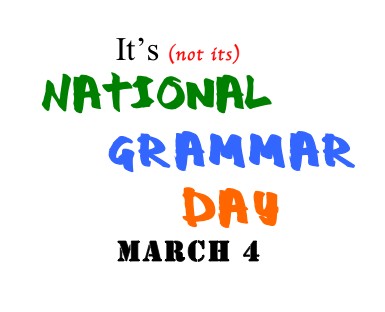
More about National Grammar Day.

. 1678 ~ Antonio Lucio Vivaldi, Italian baroque composer. The creator of hundreds of spirited, extroverted instrumental works, Vivaldi is widely recognized as the master of the Baroque instrumental concerto, which he perfected and popularized perhaps more than any of his contemporaries. A group of four violin concerti from Vivaldi’s Op. 8, better known as “The Four Seasons”, may well be the most universally recognizable musical work from the Baroque period. Perhaps the most prolific of all the great European composers, he once boasted that he could compose a concerto faster than a copyist could ready the individual parts for the players in the orchestra.
More information about Vivaldi

(MaryO’Note:  Spring from The Four Seasons is available in the Piano Maestro App for piano students)

. 1801 ~ The U.S. Marine Band performed for the first time at a presidential nomination. That president was Thomas Jefferson.

. 1875 ~ Bizet’s Carmen premier, Paris

. 1877 ~ The ballet of Swan Lake, composed by Peter Ilyich Tchaikovsky, was performed for the first time in the famous Bolshoi Theatre in Moscow, Russia

and

. 1915 ~ Carlos Surinac, Catalan Spanish-born composer and conductor

. 1918 ~ Frank Wigglesworth, American composer

. 1925 ~ Enzo Stuarti, Opera singer

. 1928 ~ Samuel Adler, German-born American composer

. 1929 ~ Bernard Haitink, Dutch conductor

. 1932 ~ Miriam (Zensile) Makeba, South African born singer who was the first black South African to attain international stardom.

. 1934 ~ Barbara McNair, Singer, TV hostess of The Barbara McNair Show, actress

. 1942 ~ Dick Jurgen’s orchestra recorded One Dozen Roses on Okeh Records in Chicago.

. 1942 ~ The Stage Door Canteen opened on West 44th Street in New York City. The canteen became widely known as a service club for men in the armed forces and a much welcomed place to spend what would otherwise have been lonely hours. The USO, the United Service Organization, grew out of the ‘canteen’ operation, to provide entertainment for American troops around the world.

. 1943 ~ Irving Berlin picked up the Best Song Oscar for a little ditty he had written for the film, Holiday Inn: White Christmas at the 15th Academy Awards.

. 1944 ~ Bobby Womack, Songwriter, singer

. 1948 ~ Chris Squire, Bass with Yes

. 1948 ~ Shakin’ Stevens (Michael Barratt), Singer, actor

. 1951 ~ Chris Rea, Guitarist with these groups Chris Rea Band and Ambrosia; singer, songwriter

. 1969 ~ Chastity Bono, Singer, daughter of Sonny & Cher

. 1978 ~ Andy Gibb reached the top of the music charts as (Love is) Thicker ThanWater reached #1 for a two-week stay. The Bee Gees also set a record on this day as their single, How Deep Is Your Love, from the Saturday Night Fever soundtrack stayed in the top 10 for an unprecedented 17 weeks.

. 1981 ~ Lyricist E.Y. ‘Yip’ Harburg died in an auto accident in Hollywood, CA at the age of 82. Two of his most successful hits were Over the Rainbow from The Wizard of Oz and It’s Only a Paper Moon, popularized by Nat King Cole and many others.

. 2001 ~ Glenn Hughes, a singer who performed as the mustachioed, leather-clad biker in the disco band the Village People, died at the age of 50. The group, which was the brainchild of producer Jacques Morali, featured men dressed as an Indian, a soldier, a construction worker, a police officer, a cowboy and Hughes’ character, a biker. The band released its first single, San Francisco (You’ve Got Me), in 1977. It followed the next year with its first hit, Macho Man. The band then produced a string of hits, including Y.M.C.A., In the Navy and Go West. Collectively the Village People sold 65 million albums and singles. Although disco fell out of fashion in the 1980s, Hughes stayed with the band until 1996, when he left to sing in Manhattan cabarets.

. 2003 ~ Fedora Barbieri, a mezzo-soprano whose passionate singing sometimes stole the scene from opera diva Maria Callas, died. She was 82. Born in Trieste in 1920, Barbieri performed on stages ranging from Milan’s La Scala to New York’s Metropolitan Opera House to London’s Covent Garden. Barbieri’s career started in 1940 and for her 80th birthday, she sang the role of Mamma Lucia in Pietro Mascagni’s “Cavalleria Rusticana” in Florence. Her repertoire included roles in operas by Giuseppe Verdi and Giacomo Puccini. Barbieri died in Florence, which she had adopted as her home and where she gave many performances.

. 2003 ~ Emilio Estefan Sr., father of the Latin music mogul, died at the age of 83. Estefan Sr. played the plump and comical ambassador in a music video for the Miami Sound Machine’s hit song Conga, which featured singer Gloria Estefan, wife of Estefan Jr. The Miami Sound Machine’s office was once located in Estefan Sr.’s garage. His son later built a home for his parents on his Star Island compound. Estefan Sr. was born in Santiago de Cuba and moved to Spain with Estefan Jr. in 1966. His wife and another son stayed in Cuba because the boy was of military draft age and couldn’t leave until 1980. Estefan Sr. came to Miami in 1968, a year after Estefan Jr., and opened a clothing business in Hialeah.

Yale Opens Online Course in Music and Social Action

Screenshot 2016-02-29 11.59.51


The Yale School of Music is pleased to announce the launch of its first massive open online course (MOOC), “Music and Social Action.” Taught by MacArthur Fellow Sebastian Ruth, the course asks vital questions about musicians’ responses to the condition of the world.

Sebastian Ruth is the founder and artistic director of Community MusicWorks, a nationally-recognized organization that connects professional musicians with urban youth and families in Providence, Rhode Island. It has been hailed as a “revolutionary organization” by the New Yorker and in 2010 received the National Arts and Humanities Youth Program Award, conferred by First Lady Michelle Obama.

Ruth has received a “genius” grant from the MacArthur Foundation Fellowship for “creating rewarding musical experiences for often-forgotten populations and forging a new, multifaceted role beyond the concert hall for the twenty-first-century musician.” Community MusicWorks was the inspiration for New Haven’s own Music Haven, which provides free instruments, lessons, classes, and ensemble and leadership development opportunities to young people (ages 6–18) from low-income New Haven neighborhoods.

Sebastian Ruth’s free online course offers students around the world an opportunity to learn from this leading educator and thinker. The multimedia course includes not only thoughtfully crafted lectures and engaging assignments but also historical photos and audio clips.

The course asks vital questions such as: Do musicians have an obligation and an opportunity to serve the needs of the world with their musicianship? Are we looking at a dying art form or a moment of re-invigoration? The course itself, as well as the impact of organizations such as Community MusicWorks and Music Haven, argues the case for re-invigoration.


The next session opens March 21.  Register here: Coursera


Exercises: Scales and Arpeggios

scales

PDF Article on Scales and Arpeggios

In music, a scale is any set of musical notes ordered by fundamental frequency or pitch.

An arpeggio (it. /arˈpeddʒo/) is a musical technique where notes in a chord are played or sung in sequence, one after the other, rather than being played together like a chord. This word comes from the Italian word “arpeggiare”, which means “to play on a harp”. An alternative translation of this term is “broken chord”.

Make any scale or chord here


Simply Piano Update!

Simply-Piano
App Description:

Simply Piano is a fast and fun way to learn piano, no previous knowledge required. Works with any piano or keyboard. Chosen as one of the best iPhone apps for 2015.

– Tons of songs like Imagine, Timber, Counting Stars, Safe and Sound, also J.S.Bach
– Includes courses for different musical tastes and playing levels
– Learn the basics from reading sheet music to playing with both hands
– Daily workouts will help you practice what you learned while not at the piano
– Suitable for all ages, no previous knowledge required

No Piano? Try the Touch Course with 3D Touch!

How it works:
– Place your device (iPhone/iPad/iPod) on your acoustic/MIDI piano or keyboard and play; the app will immediately recognize what you are playing
– Receive instant feedback on your playing to quickly learn and improve your skills
– Discover fun songs and complete courses to really get you going

Simply Piano is developed by JoyTunes, creators of award-winning apps Piano Maestro and Piano Dust Buster. The apps are used by tens of thousands of piano teachers worldwide with over 1 million songs learned every week. JoyTunes are experts in creating educational and fun apps for learning piano quickly and easily.

Awards & Recognition –
– “EMI’s Innovation Challenge”
– “World Summit Award”, by the United Nations
– “Best Tools for Beginners”, NAMM
– “Best Tablet Game”, GameIS
– “Parents’ Choice Award”
– “Golden App”, Apps for Homeschooling


Valentine Contest!

valentine-pm


Love is in the air!

To celebrate Valentine’s Day this year, students who play any version of John Legend’s “All of Me” using Piano Maestro and get 3 stars will have a chance to win an Amazon gift card!

The winner will be announced on February 15th!

NOTE: This is a contest through JoyTunes/Piano Maestro so the winner may not be from the O’Connor Music Studio.

MaryOOneRose

Practicing Piano Exercises

hanon1


These tips work for more than just exercises!

  • Practice each hand separately first.
  • Practice slowly in the beginning (metronome on 60 or less). If you played it easily, and precisely with the metronome, move the tempo up one notch. Continue to practice in this way until you reach your goal speed.
  • Practice with various dynamics. Practice soft, loud and everything in between.
  • As you practice, vary the touch. Play staccato, play legato, and play two-note slurs.
  • Practice in different rhythms.
  • Try to practice Hanon Exercises in  other keys, starting with the white keys (C, D, E, F, G, A, and B) and then going to the black keys (D-flat, E-flat, G-flat,A-flat, and B-flat).
  • And as Charles-Louis Hanon recommends it, practice his exercises by lifting the fingers high and with precision, playing each note very distinctly.

Piano Exercises: Hanon

hanon

Since the first release of this classic Schirmer edition over 100 years ago, almost anyone who has taken piano lessons for more than two years has played from The Virtuoso Pianist. 

Most anyone who has ever played piano has a love-hate relationship with the “Hanon”.

The Virtuoso Pianist (Le Pianiste virtuose) by Charles-Louis Hanon, is a compilation of sixty exercises meant to train the pianist in speed, precision, agility, and strength of all of the fingers and flexibility in the wrists.

First published in Boulogne, in 1873, The Virtuoso Pianist is Hanon’s most well-known work, and is still widely used by piano instructors and pupils although some teachers are getting away from the mechanical playing these can produce.

Personally, I’ve sometimes played these on “auto-pilot” since all one really needs is to get the first pattern going, then move up a step, up a step…

hanon1

Notes by C. L. Hanon: Preparatory exercises for the Acquirement of Agility, Independence, Strength and Perfect Evenness in the Fingers. For studying the 20 exercises, begin with the metronome set at 60, gradually increasing the speed up to 108.

From Wikipedia:

The exercises are intended to address common problems which could hamper the performance abilities of a student. These include “crossing of the thumb”, strengthening of the fourth and fifth fingers, and quadruple- and triple-trills.

The exercises are meant to be individually mastered and then played consecutively in the sections they are placed in.

Apart from increasing technical abilities of the student, when played in groups at higher speeds, the exercises will also help to increase endurance. The exercises are divided in three parts:

  1. Exercises 1 – 20: Labeled “preparatory exercises”, these are also the most famous exercises, and are used to develop finger strength and independence. Each exercise contains a sequence of 8 semiquavers, beginning on C, which is then repeated starting on D, and so on across two octaves. The exercise is then repeated in reverse down two octaves to the starting C. The exercises are intended to be practiced in groups of three, except for the first two which are practiced together.
  2. Exercises 21 – 43: Labeled “further exercises for the development of a virtuoso technique.” This more difficult section is meant to be played after the pianist has fully mastered Part 1. Part 2 includes scales and arpeggios.
  3. Exercises 44 – 60: Labeled “virtuoso exercises for mastering the greatest technical difficulties.” Since this section is considerably more difficult, Hanon recommends the mastery of both previous parts before proceeding to this one. This part includes repeated notes,, and more.

After all three parts are mastered, Hanon recommends all exercises be played through daily to retain technique.

The O’Connor Music Studio has several editions of this work.

Piano Pedaling

piano-pedal-diagram

These are some examples of pedal marks in piano music:

piano-pedal-music

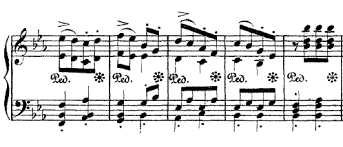
An older style of pedalling. The symbols can be between or below the staves.


piano-pedal-music2

This type of pedalling is more commonly used today.


piano-pedal-music3

Another type of pedalling

Pedals on a grand piano:

piano-pedal

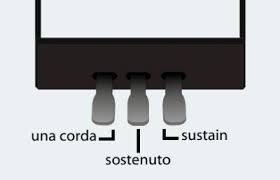
There are two standard foot pedals on the piano: on the left side is the una corda pedal and on the right side is the sustain (damper) pedal.

The middle sostenuto pedal is only standard on the American grand piano, and is very rarely used.

With pedals, the pianist can add resonance and color to the music and thereby bring out its inherent emotion. At the same time, over-pedaling or improper pedaling can drown the listener and the performer in a miasma of overlapping sounds.

Anton Rubinstein, renowned pianist of the late nineteenth century, said that the rightmost pedal is the very soul of the instrument.  His book, The Art of Piano Pedaling: Two Classic Guides, is still in print.

This pedal has various names. It is sometimes called the damper pedal (because it lifts all the dampers inside the piano), or the forte pedal (because the result of lifting all the dampers is a fuller sound), or the tre corde pedal (because it allows the three strings of each key to vibrate), or the sustaining pedal (because when you depress it the note will continue to sound even if you take your fingers off the keys).

Damper Pedaling Guidelines

Here are some guidelines pedaling. As with everything in art, they can be ignored under certain circumstances.

  1. Avoid pedaling notes that move in a stepwise or scalar pattern. Adjacent notes are dissonant, and when pedaled, they sound smudged.
  2. Do pedal notes that skip and form a nice harmony.
  3. Change your pedal (i.e., lift it up and put it down again) at each change of harmony.
  4. Avoid pedaling through rests (i.e., silence), at ends of phrases (at which point we would need to breathe and that split second of silence takes care of that), or staccato notes—although this is commonly ignored, because we actually can hear the disconnection through the pedal. This is why we do not depend on the pedal to achieve a beautiful legato.
  5. Keep your heel planted firmly on the floor, and pedal with either toes or the ball of foot, depending on your shoe size.

There are several manipulations possible with the damper pedal, each affecting the sound slightly differently.

Syncopated Pedaling

For the cleanest sound, the syncopated (or legato) pedal will give you the most control.  This is an action where the foot is put down immediately after the note is played. This may take some getting used to, but you can practice it by playing a C scale.

  1. Play C, and then lower the damper pedal.
  2. Hold the pedal down until you are just about ready to play the D.
  3. As the D’s finger goes down, the foot goes up, and then down again immediately after the D is struck.

The sound is clean. Continue up the scale the same way.

As an experiment, try putting the pedal down as you play a note, and notice the difference in the sound. Since the damper pedal lifts all the dampers, when you strike the D, not only are the three strings of that note free to vibrate but so do all the other strings vibrate sympathetically. You have a sound that is full of overtones.

There are times when you will want that effect and so will keep your foot down until the accumulated sound needs to breathe.

You can practice the syncopated pedal away from the piano by sitting on the bench or a chair and lifting your right knee at exactly the same time as your right hand goes down to tap the rising knee. This is the same action at the keyboard. The foot goes up when the hand goes down and then returns to the pedal.

Partial Pedals

There are half and quarter pedals too, which are used when you don’t want full vibrato. Rather than depressing the pedal all the way down, you lower your foot halfway so that the dampers are lifted only slightly off the strings, without allowing them to vibrate fully.

The quarter pedal gives even just a hint of pedal. It will take a while to feel these various distances on your piano. Also, you will find that each piano has its own pedal feel, which you must get used to before attempting to perform on that instrument.

Flutter Pedal

Then there are times, usually in scale passages, where touches of pedal can be very appealing and then the foot goes up and down rapidly and shallowly, and that is called the “flutter” pedal.

Choosing the Pedaling

The different types of damper pedaling techniques are for you, the pianist, to decide. But what determines which choice you will make?

Two things will control that: your very important ear, and your understanding of the music—the composer and the era in which the music was composed.

Your pedaling approach following the composer’s style depends on your knowledge of what instruments were available during the composer’s lifetime and how the pedal or lack of pedals would have made the music sound. This way, your interpretation will have authenticity.


Position of the Sustain Pedal:

Right pedal

The Sustain Pedal is Played With:

Right foot

Also Called:

Damper pedal, forte pedal, loud pedal

Effects of the Sustain Pedal:

The sustain pedal allows all of the notes on the piano to resonate after the keys have been lifted, for as long as the pedal is depressed. It creates a legato effect, forcing all of the notes to echo and overlap.

History of the Sustain Pedal:

The sustain pedal was originally operated by hand, and an assistant was required to operate it until the knee lever was created. The creators of the sustain foot pedal are unknown, but it is believed to have been invented around the mid-1700s.

Use of the sustain was uncommon until the Romantic Period, but is now the most commonly used piano pedal.

How the Sustain Pedal Works:

The sustain pedal lifts the dampers off of the strings, allowing them to vibrate until the pedal is released.

Sustain Pedal Marks:

In piano notation, use of the sustain pedal begins with Ped., and ends with a large asterisk.

Variable pedal marks, seen as __/\_/\__, are placed under notes, and define the precise pattern in which the sustain pedal is depressed and released.

    • Horizontal lines show when the sustain pedal is depressed.
  • Diagonal lines indicate a quick, temporary release of the sustain pedal.


Position of the Una Corda Pedal:

Left pedal

The Una Corda is Played With:

Left foot

Also Called:

Soft pedal, “piano” pedal

Effects of the Una Corda Pedal:

The una corda pedal is used to enhance the timbre of softly played notes, and exaggerate a low volume. The soft pedal should be used with notes that are already played softly, and will not produce the desired effect on louder notes.

History of the Una Corda Pedal:

The una corda was the first mechanism to modify the piano’s sound, and was originally operated by hand. It was invented in 1722 by Bartolomeo Cristofori, and quickly became a standard addition to the piano.

How the Una Corda Pedal Works:

Most treble keys are attached to two or three strings. The una corda shifts the strings so that the hammers only strike one or two of them, creating a softened sound.

Some bass keys are only attached to one string. In this case, the pedal creates a shift so that the hammer strikes on a lesser-used portion of the string.

Una Corda Pedal Marks:

In piano notation, use of the soft pedal begins with the words una corda (meaning “one string”), and is released by the words tre corde (meaning “three strings”).

Interesting Facts About the Una Corda Pedal:

  • Most upright pianos use a “piano” pedal instead of a true una corda pedal. The piano pedal moves the hammers closer to the strings, preventing them from striking with full force


Position of the Sostenuto Pedal:

Usually the middle pedal, but is often omitted.

The Sostenuto is Played With:

Right foot

Originally Called:

Tone-sustaining pedal

Effects of the Sostenuto Pedal:

The sostenuto pedal allows certain notes to be sustained while other notes on the keyboard are unaffected. It is used by hitting the desired notes, then depressing the pedal. The selected notes will resonate until the pedal is released. This way, sustained notes can be heard alongside notes played with a staccato effect.

History of the Sostenuto Pedal:

The sostenuto pedal was the last addition to the modern piano. Boisselot & Sons first showcased it in 1844, but the pedal didn’t gain popularity until Steinway patented it in 1874. Today, it’s primarily found on American grand pianos, but is not considered a standard addition since it is very rarely used.

How the Sostenuto Pedal Works:

When the sostenuto pedal is depressed, it keeps the dampers off the selected strings, allowing them to resonate while the rest of the keys’ dampers remain down.

Sostenuto Pedal Marks:

In piano music, use of the sostenuto pedal begins with Sost. Ped., and ends with a large asterisk. Notes meant to be sustained are sometimes marked by hollow, diamond-shaped notes, but there are no strict rules for this pedal since it is hardly ever used.

Interesting Facts About the Sostenuto Pedal:

    • Sostenuto is Italian for “sustaining,” although this incorrectly describes the pedal’s function.
    • On some pianos, the sostenuto pedal only affects the bass notes.
    • The middle pedal is sometimes built as a “practice rail” pedal instead of a sostenuto. A practice rail muffles notes with felt dampers, allowing for quiet play.
  • Sostenuto pedal markings are rarely seen in sheet music, but can be found in the works of Claude Debussy.