Piano Lessons are Not Just for Kids


When Paula Fay started taking piano lessons for the first time in her late fifties, it fulfilled a lifelong dream.

“I always wanted to learn how to play as a child, but my parents couldn’t afford it,” she said.


Today, four years later, Paula can play some of her favorite tunes. And she’s loving every minute of it.


Some adults may groan at childhood memories of lesson after lesson, practice after practice and a lot of teacher nagging, but many wish those days were back.


And more and more, these adults are turning wishful thinking into reality. According to the National Piano Foundation, adults ages 25-55 are the fastest-growing segment of people learning piano.


When Ruth Ann Laye started teaching an adult piano class at Mandarin’s Keyboard Connection, there was only one weekday class. Now, she’s up to seven classes. And of her own private practice of 28, 11 are adults.


One of her students is Belinda May from St. Augustine, who is in her 60s and in her second year of piano lessons.

Though her brothers played piano, she was more athletically inclined than musical. Then after years of “picking” at the pianos in her house, she recently resolved to start taking lessons. A beginner when she started, “now I’m playing Christmas carols,” she said.

“It tells me that you’re never too old to learn something new.”


Maureen Rhodes, a piano teacher on the Southside, would likely agree. She has more adults in her practice than she did 20 years ago.

“I think baby boomers are looking for ways to stay active,” she said. “Sometimes, kids come to me for lessons and then when they grow up and leave, their mother starts to take lessons,” says Rhodes. “Other adults have a specific goal in mind, like they want to play in church or accompany their grandson.”


Sandra Stewart, outgoing president of the Jacksonville Music Teachers Association and adjunct professor teaching a non-degree adult piano course at Florida State College, believes technology is a big part of the reason for the greater interest in piano among adults.

“Keyboards are more affordable, and that’s made all the difference,” she says.


But the piano is not always a succession of high notes for the adult student. Says Stewart: “Adults can have problems with finger dexterity. If they never played before, this can be frustrating. People who use computer a lot have an advantage. But if they don’t have this experience, they have to get over that hurdle.”

And some adults expect to transform into Mozart overnight.


“They may be symphony patrons or just love classical music and want to play instantly and do it like the pros,” Rhodes says. “But they have to develop the skills first, and it takes a lot of patience.”


But for adults committed to learning, it can be very satisfying for student and teacher alike.

“Adults are there for their own pleasure,” said Marc Hebda, president of the Florida State Music Teachers Association. “They have wonderful enthusiasm; it’s fun to see them get excited. It’s also interesting that with the economic downturn, they are not cutting back on lessons or buying instruments. Piano is a constant source of entertainment and personal development.”


The key to any student learning well, whether that student is an adult or child, is finding the right teacher. Hebda stresses the importance of taking lessons from a teacher with a music degree.

“Some people who took piano figure it’s easy to teach. But credentials are very important. You wouldn’t go to a doctor without certification or a lawyer who didn’t pass the bar. All our teachers have a music degree or demonstrate teaching ability.”

Hebda also notes that rapport between teacher and student is important.

“The student should interview the teacher, because not all students and teachers are a good match.”


For those who want to fast-track the learning process, there are alternatives. “The Piano Guy,” Scott Houston, has been teaching piano using a non-traditional method through his shows on public station WJCT.

“It seemed like there was a single path to the world of piano: this long process of taking lessons,” he said. “But people want to play the tunes they know.”


So Houston came up with a simple way for adults to learn quickly, based on the concept behind “lead sheets,” which are used by professional musicians. Houston’s technique is to teach adults a single line of notes on the treble clef with their right hand and chords with their left.


“My goal is not to teach adults to be the greatest players but to be able to play the tunes they want to play,” Houston says.

His approach has clearly struck a chord, as his book has sold 300,000 copies and he has taught many adults through his workshops in Indiana and master class “piano camp” from his beach home in Fort Myers.


There’s also a new trend gaining traction called “recreational music making” — RMM — which like Houston’s approach focuses on a simplified method to teaching music. The goal is not for a student to become accomplished at the piano and perform, but rather to just have fun making music. It is often taught to adults in group settings, such as music stores, churches and senior centers.


“Research has found that RMM is very helpful for seniors, promotes hand/eye coordination and keeps the brain working,” said Erin Bennett, assistant professor of piano and pedagogy at the University of North Florida. “Its asset is the ability to reach more people; it’s more inclusive and easier for the non-experienced.”


Whether learning piano through traditional or nontraditional means, its many benefits include boosting self-confidence.

“When I first started, I didn’t think I could do it,” Fay said. “And my friends and family were in disbelief that I was taking lessons. Then they wanted to hear a concert. In another year, I might just do it.”


She gets some measure of satisfaction in surprising those around her.

“Society puts restrictions on us as we get older that we stop learning,” she says. “But we are wiser, more patience and accept our limitations.”


Read more at Jacksonville.com: http://jacksonville.com/entertainment/music/2011-10-27/story/piano-lessons-not-just-kids#ixzz1l14hSFaV

Exercises – Scales and Arpeggios

scales

PDF Article on Scales and Arpeggios

In music, a scale is any set of musical notes ordered by fundamental frequency or pitch.

An arpeggio (it. /arˈpeddʒo/) is a musical technique where notes in a chord are played or sung in sequence, one after the other, rather than being played together like a chord. This word comes from the Italian word “arpeggiare”, which means “to play on a harp”. An alternative translation of this term is “broken chord”.

Make any scale or chord here


Piano Exercises

hanon1


These tips work for more than just exercises!

  • Practice each hand separately first.
  • Practice slowly in the beginning (metronome on 60 or less). If you played it easily, and precisely with the metronome, move the tempo up one notch. Continue to practice in this way until you reach your goal speed.
  • Practice with various dynamics. Practice soft, loud and everything in between.
  • As you practice, vary the touch. Play staccato, play legato, and play two-note slurs.
  • Practice in different rhythms.
  • Try to practice Hanon Exercises in other keys, starting with the white keys (C, D, E, F, G, A, and B) and then going to the black keys (D-flat, E-flat, G-flat, A-flat, and B-flat).
  • And as Charles-Louis Hanon recommends it, practice his exercises by lifting the fingers high and with precision, playing each note very distinctly.

January 15 in Music History

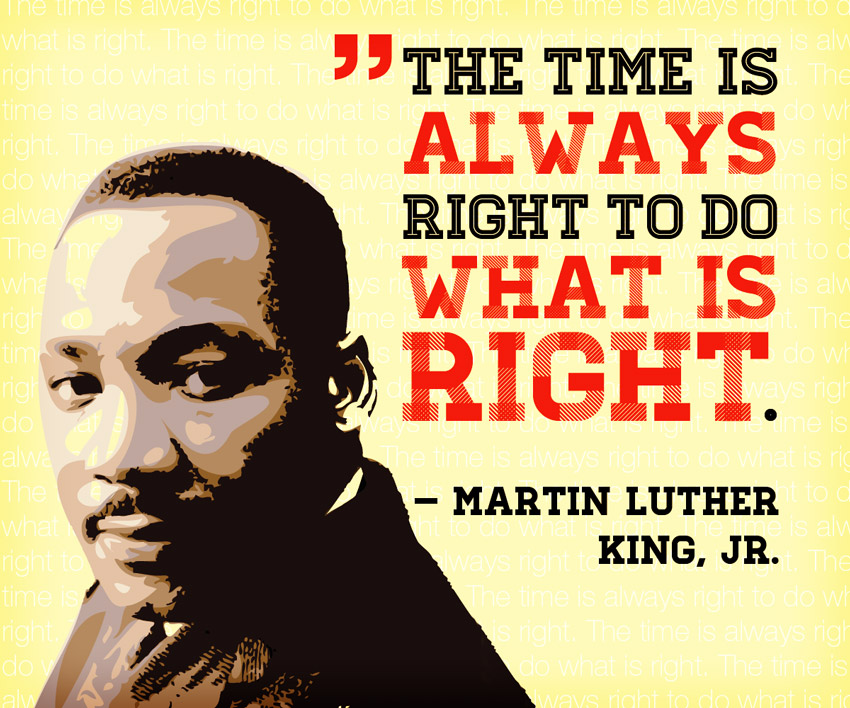
martin-luther-king


Martin Luther King, Jr Day.

. 1775 ~ Giovanni Battista Sammartini, composer, died

. 1890 ~ Premiere of The Sleeping Beauty, ballet by Pyotr Il’yich Tchaikovsky. After the less-than-promising 1877 debut of Swan Lake, marred by a largely amateur production, over a decade lapsed before the composer was commissioned by the Director of the Imperial Theatres in St. Petersburg to supply music for a ballet on the Perrault fairy tale, The Sleeping Beauty. Tchaikovsky threw himself arms-deep into the project. Not only was the composer again on happy turf, he was currently in a state of delight by the occasional presence of a three-year old little girl; children seemed to tap a joyful vein in Tchaikovsky. The little girl’s proximity fed a spirit of fantasy which transmitted to this most lighthearted of the composer’s scores. Most musicologists and historians concede that Sleeping Beauty is the most perfectly wrought of Tchaikovsky’s three ballet scores, classic in its restraint, yet possessing the right amount of color and panache to render it pure Tchaikovsky; its waltz remains a Pops favorite.

. 1896 ~ Alexander Scriabin made his European debut as a pianist at the Salle Erard in Paris

. 1904 ~ Ellie Sigmeister, Classical composer

. 1905 ~ Weldon Leo ‘Jack’ Teagarden, died of pneumonia
More information about Teagarden

. 1909 ~ Gene Krupa, American Jazz bandleader and drummer

. 1925 ~ Ruth Slenczynska, pianist, born in Sacramento, California

. 1941 ~ Captain Beefheart (Don Van Vliet), Singer with Captain Beefheart & His Magic Band, artist

. 1942 ~ Kenny Sargent vocalized with the Glen Gray Orchestra on Decca Records’ It’s the Talk of the Town.

. 1948 ~ Ronnie Van Zandt, Singer, songwriter with Lynyrd Skynyrd

. 1951 ~ Charo (Maria Rosario Pilar Martinez Molina Baeza), ‘The Hootchy Cootchy Girl’, actress, singer, wife of Xavier Cugat

. 1951 ~ Martha Davis, Singer with The Motels

. 1959 ~ Peter Trewavas, Bass with Marillion

. 1964 ~ The soundtrack album of the musical, “The King and I”, starring Yul Brynner, earned a gold record.

. 1967 ~ Ed Sullivan told the Rolling Stones to change the lyrics and the title to the song, Let’s Spend the Night Together, so it became Let’s Spend Some Time Together.

. 1972 ~ Elvis Presley, who was also censored from the waist down by Ed Sullivan, reportedly drew the largest audience for a single TV show to that time. Elvis presented a live, worldwide concert from Honolulu on this day.

. 1987 ~ Ray Bolger died.  He was an American entertainer of vaudeville, stage and actor, singer and dancer best known for his portrayal of the Scarecrow in The Wizard of Oz.

. 1993 ~ Sammy Cahn passed away.  He was an was an American lyricist, songwriter and musician.

Music Lessons Spur Emotional and Behavioral Growth in Children

From the Washington Post, but we knew this already, right?

Music training not only helps children develop fine motor skills, but aids emotional and behavioral maturation as well, according to a new study, one of the largest to investigate the effects of playing an instrument on brain development.

Using a database produced by the National Institutes of Health Magnetic Resonance (MRI) Study of Normal Brain Development, researchers at the University of Vermont College of Medicine analyzed the brain scans of 232 healthy children ages six to 18 specifically looking at brain development in children who play a musical instrument. (The original study did not indicate specific instruments.)

“What we found was the more a child trained on an instrument,” said James Hudziak, a professor of psychiatry at the University of Vermont and director of the Vermont Center for Children, Youth and Families, “it accelerated cortical organization in attention skill, anxiety management and emotional control.”

Read the entire article at Music lessons spur emotional and behavioral growth in children, new study says – The Washington Post.

‘Intervals Roasting’ – The Most Educational Christmas Carol Ever

music-theory-song

Music theory has never sounded so catchy with this witty remake of the holiday classic The Christmas Song (with apologies to Mel Torme) Try not to laugh at the ending.

Though it is a bit humorous, this version titled ‘Intervals Roasting’, with lyrics by David Rakowski, attempts to encapsulate the fundamentals of music theory in just over two minutes.

It does a good job of explaining the intervals and harmonic structure of the song and also gives you an idea of how to use music theory to analyze or compose music.

The O’Connor Music Studio has a copy if anyone wants to learn this 🙂

Have a Merry Musical Christmas!


This fun activity will encourage good practicing skills as students count down the days until Christmas with a Christmas practicing activity each day of December. It includes a variety of activities to practice sight reading, performing, technique, theory and more. Merry Christmas!

Please let me know if you do not want your student to participate in Christmas activities and I will assign alternate activities.


New for December: LIstening and Coloring Pages

I have just purchased a set of Christmas Shades of Sound Listening & Coloring Book for the studio.

Please let me know if you do not want your student to participate in Christmas activities and I will assign alternate activities.

Each week, I will print out some of the pages for your student and put them in his/her notebook.  After listening to the music on YouTube, the student may color the pages.

After they are colored, please return them to the notebook so that there will be a complete book when finished.

If you are an adult and want to listen and color, too, just let me know and I’ll print you a set.

From the website:

Get your piano students listening to great classical music!

The Shades of Sound Listening and Coloring Books are a great way to encourage students to listen to great piano and orchestral repertoire. Students of all ages will love coloring the fun pictures while listening to and learning from the music of the great composers.

This Shades of Sound Christmas edition includes 20 pieces of piano and orchestral literature for the Christmas season, from the Baroque to the Modern period. Includes background and historical information on the pieces and the composers, and a beautiful coloring page for each piece.

The Christmas Shades of Sound book includes 20 different pieces, including:

  • In Dulci Jubilo from the Christmas Tree Suite by Liszt
  • Pastorale from the Christmas Oratorio by Bach
  • Jesu, Joy of Man’s Desiring by Bach/Hess
  • Farandole from L’arlesienne Suite #1 by Bizet
  • Christmas Sonatina by Reinecke
  • Elegy #4 by Busoni
  • The Adoration of the Magi by Respighi
  • Winter Sonatina by Rowley
  • Christmas Concerto by Corelli
  • Ave Maria by Schubert/Liszt
  • Sleigh Bells in the Snow by Gillock
  • Diversions by Dello Joio
  • Nuit de Noel by Busoni
  • Sheep May Safely Graze by Bach/Petri
  • Carol Symphony by Hely-Hutchinson
  • Dance of the Sugar Plum Fairy by Tchaikovsky
  • Trepak by Tchaikovsky
  • Arabian Dance by Tchaikovsky
  • Waltz of the Flowers by Tchaikovsky
  • Hallelujah Chorus by Handel


Halloween Music: Funeral March of a Marionette by Charles Gounod

funeral

The Funeral March of a Marionette (Marche funèbre d’une marionnette) is a short piece by Charles Gounod. It was written in 1872 for solo piano and orchestrated in 1879. It is perhaps best known as the theme music for the television program Alfred Hitchcock Presents, which originally aired from 1955 to 1965.

In 1871-72, while residing in London, Gounod started to write a suite for piano called “Suite Burlesque”. After completing one movement, the Funeral March of a Marionette, he abandoned the suite and had the single movement published by Goddard & Co. In 1879 he orchestrated the piece. The instrumentation is: piccolo, flute, 2 oboes, 2 clarinets in A, 2 bassoons, 2 horns in D, 2 trumpets in A, 3 trombones, ophicleide, timpani, bass drum, triangle, strings. The work is in the key of D minor, with a central section in D major. Various arrangements by other hands exist.

There is a program underlying the Funeral March of a Marionette: The Marionette has died in a duel. The funeral procession commences (D minor). A central section (D major) depicts the mourners taking refreshments, before returning to the funeral march (D minor).
The score contains the following inscriptions in appropriate places:

La Marionnette est cassée!!! (The Marionette is broken!!!)
Murmure de regrets de la troupe (Murmurs of regret from the troupe)
Le Cortège (The Procession)
Ici plusieurs des principaux personnages de la troupe s’arrêtent pour sa rafrâichir (Here many of the principal personages stop for refreshments)
Retour a la maison (Return to the house). (Wikipedia)

Download this music in several versions from IMSLP.  Click on Arrangements and Transcriptions.  There are also some arrangements for piano at the O’Connor Music Studio.

On Alfred Hitchcock:

From Faber Piano Adventures Performance Book Level 3B No.7 (Also available in the OCMS Library):

Piano 4-hands:

With animation:

On organ:

Mannheim Steamroller:

And, finally, a light show!