I’m sure many have you have learned Twinkle, Twinkle Little Star by now. Did you know its’ the same melody as the ABC Song? You know…
Don’t believe it? Sing them both in your head or out loud.
The French melody first appeared in 1761, and has been used for many children’s songs, such as “Twinkle, Twinkle, Little Star”, “Baa, Baa, Black Sheep” and the “Alphabet Song”.
This is one of the first pieces a student learns in piano methods, since it has them reach just a bit outside their accustomed hand position on the word “little”.
I try to remember to let students know that Wolfgang Amadeus Mozart composed a set of twelve variations on the theme “Ah, vous dirai-je, Maman” for the piano and it started as the same basic Twinkle tune.
The sheet music is available at the O’Connor Music Studio if you want to borrow it or download it here about 1/3 of the way down the page under “Scores”.
I always enjoy these graphical scores. Watch the colors as the melody gets more and more complex:
Today, we start with Spring from the Four Seasons by Vivaldi. Many OCMS students have played this already in one of their Piano Pronto books. It’s also available in Piano Maestro.
If you have it in your piano book, today would be a great day to review it. (HINT – there might be a quick review at your next lesson!)
Vivaldi was born in Venice, Italy, March 4, 1678 and spent most of his life there. His father taught him to play the violin, and the two would often perform together.
He taught at an orphanage for girls and wrote a lot of music for the girls to play. People came from miles around to hear Vivaldi’s talented students perform the beautiful music he had written.
Many people think Vivaldi was the best Italian composer of his time. He wrote concertos, operas, church music and many other compositions. In all, Antonio wrote over 500 concertos.
His most famous set of concertos is The Four Seasons which is a group of four violin concerti. Each of which gives a musical expression to a season of the year. They were written about 1721 and were published in 1725 in Amsterdam.
Here’s a piano version similar to the one in Movement 1 but in a different key.
And the original with Itzhak Perlman playing and conducting!
Want to play a version of this but aren’t using these books? Just ask!
This summer, I’ve decided to add a new feature to piano lessons. I know that many families travel during the summer months and it’s sometimes difficult to practice.
These daily assignments, June through August will help you and your students learn a bit more about the pieces they’re learning during the year – or maybe give ideas for something that they’d like to learn.
Each piece has a bit of composer info and several different interpretations, some of which are very humorous. Some of the assignments appear in Piano Maestro so be sure to have that handy, if your student uses that.
Some days give hints that the assignment of the day may be played (or reviewed) at the next lesson so please be sure that your student takes note of that (no pun intended!)
Each year on May 22 we observe National Buy a Musical Instrument Day. The day is all about playing music. If you are a musician, it might be time for a new instrument. Maybe you can learn to play a second or third one. If you have never played an instrument before, National Buy A Musical Instrument Day might be the motivation you need to start.
Naturally, here at the O’Connor Music Studio, a piano, keyboard with weighted keys (and 88 of them!) or organ is recommended but this day is for all types of instruments and is for people of all ages. Grandpa can play his ukulele while the grandkids play the drums, trombone, and flute. Together they can all make terrific music!
Now and then, our studio gets asked if we offer bi-weekly lessons. I mean, doesn’t it make sense that if you take lessons every other week, you have half the number of trips into the studio, you have double the amount of time to practice, and you can save some money, right?
WRONG.
Aside from the fact that it is a scheduling nightmare for the teacher and studio, I want to outline a few reasons why (in most cases) bi-weekly lessons do not work.
As all my students know, I teach theory with all piano and organ lessons. Sometimes, it’s from a theory book that matches a lesson book, sometimes on the fly on an “as needed” basis.
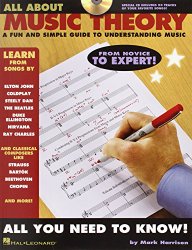
This book looks like it would be interesting to use as a review or to look ahead and see what’s coming. I have just ordered a copy for the studio if you want to check it out at the next lesson.
If you wish there was a fun and engaging way to help you understand the fundamentals of music, then this is it. Whether it’s learning to read music, understanding chords and scales, musical forms, or improvising and composing, this enjoyable guide will help you to finally start understanding the structure and design of music.
This fun-filled, easy-to-use guide includes:
* Music notation
* Scales and modes
* Melody harmonization and counterpoint
* Chord progressions
* Song form and structure
Listen and learn with the CD that has 90 tracks, including over 50 popular songs such as:
* Beauty and the Beast
* Candle in the Wind
* Imagine
* In the Air Tonight
* Killing Me Softly with His Song
* Let It Be
* Message in a Bottle
* Misty
* Satin Doll
* Take the ‘A’ Train
* Unchained Melody
* What’d I Say
* and more!
All Fairfax County public schools and offices will be closed today, Friday March 2.
All Fairfax County public schools and offices will be closed today March 2, 2018 (Condition 1) due to dangerous high winds. The following activities in schools and on school grounds are canceled:
extracurricular activities
interscholastic contests
team practices
field trips
middle school after-school programs
professional learning and training courses
adult and community education classes
recreation programs and community use by outside groups not affiliated with FCPS
School age child care (SACC) centers are closed.
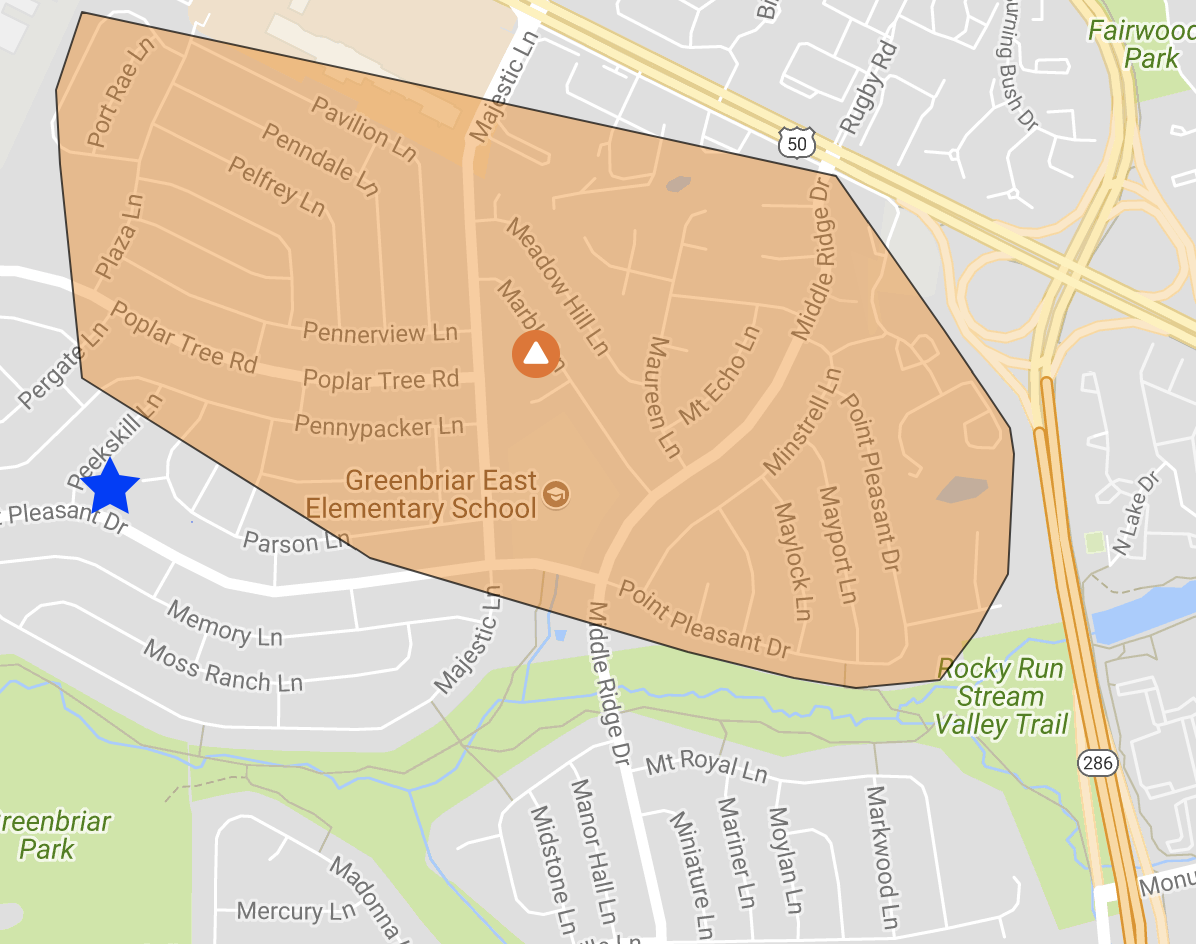
And the power situation at the O’Connor Music Studio this morning. The orange area has no power.
There MAY be piano lessons this afternoon. I’ll keep in touch 🙂
From the Washington Post, but we knew this already, right?
Music training not only helps children develop fine motor skills, but aids emotional and behavioral maturation as well, according to a new study, one of the largest to investigate the effects of playing an instrument on brain development.
Using a database produced by the National Institutes of Health Magnetic Resonance (MRI) Study of Normal Brain Development, researchers at the University of Vermont College of Medicine analyzed the brain scans of 232 healthy children ages six to 18 specifically looking at brain development in children who play a musical instrument. (The original study did not indicate specific instruments.)
“What we found was the more a child trained on an instrument,” said James Hudziak, a professor of psychiatry at the University of Vermont and director of the Vermont Center for Children, Youth and Families, “it accelerated cortical organization in attention skill, anxiety management and emotional control.”
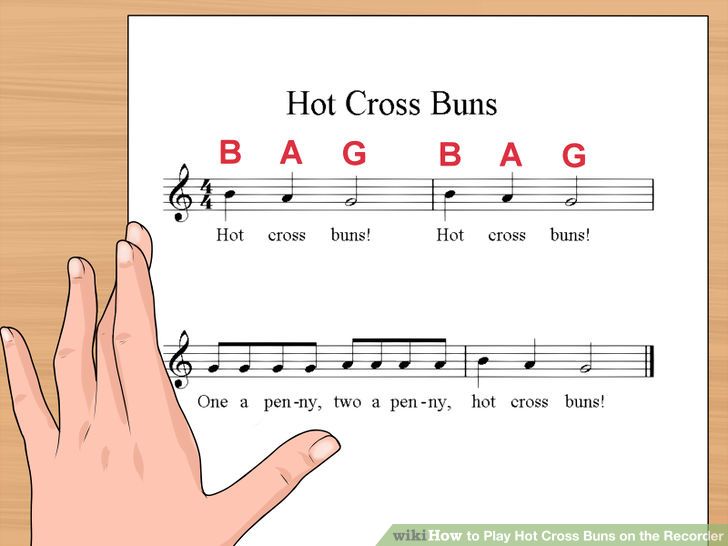
It’s time for Hot Cross Buns. “Hot Cross Buns” is an English language nursery rhyme, Easter song, and street cry referring to the spiced English bun known as a hot cross bun, which is associated with the end of Lent and is eaten on Good Friday in various countries.
My husband came home from the grocery store last night with Hot Cross Buns. I was surprised because they had never had them before Ash Wednesday in past years. I almost refused to eat them because they were “seasonally incorrect”. Of course, I did try one to be sure that they weren’t mislabeled or anything…
I’d never even heard of HCB before college. My freshman year in the dining commons at UMass Amherst changed all that. Huge pans of actually hot, cross buns. We actually even put butter on them, too. No wonder the “Freshman 15” was a problem.
I’ve made a fairly exhaustive study of the local grocery stores’ versions and the one from Giant come out on top. Surprisingly, Wegmans isn’t the winner in this case.
Looking for a video on the history of HCB, I came across one for making these at home.
Maybe that wouldn’t be a good thing!
A bit of HCB trivia: English folklore includes many superstitions surrounding hot cross buns. One of them says that buns baked and served on Good Friday will not spoil or grow moldy during the subsequent year.
Another encourages keeping such a bun for medicinal purposes. A piece of it given to someone ill is said to help them recover.
If taken on a sea voyage, hot cross buns are said to protect against shipwreck.
If hung in the kitchen, they are said to protect against fires and ensure that all breads turn out perfectly. The hanging bun is replaced each year.
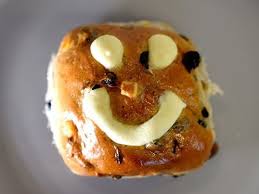
Turns out there’s also a “Not Cross Bun” which is a variation on the hot cross bun. It uses the same ingredients but instead of having a “cross” on top, it is has a smiley face in reference to it being “not cross” or “angry”.
The not cross bun was first sold commercially in 2014 by an Australian bakery in response to supermarkets selling hot cross buns as early as Boxing Day (December 26)



 MaryO'Studio