For Piano and Clorox wipe.
Live performances of this new work by various artists every hour, on the hour, at piano studios all around the world!
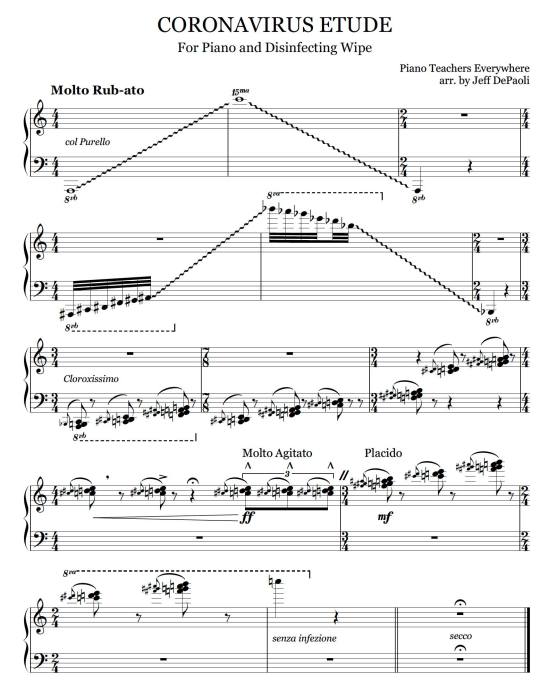

For Piano and Clorox wipe.
Live performances of this new work by various artists every hour, on the hour, at piano studios all around the world!
Lamb
Joseph Lamb (1887 to 1960) was an extraordinarily gifted ragtime pianist and composer along with Scott Joplin and James Scott. He differed from them, though, because the art of improvisation completely baffled him. In response to this, Lamb viewed ragtime as an art form written on paper, instead of a spontaneous one. Though his style and approach were markedly different from his peers, he still left behind a rich legacy and remained one of the most influential ragtime composers.
Lehar
Franz Lehar, 1870 to 1948 was the son of a bandmaster serving principally in Hungary. He followed his father’s profession, before winning, in 1902, success in the theatre in Vienna, where he succeeded in the following years in reviving the operetta, providing music of greater distinction, with tenor arias written specifically for Richard Tauber.
The reputation of Franz Lehar as a composer of operetta is assured as he wrote nearly forty of them. Of these by the far the best known is Die lustige Witwe (The Merry Widow), first staged in Vienna in 1905, the favourite operetta of Adolf Hitler.
Lennon
John Lennon, 1940 to 1980,was a pop star, composer, songwriter, and recording artist. He was born in Liverpool, Merseyside, NW England, UK. and was The Beatles rhythm guitarist, keyboard player, and vocalist, and a partner in the Lennon–McCartney song-writing team. He married Japanese artist Yoko Ono in 1969. On the birth of his son, Sean (born in 1975), he retired from music to become a house-husband. Five years later he recorded (Just Like) Starting Over, but he was shot and killed by a deranged fan just before its release. His death affected millions of people, record sales soared, and he continues to be admired by new generations of fans.
Lerner and Lowe
Alan Jay Lerner,
Playwright, born August 31, 1918, New York, New York; died June 14, 1986Frederick Loewe,
Composer, born June 10, 1904, Vienna, Austria; died February 14, 1988Frederick Loewe, an unheralded Vienna-born composer, and Alan Jay Lerner, the lyricist-playwright son of the proprietors of an American chain of women’s clothing shops, with sketches and lyrics for two Harvard Hasty Pudding shows among his major credits, met by chance at New York’s Lambs Club in 1942. Had they not, Brigadoon would never have emerged from the mists of the Scottish Highlands to make the world feel “Almost Like Being in Love” . . . no one would have been there to “Paint Your Wagon” . . . My Fair Lady would still be a less than lyrical English girl from George Bernard Shaw’s Pygmalion who couldn’t sing a note. . . we might never have thought to “Thank Heaven for Little Girls” like “Gigi” . . . and Camelot would most likely have stayed within the pages of Arthurian legend.
When the two, who were destined to enrich the American musical theater with some of its most poignant, rousing, and memorable lyrics, engaging books and powerful musical scores, had that chance meeting more than 50 years ago, neither was widely known. Loewe’s Great Lady had had a brief run on Broadway in 1938. Lerner had added radio scripts to his Hasty Pudding Club show credits. But later collaborations after one brief failure, What’s Up? (1943), and the moderately successful The Day Before Spring (1945), which ran five months on Broadway, made musical history.
Alan Jay Lerner was one of three sons of Joseph J. Lerner, who founded Lerner Stores, Inc. He was educated in England and at the Choate School in Wallingford, Connecticut, before entering Harvard. He studied at the Juilliard School of Music during vacations from Harvard. After graduating in 1940 with a B.S. degree, he wrote advertising copy and radio scripts for such programs as the “Philco Hall of Fame.”
Frederick “Fritz” Loewe was the son of Edmund Loewe, an eminent operetta tenor. When he was two, Frederick accompanied his father on a tour of the United States. The youngster played piano at four and, at nine, composed the tunes for a music hall sketch in which his father toured Europe. At 15, he wrote “Katrina,” a popular song that sold 3,000,000 copies in Europe. He had begun his own concert career as soloist with some of Europe’s leading symphony orchestras at the age of 13 after having studied with the noted European musician Ferruccio Busoni and Eugene d’Albert. In 1923, young Loewe was awarded the Hollander Medal in Berlin and studied composition and orchestration with Nickolaus von Reznicek.
The following year, the younger Loewe accompanied his father to America. Since neither a concert he gave at New York’s Town Hall, nor a subsequent week’s engagement at the Rivoli Theater led to further concert engagements, he tried teaching music and playing at Greenwich Village night clubs. When music failed to earn him a living, he worked as a busboy in a cafeteria and as a riding instructor at a New Hampshire resort. He took up flyweight boxing and failed, then went West, cowpunching, gold mining, and carrying mail on horseback over the Montana mountains before returning to New York where he found work as a piano player. In 1935, Loewe’s song “Love tiptoes Through My Heart” was accepted for the musical Petticoat Fever. His own musical, Salute to Spring, was presented in St. Louis in 1937. The next year, his Great Lady reached Broadway, but ran for only 20 performances.
The first Lerner-Loewe collaboration was a musical adaptation of Barry Connor’s farce The Patsy for a Detroit stock company in 1942. They called it Life of the Party and it enjoyed a nine-week hit that encouraged them to continue with the musical comedy What’s Up? which opened on Broadway in 1943. Lerner wrote the book and lyrics with Arthur Pierson, and Loewe composed the music. It ran for 63 performances and was followed in 1945 by their The Day Before Spring.
It was when the curtain went up to the haunted strains of bagpipes on the night of March 13, 1947, and the mist-shrouded Scottish Highland village of Brigadoon first appeared, that the team of Lerner and Loewe also emerged as potentially legendary. The musical, which after its original 581 performances on Broadway, toured extensively and has been revived frequently, won the “best musical”award from the New York Drama Critics Circle the year it opened and was hailed as having “evoked magic on Broadway.”
Between Brigadoon and Paint Your Wagon, the next team effort by Lerner and Loewe, Lerner wrote Love Life, with music by Kurt Weill, which was selected as one of the best plays of the 1948-49 Broadway season, plus the story, screenplay and lyrics for the films Royal Wedding and Brigadoon and the story and screenplay for An American in Paris, for which he won an Oscar in 1951.
Paint Your Wagon rolled in in 1951, and then, five years later, on March 15, 1956, My Fair Lady opened and became one of the most spectacular successes–artistic and financial–in the history of the American theater. Playing a record 2,717 performances on Broadway alone, it went on to break all other existing world records. This musicalization of Shaw’s classic Pygmalion was named “outstanding musical of the year” by the New York Drama Critics Circle–and by millions of theater goers.
Lerner and Loewe’s next collaboration was on the film adaptation of the Colette novel Gigi, another success filled with songs destined to become standard.
There was more collaborating to come–the film version of the Antoine de Saint-Exupery fable The Little Prince in 1972, but the 1960 Broadway hit Camelot which brought Arthurian England to life for its most shining hour, rang the curtain down on the phenomenon of Lerner and Loewe. Loewe, who had suffered a heart attack in 1958, went into retirement.
In tribute to his long time former partner, Lerner wrote, “There will never be another Fritz. . . . Writing will never again be as much fun . A collaboration as intense as ours inescapably had to be complex. But I loved him more than I understood or misunderstood him, and I know he loved me more than he understood or misunderstood me.”
Lewis
Jerry Lee Lewis (September 29, 1935 – October 28, 2022) was an American pianist, singer and songwriter. Nicknamed “The Killer”, he was described as “rock ‘n’ roll’s first great wild man”.
Liadov
Anatol Konstantinovich Liadov lived from 1855 until 1914. He was the son of a conductor at the Mariinsky Theatre in St Petersburg, and was trained at the Conservatory, where he was briefly a pupil of Rimsky-Korsakov and later a member of the teaching staff. He was associated with Balakirev and subsequently became a member of Belyayev’s circle, helping, in particular, in the establishment of the publishing-house that Belyayev established for Russian composers.
He was a thoroughly competent musician, conductor and composer, but did not apply himself constantly to work. His failure to supply music for the Dyagilev ballet in Paris in 1910 allowed Stravinsky his first chance with the Ballets russes. His compositions are characteristic of the period in Russian nationalism, when nationalism was joined with technical competence inculcated at the Conservatories.
The best known orchestral compositions by Liadov are the descriptive Russian fairy-tale pieces Kikimora, Baba-Yaga and Volshebnoye ozero (The Enchanted Lake). His last orchestral work was the symphonic poem Skorbnaya pesn. All are very much in the nationalist tradition exemplified by Rimsky-Korsakov.
Liadov wrote a number of shorter piano pieces, including Fugues and a set of Canons, testimony to his contrapuntal ability. Other pieces have characteristic titles, examples of pleasing and well crafted compositions for which there was a ready market.
Liadov wrote a setting of the final scene of Schiller’s Die Braut von Messina (The Bride from Messina) for his Conservatory graduation. Of some 26 songs, eighteen are Children’s Songs.
Liberace
(Walter) (Wladziu Valentino) Liberace, American pianist and showman. Lee, as he was known, was the master of Las Vegas. Hundreds of thousands flock to his museum there (operated by his brother, George) to see Liberace’s garish suits, trademark candelabra, and learn of the myths behind this hugely successful star of television, stage and concerts the world over.
Ligeti
György Ligeti, a composer, was born in 1923 in Transylvania. He studied and later taught at the Budapest Academy of Music. After leaving Hungary in 1956, he worked at the electronics studio in Cologne, then settled in Vienna, where he developed an experimental approach to composition. His first large orchestral work, Apparitions (1958–9), made his name widely known. In Aventures (1962) he uses his own invented language of speech sounds. He has also written a choral requiem, a cello concerto, and music for harpsichord, organ, and wind and string ensembles.
Lipatti
Dinu Lipatti was born in Bucharest and lived from 1917 until 1950. He was a pianist and composer who studied in Paris with Cortot and Boulanger, and after World War 2 established an international reputation as a gifted pianist, especially in the works of Chopin. His compositions include a Symphonie concertante for two pianos and strings, and a concertino for piano and orchestra. His career was cut short when he died of a rare form of cancer.
Liszt
Franz Liszt was born in Raiding, near Doborján, October 22, 1811 and died in Bayreuth, July 31, 1886. He was a Hungarian composer and pianist who was a major influence during the romantic period. Liszt was an outstanding pianist at seven, composed at eight and made concert appearances at nine. In addition to being a piano virtuoso, he was also a critic, conductor, city music director, literary writer and transcriber of the works of other composers. He transcribed Beethoven’s Symphonies for the piano.
Franz Liszt began his career as the outstanding concert pianist of the century, who, along with the prodigious violinist Niccolò Paganini (1782-1840), created the cult of the modern instrumental virtuoso. To show off his phenomenal and unprecedented technique, Liszt composed a great deal of music designed specifically for this purpose, resulting in a vast amount of piano literature laden with dazzling scales, trills, arpeggios, leaps, and other technical marvels. In this vein, Liszt composed a series of virtuosic rhapsodies on Hungarian gypsy melodies, the best-known being the all too familiar Hungarian Rhapsody no. 2. Liszt developed the rhapsody as a form of serious music. This kind of music is worlds apart from the generally more introspective, poetic music of pianist-composer Frédéric Chopin.
Liszt was wildly handsome and hugely talented. He was extremely popular in Paris during the 1830’s. It is said that women actually fainted at his piano recitals. He was the first to position the piano so that its lid reflected the sound and the audience could see his profile as he performed.
Liszt was the first to write a tone poem, which is an extended, single-movement work for orchestra, inspired by paintings, plays, poems or other literary or visual works, and attempting to convey the ideas expressed in those media through music. Such a work is Les Pruludes, based on a poem in which life is expressed as a series of struggles, passions, and mysteries, all serving as a mere prelude to . . .what? The Romantic genre of the symphonic poem, as well as its cousin the concert overture, became very attractive to many later composers, including Saint-Saëns, Tchaikovsky, Dvořák, Sibelius, and Richard Strauss.
Lloyd Webber
British composer Andrew Lloyd Webber is one of the most successful composers of this era with hugely successful commercial hits such as Jesus Christ Superstar, Sunset Boulevard, Cats, Phantom of the Opera and Evita. Cats, the longest-running production in Broadway history, closed after 7,397 performances on June 25, 2000.
Locatelli
Pietro Antonio Locatelli lived from 1695 until 1764. He was born in Bergamo, later moving to Rome, where he might have studied with Corelli, but more probably was a pupil of Valentini. He was an Italian composer of sonatas and concerti, but he was best known as a virtuoso violinist playing mostly in Amsterdam where he settled in 1721. He won a reputation as a virtuoso, performing in Italy, in Bavaria and in Berlin. In 1729 he settled in Amsterdam, where he taught and conducted an amateur orchestra and was able to pursue his wider cultural interests.
Locatelli wrote a number of concerti grossi, following the example of Corelli. The first set, published in Amsterdam in 1720, include twelve fugues. L’arte del violino (The Art of the Violin), published in 1733, contains twelve violin concertos and 24 Caprices, precursors of Paganini’s famous set for unaccompanied violin. A further set of six concertos was published two years later and a set of six, published in 1744, is scored for four violins, two violas and basso continuo. Locatelli combines the Roman style of Corelli with, in his solo concertos, the virtuosity of Vivaldi in Venice.
In his Concerti grossi, works for string orchestra with a smaller group of soloists, Locatelli at first follows the pattern of Corelli, with one or two violas added to Corelli’s solo group of two violins, cello and harpsichord. There is also a Concerto grosso that includes a group of solo wind instruments, in addition to solo violin concertos. Some of these works have programmatic titles. His L’arte del violino (The Art of the Violin) includes 24 Caprices for unaccompanied violin, challenging works that have been regarded by some as foreshadowing the Caprices of Paganini in the following century. Locatelli also published sets of trio sonatas and solo sonatas, including a set of the latter for flute and basso continuo.
Loewe
Frederick “Fritz” Loewe lived from 1904 until 1988. He was a composer, born in Vienna, Austria and at age 13 he was the youngest pianist to solo with the Berlin Symphony. At age 15 he composed Katrina (1919), which sold two million copies of sheet music in Europe. Although he had studied with great European masters of the piano, when he came to the U.S.A. in 1924 he failed as a piano virtuoso. He took up a series of odd jobs–prospecting for gold, professional boxing–but by the mid-1930s he had launched his career as a composer for the musical theater. Not until he teamed up with lyricist Alan Jay Lerner in 1942, however, did he find his true talent; their first big success was Brigadoon (1947) and this was followed by such classic stage and film musical scores as My Fair Lady (1956), Gigi (1958), and Camelot (1960). This last led to their falling-out and they did not collaborate again until in 1973 when they made a stage version of their film musical, Gigi. Their last collaboration was The Little Prince (1974), after which Loewe retired.
If ever I would leave you from Camelot won him a Grammy Award.
Lully
Jean Baptiste Lully lived from about 1632 until 1687 and was considered to be a baroque composer. He was an Italian-born French court composer who molded Italian opera music to suit the French text. He was the first to compose French overtures, which served as model for subsequent composers, especially J. S. Bach. He changed his name from the Italian Giovanni Battista Lulli when he became a French citizen.
Lully was conducting a Te Deum to celebrate Louis XIV’s recovery from illness. He was banging loudly on the floor with a staff when he struck his foot with such force that it developed an abscess, from which the unfortunate Lully died shortly after.
Lunceford
James Melvin Lunceford was born. June 6, 1902, Fulton, Miss., U.S. and died on July 12, 1947, Seaside, Ore. He was an American jazz dance-band leader whose rhythmically appealing, well-disciplined orchestra performed arrangements by trumpeter Sy Oliver and others to popular acclaim from 1934 to 1945 and influenced both swing and post-World War II dance bands.
Lunceford, during his youth, acquired proficiency on all reed instruments, but he seldom played with his band because he preferred to conduct. He taught and organized a student orchestra in a Memphis, Tenn., high school before beginning his professional career as a bandleader in 1929. Practiced showmanship, precise ensembles, and a medium two-beat swing tempo rather than exciting soloists were the Lunceford band’s trademarks. The band’s most popular songs included Organ Grinder’s Swing (1936) and For Dancers Only (1937). The Lunceford band was considered to be on a par with bands led by Duke Ellington, Count Basie, and Benny Goodman during the 1930s, and in 1940 the ensemble won a celebrated “battle of the bands” from a field of 28 groups, among them Basie’s, Goodman’s, and Glenn Miller‘s. Arranger Oliver left Lunceford in 1939, and by 1942 the band’s popularity had declined. Following Lunceford’s death while on tour, pianist Edwin Wilcox and saxophonist Joe Thomas led the band for several years.
Lutoslawski
Witold Lutoslawski lived from 1913 until 1994. He was born and studied in Warsaw, winning a distinguished international reputation particularly from the 1950s onwards, a leading composer among a group of creative artists of outstanding ability, remarkable in his handling of forms and textures of great originality.
The genius of Lutoslawski was early evident in his 1938 Symphonic Variations. The years after the war brought a return to more conventional national modes of composition, heard in his Little Suite and Concerto for Orchestra. Later works have allowed a more experimental approach on a broader palette, to be heard in his Funeral Music of 1958, his Second Symphony and the Prelude and Fugue for thirteen string instruments.
Characteristic works for voice and orchestra include Paroles tissées for tenor and chamber orchestra, and Three Poems by Henri Michaux for twenty voices and orchestra.

They’ve listened to your amazing feedback and have added your most requested songs, squashed tons of bugs and added iOS 17 compatibility.
You asked, and they listened and added a sparkling collection of most requested songs in 2023 for your students to enjoy “Barbie Girl” from the new ‘Barbie movie, “Circle of Life” from ‘The Lion King’, “He’s a Pirate” from ‘Pirates of the Caribbean’ and “Rainbow Connection” from ‘The Muppet Movie’.
Available in 3 versions, all new songs can be found in the ‘Top 2023 Requests’ section in the song library.
It will be fun watching your child improve their piano skills all while having fun using Piano Maestro in lessons each week!
As your child’s teacher (or YOUR teacher!), I’m looking forward to seeing the progress they will make when they start using it at home each day. This guide will help you understand how this app will benefit your child and how to get it set up on your own iPad.
Overview
What is Piano Maestro?
Piano Maestro is the ultimate piano practice tool that will have students quickly playing their favorite classical, pop, rock, TV and video game songs and themes. It is available in the App Store and works on the iPad.
What skills does it improve?
• Note reading
• Sight reading
• Rhythm
• Inner pulse
• Confidence
What makes it so fun?
• Upbeat background tracks
• Stunning graphics
• Instant rewards and feedback
• Satisfaction of playing REAL music
It works with an acoustic piano?
Yes! Your child practices on your real acoustic or digital piano. Piano Maestro listens from the iPad’s built-in microphone. No wires needed.
I’m already paying for lessons. What value does this add?
Sometimes I wish I could be there with your child to encourage them to keep practicing daily. I’m sure it’s not always easy, as unforeseen challenges will arise.
Since our time each week is just too short, this app will give me eyes on the ground and it will keep them practicing longer and improving more quickly.
How will it be used in lessons?
I will spend a few minutes of each lesson helping your child master a couple of new songs all while having fun! I will also teach them how to use the practice options at home.
At the end of the lesson, we will choose Home Challenge assignments within the app that will show up in your account at home. I’ll get updates when progress is made.
Getting Started
Wow, this sounds awesome. Now, how do I get started?
1) Download Piano Maestro on your iPad from the AppStore
2) Create a JoyTunes account with a parent’s email, under which, you can have multiple profiles for each member of the family.
3) Create a profile for each family member (that means you too Mom and Dad!) inside the Parent/Teacher zone (top right-hand corner of the main screen)
4) Connect to your teacher, me! After creating a profile in the “profiles” tab of the parent/teacher zone, select the student’s profile and click “connect to teacher.” Once I approve the connection to your child, they will receive full access to all content for FREE! I will then also begin receiving weekly progress reports.
5) Start Playing – I will now start assigning you homework, meanwhile, get started on Journey Mode.
When you connect to the O’Connor Music Studio, Piano Maestro is free for as long as you study here.

The Lego Ideas Grand Piano not only looks good on the shelf, it pairs with your phone to play back tunes.
Someone from CNET writes: “I got my hands on the hard-to-find Grand Piano set from the Lego Ideas collection and put it together just for you. Watch as I assemble over 3,000 pieces, and sync the model with my phone to make it play music.”

We often use this app in the O’Connor Music Studio. There is a new update coming very soon that looks like it will be even better.
Note Rush boosts your note reading speed and accuracy, building a strong mental model of where each written note is on your instrument.

Note Rush is like a virtual flash card deck for all ages that listens to you play each note, giving instant feedback and awarding stars based on speed and accuracy.
Race against the clock to improve your performance or hide the timer to gently engage those just starting out with the staff.
Includes built-in levels for piano and a range of other instruments as well as custom level design.
If you want to use it at home, the current cost is only $4.99 (not a subscription, one-time only) but it will be going up soon to 8.99.
More info at https://www.noterush.app/

On May 13, 2023 Brian Stevenson, Pender Music Director, produced our annual Spring Concert.
This wonderful evening included music by Heidi Jacobs, pianist, the DC Harp Ensemble, the Pender Joy Ringers Handbell ensemble, Sean Wittmer, violinist, and an Irish music session.
The Joy Ringers played Streams of Life by Jason Krug and Fantastica by Ron Mallory.
Streams of Life Review: This exciting original tune from the pen of Jason Krug is not to be missed! Featuring alternating measures of 4/4 and 3/4, the joyful, memorable melody moves throughout the ensemble. Frequent interludes take the piece off in different directions before coming back to the melody once more. A slower, introspective middle section gives a respite before the driving feeling returns once more to close the piece out in explosive, festive fashion!
Fantastica Review: Inspired by the scores to epic fantasy films, this original composition will take your listeners on a journey into their own imaginations while keeping your ringers engaged with its intertwining melodies and multiple handbell techniques.
Donations received went to the REACH International foundation in support of two Sri Lankan orphanages.

Our wonderful daughter-in-law is Chinese, so we are celebrating, too.
This is the Year of the Rabbit.
The rabbit (兔) is the fourth in the twelve-year periodic sequence (cycle) of animals that appear in the Chinese zodiac related to the Chinese calendar. The Year of the Rabbit is associated with the Earthly Branch symbol 卯.


I’m thankful for my piano studio, my students, and my piano 🙂 During Covid, I was especially thankful for the Internet!
When I was growing up, my dad was a minister, meaning we lived in whatever parsonage the church chose to let us live in. The one we had in Pawcatuck, CT had an upright piano that someone had put out in the sunroom. Not the best place for a piano, but I digress.
Since we had the piano already, someone – probably my mom – decided that I would take lessons. We had the organist from the Baptist church just across the river in Westerly, RI
Apparently, Clara Pashley was fondly remembered at the church (now Central Baptist Church) since she was mentioned in an article from 2010.

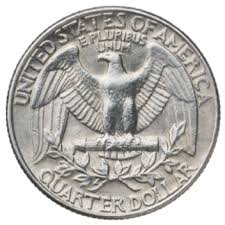 Miss Pashley walked to our house each week and taught me (and my mom who was always listening in) piano for the grand sum of 25 cents.
I started with Ada Richter’s classic Teaching Little Fingers to Play, which has now been morphed into the John Thompson library.
From there, it was the Michael Aaron series, and some sheet music.
There was no music store in our town, so I have no idea where any of this music came from – but I still have it all.
My parents did very well for their quarter a week investment, especially since my mom paid good attention and was able to beef up lessons she’d had as a child. Later on, she played well enough that she was church organist for a local Roman Catholic Church.
But I digress…
In those days, kids couldn’t do a whole lot of activities, so in 6th grade, I decided I wanted to be a Girl Scout. Bye, bye Clara.
Girl Scouts didn’t last long but I did play piano in a talent show. I remember, I carefully cut Burgmüller’s Ballade out of my Michael Aaron book and made a nice construction paper cover. (I still have this, too)
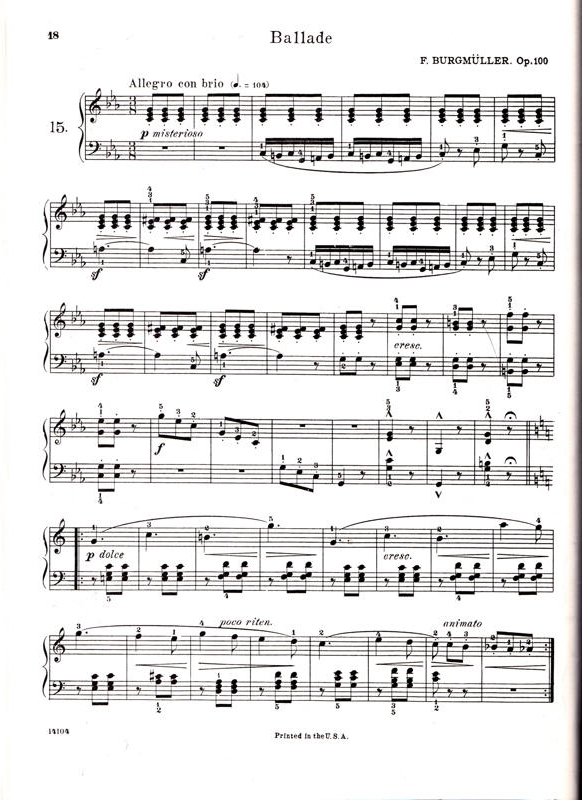
I doubt that I played this well but here’s what it was supposed to sound like:
A few years intervened and moved to Springfield, MA. The parsonage piano there was in terrible shape and in the dark, never-used basement. But I decided to make it mine and cleared up the area around it and started “practicing”.
My Junior or Senior year of High School I decided I wanted to major in music in college. I decided to learn, on my own, a piano arrangement of Aragonaise by Jules Massenet. I have no idea why or where that sheet music came from but I started working furiously on this piece.
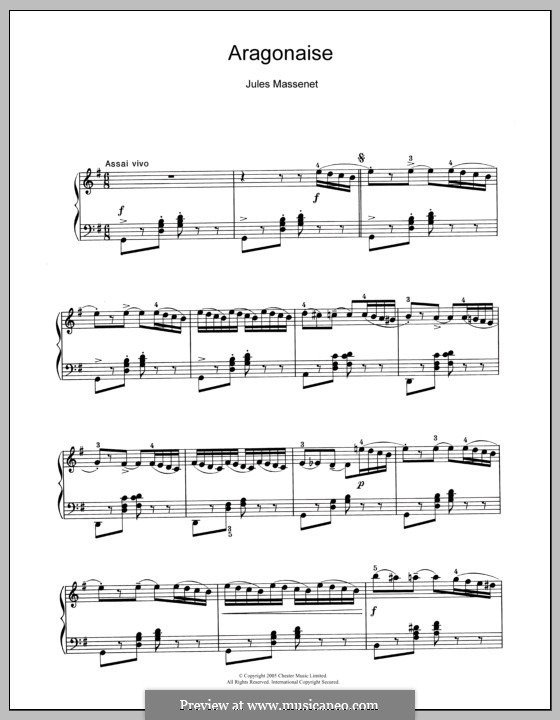
Hopefully, at some point, it should have sounded like this:
I started pedaling (no pun intended!) my music to the Universities of Connecticut and Massachusetts and ended up at UMass Amherst since we were state residents.
Early morning gym classes (usually swimming), then wet hair traipsing across campus to music theory in winter 5 days a week. AARRGGH!
But I stuck it out.
My wonderful piano teacher, Howard Lebow, was killed in a car accident during my sophomore year and I was devastated. There was more about him in a post on January 26, 2022 here on https://atomic-temporary-44596882.wpcomstaging.com
I took yet another break from piano lessons – but I kept playing.
After DH graduated, we moved to Milwaukee, WI for his graduate school. Besides working 2 jobs, I found time to commandeer the practice rooms at the University of Wisconsin. I also found a teacher at the Schaum School of Music. She was amazed that I had no piano at home to practice on.
When we later moved to Alexandria, VA my DH gave me a choice of new car or piano. So, I found a used piano. The owner had acquired it in a divorce and wanted it gone. Yesterday. She even paid to move it out of her apartment.
The new-to-me piano took up half our living room. When my parents came to visit, their feet we under my piano as I slept.
I found yet another new piano teacher and she is still my best friend to this day.
That piano moved to several locations before I bought a brand new Yamaha grand piano. The movers accidently brought in the wrong one and I made them return it. The people who lived in an apartment were probably unhappy when they had to return my piano and take their own new baby grand back.
I started teaching as a traveling piano teacher in Silver Spring, Maryland. I continued that in Wilmington, DE.
When we got to Fairfax, VA I decided no more traveling. Students would come to me. And so they have since 1973.
What is supposed to be our living room is filled with music books, electric keyboards, the grand piano, 2 organs, 2 violins, 2 clarinets, recorders, a dulcimer and other musical “stuff”.
Piano playing has gotten me through the worst times of my life. Teaching has been a lifeline for me, as well.
I am so thankful for the students who have stayed with me over the years and the new ones I have found…on the internet.


This is a family-friendly event with the little ones in mind. Adults and children are invited to walk to Jerusalem along with Jesus. There will be crafts and fun activities that will help the kids understand Easter.
Join us in The Gathering Place rain or shine! The event will run from 3:00 to 5:00 PM
Learn about the Seder, Decorate an Easter Egg, Stories of Jesus, Make a “God’s Eye”, Veggie Tales: “The Night Before Easter”, Decorate the Cross and Pray in the Garden of Gethsemane.

Christmas Countdown: Ding Dong! Merrily On High
 1803 ~ Louis-Hector Berlioz, French composer, conductor, music critic and major force in the development of musical form during the Romantic Era
More information about Berlioz
• 1876 ~ Mieczyslaw Karlowicz, Polish composer and conductor
• 1882 ~ The Bijou Theatre in Boston, MA became the first theatre to be lighted by electricity.
• 1908 ~ Elliot Cook Carter, Jr., American composer
• 1915 ~ Frank Sinatra, American singer songwriter
• 1916 ~ (Damaso) Perez Prado, Piano, organ
• 1926 ~ Willie Mae ‘Big Mama’ Thornton, Blues singer
• 1931 ~ Rita Moreno (Rosita Alverio), Dancer, Academy and Emmy Award-winning actress
• 1934 ~ Curtis Williams, Singer with The Penguins
• 1935 ~ Tom Brumley, Steel guitar with Buck Owens and the Buckaroos, Stone Canyon Band
• 1939 ~ Marlene Dietrich recorded Falling In Love Again on the Decca label.
• 1940 ~ David Gates, Guitarist, keyboard, singer with Bread
• 1944 ~ Brenda Lee (Tarpley), American singer of popular music
• 1944 ~ “The Chesterfield Supper Club” debuted on NBC radio. Perry Como, Jo Stafford and many other stars of the day shared the spotlight on the 15-minute show that aired five nights a week. The show was sponsored by Chesterfield cigarettes.
• 1952 ~ An audience of 70,000 people watched from 31 theatres as Richard Tucker starred in Carmen. The event was the first pay-TV production of an opera. Ticket prices ranged from $1.20 to $7.20.
• 1954 ~ Jermaine Jackson, Singer with The Jackson Five, brother of Michael, Janet, La Toya, Tito, Randy, Marlon and Jackie
• 1964 ~ Musician Sam Cooke died under suspicious circumstances.
• 1973 ~ Karen and Richard Carpenter received a gold record for their single, Top of the World.
• 1982 ~ Toni Basil reached the #1 one position on the pop music charts for the first time, with her single, Mickey.
• 2000 ~ Ruth Martin, a writer whose translations of both popular and obscure operas were widely used in American opera houses, died at the age of 86. Martin collaborated with her husband Thomas Martin in translating the librettos of some of the world’s most famous operas, including Mozart’s Don Giovanni and The Marriage of Figaro, as well as Puccini’s Boheme, and Bizet’s Carmen. Martin and her husband also translated some of the rarest operas, such as Offenbach’s Grand Duchess of Gerolstein, and Dvorák’s Rusalka. The Martins’ translations were marked by their clarity and singability, and despite the increasing use of closed-captioning systems in major opera houses, their translations are still used widely. Martin contributed articles on opera for Opera News, Aria, and Theater Arts. She also served on the boards of the New York Federation of Music Clubs, the Liederkranz Foundation and the National Opera Foundation.
• 2001 ~ Erik Johns, who wrote the libretto for Aaron Copland’s only full-length opera, The Tender Land, died in a fire at his home in Fishkill, N.Y. He was 74. Born Horace Eugene Johnston in Los Angeles, Johns began his career in music as a dancer. He met Copland when he was 19 at a New Year’s Eve party in New York. In 1952 the two began collaborating on an opera based on Let Us Now Praise Famous Men, a book by writer James Agee and photographer Walker Evans that describes the lives of several Southern sharecropper families during the Depression. Copland composed the music and Johns wrote the libretto, or the words. The work was originally commissioned as a television opera by NBC but was subsequently rejected by the network. The New York City Opera performed it at its premiere at City Center in April 1954 in a short two-act version. The two later added a third act.
• 2001 ~ Jose Fajardo, a Cuban flutist who was one of the most influential bandleaders in Latin music, died an aneurysm. He was 82. The Cuban native had emigrated from Cuba in 1961, when he refused a request from the Cuban government to continue a musical tour to other communist countries. During his lengthy career, Fajardo recorded more than 40 albums and performed around the world. He was credited with expanding the audience for charanga, a Cuban musical style that backs a singer with flute, violins, piano, bass and percussion. Fajardo started his first group, Fajardo y sus Estrellas, in the 1940s. He later led three bands by the same name. After moving to the United States, he founded bands in New York and Miami and began performing in new style called pachanga, featuring a slightly more assertive rhythm. Fajardo was featured on “Cuban Masters: Los Originales,” an album of performances by leading Cuban musicians that was released November 2001.
• 2002 ~ Kay Rose, the first woman to win an Academy Award for sound editing, died. She was 80. Rose won the statuette for her work on the 1984 film The River. A native of New York, Rose was recognized in March with a career achievement award from the Cinema Audio Society. The Motion Picture Sound Editors gave her a similar lifetime achievement award in 1993. In October 2002, directors George Lucas and Steven Spielberg endowed the Kay Rose Chair in the Art of Sound and Dialogue Editing at the University of Southern California’s School of Cinema-Television. The chair is the first of its kind in the country. After studying film at Hunter College, she became a civilian film apprentice for the Army Signal Corps during World War II. There, she helped create such training films as How to Erect a Double Apron Barbed Wire Fence and the John Huston documentary Report from the Aleutians. She moved to Hollywood in 1944 and found a job as an assistant to an editor at Universal studios. In 1951, she married film editor Sherman Rose. Together, they produced the 1954 sci-fi cult classic, Target Earth. They later divorced. During her five-decade career, Rose received sound editing credits on such films as The Rose, Ordinary People, On Golden Pond, The Milagro Beanfield War, The Prince of Tides, For the Boys and Speed.
 MaryO'Studio