April 30 ~ Today in Music History

today


. 1717 ~ Guillaume Gommaire Kennis, composer

. 1792 ~ Johann Friedrich Schwencke, composer

. 1837 ~ Alfred Gaul, composer

. 1852 ~ Anton Rubinstein’s opera “Dmitri Donskoi”, premiered in St Petersburg

OCMS 1870 ~ Franz Lehar, Austrian composer of operettas. He achieved worldwide recognition for “The Merry Widow”.
More information about Lehar

. 1883 ~ David John de Lloyd, composer

. 1884 ~ Albert Israel Elkus, composer

. 1885 ~ The Boston Pops Orchestra forms

. 1885 ~ Luigi Russolo, composer

. 1886 ~ Frank Merrik, composer

. 1900 ~ Train engineer Casey Jones was killed when trying to save the Cannonball Express as it highballed its way through Vaughn, MS. The famous song about Jones is based on this train accident.

. 1903 ~ Victor Records made its first Red Seal recording this day. The premiere disk featured Ada Crossley, an opera contralto.

. 1916 ~ Robert Shaw, American conductor, Robert Shaw Chorale; music director of Atlanta Symphony Orchestra and Chorus

. 1923 ~ Percy Heath, Jazz musician: bass: founder of Modern Jazz Quartet, The Heath Brothers

. 1933 ~ Willie Nelson, American country-music singer, songwriter and guitarist

. 1940 ~ Jimmy Dorsey and his band recorded the bandleader’s signature song, Contrasts, for Decca Records. The song went on to become one of the most familiar big band themes of the era.

. 1941 ~ Johnny Farina, Musician: rhythm guitar with Santo & Johnny

. 1943 ~ Bobby Vee (Velline), Singer

. 1944 ~ Richard Schoff, Singer with The Sandpipers

. 1953 ~ Frank Sinatra and Nelson Riddle became a team this day at Capitol Records in Hollywood. Sinatra’s new musical style, under Riddle’s direction, brought the crooner to the top of the record world for the second time in his illustrious career.

. 1953 ~ Merrill Osmond, Singer with The Osmonds: Alan, Donny, Jay, Marie, Wayne,Jimmy

. 1954 ~ Darius Milhaud’s Fourth Concerto for piano and orchestra premiered in Haifa

. 1956 ~ Richard Farina, folk singer: Reflections in a Crystal Wind

. 1983 ~ Muddy Waters (McKinley Morganfield) passed away.  He was an American blues musician.

. 1987 ~ Three more compact discs of music by The Beatles went on sale for the first time. The discs were Help!, Rubber Soul and Revolver. All became hits again for the Fab Four.

. 2000 ~ Bill Woods, a band leader who helped Buck Owens, Merle Haggard and other country music stars launch their careers, died. He was 76. In the 1950s, Woods ran The Blackboard country music club in Bakersfield. The club attracted many country music stars and helped develop what became known as the Bakersfield Sound. Woods also could play many instruments, including piano, guitar, fiddle, drums, and the banjo.

. 2000 ~ Jonah Jones, a Grammy award-winning jazz trumpet player who began his career on a Mississippi riverboat and became a star playing with Cab Calloway, died at the age of 90.

. 2001 ~ Herman “Rock” Johnston, a musician known for his innovative work on steel drums, died of prostate cancer. He was 63. Johnston gained acclaim in the early 1960s with an innovation that stretched the musical range of the instrument from 24 to 36 notes. During his career, the Trinidad native appeared at the United Nations, Lincoln Center and Radio City Musical Hall in New York City, and with the Boston Symphony at its summer festival in Tanglewood. His repertoire spanned rock, spiritual, classical, show tunes and Caribbean folk music.

. 2003 ~ Bill Napier, a clarinetist who rose to prominence with the premier San Francisco jazz bands of the 1940s and 50s, died. He was 76. Napier helped create a catchy West Coast style with a Dixieland sound and a San Francisco vibe. He played with jazz stars including trombonist Turk Murphy, Lu Watters and Bob Scobey’s Frisco Jazz Band. Though he took some lessons, Napier essentially taught himself to play. His talent, and his love of music, brought him to an eclectic mix of venues – from cable car turnabouts to halftime of Harlem Globetrotters’ games to Silicon Valley soirees at the height of the dot-com boom. His last show was December 30, 2002.

$40,000 baby grand piano stolen in Paris

A $40,000 Bergmann baby grand piano that belonged to the Paris Community Theatre vanished over the weekend. Now, police are trying to figure out why and how somebody stole it.

Josh Maxwell, the office manager for the Paris Community Theatre, says it was a typical start to the work week when he arrived Monday morning. That’s until he checked on the Brown Centre at Clarksville and South Church Street around 11 o’clock that morning where he says children rehearse several times a week.

“Someone one was needing in, and walked in and noticed that the very large grand piano was missing,” said Maxwell.

Completely blown away, Maxwell says he was dumbfounded when the 1000-pound Bergmann baby grand piano was nowhere to be found. He says the last time the piano was seen in the building was Saturday afternoon. How the thieves got away with such a large object, remains a mystery.

“When they moved it into the moving, it took six people, plus a specially built dolly for a piano,” said Maxwell. “I can’t see how one person by themselves could move something that weighs over a thousand pounds.”

via $40,000 baby grand piano stolen in Paris.

Pianos, free for the taking – The Washington Post

old-piano

There’s nothing like the gift of music, but sometimes the gift of music can be a curse. Take a piano, for example.

How do you dispose of an unwanted piano? It’s easy to get rid of an empty wine bottle or a dead goldfish (recycling bin and toilet, respectively). Even an unwanted trombone or guitar is relatively easy to shift. (More on that later.) But a piano . . .

John Kelly writes “John Kelly’s Washington,” a daily look at Washington’s less-famous side. Born in Washington, John started at The Post in 1989 as deputy editor in the Weekend section. View Archive

Facebook

A reader of mine named Mary has a 40-year-old Yamaha upright piano that is taking up space. She’s not interested in selling it. She just doesn’t want it around anymore.

“Our kids are gone. We’re in an apartment. It’s really more than we want in our living room,” Mary said. She wondered if I knew of any organization that could use a free piano. She even offered to pay for moving it.

I’m sure I will now be inundated with people who want pianos, but until then, let us explore the issue. One possibility is to call around to churches, nursing homes and schools, though I suspect that most of the places that wants ’em already has ’em. Of course, there’s CraigsList. There are always a few free pianos there.

What if you want it to go to a good cause?

The Beethoven Foundation (beethovenfoundation.com), based in Asheville, N.C., is a nonprofit organization started by Dutch-born concert pianist Jan Mulder that accepts pianos, both for piano-less people around the country and to sell to fund projects.

“The pianos go to help families in need of a piano, so we will move a piano directly from Point A to Point B,” said Gabriel Mulder, son of the founder. “We will use a professional, trusted piano mover. They will pick up the piano; then we provide a tax receipt. It’s very convenient for anybody looking to donate.”

If there’s no family in need of a piano in a particular area, the Beethoven Foundation will sell it and use the money for music scholarships. Gabriel estimated the foundation handles about 10 pianos a day. Generally, it accepts only pianos less than 20 years old.

“We can’t accept them all obviously,” he said. “Some are not at all in a condition for students to be using.”

That’s a problem with pianos. No one knows that better than Brian Goodwin, a piano mover in Nashua, N.H.

In 2005, Brian started Piano Adoption (pianoadoption.com), an online clearinghouse to match people who have unwanted pianos with people who want to have pianos. Givers post a photo and description and arrange delivery with receivers.

Brian is delighted to see pianos in use, but he cautions that a free piano may not be a good deal.

“We see it as movers,” he said. “We’re not technicians, but we’ve seen enough pianos to know if the piano is just a hunk of crap. We deliver it, then they start telling us, ‘Oh, I found it for free!’ You don’t have the heart to tell them, ‘You really shouldn’t take this piano.’”

That’s because 500 pounds of messed-up piano is worse than no piano at all. If you’re offered a free piano, pay a piano technician to check it out before accepting it. Don’t forget that moving a piano can cost $150 to $500. You don’t want to fork that over to move a lousy one — twice.

Inevitably, some pianos must go to the great concert hall in the sky. This can be hard to accept. Brian put a video on YouTube of some of his guys disposing of broken pianos at a New England landfill. The instruments roll from the back of the truck like bombs from a B-17.

This pains some people. “That’s terrible,” one person commented. “Every home should have a piano even if no one can play it.”

Hmm, probably not.

If you have ideas on getting rid of pianos, let me know. And if you have smaller stuff — guitars, violins, wind instruments, drums — try Hungry for Music (hungryformusic.org), a charity that since its founding in Alexandria in 1994 has distributed 7,000 instruments in 41 states and 11 countries.

via Pianos, free for the taking – The Washington Post.

The best age to start piano lessons is now

child-piano


I think that parents are pulled in many directions when it comes to extracurricular activities and educational enrichment for children. Music is supposed to be fun. It’s not really meant to be your secret solution to passing math with flying colors one day. As long as parents maintain a patient approach to music lessons, children will see it as fun.

Music should always be fun, but it is a hard to learn. It does need to be taken seriously. A teacher has to know the right tone to use for each individual student. Some students respond to playful rewards, while others need a stern approach. Regardless, the expectation to pay attention and practice is necessary. Whether a child is a toddler or entering middle school, the basic process to learn music is the same – practice, practice, practice.

Smaller children, however, learn to sit still and listen. They also learn to retain information and ask for help from a grown-up. For preschool children, private lessons is a great first step to learning how to be a student. Private lessons are ideal, but if they are too expensive, many music schools and teachers offer group lessons for beginners as introduction courses.

The most important thing is to explore a child’s interest. Whether a child excels in their interest or not is irrelevant. They should still be given a chance to find something they love to do. With music, it could be a great source of expression for them throughout their lives, even if they are not interested in performing. That being said, the best time to start piano lessons for children is simply right now.

via The best age to start piano lessons is now | NJ.com.

Piano Stores, Teachers Adapt to Decline in Interest in the Instrument

SALISBURY, Md. – Mozart, Beethoven and Chopin wouldn’t be thrilled to hear that fewer people are choosing to learn to play the piano than ever before.

At B&B Music in Salisbury, people have been shopping for pianos since they opened 60 years ago. One think you won’t see on the display floor in 2015 is a grand piano.

“We used to have actual string pianos at one time,” said store manager Mike Jarrell. “The way the economy was, it wasn’t very feasible for a lot of people. They can cost up to several thousands of dollars.”

The best year for new piano sales in the United States was 1909, when more than 364,500 were sold. Now that number has plunged to between 30,000 and 40,000 each year.

Denise Crothers is on her 36th year of teaching people young and old how to play piano. She averages about 60 students per week.

“I teach for half an hour, usually for each lesson and half of I teach them in the note because I think it’s important to still know how to read. Half of it would be like the praise and worship and learning how to chord and how to play by ear,” said Crothers. “They can play what they hear on the radio. Some of them don’t even need me anymore.”

Nationally, increased interest in sports or electronics is blamed for declining interest in learning to play the piano. Denise says lessons have evolved over the years in order to keep it fresh.

“I think it’s important for teachers to be able to apply the real world into their teaching. Not maybe strictly Classical. Classical is wonderful, you know, don’t get me wrong. I absolutely love it, but I think it’s important for them to do fun songs and stuff like that,” said Crothers.

Rather than smashing old pianos on the curb, B&B Music is adapting to suit a more tech-savvy generation.

“Our more common models are the digital style models with weighted keys so it’s more like playing a real string piano. Then you start getting into more production type keyboards which are more for making your own scores and hip-hop beats and that kind of thing. It’s more of a production opposed to performance,” said Jarrell.

Despite a national downward trend in piano purchases and lessons, those in the biz can’t stress enough how important it is.

“In the music business, you’re constantly learning. It’s a never-ending thing,” said Jarrell.

“Once you commit to something, really having the work ethic to keep going and keep learning, it’s really rewarding and that’s something I think our culture lacks sometimes, you know the ‘stick-to-it-ness’,” said Crothers.

via Piano Stores, Teachers Adapt to Decline in Interest in the Instr – WBOC-TV 16, Delmarvas News Leader, FOX 21 –.

Recital Etiquette

recital


Student recitals can be lots of fun and create valuable experiences for pianists. Unfortunately, they can also be a source of anxiety or stress if students aren’t ready and/or guidelines aren’t followed.

There are guidelines and rules of behavior all performers and audience members should follow during recitals, concerts or other performances.

Audience members must remember the reason for their visit to the recital hall – to listen quietly, actively and appreciatively to the music being offered by the performers.


For the performer:

1.  Dress appropriately. Performers being nicely dressed (or following the recital theme) shows respect for the audience, the teacher and themselves!

Girls in knee-length or longer skirts/dresses or slacks.  No spaghetti straps, no platform shoes, flip-flops, bedroom slippers or athletic footwear.

Do not wear dangling, jingling jewelry – especially bracelets.  You may need to remove rings if they twist around easily.

Boys in dress pants and buttoned dress shirts with ties preferred, or suits.

IMPORTANT: Remember to practice several times in your outfit, shoes included.  You don’t want to get to the recital and find that you can’t use the pedal properly because of your shoes.

2. Clean hands!  Dirty, sticky, or oily fingers can hurt your performance and bother the next pianist. If you complete a long piece and notice some keys are slippery with sweat (a very common issue), notify your instructor so they can clean the keyboard before the next performer.

2. When it is your turn, stand quickly and walk up to the stage. Do not run!

Bow before you perform to acknowledge the applause. Audiences used to know that it was appropriate to clap for the musician who was entering the stage to perform. This now isn’t always the case (I will start clapping if it doesn’t happen automatically). Students should bow to their applauding audience before they sit down at the bench (not acknowledging applause is generally considered to be rude).

2.  Enter the bench from the side furthest from your audience. This was a biggie for my former piano teacher and I’m reminded of it every time I see a student slink in from the “front side”… or climb over the top. I used to think this was awfully stuffy – but when you see a student do it, it just looks right.

3.  Hands in your lap before you begin. I use this with my students to give them a moment to hear the first few measures in their mind before they begin.  Once fingers are on the keys it means you’re  ready to play. If the bench needs adjusting it should be done first… and then  hands should be placed in your lap before beginning to play.

Play the scale of the piece in your head and think over tempo, markings, etc. Then  arch your hands onto the piano and position  feet on the pedals or flat on the floor–NEVER under the stool. Proceed to play!

3. Should you make a mistake while performing, you should try to continue playing without starting over or repeating. This makes sufficient practice before the recital very Very VERY important!

If playing more than one piece, you should acknowledge applause in between with a nod or smile.

4.  Hands in lap after you finish. So many piano students are already lifting themselves off the bench as they play the final note (perhaps really eager to return to their seat in the audience!?) Learning to place your hands in your lap after finishing gives the audience a moment to truly relish what they just heard.

5.  Rise and stand at the edge of the piano (with left hand on the wood). Bow from the hips,  don’t curtsey. Bowing nicely takes practice!  In handbells, we bow towards the table and say silently “I love handbells”.  The same can be said in piano recitals – “I LOVE Piano”.

6.  Walk calmly off the stage or away from the piano.  No running… no matter how badly you want to get back to your seat!

For the audience:

Recitals are a special occasion and so it is customary to dress nicely.

• Please arrive a little early in order to find a comfortable place to sit.

• Make sure all your invited guests understand the importance of arriving on time. If they arrive late, it makes it difficult for those performing.

• Please invite as many friends and family members as you’d like. Our recital hall has lots of room, and can accomodate likely as many as you’d like to invite. And if not, then a standing room only crowd would be a fantastic crowd to have, and a wonderful problem to deal with!

• Turn off all cell phones and any electrical devices that may produce sound.

• Once the recital begins, please listen and be quiet. Crying babies should be taken out. They are not happy, and neither is the audience or the performer!

• If you arrive late, please wait to enter between pieces when you hear applause. Do not enter the recital hall or switch seats while someone is performing.

• The soloist will bow and your response is to applaud politely!

• No whistling, yelling, or other loud methods of congratulation. While boisterous congratulations are meant to show support for the performer, it may actually cause unintended problems instead. The best way to show appreciation for the performance is with thunderous applause, and an occasional “bravo” at the end of an especially great performance.

• Compositions that have movements or suites are, in general, performed without applause in the middle.

• Respect the performers. Unnecessary noise from whispering, talking, candy wrappers, etc. during a program is not acceptable. Reading, studying, and writing letters during a program are also inappropriate.

• Please stay until the performance or event is completely over. Attending a recital so that other families will serve as audience to your student, and then leaving before the other performers have finished is rude, inconsiderate and unacceptable. If you have other obligations or matters to attend to before the recital is over, please do not attend.

• Flash photography is not appropriate during a performance. The flash can disrupt the performer’s concentration.

• Enjoy! Your presence is the greatest affirmation!

For Everyone:

No Perfume!  Your perfume or cologne will linger around the piano after you leave the stage (especially under hot lights), and it might give the next pianist some sinus or eye irritation; or, at the very least, create a distraction that can prevent them from getting “in the zone.”

Parts of this article adapted from It’s The Little Things That Count… Piano Etiquette and Your Piano Students | Teach Piano Today

April 9 ~ Today in Music History

today

. 1886 ~ Enrique Granados, Spanish pianist and composer, performed his debut piano concert in Barcelona.

. 1888 ~ Sol Hurok, Impresario

OCMS 1890 ~ Efram Zimbalist, Russian-born American violinist and composer
More information about Zimbalist

. 1898 ~ Paul Robeson, American bass. Known for his sympathy for Russia he had his passport revoked for many years. The song Ole Man River, whose words he changed to fit his views, became his signature song.

. 1906 ~ Antal Dorati, Hungarian-born American conductor and composer. He was the first conductor to record all of Haydn’s symphonies.

. 1916 ~ Julian Dash, Jazz musician, tenor sax

. 1928 ~ Tom Lehrer, Songwriter

. 1932 ~ Carl Perkins, early American rock ‘n’ roll figure who originally recorded Blue Suede Shoes. Inducted into the Rock and Roll Hall of Fame in 1987

. 1940 ~ Jimmy Dorsey and his orchestra, along with singer Helen O’Connell, recorded Six Lessons from Madame La Zonga for Decca Records.

. 1950 ~ Bob Hope hosted a Star-Spangled Review on NBC-TV. Hope became the highest- paid performer for a single show on TV. The Star-Spangled Review was a musical special.

. 1970 ~ Paul McCartney sought a High Court writ to wind up the Beatles business partnership, effectively ending the group’s career.

. 1977 ~ The Swedish pop group Abba made its debut at number one on the American pop charts, as Dancing Queen became the most popular record in the U.S.

. 1988 ~ Brook Benton passed away.  He was an American singer and songwriter who was popular with rock and roll, rhythm and blues, and pop music audiences.

. 2001 ~ Graziella Sciutti, an Italian soprano and opera director best known for her interpretations of Mozart, died at the age of 68. Born in Turin, northern Italy, in 1932, Sciutti made her first operatic appearance at the Aix-en-Provence Festival in France in 1951. She went on to perform under Herbert von Karajan at Milan’s La Scala. She was lead soprano at a smaller theatre at La Scala called La Piccola Scala for eight years from its inception in 1955. She became a member of the Vienna State Opera in 1960 and the following year made her debut in San Francisco in one of her most celebrated roles, as Susanna in The Marriage of Figaro. She began her directing career at Covent Garden in London and at the Glyndebourne Festival in England, where she directed and performed in Poulenc’s La Voix Humaine in 1977. She then went on to direct in Canada and for the opera companies in San Francisco, Chicago, New York, Dallas and Miami, as well as in Britain, Germany and Italy. She joined London’s Royal College of Music in the mid 1980s and continued to teach there until shortly before her death.

Handmade instrument donated to Black Hills State

steinway-new

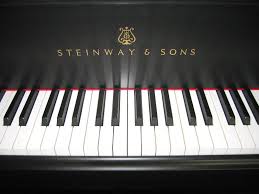
A Steinway Model-B is the new addition to Black Hills State’s Meier Recital Hall.

The nearly $100,000 piano was fully funded by donations, including Rachel Headley, the Science, Technology, Engineering & Mathematics liaison to Academic Affairs at BHSU.

The university donors purchased the 7-foot handmade instrument from Black Hills Piano Gallery in Rapid City.

Gallery owner Tony Thomas believes the Meier Recital Hall is the perfect home for a Steinway.

“That hall cries for the best possible sound,” he said. “The Meier Hall is just a wonderful hall and they have a great faculty to provide good instruction to the students there.”

Thomas, a musician himself, understands the decision of purchasing a top-of-the-line instrument.

“Anytime you have a good hall that provides that kind of acoustics, Steinway is the choice of 98 percent of concert artists on stage. That’s the sound that they want to hear. You can head all of the textures of tunes, it’s beautiful.”

Black hills state received the handcrafted piano Monday afternoon, with an unveiling ceremony planned for that evening.

via Handmade instrument donated to Black Hills State | KOTATV.com Rapid City, Black Hills, So Dak. Gillette Sheridan KOTA Territory News.

Western Springs Man Still Keeps Things In Tune

Gibbons said most people have their pianos tuned about once a year.

“It varies,” he said. “I did some every couple of weeks for a while at a club in Chicago, and I’ve gone to tune for people who haven’t had their pianos tuned in 10 years. The quality of pianos has increased considerably over the past 10 to 20 years.”

Gibbons said tuning is affected by seasonal changes.

“The temperature outside affects the environment inside,” he said. “It’s really the humidity that has the biggest impact on the tuning. How often you play really doesn’t have much of an impact on the tuning, although it can matter if you’re really banging things out over a period.”

As is the case with many things, technology has resulted in the biggest changes over the years in piano tuning.

“It’s still basically the same process, but there are some electronics that are relatively new,” he said. “They haven’t replaced the tuning fork; they have supplemented the tuning fork.”

Gibbons even has a couple of apps on his cellphone that are designed specifically to aid in the tuning of pianos.

“A good technician has to be conscientious and can’t be in a hurry,” he said. “Good customer relations is very important, too.”

Gibbons must be doing something right, as he has had some clients for several years.

via Western Springs man still keeps things in tune – The Doings Western Springs.

Historic Horowitz piano visits ONU – The Daily Journal: Local

steinway-new

The concert piano, known in classical music circles as CD 503, was chosen specifically for Horowitz and presented in 1941. It was in his home until it was shipped to Russia when he made his triumphant return to the homeland he left in the 1920s.

Without Horowitz, the piano has traveled to from Fort Worth to Philadelphia and Florence, Ky. It’s made stops in London, Vancouver, Kansas City, Pensacola, Fla., Cleveland, Berlin and scores of other cities, large and small. There is no official estimate of how many individuals have played it, only a guess of “thousands.”

“It’s scheduled to be in our Chicago studios for just six weeks,” said Rhapsody Snyder, a Steinway employee and manager of this portion of the tour. “I’m not sure where it goes next, but don’t worry: It weighs between 700 and 800 pounds, but we move pianos every day.”

It is tuned for every performance, but there are standing orders that the piano’s “voice” will never be altered. It sounds today as it sounded when Horowitz played it.

via Historic Horowitz piano visits ONU – The Daily Journal: Local.