Each year on May 22 we observe National Buy a Musical Instrument Day. The day is all about playing music. If you are a musician, it might be time for a new instrument. Maybe you can learn to play a second or third one. If you have never played an instrument before, National Buy A Musical Instrument Day might be the motivation you need to start.
Naturally, here at the O’Connor Music Studio, a piano, keyboard with weighted keys (and 88 of them!) or organ is recommended but this day is for all types of instruments and is for people of all ages. Grandpa can play his ukulele while the grandkids play the drums, trombone, and flute. Together they can all make terrific music!
• 1655 ~ Bartolomeo Cristofori, Italian instrument maker, inventor of the piano. He was credited with designing the first pianoforte, which he called “the harpsichord that plays soft and loud”.
More information about Cristofori
• 1855 Camille Pleyel, Austria piano builder/composer, dies at 66
• 1886 ~ The first practical phonograph, better known as the gramophone, was patented.
• 1920 ~ The Symphony Society of New York presented a concert at the Paris Opera House. It was the first American orchestra to make a European tour.
• 1928 ~ Maynard Ferguson, Canadian jazz trumpeter and bandleader
• 1930 ~ Roberta Peters (Peterman), American soprano, Metropolitan Opera, Jewish Cultural Achievement Awards in Performing Arts in 1997.
• 1931 ~ Ed Cassidy, Drummer
• 1945 ~ June Christy sang with the Stan Kenton band on one of the most famous of all big band hits, Tampico.
• 1951 ~ Jackie (Sigmund) Jackson, Singer with The Jackson Five
• 1956 ~ Gene Vincent and his group, The Blue Caps, recorded Be-Bop-A Lula for Capitol Records in Los Angeles. Interesting note: Vincent had written the tune only three days before he auditioned in a record company talent search that won him first place. The record was rush-released just two days later and became a rock and roll classic.
• 1959 ~ Randy Travis (Traywick), Singer
• 1962 ~ Oleta Adams, American soul singer and pianist
• 1996 ~ Alanis Morissette started a six-week run at No.1 on the UK album chart with Jagged Little Pill. The record produced six successful singles, including ‘You Oughta Know’, ‘Ironic’, ‘You Learn’, ‘Hand in My Pocket’, and ‘Head over Feet’.
• 2016 ~ Ursula Mamlok, German American avant-garde composer, died at the age of 93
. 1900 ~ Train engineer Casey Jones was killed when trying to save the Cannonball Express as it highballed its way through Vaughn, MS. The famous song about Jones is based on this train accident.
. 1903 ~ Victor Records made its first Red Seal recording this day. The premiere disk featured Ada Crossley, an opera contralto.
. 1916 ~ Robert Shaw, American conductor, Robert Shaw Chorale; music director of Atlanta Symphony Orchestra and Chorus
. 1923 ~ Percy Heath, Jazz musician: bass: founder of Modern Jazz Quartet, The Heath Brothers
. 1933 ~ Willie Nelson, American country music singer, songwriter and guitarist
. 1940 ~ Jimmy Dorsey and his band recorded the bandleader’s signature song, Contrasts, for Decca Records. The song went on to become one of the most familiar big band themes of the era.
. 1941 ~ Johnny Farina, Musician: rhythm guitar with Santo & Johnny
. 1943 ~ Bobby Vee (Velline), Singer
. 1944 ~ Richard Schoff, Singer with The Sandpipers
. 1953 ~ Frank Sinatra and Nelson Riddle became a team this day at Capitol Records in Hollywood. Sinatra’s new musical style, under Riddle’s direction, brought the crooner to the top of the record world for the second time in his illustrious career.
. 1953 ~ Merrill Osmond, Singer with The Osmonds: Alan, Donny, Jay, Marie, Wayne, Jimmy
. 1954 ~ Darius Milhaud’s Fourth Concerto for piano and orchestra premiered in Haifa
. 1956 ~ Richard Farina, folk singer: Reflections in a Crystal Wind
. 1983 ~ Muddy Waters (McKinley Morganfield) passed away. He was an American blues musician.
. 1987 ~ Three more compact discs of music by The Beatles went on sale for the first time. The discs were Help!, Rubber Soul and Revolver. All became hits again for the Fab Four.
. 2000 ~ Bill Woods, a bandleader who helped Buck Owens, Merle Haggard and other country music stars launch their careers, died. He was 76. In the 1950s, Woods ran The Blackboard country music club in Bakersfield. The club attracted many country music stars and helped develop what became known as the Bakersfield Sound. Woods also could play many instruments, including piano, guitar, fiddle, drums, and the banjo.
. 2000 ~ Jonah Jones, a Grammy award-winningjazz trumpet player who began his career on a Mississippi riverboat and became a star playing with Cab Calloway, died at the age of 90.
. 2001 ~ Herman “Rock” Johnston, a musician known for his innovative work on steel drums, died of prostate cancer. He was 63. Johnston gained acclaim in the early 1960s with an innovation that stretched the musical range of the instrument from 24 to 36 notes. During his career, the Trinidad native appeared at the United Nations, Lincoln Center and Radio City Musical Hall in New York City, and with the Boston Symphony at its summer festival in Tanglewood. His repertoire spanned rock, spiritual, classical, show tunes and Caribbean folk music.
. 2003 ~ Bill Napier, a clarinetist who rose to prominence with the premier San Francisco jazz bands of the 1940s and 50s, died. He was 76. Napier helped create a catchy West Coast style with a Dixieland sound and a San Francisco vibe. He played with jazz stars including trombonist Turk Murphy, Lu Watters and Bob Scobey’s Frisco Jazz Band. Though he took some lessons, Napier essentially taught himself to play. His talent, and his love of music brought him to an eclectic mix of venues – from cable car turnabouts to halftime of Harlem Globetrotters’ games to Silicon Valley soirees at the height of the dot-com boom. His last show was December 30, 2002.
. 2015 ~ Ben E. King [Benjamin Earl Nelson], American soul singer (Stand by Me), died at the age of 76
.2016 ~ Phil Ryan, Welsh keyboardist and composer (Man, Pete Brown), died at the age of 69
. 1886 ~ Enrique Granados, Spanish pianist and composer, performed his debut piano concert in Barcelona.
. 1888 ~ Sol Hurok, Impresario
1890 ~ Efram Zimbalist, Russian-born American violinist and composer
More information about Zimbalist
. 1898 ~ Paul Robeson, American bass. Known for his sympathy for Russia he had his passport revoked for many years. The song Ole Man River, whose words he changed to fit his views, became his signature song.
. 1906 ~ Antal Dorati, Hungarian-born American conductor and composer. He was the first conductor to record all of Haydn’s symphonies.
. 1932 ~ Carl Perkins, early American rock ‘n’ roll figure who originally recorded Blue Suede Shoes. Inducted into the Rock and Roll Hall of Fame in 1987
. 1940 ~ Jimmy Dorsey and his orchestra, along with singer Helen O’Connell, recorded Six Lessons from Madame La Zonga for Decca Records.
. 1950 ~ Bob Hope hosted a Star-Spangled Review on NBC-TV. Hope became the highest- paid performer for a single show on TV. The Star-Spangled Review was a musical special.
. 1970 ~ Paul McCartney sought a High Court writ to wind up the Beatles business partnership, effectively ending the group’s career.
. 1977 ~ The Swedish pop group Abba made its debut at number one on the American pop charts, as Dancing Queen became the most popular record in the U.S.
. 1988 ~ Brook Benton passed away. He was an American singer and songwriter who was popular with rock and roll, rhythm and blues, and pop music audiences.
. 2001 ~ Graziella Sciutti, an Italian soprano and opera director best known for her interpretations of Mozart, died at the age of 68. Born in Turin, northern Italy, in 1932, Sciutti made her first operatic appearance at the Aix-en-Provence Festival in France in 1951. She went on to perform under Herbert von Karajan at Milan’s La Scala. She was lead soprano at a smaller theater at La Scala called La Piccola Scala for eight years from its inception in 1955. She became a member of the Vienna State Opera in 1960 and the following year made her debut in San Francisco in one of her most celebrated roles, as Susanna in The Marriage of Figaro. She began her directing career at Covent Garden in London and at the Glyndebourne Festival in England, where she directed and performed in Poulenc’s La Voix Humaine in 1977. She then went on to direct in Canada and for the opera companies in San Francisco, Chicago, New York, Dallas and Miami, as well as in Britain, Germany and Italy. She joined London’s Royal College of Music in the mid 1980s and continued to teach there until shortly before her death.
. 1850 ~ Vaclav Jan Krtitel Tomasek, organist/pianist/composer, died at the age of 75
. 1859 ~ Reginald De Koven, Composer
. 1895 ~ Mario Castelnuovo-Tedesco, Italian-born American composer
. 1897 ~ Johannes Brahms, German composer and pianist, died. He wrote four symphonies as well as concerti for piano and violin and highly-esteemed chamber works.
. 1924 ~ Doris Day, Singer
. 1942 ~ Wayne Newton, American singer of popular music
. 1944 ~ Tony Orlando, Singer, Tony Orlando and Dawn
. 1948 ~ Garrick Ohlsson, American pianist, winner of Poland’s Frederic Chopin piano competition in 1970. More about this competition.
. 1949 ~ Dean Martin and Jerry Lewis debuted on radio in an NBC program that ran until 1952.
. 1950 ~ Kurt Weil, German composer, died, best known for his “Threepenny Opera” and for his collaboration with actress and singer Lotte Lenya whom he married in 1926.
. 1952 ~ Harry Belafonte recorded his first songs for RCA Victor at Manhattan Center in New York City.
. 1952 ~ Hugo Winterhalter backed up the singer with an 18-piece orchestra. Among the sides recorded were Dogs A-Roving and Chimney Smoke.
. 1955 ~ Fred Astaire appeared on television for the first time on The Toast of the Town, with host, Ed Sullivan. Already an established dancer in films, Astaire was quick to become a TV sensation as well.
. 1965 ~ Bob Dylan appeared on the pop music charts for the first time. Subterranean Homesick Blues entered the Top 40 at number 39. The song stayed on the charts for eight weeks. Dylan would chart a total of 12 singles on the pop charts between 1965 and 1979. He appeared in the films Don’t Look Back, Eat the Document and Pat Garrett and Billy the Kid. He made the film Renaldo and Clara in 1978. Dylan co-starred in the film Hearts of Fire in 1987. He became a member of the Traveling Wilburys and was inducted into the Rock and Roll Hall of Fame in 1988. Dylan won the Grammy’s Lifetime Achievement Award in 1991.
. 1972 ~ Ferde Grofe, US composer (Grand Canyon Suite), died at the age of 80
More about Grofe
. 1986 ~ For the first time in six years, major record companies decided to raise prices – between three and five percent.
. 1986 ~ Peter Pears, British operatic tenor, died. He was a collaborator with composer Benjamin Britten and first interpreter of many of Britten’s works, notably “Peter Grimes.”
. 1990 ~ Sarah Vaughan passed away
. 1999 ~ Lionel Bart, British composer of the musical “Oliver!,” died aged 68.
. 2001 ~ Lester “Big Daddy” Kinsey, a blues singer-guitarist known for his croaky voice, died of prostate cancer. He was 74. Kinsey and his sons, Kenneth, Donald and Ralph, became known as “Big Daddy” Kinsey and His Fabulous Sons. The sons now form the Gary-based Kinsey Report and record for Alligator Records, a Chicago blues label. The Kinsey Report has toured with the likes of the Allman Brothers Band. In the early ’90s, the elder Kinsey experienced one of his career highlights with I Am the Blues, a major-label release on Polygram. The album boasted a host of blues standouts backing up Kinsey, including Buddy Guy, James Cotton, Sugar Blue and Pinetop Perkins.
. 2015 ~ Andrew Porter died. He was a renowned music critic and scholar and translator of opera.
. 1674 ~ Pietro Antonio Locatelli died. He was an Italian Baroque composer and violinist.
. 1872 ~ Sergei Vasilenko, Russian composer
. 1900 ~ Ted (Edward) Heath, Musician, trombonist, bandleader: played big band concerts every Sunday at the Palladium in the 1940s and 1950s
. 1913 ~ Frankie Laine (Frank Paul LoVecchio), Singer
. 1923 ~ The Audubon Ballroom in New York City was the scene of the first dance marathon. Alma Cummings danced the foxtrot, one-step and waltz with half a dozen partners.
. 1932 ~ Leonard Bernstein participated in his first piano recital at New England Conservatory, performing Brahm’s Rhapsody in G Minor. He was 13.
. 1935 ~ Gordon Mumma, American composer of experimental music
. 1941 ~ Graeme Edge, Drummer with The Moody Blues
. 1942 ~ Bobby Wright, Country artist, actor, son of Johnny Wright of Johnnie and Jack country duo
. 1945 ~ Eric Clapton, British rock guitarist with the Yardbirds; songwriter, Grammy Award-winning singer: Bad Love in 1990
. 1959 ~ Sabine Meyer, German clarinetist
. 1963 ~ The Chiffons began a four-week stay at the top of the pop music charts as their hit single, He’s So Fine, became number one. The song stayed at the top of the top tune tabulation until Little Peggy March came along with I Will Follow Him on April 27th.
. 1964 ~ Tracy Chapman, Grammy Award-winning folk singer-songwriter
. 1964 ~ Willem Andriessen, Dutch composer and pianist (Beethoven), died at the age of 76
. 1968 ~ Celine Dion, Singer
. 1970 ~ Lauren Bacall starred in Applause which opened on Broadway. The show became one of the hardest tickets to get on the Great White Way. Critics called Bacall “a sensation.” The play, at the Palace Theatre, was an adaptation of the film, All About Eve. It continued for 896 performances. A London version of the show, also starring Bacall, opened in 1972.
. 1971 ~ The Bee Gees received a gold record for the single, Lonely Days. When playing it, they heard the song at a faster speed and said, “Hey, this sounds like disco!” and the rest was Saturday Night Fever music history…
. 1974 ~ John Denver reached the top spot on the music charts with his hit, Sunshine on My Shoulders. It was the singer’s first number one song. Three other singles by Denver reached the top of the music world: Annie’s Song, ThankGod I’m a Country Boy and I’m Sorry. Take Me Home Country Roads made it to the number two position, while Rocky Mountain High just cracked the Top 10 at number 9. Denver wrote Leaving on a Jet Plane for Peter, Paul and Mary and won an Emmy for the TV special, An Evening With John Denver.
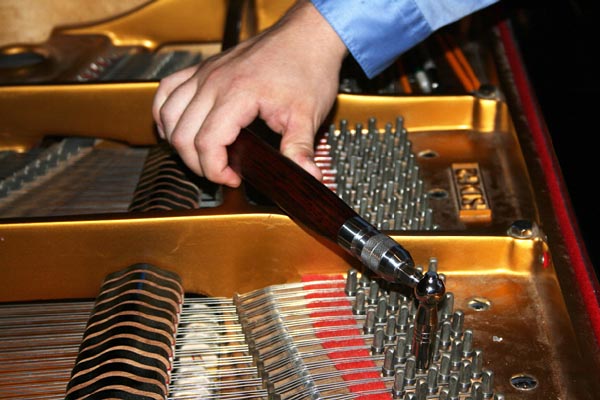
When it comes to tuning, every piano is different, even two pianos of the same style and make are different, and the humidity of the room makes a big difference, he said.
High humidity causes the sound board to swell, stretching the strings and causing the pitch to go sharp, while low humidity has the opposite effect.
In Minnesota, humidity can easily range from 80 percent in the summertime to 10-15 percent in the winter, if the home doesn’t have a humidifier. Wood-heated homes tend to be especially dry, he said.
“Pianos like it between 40 and 50 percent humidity in the house,” he said.
Even places that are supposedly “climate-controlled,” aren’t always. The heat might get turned down substantially evenings and weekends, for example.
A new piano needs a few weeks to settle into its new home before tuning, Fry said.
“If they get a new piano, generally they call us the day before it gets in the house,” he said. “It should sit in the house a couple weeks just to acclimatize it to its new surroundings … brand new pianos stretch for a while. They go out of tune quicker. The wire stretches and they settle into themselves.”
Some people think they have to let a new, or recently moved older piano, sit six months or a year before it gets tuned. That’s not true, Fry said, but it does need a few weeks.
He recommends that pianos be tuned at least once a year (he tunes his own piano once a year, even though he no longer gives lessons) and the busiest time for him is before the holidays — September through December.
“Piano-tuning is something people can put off,” he said. “We noticed a real drop in tuning when gas got over $3 a gallon. I didn’t think it would make that much of a difference, but it did.”
Fry said he is looking for some kind of work to do in the summertime when his other businesses are slow.
He doesn’t give piano or guitar lessons anymore, but does enjoy tuning all types of pianos.
“It takes me a couple of hours. I have time,” Fry said. “I’m going to do the job that I like to do, and do it right.”
As all my students know, I teach theory with all piano and organ lessons. Sometimes, it’s from a theory book that matches a lesson book, sometimes on the fly on an “as needed” basis.
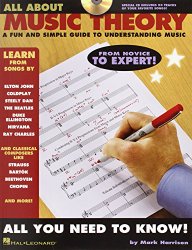
This book looks like it would be interesting to use as a review or to look ahead and see what’s coming. I have just ordered a copy for the studio if you want to check it out at the next lesson.
If you wish there was a fun and engaging way to help you understand the fundamentals of music, then this is it. Whether it’s learning to read music, understanding chords and scales, musical forms, or improvising and composing, this enjoyable guide will help you to finally start understanding the structure and design of music.
This fun-filled, easy-to-use guide includes:
* Music notation
* Scales and modes
* Melody harmonization and counterpoint
* Chord progressions
* Song form and structure
Listen and learn with the CD that has 90 tracks, including over 50 popular songs such as:
* Beauty and the Beast
* Candle in the Wind
* Imagine
* In the Air Tonight
* Killing Me Softly with His Song
* Let It Be
* Message in a Bottle
* Misty
* Satin Doll
* Take the ‘A’ Train
* Unchained Melody
* What’d I Say
* and more!


 1829 ~ Louis Moreau Gottschalk, American pianist and composer



 MaryO'Studio