What a fantastic concert this was. There will be move videos coming in the following days but this is a great start! This is the grand finale – the Ukrainian National Anthem arranged by Brian Stevenson, director of Music Ministries at Pender UMC.
The Pender Concert Supporting Ukraine on April 23 featured Liz Sellers on piano, Brian on harp, and local professional musicians, including woodwind quintet, drums, organ, guitar, flute, penny whistle, singing and violin.
Concert repertoire included: Harp arrangements by Debussy, Piano trio of Jazz/Baroque, Flute Concertino by Chaminade, Woodwind Quintet with music of Duke Ellington, The Widor Toccata Organ Symphony Movement V and an Irish session!
There was no charge for this concert but there was a free will offering taken to support Ukraine through Advance #982450, UMCOR International Disaster Response and Recovery. This fund provides direct assistance to those in Ukraine as well as assistance to Ukrainians fleeing to neighboring countries.
One hundred percent of all Advance contributions go to the designated cause. (The independent charity watchdog, “Charity Watch,” gives UMCOR an “A+” ranking, and includes the UM organization on a highly selective list of charities it recommends when considering how to support the Ukrainian people. Read more)
The United Methodist community in Ukraine, though quite small, is actively engaged in assisting neighbors in need. Global Ministries is in touch with the church’s leadership as well as with church leaders in countries welcoming those who are fleeing from violence in Ukraine.
Click this link and choose UMCOR to send direct aid. In the memo line, put Advance #982450, UMCOR International Disaster Response and Recovery.
I’m thankful for my piano studio, my students, and my piano 🙂 During Covid, I was especially thankful for the Internet!
When I was growing up, my dad was a minister, meaning we lived in whatever parsonage the church chose to let us live in. The one we had in Pawcatuck, CT had an upright piano that someone had put out in the sunroom. Not the best place for a piano, but I digress.
Since we had the piano already, someone – probably my mom – decided that I would take lessons. We had the organist from the Baptist church just across the river in Westerly, RI
Apparently, Clara Pashley was fondly remembered at the church (now Central Baptist Church) since she was mentioned in an article from 2010.
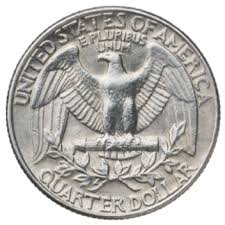
Miss Pashley walked to our house each week and taught me (and my mom who was always listening in) piano for the grand sum of 25 cents.
I started with Ada Richter’s classic Teaching Little Fingers to Play, which has now been morphed into the John Thompson library.
From there, it was the Michael Aaron series, and some sheet music.
There was no music store in our town, so I have no idea where any of this music came from – but I still have it all.
My parents did very well for their quarter a week investment, especially since my mom paid good attention and was able to beef up lessons she’d had as a child. Later on, she played well enough that she was church organist for a local Roman Catholic Church.
But I digress…
In those days, kids couldn’t do a whole lot of activities, so in 6th grade, I decided I wanted to be a Girl Scout. Bye, bye Clara.
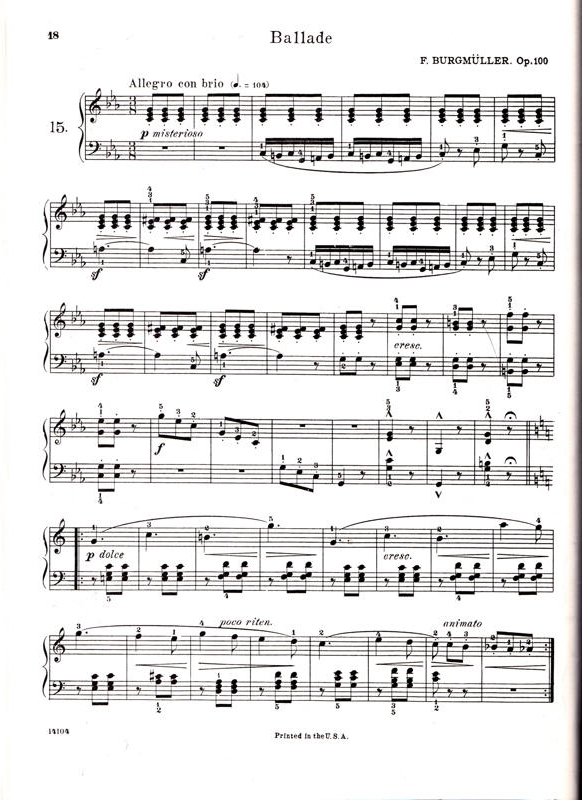
Girl Scouts didn’t last long but I did play piano in a talent show. I remember, I carefully cut Burgmüller’s Ballade out of my Michael Aaron book and made a nice construction paper cover. (I still have this, too)
I doubt that I played this well but here’s what it was supposed to sound like:
A few years intervened and moved to Springfield, MA. The parsonage piano there was in terrible shape and in the dark, never-used basement. But I decided to make it mine and cleared up the area around it and started “practicing”.
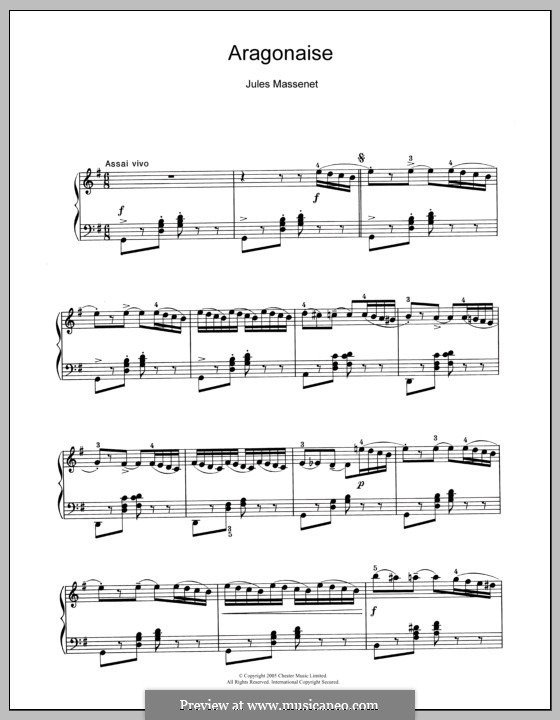
My Junior or Senior year of High School I decided I wanted to major in music in college. I decided to learn, on my own, a piano arrangement of Aragonaise by Jules Massenet. I have no idea why or where that sheet music came from but I started working furiously on this piece.
Hopefully, at some point, it should have sounded like this:
I started pedaling (no pun intended!) my music to the Universities of Connecticut and Massachusetts and ended up at UMass Amherst since we were state residents.
Early morning gym classes (usually swimming), then wet hair traipsing across campus to music theory in winter 5 days a week. AARRGGH!
But I stuck it out.
My wonderful piano teacher, Howard Lebow, was killed in a car accident during my sophomore year and I was devastated. There was more about him in a post on January 26, 2022 here on https://atomic-temporary-44596882.wpcomstaging.com
I took yet another break from piano lessons – but I kept playing.
After DH graduated, we moved to Milwaukee, WI for his graduate school. Besides working 2 jobs, I found time to commandeer the practice rooms at the University of Wisconsin. I also found a teacher at the Schaum School of Music. She was amazed that I had no piano at home to practice on.
When we later moved to Alexandria, VA my DH gave me a choice of new car or piano. So, I found a used piano. The owner had acquired it in a divorce and wanted it gone. Yesterday. She even paid to move it out of her apartment.
The new-to-me piano took up half our living room. When my parents came to visit, their feet we under my piano as I slept.
I found yet another new piano teacher and she is still my best friend to this day.
That piano moved to several locations before I bought a brand new Yamaha grand piano. The movers accidently brought in the wrong one and I made them return it. The people who lived in an apartment were probably unhappy when they had to return my piano and take their own new baby grand back.
I started teaching as a traveling piano teacher in Silver Spring, Maryland. I continued that in Wilmington, DE.
When we got to Fairfax, VA I decided no more traveling. Students would come to me. And so they have since 1973.
What is supposed to be our living room is filled with music books, electric keyboards, the grand piano, 2 organs, 2 violins, 2 clarinets, recorders, a dulcimer and other musical “stuff”.
Piano playing has gotten me through the worst times of my life. Teaching has been a lifeline for me, as well.
I am so thankful for the students who have stayed with me over the years and the new ones I have found…on the internet.
• 1812 ~ Fanny Perisiani, Italian coloratura soprano
• 1881 ~ The player piano was invented by Edward Leveaux of Sussex, England, who received a patent for it this day. There were many player piano inventions going on throughout the world during this time. Leveaux happened to be the lucky chap who received the patent England was handing out.
• 1929 ~ Leroy Van Dyke, Singer
• 1939 ~ A barber from Canonsburg (near Pittsburgh), PA, who had quite a singing voice, recorded That Old Gang of Mine with the Ted Weems Orchestra. That singer was the feature of the Weems band for many years before going solo as a radio, TV and stage star. You know him as ‘The Incomparable Mr. C.’, Perry Como. His string of hits for RCA Victor spans four decades. He was an NBC mainstay for years and years.
• 1943 ~ Is You is or is You Ain’t My Baby? was the musical question by Louis Jordan and His Tympany Five on this day on Decca Records.
• 1947 ~ James Fielder, Bass with these groups: Buffalo Springfield, Mothers of Invention and Blood, Sweat & Tears
• 1948 ~ Gordon MacRae hosted the premiere of a radio classic. The Railroad Hour debuted on ABC radio. The theme song was I’ve Been Working on the Railroad and the show was sponsored by….America’s Railroads.
• 1949 ~ John Aler, American tenor
• 1959 – Chris Lowe, Keyboards with Pet Shop Boys
• 1966 ~ It was, indeed, a Sunny Day for singer Bobby Hebb, who received a shiny gold record award for his song.
• 1970 ~ Janis Joplin died from a drug overdose. She was 27. Joplin, known for her passionate, bluesy, vocal style, was the lead singer of Big Brother and the Holding Company. She became a superstar with hits like, Down on Me, Pearl (her nickname) and Every Little Piece of My Heart; but Me and Bobby McGee was her only certified top 40 hit. The Bette Midler movie, The Rose, was based on Joplin’s life.
• 1999 ~ Art Farmer passed away
• 2000 ~ International diplomat and Newport Music Festival director David Meredith Evans died at the age of 64.
• 2001 ~ Irmgard Farden Aluli, considered the most prolific female Hawaiian composer since Queen Liliuokalani, died after suffering complications from colon cancer surgery. She was 89. Aluli, affectionately nicknamed “Aunty”, became the first living member to be inducted into the Hawaiian Music Hall of Fame in 1998. In August, the Prince Kuhio Hawaiian Civic Club honored her as a cultural living treasure. She wrote more than 200 songs, including Boy from Laupahoehoe and E maliu Mai. Aluli began performing publicly after graduating from St. Andrew’s Priory in 1929. She was a member of the Annie Kerr Trio in the 1930s. In the late 1960s, Aluli, her daughters and a niece formed the group Puamana.
• 2001 ~ Jazz guitarist John Collins, who played with Nat King Cole for over a decade, died at the age of 83. Collins was born in Montgomery, Ala., and grew up in Chicago. His mother, Georgia Gorham, was a pianist and bandleader. Collins briefly played clarinet before switching to guitar and moving to New York, where he played with prominent jazzmen such as pianist Art Tatum. Collins accompanied singer Billie Holiday and saxophonist Lester Young in the 1940s and played in bands led by Benny Carter and Fletcher Henderson. He served in the Army during World War II, and played in Army bands. Esquire magazine gave Collins its New Star award as best guitarist of 1947, his lone jazz poll honor. Collins’ 14-year association with Cole began in 1951, when he replaced guitarist Oscar Moore. Collins played with Cole until the latter’s death in 1965. Collins went on to tour Europe with his own group. He played occasionally around Southern California in the 1990s but worked mainly as a private teacher.
• 1763 ~ An instrument named the spinet was mentioned in The Boston Gazette newspaper on this day. John Harris made the spinet, a small upright piano with a three to four-octave range. There is no verifiable evidence to support the rumor that a man named Spinetti made the first spinet.
• 1809 ~ The Theatre Royal at Covent Garden re-opened after being destroyed by fire the year before. The Theatre Royal at Covent Garden began in Bow Street in 1732. It was designed by E.M. Barry in classical style. He also built for the theatre’s management the Floral Hall next door in glass and iron, meant to be a straightforward rival to the Bedford’s flower market. Both of Barry’s buildings are now part of the rebuilt Royal Opera House at Covent Garden complex.
• 1838 ~ Emil Scaria, Austrian bass-baritone
• 1899 ~ Scott Joplin was granted copyright for his “Maple Leaf Rag”, the most famous ragtime composition, by the US Copyright Office
• 1910 ~ Josef Tal, Polish-born Israeli composer and pianist
• 1917 ~ The Honolulu Ad Club registered a patent for the ukulele.
• 1927 ~ The Columbia Broadcasting System was born on this day, although its rival, NBC, had been on the air for some time. The Tiffany Network, as CBS was called, broadcast an opera, The King’s Henchman, as its first program. William S. Paley put the network together, purchasing a chain of 16 failing radio stations. The controlling interest cost between $250,000 and $450,000. The following year, the 27-year-old Paley became President of CBS. It only took one more year for him to profit 2.35 million dollars as the network grew to over 70 stations. In 1978 Paley received the First Annual ATAS (Academy of Television Arts and Sciences) Governor’s Award as Chairman of the Board of CBS.
• 1929 ~ Teddi King, Singer
• 1933 ~ Jimmie Rodgers, Singer
• 1939 ~ Frankie (Frances) Avalon (Avellone), American rock-and-roll singer
• 1947 ~ Country singers Ernest Tubb and Roy Acuff performed at Carnegie Hall in New York City. It was the first country show for the NYC venue.
• 1948 ~ The Original Amateur Hour returned to radio on ABC, two years after the passing of the program’s originator and host, Major Bowes. Bowes brought new star talent into living rooms for 13 years. Ted Mack, the new host, had also started a TV run with The Original Amateur Hour on the DuMont network in January of 1948.
• 1949 ~ Kerry Livgren, Guitar, keyboards with Kansas
• 1952 ~ Dee Dee Ramone (Douglas Colvin), Drummer with The Ramones
• 1955 ~ What had been The Toast of the Town on CBS Television (since 1948) became The Ed Sullivan Show. This “rilly big shew” remained a mainstay of Sunday night television until June 6, 1971. Sullivan was a newspaper columnist/critic before and during the early years of this pioneering TV show.
• 1957 ~ The Big Record, hosted by ‘the singing rage’, Miss Patti Page, debuted on CBS-TV. The Big Record was a live musical showcase featuring established artists singing their big songs. The Big Record lasted one big season.
• 1962 ~ Joanne Catherall, Singer with Human League
• 1967 ~ Ricky Bell, Singer with New Edition
• 1969 ~ Tiptoeing through late night TV, Tiny Tim announced his engagement to Miss Vicki Budinger. Johnny Carson, host of The Tonight Show, was so enthralled with the falsetto-voiced singer that he invited the couple to get married on the show. They did on December 17, 1969 and TV history was made.
• 1970 ~ Rock radio mourned the loss of rock music legend, Jimi Hendrix. He died at age 27 of an overdose of sleeping pills. His Purple Haze and Foxy Lady became anthems for a generation at war in Vietnam.
• 1985 ~ “Song & Dance” opened at Royale Theater NYC for 474 performances
• 1881 ~ Georges Enesco, Rumanian composer, violinist and conductor
• 1918 ~ Sgt. Irving Berlin’s musical about army life in World War I opened at the Century Theatre in New York City. Yip Yip Yaphank included songs, such as Mandy and Oh, How I Hate to Get Up in the Morning.
• 1939 ~ Ginger (Peter) Baker, Trumpeter, drummer with Cream
• 1939 ~ The Dick Jurgens Orchestra recorded Day Dreams Come True at Night on Okeh Records. Eddy Howard was the vocalist on the piece. It became Jurgens’ theme song.
• 1940 ~ Johnny Nash, American pop-reggae singer, songwriter and guitarist
• 1943 ~ Billy J. Kramer (William Ashton), Singer with The Dakotas
• 1945 ~ Ian Gillan, Singer with Deep Purple
• 1947 ~ Gerard Schwarz, American trumpeter and conductor
• 1951 ~ John Deacon, Bass with Queen, score of Flash Gordon
• 1964 ~ The Beatles began their first North American concert tour. They would visit 26 cities.
• 1972 ~ NBC-TV presented The Midnight Special for the first time. John Denver was the host for the first show. Wolfman Jack was the show’s announcer. The Midnight Special proved to be a ratings success.
• 1991 ~ Richard Maltby passed away. He was an American musician, conductor, arranger and bandleader.
• 2001 ~ Singer Betty Everett, whose recording of The Shoop Shoop Song (It’s In His Kiss) made Billboard’s Top 10 in 1964, died Sunday. She was 61.
Everett is remembered primarily for one huge hit song in the 1960s, but she also recorded many other songs and was recognized as one of the top soul singers of her time.
Starting at age 9, Everett played the piano and sang in church. She continued to sing in gospel choirs before moving to Chicago in 1957, where she recorded a string of hits on local record labels such as C.J. Cobra and OneDerful that included I’ll Be There and I’ve Got a Claim On You.
Everett signed a contract in the early 1960s with VeeJay, a record label that was then issuing recordings by The Beatles.
Everett recorded The Shoop Shoop Song in the spring of 1964, and it soared to Billboard’s Top 10.
The song was later recorded by Cher in the soundtrack for the 1990 movie Mermaids and more recently by Vonda Shepard of the Fox television show Ally McBeal.
• 2017 ~ Bea Wain, American singer and radio host (Deep Purple, Heart and Soul), died at the age of 100
Let’s face it. Most kids don’t want to practice the piano. And if they do find the time to practice, it’s usually because their parent kept nagging them. How frustrating!
Piano teachers are frustrated too. It’s nearly impossible to teach students new concepts when they don’t understand the old ones–all because of a lack of practice.
If you’re a parent in this situation, I have just the solution you’re looking for.
In this upbeat book, I share all the tips I’ve discovered in my 14 years of teaching piano. You’ll learn fun, practical ways to get your kids to the keyboard.
But this easy-to-read guide goes one step further. I’ll show you simple ways to encourage better quality practice. Even if you’ve never had a music lesson in your life!
I wrote this book for kids of all ages. There are creative ideas for elementary students and also a section for teens.
There’s even a section for what to do if your child wants to stop taking piano lessons. That’s right, there is hope and my book will show you exactly how to get them interested in piano again.
Don’t be the kind of parent who sits on the sidelines waiting until their child wants to practice. Piano lessons are too expensive for you to let another “no-practice” day go by.
This book is your answer to get your child to the keyboard, have good quality practice and develop a life-long love of music.
Thank you for your interest in the O’Connor Music Studio!
Available times are on Mondays, Wednesdays and Fridays during the day and after school for all ages and levels. There may be other times available if requested.
After you register, you will get a confirmation email with the information you need to access the Student Portal. After logging in you may choose from the available lesson times or request something different.
If you are a transfer student, please have your most recent method book(s) and notebook available for the interview.
Prospective students must have a piano, organ or electric keyboard to use for daily practice.
Roadtrip! students (ages 4-5) are scheduled for half-hour lessons with their parents present.
Beginning children (ages 6 to 9) are scheduled for half-hour lessons.
Youth (ages 10 and up) may be scheduled for half-hour lessons or forty-five minute lessons.
Adults are highly encouraged to take hour-long lessons but are always welcome to schedule half-hour lessons at first.
Many homeowners don’t realize that there are movers available to them who specialize in the transportation and storage of pianos. A piano is a delicate instrument and not something you want to take risks with. By trusting this major job to a piano mover, you can rest easy knowing that one of the most valuable items in your home is being transported with the care it deserves.
But It Weighs 1500 Pounds. How Delicate Can It Be?
This is exactly where many homeowners go wrong. Sure, that piano in your living room is heavy enough to throw out the backs of four or five of your best buddies as you wrestle it out the door and up into the truck, but don’t let that fool you. Despite its bulky appearance, it is also a precision musical instrument with over 1000 moving parts and 200 finely-tuned strings, any number of which can be damaged and require repair if your piano isn’t handled properly in a move.
Your Piano Mover Understands Pianos
These intricate inner workings of a piano are exactly why hiring an expert in piano moving is so important. These professionals understand pianos and moving them, from the safest way to lift and twist a standard upright piano to get it out the door, to how to properly disassemble a grand piano and transport it without causing any damage. And even more importantly, a piano mover understands that when your piano is delivered to your new home, you expect to be able to sit down and play it right away. It’s why many piano movers keep tuners and repairmen on staff, and why the rest will have a trusted list of professionals available on request if you need it.
Stephen Powers first thought of his grand piano as an impressive piece of furniture.
But he enjoyed listening to music so much when friends played at parties at his home in North Wilmington that he began taking lessons.
“I enjoy having a couple of songs under my belt,” says Powers, a 52-year-old banker. “I play Happy Birthday. I play Getting to Know You for my mom.”
Powers is part of a boomlet of adults who are studying piano. Many took lessons briefly as children and regret giving it up. Some simply enjoy music. Others gravitated toward the keyboard because studies suggest piano improves mental acuity while reducing the odds of dementia.
A Swedish study published in 2014 in the International Journal of Alzheimer’s Disease found that when a twin played a musical instrument later in life, he or she was 64 percent less likely to develop dementia than the twin who did not play.
A study published in Frontiers in Psychology in 2013 evaluated the impact of piano lessons on cognitive function, mood and quality of life in adults age 60 to 84.
The group that studied piano showed significant improvement in tests that measure executive function, controlling inhibitions and divided attention, as well as enhanced visual scanning and motor ability. Piano students also reported a better quality of life.
Some grownups simply relish a challenge.
In the United Kingdom, Alan Rusbridger, editor of the Guardian, took to the keyboard at age 56. He chronicled the year he spent learning Chopin’s demanding No. Ballade 1 in G Minor in the book Play It Again: An Amateur Against the Impossible.
Richard Swarmer, 57, of Lewes, played the trumpet from grade school through college. He has sung in several choirs. This year, he began piano lessons.
Learning the piano isn’t easy even for someone with a musical background. Still, Swarmer appreciates that the creative thought process is different from the focus required by his job for a medical benefits company.
“I have thoroughly enjoyed taking piano lessons as an adult,” he says. “It provides a welcome respite from the demands of my job.”
Ethel Thirtel of North Wilmington is 71 and a student at the Music School of Delaware. She is also taking French lessons to help keep her intellect sharp.
“Both pursuits involve active studying and practice to master new skills,” she says.
To meet rising demand, the Music School of Delaware offers adults-only evening group classes to accommodate working people, says Matthew Smith, student and alumni relations officer. The school also provides instruction for adults 50 and older through the Osher Lifelong Learning Institute at University of Delaware.
“In addition to professionals, we are getting a lot more inquiries from older adults who are retired and have time on their hands,” he says.
Geri Smith, a Julliard-trained singer, musician and composer, has taught piano to children in public schools as well as private arts centers. Her adult students include a 59-year-old writer who took up piano after the death of her husband, a gifted musician.
“Teaching children is a different experience than teaching adults,” says Smith, of Unionville. “Kids pretty much do what you ask them to do but adults ask lots of questions. They want to know why things have to be done a certain way.”
An important part of learning piano is creating new pathways in the brain. A Harvard Medical School study examined the impact of practicing the piano on synapses, the connections between neurons that encode memories and learning.
Volunteers practiced two hours a day for five days, playing a five-finger exercise to the beat of a metronome. To learn how that impacted the neurons scientists used transcranial-magnetic-stimulation (TMS), in which a wire coil sends magnetic impulses to the brain.
They discovered that after a week of practice, the stretch of motor cortex devoted to the finger exercises had expanded like crabgrass.
“Playing the piano creates new synapses,” Smith says. “Think of it as creating a conduit so your right hand can talk to your left hand.”
Meldene Gruber of Rehoboth Beach, who has taught piano for more than 40 years, has seen a surge in adult students in the past two years. Now, half her students are adults.
“A number of my adults say they think playing the piano will help with mental acuity,” she says. “Playing the piano forces you to use both sides of the brain, which is great for neuron firing.”
Most adults have specific goals in mind, such as learning to play Christmas carols or a few favorite pieces.
“You don’t get adults who are focused on becoming concert pianists,” Gruber says. “They come for the joy of playing, not because their mothers made them.”







 MaryO'Studio