A $40,000 Bergmann baby grand piano that belonged to the Paris Community Theatre vanished over the weekend. Now, police are trying to figure out why and how somebody stole it.
Josh Maxwell, the office manager for the Paris Community Theatre, says it was a typical start to the work week when he arrived Monday morning. That’s until he checked on the Brown Centre at Clarksville and South Church Street around 11 o’clock that morning where he says children rehearse several times a week.
“Someone one was needing in, and walked in and noticed that the very large grand piano was missing,” said Maxwell.
Completely blown away, Maxwell says he was dumbfounded when the 1000-pound Bergmann baby grand piano was nowhere to be found. He says the last time the piano was seen in the building was Saturday afternoon. How the thieves got away with such a large object, remains a mystery.
“When they moved it into the moving, it took six people, plus a specially built dolly for a piano,” said Maxwell. “I can’t see how one person by themselves could move something that weighs over a thousand pounds.”
1879 ~ Sir Thomas Beecham, English conductor. Founded the Royal Philharmonic Orchestra in 1947 and did much to promote the works of Delius, Sibelius and Richard Strauss.
Read quotes by and about Beecham
. 1895 ~ Sir Malcolm Sargent, English conductor, born. He was in charge of the Liverpool Philharmonic Orchestra from 1942 until 1948 and of the BBC Symphony Orchestra from 1950 until 1957.
1899 ~ Duke Ellington, American jazz pianist, bandleader and composer
Read quotes by and about Ellington
More information about Ellington Grammy winner
. 1913 ~ Donald Mills, Singer with The Mills Brothers.
. 1925 ~ Danny Davis (George Nowland), Grammy Award-winning bandleader with Danny Davis and the Nashville Brass. Best Country Instrumental Performance in 1969, Country Music Awards Instrumental Group of the Year 1969 to 1974
. 1936 ~ Zubin Mehta, Indian conductor, Los Angeles Philharmonic Orchestra, and violinist
. 1936 ~ April Stevens (Carol Lo Tempio), Singer
. 1943 ~ Duane Allen, Singer with the Oak Ridge Boys
. 1947 ~ Tommy James (Jackson), Singer with Tommy James and The Shondells
. 1949 ~ Francis Rossi, Musician, guitar and singer with Status Quo
. 1968 ~ Hair made its way from Greenwich Village to Broadway. The show certainly opened eyes. It was the first time that actors appeared nude in a Broadway musical. Hair ran for 1,844 shows on and off Broadway. It was even more successful in its London run later. Big songs from the show: Hair (The Cowsills) and Aquarius/Let the Sunshine In (The 5th Dimension).
. 1969 ~ Sir Duke, Duke Ellington, celebrated his 70th birthday. He was honored with the presentation of the Medal of Freedom, the U.S. government’s highest civilian honor.
. 2001 ~ Opera diva Rita Nellie Hunter, a powerful soprano celebrated for her fine Wagnerian performances, died at the age of 67. Hunter, originally from Wallasey, England, was best remembered as the quintessential Brunnhilde of Wagner’s “Ring” cycle, which she performed in London, New York, Germany and Sydney. Hunter’s agile voice led her through performances of Verdi’s “Aida,” and “Macbeth,” Puccini’s“Turandot” and Strauss’ challenging “Elektra.” Despite her remarkable voice, Hunter did not reach international stardom. Her physical size, at a time when the opera was seeking slimmer performers, and the fact that she sang roles primarily in English, kept her from achieving global fame. Hunter married tenor John Darnley Thomas in 1960, and after his death in 1994, took over management of his Singing Academy in Sydney.
The real reasons that students quit is often beyond their own understanding. It is up to teachers and parents to create moments for students to want to continue on their instrument during the early years of study in order for the child to be successful and stay with the craft.
Here are reasons students quit, and ways to combat them:
Parents need to find music just as important as other subjects. The sad truth is that many non-music teachers and administrators do not find music equally as important as math or English language-arts, but parents need to. Besides, you wouldn’t let your child quit math, would you? Many kids would jump at that opportunity. Music is a core subject…period. The more parents treat it as such, the less students will quit.
Students don’t know how to get better. Without the proper tools and practice habits to get better at anything, students will become frustrated and want to quit. It is the role of the music educator and the parents to give students ownership over their learning. Teachers must teach students why, how, where, and when to practice, and parents must obtain minimal knowledge about how students learn music in order to properly support them at home.
Parents and students think they aren’t musically talented. Sure, there are some kids who pick up an instrument and sound decent immediately, but they will hit a wall later and have to work hard to overcome it. Most everyone else won’t sound that great at first. Playing a musical instrument is a craft that, if practiced correctly, is something that all children can find success in. As long as students know how to practice and that it needs to be done regularly, they will get better.
Students discontinue playing over the summer. Statistics show that students who do not read over the summer find themselves extremely behind once school starts. The same goes for playing an instrument. A year of musical instruction can quickly go down the tubes over the summer vacation if students do not find small ways to play once in a while. Picking up an instrument for the first time after a long layoff can be so frustrating that a student will not want to continue into the next school year.
The instrument is in disrepair. A worn down cork, poor working reed, or small dent can wreak havoc on a child’s playing ability. Sometimes the malfunction is so subtle that the student thinks they are doing something wrong, and frustration mounts. Students, parents and teachers need to be aware of the basics of instrument maintenance and be on top of repairs when needed.
Teachers don’t create enough performing opportunities during the year. The best way to motivate students musically is through performance. Weeks or even months on end of practicing without performing for an audience gets old very quick, and student will definitely quit. Teachers should schedule performances every six weeks or so in order for students to stay engaged and practicing. Parents can help by creating small performance opportunities at home — a Friday night dinner concert or a planned performance for visiting family members are great ideas.
There is not enough “fun”music to practice. It’s very important for parents to be aware of music that interests their child, because it exists in sheet music form for download or purchase. It’s important that all students play music that is aligned to their interests in addition to other pieces that are worked on in school.
Other activities are pulling at the child. Between art lessons, sports, karate, and other activities, parents grow weary of having “one more thing” to be on top of schedule-wise. Parents need to understand that the enduring social and psychological benefits of music are as enormous as those of sports — in the same and different ways. Budget time accordingly and children will have 10 minutes a day to practice an instrument, for sure.
Much like any worthwhile venture, practicing a musical instrument has its ups and downs. Kids need to be reminded to practice, of course — but they should not be constantly pushed, and they should not be completely left alone. It’s a balancing act where sometimes the parents will need to give their child a break for a few days and other times will need to bribe them to practice. Either way, all children are capable of thriving with a musical education, and students will indeed thank their parents for not letting them quit.
. 1987 ~ For the first time, a compact disc of an album was released before its vinyl counterpart. The Art of Excellence by Tony Bennett, his first recorded work in a decade, went on sale.
. 2001 ~ Evelyn Kuenneke, a Berlin singer and cabaret artist whose tune Sing NightingaleSing was a hit among German soldiers during World War II, died of lung cancer at the age of 79. Kuenneke started out as a dancer at Berlin’s State Opera in the late 1930s. When the Nazis banned her from appearing in cabaret shows under her artist name Evelyn King in 1939, she turned to movies and pop songs that also took her on the wartime military entertainment circuit. With the war started by Adolf Hitler in full fury, Kuenneke scored her biggest success in 1941 with Sing Nightingale Sing, a nostalgia-laced ditty set to a slow swing beat. She continued her career after the war with pop recordings and films, dropping out of the public eye in the 1960s but staging a comeback in the 1970s. Since then, she regularly appeared on stage in small productions or variety shows until a few months ago. Born Dec. 15, 1921 in Berlin, Kuenneke was the daughter of German operetta composer Eduard Kuenneke and the opera singer Katarina Krapotkin.
. 2002 ~ Noel Da Costa, a composer and professor at Rutgers University, died. He was 82. Da Costa also wrote music that drew from African folk music. His piece, Primal Rites, was performed in 1983 by the Boston Pops Esplanade Orchestra under John Williams, with Max Roach as the soloist. Born in Nigeria, Da Costa’s family moved to Harlem as a young boy. He attended Queens College and Columbia University. He won a Fulbright Scholarship to study music with Luigi Dallapiccola in Florence, Italy. Da Costa joined the faculty of Rutgers in New Brunswick, N.J. in 1970 after teaching for the city universities of New York. He retired from Rutgers last year.
Rare 1945 film from the Central Music School of the Moscow Conservatory shows a pupil (Margarita Fodorova?) taking lessons with Heinrich Neuhaus and Alexander Goldenweiser.
Neuhaus, a pupil of Scriabin, was Sviatoslav Richter’s teacher.
Goldenweiser’s students included Lazar Berman, Tatiana Nikolayeva and Dimitri Bashkirov.
What’s remarkable is how gentle they both seem – in contrast with the prevailing image of brutal Russian teaching methods.
. 1867 ~ Charles Gounod’s opera “Romeo et Juliette” was first performed, in Paris.
. 1894 ~ Nicholas Slonimsky, Russian-born American musicologist, musical lexicographer and composer
. 1871 ~ Sigismond Thalberg died. He was a composer and one of the most famous virtuoso pianists of the 19th century.
. 1931 ~ Igor Oistrakh, Violinist
. 1932 ~ Maxine (Ella) Brown, Singer
. 1933 ~ Calvin Newborn, Jazz/blues guitarist, brother of piano wizard Phineas Newborn Jr.
. 1938 ~ Tommy Dorsey and his orchestra recorded I Hadn’t Anyone ’til You for Victor Records. Jack Leonard was featured as vocalist.
. 1941 ~ Judith Blegan, American soprano
. 1944 ~ Cuba Gooding, Singer
. 1947 ~ Pete Ham, Musician, guitar, piano, singer
. 1948 ~ Kate Pierson, Musician, organ, singer with the B-52s
. 1959 ~ Sheena Easton, Singer
. 1959 ~ Lloyd Price’s song, Personality, was released. Price had 10 songs that made it on the nation’s pop music charts in the 1950s through early 1960s.
. 1970 ~ Mariah Carey, Singer
. 1976 ~ Maxine Nightingale received a gold record for the single, Right Back Where WeStarted From. Nightingale was in the productions of Hair, Jesus Christ Superstar, Godspell and Savages in the early ’70s. Right Back Where We StartedFrom was a number two hit for two weeks in 1976.
. 2002 ~ Classical violinist Guila Bustabo died at the age of 86. Bustabo, born in Manitowoc, Wis., in 1916, toured Europe and Asia, performing under such conductors as Herbert von Karajan and Wilhelm Furtwangler. Bustabo studied at the Juilliard School in New York before moving to Paris. During her career, she recorded concertos by Beethoven and Bruch with the Concertgebouw Orchestra in Amsterdam. Bustabo was arrested in Paris after World War II, accused of being a Nazi sympathizer because she played under conductor Willem Mengelberg. Mengelberg had been affiliated with musical associations sanctioned by the Nazi Party. The accusation against Bustabo was eventually dropped.
. 1942 ~ Bobby Rydell, American rock-and-roll singer and drummer
. 1970 ~ The musical, Company, opened on Broadway. It ran for 705 performances at the Alvin Theatre in New York City. Company starred Elaine Stritch.
. 1975 ~ On top of the Billboard popular music chart was B.J. Thomas, with the longest title ever for a number one song. (Hey Won’t You Play) AnotherSomebody Done Somebody Wrong Song was number one for one week, though it took that long just to say the title.
. 1978 ~ An updated version of Mark Twain’s The Prince and the Pauper appeared on television. In the lead role (his first TV special), was former Beatle, Ringo Starr. He sang new versions of Act Naturally, Yellow Submarine and With a Little Help from My Friends.
. 1984 ~ Count Basie (William Basie), U.S. jazz pianist and big band leader who led his orchestra from 1937, died.
People, especially students, are often surprised that I still take piano lessons. There seems to be a consensus that adults, especially piano teachers, know everything already. Well, no. There is always more to learn.
Each pianist and teacher has different ideas and techniques to share. Anyone who has seen my music library knows that I couldn’t possibly have played, let alone mastered, each piece of music I own. One year, I had claimed so much music on my income taxes, that an IRS agent was dispatched to my studio to disclaim my claims in an audit. I won!
I am reviving an older piece that I played sometime in the past. I know that because of all the color coding!
Here, Murray Perahia plays Mendelssohn’s Trois Fantaisies ou Caprices, Op. 16. Nr. 1: Andante con moto.
My son and I are working on Capriol by Peter Warlock, to be played June 7, 2015 at Steinway Hall.
I don’t know who is performing in this video but I hope to have a video of our performance to post later:
I’m also sightreading a variety of ragtime pieces and will choose one to work on in the next few days. In the running are Zez Confrey and William Bolcom. We’ll see!
. 1933 ~ Jerry Leiber, Record producer with Mike Stoller
. 1945 ~ Stu Cook, Bass with Creedence Clearwater Revival
. 1945 ~ Bjorn Ulvaeus, Musician, guitar, singer with Abba
. 1946 ~ The popular Jimmy Lunceford Orchestra recorded Cement Mixer for Majestic records, tapes and CDs this day. Well, not tapes and CDs. We were still listening to 78s back then … thick, heavy ones, at that.
. 1956 ~ The rock ‘n roll legend, Elvis Presley’sHeartbreak Hotel went No.1.
. 1970 ~ DJs around the U.S. played the new number one song, ABC, quite often, as the Jackson 5 reached the number one spot in pop music for two weeks. ABC was the second of four number one songs in a row for the group from Gary, IN. I Want You Back was their first. ABC was one of 23 hits for Michael, Tito, Jackie, Jermaine and Marlon. ABC was knocked out of first place by The Guess Who and their hit, American Woman.
. 1973 ~ The group, The Sweet, received a gold record for the hit Little Willy. The English rocker band recorded four hits in addition to their first million- seller, Ballroom Blitz, Fox on the Run, Action and Love is like Oxygen. Little Willy was a top-three hit, while the group’s other gold record winner, Fox on the Run made it to the top five.
. 2000 ~ David Merrick, one of Broadway’s most flamboyant and successful theatrical producers who created “Gypsy,” “Hello, Dolly!” and “42nd Street,” died in London at the age of 88. During his long career as arguably Broadway’s most successful producer, Merrick won all the major theatrical awards, including 10 Tony Awards just for “Hello, Dolly!” He was best-known for his musicals but he produced many non-musicals as well.


 1879 ~ Sir Thomas Beecham, English conductor. Founded the Royal Philharmonic Orchestra in 1947 and did much to promote the works of
  Grammy winner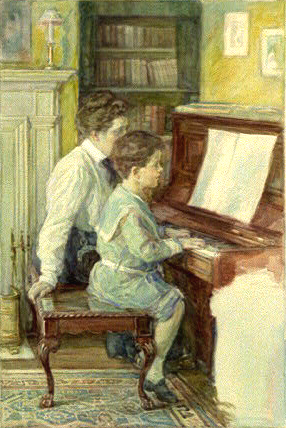

 MaryO'Studio