• 1655 ~ Bartolomeo Cristofori, Italian instrument maker, inventor of the piano. He was credited with designing the first pianoforte, which he called “the harpsichord that plays soft and loud”.
More information about Cristofori
• 1886 ~ The first practical phonograph, better known as the gramophone, was patented.
• 1920 ~ The Symphony Society of New York presented a concert at the Paris Opera House. It was the first American orchestra to make a European tour.
• 1928 ~ Maynard Ferguson, Canadian jazz trumpeter and bandleader
• 1930 ~ Roberta Peters (Peterman), American soprano, Metropolitan Opera, Jewish Cultural Achievement Awards in Performing Arts in 1997.
• 1931 ~ Ed Cassidy, Drummer
• 1945 ~ June Christy sang with the Stan Kenton band on one of the most famous of all big band hits, Tampico.
• 1951 ~ Jackie (Sigmund) Jackson, Singer with The Jackson Five
• 1956 ~ Gene Vincent and his group, The Blue Caps, recorded Be-Bop-A Lula for Capitol Records in Los Angeles. Interesting note: Vincent had written the tune only three days before he auditioned in a record company talent search that won him first place. The record was rush-released just two days later and became a rock and roll classic.
• 1959 ~ Randy Travis (Traywick), Singer
. 1979 ~ Lance Bass, member of American pop boy band NSYNC (Justin Timberlake, JC Chasez, Chris Kirkpatrick, Joey Fatone, and Lance Bass) who had hits from late nineties to early 2000’s including top hit Singles “Bye Bye Bye”, “This I Promise You”, “Girlfriend”, “Pop” and “It’s Gonna Be Me” NSYNC and has sold over 70 million records, becoming one of the best-selling boy bands in history.
• 1996 ~ Alanis Morissette started a six-week run at No.1 on the UK album chart with Jagged Little Pill. The record produced six successful singles, including ‘You Oughta Know’, ‘Ironic’, ‘You Learn’, ‘Hand in My Pocket’, and ‘Head over Feet’. Do you have a favorite track from the album?
The Lego Ideas Grand Piano not only looks good on the shelf, it pairs with your phone to play back tunes.
Someone from CNET writes: “I got my hands on the hard-to-find Grand Piano set from the Lego Ideas collection and put it together just for you. Watch as I assemble over 3,000 pieces, and sync the model with my phone to make it play music.”
I’m thankful for my piano studio, my students, and my piano 🙂 During Covid, I was especially thankful for the Internet!
When I was growing up, my dad was a minister, meaning we lived in whatever parsonage the church chose to let us live in. The one we had in Pawcatuck, CT had an upright piano that someone had put out in the sunroom. Not the best place for a piano, but I digress.
Since we had the piano already, someone – probably my mom – decided that I would take lessons. We had the organist from the Baptist church just across the river in Westerly, RI
Apparently, Clara Pashley was fondly remembered at the church (now Central Baptist Church) since she was mentioned in an article from 2010.
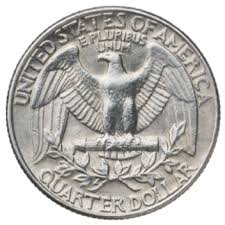
Miss Pashley walked to our house each week and taught me (and my mom who was always listening in) piano for the grand sum of 25 cents.
I started with Ada Richter’s classic Teaching Little Fingers to Play, which has now been morphed into the John Thompson library.
From there, it was the Michael Aaron series, and some sheet music.
There was no music store in our town, so I have no idea where any of this music came from – but I still have it all.
My parents did very well for their quarter a week investment, especially since my mom paid good attention and was able to beef up lessons she’d had as a child. Later on, she played well enough that she was church organist for a local Roman Catholic Church.
But I digress…
In those days, kids couldn’t do a whole lot of activities, so in 6th grade, I decided I wanted to be a Girl Scout. Bye, bye Clara.
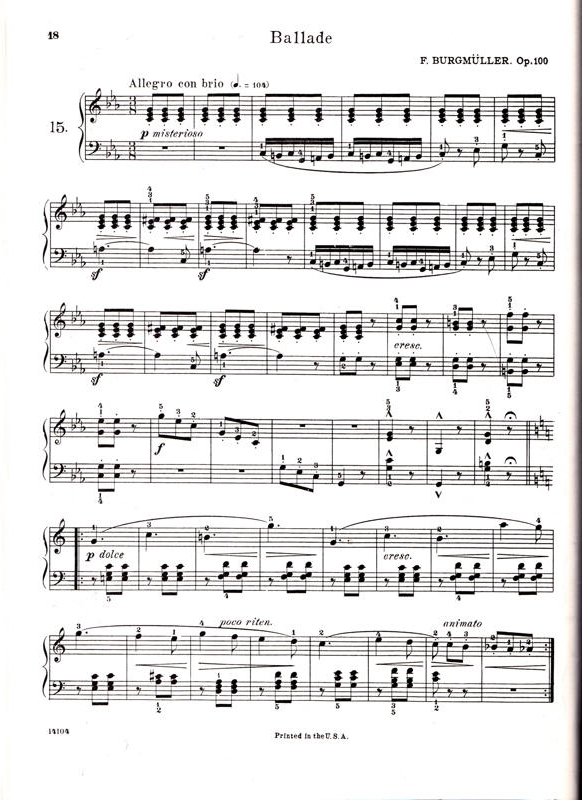
Girl Scouts didn’t last long but I did play piano in a talent show. I remember, I carefully cut Burgmüller’s Ballade out of my Michael Aaron book and made a nice construction paper cover. (I still have this, too)
I doubt that I played this well but here’s what it was supposed to sound like:
A few years intervened and moved to Springfield, MA. The parsonage piano there was in terrible shape and in the dark, never-used basement. But I decided to make it mine and cleared up the area around it and started “practicing”.
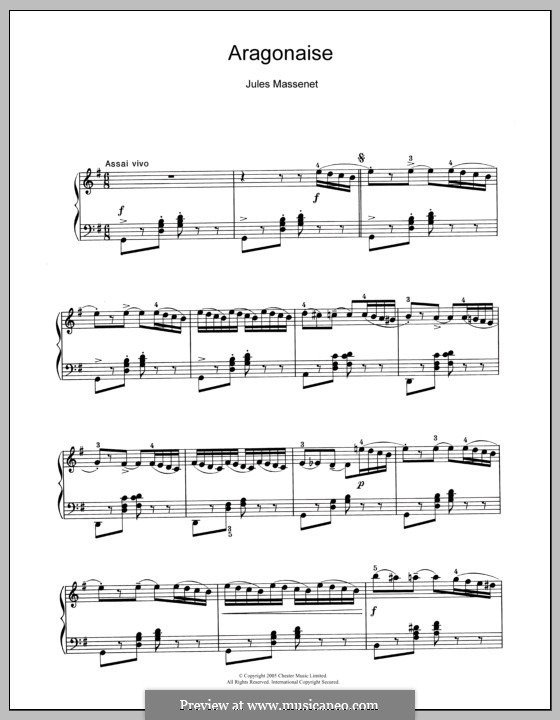
My Junior or Senior year of High School I decided I wanted to major in music in college. I decided to learn, on my own, a piano arrangement of Aragonaise by Jules Massenet. I have no idea why or where that sheet music came from but I started working furiously on this piece.
Hopefully, at some point, it should have sounded like this:
I started pedaling (no pun intended!) my music to the Universities of Connecticut and Massachusetts and ended up at UMass Amherst since we were state residents.
Early morning gym classes (usually swimming), then wet hair traipsing across campus to music theory in winter 5 days a week. AARRGGH!
But I stuck it out.
My wonderful piano teacher, Howard Lebow, was killed in a car accident during my sophomore year and I was devastated. There was more about him in a post on January 26, 2022 here on https://atomic-temporary-44596882.wpcomstaging.com
I took yet another break from piano lessons – but I kept playing.
After DH graduated, we moved to Milwaukee, WI for his graduate school. Besides working 2 jobs, I found time to commandeer the practice rooms at the University of Wisconsin. I also found a teacher at the Schaum School of Music. She was amazed that I had no piano at home to practice on.
When we later moved to Alexandria, VA my DH gave me a choice of new car or piano. So, I found a used piano. The owner had acquired it in a divorce and wanted it gone. Yesterday. She even paid to move it out of her apartment.
The new-to-me piano took up half our living room. When my parents came to visit, their feet we under my piano as I slept.
I found yet another new piano teacher and she is still my best friend to this day.
That piano moved to several locations before I bought a brand new Yamaha grand piano. The movers accidently brought in the wrong one and I made them return it. The people who lived in an apartment were probably unhappy when they had to return my piano and take their own new baby grand back.
I started teaching as a traveling piano teacher in Silver Spring, Maryland. I continued that in Wilmington, DE.
When we got to Fairfax, VA I decided no more traveling. Students would come to me. And so they have since 1973.
What is supposed to be our living room is filled with music books, electric keyboards, the grand piano, 2 organs, 2 violins, 2 clarinets, recorders, a dulcimer and other musical “stuff”.
Piano playing has gotten me through the worst times of my life. Teaching has been a lifeline for me, as well.
I am so thankful for the students who have stayed with me over the years and the new ones I have found…on the internet.
The Piano Puzzlers book is available in the O’Connor Music Studio library if you’d like to give any a try. Piano Puzzlers as heard on American Public Media’s “Performance Today.” Includes 32 tunes with songs by Gershwin, Berlin, Arlen, Porter, Rodgers, Fats Waller, Lennon & McCartney, and others disguised in the styles of Bach, Handel, Haydn, Mozart, Beethoven, Brahms, Schubert, Schumann, Chopin, Janacek, Debussy, Ravel, Rachmaninoff, Stravinsky, Prokofiev, Bartok, and Copland.
Includes an introduction by Fred Child, host of “Performance Today” as well as background info by Bruce Adolphe. “Bruce Adolphe has taken a common musician’s party game and elevated it to high art and truly funny musical slapsticks. The Piano Puzzlers are a unique combination of extraordinary insight into the styles of many composers subtle, expert workmanship and great, great fun!”
If you’re a music geek (like me), I have a program for you. Now, let me be clear, to fully qualify as a music geek…you must have a fond appreciation for classical music (no, Poison, Quiet Riot, and Zepplin do not count as classical music). So, if you’re a “music geek” without an appreciation for classical music…well, I hate to burst your bubble…but, you’re not truly a music geek. Instead, you’re a music appreciator, but not a geek. So, if you just listen to indie music and scowl at anything on a label larger than Matador…don’t bother following the link I’ll provide…the fun will be lost on you…And, you probably won’t have a chance.
Every Wednesday night, on my way home from WNL, I turn on my local NPR station to listen to Piano Puzzlers on Performance Today. It’s absolutely incredible. A pianist/composer (Bruce Adolphe) takes a familiar folk or pop tune and sets it inside a classical masterpiece (or in the style of a particular composer). Sometimes it’s easy…sometimes it’s ridiculously difficult. There are days when I say, “got it” on the first pass. Then there are days when I say, “what the heck?” And, more often than not, I’m able to get either the popular/folk tune or the composer.
This is sad to admit, but there are nights when I’ll slow down on the drive home or sit in the car in the driveway to finish an episode. In fact, I get a little worked up if someone stops me after WNL…as I might miss the beginning of Piano Puzzlers (it usually hits around 8:20pm on our local station).
Take a listen to some of the archives and see if you can figure it out! It’s really cool…but probably only appreciated by music geeks (the kind of people that listen to NPR for their musical programs and not just the snipets of cool indie rock between segments on All Things Considered…which is a great show too).
Many homeowners don’t realize that there are movers available to them who specialize in the transportation and storage of pianos. A piano is a delicate instrument and not something you want to take risks with. By trusting this major job to a piano mover, you can rest easy knowing that one of the most valuable items in your home is being transported with the care it deserves.
But It Weighs 1500 Pounds. How Delicate Can It Be?
This is exactly where many homeowners go wrong. Sure, that piano in your living room is heavy enough to throw out the backs of four or five of your best buddies as you wrestle it out the door and up into the truck, but don’t let that fool you. Despite its bulky appearance, it is also a precision musical instrument with over 1000 moving parts and 200 finely-tuned strings, any number of which can be damaged and require repair if your piano isn’t handled properly in a move.
Your Piano Mover Understands Pianos
These intricate inner workings of a piano are exactly why hiring an expert in piano moving is so important. These professionals understand pianos and moving them, from the safest way to lift and twist a standard upright piano to get it out the door, to how to properly disassemble a grand piano and transport it without causing any damage. And even more importantly, a piano mover understands that when your piano is delivered to your new home, you expect to be able to sit down and play it right away. It’s why many piano movers keep tuners and repairmen on staff, and why the rest will have a trusted list of professionals available on request if you need it.
Today’s Listening Assignment is Country Gardens by Percy Grainger.
“Country Gardens” is an English folk tune collected by Cecil Sharp from the playing of William Kimber and arranged for piano in 1918 by Percy Grainger.
The tune and the Grainger arrangement for piano and orchestra is a favorite with school orchestras, and other performances of the work include morris dancing.
A piano version:
Piano duet (four-hands)
Clarinet solo
Orchestra
The Ambrosian Children’s Choir
From the Muppets
And, how a Morris Dance is done:
Find Country Gardens on IMSLP, Piano Maestro (under the method book section) and Piano Pronto: Movement 2
Each year on May 22 we observe National Buy a Musical Instrument Day. The day is all about playing music. If you are a musician, it might be time for a new instrument. Maybe you can learn to play a second or third one. If you have never played an instrument before, National Buy A Musical Instrument Day might be the motivation you need to start.
Naturally, here at the O’Connor Music Studio, a piano, keyboard with weighted keys (and 88 of them!) or organ is recommended but this day is for all types of instruments and is for people of all ages. Grandpa can play his ukulele while the grandkids play the drums, trombone, and flute. Together they can all make terrific music!
• 1655 ~ Bartolomeo Cristofori, Italian instrument maker, inventor of the piano. He was credited with designing the first pianoforte, which he called “the harpsichord that plays soft and loud”.
More information about Cristofori
• 1886 ~ The first practical phonograph, better known as the gramophone, was patented.
• 1920 ~ The Symphony Society of New York presented a concert at the Paris Opera House. It was the first American orchestra to make a European tour.
• 1928 ~ Maynard Ferguson, Canadian jazz trumpeter and bandleader
• 1930 ~ Roberta Peters (Peterman), American soprano, Metropolitan Opera, Jewish Cultural Achievement Awards in Performing Arts in 1997.
• 1931 ~ Ed Cassidy, Drummer
• 1945 ~ June Christy sang with the Stan Kenton band on one of the most famous of all big band hits, Tampico.
• 1951 ~ Jackie (Sigmund) Jackson, Singer with The Jackson Five
• 1956 ~ Gene Vincent and his group, The Blue Caps, recorded Be-Bop-A Lula for Capitol Records in Los Angeles. Interesting note: Vincent had written the tune only three days before he auditioned in a record company talent search that won him first place. The record was rush-released just two days later and became a rock and roll classic.
• 1959 ~ Randy Travis (Traywick), Singer
• 1996 ~ Alanis Morissette started a six-week run at No.1 on the UK album chart with Jagged Little Pill. The record produced six successful singles, including ‘You Oughta Know’, ‘Ironic’, ‘You Learn’, ‘Hand in My Pocket’, and ‘Head over Feet’. Do you have a favorite track from the album?







 MaryO'Studio