Giving Thanks

Adapted from a post at http://www.maryo.co/giving-thanks-day-2/
 

ocms-logo


I’m thankful for my piano studio, my students, and my piano 🙂

When I was growing up, my dad was a minister, meaning we lived in whatever parsonage the church chose to let us live in.  The one we had in Pawcatuck, CT had an upright piano that someone had put out in the sunroom.  Not the best place for a piano, but I digress.

Since we had the piano already, someone – probably my mom – decided that I would take lessons.  We had the organist from the Baptist church just across the river in Westerly, RI

Apparently, Clara Pashley was fondly remembered at the church (now Central Baptist Church) since she was mentioned in an article from 2010.

screenshot-2016-11-04-10-04-33
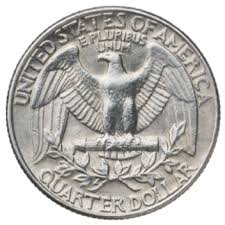
25-centsMiss Pashley walked to our house each week and taught me (and my mom who was always listening in) piano for the grand sum of 25 cents.

I started with Ada Richter’s classic Teaching Little Fingers to Play, which has now been morphed into the John Thompson library.

From there, it was the Michael Aaron series, and some sheet music.

There was no music store in our town, so I have no idea where any of this music came from – but I still have it all.

My parents did very well for their quarter a week investment, especially since my mom paid good attention and was able to beef up lessons she’d had as a child.  Later on, she played well enough that she was church organist for a local Roman Catholic Church.

But I digress…

In those days, kids couldn’t do a whole lot of activities, so in 6th grade, I decided I wanted to be a Girl Scout.  Bye, bye Clara.

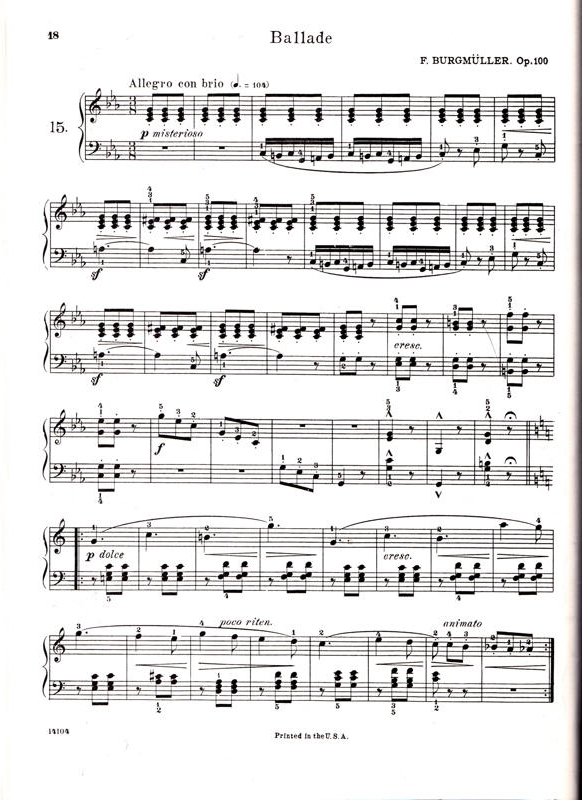
Girl Scouts didn’t last long but I did play piano in a talent show.  I remember, I carefully cut Burgmüller’s Ballade out of my Michael Aaron book and made a nice construction paper cover.  (I still have this, too)
balladeburgmuller

I doubt that I played this well but here’s what it was supposed to sound like:

A few years intervened and moved to Springfield, MA.  The parsonage piano there was in terrible shape and in the dark, never-used basement.  But I decided to make it mine and cleared up the area around it and started “practicing”.

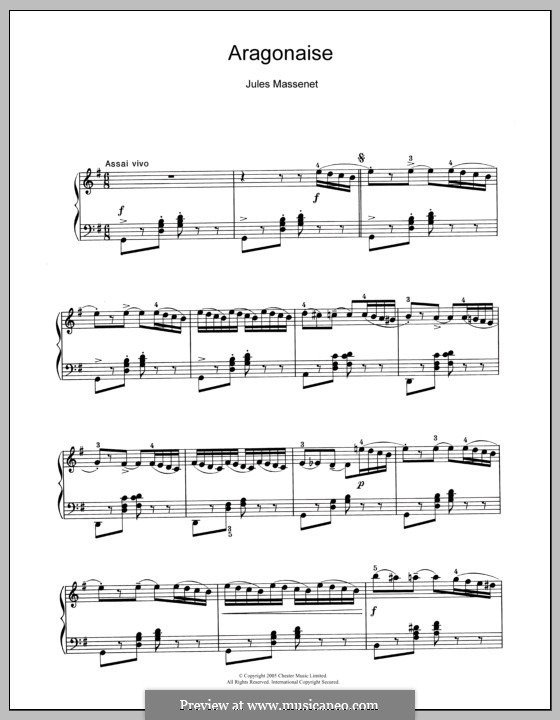
My Junior or Senior year of High School I decided I wanted to major in music in college.  I decided to learn, on my own, a piano arrangement of Aragonnaise by Jules Massenet.  I have no idea why or where that sheet music came from but I started working furiously on this piece.
aragonnaise

Hopefully, at some point, it should have sounded like this:

I started pedaling (no pun intended!) my music to the Universities of Connecticut and Massachusetts and ended up at UMass Amherst since we were state residents.

Early morning gym classes (usually swimming), then wet hair traipsing across campus to music theory in winter 5 days a week.  AARRGGH!

But I stuck it out.

My wonderful piano teacher, Howard Lebow, was killed in a car accident during my sophomore year and I was devastated.  There will be more about him in a post on January 26, 2019 here on https://atomic-temporary-44596882.wpcomstaging.com

I took yet another break from piano lessons – but I kept playing.

After DH graduated, we moved to Milwaukee, WI for his graduate school.  Besides working 2 jobs, I found time to commandeer the practice rooms at the University of Wisconsin.  I also found a teacher at the Schaum School of Music.  She was amazed that I had no piano at home to practice on.

When we later moved to Alexandria, VA my DH gave me a choice of new car or piano. So, I found a used piano.  The owner had acquired it in a divorce and wanted it gone.  Yesterday.  She even paid to move it out of her apartment.

The new-to-me piano took up half our living room.  When my parents came to visit, their feet we under my piano as I slept.

I found yet another new piano teacher and she is still my best friend to this day.

That piano moved to several locations before I bought a brand new Yamaha grand piano.  The movers accidently brought in the wrong one and I made them return it.  The people who lived in an apartment were probably unhappy when they had to return my piano and take their own new baby grand back.

I started teaching as a traveling piano teacher in Silver Spring, Maryland.  I continued that in Wilmington, DE.

When we got to Fairfax, VA I decided no more traveling.  Students would come to me.  And so they have since 1973.

What is supposed to be our living room is filled with music books, electric keyboards, the grand piano, 2 organs, 2 violins, 2 clarinets and other musical “stuff”.

Piano playing has gotten me through the worst times of my life.  Teaching has been a lifeline for me, as well.

I am so thankful for the students who have stayed with me over the years.
Just in Time for Halloween: Night on Bald Mountain by Modest Mussorgsky

bald-mountain

Night on Bald Mountain refers to a series of compositions by Modest Mussorgsky (1839–1881). Inspired by Russian literary works and legend, Mussorgsky composed a “musical picture”, St. John’s Eve on Bald Mountain on the theme of a witches’ sabbath occurring on St. John’s Eve, which he completed on that very night, June 23, in 1867.

Get a free copy of the sheet music at IMSLP or buy it on amazon.com.

From Disney’s Fantasia


Piano version transcribed for solo piano by Konstantin Chernov (1865-1937).


The Ludwig Symphony Orchestra, conducted by Maestro Thomas Ludwig

Just in Time for Halloween: Funeral March of a Marionette by Charles Gounod

funeral

The Funeral March of a Marionette (Marche funèbre d’une marionnette) is a short piece by Charles Gounod. It was written in 1872 for solo piano and orchestrated in 1879. It is perhaps best known as the theme music for the television program Alfred Hitchcock Presents, which originally aired from 1955 to 1965.

In 1871-72, while residing in London, Gounod started to write a suite for piano called “Suite Burlesque”. After completing one movement, the Funeral March of a Marionette, he abandoned the suite and had the single movement published by Goddard & Co. In 1879 he orchestrated the piece. The instrumentation is: piccolo, flute, 2 oboes, 2 clarinets in A, 2 bassoons, 2 horns in D, 2 trumpets in A, 3 trombones, ophicleide, timpani, bass drum, triangle, strings. The work is in the key of D minor, with a central section in D major. Various arrangements by other hands exist.

There is a program underlying the Funeral March of a Marionette: The Marionette has died in a duel. The funeral procession commences (D minor). A central section (D major) depicts the mourners taking refreshments, before returning to the funeral march (D minor).
The score contains the following inscriptions in appropriate places:

La Marionnette est cassée!!! (The Marionette is broken!!!)
Murmure de regrets de la troupe (Murmurs of regret from the troupe)
Le Cortège (The Procession)
Ici plusieurs des principaux personnages de la troupe s’arrêtent pour sa rafrâichir (Here many of the principal personages stop for refreshments)
Retour a la maison (Return to the house). (Wikipedia)

Download this music in several versions from IMSLP.  Click on Arrangements and Transcriptions.  There are also some arrangements for piano at the O’Connor Music Studio.

On Alfred Hitchcock:

From Faber Piano Adventures Performance Book Level 3B No.7 (Also available in the OCMS Library):

Piano 4-hands:

With animation:

On organ:

Mannheim Steamroller:

And, finally, a light show!

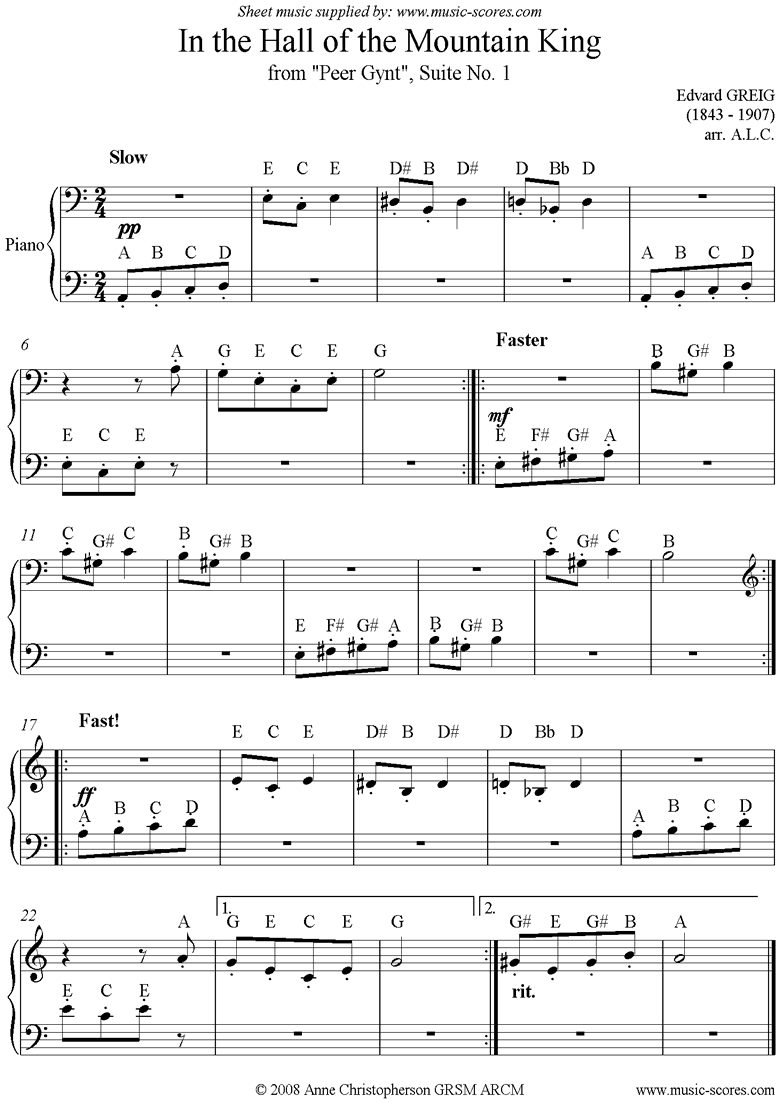
Just in Time for Halloween: In the Hall of the Mountain King by Edvard Grieg

hall-mountain


“In the Hall of the Mountain King” is a piece of orchestral music composed for the sixth scene of act 2 in Henrik Ibsen’s 1867 play Peer Gynt. It was originally part of Opus 23 but was later extracted as the final piece of Peer Gynt, Suite No. 1, Op. 46. Its easily recognizable theme has helped it attain iconic status in popular culture, where it has been arranged by many artists, including for the piano.

Borrow a copy of the sheet music from the O’Connor Music Studio.  I have this arranged for piano, duet, 2-piano, simplified…


8 part vocal orchestra (plus a tiny pair of cymbals)


Pianist Paul Barton


Solo piano sheet music – Video Score


Orchestral version

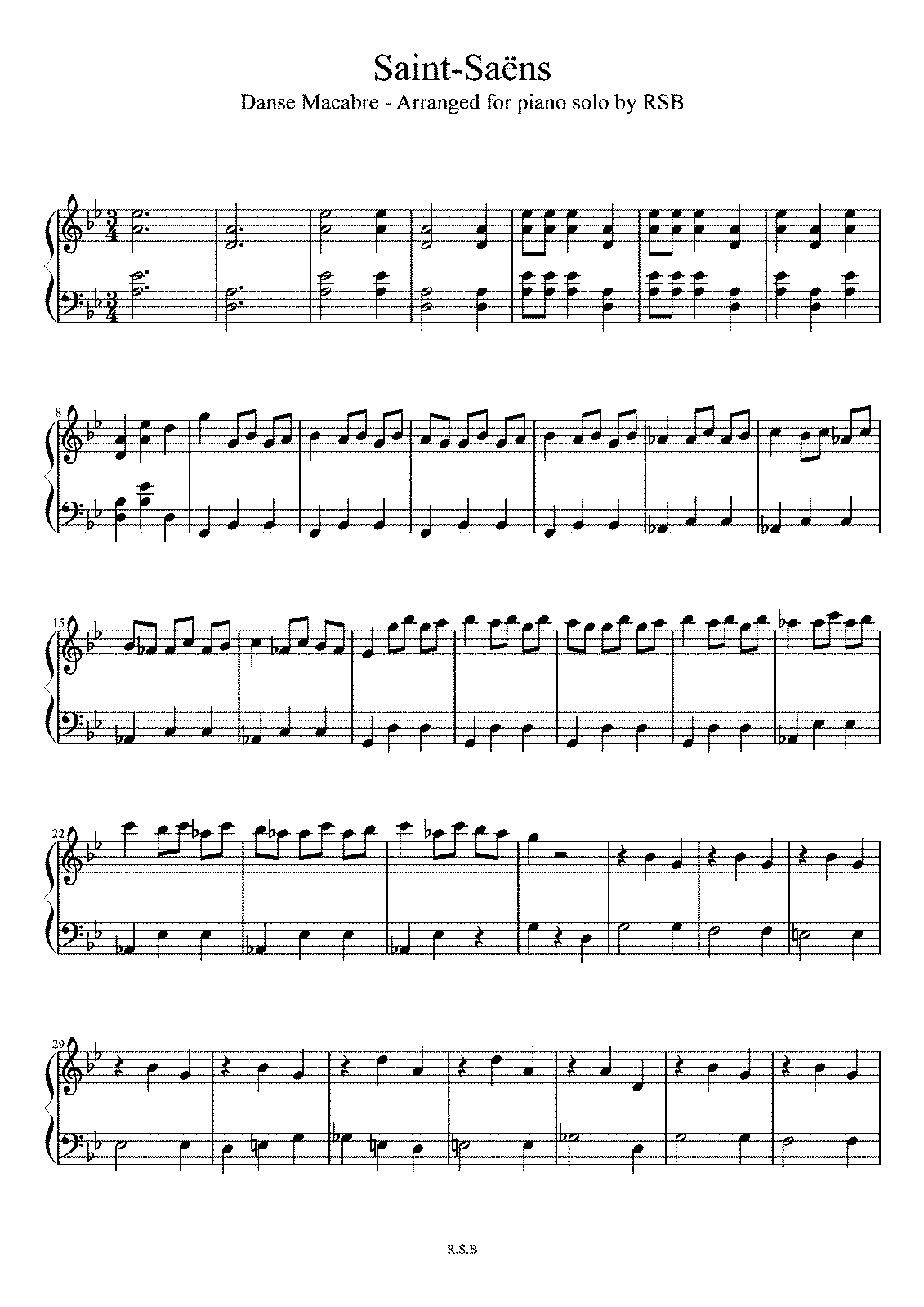
Just in Time for Halloween: Danse Macabre by Camille Saint-Saëns

danse-macabre

Danse macabre, Op. 40, is a tone poem for orchestra, written in 1874 by French composer Camille Saint-Saëns. It started out in 1872 as an art song for voice and piano with a French text by the poet Henri Cazalis, which is based on an old French superstition. In 1874, the composer expanded and reworked the piece into a tone poem, replacing the vocal line with a solo violin.

Get a free copy of the sheet music at IMSLP (Look for Arrangements and Transcriptions) or borrow a copy from the O’Connor Music Studio.  I have this arranged for organ, piano, duet, simplified…

Amazon has a great Dover edition for solo piano.  This splendid compilation features a variety of the composer’s best piano works, all reproduced from authoritative sources. Taking its title from the popular orchestral work “Danse Macabre” (presented here in the brilliant arrangement by Liszt), this collection also includes “Allegro appassionato,” “Album” (consisting of six pieces), “Rhapsodie d’Auvergne,” “Theme and Variations,” plus six etudes, three waltzes, and six etudes for left hand alone.

This video originally aired on PBS in the 1980s:


For two pianos:


Piano Tutorial:


Orchestra:

October 20 ~ in Music History

today


OCMS 1874 ~ Charles Ives, American composer
More information on Ives

• 1890 ~ Ferdinand “Jelly Roll” Morton, jazz pianist/composer

• 1913 ~ Grandpa (Louis Marshall) Jones, Country Music Hall of Famer, Grand Ole Opry, singer

• 1914 ~ Fayard Nicholas, American tap dancer, one-half of The Nicholas Brothers and actor (The Five Heartbeats)

• 1923 ~ Robert Craft, American conductor and writer

• 1935 ~ Jerry Orbach, American singer and actor for the musical theater

• 1937 ~ Wanda Jackson, Singer, songwriter

• 1939 ~ Jay Siegel, Singer with The Tokens

• 1939 ~ All the Things You Are was recorded by the Tommy Dorsey Orchestra on the Victor label. Jack Leonard was the featured vocalist.

• 1945 ~ Ric Lee, Drummer with Ten Years After

• 1950 ~ Tom Petty, Singer with The Traveling Wilburys

• 1951 ~ Al Greenwood, Keyboards with Foreigner

• 1955 ~ “Day-O. Day-ay-ay-ay-o!” One of the most popular of the Harry Belafonte hits was recorded for RCA Victor. Day-O didn’t make it to the pop charts for over a year, until January of 1957, after its name had been changed to The Banana Boat Song (Day-O).

• 1958 ~ Mark King, Bass, singer with Level 42

• 1958 ~ Ivo Pogorelić, Croatian pianist (1978 Casagrande winner)

• 1962 ~ With Halloween just around the corner, we remember that Bobby “Boris” Picket and the Crypt Kickers reached the top of the charts this day (for two weeks) with The Monster Mash. And someone, somewhere, has resurrected it every Halloween since.

This piece is now in Piano Maestro in the Halloween section and there is sheet music, if you are interested.

• 1962 ~ The musical, Mr. President, written by Irving Berlin, opened on Broadway. Mr. President ran for 265 performances.

• 1965 ~ The Beatles received a gold record for the single, Yesterday. This song marked the first time a cello was used in a pop hit.

• 2000 ~ Li Yundi, an 18-year-old virtuoso from China, has won Poland’s Frederic Chopin piano competition, becoming one of the youngest players to capture the prestigious international prize. Read the whole story

Sing or Play Happy Birthday Whenever You Want

happy birthday


You’re legal now!

None of the companies that have collected royalties on the “Happy Birthday” song for the past 80 years held a valid copyright claim to one of the most popular songs in history, a federal judge in Los Angeles ruled on Tuesday.

In a stunning reversal of decades of copyright claims, the judge ruled that Warner/Chappell never had the right to charge for the use of the “Happy Birthday To You” song. Warner had been enforcing a copyright since 1988, when it bought Birch Tree Group, the successor to Clayton F. Summy Co., which claimed the original disputed copyright.

Judge George H. King ruled that a copyright filed by the Summy Co. in 1935 granted only the rights to specific piano arrangements of the music, not the actual song.

Read more at http://www.latimes.com/local/lanow/la-me-ln-happy-birthday-song-lawsuit-decision-20150922-story.html

The following version is in the O’Connor Music Studio library, if you wish to borrow it.  It is also available on amazon.com

From the Radio Show Piano Puzzlers!

puzzlers


The Piano Puzzlers book is available in the O’Connor Music Studio library if you’d like to give any a try.  Piano Puzzlers as heard on American Public Media’s “Performance Today.” Includes 32 tunes with songs by Gershwin, Berlin, Arlen, Porter, Rodgers, Fats Waller, Lennon & McCartney, and others disguised in the styles of Bach, Handel, Haydn, Mozart, Beethoven, Brahms, Schubert, Schumann, Chopin, Janacek, Debussy, Ravel, Rachmaninoff, Stravinsky, Prokofiev, Bartok, and Copland.

Includes an introduction by Fred Child, host of “Performance Today” as well as background info by Bruce Adolphe. “Bruce Adolphe has taken a common musician’s party game and elevated it to high art and truly funny musical slapsticks. The Piano Puzzlers are a unique combination of extraordinary insight into the styles of many composers subtle, expert workmanship and great, great fun!”

From http://jasonmorris.blogsome.com/2008/08/08/piano-puzzlers/

If you’re a music geek (like me), I have a program for you. Now, let me be clear, to fully qualify as a music geek…you must have a fond appreciation for classical music (no, Poison, Quiet Riot, and Zepplin do not count as classical music). So, if you’re a “music geek” without an appreciation for classical music…well, I hate to burst your bubble…but, you’re not truly a music geek. Instead, you’re a music appreciator, but not a geek. So, if you just listen to indie music and scowl at anything on a label larger than Matador…don’t bother following the link I’ll provide…the fun will be lost on you…And, you probably won’t have a chance.

Every Wednesday night, on my way home from WNL, I turn on my local NPR station to listen to Piano Puzzlers on Performance Today. It’s absolutely incredible. A pianist/composer (Bruce Adolphe) takes a familiar folk or pop tune and sets it inside a classical masterpiece (or in the style of a particular composer). Sometimes it’s easy…sometimes it’s ridiculously difficult. There are days when I say, “got it” on the first pass. Then there are days when I say, “what the heck?” And, more often than not, I’m able to get either the popular/folk tune or the composer.

This is sad to admit, but there are nights when I’ll slow down on the drive home or sit in the car in the driveway to finish an episode. In fact, I get a little worked up if someone stops me after WNL…as I might miss the beginning of Piano Puzzlers (it usually hits around 8:20pm on our local station).

Take a listen to some of the archives and see if you can figure it out! It’s really cool…but probably only appreciated by music geeks (the kind of people that listen to NPR for their musical programs and not just the snipets of cool indie rock between segments on All Things Considered…which is a great show too).

Play Piano Puzzlers HERE!

July 10 ~ Daily Listening Assignment


Today’s piece is Solfeggietto by Carl Philipp Emanuel Bach (aka C.P.E. Bach). The piece is commonly assigned to piano students and appears in many books because it fosters the playing of an even sixteenth note rhythm by alternating hands.


Bass guitar

Clarinet starting about a minute in:

On harp

Find it on IMSLP,  in several anthologies of music at the O’Connor Music Studio, in Piano Pronto: Encore