None of the companies that have collected royalties on the “Happy Birthday” song for the past 80 years held a valid copyright claim to one of the most popular songs in history, a federal judge in Los Angeles ruled on Tuesday.
In a stunning reversal of decades of copyright claims, the judge ruled that Warner/Chappell never had the right to charge for the use of the “Happy Birthday To You” song. Warner had been enforcing a copyright since 1988, when it bought Birch Tree Group, the successor to Clayton F. Summy Co., which claimed the original disputed copyright.
Judge George H. King ruled that a copyright filed by the Summy Co. in 1935 granted only the rights to specific piano arrangements of the music, not the actual song.
Kris Skaletski and Jennifer Eklund are happy to announce that, Roadtrip!, the first book in our new preschool method book series, is officially for sale! Student books are available now in both digital and hardcopy. The teacher guidebook, with comprehensive lesson plans and multiple teacher duets for all 18 songs, is available digitally now. Hardcopies of the guidebook will be available next Wednesday, July 29th.
Ideal for students ages 4 and up.
On the staff from the start
Music is a mix of familiar tunes and original pieces
Multi-key approach
18 songs that can be learned by note or rote
Clean easy-to-follow pages (great for special needs students!)
BONUS: The soundtrack is FREE in the introductory selling period! You can hear all the music and see the insides of the student book and teacher guidebook on the website. Full-time fun ahead!
The Piano Puzzlers book is available in the O’Connor Music Studio library if you’d like to give any a try. Piano Puzzlers as heard on American Public Media’s “Performance Today.” Includes 32 tunes with songs by Gershwin, Berlin, Arlen, Porter, Rodgers, Fats Waller, Lennon & McCartney, and others disguised in the styles of Bach, Handel, Haydn, Mozart, Beethoven, Brahms, Schubert, Schumann, Chopin, Janacek, Debussy, Ravel, Rachmaninoff, Stravinsky, Prokofiev, Bartok, and Copland.
Includes an introduction by Fred Child, host of “Performance Today” as well as background info by Bruce Adolphe. “Bruce Adolphe has taken a common musician’s party game and elevated it to high art and truly funny musical slapsticks. The Piano Puzzlers are a unique combination of extraordinary insight into the styles of many composers subtle, expert workmanship and great, great fun!”
If you’re a music geek (like me), I have a program for you. Now, let me be clear, to fully qualify as a music geek…you must have a fond appreciation for classical music (no, Poison, Quiet Riot, and Zepplin do not count as classical music). So, if you’re a “music geek” without an appreciation for classical music…well, I hate to burst your bubble…but, you’re not truly a music geek. Instead, you’re a music appreciator, but not a geek. So, if you just listen to indie music and scowl at anything on a label larger than Matador…don’t bother following the link I’ll provide…the fun will be lost on you…And, you probably won’t have a chance.
Every Wednesday night, on my way home from WNL, I turn on my local NPR station to listen to Piano Puzzlers on Performance Today. It’s absolutely incredible. A pianist/composer (Bruce Adolphe) takes a familiar folk or pop tune and sets it inside a classical masterpiece (or in the style of a particular composer). Sometimes it’s easy…sometimes it’s ridiculously difficult. There are days when I say, “got it” on the first pass. Then there are days when I say, “what the heck?” And, more often than not, I’m able to get either the popular/folk tune or the composer.
This is sad to admit, but there are nights when I’ll slow down on the drive home or sit in the car in the driveway to finish an episode. In fact, I get a little worked up if someone stops me after WNL…as I might miss the beginning of Piano Puzzlers (it usually hits around 8:20pm on our local station).
Take a listen to some of the archives and see if you can figure it out! It’s really cool…but probably only appreciated by music geeks (the kind of people that listen to NPR for their musical programs and not just the snipets of cool indie rock between segments on All Things Considered…which is a great show too).
Stephen Powers first thought of his grand piano as an impressive piece of furniture.
But he enjoyed listening to music so much when friends played at parties at his home in North Wilmington that he began taking lessons.
“I enjoy having a couple of songs under my belt,” says Powers, a 52-year-old banker. “I play Happy Birthday. I play Getting to Know You for my mom.”
Powers is part of a boomlet of adults who are studying piano. Many took lessons briefly as children and regret giving it up. Some simply enjoy music. Others gravitated toward the keyboard because studies suggest piano improves mental acuity while reducing the odds of dementia.
A Swedish study published in 2014 in the International Journal of Alzheimer’s Disease found that when a twin played a musical instrument later in life, he or she was 64 percent less likely to develop dementia than the twin who did not play.
A study published in Frontiers in Psychology in 2013 evaluated the impact of piano lessons on cognitive function, mood and quality of life in adults age 60 to 84.
The group that studied piano showed significant improvement in tests that measure executive function, controlling inhibitions and divided attention, as well as enhanced visual scanning and motor ability. Piano students also reported a better quality of life.
Some grownups simply relish a challenge.
In the United Kingdom, Alan Rusbridger, editor of the Guardian, took to the keyboard at age 56. He chronicled the year he spent learning Chopin’s demanding No. Ballade 1 in G Minor in the book Play It Again: An Amateur Against the Impossible.
Richard Swarmer, 57, of Lewes, played the trumpet from grade school through college. He has sung in several choirs. This year, he began piano lessons.
Learning the piano isn’t easy even for someone with a musical background. Still, Swarmer appreciates that the creative thought process is different from the focus required by his job for a medical benefits company.
“I have thoroughly enjoyed taking piano lessons as an adult,” he says. “It provides a welcome respite from the demands of my job.”
Ethel Thirtel of North Wilmington is 71 and a student at the Music School of Delaware. She is also taking French lessons to help keep her intellect sharp.
“Both pursuits involve active studying and practice to master new skills,” she says.
To meet rising demand, the Music School of Delaware offers adults-only evening group classes to accommodate working people, says Matthew Smith, student and alumni relations officer. The school also provides instruction for adults 50 and older through the Osher Lifelong Learning Institute at University of Delaware.
“In addition to professionals, we are getting a lot more inquiries from older adults who are retired and have time on their hands,” he says.
Geri Smith, a Julliard-trained singer, musician and composer, has taught piano to children in public schools as well as private arts centers. Her adult students include a 59-year-old writer who took up piano after the death of her husband, a gifted musician.
“Teaching children is a different experience than teaching adults,” says Smith, of Unionville. “Kids pretty much do what you ask them to do but adults ask lots of questions. They want to know why things have to be done a certain way.”
An important part of learning piano is creating new pathways in the brain. A Harvard Medical School study examined the impact of practicing the piano on synapses, the connections between neurons that encode memories and learning.
Volunteers practiced two hours a day for five days, playing a five-finger exercise to the beat of a metronome. To learn how that impacted the neurons scientists used transcranial-magnetic-stimulation (TMS), in which a wire coil sends magnetic impulses to the brain.
They discovered that after a week of practice, the stretch of motor cortex devoted to the finger exercises had expanded like crabgrass.
“Playing the piano creates new synapses,” Smith says. “Think of it as creating a conduit so your right hand can talk to your left hand.”
Meldene Gruber of Rehoboth Beach, who has taught piano for more than 40 years, has seen a surge in adult students in the past two years. Now, half her students are adults.
“A number of my adults say they think playing the piano will help with mental acuity,” she says. “Playing the piano forces you to use both sides of the brain, which is great for neuron firing.”
Most adults have specific goals in mind, such as learning to play Christmas carols or a few favorite pieces.
“You don’t get adults who are focused on becoming concert pianists,” Gruber says. “They come for the joy of playing, not because their mothers made them.”
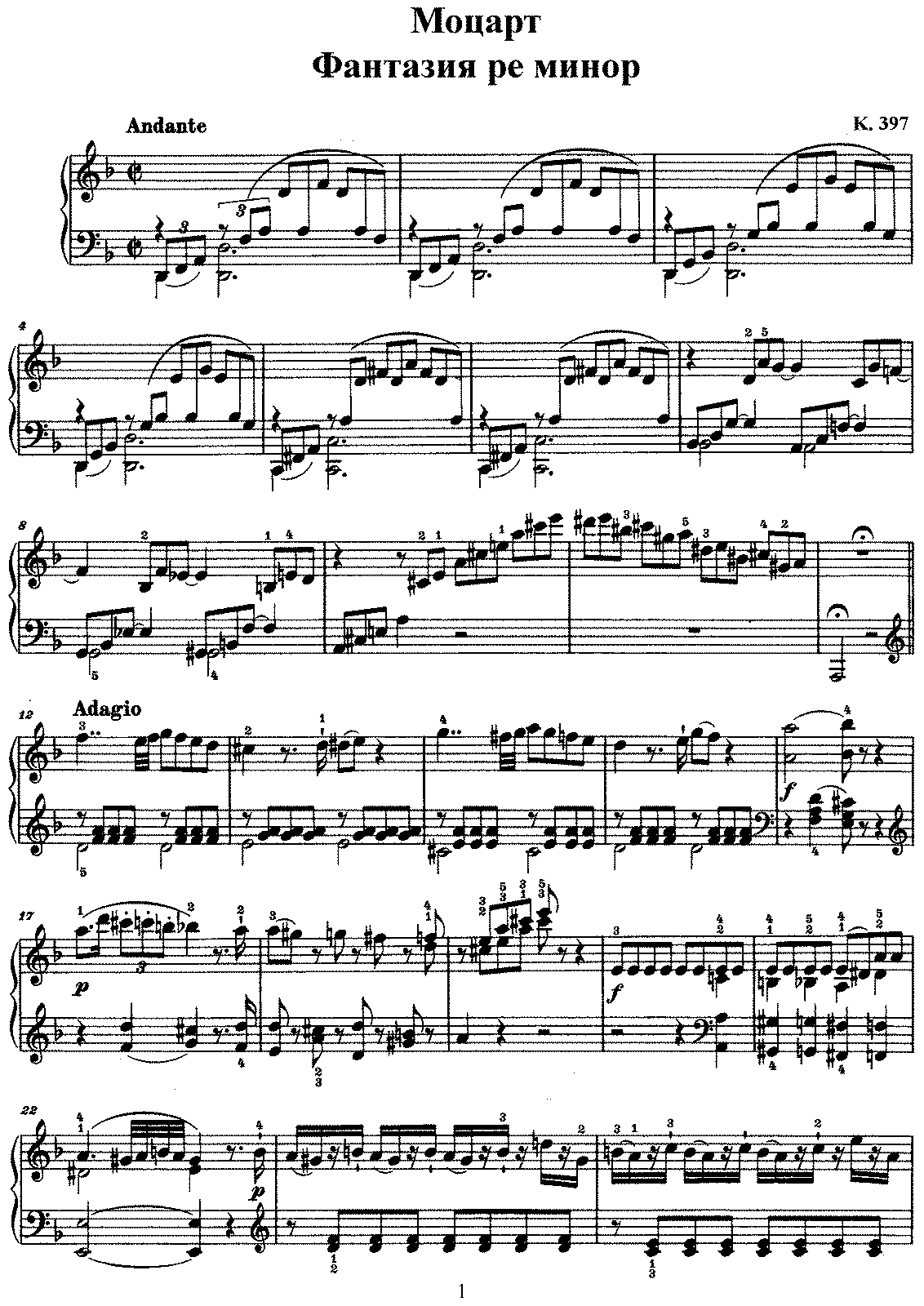
I have always really enjoyed playing Mozart’sFantasia in d minor and when I was asked to play for the new piano dedication service at my church a couple years ago I knew what I would “dust off” to perform.
The Grove’s Dictionary of Music and Musicians defines the genre of musical fantasia as “a piece of instrumental music owning no restriction of formal construction, but the direct product of the composer’s impulse.”
The Fantasia in d minor has somewhat unusual rhythm, constantly changing tempo (seven different tempi occur throughout the piece), three cadenzas and its apparent lack of any recognizable musical form (as indicated by the “Fantasy” title). Although it begins in d minor, the final section is in D Major.
Mozart composed this, his third and final, Fantasia in 1782 and it was unfinished at the time of his death in 1791. Even Mozart’s sister, “Nannerl”, who came across the work in 1807, was astounded to have discovered a previously unknown composition of such quality.
In its original form this Fantasia was probability only a fragment of what was to be a larger work. The closing bars which are most frequently performed today originated from an unauthorized print believed to have been composed in 1806 by August Eberhard Müller, one of Mozart’s admirers.
Because it was unfinished, many of the dynamic and pedal markings are nonexistant and left for the performer to choose.
As you can see from these videos, there is a wide range of tempi and interpretation from Frederich Gulda’s 4 minute, 36 second rendition
to Glenn Gould’s version which lasts for 8 minutes, 22 seconds
Both these composers have added their own ornamentation to Mozart’s original work.
I will be playing from a G. Henley Verlagurtext edition instead of one of the many edited versions available. I prefer to make my own musical decisions wherever possible.
This is one of my “bucket list” items, to go to the Old-Time Piano Playing Contest in Peoria, IL over Memorial Day weekend.
This video is “almost” as good as being there.
The Old-Time Music Preservation Association is staging their 41st World Championship Old-Time Piano Playing Contest this year to educate people about old-time piano music written prior to 1940.
When the World Championship Old-time Piano Playing Contest wraps up its 41st annual edition Memorial Day weekend in East Peoria IL, it will be for the last time.
More than 800 piano players from 38 states and five foreign countries have participated in the event through the years, collecting over $100,000 in prizes, but whoever wins the contest’s traveling trophy this year will get to keep it.
I guess this is one of my bucket list items that won’t be achieved.
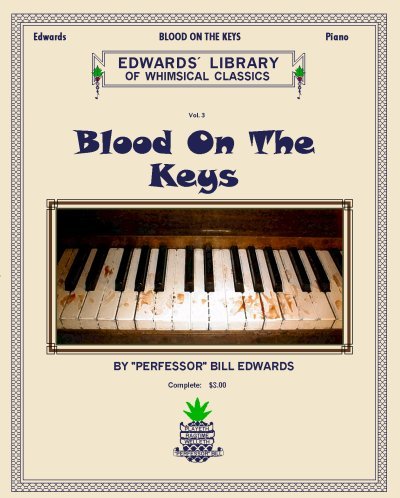
One of the “regulars”, Bill Edwards, who goes by the pseudonym “Perfessor Bill” has written a lot of ragtime music, some of which I’ve ordered. When I did, it came out that he lives relatively close so he dropped it off in person! As close as I’ll get to this event.
Bill’s website is an excellent resource for all-things ragtime. If you’re interested at all, just start digging in.
This is one of the pieces in the OCMS lending library.
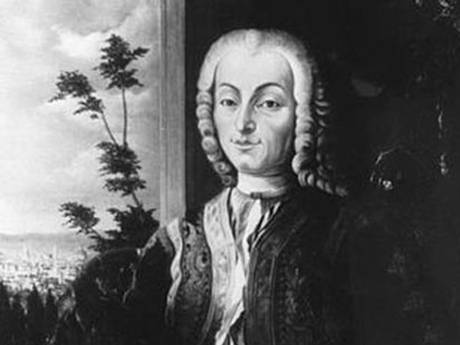
The inventor of the piano, Bartolomeo Cristofori, is celebrated in today’s Google Doodle.
Born on 4 May, 1655 in Padua, northern Italy, Cristofori initially worked making harpsichords and clavichords and was employed by Prince Ferdinando de Medici, son of the duke of Tuscany.
He is believed to have started work on what would become a piano in the 1690s and the first one is thought to have been made in 1709.
In a harpsichord the strings are plucked, so it is not possible to play the notes softer or louder. Cristofori managed to design a mechanism that transferred the pressure placed on the keys to the hammers that hit the strings.
He called his invention a “gravecembalo col piano e forte” – a clavichord with soft and loud. The name was shortened to pianoforte and then simply piano.
Francesco Mannucci, a musician at the Medici court, described one early version as “a large ‘Arpicembalo’ [the name of a type of harpsichord] by Bartolomeo Cristofori, of new invention that produces soft and loud, with two sets of strings at unison pitch, with soundboard of cypress without rose”.
Bartolomeo Cristofori di Francesco was an Italian maker of musical instruments, generally regarded as the inventor of the piano.
While other musical instrument makers had attempted to solve the same problem with the harpsichord, Cristofori’s invention is generally regarded as the first real piano.
However, the piano was not popular at first and many felt it was too difficult to play. Cristofori died largely uncelebrated for an invention that would later change the musical world in 1731 – a year before the first sheet music for the piano appeared.
People, especially students, are often surprised that I still take piano lessons. There seems to be a consensus that adults, especially piano teachers, know everything already. Well, no. There is always more to learn.
Each pianist and teacher has different ideas and techniques to share. Anyone who has seen my music library knows that I couldn’t possibly have played, let alone mastered, each piece of music I own. One year, I had claimed so much music on my income taxes, that an IRS agent was dispatched to my studio to disclaim my claims in an audit. I won!
I am reviving an older piece that I played sometime in the past. I know that because of all the color coding!
Here, Murray Perahia plays Mendelssohn’s Trois Fantaisies ou Caprices, Op. 16. Nr. 1: Andante con moto.
My son and I are working on Capriol by Peter Warlock, to be played June 7, 2015 at Steinway Hall.
I don’t know who is performing in this video but I hope to have a video of our performance to post later:
I’m also sightreading a variety of ragtime pieces and will choose one to work on in the next few days. In the running are Zez Confrey and William Bolcom. We’ll see!
The Piano Guys are an American musical group who gained popularity through YouTube, where they posted piano and cello renditions of popular songs and classical music.
They are also adding piano music books. This one from amazon.com says:
With their clever and inspiring takes on popular music and creative videos, The Piano Guys serve up an eclectic mix of classical, film score, rock and pop favorites that resonates with a wide variety of audiences.
Play 12 of their most popular songs in these arrangements for easy piano with optional cello: All of Me * Arwen’s Vigil * Begin Again * Home * Kung Fu Piano: Cello Ascends * Moonlight * Over the Rainbow * Paradise * Rolling in the Deep * A Thousand Years * Titanium * Without You.
Includes separate pull-out cello part.
I am not sure about their idea of “easy piano” but I have ordered a copy for the studio.






 MaryO'Studio