FREE Piano Practice Book Through Tuesday!

101


From the author:

Let’s face it. Most kids don’t want to practice the piano. And if they do find the time to practice, it’s usually because their parent kept nagging them. How frustrating!

Piano teachers are frustrated too. It’s nearly impossible to teach students new concepts when they don’t understand the old ones–all because of a lack of practice.

If you’re a parent in this situation, I have just the solution you’re looking for.

In this upbeat book, I share all the tips I’ve discovered in my 14 years of teaching piano. You’ll learn fun, practical ways to get your kids to the keyboard.

But this book goes one step further. I’ll show you easy ways to encourage better quality practice. Even if you’ve never had a music lesson in your life!

I wrote this book for kids of all ages. There are creative ideas for elementary students and also a section for teens.

There’s even a section for what to do if your child wants to stop taking piano lessons. That’s right, there is hope and my book will show you exactly how to get them interested in piano again.

Don’t be the kind of parent who sits on the sidelines waiting until their child wants to practice. Piano lessons are too expensive for you to let another “no-practice” day go by.

This book is your answer to get your child to the keyboard, have good quality practice and develop a life-long love of music.

Download for free here.

Coming Soon for Younger Students!

RT_Front-cover

This new method book is at the publishers right now.  I’ve already downloaded the Teacher’s Guide and I’m liking what I see.

From the Piano Pronto website –

Roadtrip! is a primer level method book for very early beginners ages 4 and up. Students master basic music fundamentals while creating a musical memory book that becomes a keepsake item to commemorate their maiden voyage into piano lessons.

18 songs: Non-position based; black key pieces; R.H. & L.H. only pieces; on-staff reading only
Also features: improvisation activities; ear training; composition; teacher duets

What this means for the O’Connor Music Studio – younger beginners will be able to get a great start to their musical lives.  Previously, I’ve only accepted students starting at age 6.

Starting with the new school year, interested parents can enroll their students from the age of 4.

Register for lessons here: http://ocms.mymusicstaff.com/Register-for-Lessons


Old-Time Music Preservation

This is one of my “bucket list” items, to go to the Old-Time Piano Playing Contest in Peoria, IL over Memorial Day weekend.

This video is “almost” as good as being there.


The Old-Time Music Preservation Association is staging their 41st World Championship Old-Time Piano Playing Contest this year to educate people about old-time piano music written prior to 1940.

When the World Championship Old-time Piano Playing Contest wraps up its 41st annual edition Memorial Day weekend in East Peoria IL, it will be for the last time.

More than 800 piano players from 38 states and five foreign countries have participated in the event through the years, collecting over $100,000 in prizes, but whoever wins the contest’s traveling trophy this year will get to keep it.

I guess this is one of my bucket list items that won’t be achieved.

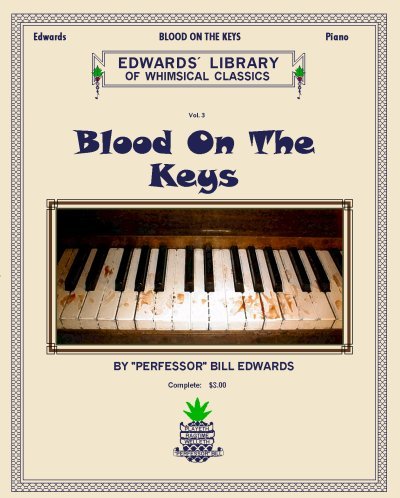
One of the “regulars”, Bill Edwards, who goes by the pseudonym “Perfessor Bill” has written a lot of ragtime music, some of which I’ve ordered.  When I did, it came out that he lives relatively close so he dropped it off in person!  As close as I’ll get to this event.

Bill’s website is an excellent resource for all-things ragtime.  If you’re interested at all, just start digging in.

This is one of the pieces in the OCMS library.

This is one of the pieces in the OCMS lending library.


One last favorite video

Clementi Added to Piano Maestro!

Piano Mania


New song just released!

After receiving many requests for more early intermediate songs JoyTunes has added:

Sonatina in C Major (Op.36) By Muzio Clementi.

Although the song has 3 movements, they’ve added only the first movement and hope to add the other 2 soon!

You can find the piece in the Library under “Classical and Opera”.

clementi

The O’Connor Music Studio has several editions of Clementi’s Sonatinas available in the Lending Library.

Why Work on Music Theory?

Music_Theory


Students at the O’Connor Music Studio know that music theory is always a part of lessons.  I strongly believe that theory is needed so that students understand what they are playing and why.

To me, theory work is just as important as playing.  A firm knowledge of musical structure makes playing everything easier.

Music knowledge learned through piano lessons transfers easily to other  musical activities.  Students in Fairfax County Public Schools, students learn to play recorder.  Students are sometimes surprised to learn that they already know all the notes – from their piano lessons!

When you sing in a choir, harmonize with Sweet Adelines, play an instrument in your school or community band/orchestra, join your church’s handbell choir (note:  Pender UMC has an excellent Handbell program), teach yourself guitar – theory will help in every instance. By learning to read, write, and understand this musical language, many more musical opportunities will be made available the rest of your life.

Most piano methods come with a theory book that matches page by page what concepts are being learned in the lesson books.  I actually recommend that students do the theory first when they get home, while the concepts are still fresh in their minds.

If the student is not in a piano method, I’m starting to use the Theory Time series.  Book One covers music alphabet, introduction to keyboard and staff, stem rule, steps & skips on a keyboard and staff, repeated notes, dynamics, treble clef lines & spaces, bass clef lines & spaces, quarter note & rest, half note & rest, whole note & rest, dotted half note, bar lines, double bar line, measures, time signatures, rhythm drill, vocabulary, ear training and a review test. Free ear training videos for each ear training exercise are hosted on the Theory Time YouTube channel. The Grade One workbook is appropriate for beginning 1st, 2nd or 3rd grade students. This workbook includes 51 pages, 13 lessons and 8 Fun Sheets.

For adults and more advanced students, I have a copy of All About Music Theory: A Fun and Simple Guide to Understanding Music which can be used as a review or a “try before buy”.

Stop procrastinating and go do your theory!

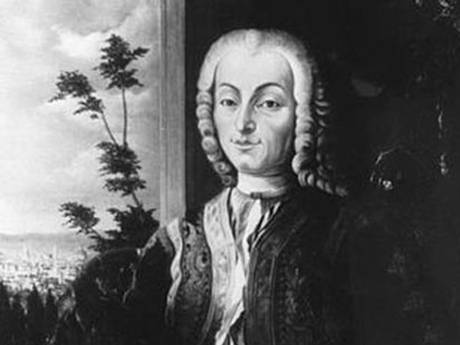
Who Invented the Piano? Bartolomeo Cristofori’s Birthday Celebrated in Today’s Google Doodle

The inventor of the piano, Bartolomeo Cristofori, is celebrated in today’s Google Doodle.

Born on 4 May, 1655 in Padua, northern Italy, Cristofori initially worked making harpsichords and clavichords and was employed by Prince Ferdinando de Medici, son of the duke of Tuscany.

He is believed to have started work on what would become a piano in the 1690s and the first one is thought to have been made in 1709.

In a harpsichord the strings are plucked, so it is not possible to play the notes softer or louder. Cristofori managed to design a mechanism that transferred the pressure placed on the keys to the hammers that hit the strings.

He called his invention a “gravecembalo col piano e forte” – a clavichord with soft and loud. The name was shortened to pianoforte and then simply piano.

Francesco Mannucci, a musician at the Medici court, described one early version as “a large ‘Arpicembalo’ [the name of a type of harpsichord] by Bartolomeo Cristofori, of new invention that produces soft and loud, with two sets of strings at unison pitch, with soundboard of cypress without rose”.

Bartolomeo Cristofori

Bartolomeo Cristofori di Francesco was an Italian maker of musical instruments, generally regarded as the inventor of the piano.


While other musical instrument makers had attempted to solve the same problem with the harpsichord, Cristofori’s invention is generally regarded as the first real piano.

However, the piano was not popular at first and many felt it was too difficult to play. Cristofori died largely uncelebrated for an invention that would later change the musical world in 1731 – a year before the first sheet music for the piano appeared.

via Who invented the piano? Bartolomeo Cristofori’s birthday celebrated in today’s Google doodle – News – Gadgets and Tech – The Independent.

What I’m Working on Now

People, especially students, are often surprised that I still take piano lessons.  There seems to be a consensus that adults, especially piano teachers, know everything already.  Well, no.  There is always more to learn.

Each pianist and teacher has different ideas and techniques to share.  Anyone who has seen my music library knows that I couldn’t possibly have played, let alone mastered, each piece of music I own.  One year, I had claimed so much music on my income taxes, that an IRS agent was dispatched to my studio to disclaim my claims in an audit.  I won!


I am reviving an older piece that I played sometime in the past.  I know that because of all the color coding!

Here,  Murray Perahia plays Mendelssohn’s Trois Fantaisies ou Caprices, Op. 16. Nr. 1: Andante con moto.

This piece can be downloaded from http://imslp.org/wiki/3_Fantaisies,_Op.16_%28Mendelssohn,_Felix%29


My son and I are working on Capriol by Peter Warlock, to be played June 7, 2015 at Steinway Hall.

I don’t know who is performing in this video but I hope to have a video of our performance to post later:


I’m also sightreading a variety of ragtime pieces and will choose one to work on in the next few days.  In the running are Zez Confrey and William Bolcom.  We’ll see!


maryOpianoplayer

Piano Ornaments ~ Trills

OLYMPUS DIGITAL CAMERA


WRONG – this post, and others in this category, isn’t about ornaments at Christmas but about those funny looking marks over your music and how to play them.

The trill (or shake, as it was known from the 16th until the 19th century) is a musical ornament consisting of a rapid alternation between two adjacent notes, usually a semitone or tone apart, which can be identified with the context of the trill.

A trill provides rhythmic interest, melodic interest, and harmonic interest. Sometimes it is expected that the trill will end with a turn or some other variation. Such variations are often marked in the music.

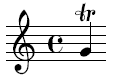
A trill in your music can look like this trill

Or like this tr~~~~~~~~~~~~~

Trills can be played differently, depending on the period in which the composer was living so it is important to know the time period of your piece.

Baroque trills (aka shakes in this time period) have several ways to be played as shown in this chart:

A table depicting how to perform different types of trills when playing music from the Baroque period (1600-1750).[4] Note the similarity between the symbol for trill and that of the mordent.

A table depicting how to perform different types of trills (or shakes) when playing music from the Baroque period (1600-1750). 

The Baroque trill continuing through Mozart’s time usually begins on the note above the main note.

In music after the time of Mozart, the trill usually begins on the principal note.

Often, your music will have suggestions about how they should be played written above the music.  If not, ASK!

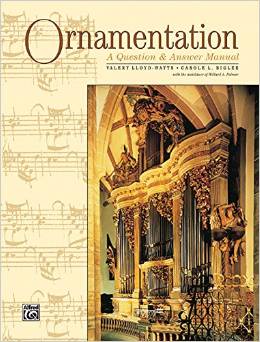
A really good book which explains about the trill and other ornaments is this one, available as a reference book in the O’Connor Music Studio:

ornamentation


Some trill exercises:

Questions?  Write them down and don’t forget to ask at your next lesson!

The Piano Guys are coming to Wolf Trap August 6

The Piano Guys are an American musical group who gained popularity through YouTube, where they posted piano and cello renditions of popular songs and classical music.

They are also adding piano music books.  This one from amazon.com says:

piano-guysWith their clever and inspiring takes on popular music and creative videos, The Piano Guys serve up an eclectic mix of classical, film score, rock and pop favorites that resonates with a wide variety of audiences.

Play 12 of their most popular songs in these arrangements for easy piano with optional cello: All of Me * Arwen’s Vigil * Begin Again * Home * Kung Fu Piano: Cello Ascends * Moonlight * Over the Rainbow * Paradise * Rolling in the Deep * A Thousand Years * Titanium * Without You.

Includes separate pull-out cello part.


I am not sure about their idea of  “easy piano” but I have ordered a copy for the studio.

Wolf Trap tickets are available here: http://www.wolftrap.org/tickets/calendar/performance/15filene/0806show15.aspx