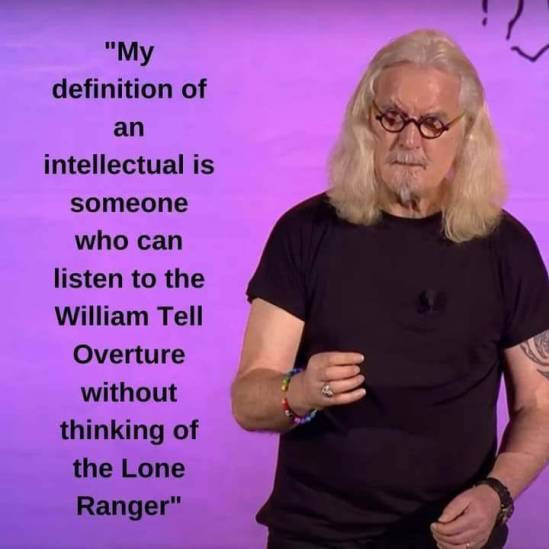
Today, we’ll be listening to the end of the William Tell Overture by Gioachino Rossini. This piece, originally the overture to an opera, has been arranged for piano and is in several method books, including Piano Pronto Movements 1 and 2. It’s also in Bastien Book 4 and Piano Maestro.
The original story
Maybe your grandparents watched the original Lone Ranger
Or you saw the newer Lone Ranger with Johnny Depp
Here’s the entire William Tell Overture played by an orchestra
Piano Solo
Franz Liszt made a really hard version for piano solo. See if you can follow along!
Piano Duet (1 piano, 4 hands)
Piano Duet arranged by Louis Moreau Gottschalk
Piano Duo (2 pianos, 8 hands)
Piano Quartet (4 pianos, 16 hands)
For pipe organ
For synthesizer
And then things get nuts with cartoons. Lots of cartoons used this music. Here are Mickey Mouse and friends
And Spike Jones
Handbells…
Poor Rossini – I think he’d have a fit if he knew how is music was being used.
The Piano Puzzlers book is available in the O’Connor Music Studio library if you’d like to give any a try. Piano Puzzlers as heard on American Public Media’s “Performance Today.” Includes 32 tunes with songs by Gershwin, Berlin, Arlen, Porter, Rodgers, Fats Waller, Lennon & McCartney, and others disguised in the styles of Bach, Handel, Haydn, Mozart, Beethoven, Brahms, Schubert, Schumann, Chopin, Janacek, Debussy, Ravel, Rachmaninoff, Stravinsky, Prokofiev, Bartok, and Copland.
Includes an introduction by Fred Child, host of “Performance Today” as well as background info by Bruce Adolphe. “Bruce Adolphe has taken a common musician’s party game and elevated it to high art and truly funny musical slapsticks. The Piano Puzzlers are a unique combination of extraordinary insight into the styles of many composers subtle, expert workmanship and great, great fun!”
If you’re a music geek (like me), I have a program for you. Now, let me be clear, to fully qualify as a music geek…you must have a fond appreciation for classical music (no, Poison, Quiet Riot, and Zepplin do not count as classical music). So, if you’re a “music geek” without an appreciation for classical music…well, I hate to burst your bubble…but, you’re not truly a music geek. Instead, you’re a music appreciator, but not a geek. So, if you just listen to indie music and scowl at anything on a label larger than Matador…don’t bother following the link I’ll provide…the fun will be lost on you…And, you probably won’t have a chance.
Every Wednesday night, on my way home from WNL, I turn on my local NPR station to listen to Piano Puzzlers on Performance Today. It’s absolutely incredible. A pianist/composer (Bruce Adolphe) takes a familiar folk or pop tune and sets it inside a classical masterpiece (or in the style of a particular composer). Sometimes it’s easy…sometimes it’s ridiculously difficult. There are days when I say, “got it” on the first pass. Then there are days when I say, “what the heck?” And, more often than not, I’m able to get either the popular/folk tune or the composer.
This is sad to admit, but there are nights when I’ll slow down on the drive home or sit in the car in the driveway to finish an episode. In fact, I get a little worked up if someone stops me after WNL…as I might miss the beginning of Piano Puzzlers (it usually hits around 8:20pm on our local station).
Take a listen to some of the archives and see if you can figure it out! It’s really cool…but probably only appreciated by music geeks (the kind of people that listen to NPR for their musical programs and not just the snipets of cool indie rock between segments on All Things Considered…which is a great show too).
Today we will listen to Minuet in G. Several people composed a Minuet (a slow, stately ballroom dance for two in 3/4 time, popular especially in the 18th century) in the key of G including Beethoven, Mozart and Bach.
How are the same? How are they different?
JS Bach’s version
The Bach version also was “acquired” for a popular song in the 1960s
Beethoven
Rowlf from the Muppets plays the Beethoven Minuet
Mozart
So – never say to your teacher that “I already played that” – you never know which version s/he has in mind!
Today we listen to Beethoven’s “Moonlight Sonata”. The real name for this work is The Piano Sonata No. 14 in C♯ minor “Quasi una fantasia”, Op. 27, No. 2. It was completed in 1801 and dedicated in 1802 to his pupil, Countess Giulietta Guicciardi
The piece is one of Beethoven’s most popular compositions for the piano, and it was a popular favorite even in his own day.
It’s in the Piano Pronto Beethoven book as well as many compilations of classical music.
Arranged for piano and orchestra
An animation
The above were all of the first movement only. Here’s the whole sonata played by Valentina Lisitsa:
Today’s piece is Steven Heller’s Avalanche. This may be his most recognizable piece and is a perfect study for an intermediate level pianist, with triplets, accents, pedaling and dynamic challenges to add to the excitement.
I chose this today, when it’s so hot, to remind people of snow and coldness!
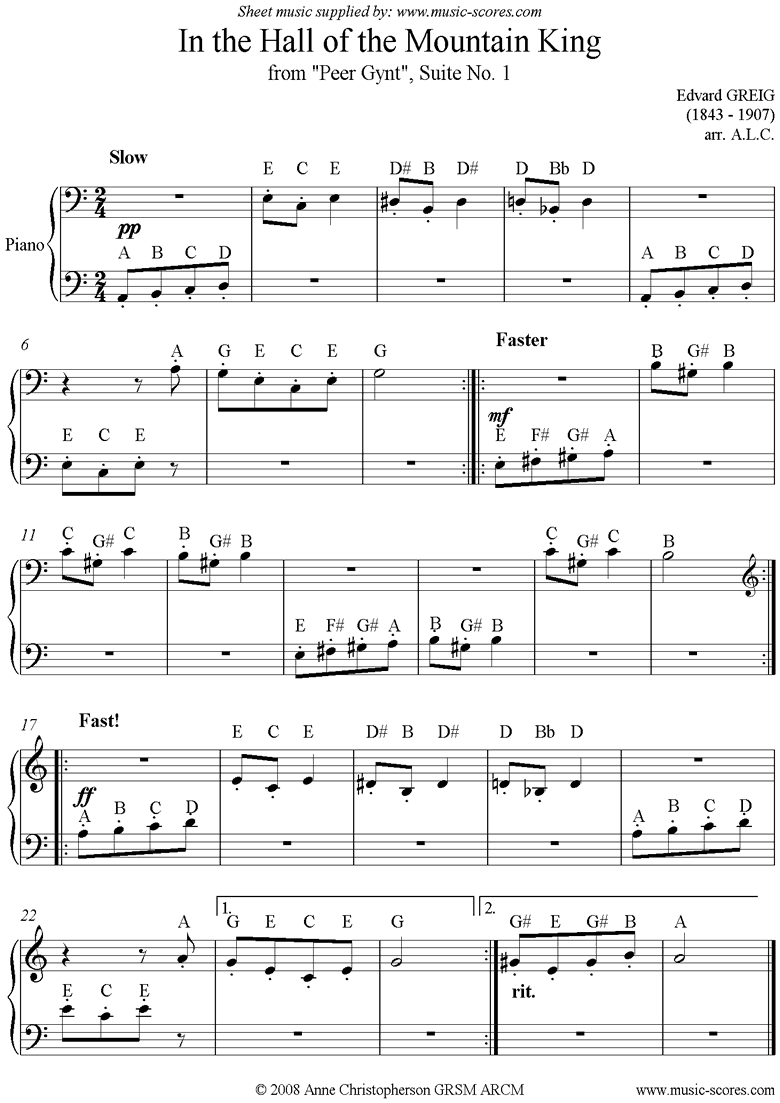
“In the Hall of the Mountain King” is a piece of orchestral music composed for the sixth scene of act 2 in Henrik Ibsen’s 1867 play Peer Gynt. It was originally part of Opus 23 but was later extracted as the final piece of Peer Gynt, Suite No. 1, Op. 46. Its easily recognizable theme has helped it attain iconic status in popular culture, where it has been arranged by many artists, including for the piano.
Borrow a copy of the sheet music from the O’Connor Music Studio. I have this arranged for piano, duet, 2-piano, simplified…
8 part vocal orchestra (plus a tiny pair of cymbals)
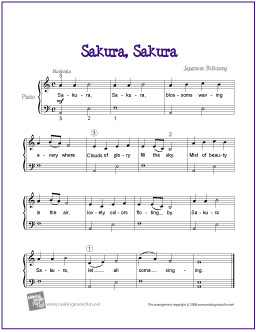
“Sakura Sakura”, also known as “Sakura”, is a traditional Japanese folk song depicting spring, the season of cherry blossoms. It is often sung or played in international settings as a song representative of Japan.
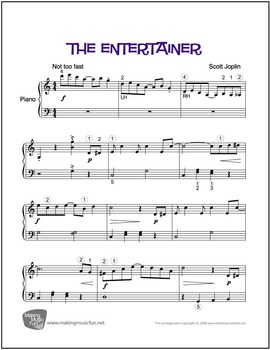
“The Entertainer” is a 1902 classic piano rag written by Scott Joplin. It was sold first as sheet music, and in the 1910s as piano rolls that would play on player pianos.
It was used as the theme music for the 1973 Oscar-winning film The Sting by composer and pianist Marvin Hamlisch.
The Sting was set in the 1930s, a full generation after the end of ragtime’s mainstream popularity, thus giving the inaccurate impression that ragtime music was popular at that time.
Find the sheet music in a variety of levels including Songs I Love to Play, Volume 1 and Alfred Premier Piano Course Book 4. It’s also available in Piano Maestro and to borrow from the O’Connor Music Studio
Today’s piece is based on a collection of tales known as the One Thousand and One Nights or Arabian Nights.
The story, which was written many hundreds of years ago, tells of a Persian king who married a young girl every night. Every morning he would send his new wife to have her head chopped off. He had already killed 3000 women in this way.
When Scheherazade heard about this, she wanted to spend the night with him. She spent all night telling him a story. At the end of the night, she stopped the story at an exciting moment, like a modern-day soap opera.
The next night she finished the story and began another one, which she again stopped when it was dawn. The king had to wait another night to hear the rest of the story. Scheherazade kept this up for 1001 nights. By then, the king had fallen in love with Scheherazade and he let her live.
Rimsky-Korsakov’s best-known work is Scheherazade, an orchestral piece that describes in music the stories told by Scheherazade.
The work consists of four movements:
The Sea and Sinbad’s Ship
The Kalandar Prince
The Young Prince and The Young Princess
Festival at Baghdad. The Sea. The Ship Breaks against a Cliff Surmounted by a Bronze Horseman
Today, we’re focusing on The Young Prince and The Young Princess which can be found in Piano Pronto Movement 4
Today, we’ll listen to the Symphony No. 5 in C minor, Op. 67, of Ludwig van Beethoven. It was written between 1804–1808. It is one of the best-known compositions in classical music, and one of the most frequently played symphonies. As is typical of symphonies in the classical period, Beethoven’s Fifth Symphony is in four movements.
I’m sure you’ve heard the first 8 notes before…
Since it was written for orchestra, each instrument has its own line:
A piano version, transcribed by Liszt
From Disney’s Fantasia 2000:
Pink learns to play the violin, and interrupts a performance of Beethoven’s Fifth Symphony with the Pink Panther theme played on various instruments.
Beethoven’s Wig:
Arrangements of Beethoven’s Fifth Symphony can be found in Piano Maestro and lots of books including Piano Pronto’s Movement 2, Movement 5 (Victory Theme) and Beethoven: Exploring His Life and Music.