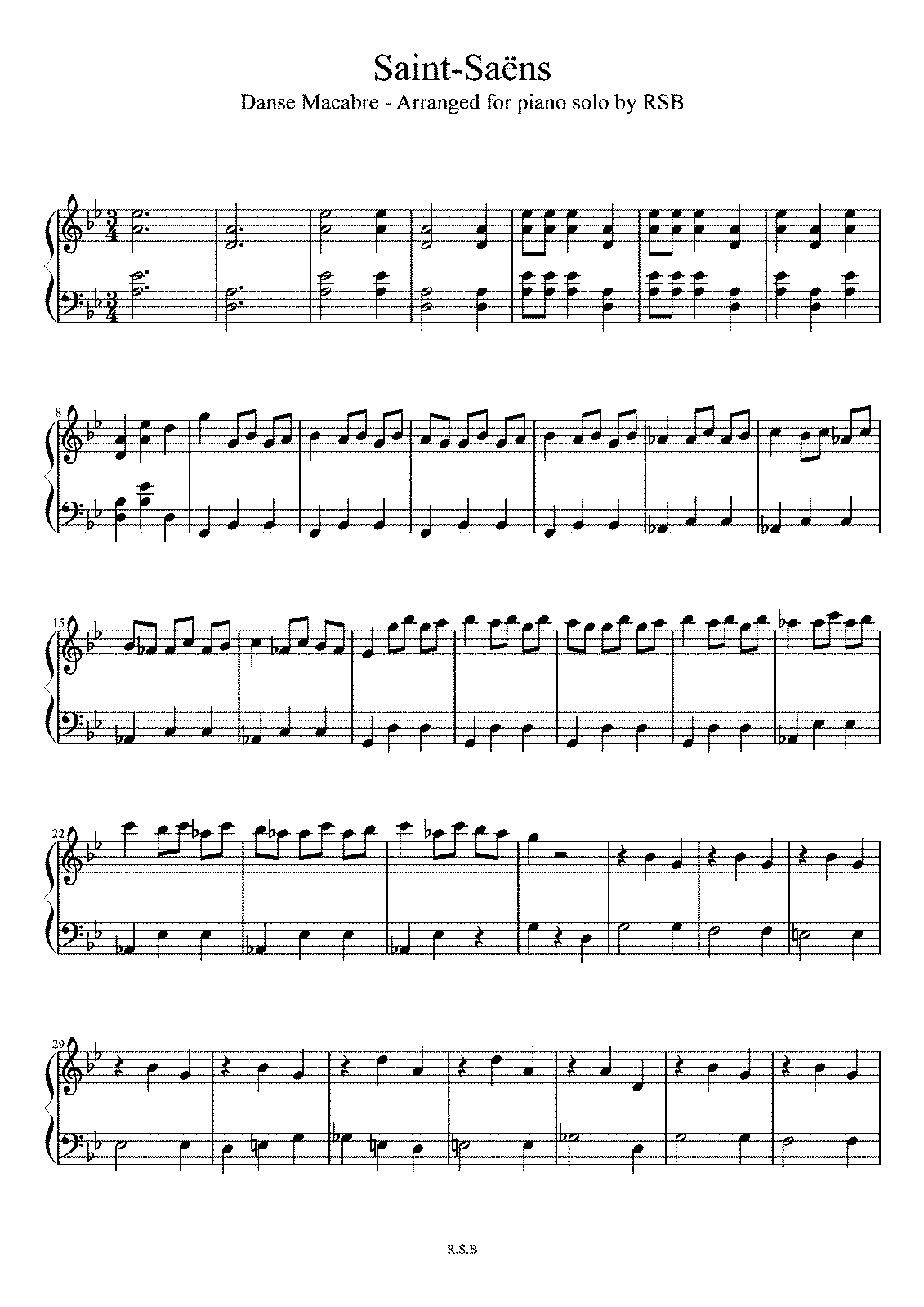
Halloween Music: Danse Macabre by Camille Saint-Saëns

danse-macabre

Danse macabre, Op. 40, is a tone poem for orchestra, written in 1874 by French composer Camille Saint-Saëns. It started out in 1872 as an art song for voice and piano with a French text by the poet Henri Cazalis, which is based on an old French superstition. In 1874, the composer expanded and reworked the piece into a tone poem, replacing the vocal line with a solo violin.

Get a free copy of the sheet music at IMSLP (Look for Arrangements and Transcriptions) or borrow a copy from the O’Connor Music Studio.  I have this arranged for organ, piano, duet, simplified…

Amazon has a great Dover edition for solo piano.  This splendid compilation features a variety of the composer’s best piano works, all reproduced from authoritative sources. Taking its title from the popular orchestral work “Danse Macabre” (presented here in the brilliant arrangement by Liszt), this collection also includes “Allegro appassionato,” “Album” (consisting of six pieces), “Rhapsodie d’Auvergne,” “Theme and Variations,” plus six etudes, three waltzes, and six etudes for left hand alone.

This video originally aired on PBS in the 1980s:


For two pianos:


Piano Tutorial:


Orchestra:
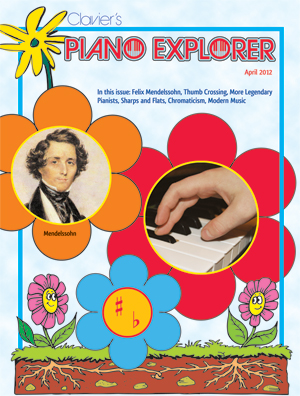
Piano Explorer ~ October 2015

piano-explorer


Each month, young students will receive a copy of Piano Explorer magazine.  It is available to adults, on request.

Included are

Composer biographies
• Music history
• Instruments
• Theory, practice tips, composing ideas
• Beginner’s Corner
• Music Corner (featuring student compositions)

Colorful pictures, timelines, and maps capture students’ attention. At the end of each magazine is a quiz to test students’ comprehension of the material. Games, puzzles, riddles, and student contributions round out the magazine and keep things fun.

Additional Features: Check out our website for additional material. The student page includes links to music mentioned in the issue, additional quizzes, and other interesting information.

The October issue includes information about

  • Franz Schubert
  • Practice tips
  • Dynamics
  • Voice
  • E Major
  • Antonio Salieri

Please note that students will have assignments from each issue.

Science Tries to Understand What Gives a Piano its Voice

Picture a seven-foot grand piano in a studio. The lid’s missing, so you can see all the strings. Researchers suspend a rod embedded with 32 microphones over the piano’s body.

“We played this middle C at a very soft level, a medium level, and a very loud level,” says Agnieszka Roginska, a professor in NYU’s music technology program. She says using a pianist to play middle C over and over wouldn’t be scientific. So they’re using a disklavier, a fancy player piano triggered by electronics. “So we could hit the same note, with the same velocity, thousands of times,” she says.

They’d record the piano in one spot. Then move the microphones eight inches. Record the note. Move the mics again. Record the note. Over and over and over, until they reach the back of the piano. At the end, they get “what is basically a very dense acoustical scan of the radiation pattern of the grand piano,” Roginska says.

Read the entire article here: http://www.pri.org/stories/2014-08-10/science-tries-understand-what-gives-piano-its-voice

Science Tries to Understand What Gives a Piano its Voice

Picture a seven-foot grand piano in a studio. The lid’s missing, so you can see all the strings. Researchers suspend a rod embedded with 32 microphones over the piano’s body.

“We played this middle C at a very soft level, a medium level, and a very loud level,” says Agnieszka Roginska, a professor in NYU’s music technology program. She says using a pianist to play middle C over and over wouldn’t be scientific. So they’re using a disklavier, a fancy player piano triggered by electronics. “So we could hit the same note, with the same velocity, thousands of times,” she says.

They’d record the piano in one spot. Then move the microphones eight inches. Record the note. Move the mics again. Record the note. Over and over and over, until they reach the back of the piano. At the end, they get “what is basically a very dense acoustical scan of the radiation pattern of the grand piano,” Roginska says.

Read the entire article here: http://www.pri.org/stories/2014-08-10/science-tries-understand-what-gives-piano-its-voice