November 5 ~ On This Day in Music

today

.1895 ~ Walter Gieseking, German pianist

.1912 ~ Roy Rogers (Leonard Slye) ‘King of the Cowboys’, singer, married to Dale Evans

.1929 ~ McKinney’s Cotton Pickers picked and fiddled their way to the Victor studios to record Plain Dirt. Among those pickin’ and grinnin’ were luminaries such as Fats Waller (on piano), Benny Carter and Coleman Hawkins.

.1931 ~ Ike Turner, American soul-rock singer, pianist and guitarist, duo with Ike and Tina Turner Revue, owner of a recording studio

.1936 ~ Billy Sherrill, Songwriter, musician: saxophone, record producer, VP/Executive Producer of CBS Nashville

.1941 ~ Art Garfunkel, American folk-rock singer, songwriter and actor, duo ~Simon and Garfunkel

.1942 ~ George M. Cohan passed away at the age of 64. Cohan was a legendary songwriter whose spirited and star~spangled tunes lit up Broadway and will be a part of Americana forever.

.1946 ~ Gram Parsons (Cecil Ingram Connor), Singer with The Byrds, songwriter

.1947 ~ Peter Noone (Peter Blair Denis Bernard Noone), Guitarist, piano, singer, Herman of Herman’s Hermits, actor

.1955 ~ The Vienna State Opera House in Austria formally opened, celebrating the end of 17 years of foreign occupation.

.1956 ~ Art Tatum [Arthur Tatum Jr], American jazz pianist and composer, died at the age of 47

.1959 ~ Bryan Adams, Singer, songwriter

.1960 ~ Johnny Horton, American country and rockabilly singer (The Battle of New Orleans), died at the age of 33

.1963 ~ Andrea McArdle, Actress, singer in Annie

.1977 ~ Guy Lombardo passed away at the age of 75. He was a musical fixture for decades, especially on New Year’s Eve. Guy Lombardo, leader of the Royal Canadians, is fondly remembered for many songs he made famous but his most popular remains Auld Lang Syne.

.1986 ~ Dick Clark registered for an initial public stock offering for his TV production company (DCP). On the registration form, he called his product ‘mind candy’.

.1989 ~ Vladimir Horowitz passed away
Read more about Horowitz

.1989 ~ Barry Sadler passed away

.2000 ~ Frances Mercer, a leading model of the 1930s who went on to star in films, radio, television and on Broadway, died at the age of 85. Chosen as one of New York’s most beautiful models while still in her teens, Mercer made her film debut in 1938 playing Ginger Rogers’ rival for James Stewart’s affections in “Vivacious Lady.” In the next two years Mercer made eight more movies, including “The Mad Miss Manton” opposite Barbara Stanwyck. In theater work, she had co starring roles in the Broadway musicals “All the Things You Are” and “Something for the Boys.” Mercer also had her own New York-based radio show, “Sunday Night at Nine.” On TV, Mercer played a vituperative mother-in-law on the soap opera “For Better or Worse” and surgical nurse Ann Talbot in the 1955-1957 syndicated series, “Dr. Hudson’s Secret Journal.”

.2000 ~ Jack O’Brian, a newspaper columnist and Associated Press critic who wrote about television and Broadway gossip, died at the age of 86. O’Brian chronicled soap opera plot twists and celebrities and the quiz show scandals of the 1950s. The cultural figures who met with his approval included Bert Lahr, Perry Como and Walter Cronkite. He took a job as a cub reporter with a Buffalo newspaper and established a reputation for cantankerousness when he skewered the local orchestra’s young accordionists. He joined the AP as its drama and movie critic in 1943. Later, he wrote about television and Broadway for a string of newspapers and a nationally syndicated column. He also hosted a WOR-AM radio show.

.2012 ~ Elliott Carter, American composer, died at the age of 103

October 1 ~ On This Day in Music

•  1865 ~ Paul Dukas, French composer and music critic Paul Dukas’ The Sorcerer’s Apprentice was featured in the Walt Disney movie Fantasia and Fantasia 2000. More information about Dukas

• 1880 ~ A new director of the United States Marine Corps Band was named. It was fitting that John Philip Sousa have that position. He composed the Marine Corps hymn, Semper Fidelis.

• 1904 ~ Vladimir Horowitz, Russian-born American concert pianist
More information about Horowitz

• 1926 ~ Max Morath, Ragtime pianist

• 1926 ~ Roger Williams (Louis Weertz), Pianist

• 1928 ~ Duke Ellington recorded The Mooche on the Okeh label.

• 1928 ~ Forever, by Ben Pollack and his band, was recorded on Victor Records. In Pollack’s band were two talented young musicians: Benny Goodman and Jack Teagarden.

• 1932 ~ Albert Collins, Grammy Award-winning musician, blues guitarist, songwriter, Blues Hall of Fame in 1989

• 1933 ~ Richard Harris, Actor, singer

• 1935 ~ Julie Andrews, British singer and actress.

• 1943 ~ Herb Fame (Feemster), Singer – Herb of Peaches & Herb

• 1944 ~ Scott McKenzie (Phillip Blondheim), Singer, songwriter

• 1945 ~ Donny Hathaway, Singer, sang with Roberta Flack

• 1956 ~ Albert Von Tilzer, died.

• 1966 ~ I Love My Dog was released by Cat Stevens. He was 19 years old. Five years later, he recorded such hits as Wild World, Morning Has Broken, Peace Train and Oh Very Young. By 1979, Cat Stevens (born Steven Demitri Georgiou), disenchanted with the music business, converted to the Islamic religion and changed his name to Yusef Islam. He may not have liked the music biz anymore but Cat still loves his dog.

• 2000 ~ Robert Allen, who composed songs performed by Tony Bennett, Johnny Mathis and Billie Holiday, died at the age of 73. Allen wrote his biggest hits with lyricist Al Stillman. The two collaborated on “Chances Are”, and “It’s Not for Me to Say”, which were major hits for Mathis, as well as a series of hits for the group The Four Lads in the mid-1950s. They also wrote “Home for the Holidays”, which has been recorded by dozens of performers, such as Garth Brooks and Andy Williams. On his own, Allen wrote the fight song for Auburn University and soundtrack music for the movies “Lizzie”, ” Enchanted Island”, and “Happy Anniversary.” In 1963, he wrote the music for and produced “Three Billion Millionaires”, a benefit album for the United Nations by Bing Crosby, Judy Garland, Danny Kaye, Sammy Davis, Jr., Jack Benny and Carol Burnett.

• 2018 ~ Charles Aznavour, French singing star, died at the age of 94

Happy Birthday, Vladimir Horowitz!

Destined to become one of the world’s greatest pianists, Vladimir Horowitz was born in 1903 in Kiev, Russia. While most young children were playing games, Vladimir was playing with the ivories. His time was well spent as he was fully capable of performing publicly by the time he was sixteen.

Within four years, the young piano virtuoso was entertaining audiences at recitals throughout Leningrad – 23 performances in one year, where he played over 200 different works of music, never repeating a composition. After Leningrad, Horowitz played in concerts in Berlin, Hamburg and Paris.

In 1928, the Russian pianist traveled to the United States to play with the New York Philharmonic Orchestra at Carnegie Hall. Arturo Toscanini chose Horowitz to perform his first solo with the New York Philharmonic. It was there that Horowitz met his bride-to-be, Toscanini’s daughter, Wanda. The two were wed in Milan in 1933. New York became Horowitz’ permanent home in 1940. He became a U.S. citizen a few years later, devoting the rest of his career to benefit performances, and helping young, aspiring artists.

His return to the concert stage in May of 1965 was a triumphant success, as was his television recital, Vladimir Horowitz at Carnegie Hall.

Just three years before his death, Vladimir Horowitz returned to his homeland to perform once again for the Russian people on April 20, 1986. They felt he had been away far too long … close to sixty years.

     Horowitz’s birthday

     anniversary of Horowitz’s death

     History of the Piano

     News Item including Horowitz

Happy July 4th!

july4-eisenhower

Independence Day, commonly known as the Fourth of July, is a federal holiday in the United States commemorating the adoption of the Declaration of Independence on July 4, 1776, declaring independence from Great Britain.

Independence Day fireworks are often accompanied by patriotic songs such as the national anthem “The Star-Spangled Banner”, “God Bless America”, “America the Beautiful”, “My Country, ‘Tis of Thee”, “This Land Is Your Land”, “Stars and Stripes Forever”, and, regionally, “Yankee Doodle” in northeastern states and “Dixie” in southern states. Some of the lyrics recall images of the Revolutionary War or the War of 1812.

A bit of audio for your listening pleasure, as played by Vladimir Horowitz…


Daily Listening Assignments ~ June 15

liszt-hungarian

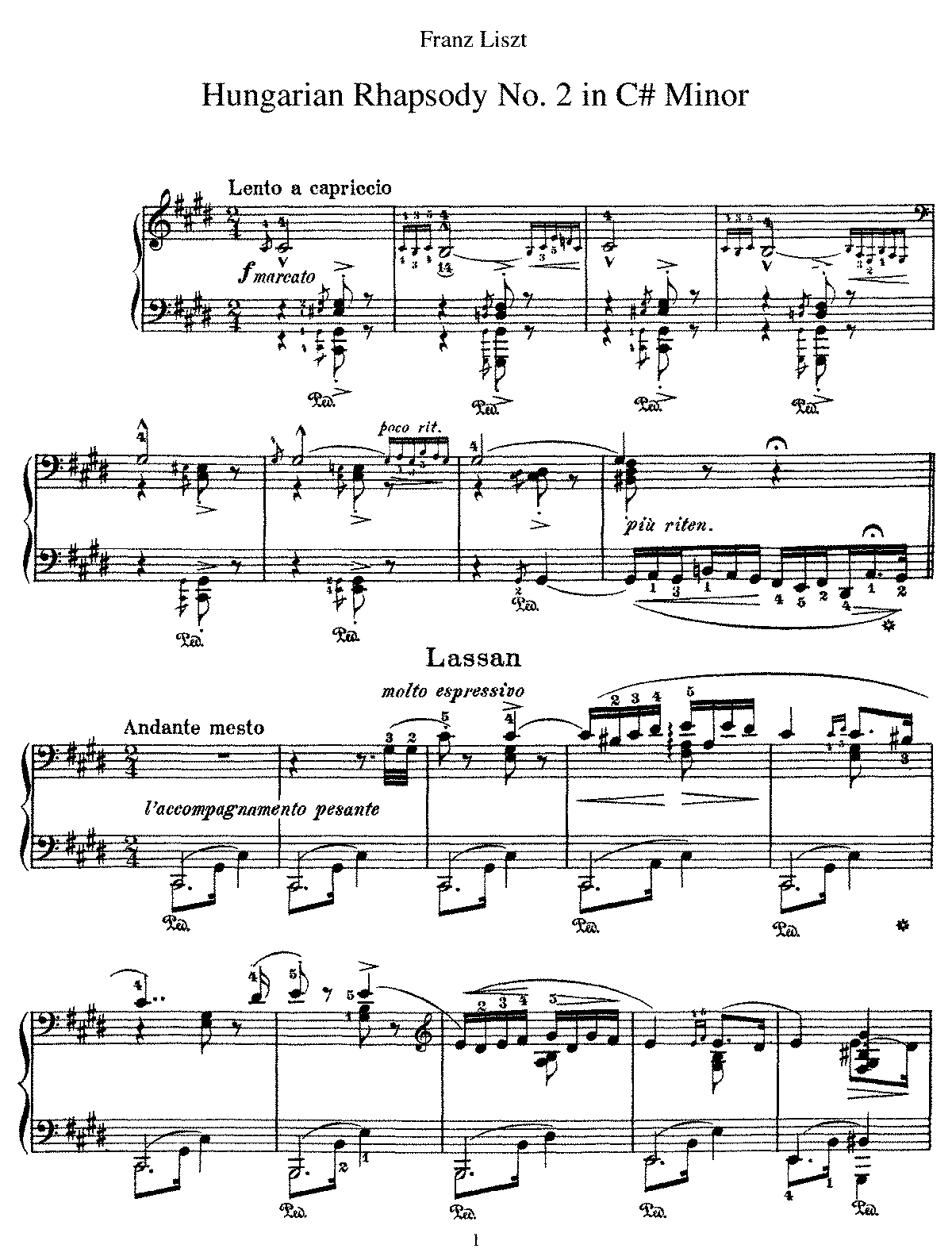
Today’s assignment is Hungarian Rhapsody No. 2 in C-sharp minor. It is the second in a set of 19 Hungarian Rhapsodies by composer Franz Liszt, and is by far the most famous of the set.

In both the original piano solo form and in the orchestrated version this composition has enjoyed widespread use in animated cartoons. Its themes have also served as the basis of several popular songs.

Above, Danish comedian and pianist Victor Borge gives every impression of having been asked to play a duet with someone whom he not only doesn’t know but doesn’t particularly like. Forced to come up with a mutually agreeable way of sharing the musical workload, he settles on the most difficult route possible.

It’s not clear why two pianists were needed for this performance of Liszt’s Hungarian Rhapsody No.2, S.244/2.  I think that they did it just for the fun of it.  The result is hilarious.

They’re not the only ones to tackle Liszt’s Hungarian Rhapsody No.2 as a piano duo.

We also have these guys:


The “history” of this piece in several cartoons:

This is very interesting:

As he often did, Horowitz arranged it more for his liking:


Finally, for real:

Daily Listening Assignments ~ June 12


Since we had the Bridal Chorus a couple days ago, it’s time to march the bride and groom back up the aisle with the Wedding March by Felix Mendelssohn.

This Wedding March comes from Mendelssohn’s incidental music to A Midsummer Night’s Dream. It became customary to play this at marriage ceremonies from about the mid 19th Century, and particularly after the daughter (also called Victoria) of Queen Victoria chose the piece for her own wedding in 1858.

Notice all the triplets (3)!  If you don’t know what they are, be sure to ask at your next lesson.

Find this in Movement 2 and Piano Maestro.

Franz Liszt and Vladimir Horowitz added some variations

On an organ

An organist who needed a bit more practice

With an orchestra

See you tomorrow!


Daily Listening Assignments ~ June 11

Since we had the Bridal Chorus a couple days ago, it’s time to march the bride and groom back up the aisle with the Wedding March by Felix Mendelssohn.

This Wedding March comes from Mendelssohn’s incidental music to A Midsummer Night’s Dream. It became customary to play this at marriage ceremonies from about the mid 19th Century, and particularly after the daughter (also called Victoria) of Queen Victoria chose the piece for her own wedding in 1858.

Notice all the triplets (3)!  If you don’t know what they are, be sure to ask at your next lesson.

Find this in Movement 2 and Piano Maestro.

Franz Liszt and Vladimir Horowitz added some variations

On an organ

An organist who needed a bit more practice

With an orchestra

See you tomorrow!

Daily Listening Assignments ~ June 3, 2025


Today we’re going to listen and learn about the opera Carmen.

I chose this for today since it’s the anniversary of French composer Georges Bizet‘s death.

Georges Bizet was born in Paris, France. Both his parents were musicians, and they actually wanted their son to become a composer when he grew up! Bizet loved music, but he also loved to read books. His parents wound up hiding his books so that he would spend more time on his music.

When Georges was 10 years old, his father enrolled him in the Paris Conservatory. While he was there, he wrote his only symphony, but it wasn’t performed until many years after he died. Bizet graduated from the Conservatory with awards in both composition and piano.

Bizet also composed operas. His most famous opera is Carmen. When Carmen first opened in Paris, the reviews were terrible. Many critics said there were no good tunes in it, so audiences stayed away.

In the middle of the night during the first round of Carmen performances, Bizet died. He was only 36. Four months later, Carmen opened in Vienna, Austria, and was a smash hit. It is now one of the most popular operas ever written. Bizet never knew that audiences would come to consider it his masterpiece.


Vladimir Horowitz made Carmen his own by turning it into a fantasy (or the more musical spelling – fantasie).

The fantasia (Italian; also English: fantasy, fancy, fantazy, phantasy, German: Fantasie, Phantasie, French: fantaisie) is a musical composition with its roots in the art of improvisation. Because of this, like the impromptu, it seldom approximates the textbook rules of any strict musical form.

When you play wrong notes for an audience, just tell the audience it’s a “Fantasie”, not the original work!

As you can see, Carmen is a popular work. Here it is for two pianos, played by Anderson and Roe.

The Canadian Brass tell the story of Carmen in their own humorous words.

If you want to learn this, just let me know!

May 9: Today’s Music History

• 1707 ~ Dietrich Buxtehude, German organist/composer, died at about the age of 69

• 1740 ~ Giovanni Paisiello, Italian composer (Barber of Seville)

• 1880 ~ Johann Hermann Berens, composer, died at the age of 54

• 1905 ~ Ernst Pauer, Austrian composer and pianist, died at the age of 78

• 1914 ~ Carlo Maria Guilini, Italian conductor

• 1914 ~ Hank Snow (Clarence Eugene), Canadian-born American country-music singer, guitarist and songwriter, Country Music Hall of Fame

• 1937 ~ Sonny Curtis, Guitarist with Buddy Holly & The Crickets, songwriter

• 1939 ~ Nokie Edwards, Guitarist with The Ventures

• 1939 ~ Ray Eberle recorded Stairway to the Stars with the Glenn Miller Orchestra for Bluebird records.

• 1941 ~ Pete Birrell, Guitarist with Freddie & The Dreamers

• 1942 ~ Tommy Roe, Singer, songwriter

• 1944 ~ Richie Furay, Musician with Poco and Buffalo Springfield

• 1945 ~ Steve Katz, Record producer; musician: guitar, harmonica, singer with Blood, Sweat and Tears

• 1949 ~ Billy Joel, Grammy Award-winning American rock singer, songwriter and pianist Inducted into the Rock and Roll Hall of Fame on 3/15/99. Commonly nicknamed the “Piano Man” after his first single in North America and signature song of the same name (Released November 2, 1973.) . He is one of the best-selling music artists of all time and the fourth best-selling solo artist in the United States, with over 150 million records sold worldwide
More information on Joel

• 1962 ~ The Beatles signed their first recording contract. George Martin was hired to be the group’s producer and the band would record for EMI Parlophone.

• 1964 ~ Hello Dolly! became the nation’s top pop record. The milestone put Louis Armstrong on the Billboard music chart in the top spot for the first time in his 41-year music career. Later, ‘Satchmo’ was cast in the movie version of Hello Dolly!

• 1965 ~ Vladimir Horowitz played his first public concert in 12 years at Carnegie Hall in New York City. The audience applauded the piano virtuoso with a standing ovation that lasted for 30 minutes.

• 1970 ~ Guess Who started a three-week run at No.1 on the US singles chart with ‘American Woman’, it was the group’s sixth Top 30 hit and only chart-topper. The song was born by accident when guitarist Randy Bachman was playing a heavy riff on stage after he had broken a string, the other members joined in on the jam. A fan in the audience who had recorded the gig on tape presented it to the group after the show and they developed it into a full song.

. 1974 ~ Bruce Springsteen nicknamed “The Boss,” with his E Street Band performed a concert in Cambridge, Mass., which made the well known rock critic Jon Landau write, “I saw rock and roll future and it’s name is Bruce Springsteen.” Bruce Springsteen most famous albums include Born to Run (1975) and Born in the U.S.A. (1984). He has sold over 65 million albums in the U.S.

• 1991 ~ Rudolph Serkin passed away.  He was a Bohemian-born pianist who was widely regarded as one of the greatest Beethoven interpreters of the twentieth century.

• 2001 ~ James Myers, whose two-minute, eight-second tune Rock Around the Clock is considered the granddaddy of all rock ‘n’ roll songs, died of leukemia. He was 81. The song was No. 1 for eight weeks and went on to sell 22 million copies worldwide. It has been recorded by more than 500 artists, from Mae West to the Sex Pistols, and has been used in more than 40 movies. Myers, who also wrote under the name Jimmy DeKnight, penned more than 300 songs and had bit parts in movies and TV shows, but Rock Around the Clock remained his most famous work.

• 2010 ~ Lena Horne, American singer and actress died

• 2020 ~ Little Richard (Richard Wayne Penniman), American singer, songwriter, and musician died. An influential figure in popular music and culture for seven decades, he was nicknamed “The Innovator”, “The Originator”, and “The Architect of Rock and Roll”. Penniman’s most celebrated work dates from the mid-1950s, when his charismatic showmanship and dynamic music, characterized by frenetic piano playing, pounding backbeat and raspy shouted vocals, laid the foundation for rock and roll.


Composers ~ H

Halle

Adam de la Halle, also known as Adam le Bossu (“Adam the Hunchback’) lived from around 1237 to around 1286. He was a poet and composer, born in Arras, France. He was court poet and musician to Robert II of Artois, and followed him to Naples in 1283. He was the originator of French comic opera, with Le Jeu de Robin et de Marion, and the partly autobiographical composition Jeu de la fuelle (Play of the Greensward). He also wrote poems in mediaeval verse forms.

Hamlisch

Marvin Hamlisch, American pianist, composer and arranger of popular music. He helped revitalize Ragtime with his musical arrangements in the movie, The Sting.

Hammerstein

1895 – Oscar (Greeley Clendenning) Hammerstein II lived from 1895 until 1960. He was a lyricist and songwriter with Richard Rodgers. Some of their best known musicals are Oklahoma!, Carousel, South Pacific, The King and I, Flower Drum Song and Sound of Music.

Handel

George Frederick Handel lived between 1685 and 1759. He is considered to be an important baroque composer. Handel had a lot in common with Bach. They were both born in Germany, the same year and both were organists and composers. Handel moved to England and spent 40 years there. While he was there he began writing music for the British royal family and he directed and composed operas as director of the Academy of Music.

“Largo” is a musical term for “very slow” and it is also the title of Handel’s most famous single melody. Largo is from an opera called Xerxes about a Persian king with that name and had it’s premiere in London in 1738.

Handel’s nickname was “The Thunderbolt”, given to him by Mozart because he composed so much music.

One of Handel’s most popular works is The Sarabande from Suite Number 11 since it was made popular in the 1975 Stanley Kubrick movie Barry Lyndon, based on the novel by Thackery. This sarabande is part of a dance suite. Suites such as this were very popular with amateur players during Handel’s day.

He is most famous for the Messiah. This oratorio, composed in 1742, brought the entire baroque tradition to its climax. Handel’s enormous work included over 40 operas, about 20 oratorios, cantatas, sacred music, and orchestral, instrumental, and vocal works.

Handy

W. C. Handy was known as the Father of the Blues. His compositions “Memphis Blues” (1912) and “St. Louis Blues” (1914) made the blues popular in the United States.

Hanson, Howard

Howard Hanson lived from 1896 until 1981. He was a composer, conductor, educator; born in Wahoo, Nebraska. He studied and taught in the U.S.A. before winning the Rome Prize in 1921. He returned from Italy in 1924 to become director of the Eastman School of Music in Rochester, N.Y., remaining there until retirement in 1964. His compositions, including seven symphonies and the opera Merry Mount (1934), typically reflect both his Swedish family background and a conservative, Romantic spirit. He was also an important conductor and promoter of American composers, both conservative and innovative.

Hanson, Raymond

Raymond Hanson lived from 1913 until 1976. He was a composer and teacher, born in Sydney, New South Wales, Australia. He studied at the New South Wales Conservatory, to which he returned to lecture from 1948 until his death. His Trumpet Concerto is well known, and was one of the first Australian recordings to be released internationally. Other works include operas, a ballet, a symphony, four concertos, chamber music, and film scores.

Hanson-Dyer, Louise Berta Mosson

Louise Berta Mosson Hanson-Dyer lived from 1884 until 1962. She was a music publisher and patron, born in Melbourne, Victoria, Australia. She studied in Edinburgh and at the Royal College of Music, London, and became the centre of Melbourne’s musical life, helping establish the British Music Society there in 1921. She established Editions du Oiseau-Lyre, a music-publishing business in Paris in 1927, which set a new standard of music printing, and she became a leader in the revival of early music. Later resident in France, she maintained her links with Australia, and published the works of leading Australian composers. Her considerable Australian estate was left to Melbourne University for music research.

Hart

Lorenz Hart was born in New York City and lived from 1895 until 1943. He was a lyricist;. He studied journalism and wrote poetry at Columbia University and translated plays for the Shuberts before meeting composer Richard Rodgers in 1918. They collaborated on four songs for Poor Little Ritz Girl (1920) and did their first complete score for The Garrick Gaities (1925).

During the next 18 years they collaborated on a string of successful Broadway and Hollywood musicals–among them On Your Toes (1936), The Boys from Syracuse (1938), and Pal Joey (1940). Although they created many popular songs, including “With a Song in My Heart” (1929), “Blue Moon” (1934), and “My Funny Valentine” (1937), Hart’s show lyrics were distinguished by their clever wordplay, intricate internal rhymes, and often sardonic attitude.

Haydn

Joseph Haydn lived between 1732 and 1809 and was born in Austria. He is considered to be a classical composer. Haydn was born in Rohrau, Austria and is often called the father of the modern symphony. Most of his career was spent conducting an orchestra and composing music for a rich Hungarian family, the Esterházys, who not only maintained a magnificent palace in Eisenstadt, but kept a string quartet and an entire opera company in residence.

Haydn created the form of the classical symphony and string quartet as we know them today. He became one of the most important figures in the development of Classical music during the eighteenth century.

Haydn wrote 104 symphonies, more than 40 piano sonatas, over 20 operas, many string quartets, trios, masses and songs.

The Creation is one of his oratorios and has been compared to Handel’s Messiah.

Henderson

Roy Henderson was a baritone famed for his performances of Frederick Delius’ works and a teacher of Kathleen Ferrier. When he died Thursday March 11, 2000, he was 100.

Henderson learned to sing while serving with the Artists Rifles during World War I.

He studied at the Royal Academy of Music, and got his first major break in 1925 in a performance of Delius’ “Mass of Life,” which he sang at short notice at a Royal Philharmonic concert.

From then on, Henderson was regarded as the ideal Delius baritone. He sang on the first recording of Delius’ “Sea Drift” and in the premiere of “Idyll.”

He also performed all the Elgar oratorios and choral works, and sang Count Almaviva in “The Marriage of Figaro” at the 1934 opening night of the Glyndebourne summer opera festival.

Henderson’s last singing performance was on March 29, 1952 in the role of Christus in Bach’s “St. Matthew Passion” at Southwark Cathedral, the Anglican cathedral on the south bank of the Thames in London.

Henderson met Ferrier in 1942,and she later asked Henderson to teach her. She went on to become one of Britain’s renowned voices of the century.

Hill

Mildred Hill, born in 1859, American organist and pianist, composer of “Happy Birthday”. When it was granted a copywrite in 1893, it’s original title was “Goodmorning to All”.

Hindemith

Paul Hindemith lived from 1895 until 1963. He was a German composer who used many techniques of composition from the 1700’s therefore, bringing a neoclassical element to contemporary music.

Holst

Gustav Theodore Holst, English Composer, was born in Cheltenham, England in 1874 and died in London in 1934. He was of the same era as Elgar, but, like Pachelbel, is really only famous for one piece, his Planets’ Suite. This is a series of seven “movements”, one for each of the non~Earth planets known in Holst’s day (i.e., all of the planets but Earth and Pluto). The music reflects the character of the Greco-Roman divinity associated with each planet, with the opening Mars, Bringer of War, being a ferocious, menacing portrait indeed.

One of the themes to Jupiter was subsequently used as the basis for rather a patriotic hymn (I vow to thee my country), in much the same way as one of Elgar’s Pomp and Circumstance marches was turned into Land of Hope and Glory.

Horowitz

Destined to become one of the world’s greatest pianists, Vladimir Horowitz was born in 1903 in Kiev, Russia. While most young children were playing games, Vladimir was playing with the ivories. His time was well spent as he was fully capable of performing publicly by the time he was sixteen.

Within four years, the young piano virtuoso was entertaining audiences at recitals throughout Leningrad – 23 performances in one year, where he played over 200 different works of music, never repeating a composition. After Leningrad, Horowitz played in concerts in Berlin, Hamburg and Paris.

In 1928, the Russian pianist traveled to the United States to play with the New York Philharmonic Orchestra at Carnegie Hall. Arturo Toscanini chose Horowitz to perform his first solo with the New York Philharmonic. It was there that Horowitz met his bride-to-be, Toscanini?s daughter, Wanda. The two were wed in Milan in 1933. New York became Horowitz? permanent home in 1940. He became a U.S. citizen a few years later, devoting the rest of his career to benefit performances, and helping young, aspiring artists.

His return to the concert stage in May of 1965 was a triumphant success, as was his television recital, Vladimir Horowitz at Carnegie Hall.

Just three years before his death, Vladimir Horowitz returned to his homeland to perform once again for the Russian people on April 20, 1986. They felt he had been away far too long … close to sixty years.

Horn

Paul Horn was born in 1930. He is a composer, jazz musician, playing reeds. SOme of his most famous works are: Green Jelly Beans, Dancing Children, Inside [recorded in Taj Mahal]. His TV documentary was The Story of a Jazz Musician.

Hovhaness

Alan Hovhaness, (1911 until 2000) was a a prolific composer who melded Western and Asian musical styles.

Hovhaness wrote more than 400 pieces, including at least nine operas, two ballets, more than 60 symphonies, and more than 100 chamber pieces.

His works include “Lousadzak” (1944), for piano and orchestra; “Wind Drum” (1962), a music-dance drama; “And God Created the Great Whales” (1970); and “The Way of Jesus” (1974), a folk mass.

His early compositions were thoroughly Western. But the influences of Eastern musical styles became more evident after he attended Bohuslav Martinu’s master class in composition in 1942 at the Berkshire Music Center at Tanglewood.

Hovhaness was the first Western composer asked to write music for an orchestra comprised entirely of Indian instruments. He served for six months as composer-in-residence at the University of Hawaii and became a composer-in-residence with the Seattle Symphony in 1966.

Howe

Julia Ward Howe was a U.S. author and lecturer best known for her “Battle Hymn of the Republic.” In 1843 she married Samuel Gridley Howe of Boston, reformer and teacher of the blind. The “Battle Hymn”, composed to the rhythm of the folksong “John Brown’s Body”, was first published in The Atlantic Monthly in February 1862.

Huang

Dr. Hao Huang was a Leonard Bernstein Music scholarship recipient at Harvard University (AB cum laude), a piano scholarship Master’s student at the Juilliard School (MM in piano performance), and a Graduate Council Fellow at the State University of New York at Stony Brook (DMA). He has studied with Seymour Bernstein, Leon Fleisher, Claude Frank, Beveridge Webster and Gilbert Kalish. He is currently a piano professor at Scripps College and the Claremont Graduate School, and has taught at the Hochschule fur Musik “Franz Liszt” in Weimar and the School of Music at Converse College.