. 1895 ~ France, There’s no business like show business, right? Well, this is where it all started. A patent for a machine “to film and view phronopotographic proofs” (in simpler words, a projector) was assigned to the Lumiere brothers of Paris.
. 1914 ~ The American Society of Composers, Authors and Publishers (known as ASCAP) was formed in New York City. The society was founded to protect the copyrighted musical compositions of its members.
. 1918 ~ Oliver Smith, Scenic designer for Broadway Musicals such as On the Town, Brigadoon, My Fair Lady, Camelot, The Sound of Music, Hello Dolly! and films Guys and Dolls, Oklahoma!, Porgy and Bess, The Band Wagon
. 1919 ~ “Tennessee” Ernie Ford, American country music singer and songwriter
. 1920 ~ Eileen Farrell, American soprano, San Francisco Opera, Lyric Opera of Chicago, Metropolitan Opera. Also successful in singing and recording popular music and jazz
. 1940 ~ Earl ‘Fatha’ Hines and his orchestra recorded the classic Boogie Woogie on St. Louis Blues on the famous Bluebird record label.
. 1925 ~ Gene Ames, Singer with The Ames Brothers
. 1929 ~ Jesse McReynolds, Guitarist, folk singer with Jim & Jesse
. 1930 ~ Dotty McGuire, Singer with McGuire Sisters
. 1940 ~ “Boogie Woogie on St. Louis Blues” was recorded by Earl “Fatha” Hines and his orchestra. The song eventually became a classic and is still popular among big band fans today.
. 1944 ~ Peter Tork (Peter Halsten Thorkelson), Bassist, singer with The Monkees
. 1950 ~ Roger Christian, Singer with The Christians
. 1956 ~ Peter Hook. Bass with Joy Division
. 1957 ~ Tony Butler, Bass with Big Country
. 1967 ~ The Beatles released the double A-sided single in the United Kingdom with Penny Lane (Paul McCartney) and “Strawberry Fields Forever” (John Lennon) on the other side. Penny Lane was where Lennon and McCartney would meet to go into Liverpool.
Strawberry Fields was named after a Salvation Army house where Lennon would play as a child.
. 1971 ~ The Osmonds, a family singing group from Ogden, Utah, began a five-week stay at the top of the pop music charts with the hit, “One Bad Apple”. The song, featuring the voice of little Donny Osmond, also showcased the talent of Alan, Wayne, Merrill and Jay Osmond. The brothers were regulars on Andy Williams’ TV show from 1962 to 1967. The group began as a religious and barbershop quartet in 1959. Together, the Osmonds scored with 10 singles in four years — four of them were top ten hits.
. 2001 ~ Music critic George T. Simon, the original Glenn Miller Band drummer who swapped his sticks for a pen and eventually earned a Grammy for his acclaimed liner notes, died of pneumonia following a battle with Parkinson’s disease at the age of 88. In 1937 Simon sat in with the fledgling Glenn Miller Band. But he opted for writing over drumming, and became editor-in-chief of Metronome magazine in 1939. As a writer, Simon worked for the New York Post and the now-defunct New York Herald-Tribune. He also served as executive director of the National Academy of Recording Arts and Sciences, the organization behind the Grammy Awards. In 1977, Simon won his Grammy Award for best album notes – his contribution to the collection “Bing Crosby: A Legendary Performer.” Simon was hand-picked by Crosby to write the liner notes for the release.
. 2002 ~ Waylon Jennings, whose rebellious songs and brash attitude defined the outlaw movement in country music, died peacefully at his Arizona home after a long battle with diabetes-related health problems. He was 64. Jennings’ list of hits spans four decades and includes country music standards like Good-Hearted Woman and Mammas Don’t Let Your Babies Grow Up to Be Cowboys, both duets with Willie Nelson. Jennings made 60 albums and had 16 country singles that reached No. 1. His “Greatest Hits” album in 1979 sold 4 million – a rare accomplishment in country music for that era. Jennings won two Grammy awards and four Country Music Association awards. Other hits include I’m a Ramblin’ Man, Amanda, Lucille, I’ve Always Been Crazy, and Rose in Paradise. Jennings’ deep, sonorous voice narrated the popular TV show “The Dukes of Hazzard” and sang its theme song, which was a million seller. Jennings had been plagued with health problems in recent years that made it difficult for him to walk. In December 2002, his left foot was amputated. He traditionally wore a black cowboy hat and ebony attire that accented his black beard and mustache. Often reclusive when not on stage, he played earthy music with a spirited, hard edge. Some of Jennings’ album titles nourished his brash persona: “Lonesome, On’ry and Mean,” “I’ve Always Been Crazy,” “Nashville Rebel,” “Ladies Love Outlaws” and “Wanted: The Outlaws.” He often refused to attend music awards shows on the grounds that performers shouldn’t compete against each other. He didn’t show up at his induction into the Country Music Hall of Fame last year. He made occasional forays into TV movies, including “Stagecoach” and “Oklahoma City Dolls,” plus the Sesame Street movie “Follow That Bird” and the B-movie “Nashville Rebel.”
. 2015 ~ John McCabe died. He was an English composer and pianist. He was a prolific composer from an early age but first became known as a pianist. He created works in many different forms, including symphonies, ballets, and solo works for the piano.
Lorin Maazel performed at the 1939 New York World’s Fair when he was only 9. He conducted two major symphonies before he was 13 and went on to a successful career as an adult conductor.
MacDowell
Edward MacDowell lived from 1860 until 1908. He was an American pianist and composer and was one of the first American composers to achieve any degree of international fame. He studied in Paris, eventually at the Conservatoire, before moving to study the piano with Carl Heymann at the Hoch Conservatory in Frankfurt, where he had composition lessons with Joachim Raff. There was encouragement from Liszt and further years spent in Europe until his return to the United States in 1888. There he succeeded in establishing himself as a teacher, pianist and composer, with appointment as the first Professor of Music at Columbia,a position he held until 1904. His last years were clouded by mental illness.
Piano music by MacDowell is effective if not innovative. It includes two piano concertos, four sonatas, the Tragica, Eroica, Norse and Keltic, studies and a quantity of genre pieces.
Machaut
Guillaume de Machaut was born sometime around 1300 in Rheims(?), France and died: April 13, 1377. Rheims, France He was a French poet and musician as well as a composer of monophonic and polyphonic music. He is also known as the leading representative of the Ars nova tradition.
Machaut lived his life in the higher ranks of service, first as secretary to John of Luxembourg, King of Bohemia, and then as a canon (a church official) at the Cathedral of Rheims. Like many in the fourteenth century, Machaut’s life and works reflect an equal measure of the sacred and secular. Most of his works were either secular (such as his many chansons) or a mix of sacred and ceremonial (including many of his motets and his hocket David, which was probably written for the coronation service of King Charles V in 1364). At the same time, he wrote what is probably the first full setting of the Mass Ordinary by a single composer (the Messe de Nostre Dame). He was a man of the cloth, having taken minor orders at an early age. Yet toward the end of his life he maintained a romantic/literary affair with a young woman named Perrone.
Much of Machaut’s polyphonic music reflects the interest that composers had in building complex structures based on the repetition and manipulation of borrowed melodies (a technique called isorhythm). In some of his works, these techniques are applied to all the voices. The harmonies found in Machaut’s pieces are built around the fifth and the octave, the primary consonances of the period. His secular music carries on the musical and textual traditions of the troubadours and trouv?res. Most are written in the fixed forms such as the virelei, rondeau and ballade.
Marchaut’s works include: Sacred/ceremonial music, including Messe de Nostre Dame, 23 motets, hocket “David” Secular music, including 42 ballades, 22 rondeaux, 33 virelais, 19 lais, 1 complainte, 1 chanson royale
Mahler
Gustav Mahler lived from 1860 until 1911. Like so many other musicians, Mahler started early, learning the piano at six and giving his first recital at the age of ten.
In 1909, he became conductor of the New York Philharmonic Orchestra and the Vienna Court Opera. Mahler, a Bohemian composer, used huge orchestras, the largest for his “Symphony for a Thousand”. He also completed nine symphonies and several song-cycles notably “Das Lied von der Erde.” Mahler’s music was used in the 1971 movie, Death in Venice.
Mancini
Henry Mancini (Enrico Nicola Mancini) lived from 1924 until 1994. He was an Academy Award-winning composer of movies such as Moon River in 1961, Days of Wine and Roses in 1962, Breakfast at Tiffany’s score in 1961, Victor/Victoria score in 1982. He also composed themes for The Pink Panther, Mr. Lucky, Peter Gunn, Charade, NBC Mystery Movie, NBC Nightly News, Love Theme from Romeo & Juliet and received 20 Grammy Awards.
Marriner
Sir Neville Marriner, born in 1924, is a British violinist and conductor. He was born in Lincoln, Lincolnshire, EC England, UK and he studied at the Royal College of Music and the Paris Conservatory. He first played violin with the London Philharmonia and the London Symphony Orchestra, then turned to conducting. He has held posts with the Los Angeles Chamber Orchestra from 1968 until 1977, the Minnesota Orchestra from 1979 until 1986, and the Stuttgart Radio Symphony Orchestra 1984 until 1989. Since 1956 he has been founder-director of the Academy of St Martin-in-the-Fields chamber ensemble. He was knighted in 1985.
Marsalis
The Marsalis clan of New Orleans is a large one. Ellis, the head of the family, plays piano, Jason plays drums. Wynton plays trumpet and Branford plays saxophone. Together and individually, this family has done quite a lot to inspire young musicians.
Massanet
Jules Emile Frederick Massenet lived from 1842 until 1912. He was a composer who was born in Montaud, France. He studied at the Paris Conservatoire, where he was professor from 1878 until 1896. He made his name with the comic opera Don Caesar de Bazan. Other operas followed, including Manon (1884), considered by many to be his masterpiece, Le Cid (1885), and Werther (1892). Among his other works are oratorios, orchestral suites, music for piano, and songs.
McCartney
Sir (James) Paul McCartney was born in 1942. He is a musician, songwriter, and composer who was born in Liverpool, Merseyside, NW England, UK. He was the Beatles’ bass guitarist, vocalist, and member of the Lennon-McCartney songwriting team, he made his debut as a soloist with the album McCartney (1970), heralding the break-up of the group. In 1971 he formed the band Wings (disbanded in 1981) with his wife Linda (1942–98). “Mull of Kintyre’ (1977) became the biggest-selling UK single (2.5 million). In 1979 he was declared the most successful composer of all time: by 1978 he had written or co-written 43 songs that sold over a million copies each.
His Liverpool Oratorio (written in association with Carl Davis) was performed by the Royal Liverpool Philharmonic Orchestra at Liverpool Cathedral in 1991, and he has since continued to develop his interests as a classical composer, notably in Standing Stone (1997). He collaborated with Harrison and Starr in the retrospective Beatles’ anthology in 1995.
He wrote the books All You Need Is Love (1968) and Paul McCartney In His Own Words (1976), and wrote, produced, and composed the music for a successful animated film, Rupert and the Frog Song in 1984.
He won a Grammy Award in 1990 and was inducted into the Rock and Roll Hall of Fame on March 15, 1999. He was knighted in 1997.
McPartland
Marian Turner McPartland was born in Windsor, England in 1920. She is a versatile pianist and jazz musician. She moved to America in 1945 and led a trio from 1951 and founded Halcyon Records. In 1973 she began an adjunct career as the host of jazz radio programs and National Public Radio show – Marian McPartand?s Piano Jazz.
Melba
Nellie Melba, whose birth name was Helen Porter Mitchell, was an Australian singer born in Melbourne, Australia in 1861. She was taught to sing by mother, educated at Presbyterian Ladies’ College, married 1881 and decided to sing professionally. She visited London and Paris in 1886 and debuted in Brussels as Gilda in Verdi’s “Rigoletto” in 1887.
First diva of the century as Nellie Melba (from her home town), she demanded a pound more than Caruso at his peak for her three-octave voice. Upset that Escoffier named a dessert Peach Melba without paying royalties, she patented her name in the US. For WWI fundraising concerts she was made a Dame Commander of the Order for the British Empire in 1918. Her career took her to London’s Covent Garden and New York’s Metropolitan opera houses. She gave her name to Melba Toast, Peach Melba and Melba Sauce. Melba died 1931 from and infection following an unsuccessful face lift.
Melchoir
Lauritz Lebrecht Hommel Melchior was a tenor who born in Copenhagen, Denmark in 1890. He died in 1973. Beginning as a baritone in 1913, he went on to become arguably the foremost Wagnerian tenor of the century. He sang in Bayreuth from 1924 until 1931 and regularly at the Metropolitan Opera from 1926 until 1950). In the late 1940s and early 1950s he appeared in several Hollywood movies.
Melchior was sometimes called ‘The Heroic Tenor’ or ‘The Premier Heldentenor of the 20th Century’.
Mendelssohn
Felix Bartholdy Mendelssohn lived between 1809 and 1847. He is considered to be a romantic composer and pianist best known for his symphonies and concert overtures. Mendelssohn played the piano in public by the age of nine, so he was often compared to Mozart.
He composed works for solo instruments and orchestra, and German songs. Some of his better known works are the “Wedding March”, “Elijah” and “Fingal’s Cave”. Felix Mendelssohn, along with Hector Berlioz was one of the first conductors of a large orchestra.
Mendelssohn harmonized the works of other composers, including Johann Cruger.
Menotti
Menotti’s “Amahl and the Night Visitors” was the first opera ever written for television and is the most frequently performed opera in the United States. He won a Pulitzer prize for his opera, The Consul, in 1950.
Menuhin
Yehudi Menuhin made his violin debut as a child prodigy by appearing with the San Francisco Orchestra at the age of 7 in 1923. He was wearing short pants, which were then fashionable for boys his age. He later became a music statesman by promoting music as a univeral peacemaker and as a means to realize greater global understanding. He was born in New York City in 1916 but became a British citizen in 1985.
Messiaen
Olivier (Eugène Prosper Charles) Messiaen lived from 1908 until 1992. He was a composer and organist, born in Avignon, France. He studied at the Paris Conservatoire, where his teachers included Paul Dukas.
His 20/21 earned him a Grammy
Meyerbeer
Giacomo Meyerbeer lived from 1791 until 1864. He was a German Grand opera composer. His most famous works are “Les Huguenots” and “L’Africaine”. His Hellish Waltz from Robert du Diable, transcribed by Liszt probably caused more public commotion than any other piano piece in history.
Midori
Midori (Mi Dori Goto) is a Japanese violin virtuoso who began lessons at age four.
Milhaud
arius Milhaud, 1892 to 1974, was born in the southern French city of Aix-en-Provence. Darius Milhaud was trained at the Paris Conservatoire, originally as a violinist, before turning to composition. He enjoyed a close association with the diplomat-poet Paul Claudel, whom he accompanied to Brazil as secretary, after Claudel’s appointment as Minister at the French delegation in Rio de Janeiro. On his return to Paris in 1918, after two years abroad, Milhaud was for a time in the circle of Jean Cocteau and a member of the diverse group of French composers known as Les Six. Extremely prolific as a composer in many genres, Milhaud spent the years of the 1939 war in the United States, where he taught, combining this position with a similar post at the Paris Conservatoire after 1947.
Two works in particular have proved attractive additions to repertoire. The first, Saudades do Brasil, a suite for piano, is based on music heard in Brazil during the composer’s stay there between 1916 and 1918. Scaramouche, arranged for two pianos from incidental music for Moli?re’s Le M?decin Volant, is a lively jeu d’esprit, in the spirit of the commedia dell’arte character of the title.
Darius Milhaud wrote a considerable amount of music for the theatre, operas, ballets and incidental music, as well as film and radio scores. Collaboration with Claudel brought the opera Christophe Colombe and a number of compositions of incidental music for plays ranging from those of Shakespeare to the work of contemporaries such as Brecht, Supervielle, Giraudoux and Anouilh. With Cocteau he wrote the ballets Le Boeuf sur le Toit (The Ox on the Roof) and the jazz La Cr?ation du Monde, for the Ballets n?gres. These represent only a small fraction of his dramatic work.
Milhaud was equally prolific as a composer of orchestral music of all kinds, including twelve symphonies and a variety of concertos, some of which reflect the influence of his native Provence.
Milhaud contributed widely also to the repertoire of French song both in choral settings and in songs for solo voice and piano, with texts chosen from a great variety of sources from Rabindranath Tagore and Andre Gide to the words of Pope John XXIII, the last in a choral symphony Pacem in terris.
In addition to eighteen string quartets and useful additions to duo sonata repertoire, not least for viola, an instrument used for the Quatre Visages of 1943, representations in music of four different kinds of girls, Milhaud provided for wind quintet the charming suite La cheminée du roi René and the attractive Pastorale of 1935 for oboe, clarinet and bassoon. He shows here, as elsewhere, a characteristically French adroitness in writing for woodwind instruments.
Miller
(Alton) Glenn Miller, lived from 1904 until 1944 and was born in Clarinda, Iowa. He was a trombonist who he attended the University of Colorado before joining Ben Pollack’s orchestra in Chicago in 1924. He moved to New York in 1928, where he free-lanced for the next nine years as a studio musician and worked as a sideman with a succession of bandleaders, including Red Nichols, the Dorsey Brothers, and Ray Noble. After his first band failed in 1937, he put together a second orchestra in 1938. For the next four years, with hits such as “Moonlight Serenade” and “In the Mood,” it was the most successful dance band of the period. In 1942, he joined the U.S. Air Force, for which he organized the Glenn Miller Army Air Force Band to entertain the troops. While stationed in Europe, he died on a flight from England to France in a plane that disappeared over the English Channel.
Minelli
Liza May Minnelli was born in 1946 in Los Angeles, California. She is a singer, dancer, stage and screen actress. Her parents are actress Judy Garland and director Vincente Minnelli and her half-sister is singer-actress Lorna Luft.
Minnelli was less than 3 years old when she made her screen debut in In the Good Old Summertime (1949), which co-starred her mother. She became the youngest-ever actress to win a Tony Award, for Flora, the Red Menace (1965), at age nineteen. She is the only singer in history to sell out Carnegie Hall for three weeks straight.
Monteverdi
Claudio Monteverdi lived from 1567 until 1643 and was considered to be a baroque composer. He was the first great composer of opera.
Monteverdi introduced the orchestral prelude, enlarged the orchestra, and improved its role by recognizing instrumental differences. His first opera “Orfeo” was performed in 1607.
Moog
Robert Moog was born in 1934. He invented the first music synthesizer in 1964.
Morley
Morton
Jelly Roll Morton, born Ferdinand Joseph La Menthe in 1885, was one of the most influential composers of the jazz era, bridging an important gap between ragtime, blues, and jazz. In a sense, he was the first great jazz composer.
His career began in New Orleans, where he began to experiment with a unique blend of blues, ragtime, Creole, and Spanish music in bordellows as a piano player. Along with being a musician, he also worked as a gambler, pool shark, vaudeville comedian, and was known for his flamboyant personality and diamond front tooth.
Morton became successful when he started making what would be some of the first jazz recordings in 1923 with “the New Orleans Rhythm Kings”. Whether he played on the West Coast, New Orleans, or in Chicago, his recordings were always very popular. He joined the group “the Red Hot Peppers” in 1924 and made several classic albums with the Victor label.
Nothing but success came to him until 1930, when “Hot Jazz” began to die out, and big bands began to take over. Morton died in 1941, claiming that a voodoo spell was the cause of his demise.
Moscheles
Ignaz Moscheles was a Bohemian composer and piano virtuoso.
Mouret
Jean Joseph Mouret’s Rondeau was the theme for many years of TV’s Masterpiece Theater Mouret wrote his music in Paris in the early 1700’s
Mozart
Wolfgang Amadeus Theophilus Mozart lived between 1756 and 1791. He is considered to be a classical composer. Mozart, born in Salzburg, Austria, began composing before most children go to kindergarten. By the time he was six he had played the piano and violin in public.
A Wunderkind, a prodigy of the first rank before the age of five, Mozart astounded the musical world with compositions of unsurpassed brilliance. His father Leopold had recognized his talent at the age of three and immediately set out to teach him to play the harpsichord, violin, and organ. Mozart and his sister made their debut in Munich when he was just six and traveled about Europe together, performing at courts and before royalty, always with success. While still a little child Mozart was inventing symphonies, sonatas, and his first opera. Legends abound about how Mozart could hear an entire work in his head and write everything down without making even one change.
As a child performer he was often treated as a freak. People would cover his hands as he played the piano, make him compose tunes on the spot and perform all sorts of other musical tricks.
In 1787 Mozart became court composer to Joseph II. He played for royalty, received commissions from aristocrats and in his short lifetime composed nearly a thousand masterpieces, including symphonies, operas, serenades, sonatas, concertos, masses, vocal works, and church works.
Mozart was a prolific composer writing masterpieces using every form of music, including his operas “The Marriage of Figaro” (based on a play by Pierre Beaumarchais), “Don Giovanni”, “Cosi fan tutte” and “The Magic Flute”. His mastery of instrumental and vocal forms, from symphony to concerto and opera, was unrivalled in his own time and perhaps in any other.
Composing the Requiem Mass commissioned for Count Walsegg, he felt he was writing his own requiem and he died before it was finished.
Wolfgang Amadeus Mozart, composer, died in Vienna Austria at the age of 35, penniless, on December 5th, 1791, of malignant typhus. Mozart, the precocious child prodigy, composed several pieces that are deemed central to the classical era. Though he ranked as one of the greatest musical genius, he did not live a life of affluence as none of his compositions earned him a decent commission but the world is forever enriched by such works as Eine Kleine Nachtmusik, the Symphonies No. 38 through 41 and the Coronation Mass. In the year 2000, there have been some new discoveries about Mozart’s death.
Munch
Charles Munch was a French composer who lived from 1891 until 1968. He was born in Strasbourg, France. After a long career as a violinist, he made his conducting debut in Paris in 1932 and three years later organized his own orchestra there. He became conductor of the Boston Symphony in 1949 and stayed until 1962. In the latter year he organized the Orchestre de Paris; he died on tour with that group in Virginia. Munch was known for allowing his players room to express themselves, producing warm and musical performances.
Mussorgsky
Modest Petrovich Mussorgsky lived from 1839 until 1881. This Russian composer, born in Karevo, Russia, was educated for the army, but resigned his commission in 1858 and began the serious study of music under Balakirev.
He is most known for his dramatic opera Boris Godunov, first performed in St Petersburg in 1874. In this opera, he emphasized that speech is made more poignant by the accompanying music.
His piano suite Pictures from an Exhibition (1874) has also kept a firm place in the concert repertoire. Other operas and large-scale works remained uncompleted as the composer sank into the chronic alcoholism which hastened his early death. His friend Rimsky-Korsakov undertook the task of musical executor, arranged or completed many of his unfinished works, and rearranged some of the finished ones.
Mussorgsky’s Night on Bald Mountain was featured in the Walt Disney movie Fantasia.
Mutter
Anne-Sophie Mutter’s remarkable career began at the age of 13 when she appeared as soloist with Herbert von Karajan and the Berlin Philharmonic at the 1977 Salzburg Whitsun Festival. Since then she has been in demand as both a soloist and chamber music partner in major music centers throughout Europe, the Americas and Asia.
Her long list of honors for recordings includes the Grand Prix du Disque, the Grammy Award in the United States, and Holland’s Edison Award. Her most recent releases have been “The Berlin Recital” with pianist Lambert Orkis and live recordings of Brahms’ Violin Concerto and Schumann’s “Fantasy” with the New York Philharmonic and Kurt Masur. Her recording of Penderecki’s Violin Concerto No. 2 with the London Symphony Orchestra conducted by the composer (coupled with Bartok’s Violin Sonata No. 2) was released in early 1998. All of Beethoven’s sonatas will be recorded live during her worldwide tour and released by the autumn of 1998.
An ardent champion of contemporary music, Miss Mutter has given premiere performances of several works written especially for her by composers such as Witold Lutoslawski, Norbert Moret, Krzysztof Penderecki, Wolfgang Rihm and Sebastian Currier. Over the next few years she will participate in premiere performances of works by contemporary composers whom she especially admires.
In 1987 Miss Mutter established the Rudolf Eberle Endowment which supports talented young string musicians throughout Europe. This endowment was recently incorporated into the Munich-based Anne-Sophie Mutter Foundation and Friends Circle which share the same objective.
Miss Mutter has a strong commitment to social and health problems of our time. She supports work in these fields through regular benefit concerts. The proceeds from one of her three Beethoven evenings in Munich will go to the Christiane-Herzog-Stiftung for sufferers of cystic fibrosis. In the same year she will perform a benefit concert for the German Red Cross with the proceeds going to an orphanage in Romania. In Philadelphia a concert for Temple University’s Esther Boyer College of Music will take place.
She is a holder of the Order of Merit of the Federal Republic of Germany.
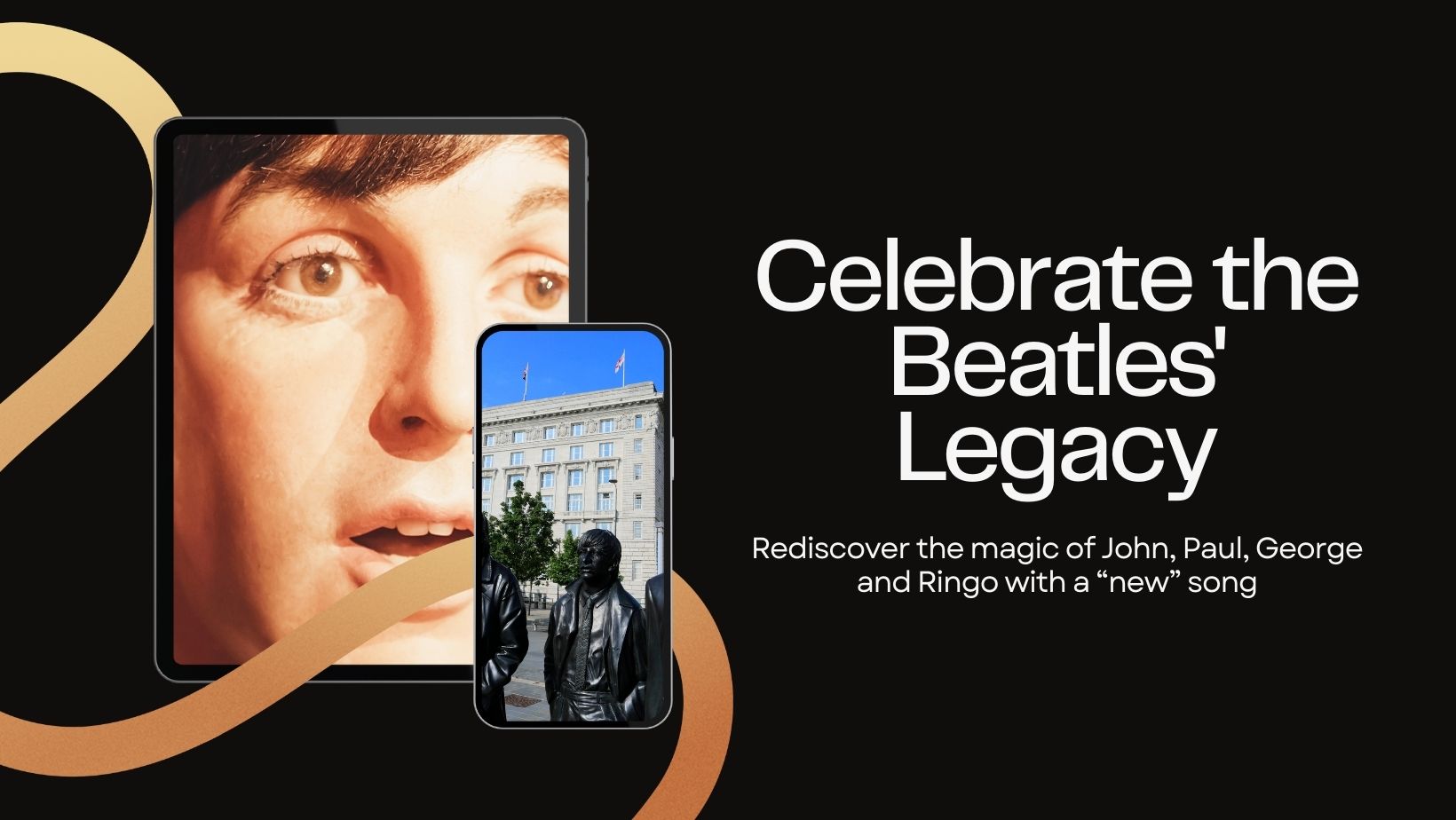
I love the new song, Now and Then, but I’m not sure of the implications of manipulating the voices of dead people. It could change history and what we know – or think we know – about people.
In the mid-’70s, long after The Beatles had officially parted ways, John Lennon recorded a series of demos straight to cassette tape in his home in New York City. After his death in 1980, his wife, Yoko Ono, passed the tapes to the remaining Beatles, and in 1995, Paul McCartney, Ringo Starr, and George Harrison began work on a trio of new Beatles songs born from Lennon’s sketches. You’ve heard a couple of them before—“Real Love” and “Free as a Bird”—but one of them never came to fruition during those sessions. “When we started ‘Now and Then,’ it was very difficult because John was sort of hidden in a way,” said Starr in a documentary about how The Beatles’ final song came together. “In John’s demo tape, the piano was a little hard to hear,” said McCartney. They put together some of the song’s building blocks, including having Harrison record guitar parts for the song. But they couldn’t properly isolate Lennon’s vocals from his piano. So “‘Now and Then’ just kind of languished in a cupboard,” McCartney said.
Fast-forward to 2022. Using machine-learning technology that director Peter Jackson’s team had developed for the 2021 Beatles documentary Get Back, engineers were able to separate Lennon’s voice from his original demo of “Now and Then,” finally allowing the remaining Beatles to finish the track. “It’s like John’s there,” said Ringo of the now-crystalline vocal track. “It’s far out.” Paul and producer Giles Martin (son of Beatles producer George Martin) were then able to assemble John’s 1970s vocals with George’s 1995 guitar lines and Paul and Ringo’s new vocal and instrumental parts, as well as a string arrangement, to complete the song.
Bearing the signatures of all four Beatles, it’s a doleful ballad and a poignant good-bye, with lyrics—“And if you go away, I’ll know you’re there”—that resonate far beyond their initial intentions. Hear The Beatles’ last song alongside their very first—1962’s “Love Me Do”—and watch the trailer for the documentary about how “Now and Then” was made.
Now and Then’s eventful journey to fruition took place over five decades and is the product of conversations and collaborations between the four Beatles that go on to this day.
The long mythologised John Lennon demo was first worked on in February 1995 by Paul, George and Ringo as part of The Beatles Anthology project but it remained unfinished, partly because of the impossible technological challenges involved in working with the vocal John had recorded on tape in the 1970s. For years it looked like the song could never be completed.
But in 2022 there was a stroke of serendipity. A software system developed by Peter Jackson and his team, used throughout the production of the documentary series Get Back, finally opened the way for the uncoupling of John’s vocal from his piano part. As a result, the original recording could be brought to life and worked on anew with contributions from all four Beatles.
This remarkable story of musical archaeology reflects The Beatles’ endless creative curiosity and shared fascination with technology. It marks the completion of the last recording that John, Paul and George and Ringo will get to make together and celebrates the legacy of the foremost and most influential band in popular music history.
The Piano Puzzlers book is available in the O’Connor Music Studio library if you’d like to give any a try. Piano Puzzlers as heard on American Public Media’s “Performance Today.” Includes 32 tunes with songs by Gershwin, Berlin, Arlen, Porter, Rodgers, Fats Waller, Lennon & McCartney, and others disguised in the styles of Bach, Handel, Haydn, Mozart, Beethoven, Brahms, Schubert, Schumann, Chopin, Janacek, Debussy, Ravel, Rachmaninoff, Stravinsky, Prokofiev, Bartok, and Copland.
Includes an introduction by Fred Child, host of “Performance Today” as well as background info by Bruce Adolphe. “Bruce Adolphe has taken a common musician’s party game and elevated it to high art and truly funny musical slapsticks. The Piano Puzzlers are a unique combination of extraordinary insight into the styles of many composers subtle, expert workmanship and great, great fun!”
If you’re a music geek (like me), I have a program for you. Now, let me be clear, to fully qualify as a music geek…you must have a fond appreciation for classical music (no, Poison, Quiet Riot, and Zepplin do not count as classical music). So, if you’re a “music geek” without an appreciation for classical music…well, I hate to burst your bubble…but, you’re not truly a music geek. Instead, you’re a music appreciator, but not a geek. So, if you just listen to indie music and scowl at anything on a label larger than Matador…don’t bother following the link I’ll provide…the fun will be lost on you…And, you probably won’t have a chance.
Every Wednesday night, on my way home from WNL, I turn on my local NPR station to listen to Piano Puzzlers on Performance Today. It’s absolutely incredible. A pianist/composer (Bruce Adolphe) takes a familiar folk or pop tune and sets it inside a classical masterpiece (or in the style of a particular composer). Sometimes it’s easy…sometimes it’s ridiculously difficult. There are days when I say, “got it” on the first pass. Then there are days when I say, “what the heck?” And, more often than not, I’m able to get either the popular/folk tune or the composer.
This is sad to admit, but there are nights when I’ll slow down on the drive home or sit in the car in the driveway to finish an episode. In fact, I get a little worked up if someone stops me after WNL…as I might miss the beginning of Piano Puzzlers (it usually hits around 8:20pm on our local station).
Take a listen to some of the archives and see if you can figure it out! It’s really cool…but probably only appreciated by music geeks (the kind of people that listen to NPR for their musical programs and not just the snipets of cool indie rock between segments on All Things Considered…which is a great show too).
Today’s is a cheat post, partly because I ran out of time.
I’ve watched this video several times in the past few days. It’s a great overview of the Beatles music. And, yes, I have books of their music arranged for piano, if you want to play anything.
Today’s is a cheat post, partly because I ran out of time.
I’ve watched this video several times in the past few days. It’s a great overview of the Beatles music. And, yes, I have books of their music arranged for piano, if you want to play anything.
The Piano Puzzlers book is available in the O’Connor Music Studio library if you’d like to give any a try. Piano Puzzlers as heard on American Public Media’s “Performance Today.” Includes 32 tunes with songs by Gershwin, Berlin, Arlen, Porter, Rodgers, Fats Waller, Lennon & McCartney, and others disguised in the styles of Bach, Handel, Haydn, Mozart, Beethoven, Brahms, Schubert, Schumann, Chopin, Janacek, Debussy, Ravel, Rachmaninoff, Stravinsky, Prokofiev, Bartok, and Copland.
Includes an introduction by Fred Child, host of “Performance Today” as well as background info by Bruce Adolphe. “Bruce Adolphe has taken a common musician’s party game and elevated it to high art and truly funny musical slapsticks. The Piano Puzzlers are a unique combination of extraordinary insight into the styles of many composers subtle, expert workmanship and great, great fun!”
If you’re a music geek (like me), I have a program for you. Now, let me be clear, to fully qualify as a music geek…you must have a fond appreciation for classical music (no, Poison, Quiet Riot, and Zepplin do not count as classical music). So, if you’re a “music geek” without an appreciation for classical music…well, I hate to burst your bubble…but, you’re not truly a music geek. Instead, you’re a music appreciator, but not a geek. So, if you just listen to indie music and scowl at anything on a label larger than Matador…don’t bother following the link I’ll provide…the fun will be lost on you…And, you probably won’t have a chance.
Every Wednesday night, on my way home from WNL, I turn on my local NPR station to listen to Piano Puzzlers on Performance Today. It’s absolutely incredible. A pianist/composer (Bruce Adolphe) takes a familiar folk or pop tune and sets it inside a classical masterpiece (or in the style of a particular composer). Sometimes it’s easy…sometimes it’s ridiculously difficult. There are days when I say, “got it” on the first pass. Then there are days when I say, “what the heck?” And, more often than not, I’m able to get either the popular/folk tune or the composer.
This is sad to admit, but there are nights when I’ll slow down on the drive home or sit in the car in the driveway to finish an episode. In fact, I get a little worked up if someone stops me after WNL…as I might miss the beginning of Piano Puzzlers (it usually hits around 8:20pm on our local station).
Take a listen to some of the archives and see if you can figure it out! It’s really cool…but probably only appreciated by music geeks (the kind of people that listen to NPR for their musical programs and not just the snipets of cool indie rock between segments on All Things Considered…which is a great show too).
Today’s is a cheat post, partly because I ran out of time.
I’ve watched this video several times in the past few days. It’s a great overview of the Beatles music. And, yes, I have books of their music arranged for piano, if you want to play anything.
The Piano Puzzlers book is available in the O’Connor Music Studio library if you’d like to give any a try. Piano Puzzlers as heard on American Public Media’s “Performance Today.” Includes 32 tunes with songs by Gershwin, Berlin, Arlen, Porter, Rodgers, Fats Waller, Lennon & McCartney, and others disguised in the styles of Bach, Handel, Haydn, Mozart, Beethoven, Brahms, Schubert, Schumann, Chopin, Janacek, Debussy, Ravel, Rachmaninoff, Stravinsky, Prokofiev, Bartok, and Copland.
Includes an introduction by Fred Child, host of “Performance Today” as well as background info by Bruce Adolphe. “Bruce Adolphe has taken a common musician’s party game and elevated it to high art and truly funny musical slapsticks. The Piano Puzzlers are a unique combination of extraordinary insight into the styles of many composers subtle, expert workmanship and great, great fun!”
If you’re a music geek (like me), I have a program for you. Now, let me be clear, to fully qualify as a music geek…you must have a fond appreciation for classical music (no, Poison, Quiet Riot, and Zepplin do not count as classical music). So, if you’re a “music geek” without an appreciation for classical music…well, I hate to burst your bubble…but, you’re not truly a music geek. Instead, you’re a music appreciator, but not a geek. So, if you just listen to indie music and scowl at anything on a label larger than Matador…don’t bother following the link I’ll provide…the fun will be lost on you…And, you probably won’t have a chance.
Every Wednesday night, on my way home from WNL, I turn on my local NPR station to listen to Piano Puzzlers on Performance Today. It’s absolutely incredible. A pianist/composer (Bruce Adolphe) takes a familiar folk or pop tune and sets it inside a classical masterpiece (or in the style of a particular composer). Sometimes it’s easy…sometimes it’s ridiculously difficult. There are days when I say, “got it” on the first pass. Then there are days when I say, “what the heck?” And, more often than not, I’m able to get either the popular/folk tune or the composer.
This is sad to admit, but there are nights when I’ll slow down on the drive home or sit in the car in the driveway to finish an episode. In fact, I get a little worked up if someone stops me after WNL…as I might miss the beginning of Piano Puzzlers (it usually hits around 8:20pm on our local station).
Take a listen to some of the archives and see if you can figure it out! It’s really cool…but probably only appreciated by music geeks (the kind of people that listen to NPR for their musical programs and not just the snipets of cool indie rock between segments on All Things Considered…which is a great show too).
The Piano Puzzlers book is available in the O’Connor Music Studio library if you’d like to give any a try. Piano Puzzlers as heard on American Public Media’s “Performance Today.” Includes 32 tunes with songs by Gershwin, Berlin, Arlen, Porter, Rodgers, Fats Waller, Lennon & McCartney, and others disguised in the styles of Bach, Handel, Haydn, Mozart, Beethoven, Brahms, Schubert, Schumann, Chopin, Janacek, Debussy, Ravel, Rachmaninoff, Stravinsky, Prokofiev, Bartok, and Copland.
Includes an introduction by Fred Child, host of “Performance Today” as well as background info by Bruce Adolphe. “Bruce Adolphe has taken a common musician’s party game and elevated it to high art and truly funny musical slapsticks. The Piano Puzzlers are a unique combination of extraordinary insight into the styles of many composers subtle, expert workmanship and great, great fun!”
If you’re a music geek (like me), I have a program for you. Now, let me be clear, to fully qualify as a music geek…you must have a fond appreciation for classical music (no, Poison, Quiet Riot, and Zepplin do not count as classical music). So, if you’re a “music geek” without an appreciation for classical music…well, I hate to burst your bubble…but, you’re not truly a music geek. Instead, you’re a music appreciator, but not a geek. So, if you just listen to indie music and scowl at anything on a label larger than Matador…don’t bother following the link I’ll provide…the fun will be lost on you…And, you probably won’t have a chance.
Every Wednesday night, on my way home from WNL, I turn on my local NPR station to listen to Piano Puzzlers on Performance Today. It’s absolutely incredible. A pianist/composer (Bruce Adolphe) takes a familiar folk or pop tune and sets it inside a classical masterpiece (or in the style of a particular composer). Sometimes it’s easy…sometimes it’s ridiculously difficult. There are days when I say, “got it” on the first pass. Then there are days when I say, “what the heck?” And, more often than not, I’m able to get either the popular/folk tune or the composer.
This is sad to admit, but there are nights when I’ll slow down on the drive home or sit in the car in the driveway to finish an episode. In fact, I get a little worked up if someone stops me after WNL…as I might miss the beginning of Piano Puzzlers (it usually hits around 8:20pm on our local station).
Take a listen to some of the archives and see if you can figure it out! It’s really cool…but probably only appreciated by music geeks (the kind of people that listen to NPR for their musical programs and not just the snipets of cool indie rock between segments on All Things Considered…which is a great show too).




 MaryO'Studio