Johann Sebastian Bach’s towering monument of organ music, with its deep sense of foreboding, will forever be associated with Halloween.
Get a free copy of the sheet music at IMSLP or borrow a copy from the O’Connor Music Studio. I have this arranged for organ, piano, duet, 2-piano, simplified…
The Funeral March of a Marionette (Marche funèbre d’une marionnette) is a short piece by Charles Gounod. It was written in 1872 for solo piano and orchestrated in 1879. It is perhaps best known as the theme music for the television program Alfred Hitchcock Presents, which originally aired from 1955 to 1965.
In 1871-72, while residing in London, Gounod started to write a suite for piano called “Suite Burlesque”. After completing one movement, the Funeral March of a Marionette, he abandoned the suite and had the single movement published by Goddard & Co. In 1879 he orchestrated the piece. The instrumentation is: piccolo, flute, 2 oboes, 2 clarinets in A, 2 bassoons, 2 horns in D, 2 trumpets in A, 3 trombones, ophicleide, timpani, bass drum, triangle, strings. The work is in the key of D minor, with a central section in D major. Various arrangements by other hands exist.
There is a program underlying the Funeral March of a Marionette: The Marionette has died in a duel. The funeral procession commences (D minor). A central section (D major) depicts the mourners taking refreshments, before returning to the funeral march (D minor).
The score contains the following inscriptions in appropriate places:
La Marionnette est cassée!!! (The Marionette is broken!!!)
Murmure de regrets de la troupe (Murmurs of regret from the troupe)
Le Cortège (The Procession)
Ici plusieurs des principaux personnages de la troupe s’arrêtent pour sa rafrâichir (Here many of the principal personages stop for refreshments)
Retour a la maison (Return to the house). (Wikipedia)
Download this music in several versions from IMSLP. Click on Arrangements and Transcriptions. There are also some arrangements for piano at the O’Connor Music Studio.
On Alfred Hitchcock:
From Faber Piano Adventures Performance Book Level 3B No.7 (Also available in the OCMS Library):
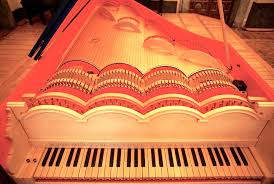
It’s startling to think of the multitude of objects Leonardo da Vinci conceptualized, and it’s a tad heartbreaking to realize he saw so few of them actualized.
But nearly 500 years after da Vinci sketched his plans for a musical instrument he dubbed the Viola Organista, Polish concert pianist Slawomir Zubrzycki spent more than 5,000 hours making da Vinci’s idea a reality.
In 2013, Zubryzcki debuted the instrument at the Academy of Music in the southern Polish city of Krakow. As reported in the Sydney Morning Herald, Zubryzcki said, “This instrument has the characteristics of three we know: the harpsichord, the organ and the viola da gamba.”
Watch the performance in the YouTube video below; you’ll recognize the pieces. And if you listen to the audio without watching Zubryzcki at the keyboard, you may think you’re hearing a small chamber ensemble rather than one person playing a single instrument.
Any piano student can tell you that their instrument has a total of 88 keys, but that isn’t always the case. While working on transcriptions of Bach organ works for the piano, composer and pianist Ferruccio Busoni found that the standard keyboard was unsatisfactory.
In order to mimic the sound of the largest organ pipes, Busoni worked with Ludwig Bösendorfer of the eponymous piano factory to create an instrument with an extended the piano’s lower register. The result was the Model 290 Imperial, a 97-keyed piano that encompasses eight full octaves.
The first prototype was built in 1909. Its extraordinary sound inspired major composers, including Bartók, Debussy and Ravel. Several music pieces composed require an Imperial to ensure that they are played true to the original.
Garrick Ohlsson once called it the “Rolls Royce of pianos.”
. 1934 ~ Shirley Boone (Foley), Singer, married to singer Pat Boone since 1953
. 1934 ~ Shirley MacLaine, Entertainer, Academy Award-winning actress, sister of actor Warren Beatty
. 1934 ~ Laurens Hammond, in Chicago, IL, announced news that would be favored by many churches across the United States. The news was the development of the pipeless organ — and a granting of a U.S. patent for same.
Read more about the Hammond Organ
. 1936 ~ Benny Goodman and his trio recorded China Boy for Victor Records. GeneKrupa, Teddy Wilson and Goodman recorded the session in Chicago.
. 1937 ~ Joe Henderson, Musician, composer. He played live in sextet at San Francisco’s Keystone Korner and also played with Blood Sweat and Tears
. 1942 ~ John Williams, Guitarist
. 1942 ~ Barbra Streisand, American actress and singer of popular music, GrammyAward-winning Best Female Pop Vocalist (1963-1965, 1977, 1986), Best Songwriter in 1977, Academy Award-winning Best Actress, Oscar for Best Song (Evergreen in 1976)
Read a news item about Barbra Streisand
. 1943 ~ Richard Sterban, Musician: bass, singer with The Oak Ridge Boys
. 1945 ~ Doug Clifford, Drummer with Creedence Clearwater Revival
. 1954 ~ Billboard magazine, the music industry trade publication, headlined a change to come about in the music biz. The headline read, “Teenagers Demand Music with a Beat — Spur Rhythm and Blues” … a sign of times to come. Within a year, R&B music by both black and white artists became popular.
. 1959 ~ Your Hit Parade ended after a nine-year run on television and many more years on radio. The show debuted in 1935. On the final show, these were the top five songs on Your Hit Parade:
1 Come Softly to Me
2 Pink Shoelaces
3 Never Be Anyone Else but You
4 It’s Just a Matter of Time
5 I Need Your Love Tonight
. 1965 ~ Game of Love, by Wayne Fontana and The Mindbenders, made it to the top spot on the Billboard music chart. Game of Love stayed for a short visit of one week, before Peter Noone and Herman’s Hermits took over the top spot with Mrs. Brown You’ve Got a Lovely Daughter.
. 1968 ~ Climaxing his birthday celebration, the Who’s drummer, Keith Moon, accidentally drove a Lincoln Continental into a hotel swimming pool in Flint, Mich.
. 1969 ~ The singing family, The Cowsills, received a gold record for their hit single, Hair, from the Broadway show of the same name.
. 2000 ~ Singer and pianist George Paoa, whose smooth voice and mellow style introduced generations of tourists to Hawaiian music, died. He was 65. For more than 40 years, Paoa entertained vacationers at isle hotels with a repertoire of old Hawaiian standards, light jazz and hapa-haole music, a tourist favorite with its blend of English lyrics and Hawaiian melodies. Paoa played with the jazz recording star Martin Denny in the 1960s and two of his children sang on his 1994 album, “Walking in the Sand.”
. 2001 ~ Jazz singer Al Hibbler, who was known for his rich baritone and exaggerated phrasing, died at the age of 85. Hibbler is best remembered as one of Duke Ellington’s most colorful vocalists. Hibbler went solo in the 1950s, and enjoyed his biggest hit,Unchained Melody. Another of his hit songs was After the Lights Go Down Low. The Mississippi native, who was blind from birth, joined Ellington’s band in 1943 and became popular for singing tunes with the band that included Do NothingTill You Hear From Meand I’m Just a Lucky So and So. Hibbler’s penchant for distorted vocal effects were described by Ellington as “tonal pantomime.” Hibbler started his professional singing career in the 1930s, after vocal studies at the Conservatory for the Blind in Little Rock, Ark. After winning amateur concerts in Memphis, Tenn., he led a group in Texas and toured with Kansas City bandleader Jay McShann in 1942. Hibbler went on to record with Ellington’s son, Mercer Ellington, Billy Taylor, Count Basie, Gerald Wilson and Rahsaan Roland Kirk. He sang When the Saints GoMarching In at Louis Armstrong’s funeral.
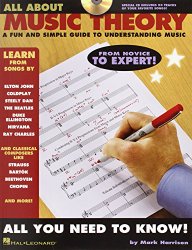
As all my students know, I teach theory with all piano and organ lessons. Sometimes, it’s from a theory book that matches a lesson book, sometimes on the fly on an “as needed” basis.
This book looks like it would be interesting to use as a review or to look ahead and see what’s coming. I have just ordered a copy for the studio if you want to check it out at the next lesson.
If you wish there was a fun and engaging way to help you understand the fundamentals of music, then this is it. Whether it’s learning to read music, understanding chords and scales, musical forms, or improvising and composing, this enjoyable guide will help you to finally start understanding the structure and design of music.
This fun-filled, easy-to-use guide includes:
* Music notation
* Scales and modes
* Melody harmonization and counterpoint
* Chord progressions
* Song form and structure
Listen and learn with the CD that has 90 tracks, including over 50 popular songs such as:
* Beauty and the Beast
* Candle in the Wind
* Imagine
* In the Air Tonight
* Killing Me Softly with His Song
* Let It Be
* Message in a Bottle
* Misty
* Satin Doll
* Take the ‘A’ Train
* Unchained Melody
* What’d I Say
* and more!
What better way to get things started than with a party?
At Wolfie, that means the first worldwide event in honor of Mozart’s birthday – taking place this Tuesday, January 27th! Every musician – concert pianist or 2nd-grader – playing a score on the Wolfie app on January 27th will automatically appear on an interactive world map at www.wolfiepiano.com.
Share this special event with colleagues and inspire your students by enabling them to take part in a worldwide event that will connect them to piano players around the world! It all starts by joining the event, here.
Finally, we’d love to hear from you. You, Mozart’s ambassadors, are keeping his legacy alive and instilling the gift of music appreciation into young peoples’ lives every day.
See you on Tuesday – on the map!
~~~~~~~~ Wolfgang Amadeus Theophilus Mozart lived between 1756 and 1791. He is considered to be a classical composer. Mozart, born in Salzburg, Austria, began composing before most children go to kindergarten. By the time he was six he had played the piano and violin in public.
A Wunderkind, a prodigy of the first rank before the age of five, Mozart astounded the musical world with compositions of unsurpassed brilliance. His father Leopold had recognized his talent at the age of three and immediately set out to teach him to play the harpsichord, violin, and organ. Mozart and his sister made their debut in Munich when he was just six and traveled about Europe together, performing at courts and before royalty, always with success. While still a little child Mozart was inventing symphonies, sonatas, and his first opera. Legends abound about how Mozart could hear an entire work in his head and write everything down without making even one change.
As a child performer he was often treated as a freak. People would cover his hands as he played the piano, make him compose tunes on the spot and perform all sorts of other musical tricks.
In 1787 Mozart became court composer to Joseph II. He played for royalty, received commissions from aristocrats and in his short lifetime composed nearly a thousand masterpieces, including symphonies, operas, serenades, sonatas, concertos, masses, vocal works, and church works.
Mozart was a prolific composer writing masterpieces using every form of music, including his operas “The Marriage of Figaro” (based on a play by Pierre Beaumarchais), “Don Giovanni”, “Cosi fan tutte” and “The Magic Flute”. His mastery of instrumental and vocal forms, from symphony to concerto and opera, was unrivalled in his own time and perhaps in any other.
Composing the Requiem Mass commissioned for Count Walsegg, he felt he was writing his own requiem and he died before it was finished.
Wolfgang Amadeus Mozart, composer, died in Vienna Austria at the age of 35, penniless, on December 5th, 1791, of malignant typhus. Mozart, the precocious child prodigy, composed several pieces that are deemed central to the classical era. Though he ranked as one of the greatest musical genius, he did not live a life of affluence as none of his compositions earned him a decent commission but the world is forever enriched by such works as Eine Kleine Nachtmusik, the Symphonies No. 38 through 41 and the Coronation Mass.
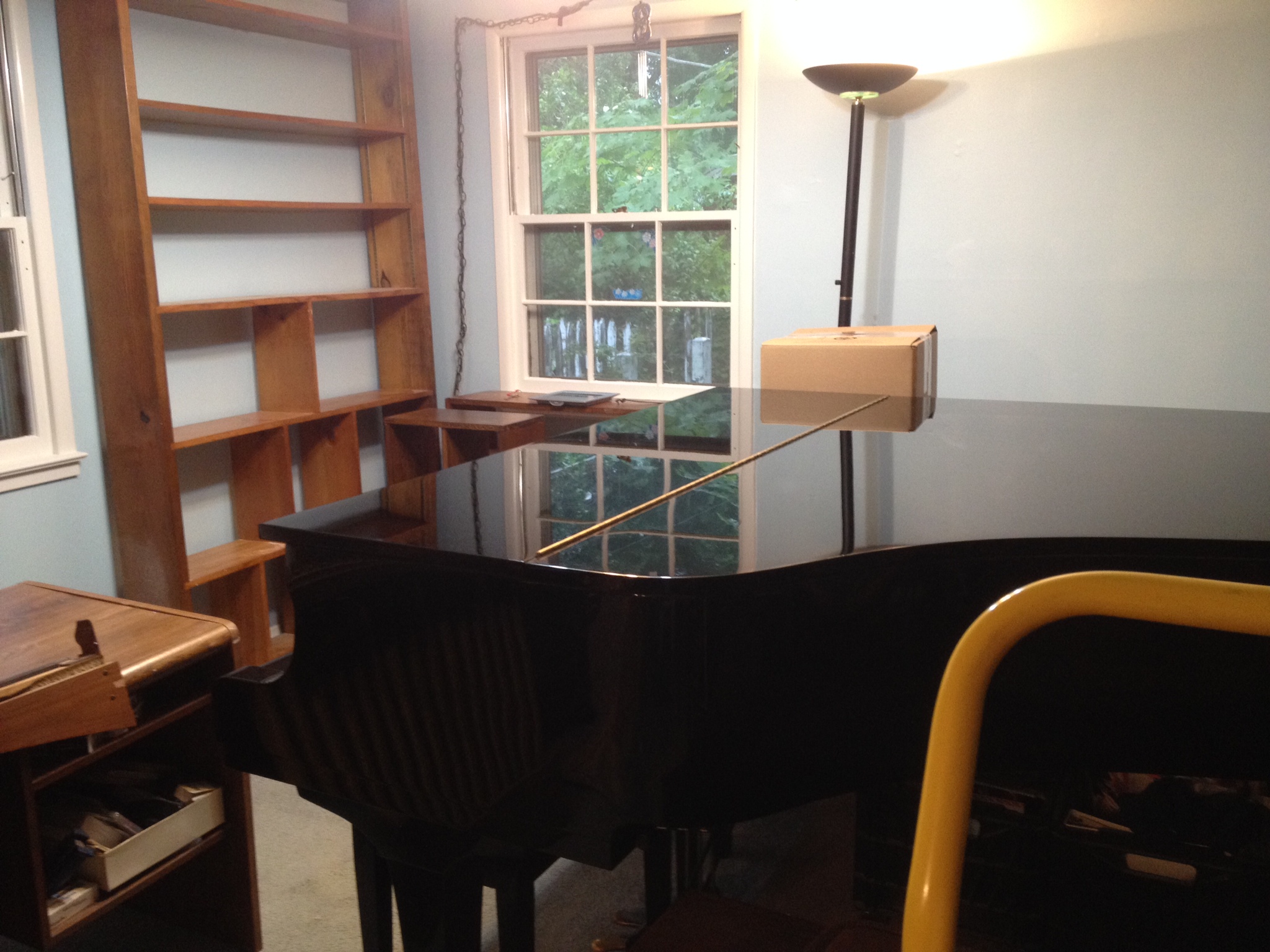
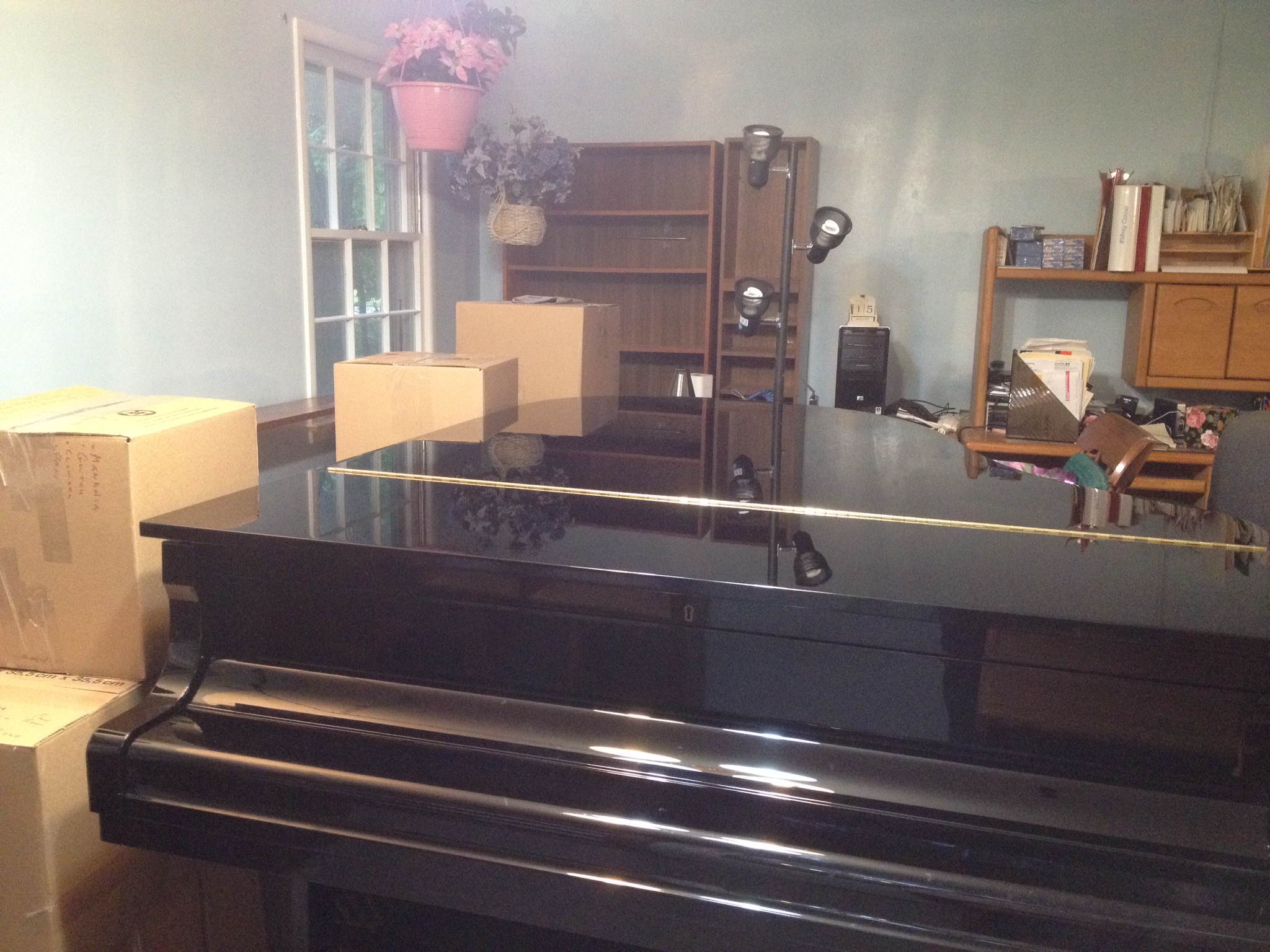
Now, it’s time to start putting the furniture back where it goes, although I think I’m leaving the piano more in the center of the room for now. It shows the piano off better and I’ll have a place to put the digital keyboard against the wall and closer to the piano.
After a lot of thought, the organs will stay in their respective places next to each other but the music for them will be moving nearer to them.
Then putting all the other books away. I have an iPad app which is a database that adds items by taking pictures of their barcodes. Hopefully, this will help organize some of my books.
It won’t be done by Monday but it will be done enough for teaching purposes!






 Wolfgang Amadeus Theophilus Mozart lived between 1756 and 1791. He is considered to be a classical composer. Mozart, born in Salzburg, Austria, began composing before most children go to kindergarten. By the time he was six he had played the piano and violin in public.


 MaryO'Studio