January 2 ~ Today in Music History

today


• 1732 ~ Franz Xaver Brixi

• 1837 ~ Mily Balakirev, Russian Composer and collector of Russian Music
More information about Balakirev

• 1904 ~ James Melton, Singer in La Traviata

1905 ~ Sir Michael Tippett, British Composer and librettist
More information about Tippett

• 1917 ~ Vera Zorina (Eva Hartwig), Dancer, actress

1922 ~ Renata (Ersilia Clotilde) Tebaldi, Opera diva, lyric soprano. She debuted as Elena in Boito’s Mefistofele in 1944 and at the Metropolitan Opera in Verdi’s Otello in 1955
More information about Tebaldi
Anniversary of Tebaldi’s death

• 1930 ~ Julius LaRosa, Singer

• 1932 ~ Freddy Martin formed a new band and was hired to play the Roosevelt Grill in New York City. Martin became one of the big names in the music business. Merv Griffin later became Martin’s lead vocalist.

• 1936 ~ Roger Miller. American country-music singer, guitarist and songwriter, 11 Grammys in 1964-65

• 1941 ~ The Andrews Sisters recorded Boogie Woogie Bugle Boy on Decca Records. LaVerne, Maxine and Patti Andrews recorded in Los Angeles and the song was heard in the movie, “Buck Privates”, starring Bud Abbott and Lou Costello.

• 1949 ~ Chick Churchill, Keyboards with Ten Years After

• 1974 ~ Singing cowboy Tex Ritter died of a heart attack at the age of 67. His son, John, became a significant television star in “Three’s Company”, and in movies, including “Problem Child”.

• 1977 ~ Erroll Garner passed away

• 1980 ~ Officials of the Miss America Pageant announced that Bert Parks would not return as host of the annual beauty contest in Atlantic City, New Jersey. Parks sang There she is, Miss America for 25 years. He was replaced by Gary Collins.

• 1983 ~ The smash musical, “Annie”, closed on Broadway at the Uris Theatre after

• 2,377 performances: the sixth longest-running show on the Great White Way. The five longest-running shows at the time were: “Fiddler on the Roof”, “Life With Father”, “Tobacco Road”, “Hello Dolly”and “Music Man”.

• 2003 ~ Bluegrass music veteran James McReynolds, who with his mandolin-playing brother Jesse formed the legendary “Jim & Jesse” duo honored in the Country Music Hall of Fame, has died. Backed by their band, “The Virginia Boys,” their first single The Flame of Love, backed byGosh I Miss You All the Time, spent weeks on the national charts. Other songs regarded as Jim & Jesse classics are Cotton Mill Man, Diesel on My Tail, Are You Missing Me and Paradise. Jim’s enhanced high tenor and guitar playing combined with Jesse’s deep-voiced singing and unique mandolin style to produce their distinctive sound. Jesse developed a cross-picking technique and “split-string” style few could duplicate. The brothers’ performing career was interrupted by service in both World War II and the Korean War. They joined the Grand Ole Opry in Nashville in 1964, and their numerous honors included induction into the Country Music Hall of Fame’s “Walkway of Stars” and the International Bluegrass Music Association’s Hall of Honor.

• 2004 ~ Pioneering black actress and singer Etta Moten Barnett, who sang at the White House and appeared with Fred Astaire and Ginger Rogers in Flying Down to Rio, died. She was 102. Barnett was unique because of the romantic, sexy figures she portrayed – as opposed to the motherly nannies and maids that most black actresses were cast as in early Hollywood films. Barnett moved to New York City in her 30s and quickly landed a spot singing with the Eva Jessye Choir. The lead in the Broadway show Zombie followed. She later dubbed songs for actresses and was cast in the Busby Berkeley film Gold Diggers of 1933. In the 1933 film Flying Down to Rio, Barnett was cast as a Brazilian entertainer who sang The Carioca while Astaire and Rogers danced. The song was nominated for an Academy Award as best song. Her voice caught the attention of President Franklin D. Roosevelt, who invited her to sing at his White House birthday party. In 1942, she appeared as Bess in Porgy and Bess on Broadway and then toured with the show until 1945. Suffering from a strained voice, she gave her last formal concert in 1952


January 1 ~ Today in Music History

Happy-New-Year


Happy New Year!

• 1701 ~ Johann Joachim Agrell, Composer
More information about Agrell

• 1735 ~ Paul Revere, American patriot and music engraver

• 1764 ~ In a stunning demonstration of prodigious talent, the Royal Family at Versailles in France was treated to a brilliant recital by an eight year old musician. His name was Wolfgang Amadeus Mozart.

• 1878 ~ Edwin Franko Goldman, Composer

1900 ~ Xavier Cugat (Francisco de Asís Javier Cugat Mingall de Brue y Deulofeo). Spanish violinist, composer and band leader, married to Abbe Lane and Charo
More information about Cugat

• 1916 ~ Earl Wrightson, Actor, singer

• 1923 ~ Milt Jackson, Vibes with The Modern Jazz Quartet

• 1925 ~ Lucrezia Bori and John McCormack of the famous Metropolitan Opera in New York City made their singing debuts on radio this day. The broadcast over what was WEAF Radio (now WABC) encouraged others to sing on radio. Some of those were Hootie and the Blowfish, and Barry Manilow.

• 1928 ~ Frank Pourcel, Composer, violinist

• 1942 ~ Country Joe McDonald, Singer with Country Joe & the Fish

• 1953 ~ A sad day in country music, as the legendary Hank Williams died at the young age of 29. Undisputedly, the biggest star in the history of country music, Hank Williams’ legacy is being carried on by his son, Hank Williams, Jr.

• 1955 ~ Elvis Presley appeared at The Eagles Hall in Houston Texas. Presley went on to play over 250 shows in 1955.

• 1968 ~ A group known as The Blue Velvets decided to change its name this day and it’s a good thing they did. The new name soon became a national pop music favorite as Creedence Clearwater Revival climbed to stardom.

• 1972 ~ Maurice Chevalier passed away

• 1984 ~ Alexis Korner passed away

• 2000 ~ Ray Walston, who found commercial success playing a comical devil in the play “Damn Yankees” and an extraterrestrial on the sitcom “My Favorite Martian,” of natural causes at the age of 86. Walston caught the biggest break of his career when he won a Tony in 1955 for his performance in Broadway’s “Damn Yankees.” The smash musical told the story of a frustrated baseball fan who sells his soul. His screen debut came in the 1957 movie “Kiss Them For Me” with Cary Grant, and the next year he played the devil again in the film version of “Damn Yankees.” Walston snagged the role that would stick with him for a lifetime – that of a lovable alien on the TV show “My Favorite Martian” in 1963. The show was immensely popular, but Walston felt so typecast that he tried to highlight his dramatic abilities by returning to the stage when the TV comedy went off the air in 1966. He stayed in theater for several years before re-emerging with a succession of solid supporting roles in movies and television. Nearly 30 years after the end of the lighthearted “My Favorite Martian,” Walston’s role on “Picket Fences” as acerbic Judge Henry Bone earned Walston successive Emmys in 1995-96.


maryorhhappynewyear

At a Manhattan Soup Kitchen, Food on the Table and Chops on the Piano – NYTimes.com

The church’s soup kitchen program fills quickly, bringing a din of chitchat and the scraping of chairs on floor tiles and the thud of trays being knocked against the inside of a trash can.

But above it all, each and every weekday, hovers another sound, wholly unexpected: the clear, clean notes of a concert grand piano, there in a far corner.

On a recent Wednesday, like every Wednesday, it is not so much being played as it is being worked over by a man who seems to be warming up for a gig at a candlelit downtown jazz club.


Read more and see a video At a Manhattan Soup Kitchen, Food on the Table and Chops on the Piano – NYTimes.com.

What Instrument Should You Learn to Play in 2015?


Picking which instrument to learn can be a challenge within itself which is exactly why we created this fun quiz!

Just answer 10 questions and we’ll recommend an instrument for you to learn. Happy New Year and Happy Playing!

Take the test here: What Instrument Should You Learn to Play in 2015 | JoyTunes.


Piano Maestro Update!

piano-maestro-parent

It’s now going to be even easier for students’ parents to get involved with Piano Maestro.

The author of Piano Maestro, JoyTunes, will automatically send parents an email which will update them on their child’s progress through engaging content including the week’s highlights, fun trivia facts related to songs played, skills learned and shared moments.

Please take advantage of this great new feature so that your student can get the most of out of piano lessonsl

Local Musical Events this Sunday!

christmas-music

The Pender UMC Choir, Handbells, Orchestra and Liturgical Dancer will present Joel Raney’s Christmas Cantata, Celebrate the Season, at 8:15 and 11:00 am on Sunday, December 7.

Contemporary and upbeat, this superb cantata celebrates the excitement, joy and true meaning of the Christmas season. Joel Raney retells the Christmas story through a unique partnering of creative, original songs with traditional carols. Most of the originals incorporate strains from traditional carols, weaving a tapestry with just enough familiarity  to warm our hearts and with enough originality to surprise our ears and lift our spirits. The styles he uses range from traditional classical, to jazz and everything in between.


At Pender’s neighbor, Christ Presbyterian:

The Cathedral Brass will perform “A Cathedral Brass Christmas” at Christ Presbyterian Church, Fairfax, on Sunday, December 7th at 4:00 pm. The concert features beloved Christmas carols and other holiday favorites, including ‘Twas the Night Before Christmas, narrated by Alan Cole.

Other selections includeLeRoy Anderson’s Suite of Carols, Antonio DiLorenzo’s The Toymaker, and Alfred Reed’s Joyeux Noel. Jazz trumpeter Roger Rossi, former member of the Army Blues, will be featured. The concert is free; voluntary donations are gratefully accepted.

Cathedral Brass is a brass choir based at Vienna Presbyterian Church and performs under the direction of L. Thomas Vining.

Preserving the Piano during the Holidays and Beyond – Preserving the Piano During the Holidays and Beyond Blog from ArtfixDaily.com

Jim Vogelman, President of JMV Classics, a Florida-based piano design company that specializes in creating unique, custom art case pianos, offers helpful tips on piano maintenance:

Maintaining one’s piano may also help maintain one’s well-being  

Recent studies show that active participation in music learning can preserve a person’s mental and physical health, so whether playing or listening to the piano during the holidays, one can expect to experience the joy of the instrument as well as the joy of the season.

Tuning: The amount of tuning depends on use and environment. We advise that a new or restrung piano may take up to four to six tunings during the first year, but in general, it’s best to have it tuned at least twice a year. A good rule of thumb is to tune when the seasons change. If planning for a professional pianist at a holiday party, be sure the piano is well tuned and in good working order.

Polish: If the piano has been protected using a high gloss finish, dust with a soft, dry cloth, free of chemicals. Use a cloth dipped in mild dish soap and water to clean, but wring the cloth tightly and follow with a dry, soft cloth. For satin finish, dust with a soft, dry chemical-free cloth. Any high quality polish or lemon oil can be used as a wood preserving step, especially if holiday cheer might be spilled during the festivities. For the hand painted finish of an art case piano, we recommend employing a highly skilled, professional art cleaner, as these finishes can be as delicate and important as any fine work of art and as treasured as any museum quality piece.

The Keys: Keep keys dust free, but clean only when necessary, using a moist cloth, then immediately wipe dry. Never spray keys with a commercial cleaner–too much moisture may cause the wood to swell. This season, best to keep children’s sticky fingers or hands heavy with hors d’oeuvres at bay!

Humidity: Humidity is perhaps the single most potentially destructive climate challenge for a piano. Damp chasers only work when the piano lid is closed. For areas where high humidity is a way of life, air conditioning or a dehumidifier in a closed space is always the best solution, especially if used on a regular basis. Once a month, open the piano lid for a few days while the A/C is running to allow for dry air circulation. In dry weather, open the lid and the windows, allowing fresh flowing air to circulate around the piano.

Maintaining one’s piano may also help maintain one’s well-being,” Vogelman says. “Recent studies show that active participation in music learning can preserve a person’s mental and physical health, so whether playing or listening to the piano during the holidays, one can expect to experience the joy of the instrument as well as the joy of the season.”

Read the entire article at Preserving the Piano during the Holidays and Beyond – Preserving the Piano During the Holidays and Beyond Blog from ArtfixDaily.com.

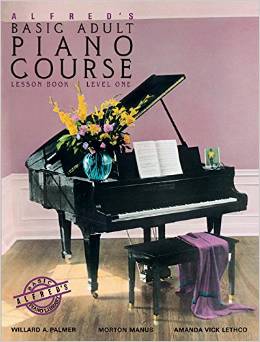
What I’ve Learned from Taking Piano Lessons as an Adult

alfred-adult


It’s never too late to pick it up again

One of my biggest fears in returning to playing music was that I would have to start over from scratch—which, for me, would mean erasing a decade of lessons I’d absorbed throughout my childhood and adolescence and going back to the very beginning. Thankfully, a lot of what I’d learned came back to me quickly. There were a few times when Bryan would say words like “mixolydian scale” or “dominant chord” and I would stare at him like an infant who was just asked to point at their nose for the first time. But as soon as he would explain it, it would jog my memory and we’d be on our way.

Another thing that I didn’t expect was that studying jazz would require me to learn a whole new vocabulary and deepen my understanding of music theory, and there were moments where the learning curve felt steeper than I remembered. But, much like learning a new language or picking up any other new skill, it just required a little patience and repetition and practice for it to wedge itself into my brain.

Read the entire article at What I’ve learned from taking piano lessons as an adult | Local Current Blog | The Current from Minnesota Public Radio.

November 19 ~ Today in Music History

today


• 1724 ~ First Performance of J. S. Bach’s Sacred Cantata No. 26 Ach wie flüchtig, ach wie nichtig performed on the 24th Sunday following Trinity. A portion of Bach’s second annual Sacred Cantata cycle in Leipzig, 1724-25.

• 1736 ~ J. S. Bach named court composer by Poland’s King Agustus III.

• 1739 ~ First Performance of Jean-Philippe Rameau‘s opera Dardanus in Paris.

• 1826 ~ Composer Felix Mendelssohn and his sister Fanny performed his overture to “A Midsummer Night’s Dream” for the first time.

• 1828 ~ Death of Austrian composer Franz Schubert in Vienna, at the age of 31 from typhus.   He is buried near Beethoven.

• 1859 ~ Mikhail Ippolitov-Ivanov, Russian composer and conductor
More information about Ippolitov-Ivanov

• 1874 ~ Birth of composer Karl Adrian Wohlfahrt.

• 1875 ~ First Performance of Tchaikovsky‘s Third Symphony, in Moscow.

• 1888 ~ Piano Debut in Boston of composer Edward MacDowell with the Kneisel Quartet.

• 1905 ~ Tommy Dorsey, American trombonist and bandleader

• 1923 ~ First Performances of Béla Bartók‘s Five Dances and Zoltán Kodály‘s Psalums Hungaricus in Budapest, marking the 50th anniversary of the union of cities Buda and Pest.

• 1936 ~ Birth of classical music commentator (Detroit Symphony broadcasts) Dick Cavett, in Kearney, Nebraska. ABC-TV talk show host (Dick Cavett Show).

• 1936 ~ First concert recorded on magnetic tape with the London Philharmonic orchestra conducted by Sir Thomas Beecham at BASF’s own concert hall in Ludwigshaven, Germany.

• 1937 ~ Ray Collins, Songwriter

• 1938 ~ Hank Medress, Singer with The Tokens, record producer

• 1943 ~ Fred Lipsius, Piano, sax with Blood Sweat & Tears

• 1943 ~ Stan Kenton and his orchestra recorded Artistry in Rhythm, the song that later become the Kenton theme. It was Capitol record number 159. The other side of the disk was titled, Eager Beaver.

• 1944 ~ Agnes Baltsa, Greek mezzo-soprano

• 1954 ~ Sammy Davis, Jr. was involved in a serious auto accident in San Bernardino, CA. Three days later, Davis lost the sight in his left eye. He later referred to the accident as the turning point of his career.

• 1957 ~ American conductor Leonard Bernstein named Music Director of the New York Philharmonic. First American-born and educated conductor named to head an important American Orchestra.

• 1961 ~ A year after Chubby Checker reached the #1 spot with The Twist, the singer appeared on The Ed Sullivan Show to sing the song again. The Twist became the first record to reach #1 a second time around, on January 13, 1962.

• 1962 ~ For the first time, a jazz concert was presented at the White House. Jazz had previously been served as background music only.

• 2000 ~ First Performance of Philip Glass‘ Double Concerto for Timpani and Orchestra, by the American Composers Orchestra. Lincoln Center in New York.

2004 ~ Composer Cy Coleman, who wrote the musical “Sweet Charity” and whose songs included such Frank Sinatra classics as Witchcraft, Big Spender and The Best is Yet to Come, died at the age 75
More information about Cy Coleman

Adapted from http://www.oconnormusic.org/month-nov.htm