
The video below was recorded by my friend (Rev. Kevin Havens aka RevKev) and his band, JC Reigns. A tribute to moms for Mothers Day, for all moms in Heaven and on earth.

The video below was recorded by my friend (Rev. Kevin Havens aka RevKev) and his band, JC Reigns. A tribute to moms for Mothers Day, for all moms in Heaven and on earth.

Students at the O’Connor Music Studio know that music theory is always a part of lessons. I strongly believe that theory is needed so that students understand what they are playing and why.
To me, theory work is just as important as playing. A firm knowledge of musical structure makes playing everything easier.
Music knowledge learned through piano lessons transfers easily to other musical activities. Students in Fairfax County Public Schools, students learn to play recorder. Students are sometimes surprised to learn that they already know all the notes – from their piano lessons!
When you sing in a choir, harmonize with Sweet Adelines, play an instrument in your school or community band/orchestra, join your church’s handbell choir (note: Pender UMC has an excellent Handbell program), teach yourself guitar – theory will help in every instance. By learning to read, write, and understand this musical language, many more musical opportunities will be made available the rest of your life.
Most piano methods come with a theory book that matches page by page what concepts are being learned in the lesson books. I actually recommend that students do the theory first when they get home, while the concepts are still fresh in their minds.
If the student is not in a piano method, I’m starting to use the Theory Time series. Book One covers music alphabet, introduction to keyboard and staff, stem rule, steps & skips on a keyboard and staff, repeated notes, dynamics, treble clef lines & spaces, bass clef lines & spaces, quarter note & rest, half note & rest, whole note & rest, dotted half note, bar lines, double bar line, measures, time signatures, rhythm drill, vocabulary, ear training and a review test. Free ear training videos for each ear training exercise are hosted on the Theory Time YouTube channel. The Grade One workbook is appropriate for beginning 1st, 2nd or 3rd grade students. This workbook includes 51 pages, 13 lessons and 8 Fun Sheets.
For adults and more advanced students, I have a copy of All About Music Theory: A Fun and Simple Guide to Understanding Music which can be used as a review or a “try before buy”.
Stop procrastinating and go do your theory!

• 1914 ~ Carlo Maria Guilini, Italian conductor
• 1914 ~ Hank Snow (Clarence Eugene), Canadian-born American country-music singer, guitarist and songwriter, Country Music Hall of Fame
• 1937 ~ Sonny Curtis, Guitarist with Buddy Holly & The Crickets, songwriter
• 1939 ~ Nokie Edwards, Guitarist with The Ventures
• 1939 ~ Ray Eberle recorded Stairway to the Stars with the Glenn Miller Orchestra for Bluebird records.
• 1941 ~ Pete Birrell, Guitarist with Freddie & The Dreamers
• 1942 ~ Tommy Roe, Singer, songwriter
• 1944 ~ Richie Furay, Musician with Poco and Buffalo Springfield
• 1945 ~ Steve Katz, Record producer; musician: guitar, harmonica, singer with Blood, Sweat and Tears
• 1949 ~ Billy Joel, Grammy Award-winning American rock singer, songwriter and pianist Inducted into the Rock and Roll Hall of Fame on 3/15/99
More information on Joel
• 1962 ~ The Beatles signed their first recording contract. George Martin was hired to be the group’s producer and the band would record for EMI Parlophone.
• 1964 ~ Hello Dolly! became the nation’s top pop record. The milestone put Louis Armstrong on the Billboard music chart in the top spot for the first time in his 41-year music career. Later, ‘Satchmo’ was cast in the movie version of Hello Dolly!
• 1965 ~ Vladimir Horowitz played his first public concert in 12 years at Carnegie Hall in New York City. The audience applauded the piano virtuoso with a standing ovation that lasted for 30 minutes.
• 1991 ~ Rudolph Serkin passed away. He was a Bohemian-born pianist who was widely regarded as one of the greatest Beethoven interpreters of the twentieth century.
• 2001 ~ James Myers, whose two-minute, eight-second tune Rock Around the Clock is considered the granddaddy of all rock ‘n’ roll songs, died of leukemia. He was 81. The song was No. 1 for eight weeks and went on to sell 22 million copies worldwide. It has been recorded by more than 500 artists, from Mae West to the Sex Pistols, and has been used in more than 40 movies. Myers, who also wrote under the name Jimmy DeKnight, penned more than 300 songs and had bit parts in movies and TV shows, but Rock Around the Clock remained his most famous work.
On Monday, Google’s homepage ran a picture to celebrate the 360th birthday of Bartolomeo Cristofori, inventor of the piano and keeper of instruments for the Medicis in Florence. The instrument Cristofori invented was originally called a “harpsichord with soft and loud” even though the distinction between the two is large (the harpsichord produces sound by plucking strings, the piano by striking them with a hammer). Only three of the newfangled instruments he made – all of them dating from the 1720s – survive.
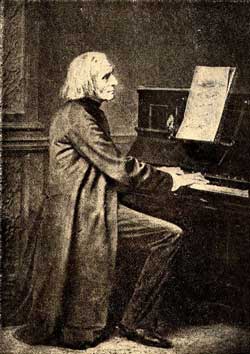 More than a century later the piano recital was devised. It was Liszt who first decided to have the whole stage to himself, and set the fashion for dispensing with the mixture of celebrities and supporting acts that had prevailed up to that time. As he wrote about his audacity to a friend: “Le concert, c’est moi!” And he called his appearance at the Hanover Square Rooms in London in June 1840 not a concert but a recital.
The composer-pianists of the day concentrated on their own works. Liszt set a marker in this regard, too, choosing music that ranged from Bach through Beethoven and up to Chopin. He set the pattern for playing from memory, and cemented the platform layout we know today by turning the then-conventional position of the instrument on the stage through 90 degrees. He was what we would now call a sex symbol as well as a star musician, and the new arrangement allowed the audience to see his impressive profile as well as to hear the instrument more clearly. The standards he set have survived without significant alteration right up to the present.
 1829 ~ Louis Moreau Gottschalk, American pianist and composer
Listen to Gottschalk’s music
More information on Gottschalk
• 1948 ~ Oscar Hammerstein I, Playwright, producer
• 1910 ~ Mary Lou Williams, American jazz pianist, composer and arranger
• 1911 ~ Robert Johnson, Blues Hall of Fame, singer, songwriter, guitarist, inducted into Rock and Roll Hall of Fame in 1986
• 1941 ~ Anita O’Day recorded Let Me Off Uptown on Okeh Records with Gene Krupa and his band.
• 1943 ~ Toni Tennille, Singer
• 1944 ~ Gary Glitter (Paul Gadd), Singer
• 1945 ~ Keith Jarrett, American jazz pianist and composer

“Happy Birthday” arranged in the style of Johannes Brahms
“Happy Birthday” in the style of Tchaikovsky
• 1833 ~ Johannes Brahms, German composer
More information about Brahms
• 1840 ~ Piotr Ilyich Tchaikovsky, Russian composer
Listen to Tchaikovsky’s music
Read about Tchaikovsky
Read quotes by and about Tchaikovsky
More information about Tchaikovsky
• 1919 ~ Eva (Evita) Peron, Argentina’s spiritual leader and wife of Argentina’s President, Juan Peron; actress on stage, film and radio; subject of the Broadway musical and film Evita
• 1927 ~ Elisabeth Söderström, Swedish soprano
• 1931 ~ Teresa Brewer (Breuer), Singer
• 1941 ~ Glenn Miller and his Orchestra recorded one of the great American music standards, Chattanooga Choo Choo
More information about Chattanooga Choo Choo
• 1942 ~ Felix Weingartner, Austrian conductor and composer, died; best known for his interpretations of Wagner and Beethoven.
• 1958 ~ Pianist Van Cliburn signed an artist’s contract with RCA Victor Records.
• 1966 ~ The Mamas & The Papas made the climb to the top of the Billboard pop music chart with Monday, Monday.
• 1995 ~ Ray McKinley passed away. He was an American jazz drummer, singer, and bandleader.
• 2002 ~ Buster Brown, a tap star and choreographer who danced on stage, in films and on television, died. He was 88. Brown was one of the last surviving members of the Copasetics, a legendary group of veteran dancers who performed together. Known for his quick rhythms and charm, Brown was a mentor and teacher for a younger generation of dancers. Brown, who was born James Brown in Baltimore, began his dancing career with a trio called the Three Aces and Speed Kings. He eventually began a solo career, appearing in the Hollywood musical “Something to Shout About” in 1943. Brown toured with the bands of Count Basie, Dizzy Gillespie and Duke Ellington, and was a featured dancer in Ellington’s concerts in the 1960s. He danced in the films “The Cotton Club” and “Tap” and on two public television specials. He also performed with the original casts of the Broadway musicals “Bubbling Brown Sugar” and “Black and Blue.” Brown toured South America with the Cab Calloway Orchestra and was commissioned by the State Department to perform in several African counties. He also taught master classes throughout Europe. Beginning in 1997, Brown was master of ceremonies at a weekly Sunday tap jam at the Manhattan club Swing 46, where young and old dancers stopped by to perform. He recently received an honorary doctorate from Oklahoma City University.
• 1896 ~ Puccini’s opera La Bohème made it’s world premiere in Venice
• 1913 ~ Carmen Cavallaro, Pianist: Chopin’s Polonaise, films: The Eddy Duchin Story, Hollywood Canteen, Out of this World, Diamond Horseshoe
• 1915 ~ George Perle, American composer and theorist
• 1918 ~ Godfrey Ridout, Canadian composer
• 1926 ~ Marguerite Piazza (Luft), Soprano and regular on TV’s Your Show of Shows
• 1942 ~ Richard Stilwell, American baritone
• 1945 ~ Bob Seger, Singer
• 1963 ~ Ted Weems passed away. He was an American bandleader and musician.
• 1983 ~ Kai Winding passed away. He was a Danish-born American trombonist and jazz composer.
The inventor of the piano, Bartolomeo Cristofori, is celebrated in today’s Google Doodle.
Born on 4 May, 1655 in Padua, northern Italy, Cristofori initially worked making harpsichords and clavichords and was employed by Prince Ferdinando de Medici, son of the duke of Tuscany.
He is believed to have started work on what would become a piano in the 1690s and the first one is thought to have been made in 1709.
In a harpsichord the strings are plucked, so it is not possible to play the notes softer or louder. Cristofori managed to design a mechanism that transferred the pressure placed on the keys to the hammers that hit the strings.
He called his invention a “gravecembalo col piano e forte” – a clavichord with soft and loud. The name was shortened to pianoforte and then simply piano.
Francesco Mannucci, a musician at the Medici court, described one early version as “a large ‘Arpicembalo’ [the name of a type of harpsichord] by Bartolomeo Cristofori, of new invention that produces soft and loud, with two sets of strings at unison pitch, with soundboard of cypress without rose”.
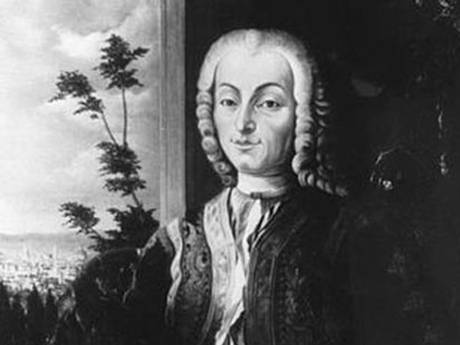
Bartolomeo Cristofori di Francesco was an Italian maker of musical instruments, generally regarded as the inventor of the piano.
While other musical instrument makers had attempted to solve the same problem with the harpsichord, Cristofori’s invention is generally regarded as the first real piano.
However, the piano was not popular at first and many felt it was too difficult to play. Cristofori died largely uncelebrated for an invention that would later change the musical world in 1731 – a year before the first sheet music for the piano appeared.
• 1844 ~ Richard D’Oyly Carte, British impresario; producer of Gilbert and Sullivan operettas. He also founded the Savoy Theater in London.
• 1912 ~ Virgil Fox, Organ virtuoso: credited for bringing the organ “to the forefront among classical concert instruments”
• 1919 ~ Betty Comden, Composer
• 1919 ~ Pete Seeger, American folk singer, banjo player, guitarist and songwriter
• 1924 ~ Joe Ames, Singer with The Ames Brothers
• 1926 ~ Jimmy Cleveland, Composer, musician, trombone
• 1928 ~ Dave Dudley (Pedruska), Country singer
• 1933 ~ James Brown, American rhythm-and-blues singer songwriter, dancer and instrumentalist, The Godfather of Soul, Rock and Roll Hall of Fame in 1986
• 1937 ~ Frankie Valli (Francis Castellucio), Falsetto singer with The Four Seasons
• 1939 ~ Beer Barrel Polka, one of the standards of American music, was recorded by The Andrews Sisters for Decca Records. Patti, Maxine and LaVerne turned this song into a giant hit.
• 1951 ~ In Britain, the King and Queen inaugurated the Festival of Britain on London’s South Bank and also opened the Festival Hall.
• 1956 ~ Most Happy Fella, a musical by Frank Loesser, opened at the Imperial Theatre in New York City. The show, an adaptation of They Knew What They Wanted by Sidney Howard, ran for 676 performances on Broadway.
• 1960 ~ The play, The Fantasticks, opened at the Sullivan Playhouse in New York City. It would later become the longest-running off-Broadway play.
• 1971 ~ NPR, National Public Radio, the U.S. national, non-commercial radio network, was born.
• 1997 ~ Narciso Yepes, famous Spanish classical guitarist, died.
• 2001 ~ Legendary jazz drummer Billy Higgins died at the age of 64. Higgins was one of the most recorded figures in the history of jazz, performing with John Coltrane, Dexter Gordon, Herbie Hancock, Milt Jackson, Charles Lloyd, Pat Metheny, Lee Morgan, Art Pepper and Joshua Redman, among others. He played with pianist Cedar Walton and was involved with the first edition of bassist Charlie Haden’s innovative Quartet West. Higgins came to prominence in the 1950s with saxophonist Ornette Coleman’s free jazz group, which included Haden and trumpeter Don Cherry. Higgins’ drumming laid the foundation for the group’s free jazz flights of fancy. That group sparked a decade of innovation in jazz that was carried on by the Coleman Quartet, Coltrane, George Russell, Charles Mingus and Albert Ayler, among others. Higgins’ ability to adapt his sense of swing to any genre made him one of the most in-demand drummers of the past four decades. Higgins helped found World Stage, a storefront performance space and teaching venue in Los Angeles’ Leimert Park. He was also on the jazz faculty at the University of California, Los Angeles. Higgins was awarded a National Endowment for the Arts Jazz Master’s Fellowship in 1997.
• 2002 ~ Yevgeny Svetlanov, a renowned Russian pianist, composer and former chief conductor of the Bolshoi Theater, died. He was 73. He was born in Moscow in 1928. He graduated from the Gnesinykh Musical- Pedagogical Institute and from the Moscow Conservatory. For several years he was conductor and chief conductor of the Bolshoi Theatre. From 1965 on he was artistic director and chief conductor of the State Symphonic Orchestra of USSR. He composed several symphonies, symphonic poems, chamber music works, and vocal-instrumental works. Svetlanov was the chief conductor of the Bolshoi Theater from 1963 to 1965, when he was named artistic director and chief conductor of the Soviet State Symphony. He was named a People’s Artist of the Soviet Union in 1968 and was awarded the Lenin prize in 1972 and the Order of Lenin 1978. He was given the Soviet State prize for creative achievement in 1983. Svetlanov was born in the Soviet Union in 1928. In 1951, he graduated from the Gnesin Institute of Music. Svetlanov graduated from the Moscow Conservatory in 1955 as a pianist, composer and conductor.

