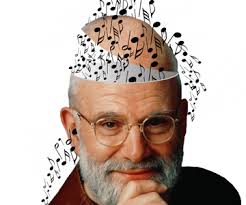
Writer and neurologist Oliver Sacks, who died on Sunday, August 30, 2015 at age 82, spent his life wondering on the myriad connections among biology, thought, emotion and perception.
For those of us who obsess over the how and why of music, Sacks’ work on sound and its effects on the brain – and vice versa – was particularly illuminating. His book on the subject, “Musicophilia: Tales of Music and the Brain,” remains essential reading for those who want to understand the mechanics of music.
Through bountiful research and mesmerizing case studies, Sacks addressed topics including music and amnesia, music therapy, musical prodigies and those who suffer from debilitating aural hallucinations.
• 1931 ~ Vaudeville star Eddie Cantor was heard for the first time – on NBC radio.
The Chase and Sanborn Hour became one of the most popular radio shows of the 1930s.
• 1941 ~ David Clayton-Thomas, Singer with Blood Sweat and Tears
• 1944 ~ Peter Cetera, Bass guitar, singer with Chicago
• 1952 ~ Randy Jones, Singer with The Village People
• 1954 ~ The cover of LIFE magazine was adorned with Judy Garland’s picture, with the caption, “Judy Garland takes off after an Oscar.” Garland had been nominated for her role in A Star is Born.
• 1956 ~ Joni Sledge, Singer with Sister Sledge
• 1968 ~ Clarence Carter received a gold record for his million-selling hit Slip Away. Carter earned two other gold records for Too Weak to Fight and Patches. The singer from Montgomery, Alabama had been blind since age one and taught himself to play guitar by age 11.
• 1969 ~ John Lennon and his wife, Yoko Ono, presented the Plastic Ono Band in concert for the first time. The appearance at the Toronto Peace Festival was Lennon’s first in four years. The first hit by the new group, Give Peace a Chance, made it to number 14 on the charts.
• 1986 ~ Captain EO, a 17-minute, three-dimensional, musical, science-fiction flick starring Michael Jackson, made its gala premiere at Disneyland in Anaheim, CA and at Disney’s Epcot Center in Orlando, FL this day. The innovative movie cost approximately $1,000,000 a minute to produce.
• 2001 ~ Barbara Matera, who made costumes for Broadway shows, the New York City Ballet and the Metropolitan Opera, died of a cerebral hemorrhage. She was 72. With her husband, Matera founded Barbara Matera Ltd. in 1968, which produced costumes seen in the current Broadway productions of The Lion King, Beauty and the Beast, Aida, Kiss Me, Kate and 42nd Street. As the costumer for the American Ballet Theater, Matera outfitted performers in productions including Swan Lake and Othello. Her film credits include The Great Gatsby, The Addams Family, Moonstruck, Indiana Jones and the Temple of Doom, The Age of Innocence and Death on the Nile. Matera also created the purple crystal-encrusted gown that Hillary Rodham Clinton wore at her husband’s first presidential inauguration.
Clara Schumann (1819-96) was much more than the wife of composer Robert Schumann. She was, quite simply, one of the greatest pianists of all time. A child prodigy, her technique and musicianship as a mature artist led to her being regarded as the equal of giants of the keyboard such a Franz Liszt, Sigismond Thalberg and Anton Rubinstein.
And from her girlhood until the end of her marriage she composed wonderful music, mostly solo piano music, but other works as well, including a concerto, a large number of songs and a sublime piano trio.
In her later years, she was an internationally famous teacher, and her performing career lasted more than six decades. She was, quite simply, a phenomenon.
1789 ~ Franz Xaver Richter died. He was an Austro-Moravian singer, violinist, composer, conductor and music theoretician who spent most of his life first in Austria and later in Mannheim and in Strasbourg, where he was music director of the cathedral.
• 1888 ~ Maurice (Auguste) Chevalier, French chanteur and actor
• 1891 ~ Adolph Weiss, American composer and bassoonist
• 1924 ~ Ella Mae Morse, Singer, first artist to record for Capitol Records
• 1931 ~ George Jones, ‘The Possum’, singer
• 1940 ~ Tony Bellamy, Guitarist with The Tornados
• 1940 ~ Johnny Long’s orchestra recorded the classic A Shanty in Old Shanty Town for Decca Records.
• 1943 ~ Maria Muldaur (d’Amato), Singer
• 1944 ~ Booker T. Jones, American rock-and-roll musician
• 1944 ~ Barry White, Singer, played piano on Jesse Belvin’s Goodnight My Love in 1955
• 1952 ~ Gerry Beckley, Singer in the Grammy Award-winning (1972) group, America
• 1952 ~ Neil Peart, Drummer with Rush
• 1966 ~ “Hey, hey we’re the Monkees — and we don’t monkey around…” The theme song from the NBC-TV show, The Monkees, kicked off a fun-filled weekly series on this day in 1966. Some 400 aspiring actors had auditioned for the Columbia television series by producer Don Kirschner. Davy Jones, a former English horse racing jockey; Michael Nesmith, a session guitarist; Peter Tork of the Phoenix Singers; and Micky Dolenz, who had appeared in the TV series Circus Boy were picked to be America’s answer to The Beatles. The four were picked to become the fabricated music group – not because they could sing, act or play musical instruments – but because they looked the parts. Dolenz and Jones were actors, Tork and Nesmith had some musical experience. The Monkees were the first made-for-TV rock group. Ironically – or maybe not – The Monkees TV show won an Emmy for Outstanding Comedy Series of 1967.
• 1966 ~ The Beatles received a gold record this day for Yellow Submarine.
• 1970 ~ James Taylor’s first single, Fire and Rain, was released. Taylor scored 14 hits on the music charts in the 1970s and 1980s.
• 1980 ~ An in-depth report on the death of Elvis Presley aired on ABC-TV’s 20/20. It raised so many unanswered questions that the official case concerning Elvis’ death was reopened.
• 1993 ~ Herman Nieland, organist/pianist/composer, died at the age of 82
• 2000 ~ Stanley Turrentine, a jazz saxophonist whose hit “Sugar” established him in the popular mainstream and influenced musicians in many other genres, died after suffering a stroke. He was 66. Turrentine played tenor saxophone, and mixed jazz with blues, rock, pop and rhythm and blues. He lived in Fort Washington, Md., outside Washington, D.C. “His impact on jazz was just astonishing,” said his agent, Robin Burgess. “He had a large impact on fusion, electric jazz and organ trio music.” Turrentine grew up in Pittsburgh, surrounded by music. His brother Tommy played trumpet, and the two played together in Pittsburgh while they were still in high school. Turrentine started his professional career playing with Ray Charles and Max Roach. He went solo in the 1960s and scored his biggest hit in 1970 with “Sugar,” which became something of a jazz standard. His blues-influenced riffs brought him commercial success with albums including “Stan ‘The Man’ Turrentine,” “Up at Minton’s,” and “Never Let Me Go.”
• 2003 ~ Johnny Cash, “The Man in Black”, died at the age of 71.
More information about Cash
We have established that regular practice routines will not happen without proactive piano parents. So, how can parents be proactive practice assistants even if they have never touched a piano?
Day 3. The Piano Piece Request Line: The most accomplished piano students always revisit pieces from their past to brush up on skills and to simply revisit some old favorites. During practice sessions, parents can get involved by requesting their children to perform some pieces that they have enjoyed hearing from past recitals, playing classes or just for fun.
• 1786 ~ Friedrich Kuhlau, German-born Danish composer and pianist
More information about Kuhlau
• 1847 ~ This night an audience at the Eagle Saloon in Pittsburgh, Pennsylvania enjoyed Foster’s rendition of his minstrel song, Oh! Susanna. Stephen got a bottle of whiskey for his performance.
• 1850 ~ Jenny Lind sang at the Castle Garden Theatre in New York City. It was her first performance in America. Lind’s voice was so sweet that she was nicknamed ‘The Swedish Nightingale’.
• 1911 ~ Alice Tully, American mezzo-soprano and music patron
1956 ~ Arvo Pärt (1935) Estonian composer
More information about Pärt
• 1942 ~ Lola Falana, Singer, actress
• 1944 ~ Mickey Hart, Drummer, songwriter with Grateful Dead
• 1944 ~ Phil May, Singer with The Pretty Things; Fallen Angels
• 1945 ~ Ernest Tubb recorded It Just Doesn’t Matter Now and Love Turns to Hate on the Decca label. Tubb became the second recording artist to have made a commercial record in Nashville, TN.
• 1946 ~ Dennis Tufano, Guitarist, singer with The Buckinghams
• 1952 ~ Tommy Shaw, Guitarist with Styx
• 1959 ~ On this day in 1959 a statue to honor songwriter George M. Cohan was unveiled in New York City’s Duffy Square. Ten thousand people watched and sang his “Give My Regards to Broadway.” Today crowds gather near the statue daily to buy half-priced theater tickets.
• 1962 ~ Ringo Starr joined John, Paul and George for his first recording session as a Beatle, replacing bounced drummer Pete Best. Love Me Do was the result and it took 17 takes to complete … to everyone’s satisfaction.
• 1984 ~ Bruce Springsteen broke the attendance record at the Spectrum in Philadelphia. The Boss entertained 16,800 fans for the first of six sold-out shows. Springsteen broke his own record; one he set during a visit to Philly in 1981.
• 1993 ~ Erich Leinsdorf, Austrian-born American conductor, died at the age of 81
• 2001 ~ Larry Kegan, a singer-songwriter who performed in concert with Bob Dylan, Jackson Browne and others, died of cardiac arrest. He was 59. Kegan sang at Gov. Jesse Ventura’s inaugural celebration in 1999, at American Indian functions and at Stillwater prison. A paraplegic since a diving accident when he was 15, and a quadriplegic after a car accident a decade later, Kegan was nonetheless very active. Kegan ran a resort for disabled veterans in Mexico and managed orange groves in Florida before returning to Minnesota in the mid-1970s. He met Dylan when they were teenagers at a summer camp. Decades later, in 1978, Dylan dedicated his album Street Legal to Kegan.
• 2004 ~ Fred Ebb, American lyricist
• 2017 ~ Peter Hall, English stage, film and opera director (Royal Shakespeare Company, National Theatre director), died at the age of 86
• 1914 ~ Robert Wise, Academy Award-winning director of The Sound of Music [1965], West Side Story [1961]; Two for the Seesaw, The Andromeda Strain, Star Trek: The Motion Picture
• 1927 ~ Yma Sumac (Zoila Emperatriz Chavarri del Castillo), Peruvian singer, of Inca descent, with a 4-octave range
• 1935 ~ “I’m Popeye the sailor man…” toot! toot! Popeye was heard for the first time on NBC radio. The show was based on the Elzie Crisler Segar comic strip, which featured Popeye, Olive Oyl, Brutas, Wimpy and Sweepea.
Now, eat your spinach in celebration!
• 1937 ~ Tommy Overstreet, Singer
• 1941 ~ Christopher Hogwood, British harpsichordist, musicologist and conductor
• 1942 ~ Danny Hutton, Singer with Three Dog Night
• 1945 ~ Jose Feliciano, Grammy Award-winning singer, Best New Artist in 1968, guitar, songwriter of the theme for Chico and the Man
• 1950 ~ Joe Perry, Guitarist with Joe Perry Project; Aerosmith
• 1950 ~ Don Powell, Drummer with Slade
• 1950 ~ Eddie Cantor moved from radio to TV, as he hosted the Colgate Comedy Hour on NBC.
• 1955 ~ Pat Mostelotto, Drummer with Mr. Mister
• 1955 ~ Bert Parks began a 25-year career as host of the Miss America Pageant on NBC. The show became a TV tradition as Parks sang to the newly~crowned beauty queen, “There She is … Miss America”. The song was composed by Bernie Wayne and was sung for the first time on this day. Sharon Kay Ritchie was the first Miss America to be honored with the song. When she married singer Don Cherry (Band of Gold), There She Is was part of the wedding ceremony.
• 1956 ~ Johnnie Fingers (Moylett), Keyboards, singer with The Boomtown Rats
• 2000 ~ In a flourish of fur and song, whiskers and many tears, “Cats”, the longest-running show in Broadway history, closed after 18 years, 7,485 performances and a box office gross of more than $400 million.
Read the whole news article.
• 1583 ~ Girolamo Frescobaldi, Italian organist and composer
More information about Frescobaldi
• 1846 ~ This was the day when Richard Wagner began work on his opera Lohengrin. It remains an opera hit and “Here Comes the Bride”, based on the “Wedding March” from this opera.
• 1872 ~ Edward Burlingame Hill, American composer
• 1941 ~ Otis Redding, American rhythm-and-blues singer and songwriter
• 1942 ~ Inez Foxx, Singer with brother, Charlie
• 1942 ~ Luther Simmons, Singer with Main Ingredient
• 1945 ~ Dee Dee Sharp (Dione LaRue), Singer with Chubby Checker
• 1946 ~ Billy Preston, Musician, songwriter, singer with The Beatles, Syreeta, played with Little Richard’s Band
• 1947 ~ Freddy Weller, Musician, guitar with Paul Revere and The Raiders (1969), solo, songwriter
• 1952 ~ David Stewart, Guitarist, keyboard with Eurythmics
• 1956 ~ On this Sunday night, 54,000,000 viewers (82.6 percent of the U.S. television audience) turned their TV dials to CBS as Ed Sullivan introduced 21-year-old singer Elvis ‘The Pelvis’ Presley. Elvis sang Hound Dog and Love Me Tender. Ed Sullivan, watching out for the moral safety of the viewing public (plus a live audience of screaming Elvis fans in the show’s New York theatre) demanded that the CBS cameras not venture lower than Elvis’ waist! Sullivan felt that Presley’s wild gyrations of his pelvis would lead the nation’s females into a frenzy of untold proportions. One female Elvis fan described him as, “One big hunk of forbidden fruit.” Elvis got the largest fee to that date for appearing on Ed Sullivan’s Toast of the Town: $50,000.
• 1993 ~ Helen O’Connell passed away. She was an American singer, actress, and hostess, sometimes described as “the quintessential big band singer of the 1940s”.
• 1996 ~ Bill Monroe passed away. He was an American mandolinist, singer, and songwriter who created the style of music known as bluegrass. The genre takes its name from his band, the Blue Grass Boys, named for Monroe’s home state of Kentucky.
• 2003 ~ Warren Zevon, who wrote and sang the rock hit “Werewolves of London” and was among the wittiest and most original of a broad circle of singer-songwriters to emerge from Los Angeles in the 1970s, died at the age of 56. Zevon moved to Los Angeles in the 1960s, making a living writing jingles for television commercials. He also composed the song “She Quit Me Man” for the movie “Midnight Cowboy.” He was just out of his teens when he went to work for the Everly Brothers, first as a pianist and later as their band leader.




 1956 ~ Arvo Pärt (1935) Estonian composer
 MaryO'Studio