Master Chopin By Practicing Just 20 Minutes A Day

Here are 8 bits of wisdom from Play It Again that remind us that it is possible to make time for what matters most in the face of life’s demands and stresses.

Own Your Stress

Rusbridger is completely clear-eyed about just how stressful his job is, and by confronting — rather than denying — the reality of his stress, he’s able to seek out ways to reduce it. Being editor of the Guardian is “one of those jobs which expands infinitely to fill the time and then spill beyond it,” he writes. “An editor, particularly within a modern global media company, is never truly off duty.”

A typical day in the life of a newspaper editor, he writes, means “a hum of low-level stress much of the time, with periodic eruptions of great tension.”

Find Your Metaphor

When Rusbridger felt frustration and self-doubt — which was nearly all the time — he found it helpful to think of people who took on great challenges in different fields. This helped put his own project in perspective, and also let him feel solidarity with others who had taken on great challenges. He compares learning Chopin to climbing the Matterhorn, the forbidding mountain in the Alps.

He writes: “Jerry R. Hobbs, an American computational linguistics expert and amateur climber, described the mountain as ‘just about the hardest climb and ordinary person can do’, which, apropos the G minor Ballade, sounds familiar.”

You’re Not Alone

Rusbridger supplements his piano practice with lots of reading. One book in particular, Arnold Bennett’s 1910 How to Live on 24 Hours a Day, reminds him that the sense of having not enough time to do all we want to do is universal, and not exactly new.

As Bennett writes: “We never shall have any more time. We have, and we have always had, all the time there is.”

There’s Power In A Morning Routine

Rusbridger learns quickly that his daily 20 minutes have to happen in the morning, before the unpredictable demands of work kick in. Here is how he describes his routine:

“I get up half an hour earlier. I fit in ten minutes of yoga listening to the Todayprogramme – not exactly meditative. Then breakfast and the papers with more Today programme all at the same time. Then I slip upstairs to the sitting room to play before driving into work.”

Pursuing Your Passion Is An Investment

Even though his morning piano practice is a solitary activity, he undertakes it knowing that it will have social benefits. After all, when he was a child, his mother told him that playing the piano would help him make friends. She’s right, and he finds her message echoed in the pages of Charles Cooke’s book Playing the Piano for Pleasure: “The better you play, the more your circle of friends will expand. You can count on this as confidently as you can count on the sun rising. Music is a powerful magnet which never fails to attract new, congenial, long-term friends.”

Mortality Is A Good Motivator

When Rusbridger’s former girlfriend gets in touch to tell him that her breast cancer has returned, he finds himself reflecting on mortality, and thinking of other friends more or less his age who are undergoing treatment for various serious diseases. Each brush with illness or mortality strengthens his determination to lean the Ballade. “In terms of getting on with life’s ambitions,” he writes, “I’m hit by more than a tinge of carpe diem.”

“Amateur” Is Not An Insult

Rusbridger has no illusions or intentions about becoming a professional pianist. He’s a dedicated amateur from the start, and his conversations and meetings with other music lovers — both professional and amateur — is a reminder that “amateur” isn’t a value judgment (i.e. worse than a professional), but a worthy end in itself. In fact, it’s probably a good deal more enjoyable and less stressful than being a pro.

In conversation with Rusbridger, the New York Times music critic Michael Kimmelman talks about the perks of being an amateur. “You have another life, it’s a full and interesting life, but you decide to add this life as well because music gives you something that you can’t get from this other life. It isn’t about having a career and making a living from it, it’s about something that only music-making will give you.”


It’s Never Too Late

As he improves and comes closer to learning the entire Ballade, no one is as surprised as Rusbridger himself. “It’s a funny thing to discover about yourself in your mid-50s — that you spent the previous forty years not doing something on the assumption that you couldn’t do it, when all along you could.”

He is astonished to learn, after memorizing complex passages of the Ballade, just how powerful his own memory is. “Back in the summer of 2010 I had no idea of just how capable a 56-year-old brain was of learning new tricks,” he writes. “So it’s heartening to know that, quite well into middle age, the brain is plastic enough to blast open hitherto unused neural pathways and adapt to new and complicated tasks. So, no, it’s not too late.”

From http://www.huffingtonpost.com/2013/10/14/how-alan-rusbridger-edito_n_4080735.html
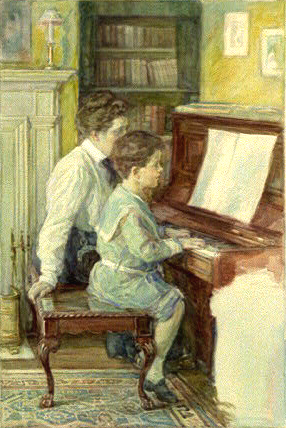
Minot piano teacher prizes more than 50 years with students

piano-teacher

Someone once said that music can change the world because it can change people.

Arnola Leverson, longtime piano teacher and accompanist for countless students and groups in Minot, is living proof of this simple quote.

Leverson began taking piano lessons when she was just 7 years old and has since taught lessons to more than 250 students and accompanied thousands.

As a child, Leverson would trek across the street to her piano teacher’s house, schoolbooks in hand. Having grown up in a musical family, Leverson said she and all four siblings were encouraged to take piano lessons. Her mother did not play piano herself but loved music and wanted her children to grow up experiencing it. While Leverson also played the flute and auxiliary percussion in her lifetime, piano was always her favorite.

In eighth grade, Leverson began taking lessons from Doris Schroder, a piano teacher who would greatly impact her life. While Schroder was an avid piano player in her youth, she had developed arthritis and couldn’t play anymore. Because of this, she could teach her students but could not demonstrate by playing any songs.

Leverson said Schroder was the first person who encouraged her to begin accompanying groups, which she quickly grew to love, and was eye-opening in the delight of being able to demonstrate. Now, Leverson demonstrates songs as much as possible for her students “because I can.”

The very first group Leverson accompanied was the boy’s chorus in Mohall when she was only in ninth grade. In the years following, Leverson has accompanied or still accompanies the Erik Ramstad Jr. High choir, Magic City groups and singers, Central Campus, Jim Hill Jr. High and many festivals in towns nearby. She also plays the piano for her church, First Lutheran, and has been involved in the production of “Messiah” for more than 50 years.

In addition, Leverson is president of the Minot Piano Teachers group, has been a member of the Minot Symphony Orchestra and has been chairman of the Gold Cup Piano Festival for 38 years.

“There are so many great piano players in the city of Minot but so many of them are not available to do what I have made myself available to do,” said Leverson, who dedicated her life to piano after receiving her bachelor’s degree from Minot State in elementary education and music.

Along with accompanying and being a member of the aforementioned groups, Leverson has been teaching piano lessons to students for 52 years, beginning at the impressive age of 16.

And still, Leverson’s love for piano is just as strong as it was more than half a century ago. “There’s not a day that goes by that I’m not happy to play piano,” she said.

Even Leverson’s grandchildren are learning to play. “The plan was always that they would take lessons from grandma,” she said with a smile.

Leverson said that because being able to play the piano is the basis of many other instruments, it teaches kids rhythm, names of notes and the discipline of being with a teacher. “It is also such a great way to communicate,” she said. “For me, piano playing has always been an outlet for my mood, and I encourage students to use piano for this as well.”

Because the lives of students are usually busy, Leverson said that she never wants a student to have to choose between piano and a sport. Though she usually teaches lessons during the weekdays, she said that she is flexible and will teach on the weekends if that is the only time a student can meet. She said that if seniors in high school, for example, have stayed in piano for as long as they have regardless of busy lives, she will work with their schedules as much as she can.

“The most important thing is the student,” Leverson said, beaming as she told many stories of students who came in to her class shy and nervous and left with excitement and “their true selves shining through.”

At 68 years old, Leverson said she would not change her dedication to piano for the world.

“It has given me a really interesting life,” she said. “It is something I’ve found great pleasure in doing, and through it I have met so many great musicians, had the chance to work with wonderful people and it has even given me the opportunity to travel. My life would not be what it is today without it.”

via Minot piano teacher prizes more than 50 years with students.

Winthrop Woman Has Played Old Time Favorites For 70 Years – Central Maine

piano-dream

Joyce Fessenden has been playing piano in public for 70 years. At the age of 83, she still plays four or five times a week at area nursing homes and assisted living centers. She has no thought of quitting.

“Music has always been a very important part of my life,” Fessenden said. “I’m very grateful for that. I don’t plan to quit playing.”

On a recent Tuesday, Fessenden played old favorites on the piano at the William S. Cohen Community Center in Hallowell. Her music blended in and enhanced the boisterous sound of lunchtime diners.

“I love it here because the food is good and the people are kind,” Fessenden said. “If somebody says ‘play the piano,’ the only thing I ask is where and when.”

Fessenden reads music rather than playing by ear.

Read more at Winthrop woman has played old time favorites for 70 years – Central Maine.

It’s Never Too Late to… Take Up Piano – Telegraph

Schubert took piano lessons aged six, but don't let that put you off

Lionel Kelly, 78, may have come late to the piano – he took it up at the age of 73 – but it’s changed his life. “I first heard Mahler performed in London in the mid-50s, when he became very popular over here,” he says. “I’m currently working on a piano transcription of the Adagietta from his Symphony No. 5. It’s a beautiful piece of music, slow and passionate, and was used in Luchino Visconti’s 1971 film of Thomas Mann’s novella, Death in Venice. To be able to play Mahler now, all these years later, is a real treat.”

Kelly, formerly director of American Studies at Reading University, practises up to four hours a day. He has lessons in Reading with Janet Sherbourne, whom he describes as “an excellent, if strict, teacher”, and is not taking grades. “Janet reckons I’m somewhere between grade four and five level, but I’m just doing it for pleasure, because I want to learn and play,” he says.

Bach, Beethoven and Mozart are among other composers tackled by Kelly…

Read the entire article at It’s Never Too Late to… Take Up Piano – Telegraph.

What Instrument Should You Learn to Play in 2015?


Picking which instrument to learn can be a challenge within itself which is exactly why we created this fun quiz!

Just answer 10 questions and we’ll recommend an instrument for you to learn. Happy New Year and Happy Playing!

Take the test here: What Instrument Should You Learn to Play in 2015 | JoyTunes.


What I’ve Learned from Taking Piano Lessons as an Adult

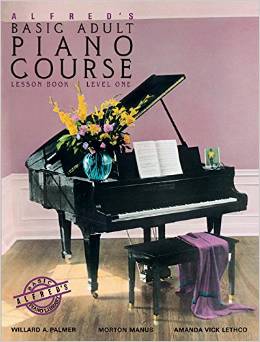
alfred-adult


It’s never too late to pick it up again

One of my biggest fears in returning to playing music was that I would have to start over from scratch—which, for me, would mean erasing a decade of lessons I’d absorbed throughout my childhood and adolescence and going back to the very beginning. Thankfully, a lot of what I’d learned came back to me quickly. There were a few times when Bryan would say words like “mixolydian scale” or “dominant chord” and I would stare at him like an infant who was just asked to point at their nose for the first time. But as soon as he would explain it, it would jog my memory and we’d be on our way.

Another thing that I didn’t expect was that studying jazz would require me to learn a whole new vocabulary and deepen my understanding of music theory, and there were moments where the learning curve felt steeper than I remembered. But, much like learning a new language or picking up any other new skill, it just required a little patience and repetition and practice for it to wedge itself into my brain.

Read the entire article at What I’ve learned from taking piano lessons as an adult | Local Current Blog | The Current from Minnesota Public Radio.

It’s Never Too Late!

“I used to play piano, when I was a child,” Fitzgerald explained. “My mother liked it, because she could just say, ‘Go play piano!’ and I’d go off and play it by myself.”

Fitzgerald stopped playing when she was young, due to the large size of her family. None of her brothers or sisters were much interested in the instrument, and she began to feel uncomfortable about her hobby.

She explained that big families can’t afford everything, and that keeping an expensive object like a piano for just one person would have been selfish.

So Fitzgerald gave up her piano, grew up, and moved on. But she always remembered her love of the piano. And when she moved into the Cartmell Home, and found out about the lessons, she was hooked.

“I decided to give it a try,” she said, laughing, “I’ve already got one foot in the grave! When else will I get the chance to?”

Although Fitzgerald’s skill with the instrument has atrophied since she was younger, (she laughs while pointing out that her music practice book is designed for children) her innate talents are as sharp as ever.

“I’ve always had an ear for music” she explains, “I can play a tune just from hearing it.”

Read the entire article at Returning to the keys: retired techer takes piano lessons after decades.