How the Clefs Came to Be

When my students are first working with the Grand Staff, they are often confused about the placement of the various clefs.

In piano music, we generally use only the G-clef (Treble clef – not “trouble clef” as some think!) and the F-clef (Bass clef)  I try to show students how the curvy part of the G-clef wraps around the G above middle C and the F-clef looks sort of like an F marking the F below middle C.  I draw out G and F on the staff to show how these could have looked.

Originally, instead of a special clef symbol, the reference line of the staff was simply labeled with the name of the note it was intended to bear: F and C and, more rarely, G. These were the most often-used ‘clefs’ in Gregorian chant notation.  Gregorian chant developed mainly in western and central Europe during the 9th and 10th centuries, with later additions and redactions.

Over time the shapes of these letters became stylized, leading to their current versions.


Bach’s Ornament Table

The following ornament table is a transcription of the one appearing in the Clavier-Büchlein vor Wilhelm Friedemann Bach, written by Johann Sebastian Bach for the keyboard instruction of his eldest son.

A scan of the original manuscript appears at Dave’s J.S. Bach Page.

The German title translates as “Explanation of various signs, showing how to play certain ornaments correctly.”{1} Bach gives the sign for each ornament on the upper of the paired staves, while the lower shows its execution directly beneath.

(This blog has) simply modernized the clefs in my transcription, since Bach’s manuscript uses soprano clefs, as several composers continued to do throughout the 18th century in place of the treble clef now used in all keyboard music.

After the transcription graphic showing the table, there appear clickable buttons which are keyed to AU sound files; you can click on any of the ornaments and hear a sound file play its execution.

ornaments

Read the original blog post with the ornament table and listening files at J.S. Bach’s Ornament Table.

Why is Theory Important for Piano Students?

Music_Theory


Students at the O’Connor Music Studio know that music theory is always a part of lessons.  I strongly believe that theory is needed so that students understand what they are playing and why.

To me, theory work is just as important as playing.  A firm knowledge of musical structure makes playing everything easier.

Music knowledge learned through piano lessons transfers easily to other  musical activities.  Students in Fairfax County Public Schools, students learn to play recorder.  Students are sometimes surprised to learn that they already know all the notes – from their piano lessons!

When you sing in a choir, harmonize with Sweet Adelines, play an instrument in your school or community band/orchestra, join your church’s handbell choir (note:  Pender UMC has an excellent Handbell program), teach yourself guitar – theory will help in every instance. By learning to read, write, and understand this musical language, many more musical opportunities will be made available the rest of your life.

Most piano methods come with a theory book that matches page by page what concepts are being learned in the lesson books.  I actually recommend that students do the theory first when they get home, while the concepts are still fresh in their minds.

If the student is not in a piano method, I’m starting to use the Theory Time series.  Book One covers music alphabet, introduction to keyboard and staff, stem rule, steps & skips on a keyboard and staff, repeated notes, dynamics, treble clef lines & spaces, bass clef lines & spaces, quarter note & rest, half note & rest, whole note & rest, dotted half note, bar lines, double bar line, measures, time signatures, rhythm drill, vocabulary, ear training and a review test. Free ear training videos for each ear training exercise are hosted on the Theory Time YouTube channel. The Grade One workbook is appropriate for beginning 1st, 2nd or 3rd grade students. This workbook includes 51 pages, 13 lessons and 8 Fun Sheets.

For adults and more advanced students, I have a copy of All About Music Theory: A Fun and Simple Guide to Understanding Music which can be used as a review or a “try before buy”.

Stop procrastinating and go do your theory!

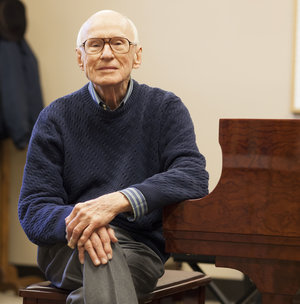
Dr. Maurice Hinson

hinson


I have always respected Dr. Hinson’s work and his music.  So much so that I went to Connecticut to take a class on Piano Pedagogy with him several years ago.  I have also attended several local piano teacher workshops with him.  At one of them, he claimed to remember me from that Connecticut class.  Whether true or not, I treasure that comment and the signature on a piano book he gave me.

We have several of his books at the O’Connor Music Studio and many are available for loan.  If you are interested in buying any for yourself, amazon.com has a great selection.  In addition to those books he has authored, he has edited the works of many composers.  Amazon lists 270 works edited and annotated by Dr. Hinson.


From his page on alfred.com:

One of America’s most respected authorities on piano literature, Dr. Maurice Hinson received the Lifetime Achievement Award from the Music Teachers National Association at its Washington, D.C. convention in the spring of 1994, the Outstanding Alumni Award from the University of Florida in 1990, and the Outstanding Alumni Award from the University of Michigan in the fall of 1995. Hailed as a specialist in American piano music, some of his articles appear in the New Grove Dictionary of American Music in the United States.

Dr. Hinson received his Bachelor of Arts degree from the University of Florida and his Master of Music and Doctor of Musical Arts degrees from the University of Michigan. He also studied at The Juilliard School and the Conservatoire National in Nancy, France.

While a Senior Professor of Piano in the School of Church Music at the Southern Baptist Theological Seminary in Louisville, Kentucky, Dr. Hinson’s curriculum included teaching piano, piano literature, and piano chamber music. He performed, lectured, and gave masterclasses worldwide. His books and editions have become classic standards in the studios of serious piano teachers and students the world over.


From his obituary at legacy.com:

Hinson, Dr. G. Maurice, age 84 died November 11, 2015 in the company of his family. Dr. Hinson was Professor and Senior Professor of Piano at the Southern Baptist Theological Seminary from 1957 to 2015, and a member of Broadway Baptist Church. He was also organist-choirmaster of churches in Florida, Michigan and Kentucky from 1943 to 1980. Dr. Hinson received his BA degree from the University of Florida and his MM and DMA degrees from the University of Michigan, and also studied at The Julliard School and the University of Nancy, France (Conservatoire National).

He was the first president of the Greater Louisville Music Teachers Association, and president of the Kentucky Music Teachers Association as well as the Southern Division of the MTNA. He also taught “The Dorsey Class,” a group of selected piano teachers from 1963 to 2015.

Dr. Hinson is the author of 14 books mostly published by Indiana University Press, plus over 100 articles for music publications. He was a senior editor for The Alfred Publishing Company of California. He edited more than 300 editions of classical piano music and recorded five DVDs of piano music.

As Professor of Piano at the Southern Baptist Theological Seminary for 58 years, he taught and nurtured many pianists who now hold distinguished positions in churches and universities throughout the world.

Dr. Hinson received many awards in piano pedagogy and performance. He was awarded the Liszt Commemorative Medal by the Hungarian Government and the Medal of Excellence by the American Liszt Society for his research on the music of Franz Liszt. He was hailed as a specialist in American Piano music and some of his most recent articles appeared in the NEW GROVE DICTIONARY OF AMERICAN MUSIC. He gave recitals, lectures, and master classes in five continents and 50 states.

Hinson was the founding editor of the JOURNAL OF THE AMERICAN LISZT SOCIETY, past editor of THE AMERICAN MUSIC TEACHER, and contributing editor of THE PIANO QUARTERLY and PIANO AND KEYBOARD.

September 28 ~ Today in Music

today


1598 ~ The first patent to print songbooks was issued on this day to Thomas Morley, a composer of madrigal songs.


OCMS 1902 ~ Donald Jay Grout, American musicologist
A History of Western Music.  An older version of this book is available for loan in the O’Connor Music Studio
More information about Grout

• 1927 ~ Joaquín Gutiérrez Heras, Mexican composer

• 1928 ~ Glen Gray’s orchestra recorded Under a Blanket of Blue, with Kenny Sargeant on vocals.

• 1930 ~ Tommy Collins (Leonard Sipes), Singer, songwriter

• 1938 ~ Ben E. King (Benjamin Earl Nelson), Singer, songwriter

• 1946 ~ Helen Shapiro, Singer, actress

• 1968 ~ The Beatles rode the nearly seven-minute-long Hey Jude to the top of the charts for a nine week-run starting this day. Talk about your microgroove recording! Copies of this Apple release were shipped by the dozen to radio stations because the platters wore out after just a few plays.

• 1984 ~ Saluting his 34 years in television, Bob “If There’s an Honor I’ll Be There” Hope showed outtakes of his years in television on (where else?) NBC. When he began in television’s infancy, back in 1950, Hope said he got into the new medium “…because the contract was so delicious, I couldn’t turn it down.”

• 1991 ~ Miles Davis III passed away

Oliver Sacks and Music

sacks-music


Writer and neurologist Oliver Sacks, who died on Sunday, August 30, 2015 at age 82, spent his life wondering on the myriad connections among biology, thought, emotion and perception.

For those of us who obsess over the how and why of music, Sacks’ work on sound and its effects on the brain – and vice versa – was particularly illuminating. His book on the subject, “Musicophilia: Tales of Music and the Brain,” remains essential reading for those who want to understand the mechanics of music.

Through bountiful research and mesmerizing case studies, Sacks addressed topics including music and amnesia, music therapy, musical prodigies and those who suffer from debilitating aural hallucinations.

Read more at Oliver Sacks & music: On brainworms, hallucinations and sonic overload – LA Times

The O’Connor Music Studio has a copy of Musicophilia: Tales of Music and the Brain if anyone would like to borrow it.

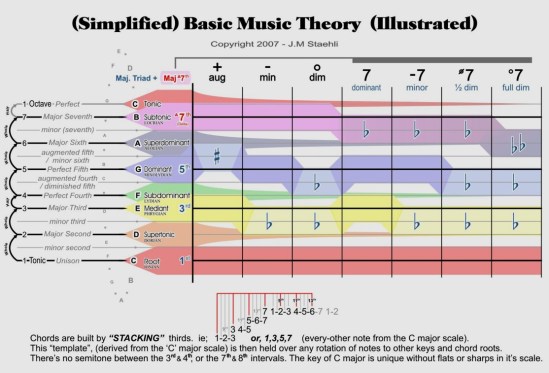
Free Today! Music Theory in One Lesson: Discover How Easy Music Theory Can Be!

music-theory-1-lesson


Music Theory in One Lesson was developed to make music theory more approachable than ever before. This book is packed and carefully formatted with rich, easy to understand diagrams. The use of space and visual learning really sets this book apart from the rest. The ability to read music is not required at any point in this book, so anyone can learn! The book is short and sweet, giving you the tools necessary to explore music in any direction you please.

Audio Examples are provided on the Music Theory in One Lesson website.

“As a music major, I’ve had to complete four semesters of college music theory. I can honestly say that in those four semesters I did not learn, much less understand, a fraction of what I did reading Music Theory in One Lesson. Each topic is expertly condensed and explained in a refreshing and enlightening way. This text takes all the pain so typically associated with learning music theory and replaces it with one exciting ‘Eureka!’ after another. I highly recommend it.”

— Therese Carmack

The Evolution of Music Clefs

When my students are first working with the Grand Staff, they are often confused about the placement of the various clefs.

In piano music, we generally use only the G-clef (Treble clef – not “trouble clef” as some think!) and the F-clef (Bass clef)  I try to show students how the curvy part of the G-clef wraps around the G above middle C and the F-clef looks sort of like an F marking the F below middle C.  I draw out G and F on the staff to show how these could have looked.

Originally, instead of a special clef symbol, the reference line of the staff was simply labeled with the name of the note it was intended to bear: F and C and, more rarely, G. These were the most often-used ‘clefs’ in Gregorian chant notation.  Gregorian chant developed mainly in western and central Europe during the 9th and 10th centuries, with later additions and redactions.

Over time the shapes of these letters became stylized, leading to their current versions.


J.S. Bach’s Ornament Table

The following ornament table is a transcription of the one appearing in the Clavier-Büchlein vor Wilhelm Friedemann Bach, written by Johann Sebastian Bach for the keyboard instruction of his eldest son.

A scan of the original manuscript appears at Dave’s J.S. Bach Page.

The German title translates as “Explanation of various signs, showing how to play certain ornaments correctly.”{1} Bach gives the sign for each ornament on the upper of the paired staves, while the lower shows its execution directly beneath.

(This blog has) simply modernized the clefs in my transcription, since Bach’s manuscript uses soprano clefs, as several composers continued to do throughout the 18th century in place of the treble clef now used in all keyboard music.

After the transcription graphic showing the table, there appear clickable buttons which are keyed to AU sound files; you can click on any of the ornaments and hear a sound file play its execution.


ornaments

Read the original blog post with the ornament table and listening files at J.S. Bach’s Ornament Table.

FREE Piano Practice Book Through Tuesday!

101


From the author:

Let’s face it. Most kids don’t want to practice the piano. And if they do find the time to practice, it’s usually because their parent kept nagging them. How frustrating!

Piano teachers are frustrated too. It’s nearly impossible to teach students new concepts when they don’t understand the old ones–all because of a lack of practice.

If you’re a parent in this situation, I have just the solution you’re looking for.

In this upbeat book, I share all the tips I’ve discovered in my 14 years of teaching piano. You’ll learn fun, practical ways to get your kids to the keyboard.

But this book goes one step further. I’ll show you easy ways to encourage better quality practice. Even if you’ve never had a music lesson in your life!

I wrote this book for kids of all ages. There are creative ideas for elementary students and also a section for teens.

There’s even a section for what to do if your child wants to stop taking piano lessons. That’s right, there is hope and my book will show you exactly how to get them interested in piano again.

Don’t be the kind of parent who sits on the sidelines waiting until their child wants to practice. Piano lessons are too expensive for you to let another “no-practice” day go by.

This book is your answer to get your child to the keyboard, have good quality practice and develop a life-long love of music.

Download for free here.