• 1874 ~ Charles Ives, American composer
More information on Ives
• 1890 ~ Ferdinand “Jelly Roll” Morton, jazz pianist/composer
• 1913 ~ Grandpa (Louis Marshall) Jones, Country Music Hall of Famer, Grand Ole Opry, singer
• 1914 ~ Fayard Nicholas, American tap dancer, one-half of The Nicholas Brothers and actor (The Five Heartbeats)
• 1923 ~ Robert Craft, American conductor and writer
• 1935 ~ Jerry Orbach, American singer and actor for the musical theater
• 1937 ~ Wanda Jackson, Singer, songwriter
• 1939 ~ Jay Siegel, Singer with The Tokens
• 1939 ~ All the Things You Are was recorded by the Tommy Dorsey Orchestra on the Victor label. Jack Leonard was the featured vocalist.
• 1945 ~ Ric Lee, Drummer with Ten Years After
• 1950 ~ Tom Petty, Singer with The Traveling Wilburys
• 1951 ~ Al Greenwood, Keyboards with Foreigner
• 1955 ~ “Day-O. Day-ay-ay-ay-o!” One of the most popular of the Harry Belafonte hits was recorded for RCA Victor. Day-O didn’t make it to the pop charts for over a year, until January of 1957, after its name had been changed to The Banana Boat Song (Day-O).
• 1958 ~ Mark King, Bass, singer with Level 42
• 1958 ~ Ivo Pogorelić, Croatian pianist (1978 Casagrande winner)
• 1962 ~ With Halloween just around the corner, we remember that Bobby “Boris” Picket and the Crypt Kickers reached the top of the charts this day (for two weeks) with The Monster Mash. And someone, somewhere, has resurrected it every Halloween since.
This piece is now in Piano Maestro in the Halloween section and there is sheet music, if you are interested.
• 1962 ~ The musical, Mr. President, written by Irving Berlin, opened on Broadway. Mr. President ran for 265 performances.
• 1965 ~ The Beatles received a gold record for the single, Yesterday. This song marked the first time a cello was used in a pop hit.
• 2000 ~ Li Yundi, an 18-year-old virtuoso from China, has won Poland’s Frederic Chopin piano competition, becoming one of the youngest players to capture the prestigious international prize. Read the whole story
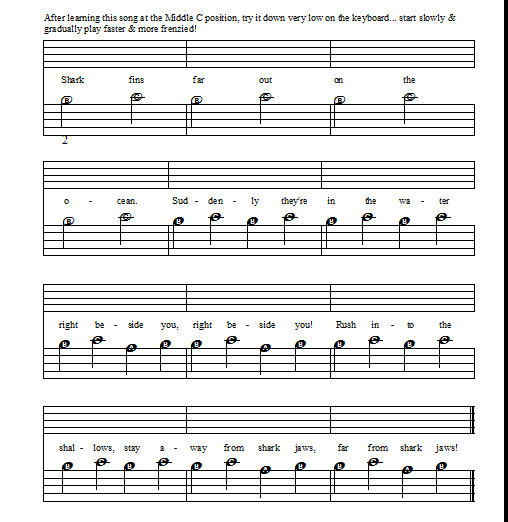
Nearly everyone can figure out the first 2 notes to this spooky piece – just play the B and C notes really low on your keyboard! It doesn’t seem logical that just two notes could cause such a sense of foreboding, but John Williams managed it. His soundtrack to Spielberg’s Jaws has been keeping people out of the sea since 1975. This piece is available in Halloween Favorites (Big-note Piano) and many others.
John Williams conducts his theme from Jaws with the Boston Pops Orchestra at Tanglewood.
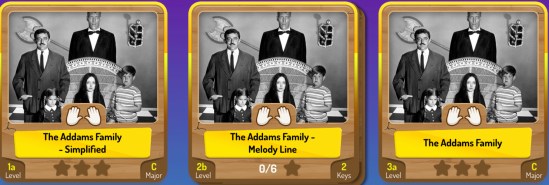
Students always find this piece fun with its finger snaps. There are three versions in Piano Maestro and it’s in several piano books including Halloween Songbook (Easy Piano). There was a a new Addams Family animated movie out in 2019, so your students are going to be snapping all over the place when this Halloween rolls around.
Composed for mid-primer piano students, Who Slobbered On My Songbook? is packed with piano pieces and activities that reinforce playing in the C 5-finger scales.
This laugh-out-loud resource follows the hilarious adventures of a homework-hungry dog who has been framed for chewy crime he didn’t commit.
Inside you will discover 7 piano solos, a teacher-student duet, warm-up exercises, note reading games, sight-reading and rhythm activities, a practice tracker, and a certificate.
If you want to check it out, the Studio has a couple copies. As always, students who would benefit from this book will get a free copy.
Brian Stevenson, Director of Music Ministries at Pender UMC in Fairfax, VA,performed En bateau (Sailing) from The Petite Suite, L 65, by Claude Debussy on the harp during Pender’s new Concert Series which began on April 23, 2022.
Debussy’s music captures perfectly a mood of water-borne serenity and languor, opening with a kind of musical sigh that made the Petite Suite immediately popular with a wide audience.
The Pender Concert Supporting Ukraine on April 23 featured Liz Sellers on piano, Brian on harp, and local professional musicians, including woodwind quintet, drums, organ, guitar, flute, penny whistle, singing and violin.
Concert repertoire included: Harp arrangements by Debussy, Piano trio of Jazz/Baroque, Flute Concertino by Chaminade, Woodwind Quintet with music of Duke Ellington, The Widor Toccata Organ Symphony Movement V and an Irish session!
There was no charge for this concert but there was a free will offering taken to support Ukraine through Advance #982450, UMCOR International Disaster Response and Recovery. This fund provides direct assistance to those in Ukraine as well as assistance to Ukrainians fleeing to neighboring countries.
One hundred percent of all Advance contributions go to the designated cause. (The independent charity watchdog, “Charity Watch,” gives UMCOR an “A+” ranking, and includes the UM organization on a highly selective list of charities it recommends when considering how to support the Ukrainian people. Read more)
The United Methodist community in Ukraine, though quite small, is actively engaged in assisting neighbors in need. Global Ministries is in touch with the church’s leadership as well as with church leaders in countries welcoming those who are fleeing from violence in Ukraine.
Click this link and choose UMCOR to send direct aid. In the memo line, put Advance #982450, UMCOR International Disaster Response and Recovery.
Sylvia Mulherin, organist at St. George’s UMC in Fairfax, VA,performed Toccata Organ Symphony Movement V by Charles-Marie Widor at Pender’s new Concert Series which began on April 23, 2022.
The Pender Concert Supporting Ukraine on April 23 featured Liz Sellers on piano, Brian on harp, and local professional musicians, including woodwind quintet, drums, organ, guitar, flute, penny whistle, singing and violin.
Concert repertoire included: Harp arrangements by Debussy, Piano trio of Jazz/Baroque, Flute Concertino by Chaminade, Woodwind Quintet with music of Duke Ellington, The Widor Toccata Organ Symphony Movement V and an Irish session!
There was no charge for this concert but there was a free will offering taken to support Ukraine through Advance #982450, UMCOR International Disaster Response and Recovery. This fund provides direct assistance to those in Ukraine as well as assistance to Ukrainians fleeing to neighboring countries.
One hundred percent of all Advance contributions go to the designated cause. (The independent charity watchdog, “Charity Watch,” gives UMCOR an “A+” ranking, and includes the UM organization on a highly selective list of charities it recommends when considering how to support the Ukrainian people. Read more)
The United Methodist community in Ukraine, though quite small, is actively engaged in assisting neighbors in need. Global Ministries is in touch with the church’s leadership as well as with church leaders in countries welcoming those who are fleeing from violence in Ukraine.
Click this link and choose UMCOR to send direct aid. In the memo line, put Advance #982450, UMCOR International Disaster Response and Recovery.
What a fantastic concert this was. There will be move videos coming in the following days but this is a great start! This is the grand finale – the Ukrainian National Anthem arranged by Brian Stevenson, director of Music Ministries at Pender UMC.
The Pender Concert Supporting Ukraine on April 23 featured Liz Sellers on piano, Brian on harp, and local professional musicians, including woodwind quintet, drums, organ, guitar, flute, penny whistle, singing and violin.
Concert repertoire included: Harp arrangements by Debussy, Piano trio of Jazz/Baroque, Flute Concertino by Chaminade, Woodwind Quintet with music of Duke Ellington, The Widor Toccata Organ Symphony Movement V and an Irish session!
There was no charge for this concert but there was a free will offering taken to support Ukraine through Advance #982450, UMCOR International Disaster Response and Recovery. This fund provides direct assistance to those in Ukraine as well as assistance to Ukrainians fleeing to neighboring countries.
One hundred percent of all Advance contributions go to the designated cause. (The independent charity watchdog, “Charity Watch,” gives UMCOR an “A+” ranking, and includes the UM organization on a highly selective list of charities it recommends when considering how to support the Ukrainian people. Read more)
The United Methodist community in Ukraine, though quite small, is actively engaged in assisting neighbors in need. Global Ministries is in touch with the church’s leadership as well as with church leaders in countries welcoming those who are fleeing from violence in Ukraine.
Click this link and choose UMCOR to send direct aid. In the memo line, put Advance #982450, UMCOR International Disaster Response and Recovery.
I’m thankful for my piano studio, my students, and my piano 🙂 During Covid, I was especially thankful for the Internet!
When I was growing up, my dad was a minister, meaning we lived in whatever parsonage the church chose to let us live in. The one we had in Pawcatuck, CT had an upright piano that someone had put out in the sunroom. Not the best place for a piano, but I digress.
Since we had the piano already, someone – probably my mom – decided that I would take lessons. We had the organist from the Baptist church just across the river in Westerly, RI
Apparently, Clara Pashley was fondly remembered at the church (now Central Baptist Church) since she was mentioned in an article from 2010.
Miss Pashley walked to our house each week and taught me (and my mom who was always listening in) piano for the grand sum of 25 cents.
I started with Ada Richter’s classic Teaching Little Fingers to Play, which has now been morphed into the John Thompson library.
From there, it was the Michael Aaron series, and some sheet music.
There was no music store in our town, so I have no idea where any of this music came from – but I still have it all.
My parents did very well for their quarter a week investment, especially since my mom paid good attention and was able to beef up lessons she’d had as a child. Later on, she played well enough that she was church organist for a local Roman Catholic Church.
But I digress…
In those days, kids couldn’t do a whole lot of activities, so in 6th grade, I decided I wanted to be a Girl Scout. Bye, bye Clara.
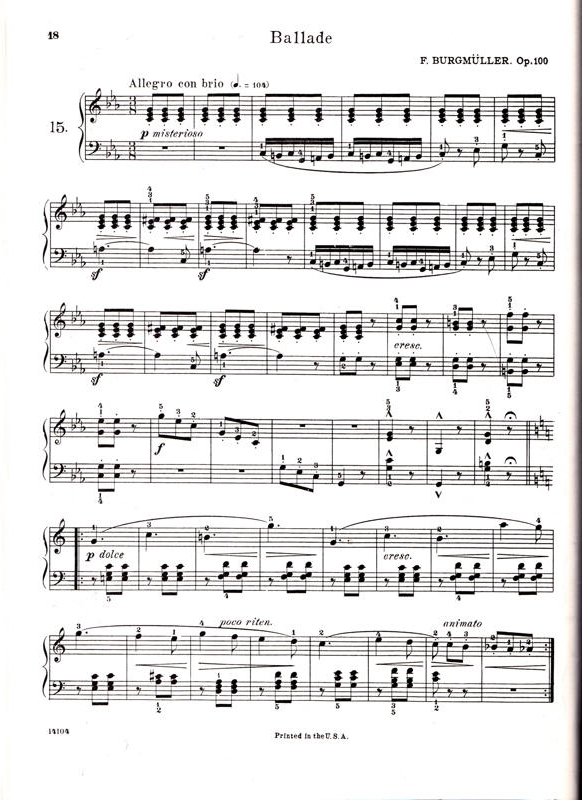
Girl Scouts didn’t last long but I did play piano in a talent show. I remember, I carefully cut Burgmüller’s Ballade out of my Michael Aaron book and made a nice construction paper cover. (I still have this, too)
I doubt that I played this well but here’s what it was supposed to sound like:
A few years intervened and moved to Springfield, MA. The parsonage piano there was in terrible shape and in the dark, never-used basement. But I decided to make it mine and cleared up the area around it and started “practicing”.
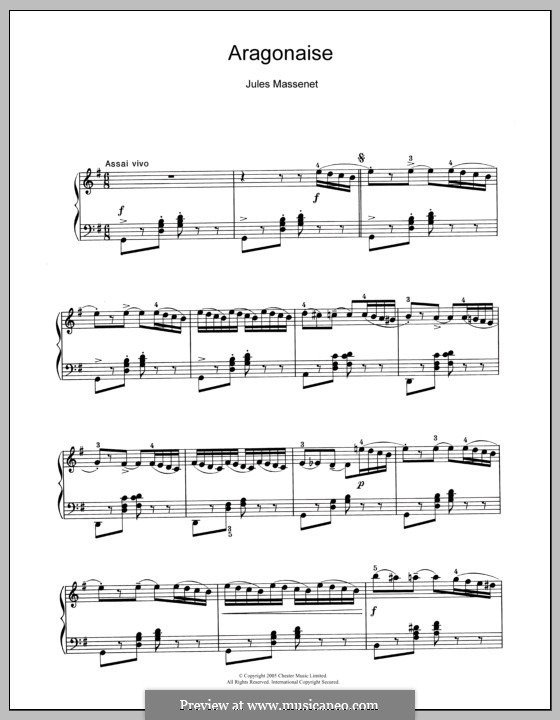
My Junior or Senior year of High School I decided I wanted to major in music in college. I decided to learn, on my own, a piano arrangement of Aragonaise by Jules Massenet. I have no idea why or where that sheet music came from but I started working furiously on this piece.
Hopefully, at some point, it should have sounded like this:
I started pedaling (no pun intended!) my music to the Universities of Connecticut and Massachusetts and ended up at UMass Amherst since we were state residents.
Early morning gym classes (usually swimming), then wet hair traipsing across campus to music theory in winter 5 days a week. AARRGGH!
But I stuck it out.
My wonderful piano teacher, Howard Lebow, was killed in a car accident during my sophomore year and I was devastated. There was more about him in a post on January 26, 2022 here on https://atomic-temporary-44596882.wpcomstaging.com
I took yet another break from piano lessons – but I kept playing.
After DH graduated, we moved to Milwaukee, WI for his graduate school. Besides working 2 jobs, I found time to commandeer the practice rooms at the University of Wisconsin. I also found a teacher at the Schaum School of Music. She was amazed that I had no piano at home to practice on.
When we later moved to Alexandria, VA my DH gave me a choice of new car or piano. So, I found a used piano. The owner had acquired it in a divorce and wanted it gone. Yesterday. She even paid to move it out of her apartment.
The new-to-me piano took up half our living room. When my parents came to visit, their feet we under my piano as I slept.
I found yet another new piano teacher and she is still my best friend to this day.
That piano moved to several locations before I bought a brand new Yamaha grand piano. The movers accidently brought in the wrong one and I made them return it. The people who lived in an apartment were probably unhappy when they had to return my piano and take their own new baby grand back.
I started teaching as a traveling piano teacher in Silver Spring, Maryland. I continued that in Wilmington, DE.
When we got to Fairfax, VA I decided no more traveling. Students would come to me. And so they have since 1973.
What is supposed to be our living room is filled with music books, electric keyboards, the grand piano, 2 organs, 2 violins, 2 clarinets, recorders, a dulcimer and other musical “stuff”.
Piano playing has gotten me through the worst times of my life. Teaching has been a lifeline for me, as well.
I am so thankful for the students who have stayed with me over the years and the new ones I have found…on the internet.



 Composed for mid-primer piano students,