Each year on May 22 we observe National Buy a Musical Instrument Day. The day is all about playing music. If you are a musician, it might be time for a new instrument. Maybe you can learn to play a second or third one. If you have never played an instrument before, National Buy A Musical Instrument Day might be the motivation you need to start.
Naturally, here at the O’Connor Music Studio, a piano, keyboard or organ is recommended but this day is for all types of instruments and is for people of all ages. Grandpa can play his ukulele while the grandkids play the drums, trombone, and flute. Together they can all make terrific music!
The video below was recorded by my friend (Rev. Kevin Havens aka RevKev) and his band, JC Reigns. A tribute to moms for Mothers Day, for all moms in Heaven and on earth.
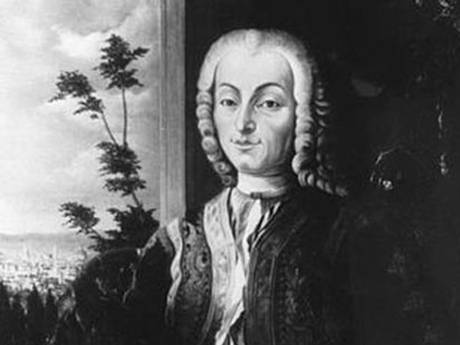
The inventor of the piano, Bartolomeo Cristofori, is celebrated in last year’s Google Doodle.
Born on 4 May, 1655 in Padua, northern Italy, Cristofori initially worked making harpsichords and clavichords and was employed by Prince Ferdinando de Medici, son of the duke of Tuscany.
He is believed to have started work on what would become a piano in the 1690s and the first one is thought to have been made in 1709.
In a harpsichord the strings are plucked, so it is not possible to play the notes softer or louder. Cristofori managed to design a mechanism that transferred the pressure placed on the keys to the hammers that hit the strings.
He called his invention a “gravecembalo col piano e forte” – a clavichord with soft and loud. The name was shortened to pianoforte and then simply piano.
Francesco Mannucci, a musician at the Medici court, described one early version as “a large ‘Arpicembalo’ [the name of a type of harpsichord] by Bartolomeo Cristofori, of new invention that produces soft and loud, with two sets of strings at unison pitch, with soundboard of cypress without rose”.
Bartolomeo Cristofori di Francesco was an Italian maker of musical instruments, generally regarded as the inventor of the piano.
While other musical instrument makers had attempted to solve the same problem with the harpsichord, Cristofori’s invention is generally regarded as the first real piano.
However, the piano was not popular at first and many felt it was too difficult to play. Cristofori died largely uncelebrated for an invention that would later change the musical world in 1731 – a year before the first sheet music for the piano appeared.
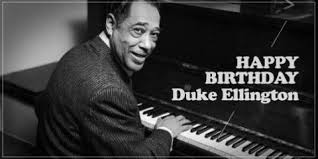
Duke Ellington (1899 to 1974) was a composer, bandleader, and pianist. He was born Edward Kennedy Ellington in Washington, D.C.
From an early age, the handsome, sharply dressed teenager (that’s where he got the nickname, Duke) was headed for success. At first it was art. He won a poster-design contest and an art scholarship, left school and started a sign-painting business. But it was his natural piano-playing ability that attracted the young women, so Duke Ellington headed in that direction. He developed his keyboard skills by listening to local black ragtime pianists; he composed his first piece, Soda Fountain Rag, around 1915. A successful professional musician by the early 1920s, he left Washington in the spring of 1923 for New York, which was his home base for the rest of his life. Between December 1927 and 1931 his orchestra held forth at Harlem’s Cotton Club, where regular radio broadcasts, together with an active recording schedule, helped him establish a nationwide reputation. Take the “A” Train was his “signature song”.
In such compositions as Black and Tan Fantasy (1927), Mood Indigo (1930),Solitude (1934), and Echoes of Harlem (1935), Ellington emerged as a distinctive composer for his ensemble, employing the rhythms, harmonies, and tone colors of jazz to create pieces that vividly captured aspects of the African-American experience. At the same time, he sought to broaden jazz’s expressive range and formal boundaries in such extended works asReminiscing in Tempo (1935), Black, Brown, and Beige (1943), and Harlem(1951).
An essential feature of Ellington’s composing method was to write with specific instrumentalists in mind, often drawing them into the creative process by building entire pieces out of their musical ideas.
He wrote scores for big band pieces, film scores, operas, ballets, Broadway shows, gospel music, musicals, films, television, and ballet and in the 1960s produced a series of sacred concerts combining his orchestra, choirs, vocalists, and dancers. He would work with each section of his orchestra as an entity unto its own and then bring them together to create the unique sounds such as, Mood Indigo. Over 1,000 musical pieces are credited to the great Duke Ellington. James Lincoln Collier studied the Duke and his Orchestra, comparing Duke Ellington to a “master chef who plans the menus, trains the assistants, supervises them, tastes everything, adjusts the spices … and in the end we credit him with the result.”
Ellington was successful, as few others have been, in reconciling the practical function of a popular entertainer with the artistic aspirations of a serious composer. His rich legacy consists of hundreds of recordings, his many pieces that have entered the standard repertory, and his musical materials now preserved in the Duke Ellington Collection at the Smithsonian Institution. There is a statue of Duke Ellington in New York.
It was 77 years ago this weekend that 26 men showed up at the Tulsa Club for a night of singing. They’d been invited by “Rupert Hall, Royal Keeper of the Minor Keys” and “O.C. Cash, Third Assistant Temporary Vice Chairman” of the Society for the Preservation and Propagation of Barber Shop Quartet Singing in the United States (sic), who noted:
In this age of Dictators and Government control of everything, about the only privilege guaranteed by the Bill of Rights not in some way supervised and directed, is the art of Barber Shop Quartet singing. Without doubt we still have the right of “peaceable assembly” which I am advised by competent legal authority includes quartet singing. The writers of this letter have for a long time thought that something should be done to encourage the enjoyment of this last remaining vestige of human liberty. Therefore, we have decided to hold a songfest on the Roof Garden of the Tulsa Club on Monday, April 11, at six-thirty p.m.
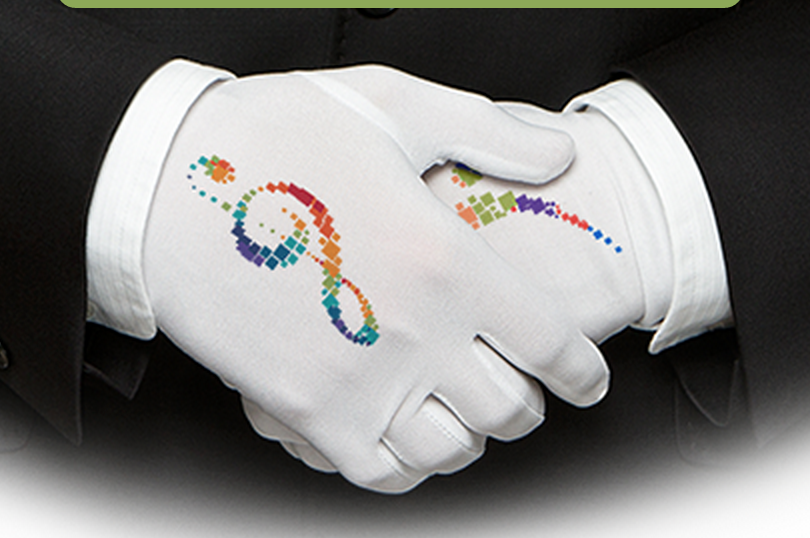
I thought this would surely interest all piano teachers and lovers out there – JoyTunes’ just came out with new piano teaching GLOVES!
Take a look in the clip and share it to all piano lovers everywhere.
The JoyTunes gloves, still in beta version, will turn you into Mozart in the blink of an eye! Don’t know how to play piano? These gloves will take you from 1 note to Beethoven in a flash. Our gloves allow your hands to auto magically bend and move to play any song your heart desires! Check out the video for more info.
. 1985 ~ The long-awaited album, We Are the World, was finally released. Eight rock stars donated previously unreleased material for the LP. Three-million copies of the award-winning single of the same name had already been sold. The song, We Are the World, was number five, and moving up, on the Billboard magazine pop single’s chart this day.
. 1991 ~ Martha Graham passed away. She was an American modern dancer and choreographer.
. 2001 ~ Eva Heinitz, who fled Nazi Germany in the prime of her career as a cello performer and was one of the first professional viola da gamba players in modern times, died at the age of 94. Heinitz, a native of Berlin, soared to prominence as a brilliant, temperamental soloist with the greatest orchestras of Europe in her 20s. Initially instructed on the cello, Heinitz taught herself to play the smaller instrument and performed the Bach Passions under the direction of Wilhelm Furtwangler and Otto Klemperer, who called her the world’s best viola da gamba player. Heinitz, who once described herself as “51 percent” Jewish, fled Germany in 1933. She lived in Paris and London, moved to New York in 1939 and was hired by Fritz Reiner as a section cellist with the Pittsburgh Symphony. She came to Seattle in 1948 and was hired as faculty cellist at the University of Washington. During her 28-year tenure, she became one of the founders of the early-music revival, which brought a renewed interest in music and instruments of the 17th and 18th centuries. In 1991, her international colleagues gathered in Indiana and accorded her the title “Grande Dame du Violoncelle” – great lady of the cello.
. 2001 ~ Trinh Cong Son, Vietnam’s most beloved singer-songwriter who opposed the Vietnam War and sought postwar reconciliation, died after a long battle with diabetes at the age of 62. Dubbed the “Bob Dylan of Vietnam” by American folk singer Joan Baez for his anti-war songs, his music is still widely performed in Vietnam and in overseas Vietnamese communities. Son, who was persecuted by the South Vietnamese government in the late 1960s and early ’70s, wrote more than 600 songs. His pacifist songs about the futility of war were banned at the time, but bootleg copies circulated throughout South Vietnam and overseas. When the war ended, most of Son’s family fled overseas but he stayed. He was equally unpopular with the new Communist government for his songs about reconciliation and spent 10 years in forced labor “re-education camps.” But by the late ’80s, he regained popularity, and his songs are still performed by some of Vietnam’s biggest pop artists.
. 2001 ~ Theodore M. “Ted” McCarty, a key figure in the development of the electric guitar and former president of Gibson Guitar Co., died at the age of 91. In his 18 years as president at Gibson, McCarty transformed the Kalamazoo, Mich.-based maker of acoustic musical instruments into the purveyor of guitars to the stars. The solid-body electric guitar was considered something of a gimmick when McCarty left the Wurlitzer Co. to join Gibson in 1948. He had a degree in commercial engineering and had been an engineering designer for the military during World War II. Despite not being musically inclined, McCarty saw possibilities in the electric guitar. At Gibson, he helped bring to life the Les Paul series, named for the bluesguitarist who endorsed it, the Explorer series, widely used by both rock and country guitarists, and the radical Flying V. McCarty later bought the Bigsby Co., which manufactures vibratos for guitars. He sold the company and retired in 1999.
. 2015 ~ Cynthia Lennon, the late John Lennon’s wife from 1962-1968, has died at age 75.








 . 1866 ~ Ferruccio Busoni, Italian pianist and composer
 MaryO'Studio