
I have a copy of this music (Faerie’s Aire and Death Waltz) if anyone is interested in playing it!
Actually, this has been attempted!
but for my students…April Fools!


I have a copy of this music (Faerie’s Aire and Death Waltz) if anyone is interested in playing it!
Actually, this has been attempted!

April Fool’s Day
 . 1866 ~ Ferruccio Busoni, Italian pianist and composer
Read quotes by and about Busoni
More information about Busoni
1873 ~ Sergei Rachmaninoff, Russian-born American composer and pianist
Read quotes by and about Rachmaninoff
More information about Rachmaninoff
. 1895 ~ Alberta Hunter, American blues singer
. 1909 ~ Eddie Duchin, Bandleader
. 1917 ~ Scott Joplin, U.S. jazz musician famous for his ragtime pieces notably The Entertainer, died.
. 1932 ~ Jane Powell, Singer
. 1932 ~ Debbie Reynolds, Entertainer
. 1984 ~ Marvin (Pentz) Gaye, Jr. passed away.
. 1985 ~ The long-awaited album, We Are the World, was finally released. Eight rock stars donated previously unreleased material for the LP. Three-million copies of the award-winning single of the same name had already been sold. The song, We Are the World, was number five, and moving up, on the Billboard magazine pop single’s chart this day.
. 1991 ~ Martha Graham passed away. She was an American modern dancer and choreographer.
. 2001 ~ Eva Heinitz, who fled Nazi Germany in the prime of her career as a cello performer and was one of the first professional viola da gamba players in modern times, died at the age of 94. Heinitz, a native of Berlin, soared to prominence as a brilliant, temperamental soloist with the greatest orchestras of Europe in her 20s. Initially instructed on the cello, Heinitz taught herself to play the smaller instrument and performed the Bach Passions under the direction of Wilhelm Furtwangler and Otto Klemperer, who called her the world’s best viola da gamba player. Heinitz, who once described herself as “51 percent” Jewish, fled Germany in 1933. She lived in Paris and London, moved to New York in 1939 and was hired by Fritz Reiner as a section cellist with the Pittsburgh Symphony. She came to Seattle in 1948 and was hired as faculty cellist at the University of Washington. During her 28-year tenure, she became one of the founders of the early-music revival, which brought a renewed interest in music and instruments of the 17th and 18th centuries. In 1991, her international colleagues gathered in Indiana and accorded her the title “Grande Dame du Violoncelle” – great lady of the cello.
. 2001 ~ Trinh Cong Son, Vietnam’s most beloved singer-songwriter who opposed the Vietnam War and sought postwar reconciliation, died after a long battle with diabetes at the age of 62. Dubbed the “Bob Dylan of Vietnam” by American folk singer Joan Baez for his anti-war songs, his music is still widely performed in Vietnam and in overseas Vietnamese communities. Son, who was persecuted by the South Vietnamese government in the late 1960s and early ’70s, wrote more than 600 songs. His pacifist songs about the futility of war were banned at the time, but bootleg copies circulated throughout South Vietnam and overseas. When the war ended, most of Son’s family fled overseas but he stayed. He was equally unpopular with the new Communist government for his songs about reconciliation and spent 10 years in forced labor “re-education camps.” But by the late ’80s, he regained popularity, and his songs are still performed by some of Vietnam’s biggest pop artists.
. 2001 ~ Theodore M. “Ted” McCarty, a key figure in the development of the electric guitar and former president of Gibson Guitar Co., died at the age of 91. In his 18 years as president at Gibson, McCarty transformed the Kalamazoo, Mich.-based maker of acoustic musical instruments into the purveyor of guitars to the stars. The solid-body electric guitar was considered something of a gimmick when McCarty left the Wurlitzer Co. to join Gibson in 1948. He had a degree in commercial engineering and had been an engineering designer for the military during World War II. Despite not being musically inclined, McCarty saw possibilities in the electric guitar. At Gibson, he helped bring to life the Les Paul series, named for the blues guitarist who endorsed it, the Explorer series, widely used by both rock and country guitarists, and the radical Flying V. McCarty later bought the Bigsby Co., which manufactures vibratos for guitars. He sold the company and retired in 1999.
. 2015 ~ Cynthia Lennon, the late John Lennon’s wife from 1962-1968, has died at age 75.


1685 ~ Johann Sebastian Bach, German composer
Bach’s Toccata and Fugue in d minor was featured in the Walt Disney movie Fantasia and the new Fantasia 2000
Read quotes by and about Bach
More information about Bach
 Grammy winner

Palm Sunday marks the beginning of Holy Week, the most important week of the church year. At the other end of Holy Week is Easter, the most important day of the church year.
For Christians, this is the big event! And it’s all about the mystery that somehow Jesus Christ makes us one with God.
The days leading up to Easter often have an understandably somber feel to them, particularly as we contemplate Jesus’ arrest, trial, and execution. It’s easy to forget that the week begins with a joyful event: the Triumphal Entry!
Today is Palm Sunday, the first day of Holy Week. On Palm Sunday, we commemorate Jesus’ celebrated entry into Jerusalem just a few days before his arrest, trial, and crucifixion.
The “palm” in Palm Sunday refers to the palm branches waved by the adoring Jerusalem crowds who welcomed Jesus and proclaimed him King. The event is commonly referred to as the Triumphal Entry. Here’s the account from Matthew 21:1-11:
As they approached Jerusalem and came to Bethphage on the Mount of Olives, Jesus sent two disciples, saying to them, “Go to the village ahead of you, and at once you will find a donkey tied there, with her colt by her. Untie them and bring them to me. If anyone says anything to you, say that the Lord needs them, and he will send them right away.”
This took place to fulfill what was spoken through the prophet:
“Say to Daughter Zion,
‘See, your king comes to you,
gentle and riding on a donkey,
and on a colt, the foal of a donkey.’”
The disciples went and did as Jesus had instructed them. They brought the donkey and the colt and placed their cloaks on them for Jesus to sit on. A very large crowd spread their cloaks on the road, while others cut branches from the trees and spread them on the road. The crowds that went ahead of him and those that followed shouted,
“Hosanna to the Son of David!”
“Blessed is he who comes in the name of the Lord!”
“Hosanna in the highest heaven!”
When Jesus entered Jerusalem, the whole city was stirred and asked, “Who is this?”
The crowds answered, “This is Jesus, the prophet from Nazareth in Galilee.”
Chuck Knows Church — Palm Sunday. Have you ever waved a palm branch in a worship service? If so, do you know why? Chuckle along and learn about Palm Sunday with Chuck
 Happy Saint Patrick’s Day
. 1901 ~ Alfred Newman, Conductor
More information about Newman
. 1917 ~ Nat “King” Cole, American jazz singer and pianist
More information about Cole
. 1930 ~ Paul Horn, American jazz flutist, saxophonist, clarinetist and composer
More information about Horn
. 1938 ~ Rudolf Nureyev, Dancer
More information about Nureyev
. 1944 ~ John Lill CBE, English classical pianist
. 1944 ~ John Sebastian, American pop-rock singer songwriter and guitarist, His group, The Lovin’ Spoonful performed Do You Believe In Magic, Summer In The City, Daydream, You Didn’t Have to be So Nice, Nashville Cats His solos include Darling Be Home Soon and Welcome Back
To celebrate, there will be no piano lessons – although that’s because it’s Thursday. 🙂



Pi Symphony: The Ruse Performance Movement I.
Pi Symphony orchestral performance in Ruse, Bulgaria, Nov. 19th, 2010
The melodies and rhythms are based on the numbers of π (3.14159…etc), which describes the ratio of a circle’s circumference to its diameter.
To read more about how this came to be written, see http://www.pisymphony.com/gpage.html
There is also another work based on π called What pi sounds like
Today is pi day, and to celebrate, we bring you a musical representation of π, to 31 decimal places, at 157 beats per minute (which, incidentally, is 314 divided by two).
For more information about this work, please see A musical interpretation of pi
Finally, 18 Wheels on a Big Rig, includes a verse in which they divide the wheels by π.
Enjoy your Pi Day! 
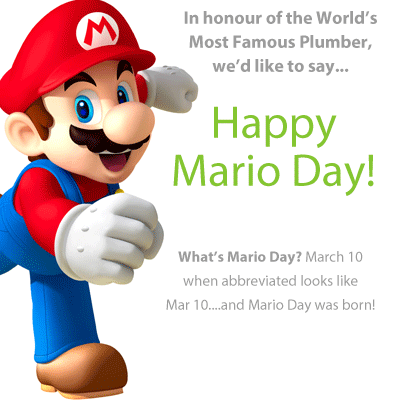
National Mario Day is observed each year on March 10th and honors Mario from the popular Nintendo game.
It is celebrated on March 10th because of the way the date appears, when abbreviated (Mar.10), it looks just like the name Mario.
. 1832 ~ Muzio Clementi died. He was an Italian-born English composer, pianist, pedagogue, conductor, music publisher, editor, and piano manufacturer.
. 1844 ~ Pablo de Sarasate, Spanish violinist
. 1879 ~ Ignaz Moscheles died. He was a Bohemian composer and piano virtuoso
. 1892 ~ Arthur Honegger, French composer
Read quotes by and about Honegger
More information about Honegger
1903 ~ “Bix” Beiderbecke, American jazz cornetist
More information about Beiderbecke
. 1935 ~ Nelson Eddy recorded Ah! Sweet Mystery of Life for Victor Records. The song came from the film, “Naughty Marietta”. Later, Eddy recorded the classic tune with Jeanette MacDonald.
. 1937 ~ An audience of 21,000 jitterbuggers jammed the Paramount Theatre in New York City to see a young clarinetist whom they would crown, ‘King of Swing’ on this night. The popular musician was Benny Goodman.
. 1940 ~ W2XBS-TV in New York City originated the first televised opera as members of the Metropolitan Opera Company presented scenes from “I Pagliacci”.
. 1956 ~ Julie Andrews was 23 years old this night when she made her TV debut. She appeared with Bing Crosby and Nancy Olson in the musical adaptation of Maxwell Anderson’s play, “High Tor”.
. 2003 ~ Lionel Dakers, who directed the Royal School of Church Music for 16 years, died at age 79. Dakers was a stickler for high musical standards and opposed some of the modernizing trends in English church music. Dakers was organist at Ripon Cathedral from 1954 to 1957, then moved to Exeter Cathedral before his appointment as director of the Royal School of Church Music in 1972. In 1976, he was appointed a director of Hymns Ancient & Modern, publisher of some of the most widely used Anglican hymnals.
. 2016 ~ Keith Emerson died. He was an English keyboardist and composer.
. 1792 ~ Gioachino Rossini, Italian composer
Read quotes by and about Rossini
More information about Rossini
. 1898 ~ Wladimir Rudolfovich Vogel, Russian-born Swiss composer
. 1904 ~ Jimmy Dorsey, American clarinetist, bandleader and saxophonist
. 1916 ~ Dinah (Frances Rose) Shore, Emmy Award-winning singer and entertainer
. 1932 ~ Bing Crosby and the Mills Brothers teamed up to record Shine for Brunswick Records.
. 1936 ~ Fanny Brice brought her little girl character “Baby Snooks” to radio on “The Ziegfeld Follies of the Air” on CBS Radio. Miss Brice presented the character and later sang My Man on the program. She was 44 at the time, and was known as America’s “Funny Girl” long before Barbra Streisand brought her even greater fame and notoriety nearly 30 years later.
. 1964 ~ The United States was in the grip of Beatlemania! I Want to Hold Your Hand, by the lads from Liverpool, was in its 5th week at #1 on the pop charts. It stayed there until March 21, when it was replaced by She Loves You, which was replaced byCan’t Buy Me Love, which was finally replaced by Hello Dolly, by Louis Armstrong, on May 9, 1964. 14 straight weeks of #1 music by The Beatles!
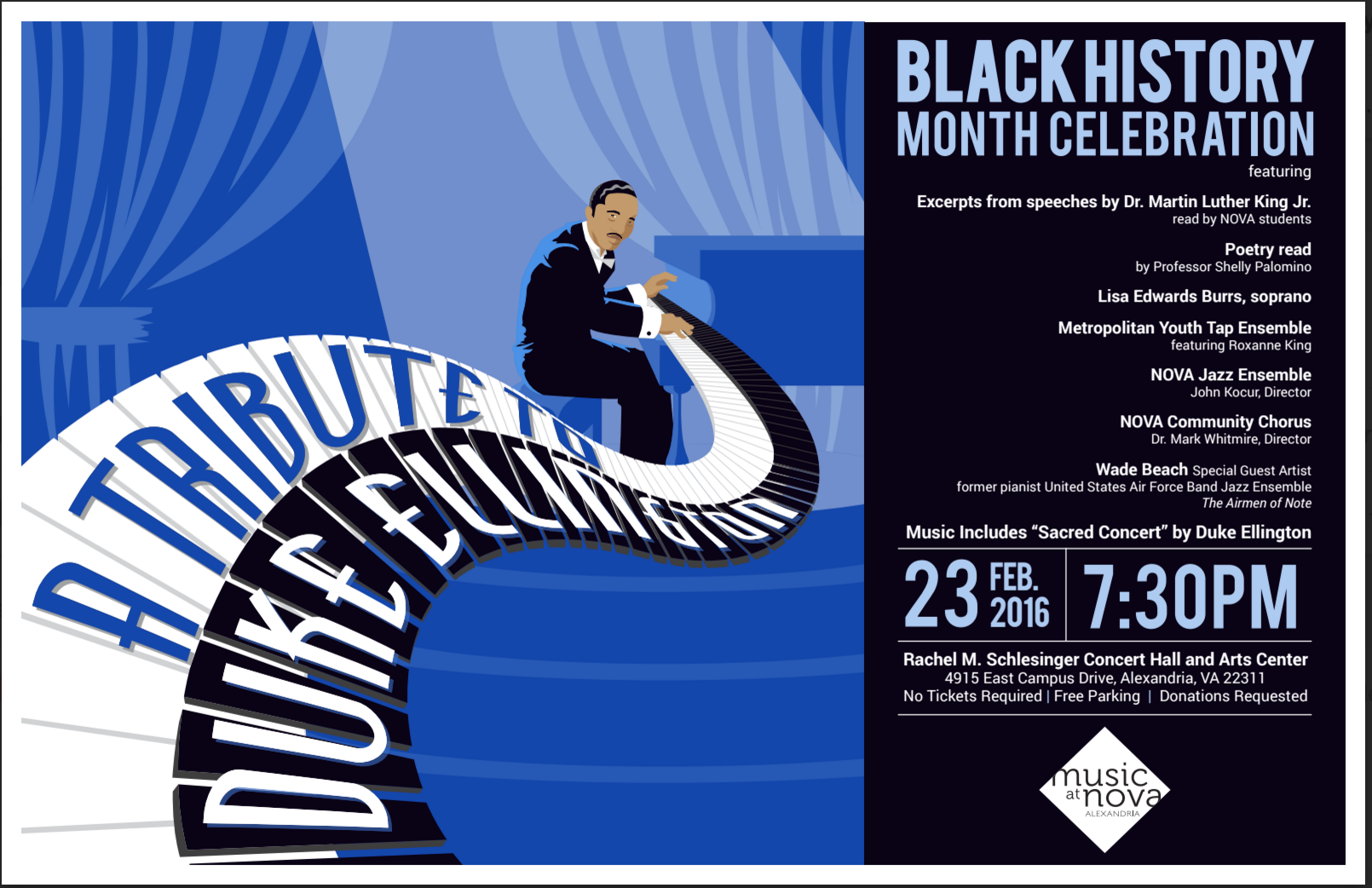
Tuesday, February 23, 2016 – Schlesinger Concert Hall, 7:30 pm
NOVA, Alexandria Campus, 4915 East Campus Drive, Alexandria VA 22311.

