Sing or Play Happy Birthday Whenever You Want

happy birthday


You’re legal now!

None of the companies that have collected royalties on the “Happy Birthday” song for the past 80 years held a valid copyright claim to one of the most popular songs in history, a federal judge in Los Angeles ruled on Tuesday.

In a stunning reversal of decades of copyright claims, the judge ruled that Warner/Chappell never had the right to charge for the use of the “Happy Birthday To You” song. Warner had been enforcing a copyright since 1988, when it bought Birch Tree Group, the successor to Clayton F. Summy Co., which claimed the original disputed copyright.

Judge George H. King ruled that a copyright filed by the Summy Co. in 1935 granted only the rights to specific piano arrangements of the music, not the actual song.

Read more at http://www.latimes.com/local/lanow/la-me-ln-happy-birthday-song-lawsuit-decision-20150922-story.html

The following version is in the O’Connor Music Studio library, if you wish to borrow it.  It is also available on amazon.com

Happy Birthday, George Gershwin!

George Gershwin lived between September 26, 1898 and July 11, 1937. He is considered to be a twentieth century composer.

If you hate homework but like roller skating, you have something in common with American composer George Gershwin. Born in Brooklyn, New York to Russian immigrant parents, George loved to play street hockey, ‘cat’, and punch ball. He didn’t even have an interest in music until his family got him a piano when he was twelve. Nine years later he had his first hit, “Swanee”, with lyrics written by Irving Caesar. No one else in the Gershwin family was musical, but George was fascinated by music. When he heard a schoolmate play the violin, George struck up a friendship with the boy who introduced him to the world of concert music.

Gershwin’s American in Paris and Rhapsody in Blue (featured in Disney’s newly released Fantasia 2000) proved that jazz was powerful enough to combine will with symphonic music. Gershwin was only 26 years old at the time when he composed Rhapsody in Blue. No matter how you hear it, “Rhapsody in Blue” will remain the signature of one of the most influential of composers, songwriters and pianists in American music history.

His play Porgy and Bess has been produced as both a film and an opera.

Daily Listening Assignments ~ June 5, 2025

Happy Birthday is a song that I like to have each of my students learn at various levels appropriate to their level. When a friend or family member has a birthday, it’s great to be able to sit down and play.

It’s only been fairly recently that piano students could have this music in their books.

“Happy Birthday to You”, more commonly known as simply “Happy Birthday”, is a song that is traditionally sung to celebrate the anniversary of a person’s birth. According to the 1998 Guinness World Records, “Happy Birthday to You” is the most recognized song in the English language, followed by “For He’s a Jolly Good Fellow”.

The melody, or part you sing, of “Happy Birthday to You” comes from the song “Good Morning to All”, which has traditionally been attributed to American sisters Patty and Mildred J. Hill in 1893, although the claim that the sisters composed the tune is disputed.

Patty Hill was a kindergarten principal and her sister Mildred was a pianist and composer.  The sisters used “Good Morning to All” as a song that young children would find easy to sing.  The combination of melody and lyrics in “Happy Birthday to You” first appeared in print in 1912, and probably existed even earlier.

“Happy Birthday” in the style of Bach, Mozart, Beethoven, Mendelssohn, Chopin, Liszt, Dvorak, and Stravinsky.  Find the melody!

Lots of legal stuff below which you can skip…

None of the early appearances of the “Happy Birthday to You” lyrics included credits or copyright notices. The Summy Company registered a copyright in 1935, crediting authors Preston Ware Orem and Mrs. R. R. Forman. In 1988, Warner/Chappell Music purchased the company owning the copyright for US$25 million, with the value of “Happy Birthday” estimated at US$5 million. Based on the 1935 copyright registration, Warner claimed that the United States copyright will not expire until 2030, and that unauthorized public performances of the song are illegal unless royalties are paid to Warner. In one specific instance in February 2010, these royalties were said to amount to US$700. By one estimate, the song is the highest-earning single song in history, with estimated earnings since its creation of US$50 million.In the European Union, the copyright for the song expired on January 1, 2017.

The American copyright status of “Happy Birthday to You” began to draw more attention with the passage of the Sonny Bono Copyright Term Extension Act in 1998. When the U.S. Supreme Court upheld the Act in Eldred v. Ashcroft in 2003, Associate Justice Stephen Breyer specifically mentioned “Happy Birthday to You” in his dissenting opinion. American law professor Robert Brauneis, who extensively researched the song, concluded in 2010 that “It is almost certainly no longer under copyright.”

In 2013, based in large part on Brauneis’s research, Good Morning to You Productions, a company producing a documentary about “Good Morning to All”, sued Warner/Chappell for falsely claiming copyright to the song.  In September 2015, a federal judge declared that the Warner/Chappell copyright claim was invalid, ruling that the copyright registration applied only to a specific piano arrangement of the song, and not to its lyrics and melody.

In 2016, Warner/Chappell settled for US $14 million, and the court declared that “Happy Birthday to You” was in the public domain.

Legal stuff is finished and people can now sing and play “Happy Birthday to You” whenever and wherever they want.

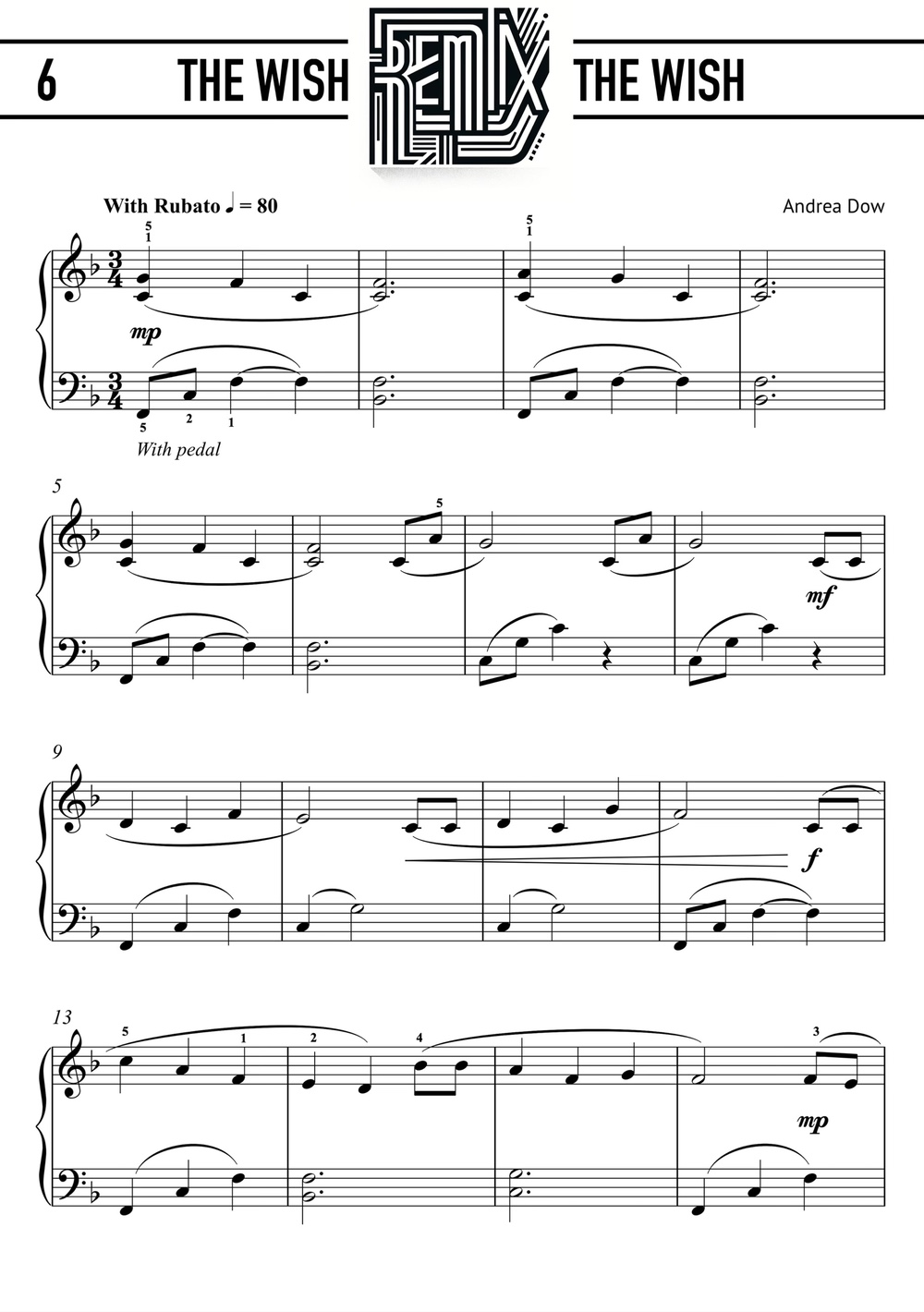
Students in Wunderkeys may play this version from Remix: Teen Hits from Kids Tunes

One of my all-time versions of Happy Birthday, in duet form – and I have the music if you want to tackle it.

Bach on Facebook!?!

He’s the master of harmony and counterpoint, he could effortlessly compose an amazing concerto or cantata, but what if Johann Sebastian Bach was on social media?

To celebrate the 339th anniversary of the great composer’s birth (it’s either today or March 31, depending on Old Style and New Style dates), we’ve imagined what his Facebook page might have looked like.

So sit back and enjoy the Baroque master’s status updates and life events in full Instagram, wall-post and emoticon glory.

Click the image below to take a closer look.

facebook-bach


It’s Carl Czerny’s Birthday!

czerny599

1791 ~ Carl Czerny, Austrian pianist and composer whose vast musical production amounted to over a thousand works.

His books of studies for the piano are still widely used in piano teaching.
More information on Czerny

Czerny is in the center top of this image. He influenced many!

Czerny is in the center top of this image. He influenced many!

At the age of fifteen, Czerny began a very successful teaching career. Basing his method on the teaching of Beethoven and Muzio Clementi, Czerny taught up to twelve lessons a day in the homes of Viennese nobility.

His ‘star’ pupils included Theodor Döhler, Stephen Heller, Sigismond Thalberg, Leopoldine Blahetka and Ninette de Belleville.In 1819, the father of Franz Liszt brought his son to Czerny.

Liszt became Czerny’s most famous pupil. He trained the child with the works of Beethoven, Clementi, Ignaz Moscheles and Johann Sebastian Bach. The Liszt family lived in the same street in Vienna as Czerny, who was so impressed by the boy that he taught him free of charge. Liszt was later to repay this confidence by introducing the music of Czerny at many of his Paris recitals.

Shortly before Liszt’s Vienna concert of 13 April 1823 (his final concert of that season), Czerny arranged, with some difficulty (as Beethoven increasingly disliked child prodigies) the introduction of Liszt to Beethoven. Beethoven was sufficiently impressed with the young Liszt to give him a kiss on the forehead. Liszt remained close to Czerny, and in 1852 his Études d’exécution transcendente (Transcendental Études) were published with a dedication to Czerny.

Happy Birthday ~ Gene Krupa!

krupa


Eugene Bertram “Gene” Krupa lived from January 15, 1909 to October 16, 1973.  He was an American jazz and big band drummer, actor and composer, known for his highly energetic and flamboyant style.

One of my all-time favorite non-piano songs is Sing Sing Sing. Krupa joined Benny Goodman’s band in 1934, where his featured drum work made him a national celebrity. His tom-tom interludes on their hit “Sing, Sing, Sing” were the first extended drum solos to be recorded commercially.

The Benny Goodman big band playing Sing Sing Sing, featuring Gene Krupa at the end. We get the added benefit of hearing Mr. Harry James play a trumpet solo.

~~~

Gene Krupa and Buddy Rich: Famous Drum Battle

Daily Listening Assignments ~ June 5, 2020


Happy Birthday is a song that I like to have each of my students learn at various levels appropriate to their level. When a friend or family member has a birthday, it’s great to be able to sit down and play.


It’s only been fairly recently that piano students could have this music in their books.

“Happy Birthday to You”, more commonly known as simply “Happy Birthday”, is a song that is traditionally sung to celebrate the anniversary of a person’s birth. According to the 1998 Guinness World Records, “Happy Birthday to You” is the most recognized song in the English language, followed by “For He’s a Jolly Good Fellow”.

The melody, or part you sing, of “Happy Birthday to You” comes from the song “Good Morning to All”, which has traditionally been attributed to American sisters Patty and Mildred J. Hill in 1893, although the claim that the sisters composed the tune is disputed.

Patty Hill was a kindergarten principal and her sister Mildred was a pianist and composer.  The sisters used “Good Morning to All” as a song that young children would find easy to sing.  The combination of melody and lyrics in “Happy Birthday to You” first appeared in print in 1912, and probably existed even earlier.

“Happy Birthday” in the style of Bach, Mozart, Beethoven, Mendelssohn, Chopin, Liszt, Dvorak, and Stravinsky.  Find the melody!


Lots of legal stuff below which you can skip…

None of the early appearances of the “Happy Birthday to You” lyrics included credits or copyright notices. The Summy Company registered a copyright in 1935, crediting authors Preston Ware Orem and Mrs. R. R. Forman. In 1988, Warner/Chappell Music purchased the company owning the copyright for US$25 million, with the value of “Happy Birthday” estimated at US$5 million. Based on the 1935 copyright registration, Warner claimed that the United States copyright will not expire until 2030, and that unauthorized public performances of the song are illegal unless royalties are paid to Warner. In one specific instance in February 2010, these royalties were said to amount to US$700. By one estimate, the song is the highest-earning single song in history, with estimated earnings since its creation of US$50 million.In the European Union, the copyright for the song expired on January 1, 2017.

The American copyright status of “Happy Birthday to You” began to draw more attention with the passage of the Sonny Bono Copyright Term Extension Act in 1998. When the U.S. Supreme Court upheld the Act in Eldred v. Ashcroft in 2003, Associate Justice Stephen Breyer specifically mentioned “Happy Birthday to You” in his dissenting opinion. American law professor Robert Brauneis, who extensively researched the song, concluded in 2010 that “It is almost certainly no longer under copyright.”

In 2013, based in large part on Brauneis’s research, Good Morning to You Productions, a company producing a documentary about “Good Morning to All”, sued Warner/Chappell for falsely claiming copyright to the song.  In September 2015, a federal judge declared that the Warner/Chappell copyright claim was invalid, ruling that the copyright registration applied only to a specific piano arrangement of the song, and not to its lyrics and melody.

In 2016, Warner/Chappell settled for US $14 million, and the court declared that “Happy Birthday to You” was in the public domain.

Legal stuff is finished and people can now sing and play “Happy Birthday to You” whenever and wherever they want.

One of my all-time versions of Happy Birthday, in duet form – and I have the music if you want to tackle it.


Was Bach on Facebook!?!

He’s the master of harmony and counterpoint, he could effortlessly compose an amazing concerto or cantata, but what if Johann Sebastian Bach was on social media?

To celebrate the 333rd anniversary of the great composer’s birth (it’s either today or March 31, depending on Old Style and New Style dates), we’ve imagined what his Facebook page might have looked like.

So sit back and enjoy the Baroque master’s status updates and life events in full Instagram, wall-post and emoticon glory.

Click the image below to take a closer look.

facebook-bach

Read more at http://www.classicfm.com/composers/bach/guides/bach-facebook-profile/#iKuZjLTM8Yzs2414.99