Tonight, we are going to Avery Fisher Hall at the Lincoln Center in New York to hear an all-Mozart program including
Piano Concerto No. 21
Symphony No. 38, Prague
Piano Concerto No. 20
Comments and full program later!

Tonight, we are going to Avery Fisher Hall at the Lincoln Center in New York to hear an all-Mozart program including
Piano Concerto No. 21
Symphony No. 38, Prague
Piano Concerto No. 20
Comments and full program later!
Now this is one flight delay we actually wish we were stuck in.
A video uploaded to YouTube captures every theater geek’s dream-come-true: a sing-off between Broadway cast members of “The Lion King” and “Aladdin.” Though it took place during a six-hour weather delay at LaGuardia Airport in New York City, the singing turned what could’ve been a dreary scene into an incredible one.
Watch as “The Lion King” cast starts off belting the iconic “Circle of Life,” but at the 3:06 mark, the camera cuts to the “Aladdin” cast fighting back, as James Inglehart, who plays the Genie, gives a seriously impressive freestyle rap. The battle continues and later on, at the 6:40 mark, the Aladdin cast performs a fantastic “Arabian Nights.”
For those who witnessed the sing-off, that awesome performance may have been more memorable than their trip.
via Watch ‘Lion King’ And ‘Aladdin’ Broadway Casts Have Epic Sing-Off During Flight Delay.

• 1665 ~ Nicolas Bernier, Composer
• 1686 ~ Cristoph Raupach, Composer
• 1722 ~ Johann Kuhnau, Composer, died at the age of 62
• 1759 ~ Theodor Zwetler, Composer
• 1785 ~ Gottfried August Homilius, Composer, died at the age of 71
• 1798 ~ Alexey Fyodorovich L’vov, Composer
• 1813 ~ Prosper Philippe Catherine Sainton, Composer
• 1816 ~ Giovanni Paisiello, Italian Composer (Serva Padrona), died at the age of 76
• 1826 ~ Carl Maria von Weber, German Composer (Oberon), died at the age of 39
Read more about von Weber
• 1826 ~ Ivar Christian Hallstrom, Composer
• 1852 ~ Tomasz Napoleon Nidecki, Composer, died at the age of 45
• 1861 ~ Tomas Genoves y Lapetra, Composer, died at the age of 55
• 1863 ~ Arthur Somervell, Composer
• 1868 ~ Anselm Huttenbrenner, Composer, died at the age of 73
• 1879 ~ Adolf Wiklund, Composer
• 1895 ~ August Baeyens, Flemish Composer of Coriolanus
• 1885 ~ Julius Benedict, Composer (Protoghesi), died at the age of 80
• 1894 ~ Immanuel Faisst, Composer, died at the age of 70
• 1908 ~ Luca Fumagalli, Composer, died at the age of 71
• 1909 ~ Alfred Uhl, Composer
• 1913 ~ Friedrich Wildgans, Composer
• 1922 ~ Specs (Gordon) Powell, Musician: drummer: CBS staff musician
• 1923 ~ Daniel Pinkham, American composer
• 1925 ~ Bill Hayes, Singer, entertainer
• 1927 ~ Paul Lacombe, Composer, died at the age of 89
• 1932 ~ Pete Jolly (Cragioli), Pianist
• 1937 ~ Stanley Lunetta, Composer
• 1941 ~ Martha Argerich, Brazilian pianist
• 1941 ~ Floyd Butler, Singer with Fifth Dimension and Friends of Distinction
• 1941 ~ Roy Eldridge was featured on trumpet and vocal as drummer Gene Krupaand his band recorded After You’ve Gone for Okeh Records.
• 1942 ~ Sammy Kaye and his orchestra recorded the classic I Left My Heart at the Stage Door Canteen for Victor Records.
• 1942 ~ Charles Dodge, Composer
• 1943 ~ Bill Hopkins, Composer
• 1944 ~ Riccardo Zandonai, Composer, died at the age of 61
• 1945 ~ Don Reid, Singer, Grammy Award-winning group: The Statler Brothers and CMA Vocal Group of the Year from 1972 to 1980
• 1946 ~ Fred Stone, Singer with Sly and the Family Stone
• 1947 ~ Laurie Anderson, American composer and performance artist
• 1956 ~ Kenny G (Gorelick), Saxophonist
• 1956 ~ Elvis Presley made his second appearance on Milton Berle’s Texaco Star Theatre. Presley sang Heartbreak Hotel, his number one hit. The TV critics were not kind to Elvis’ appearance on the show. They panned him, saying his performance looked “like the mating dance of an aborigine.”
• 1959 ~ Bob Zimmerman graduated from high school in Hibbing, MN. Zimmerman was known as a greaser to classmates in the remote rural community, because of his long sideburns and leather jacket. Soon, Zimmerman would be performing at coffee houses at the University of Minnesota in Minneapolis, and later, in Greenwich Village in New York City. He would also change his name to Bob Dylan (after poet Dylan Thomas, so the story goes).
• 1964 ~ David Jones and The King Bees had their first record, Liza Jane, released by Vocalion Records of Great Britain. Less than a decade later, we came to know Jones better as David Bowie.
• 1965 ~ “Wooly Bully” by Sam the Sham and Pharaohs hit #2
• 1971 ~ Marky Mark (Mark Wahlberg), Guitarist, singer with Marky Mark and The Funky Bunch
• 1972 ~ Maureen McGovern quit her job as a full-time secretary for a new career as a full-time singer. Maureen was part of a trio before recording as a solo artist in July, 1973. Her first song, The Morning After, from the movie, The Poseidon Adventure, was a million-seller. She also sang the theme, Different Worlds, from ABC-TV’s Angie, and Can You Read My Mind from the movie, Superman. Ms. McGovern starred in Pirates of Penzance for 14 months on Broadway.
• 1993 ~ Conway Twitty, Country star (Linda on My Mind), died at the age of 59 during surgery
• 1994 ~ Ish Kabbible (Merwyn A Bogue), Cornetist with Kay Kyser, died at the age of 86
• 1999 ~ Mel Torme passed away
We’ve previously featured the cellist Nicholas Canellakis and the pianist Michael Brown performing together as part of our Café Concert series on WQXR.org. But this week brings out a different side to the musicians’ collaboration, as the host and sometime sidekick of the online video series “Conversations with Nick Canellakis.”
Joined by the pianist Emanuel Ax – or “Yo-Yo Ma’s accompanist” – we hear about awards he didn’t win and the various “songs” that he performs. Watch:
Emanuel Ax Demoted to Mere ‘Accompanist’ in Prank Video – WQXR.
• 1585 ~ Marc-Antoine de Muret, Composer, died at the age of 58
• 1770 ~ James Hewitt, Composer
• 1846 ~ Josef Sittard, Music writer
• 1872 ~ Stanislaw Moniuszko, Composer, died at the age of 53
• 1585 ~ Erno Rapee (1891) Hungarian conductor
• 1899 ~ Leo Spies, Composer
• 1905 ~ Carl Albert Loeschhorn, Composer, pianist and Royal Professor died at the age of 85
• 1907 ~ Marjan Kozina, Composer
• 1907 ~ Agathe Grondahl, Composer, died at the age of 59
• 1909 ~ Paul Nordoff, American composer of the Frog Prince
• 1913 ~ Bruno Bettinelli, Composer
• 1915 ~ William Charles Denis Browne, Composer, died at the age of t 26
• 1919 ~ Robert Merrill (Moishe Miller), Metropolitan Opera singing star, baritone
• 1922 ~ Irwin Bazelon, American composer
• 1916 ~ Mildred J Hill, Composer/musician (Happy Birthday To You), died at the age of 56
• 1927 ~ Gerry Mulligan, American jazz baritone saxophonist and arranger
• 1930 ~ Morgana King, Jazz singer
• 1930 ~ Pentti Raitio, Composer
• 1931 ~ Cesar Bolanos, Composer
• 1934 ~ The Dorsey Brothers, Tommy and Jimmy, recorded Annie’s Aunt Fanny on the Brunswick label. The track featured trombonist Glenn Miller, who also vocalized on the tune.
• 1937 ~ Freddie Fender, Guitarist
• 1940 ~ Dorothy Rudd Moore, Composer
• 1942 ~ Glenn Wallichs did what was called ‘promotion’ for Capitol Records in Hollywood. He came up with the idea that he could send copies of Capitol’s new records to influential radio announcers all around the U.S. and, maybe, add to the chances that stations would play the records. The practice would soon become common among most record labels.
• 1944 ~ Roger Ball, Musician, saxophonist and keyboards with Average White Band
• 1945 ~ Anthony Braxton, Jazz musician Read more about Braxton
• 1945 ~ Michelle Phillips (Holly Michelle Gilliam), Singer with The Mamas and the Papas
• 1945 ~ Gordon Waller, Singer with Peter and Gordon
• 1951 ~ Conductor Serge Koussevitsky died. Born in Russia, he conducted the State Symphony Orchestra in Petrograd before moving to the U.S. to conduct the Boston Symphony Orchestra.
Read more about Serge Koussevitsky
• 1956 ~ Max Kowalski, Composer, died at the age of 73
• 1961 ~ “Wildcat” closed at Alvin Theater NYC after 172 performances
• 1963 ~ First transmission of Pop Go The Beatles on BBC radio
• 1964 ~ The Beatles “World Tour” begins in Copenhagen Denmark
• 1972 ~ Godfried Devreese, Composer, died at the age of 79
• 1978 ~ 32nd Tony Awards: Da and Ain’t Misbehavin’ won
• 1988 ~ “Cabaret” closes at Imperial Theater NYC after 262 performances
• 1988 ~ 42nd Tony Awards: M Butterfly and Phantom of the Opera won
• 1989 ~ Vaclav Kaslik, Czech opera Composer/conductor, died at the age of 71
• 1994 ~ Derek Lek Leckenby, rock guitarist (Herman’s Hermits), died at the age of 48
• 1994 ~ Earle Warren, Alto sax player, died at the age of 79
• 1995 ~ 49th Tony Awards: Love! Valour! Compassion! and Sunset Boulevard won
• 1997 ~ Ronnie Lane, bassist (Faces), died at the age of 50 of multiple sclerosis
• 2001 ~ John Hartford, a versatile and wry performer who wrote the standardGentle on My Mind and turned his back on Hollywood to return to bluegrass music, died Monday at at the age of 63. He was a singer-songwriter, comedian, tap-clog dancer, television performer and riverboat enthusiast. Gentle on My Mind has been broadcast on radio or television more than 6 million times, according to Broadcast Music Incorporated, which collects song royalties. It has been recorded more than 300 times, most prominently by Glen Campbell in 1967. Hartford’s career rambled from Hollywood to Nashville, with stops writing and performing on network television, thousands of shows at bluegrass clubs and festivals, and stints as a licensed steamboat pilot on the Mississippi River. At the height of his fame in the early 1970s, Hartford reconsidered his decision to take an offer to star in a detective series on CBS. Instead, he returned to Nashville and resumed his career as an innovative, relatively low-profile bluegrass singer-songwriter. “I knew that if I did it, I would never live it down,” Hartford said of the television series in a 2000 interview. “Because then when I went back to music, people would start saying, `Oh, he didn’t make it in acting so he’s gone country.”‘ Born in New York City and raised in St. Louis, Hartford was enthralled as a youngster by riverboats and bluegrass music, in particular that of Lester Flatt and Earl Scruggs. He moved to Nashville in 1965, and his first album “John Hartford Looks at Life” was released the following year. Hartford’s version of Gentle on My Mind from second album “Earthwords & Music” was a minor hit in 1967. The song is about a hobo whose mind is eased by the thought of a former lover. Hartford moved to California in 1968, landing a job writing and performing on “The Smothers Brothers Comedy Hour.” His went on to the cast of “The Glen Campbell Goodtime Hour.” Returning to Nashville in 1971, Hartford released the landmark acoustic album “Aereo-Plain” and continued to record until his death. He was one of the performers on the hit soundtrack to the film “O Brother, Where Art Thou?”
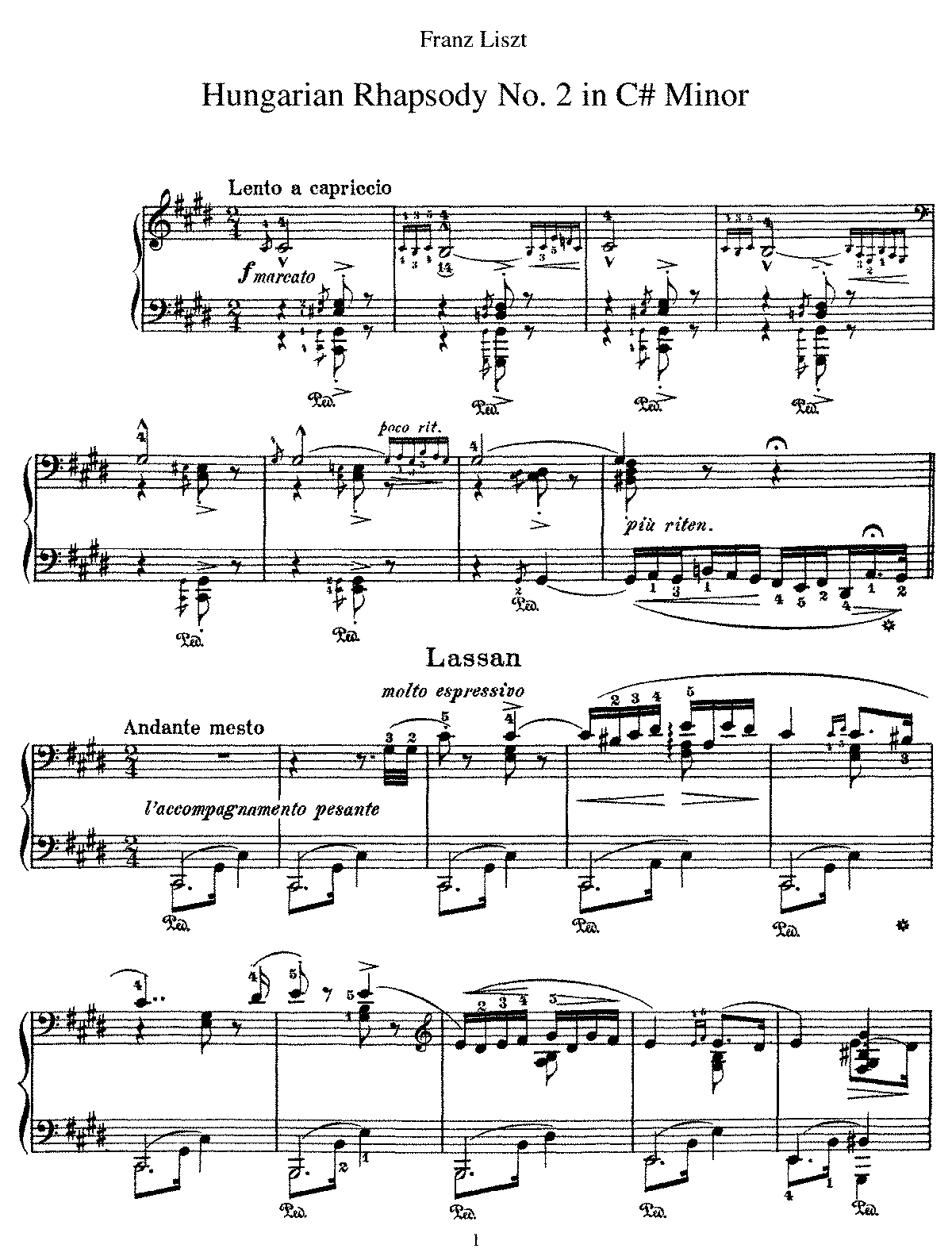
Danish comedian and pianist Victor Borge gives every impression of having been asked to play a duet with someone whom he not only doesn’t know, but doesn’t particularly like. Forced to come up with a mutually agreeable way of sharing the musical workload, he settles on the most difficult route possible.
It’s not clear why two pianists were needed for this performance of Liszt’s Hungarian Rhapsody No.2, S.244/2. I think that they did it just for the fun of it. The result is hilarious.
They’re not the only ones to tackle Liszt’s Hungarian Rhapsody No.2 as a piano duo. We also have these guys:
Finally, for real:
• 1657 ~ Manuel de Egues, Composer
• 1660 ~ Johannes Schenck, Composer
• 1661 ~ Gottfried Scheidt, Composer, died at the age of 67
• 1736 ~ Johann Christoph Oley, Composer
• 1746 ~ James Hook, Composer
• 1750 ~ Frederic Thieme, Composer
• 1773 ~ Michael Gottard Fischer, Composer
• 1801 ~ Frantisek Jan Skroup, Composer
• 1804 ~ Jean-Engelbert Pauwels, Composer, died at the age of 35
• 1809 ~ John “Christmas” Beckwith, Composer, died at the age of 58
• 1828 ~ Jean Alexander Ferdinand Poise, Composer
• 1828 ~ Jose Inzenga y Castellanos, Composer
• 1829 ~ Alfonse Charles Renaud de Vilback, Composer
• 1832 ~ Alexander Charles Lecocq, Composer
• 1841 ~ Eduardo Caudella, Composer
• 1844 ~ Emile Paladilhe, Composer
• 1849 ~ Francois de Paule Jacques Raymond de Fossa, Composer, died at the age of 73
• 1858 ~ Julius Reubke, Composer, died at the age of 24
• 1867 ~ Bela Anton Szabados, Composer
• 1868 ~ Lvar Henning Mankell, Composer
• 1872 ~ Heinrich Esser, Composer, died at the age of 53
• 1875 ~ French composer Georges Bizet died at the age of 36, the same year his “Carmen” was first produced. It caused a scandal at first but went on to become one of opera’s most popular works.
More information on Bizet
• 1887 ~ Roland Hayes, American tenor
• 1887 ~ Emil Axman, Composer
• 1888 ~ Cark Reidel, Composer, died at the age of 60
• 1890 ~ Henryk Oskar Kolberg, Composer, died at the age of 76
• 1893 ~ Assen Karastoyanov, Composer
• 1898 ~ Nikolai Afanisev, Composer, died at the age of 77
• 1899 ~ Johann Strauss Jr., Viennese conductor and composer of waltzes including “The Blue Danube”, died at the age of 73.
More information on Strauss
• 1904 ~ Jan Peerce (Jacob Pincus Perlemuth), Opera singer, tenor
• 1906 ~ Josephine Baker, American-born French jazz singer and dancer
• 1907 ~ Antonio Emmanvilovich Spadavecchia, Composer
• 1911 ~ Come Josephine in My Flying Machine hit #1
• 1913 ~ Josef Richard Rozkosny, Composer, died at the age of 79
• 1922 ~ Ivan Patachich, Composer
• 1926 ~ Carlos Veerhoff, Composer
• 1926 ~ Janez Maticic, Composer
• 1927 ~ Boots Randolph, American saxophonist (Yakety Sax)
• 1931 ~ The Band Wagon, a Broadway musical, opened in New York City. The show ran for 260 performances.
• 1932 ~ Dakota Staton (Aliyah Rabia), Jazz singer
• 1939 ~ Beer Barrel Polka hit #1 on the pop singles chart by Will Glahe
• 1942 ~ Curtis Mayfield, American rhythm-and-blues singer, songwriter, producer and guitarist Grammy Award-winner, inducted into the Rock and Roll Hall of Fame, March 15, 1999
• 1944 ~ Mike Clarke, Musician, drummer with The Byrds
• 1946 ~ Ian Hunter, Singer, songwriter with Mott the Hoople
• 1949 ~ Stephen Ruppenthal, Composer
• 1950 ~ Suzie Quatro (Quatrocchio), Singer
• 1951 ~ Deniece Williams, Singer
• 1952 ~ Frank Sinatra recorded the classic Birth of the Blues for Columbia Records
• 1959 ~ Ole Windingstad, Composer, died at the age of 73
• 1961 ~ Charles Hart, Lyricist: Phantom of the Opera
• 1961 ~ “Wildcat” closed at Alvin Theater NYC after 172 performances
• 1964 ~ The Hollywood Palace on ABC-TV hosted the first appearance of the first U.S. concert tour of The Rolling Stones. Dean Martin emceed the show. One critic called the Stones “dirtier and streakier and more disheveled than The Beatles.”
• 1971 ~ Yehudi Menuhin performed on a 250-year-old Stradivarius violin at Sothby’s auction house. It sold for $200,000.
• 1978 ~ Johnny Mathis and Deniece Williams combined their singing talents to reach the number one spot on the nation’s pop music charts with Too Much, Too Little, Too Late.
• 1986 ~ Arthur Charles Ernest Hoeree, Composer, died at the age of 89
• 1994 ~ Hub Matthijsen, Violinist/bandmaster, died at the age of 52
There’s more to a song than meets the ear, as Neil deGrasse Tyson finds out when he interviews singer/songwriter/producer Josh Groban. Josh shares how he got started playing his family’s electronic Casio piano while he was still in diapers, and whether he was a science geek in school.
In studio, concert pianist and MIT Lecturer in Music, Elaine Kwon, and co-host Chuck Nice add their voices to the chorus to help us hear the science woven into the songs. You’ll learn how artists breathe life into their music, and about the qualitative difference between human generated and automated music.
Explore the importance of the acoustics of a performance space, the effect music has on people, the difference between melody and harmony, the ranges the human voice is capable of, and which was more important, Charlie Parker’s personal style or his sax.
Plus, Neil and Josh discuss “acoustic panty removers”, Chuck admits to singing first soprano in his church choir, and we find out whether Rachmaninoff really had “big hands” and what rubato means.
via The Science of Music with Josh Groban | StarTalk Radio Show by Neil deGrasse Tyson.
1577 ~ Giovanni Righi, Composer
• 1614 ~ Benjamin Rogers, Composer
• 1715 ~ Herman-François Delange, Composer
• 1750 ~ Johann Valentin Rathgeber, German Composer, died at the age of 68
• 1806 ~ Isaac Strauss, Composer
• 1807 ~ Robert Fuhrer, Composer
• 1830 ~ Olivier Metra, Composer
• 1831 ~ Jan G Palm Curaçao, Bandmaster/choir master/composer
• 1857 ~ Sir Edward Elgar, British composer Elgar’s Pomp and Circumstance, usually heard at graduations, was featured in Disney’s Fantasia 2000.
Read quotes by and about Elgar
More information about Elgar
• 1858 ~ Harry Rowe Shelley, Composer
• 1863 ~ Paul Felix Weingartner, German conductor
• 1873 ~ François Hainl, Composer, died at the age of 65
• 1876 ~ Hakon Borresen, Composer
• 1891 ~ Ernst Kunz, Composer
• 1897 ~ Alexander Tansman, Composer
• 1900 ~ David Wynne, Composer
• 1909 ~ Robin Orr, Composer
• 1913 ~ Bert Farber, Orchestra leader for Arthur Godfrey and Vic Damone
• 1915 ~ Robert Moffat Palmer, American composer
• 1927 ~ Carl Butler, Country entertainer, songwriter
• 1927 ~ Freidrich Hegar, Composer, died at the age of 85
• 1929 ~ Alcides Lanza, Composer
• 1929 ~ Frederic Devreese, Composer
• 1932 ~ Sammy Turner (Samuel Black), Singer
• 1934 ~ Johnny Carter, American singer
• 1937 ~ Louis Vierne, Composer, died at the age of 66
• 1939 ~ Charles Miller, Saxophonist and clarinetist
• 1941 ~ William Guest, Singer with Gladys Knight & The Pips
• 1941 ~ Charlie Watts, Drummer with Rolling Stones
• 1944 ~ Marvin Hamlisch, American pianist, composer and arranger of popular music
More information about Hamlisch
• 1947 ~ Hermann Darewsky, Composer, died at the age of 64
• 1949 ~ Dynam-Victor Fumet, Composer, died at the age of 82
• 1949 ~ Ernest Ford, Composer, died at the age of 91
• 1960 ~ For the first time in 41 years, the entire Broadway theatre district in New York City was forced to close. The Actors Equity Union and theatre owners came to a showdown with a total blackout of theatres.
• 1964 ~ The original cast album of “Hello Dolly!” went gold — having sold a million copies. It was quite a feat for a Broadway musical.
• 1964 ~ “Follies Bergere” opened on Broadway for 191 performances
• 1972 ~ Franz Philipp, Composer, died at the age of 81
• 1977 ~ Henri D Gagnebin, Swiss organist and composer, died at the age of 91
• 1982 ~ “Blues in the Night” opened at Rialto Theater NYC for 53 performances
• 1983 ~ Stan Rogers, musician, died in aircraft fire
• 1985 ~ The Huck Finn-based musical “Big River” earned seven Tony Awards in New York City at the 39th annual awards presentation.
• 1986 ~ Daniel Sternefeld, Belgian conductor and composer died at the age of 80
• 1987 ~ Andres Segovia, Spanish classical guitarist, died at the age of 94. He established the guitar as a serious classical instrument through his numerous concerts and by his transcriptions of many pieces of Bach and Handel.
More information on Segovia
• 1987 ~ Sammy Kaye, Orchestra leader (Sammy Kaye Show), died at the age of 77
• 1994 ~ Prima Sellecchia Tesh, daughter of John Tesh and Connie Sellecca
• 1997 ~ Doc Cheatham, Jazz musician, died of stroke at the age of 91
• 2001 ~ Imogene Coca, the elfin actress and satiric comedienne who co-starred with Sid Caesar on television’s classic “Your Show of Shows” in the 1950s, died at the age of 92. Coca’s saucer eyes, fluttering lashes, big smile and boundless energy lit up the screen in television’s “Golden Age” and brought her an Emmy as best actress in 1951. Although she did some broad burlesque, her forte was subtle exaggeration. A talented singer and dancer, her spoofs of opera divas and prima ballerinas tiptoed a fine line between dignity and absurdity until she pushed them over the edge at the end. With Caesar she performed skits that satirized the everyday – marital spats, takeoffs on films and TV programs, strangers meeting and speaking in cliches. “The Hickenloopers” husband-and-wife skit became a staple.
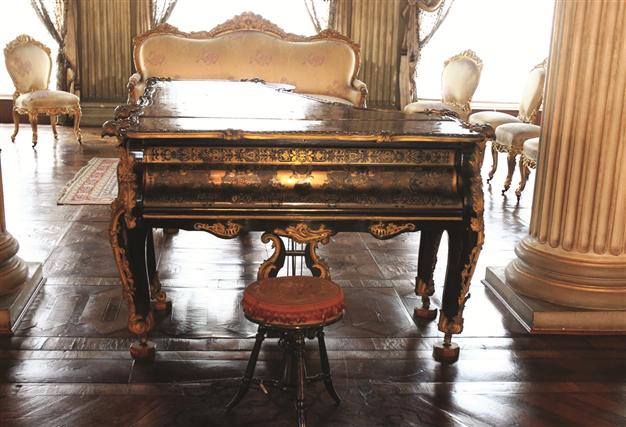
The pianos in Istanbul’s Dolmabahçe Palace, which hosted some 1 million people last year, draw great interest from local and foreign visitors for their magnificence and harmony with their surroundings.
National Palace guide Osman Nihat Bişgin said Dolmabahçe Palace was a Tanzimat (reform-era) palace, adding, “All features of the reform era are clearly seen in Dolmabahçe Palace. This process, which we call the Europeanization and westernization process, made western music enter Dolmabahçe Palace.”
He said the palace had a total of 12 pianos, and all of them had ornamentations suitable to the style and harmony of the palace.
Bişgin said the palace opened in 1856 and the pianos were brought there nearly at the same time. “The wives of sultans were taking piano education in the palace, particularly in the final years of the Ottomans. There are many pianos and none of them were inactive; all of them were being played,” he said.
He said most of the piano brands in the palace were Hertz, Pleyel, Gaveau and Erard, and that the number of grand pianos was less.
Speaking of a striking green piano in Zülvecheyn Hall on the upper floor of the palace, Bişgin said it was a classical Pleyel-brand palace piano.
“Since the magnificence and glory was dominant in the palace, the pianos draw our attention visually. Their sound is not very famous, but they are very important and famous visually,” he said.
Bişgin said Zülvecheyn Hall had gilded ornamentation on its white and beige ceiling, adding, “We see enormous harmony between the piano and the ceiling.”
He said the furniture in Dolmabahçe Palace was in its original place, and added, “We can say that the pianos belong to these halls. The pianos in the Zülvecheyn and Süfera halls were designed to add visual richness to halls like them. They are not generally played.”
Crystal piano and chair in the Glass Kiosk
As for the rare crystal piano in the Glass Kiosk, Bişgin said the following: “The Glass Kiosk is a big venue hidden behind the walls of the palace. Mustafa Kemal Atatürk greeted the public in this place. It is like a winter garden surrounded with glass. In harmony with this kiosk, there is a crystal piano. It is a Paris-made Gaveau piano. Its chair is crystal, too.”
Another piano in the palace is a plain black German-made Steinway. Bişgin said its sound was very strong and it was very valuable.
“It was produced as a Hamburg Steinway in 1912. Then the factory moved to the U.S. Accordingly, there were only five Steinway pianos made in Germany. This is one of them. Its estimated price is 200,000 euros. It also has the emblem of the sultan Abdulmecid,” Bişgin added.
Speaking of the piano, which was used during the acceptance of ambassadors in the Süfera Hall, Bişgin said, “Süfera is the plural of the word sefir [ambassador]. This hall was created to address foreigners. The furniture is gold-plated; the ceiling is the same. There is a boulle-work piano here to show the beauty of metal and gold. This piano is wonderful for decoration.”
More pictures at Pianos in harmony with palace halls – ARTS.
 MaryO'Studio