June 17: Today’s Music History

today

Be sure your student reads and listens to Today’s Daily Listening Assignment

• 1672 ~ Orazio Benevoli, Italian Composer, died at the age of 67

• 1725 ~ Joseph Anton Bauer, Composer

• 1750 ~ Michel Woldemar, Composer

• 1818 ~ Charles Gounod, French composer, conductor and organist
Read quotes by and about Gounod
More information about Gounod

• 1855 ~ Fritz Steinbach, Composer

• 1882 ~ Igor Stravinsky, Russian-born American composer Stravinsky’s Firebird is featured in Fantasia 2000 and his The Rite of Spring was featured in the original Fantasia
Read quotes by and about Stravinsky
More information about Stravinsky
Grammy winner

• 1883 ~ Alexandre Cellier, Composer

• 1888 ~ Bernhard van den Sigtenhorst Meyer, Composer

• 1900 ~ Hermann Reuter, Composer

• 1902 ~ Sammy Fain (Samuel Feinberg), Oscar-winning musician, composer
More information about Fain

• 1908 ~ John Verrall, Composer

• 1910 ~ Red (Clyde Julian) Foley, Songwriter, singer

• 1910 ~ Herbert Owen Reed, Composer

• 1916 ~ Einar Englund, Composer

• 1917 ~ Dean Martin, Entertainer

• 1922 ~ Herbert Kelsey Jones, Composer

• 1926 ~ Manuel Enriquez, Composer

• 1941 ~ Johan Wagenaar, Dutch Composer (Cyrano de Bergerac), died at the age of 78

• 1930 ~ Romuald Twardowski, Composer

• 1932 ~ Mignon Dunn, American mezzo-soprano

• 1933 ~ Christian Ferras, French violinist/conductor

• 1939 ~ Dickie Doo (Gerry Granahan), Singer with Dickie Doo and The Don’ts

• 1942 ~ Norman Kuhlke, Musician, drummer with The Swinging Blue Jeans

• 1943 ~ Christopher Brown, Composer

• 1943 ~ Barry Manilow, , American singer/pianist (Mandy, I Write the Songs)

• 1951 ~ Carl Vogler, Composer, died at the age of 77

• 1952 ~ Alberto Williams, Argentine Composer (Etrerno Reposo), died at the age of 89

• 1953 ~ Walter Niemann, Composer, died at the age of 76

• 1957 ~ So Rare by Jimmy Dorsey Orchestra peaked at #2

• 1967 ~ “Somebody To Love” by Jefferson Airplane peaked at #5

• 1967 ~ Barbra Streisand: A Happening in Central Park performed

• 1968 ~ Ohio Express’ Yummy Yummy Yummy went gold

• 1969 ~ Jazz musician Charles Mingus came out of a two-year, self-imposed retirement to make a concert appearance at the Village Vanguard in New York City.

• 1972 ~ Long Haired Lover From Liverpool by Little Jimmy Osmond peaked at #38

• 1978 ~ Shadow Dancing, by Andy Gibb, reached the number one spot on the pop music charts for the first of seven weeks. Gibb had two other number one hits: I just want to Be Your Everything and (Love is) Thicker than Water. Gibb, the youngest of the Gibb brothers who made up the Bee Gees, hosted TV’s Solid Gold in 1981-82. Andy scored nine hits on the pop music charts in the 1970s and 1980s. He died of an inflammatory heart virus in Oxford, England in 1988.

• 1978 ~ Cheeseburger In Paradise by Jimmy Buffett peaked at #32

• 1983 ~ Peter Mennin(i), American Composer (Moby Dick), died at the age of 60

• 1986 ~ Kate Smith died in Raleigh North Carolina at 78

• 1991 ~ Country entertainer Minnie Pearl suffered a stroke at 78

• 1992 ~ Dewey Balfa, Bayou fiddler, died at the age of 65

• 1995 ~ The Who’s “Tommy” closed at St James Theater NYC after 899 performances

• 2008 ~ Cyd Charisse [Tula Finklea], American dancer and actress (Singin’ in the Rain), died at the age of 86

Daily Listening Assignments ~ June 17

Today’s assignment is a very popular piece by Johann Pachelbel called Canon in D.

A canon is a technique that employs a melody with one or more imitations of the melody played after a given duration (e.g., quarter rest, one measure, etc.). The initial melody is called the leader, while the imitative melody, which is played in a different voice, is called the follower. The follower must imitate the leader, either as an exact replication of its rhythms and intervals or some transformation thereof. Repeating canons in which all voices are musically identical are called rounds—”Row, Row, Row Your Boat” and “Frère Jacques” are popular examples.

The original version:

Can you see why the cellist is bored?

Here’s what his music looks like

And that repeats over and over for the whole piece!

A bit of humor from a past cellist:

Variations on the theme:

Find it in Piano Pronto Finale and Coda

If your student is in Wunderkeys, The Pachelbel Session is a pop take on Pachelbel’s Canon in D. You can find the sheet music for this piece in WunderKeys Intermediate Performance Companion for Pop Studies Book 3.

June 16: Today’s Music History

today

Be sure your student reads and listens to Today’s Daily Listening Assignment

• 1633 ~ Nathaniel Schnittelbach, Composer

• 1651 ~ Marsilio Casentini, Composer, died at the age of 74

• 1637 ~ Giovanni Paulo Colonna, Composer

• 1752 ~ Meingosus Gaelle, Composer

• 1804 ~ Johann Adam Hiller, Composer, died at the age of 75

• 1808 ~ Georg Wenzel Ritter, Composer, died at the age of 60

• 1813 ~ Otto Jahn, German philologist and musicographer

• 1831 ~ Joseph Ignaz Schnabel, Composer, died at the age of 64

• 1837 ~ Valentino Fioravanti, Composer, died at the age of 72

• 1843 ~ David Popper, Composer

• 1843 ~ Jan Malat, Composer

• 1853 ~ Johan Gustaf Emil Sjogren, Composer

• 1858 ~ Eugene Ysaye, Composer

• 1863 ~ Paul Antonin Vidal, Composer

• 1879 ~ Gilbert and Sullivan’s “HMS Pinafore” debuted at Bowery Theater New York City

And from StarTrek: Picard and Worf sing HMS Pinafore in an effort to control a renegade Data.

• 1899 ~ Helen Traubel, Opera singer at the St. Louis Symphony and New York Metropolitan Opera (“The Met’s premier Wagnerian soprano.”)

• 1890 ~ A glittering program of music and ballet, featuring composer Edward Strause, opened the first Madison Square Garden in New York City.

• 1901 ~ Conrad Beck, Composer

• 1903 ~ Huldreich Georg Fruh, Composer

• 1909 ~ Willi Boskovsky, Austrian violinist and conductor

• 1910 ~ Wendelin Weissheimer, Composer, died at the age of 72

• 1916 ~ Francis Lopez, Composer

• 1928 ~ Sergiu Comissiona, Rumanian-born American conductor

• 1929 ~ James Kirtland Randall, Composer

• 1931 ~ Ivo Petric, Composer

• 1934 ~ Lucia Dlugoszewski, Composer

• 1938 ~ Mickie Finn, TV hostess and banjo player

• 1939 ~ Billy ‘Crash’ Craddock, Country singer

• 1940 ~ Vitezslava Kapralova, Composer, died at the age of 25

• 1941 ~ Lamont Dozier, Songwriter

• 1942 ~ Eddie Levert, Singer

• 1945 ~ Ian Matthews (McDonald), Musician, guitarist and singer with Fairport Convention

• 1946 ~ Miloje Milojevic, Composer, died at the age of 61

• 1946 ~ “Annie Get Your Gun” opened at Imperial Theater NYC for 1147 performances

• 1950 ~ James Smith, American singer with the Stylistics

• 1952 ~ Gino Vannelli, Singer, songwriter

• 1956 ~ Be-Bop-A-Lula, by Gene Vincent and His Blue Caps, was released on Capitol Records. Vincent was called Capitol’s answer to Elvis Presley. The tune became Vincent Eugene Craddock’s biggest hit of three (Lotta Lovin’, Dance to the Bop) to make the pop music charts. Vincent died in 1971.

• 1958 ~ Jose Pablo Moncayo Garcia, Composer, died at the age of 45

• 1962 ~ Paula Abdul, Singer

• 1967 ~ The Monterey Pop Festival got underway at the Monterey Fairgrounds in Northern California. Fifty thousand spectators migrated to the site that featured Jimi Hendrix, Janis Joplin, The Mamas and the Papas and The Who.

• 1969 ~ Karl Hubert Rudolf Schiske, Composer, died at the age of 53

• 1970 ~ Heino Eller, Composer, died at the age of 83

• 1972 ~ The only museum devoted exclusively to jazz music opened. The New York Jazz Museum welcomed visitors for the first time.

• 1977 ~ “Beatlemania” opened on Broadway

• 1978 ~ The film adaptation of Grease, a success on the Broadway stage, premiered in New York City. John Travolta and Olivia Newton-John. Several hit songs came out of the motion picture: Grease, by Frankie Valli, You’re the One That I Want and Summer Nights (both sung by Travolta and Newton-John). The first two songs were platinum 2,000,000+ sellers, while the third was a million-seller.

• 1979 ~ Ben Weber, American composer and winner of the Thorne Music Award in 1965, died at the age of 62

• 1980 ~ The movie The Blues Brothers opened in Chicago, IL. John Belushi and Dan Ackroyd, formerly of NBC’s Saturday Night Live, starred. The pair played Jake and Elwood Blues. James Brown, Ray Charles, and Aretha Franklin performed. Cab Calloway also appeared with a rendition of his classic Minnie the Moocher.

• 1990 ~ Eva Turner, British soprano, died

• 1991 ~ Vicky Brown, American singer (Power of Love), died

• 1991 ~ “Fiddler on the Roof” closed at Gershwin Theater NYC after 241 performances

• 1994 ~ Boris Alexandrov, Conductor of the Red Army Song/Dance Ensemble, died at the age of 88

• 1997 ~ Thirtyfirst Music City News Country Awards: Alan Jackson & LeAnn Rimes

• 2000 ~ Richard Dufallo, a conductor known for his energetic performances of contemporary music, died at age 67 of stomach cancer. Dufallo, who lived in Denton, conducted more than 80 major orchestras and festivals in the United States, Canada, and Europe, premiering numerous works by American and European composers, including Karlheinz Stockhausen, Jacob Druckman, Sir Peter Maxwell Davies and Krzystof Penderecki. He was a former assistant conductor of the New York Philharmonic and worked closely with Leonard Bernstein from 1965 to 1975. He also served as associate conductor of the Buffalo Philharmonic and as artistic director of contemporary music at the Aspen Festival in Colorado. He was married to pianist Pamela Mia Paul.

• 2001 ~ Joe Darion, the lyricist for “Man of La Mancha,” died at the age of 90. “Man of La Mancha” opened in New York in 1965 and ran for 2,328 performances. It won Darion and his composing partner Mitch Leigh a Tony Award for best score. Inspired by Cervantes’s “Don Quixote,” the musical went on to become the third-longest-running Broadway musical of the 1960s. Its music included the popular song The Impossible Dream. In the early 1950s, Darion had three top 10 hits: the Patti Page ballad “Changing Partners,” the Teresa Brewer novelty song Ricochet and Red Buttons’s comedy hit The Ho Ho Song. At the time of his death, Darion was working on a show titled “Oswego.”

• 2017 ~ Jacques Charpentier, French composer, died at the age of 83

• 2019 ~ Franco Zeffirelli, Italian film and opera director (Romeo & Juliet), died at the age of 96

June 15: Today’s Music History

today

Be sure your student reads and listens to Today’s Daily Listening Assignment

• 1636 ~ Johann David Mayer, Composer

• 1677 ~ Giovanni Battista Chinelli, Composer, died at the age of 67

• 1728 ~ Pietro Alessandro Pavona, Composer

• 1734 ~ Johann Ernst Altenburg, Composer

• 1749 ~ George Joseph Vogler, Composer

• 1763 ~ Franz Danzi, Composer

• 1772 ~ Louis-Claude Daquin, French organist and Composer, died at the age of 77

• 1821 ~ Nikolay Ivanovich Zaremba, Composer

• 1828 ~ Brizio Petrucci, Composer, died at the age of 91

• 1831 ~ Peter Fuchs, Composer, died at the age of 78

• 1836 ~ Théodore Dotrenge, South Netherland organist, died at about 74

• 1839 ~ Hans Skramstad, Composer, died at the age of 41

• 1843 ~ Edvard Hagerup Grieg, Norwegian composer
Read quotes by and about Grieg
More information about Grieg

• 1864 ~ Joseph Guy Marie Ropartz, Composer

• 1865 ~ Paul Gilson, Composer

• 1865 ~ Jakob Zeugheer, Composer, died at the age of 61

• 1869 ~ Albert Grisar, Composer, died at the age of 60

• 1886 ~ Charles Wood, Composer

• 1891 ~ Robert Russell Bennett, Musician, the orchestrator of the Victory at Sea series

• 1893 ~ Ferenc Erkel, Hungarian Composer and conductor, died at the age of 82

• 1895 ~ Richard Genee, Composer, died at the age of 72

• 1898 ~ Thomas Henry Wait Armstrong, Organist

• 1900 ~ Otto Clarence Luening, Composer

• 1900 ~ Paul J Mares, American jazz trumpeter and composer

• 1901 ~ John Wesley Work, Composer

• 1910 ~ Berend Giltay, Composer

• 1910 ~ David Rose, Composer, won 22 Grammy Awards

• 1917 ~ Leon Payne, Country artist, songwriter

• 1920 ~ Michel-Gaston Carraud, Composer, died at the age of 55

• 1936 ~ Erroll Garner (1921) ASCAP Award-winning American jazz pianist
and composer

• 1922 ~ John Veale, Composer

• 1926 ~ Jan Carlstedt, Composer

• 1929 ~ Geoffrey Penwill Parsons, Piano accompanist

• 1929 ~ Nigel Pickering, Guitarist

• 1934 ~ Alfred Bruneau, Composer, died at the age of 77

• 1936 ~ Al Jolson and Ruby Keeler starred in Burlesque on the Lux Radio Theatre.

• 1937 ~ Rolf Riehm, Composer

• 1937 ~ Waylon Jennings, American country music singer, songwriter and guitarist, won the Country Music Association Award in 1974

• 1938 ~ Jean-Claude Eloy, French Composer

• 1940 ~ Willem Frederik Bon, Dutch Composer

• 1941 ~ Harry (Edward) Nilsson III, Singer

• 1944 ~ Terri Gibbs, Singer

• 1945 ~ Rod Argent, English keyboardist for the Zombies

• 1946 ~ Janet Lennon, Singer with the Lennon Sisters

. 1946 ~ Artemios “Demis” Ventouris Roussos (June 15 1946-January 25, 2015) was a Greek singer and performer who had international hit records as a solo performer in the 1970s after having been a member of Aphrodite’s Child, a progressive rock group that also included Vangelis. He has sold over 60 million albums worldwide.

• 1947 ~ Paul Patterson, Composer

• 1949 ~ Russ Hitchcock, Singer with Air Supply

• 1949 ~ Michael Lutz, Bassist

• 1950 ~ Noddy (Neville) Holder, Musician, guitarist, singer and songwriter

• 1956 ~ Sixteen-year-old John Lennon of the music group, The Quarrymen, met 14-year-old Paul McCartney and invited him to join the group. In a few years, the group became The Beatles.

• 1957 ~ “Ziegfeld Follies of 1957″ closed at Winter Garden NYC after 123 performances

• 1962 ~ Alfred Cortot, French pianist, died at the age of 84

• 1963 ~ Kyu Sakamoto from Kawasaki, Japan, reached the number one spot on the pop music charts with Sukiyaki. The popular song captivated American music buyers and was at the top of the Billboard pop chart for three weeks. In Japan, where Sakamoto was enormously popular, Sukiyaki was known as Ue O Muite Aruko (I Look Up When I Walk). The entertainer met an untimely fate in 1985. Kyu (cue) Sakamoto was one of 520 people who perished in the crash of a Japan Air Lines flight near Tokyo. He was 43 years old.

• 1963 ~ “Sound of Music” closed at Lunt Fontanne Theater NYC after 1443 performances

• 1965 ~ Bob Dylan recorded Like a Rolling Stone

• 1968 ~ Wes Montgomery, Jazz guitarist, died of a heart attack at 48

• 1982 ~ Art (Arthur E) Pepper, American alto saxophonist, died at the age of 56

• 1984 ~ Meredith Willson, Composer, died at the age of 82
More information about Willson

• 1996 ~ Ella Fitzgerald passed away at the age of 78

Daily Listening Assignments ~ June 15

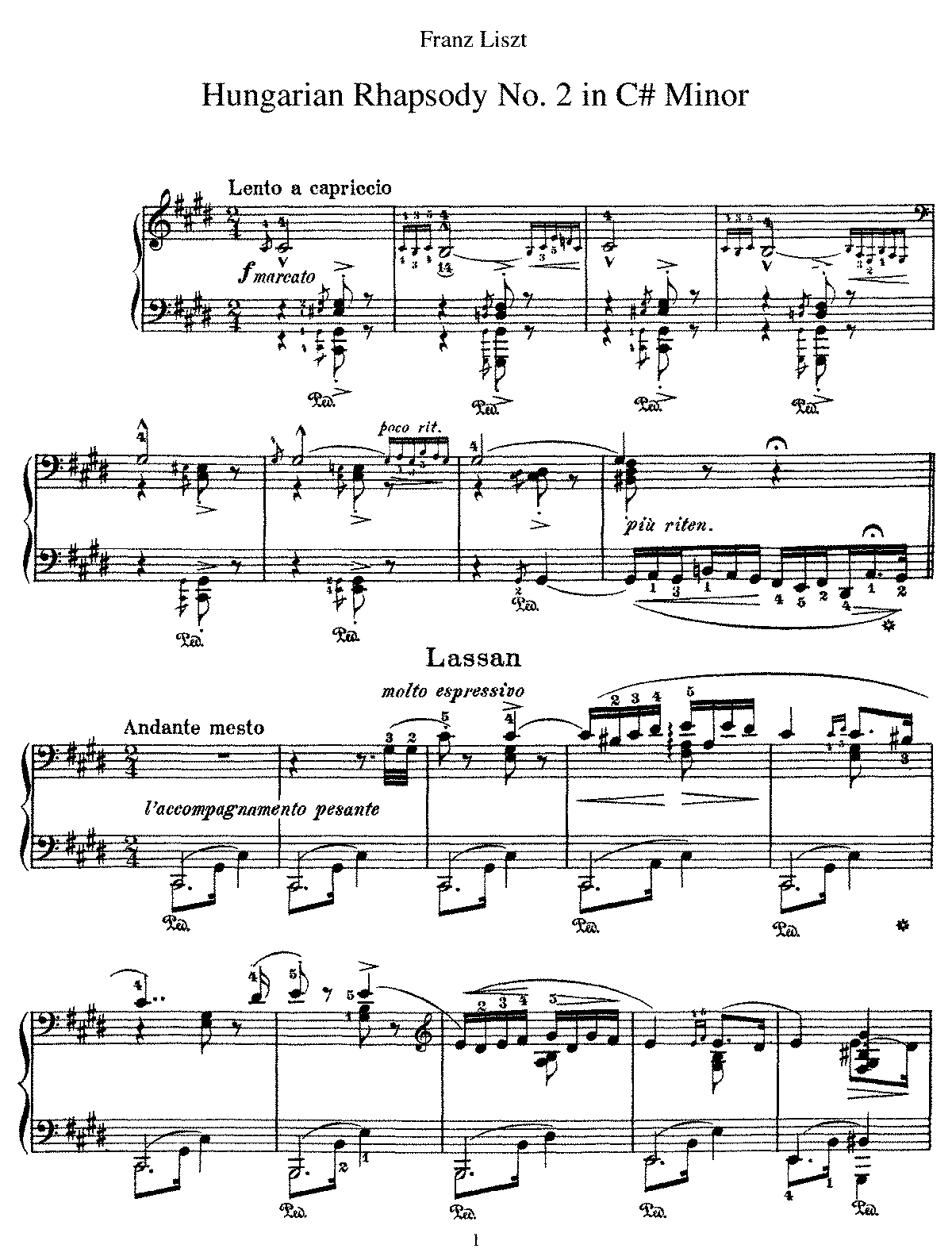
liszt-hungarian

Today’s assignment is Hungarian Rhapsody No. 2 in C-sharp minor. It is the second in a set of 19 Hungarian Rhapsodies by composer Franz Liszt, and is by far the most famous of the set.

In both the original piano solo form and in the orchestrated version this composition has enjoyed widespread use in animated cartoons. Its themes have also served as the basis of several popular songs.

Above, Danish comedian and pianist Victor Borge gives every impression of having been asked to play a duet with someone whom he not only doesn’t know but doesn’t particularly like. Forced to come up with a mutually agreeable way of sharing the musical workload, he settles on the most difficult route possible.

It’s not clear why two pianists were needed for this performance of Liszt’s Hungarian Rhapsody No.2, S.244/2.  I think that they did it just for the fun of it.  The result is hilarious.

They’re not the only ones to tackle Liszt’s Hungarian Rhapsody No.2 as a piano duo.

We also have these guys:


The “history” of this piece in several cartoons:

This is very interesting:

As he often did, Horowitz arranged it more for his liking:


Finally, for real:

June 14: Today’s Music History

today

Be sure your student reads and listens to Today’s Daily Listening Assignment

• 1594 ~ Orlandus Lassus, Composer (Prophet sybillarum), died at about 61

• 1671 ~ Thomoso Albinoni, Italian composer and violinist
More information about Albinoni

• 1691 ~ Jan Francisci, Composer

• 1709 ~ Gottfried Wegner, Composer, died at the age of 65

• 1744 ~ André Campra, Composer, died at the age of 83

• 1750 ~ Franz Anton Maichelbeck, Composer, died at the age of 47

• 1760 ~ Candido Jose Ruano, Composer

• 1763 ~ Johannes Simon Mayr, Composer

• 1769 ~ Dominique Della-Maria, Composer

• 1789 ~ Johann Wilhelm Hertel, Composer, died at the age of 61

• 1835 ~ Nikolay Rubinstein, Composer

• 1854 ~ Frederik Rung, Composer

• 1891 ~ Auguste Jean Maria Charles Serieyx (1865) Composer

• 1881 ~ The player piano was patented by John McTammany, Jr. of Cambridge, MA.

• 1882 ~ Michael Zadora, Composer

• 1884 ~ John McCormack, Irish/American singer of Irish folksongs

• 1891 ~ Nicolo Gabrielli, Composer, died at the age of 77

• 1895 ~ Cliff Edwards “Ukulele Ike”, Singer of When You Wish Upon a Star

• 1904 ~ Benno Ammann, Composer

• 1909 ~ Burl Ives, American folk singer, banjo player, guitarist and Oscar-winning actor. His gentle voice helped popularise American folk music. He played powerful dramatic roles in movies including “The Big Country,” for which he won an Acadamy Award for best-supporting actor, and “Cat on a Hot Tin Roof.”

• 1910 ~ Nappy (Hilton Napoleon) Lamare, Musician with Bob Cats

• 1911 ~ Johan Severin Svendsen, Composer, died at the age of 70

• 1916 ~ Karl-Rudi Griesbach, Composer

• 1916 ~ MIT and the American Telephone and Telegraph Company attempted the largest transcontinental telephone circuit of the time at Symphony Hall!

• 1918 ~ Carter Harman, Composer

• 1920 ~ Helmer-Rayner Sinisalo, Composer

• 1923 ~ Theodore Bloomfield, Composer

• 1923 ~ It was the beginning of the country music recording industry. Ralph Peer of Okeh Records recorded Fiddlin’ John Carson doing The Little Old Log Cabin in the Lane— and the first country music recording was in the can.

• 1929 ~ Cy Coleman (Seymour Kaufman), American composer of popular music and pianist
More information about Cy Coleman

• 1932 ~ Coleridge-Taylor Perkinson, Composer

• 1933 ~ Albert Ross Parsons, Composer, died at the age of 85

• 1940 ~ John Mizelle, Composer

• 1943 ~ Muff (Mervyn) Winwood, Singer, songwriter, bass with The Spencer Davis Group

• 1945 ~ Rod Argent, Keyboard

• 1948 ~ Ernst Henrik Ellberg, Composer, died at the age of 79

• 1948 ~ John Blackwood McEwen, Composer, died at the age of 80

• 1953 ~ Elvis Presley graduated from L.C. Humes High School in Memphis, TN. Within three years, the truck driver-turned-singer had his first number-one record with Heartbreak Hotel.

• 1960 ~ Vladimir Nikolayevich Kryukov, Composer, died at the age of 57

• 1962 ~ Boy George, Singer

• 1965 ~ Guido Guerrini, Composer, died at the age of 74

• 1965 ~ The Beatles released the album “Beatles VI”

• 1965 ~ John Lennon’s second book “A Spaniard in the Works” was published

• 1968 ~ Karl-Birger Blomdahl, Swedish opera composer, died at the age of 51

• 1969 ~ John & Yoko appeared on David Frost’s British TV Show

• 1974 ~ Knud Christian Jeppesen, Composer, died at the age of 81

• 1975 ~ America reached the top spot on the Billboard pop music chart with SisterGolden Hair. The group had previously (March, 1972) taken A Horse With No Name to the number one spot. The trio of Dan Peek, Gerry Beckley and Dewey Bunnell had received the Best New Artist Grammy in 1972. America recorded a dozen hits that made it to the popular music charts in the 1970s and 1980s. Though number one, Sister Golden Hair did not qualify for gold record (million-seller) status.

• 1975 ~ Janis Ian released At 17

• 1976 ~ The Beatles were awarded a gold record for the compilation album of past hits titled, Rock ’n’ Roll Music.

• 1978 ~ Theodore Karyotakis, Composer, died at the age of 74

• 1980 ~ Theme From New York, New York by Frank Sinatra hit #32

• 1986 ~ Alan Jay Lerner, Broadway librettist, died in NY at 67
More information about Lerner

• 1989 ~ Carole King got a star in Hollywood’s walk of fame

• 1994 ~ Henry Mancini passed away at the age of 70
More information about Mancini

• 1994 ~ Lionel Grigson, Professor of jazz, died at the age of 52

• 1994 ~ Harry “Little” Caesar, blues singer/actor (City Heat), died at the age of 66

• 1996 ~ Thomas Edward Montgomery, drummer, died at the age of 73

• 2002 ~ Marvin Paymer, Pianist, composer, musicologist and author, died of cancer. He was 81. His son, actor David Paymer, told the Los Angeles Times that Paymer died in San Diego. In 1977, he co-founded and, until his retirement in 1993, served as associate director of the Pergolesi Research Center at City University of New York Graduate Center. Pergolesi was 18th century Italian composer Giovanni Battista Pergolesi. Paymer authenticated 13 Pergolesi compositions among hundreds of fakes attributed to the posthumously famous composer, who died at 26.

Flag Day :)

flag-day


National Flag Day is celebrated annually in the United States on June 14.  This day commemorates the adoption of the United States flag on June 14, 1777.

On National Flag Day, Americans show respect for the U.S. Flag and what it represents.  Our independence and unity as a nation is represented by our flag.  The flag has become a powerful symbol of Americanism and is flown proudly.


Betsy Ross is given credit, by many, for creating the first American flag.  Since 1977, the design of the flag has been officially modified 26 times.  For 47 years, the 48-star flag was in effect.  In 1959, the 49-star version became official on July 4.  President Eisenhower ordered the 50-star flag on August 21, 1959.


Seventeen-year-old Robert G. Heft of Ohio is credited with designing the 50-star American flag.  Of the more than 1,500 designs that were submitted to President Dwight D. Eisenhower,  his was chosen.


Daily Listening Assignments ~ June 14

Today’s Daily Listening Assignment is a little different.  Pop Goes the Weasel was chosen today because somehow, somewhere someone chose today as National Pop Goes the Weasel Day.

Pop-goes-the-weasel

June 14 is set aside to observe National Pop Goes the Weasel Day.  On this day people dig back into their memories to the nursery rhymes they learned as children and celebrate the day singing “Pop Goes the Weasel”.

The origins of this nursery rhyme are believed to date back to the 1700′s.
The following lyric was printed in Boston in 1858:
All around the cobbler’s house,
The monkey chased the people.
And after them in double haste,
Pop! goes the weasel.
In 1901 in New York the opening lines were:
All around the chicken coop,
The possum chased the weasel.

The most common recent version was not recorded until 1914. In addition to the three verses above, American versions often include some of the following:
All around the mulberry bush,
The monkey chased the weasel.
The monkey stopped to pull up his sock, (or The monkey stopped to scratch his nose)
Pop! goes the weasel.
Half a pound of tuppenny rice,
Half a pound of treacle.
Mix it up and make it nice,
Pop! goes the weasel.

A Piano Version:

And another one…

‘Pop Goes the Weasel’ is played by the oboe while Elgar’s ‘Enigma’ Theme is performed on piano.

If you want to play it, you know where to find it 🙂

June 13: Today’s Music History

today

Be sure your student reads and listens to Today’s Daily Listening Assignment

• 1550 ~ Johann Spangenberg, Composer, died at the age of 66

• 1592 ~ Tobias Michael, Composer

• 1627 ~ Fidel Molitor, Composer

• 1701 ~ Angelo Antonio Caroli, Composer

• 1736 ~ Henryk Klein, Composer

• 1757 ~ Christian Ludwig Dieter, Composer

• 1761 ~ Anton Wranitzky, Composer

• 1765 ~ Anton Eberl, Composer

• 1775 ~ Antoni Henryk Radziwill, Composer

• 1839 ~ Martin-Pierre Dalvimare, Composer, died at the age of 66

• 1824 ~ Julius Eichberg, Composer

• 1829 ~ Antonio Zamara, Composer

• 1863 ~ Josef Venantius von Woss, Composer

• 1869 ~ Ede Poldini, Composer

• 1873 ~ Angelo Maurizio Gaspare Mariani, Composer, died at the age of 51

• 1875 ~ Max d’Ollone, Composer

• 1888 ~ Elisabeth Schumann, German-born American soprano

• 1899 ~ Carlos Chávez, Principal Mexican composer and conductor

• 1903 ~ Philipp Kutev, Composer

• 1905 ~ Doc Cheatham, Jazz musician

• 1911 ~ “Petrushka”, one of the earliest works of Russian composer Igor Stravinsky, was first performed in Paris.

• 1917 ~ Sy (Simon) Zentner, Bandleader, trombonist with the Boyd Raeburn Orchestra

• 1919 ~ Leif Kayser, Composer

• 1927 ~ Knut Wiggen, Composer

• 1928 ~ Damaso Ledesma, Composer, died at the age of 60

• 1929 ~ Kurt Equiluz, Austrian tenor

• 1938 ~ Gwynne Howell, British opera singer

• 1939 ~ Lionel Hampton and his band recorded Memories of You for Victor Records.

• 1940 ~ Bobby Freeman, Singer

• 1944 ~ The wire recorder was patented by Marvin Camras. Wire recorders were the precursor of much easier to use magnetic tape recorders.

• 1948 ~ Liz Phillips, Composer

• 1948 ~ Dennis Locorriere, Musician, guitarist, singer

• 1954 ~ Nikolai Obouhov, Composer, died at the age of 62

• 1954 ~ Jorge Santana, rocker

• 1958 ~ Frank Zappa graduated from Antelope Valley High School in Lancaster, California

• 1959 ~ “Sammy Kaye Show,” last aired on ABC-TV

• 1960 ~ Alley-Oop by Dyna-Sores peaked at #59

• 1962 ~ Eugene Goossens, British Composer (Perseus), died at the age of 69. A member of a famed musical family, he spent his later years conducting in Australia where he trained many musicians.

• 1970 ~ The Summertime by Mungo Jerry hit #1 in England

• 1970 ~ The Beatles’ “Let It Be,” album went #1 & stayed #1 for 4 weeks

• 1970 ~ The Beatles’ Long & Winding Road, single went #1 & stayed #1 for 2 weeks

• 1970 ~ The song Make It with You, by David Gates and Bread, was released. It turned out to be a number-one hit on August 22, 1970. Though Bread had a dozen hits, including one other million-seller (Baby I’m-A Want You, 1971); Make It with You was the soft-pop group’s only number one tune.

• 1971 ~ Singer Francis Albert Sinatra made an attempt to retire from show business following a performance this night at the Music Center in Los Angeles, CA. ‘Ol’ Blue Eyes’ got a bit restless in retirement, however, and was back in Sinatra – The Main Event at Madison Square Garden in November 1973.

• 1972 ~ Clyde L Mcphatter, American singer with the Drifters, died at the age of 39

• 1973 ~ Alvin Derold Etler, Composer, died at the age of 60

• 1973 ~ Frantisek Suchy, Composer, died at the age of 82

• 1976 ~ Bob Marley performed in Amsterdam

• 1980 ~ Billy Joel’s Glass Houses hit #1
More information on Joel

• 1980 ~ Paul McCartney released Waterfall
More information on McCartney

• 1984 ~ Marinus de Jong, Dutch Composer, died at the age of 92

• 1986 ~ Benny Goodman, American Jazz clarinetist, composer and bandleader died
More information on Goodman

• 1988 ~ George Harrison released This is Love

• 1989 ~ Jerry Lee Lewis got a star on the Hollywood Walk of Fame

• 1990 ~ “Les Miserables” opened at South Alberta Jubilee Centre, Calgary

• 1993 ~ “Someone Who’ll Watch Over Me” closed at Booth NYC after 232 performances

• 2001 ~ Makanda McIntyre, a jazz musician and educator, died at the age of 69. McIntyre’s best-known album was “Looking Ahead” (1960). He taught music in Manhattan schools and at Wesleyan University, Smith College, Fordham University and the New School. He was the founder and chairman of the American music, dance and theater program at the State University at Old Westbury, N.Y. McIntyre was born in Boston. After serving in the Army, he studied at the Boston Conservatory of Music and later earned a doctorate from the University of Massachusetts. Formerly Ken McIntyre, he changed his name to Makanda after a stranger in Zimbabwe handed him a piece of paper on which was written, “Makanda,” a word in the Ndebele and Shona languages meaning “many skins.”

• 2012 ~ Graeme Bell, Australian pianist and composer, died at the age of 97

Daily Listening Assignments ~ June 13

Today’s piece is slow and easy-going.  The name “Largo” itself means slow.  Antonin Dvorák wrote this as a part of his Symphony No. 9 in E minor, also known as From the New World, Op. 95, B. 178, or just the New World Symphony.

Popularly known as the New World Symphony, it was composed in 1893 while Dvořák was the director of the National Conservatory of Music. It is by far his most popular symphony, and one of the most popular of all symphonies. In older literature and recordings, this symphony was often numbered as Symphony No. 5.

Astronaut Neil Armstrong took a tape recording of the New World Symphony along during the Apollo 11 mission, the first Moon landing, in 1969.

Find Largo in Keyboard Kickoff, Prelude (it’s called River  Road),  Movement 2 and Piano Maestro

And orchestra

The theme from the Largo was adapted into the spiritual-like song “Goin’ Home”, often mistakenly considered a folk song or traditional spiritual, by Dvořák’s pupil William Arms Fisher, who wrote the lyrics in 1922.

.

Pipe Organ

Recorder

And sung

Whenever I think of slow things, I’m reminded of this clip from the old TV Show, Taxi

If your student is in the Wunderkeys series, “Enchanted” from Elementary 2A s a pop twist on the New World Symphony by Dvořák. In this solo students explore dotted quarter rhythms, two half-notes as a LH accompaniment, and gain further comfort in the G Major pentascales.

So, since it’s summertime…