Getting Ready for Halloween: Night on Bald Mountain by Modest Mussorgsky

bald-mountain

Night on Bald Mountain refers to a series of compositions by Modest Mussorgsky (1839–1881). Inspired by Russian literary works and legend, Mussorgsky composed a “musical picture”, St. John’s Eve on Bald Mountain on the theme of a witches’ sabbath occurring on St. John’s Eve, which he completed on that very night, June 23, in 1867.

Get a free copy of the sheet music at IMSLP or buy it on amazon.com.

From Disney’s Fantasia


Piano version transcribed for solo piano by Konstantin Chernov (1865-1937).


The Ludwig Symphony Orchestra, conducted by Maestro Thomas Ludwig

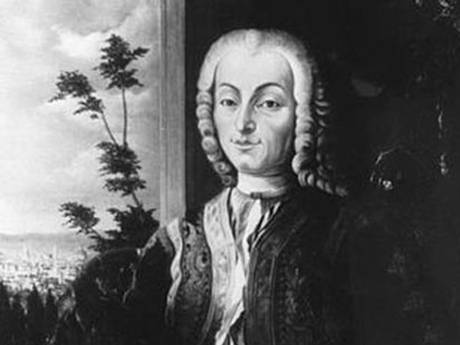
Happy Birthday Bartolomeo Cristofori!

The inventor of the piano, Bartolomeo Cristofori, is celebrated in last year’s Google Doodle.

Born on 4 May, 1655 in Padua, northern Italy, Cristofori initially worked making harpsichords and clavichords and was employed by Prince Ferdinando de Medici, son of the duke of Tuscany.

He is believed to have started work on what would become a piano in the 1690s and the first one is thought to have been made in 1709.

In a harpsichord the strings are plucked, so it is not possible to play the notes softer or louder. Cristofori managed to design a mechanism that transferred the pressure placed on the keys to the hammers that hit the strings.

He called his invention a “gravecembalo col piano e forte” – a clavichord with soft and loud. The name was shortened to pianoforte and then simply piano.

Francesco Mannucci, a musician at the Medici court, described one early version as “a large ‘Arpicembalo’ [the name of a type of harpsichord] by Bartolomeo Cristofori, of new invention that produces soft and loud, with two sets of strings at unison pitch, with soundboard of cypress without rose”.

Bartolomeo Cristofori

Bartolomeo Cristofori di Francesco was an Italian maker of musical instruments, generally regarded as the inventor of the piano.

While other musical instrument makers had attempted to solve the same problem with the harpsichord, Cristofori’s invention is generally regarded as the first real piano.

However, the piano was not popular at first and many felt it was too difficult to play. Cristofori died largely uncelebrated for an invention that would later change the musical world in 1731 – a year before the first sheet music for the piano appeared.

via Who invented the piano? Bartolomeo Cristofori’s birthday celebrated in today’s Google doodle – News – Gadgets and Tech – The Independent.

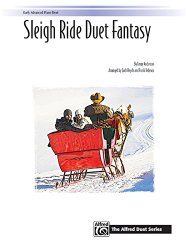
Sleigh Ride Duet

sleigh-ride


I have loved this version of Sleigh Ride since I first saw it on YouTube:

When I found out it was available in sheet music, I rushed to amazon to buy several copies for myself, my son, my friend, basically everyone I thought could play it.

Lots of fun to play and to hear.

Amazon says:

Leroy Anderson’s “Sleigh Ride” is a holiday favorite, and this setting for advanced piano duet gives it a fresh twist. It begins with Anderson’s jingling melody and some musical “banter” between the Primo and Secondo players, and then it launches into a series of variations which take the listener on a journey through a variety of styles—from gently swirling, impressionistic arpeggios to a triumphant coda with brilliant, virtuosic passagework. Audiences will enjoy a number of other musical surprises along the way.

If you want to borrow it, let me know early because someone at the studio may already be playing it!


maryOpianoplayer

Halloween Music: In the Hall of the Mountain King by Edvard Grieg

hall-mountain


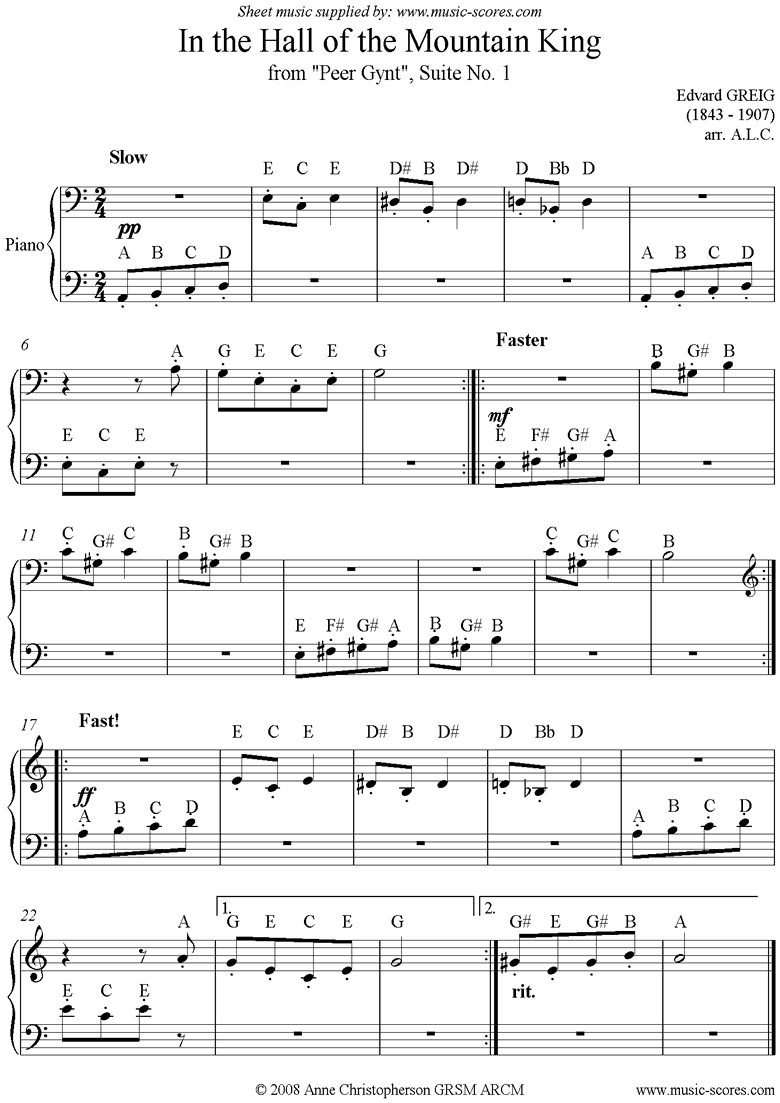
“In the Hall of the Mountain King” is a piece of orchestral music composed for the sixth scene of act 2 in Henrik Ibsen’s 1867 play Peer Gynt. It was originally part of Opus 23 but was later extracted as the final piece of Peer Gynt, Suite No. 1, Op. 46. Its easily recognizable theme has helped it attain iconic status in popular culture, where it has been arranged by many artists, including for the piano.

Borrow a copy of the sheet music from the O’Connor Music Studio.  I have this arranged for piano, duet, 2-piano, simplified…


8 part vocal orchestra (plus a tiny pair of cymbals)


Pianist Paul Barton


Solo piano sheet music – Video Score


Orchestral version

Who Invented the Piano? Bartolomeo Cristofori’s Birthday Celebrated in Today’s Google Doodle

The inventor of the piano, Bartolomeo Cristofori, is celebrated in today’s Google Doodle.

Born on 4 May, 1655 in Padua, northern Italy, Cristofori initially worked making harpsichords and clavichords and was employed by Prince Ferdinando de Medici, son of the duke of Tuscany.

He is believed to have started work on what would become a piano in the 1690s and the first one is thought to have been made in 1709.

In a harpsichord the strings are plucked, so it is not possible to play the notes softer or louder. Cristofori managed to design a mechanism that transferred the pressure placed on the keys to the hammers that hit the strings.

He called his invention a “gravecembalo col piano e forte” – a clavichord with soft and loud. The name was shortened to pianoforte and then simply piano.

Francesco Mannucci, a musician at the Medici court, described one early version as “a large ‘Arpicembalo’ [the name of a type of harpsichord] by Bartolomeo Cristofori, of new invention that produces soft and loud, with two sets of strings at unison pitch, with soundboard of cypress without rose”.

Bartolomeo Cristofori

Bartolomeo Cristofori di Francesco was an Italian maker of musical instruments, generally regarded as the inventor of the piano.


While other musical instrument makers had attempted to solve the same problem with the harpsichord, Cristofori’s invention is generally regarded as the first real piano.

However, the piano was not popular at first and many felt it was too difficult to play. Cristofori died largely uncelebrated for an invention that would later change the musical world in 1731 – a year before the first sheet music for the piano appeared.

via Who invented the piano? Bartolomeo Cristofori’s birthday celebrated in today’s Google doodle – News – Gadgets and Tech – The Independent.

NYC’s Last Classical Sheet Music Store to Close

music-store

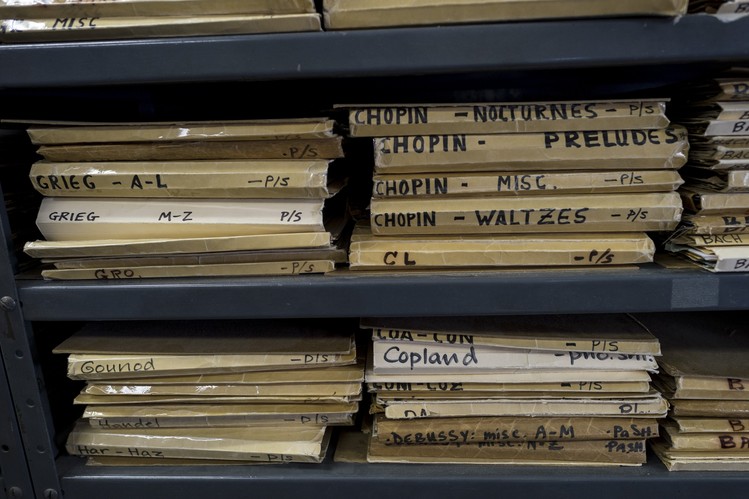
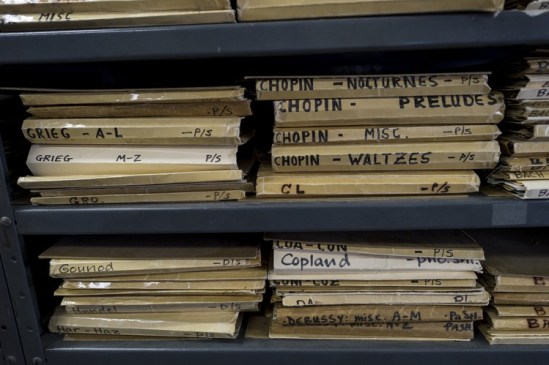
The store, on West 54th Street between Broadway and Eighth Avenue, opened in 1937 and provided the city’s musicians scores from the standard— Bach, Beethoven —to the arcane. Ms. Rogers bought it in 1978.

Frank Music is the last store in the city dedicated to selling classical sheet music, Ms. Rogers said, although other places such as the Juilliard School’s bookstore at Lincoln Center have it on their shelves.

Frank Music’s stock, which Ms. Rogers counts as hundreds of thousands of scores, was purchased by an anonymous donor as a gift for the Colburn School, a music conservatory in Los Angeles.

The school and Ms. Rogers declined to comment on financial details.

Colburn School’s president and chief executive, Sel Kardan, called Frank Music’s scores “an invaluable resource for our students and faculty for years to come.”

To the 63-year-old Ms. Rogers, nothing is more important than the arts.

“The idea that classical music is irrelevant is ridiculous,” she said, bemoaning the comparative salaries of tubists and stockbrokers. “People should be paid in terms of what they contribute to people’s well being.”

The store’s celebrity clients over the years have included pianists Emanuel Ax and Jeremy Denk, violinist Pamela Frank and cellist David Finckel.

One of Ms. Rogers’s favorite memories is a telephone call from the violinist Itzhak Perlman, asking for Kreisler scores.

The composer Bruce Adolphe, who is resident lecturer at the Chamber Music Society of Lincoln Center, described the store as a musical meeting ground.

“Frank’s Music was not just a store but a crucible,” he said, “a nexus where musicians from Suzuki beginners and their parents, to Joshua Bell, or the Brentano’s Mark Steinberg, would meet by chance.”

Read the entire article at NYC’s Last Classical Sheet Music Store to Close – WSJ.