What’s better than one piano? Eight of them at University of Akron MonsterPianos! concert – Local – Ohio

monster

One piano is grand.

Eight being played in unison?

Well, that’s much, much grander.

The University of Akron School of Music hosted its sixth MonsterPianos! concert Sunday at E.J. Thomas Hall.

The special show featured eight grand pianos arranged in a semicircle, 39 pianists dressed in tuxedos and black gowns — not all playing at the same time, mind you — a conductor, and a giant video screen broadcasting all the action.

“It’s an adventure,” admitted conductor Galen Karriker, UA director of bands and associate professor of music.

It’s also immensely popular in the community, as evidenced by the audience of nearly 1,300 people.

UA music professor Philip Thomson founded MonsterPianos! in 2006, borrowing the concept from the late pianist Eugene List.

The concert, organized by Thomson and fellow faculty member Mayumi Kikuchi, is a treat for the musicians as well as the audience, because it’s rare to have so many pianists playing together at the same time.

The piano is typically a solo instrument, after all, and pianists aren’t used to watching a conductor for direction.

The concert poses several challenges for the musicians.

One of the biggest is just the fact that they aren’t used to playing together as a group. They had practiced only six times before the final dress rehearsal Sunday.

Another challenge is that pianists are familiar with hearing themselves play. With so many other pianos, the sound blends together — of course, it’d be weird if it didn’t.

“You have to trust your eyes and not your ears,” said Ann Usher, UA professor of music and director of the School of Music, who performed at the event.

The concert, which lasted about an hour and a half, included Valse Brilliante by Moritz Moszkowski, Rondo a capriccio by Ludwig van Beethoven and the Battle Hymn of the Republic.

There also were some moments of levity such as when Zippy, the UA kangaroo mascot, led a piano-arrangement of the school fight song Win For Akron.

The concert featured faculty, students, alumni and invited guests. Some of those folks traveled from as far away as Massachusetts, Pennsylvania, New York and Texas just to perform.

One of the guests was Juliette Streeter, 14, of Akron, a student at the Miller South School for the Visual and Performing Arts.

She was excited to be chosen to participate.

“It’s not what I’m used to,” Streeter said. “It’s very fun getting used to all the different people and different styles and the ways they play.”

Karriker, who has conducted all six of the MonsterPianos!, said the concert sets UA apart.

“It truly makes us distinctive as far as a School of Music to have this kind of event,” he said. “There’s a lot of folks who love piano music in this community and they are fascinated by seeing that many pianos on stage and hearing what it sounds like.”

via What’s better than one piano? Eight of them at University of Akron MonsterPianos! concert – Local – Ohio.

March 16 ~ Today in Music History

today

. 1736 ~ Giovanni Battista Pergolesi died.  He was an Italian composer, violinist and organist.

. 1905 ~ Nadia Boulanger made her public concert debut at the piano.

. 1924 ~ Christa Ludwig, German mezzo-soprano

. 1935 ~ Theresa Berganza, Spanish mezzo-soprano

. 1937 ~ David Del Tredici, American composer

. 1942 ~ Fats Waller recorded The Jitterbug Waltz in New York for Bluebird Records.  The Jitterbug Waltz was inspired by some piano exercises that Waller’s son Maurice had been practicing on the piano.

. 1955 ~ The Ballad of Davy Crockett, by Bill Hayes, reached the number one spot on the pop music charts and stayed for five weeks beginning this day. The smash hit song sold more than 7,000,000 records on more than 20 different labels. Everyone seemed to be singing the song that saluted the frontier hero who was “Born on a mountain top in Tennessee…” Coonskin caps were seen everywhere as the Crockett craze spread like a frontier fire.

. 1963 ~ Peter, Paul and Mary released the single, Puff The Magic Dragon.

. 1971 ~ Simon & Garfunkel’s Bridge Over Troubled Water LP and single won six Grammys including Record, Song and Album of the Year. Aretha Franklin won the Best Female R&B Performance Grammy for Don’t Play That Song. B.B. King won the Best Male R&B Vocal Performance Grammy for The Thrill Is Gone.

. 1983 ~ Arthur Godfrey passed away

. 1985 ~ A Chorus Line played performance number 4,000 this night at New York’s famed Shubert Theatre. The show originally opened in July, 1975, and became the longest-running show to light up the Great White Way in September, 1983.

. 1999 ~ Honoring a roster of music artists that range from The Beatles to the Backstreet Boys, the Recording Industry Association of America presented the first Diamond Awards, given in recognition of albums and singles that have sold a million copies or more.

. 1999 ~ Clarence “Gatemouth” Brown and the late Roosevelt Sykes were inducted into the Blues Foundation Hall of Fame.

Minot piano teacher prizes more than 50 years with students

piano-teacher

Someone once said that music can change the world because it can change people.

Arnola Leverson, longtime piano teacher and accompanist for countless students and groups in Minot, is living proof of this simple quote.

Leverson began taking piano lessons when she was just 7 years old and has since taught lessons to more than 250 students and accompanied thousands.

As a child, Leverson would trek across the street to her piano teacher’s house, schoolbooks in hand. Having grown up in a musical family, Leverson said she and all four siblings were encouraged to take piano lessons. Her mother did not play piano herself but loved music and wanted her children to grow up experiencing it. While Leverson also played the flute and auxiliary percussion in her lifetime, piano was always her favorite.

In eighth grade, Leverson began taking lessons from Doris Schroder, a piano teacher who would greatly impact her life. While Schroder was an avid piano player in her youth, she had developed arthritis and couldn’t play anymore. Because of this, she could teach her students but could not demonstrate by playing any songs.

Leverson said Schroder was the first person who encouraged her to begin accompanying groups, which she quickly grew to love, and was eye-opening in the delight of being able to demonstrate. Now, Leverson demonstrates songs as much as possible for her students “because I can.”

The very first group Leverson accompanied was the boy’s chorus in Mohall when she was only in ninth grade. In the years following, Leverson has accompanied or still accompanies the Erik Ramstad Jr. High choir, Magic City groups and singers, Central Campus, Jim Hill Jr. High and many festivals in towns nearby. She also plays the piano for her church, First Lutheran, and has been involved in the production of “Messiah” for more than 50 years.

In addition, Leverson is president of the Minot Piano Teachers group, has been a member of the Minot Symphony Orchestra and has been chairman of the Gold Cup Piano Festival for 38 years.

“There are so many great piano players in the city of Minot but so many of them are not available to do what I have made myself available to do,” said Leverson, who dedicated her life to piano after receiving her bachelor’s degree from Minot State in elementary education and music.

Along with accompanying and being a member of the aforementioned groups, Leverson has been teaching piano lessons to students for 52 years, beginning at the impressive age of 16.

And still, Leverson’s love for piano is just as strong as it was more than half a century ago. “There’s not a day that goes by that I’m not happy to play piano,” she said.

Even Leverson’s grandchildren are learning to play. “The plan was always that they would take lessons from grandma,” she said with a smile.

Leverson said that because being able to play the piano is the basis of many other instruments, it teaches kids rhythm, names of notes and the discipline of being with a teacher. “It is also such a great way to communicate,” she said. “For me, piano playing has always been an outlet for my mood, and I encourage students to use piano for this as well.”

Because the lives of students are usually busy, Leverson said that she never wants a student to have to choose between piano and a sport. Though she usually teaches lessons during the weekdays, she said that she is flexible and will teach on the weekends if that is the only time a student can meet. She said that if seniors in high school, for example, have stayed in piano for as long as they have regardless of busy lives, she will work with their schedules as much as she can.

“The most important thing is the student,” Leverson said, beaming as she told many stories of students who came in to her class shy and nervous and left with excitement and “their true selves shining through.”

At 68 years old, Leverson said she would not change her dedication to piano for the world.

“It has given me a really interesting life,” she said. “It is something I’ve found great pleasure in doing, and through it I have met so many great musicians, had the chance to work with wonderful people and it has even given me the opportunity to travel. My life would not be what it is today without it.”

via Minot piano teacher prizes more than 50 years with students.

It takes dedication to master piano keys | The Andalusia Star-News

keys

My piano teacher friend, Michelle, posted pictures of her students the other day. Apparently, they participated in some type of competition/recital, and with pride their teacher shared the results.

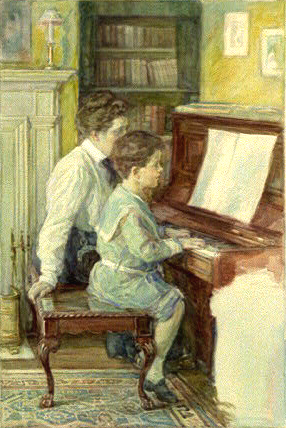
They stood smiling into the camera each holding a certificate that announced his or her status in the competition. Seeing them brought back my own memories of piano lessons and recitals. I smiled as I looked into the bright faces of those talented young people.

When I was a kid I wanted nothing more than to learn to play the piano. I had a favorite aunt who played so well and my daddy played by ear better than some folks who read music.

Oh yes, I imagined myself sitting at the keyboard, fingers flying while the family sang along to some favorite hymn or Christmas carol. Daddy would grin with pride and maybe join in playing his harmonica.

It was lovely dream. There was only one little glitch in this plan. I needed lessons in order to make it come true.

So, my parents signed me up with Mrs. Simmons who lived across the street. She was one of the best piano teachers in town and lucky me, all I had to do was cross the street for my lessons.

I’m not sure what I expected, but it was with great disappointment I realized I was not going to produce a beautiful song after only one lesson. Heck, I wasn’t going to produce much more than a repetitive playing of the scales after several lessons.

I recited, Every — Good — Boy — Does — Fine, All — Cars — Eat — Gas, FACE, GBDFA to help me remember the treble and clef lines and spaces. And I played the notes over and over until the sand in the hourglass timer told me it was time to stop. (I’m pretty sure Mother was overjoyed when that last piece of sand fell through the hole.)

When I finally got to the point of making a noise that sounded like something musical, it was, if I remember correctly, a little ditty about a frog — not exactly the moving hymn I imagined playing.

Eventually, I progressed to playing an entire piece of music. That meant I was ready to take part in the annual piano recital. I’d love to say I was excited at the prospect of publicly showing the great strides I’d made in piano playing. In truth, I was more excited about getting to wear an evening gown and lipstick.

For three years, I stuck with the lessons and with the practicing. For three years, I showed up for the recital and played the piece my teacher assigned. I have a picture of myself seated at the piano in my parents’ living room on the night of one of those recitals.

My hair is a perfect flip and I’m wearing a white gown that I imagined made me look like a cross between an angel and a fairy. I have my hands resting on the keys and I’m smiling into the camera like some diva about to launch into a classical masterpiece.

At some point, (probably had something to do with being a teenager and boys) I let go of my dreams of tickling the ivories. I did learn one Christmas carol, which my family heard until they were pretty much sick of it.

As I looked at Michelle’s students holding their certificates, I thought about the dedication it took for them to play so well. I also thought about all those teachers, like my friend and like Mrs. Simmons, who have the calling and the incredible patience it takes to try to teach another human to play a piano, especially when the student is not realistic about what it takes to master the instrument and more interested in evening gowns.

via It takes dedication to master piano keys | The Andalusia Star-News.

March 12 ~ Today in Music History

today


. 1710 ~ Thomas Arne, English composer
More information about Arne

. 1890 ~ Vaslav Nijinsky, Ukrainian ballet dancer

. 1891 ~ Clara Schumann gave her final piano performance.

. 1921 ~ Gordon MacRae, Singer

. 1923 ~ Dr. Lee DeForest demonstrated his putting sound on motion picture film. One of the pioneers of radio in the early 1900s, DeForest came up with a snappy name for his invention; he called it phonofilm. Today, we call it a soundtrack.

. 1937 ~ Charles-Marie Widor died.  He was a was a French organist, composer and teacher.

. 1939 ~ Artie Shaw and his band recorded the standard, Deep Purple, in New York for the Bluebird label. Listening carefully after the first minute or so, one can hear Helen Forrest sing the vocal refrain. Larry Clinton and his orchestra had a number one song with a similar arrangement of the same tune that same year. It later was a hit for saxophonist, Nino Tempo and his sister, April Stevens in 1963. Hundreds of versions of this song have been recorded through the years, making it one of the most popular standards of all time.

. 1940 ~ Al Jarreau, Singer

. 1946 ~ Liza Minnelli, American actress and singer of popular music
More information about Minnelli

. 1948 ~ James Taylor, American folk-rock singer, songwriter, and guitarist

. 1955 ~ Charlie Parker, influential U.S. jazz saxophonist, died.

. 1955 ~ One of the great groups of jazz appeared for the first time at Carnegie Hall in New York City. The Dave Brubeck Quartet presented a magnificent concert for jazz fans.

. 1969 ~ Wedding bells rang in London for singer, Paul McCartney and his new bride, photographer, Linda Eastman.

. 1985 ~ Eugene Ormandy, U.S. conductor, died. He directed the Philadelphia Orchestra from 1936-1980 and was especially noted for his performances of Rachmaninoff and Shostakovitch.

. 1987 ~ The famous musical play “Les Miserables” by Victor Hugo opened on Broadway in New York.

. 1991 ~ Jimmy McPartland passed away

. 1993 ~ June Valli passed away

. 1999 ~ World-famous violin maestro Yehudi Menuhin died in Berlin.


Frozen Fever: Brother and sister play Frozen songs on the piano while sitting backwards | Metro News

frozen

If you haven’t seen someone playing the piano backwards before, take a good look at this video.

A brother and sister are seen battling it out on the piano in this clever clip, first nudging each other out of the way then rotating around on their stool.

Jason and Sarah Black perform a mash-up of Frozen songs including Love is an Open Door, For the First Time in Forever, Do You Want to Build a Snowman and Let it Go.

via Frozen Fever: Brother and sister play Frozen songs on the piano while sitting backwards | Metro News.

‘Seymour’: Ethan Hawke Makes an Introduction

sbernstein

Seymour Bernstein might have ranked alongside such classical pianists as Alfred Brendel and Van Cliburn. His recitals were glowingly reviewed and he had a highly supportive patron. Yet, at the significant age of 50, he voluntarily withdrew from the world of public performance to concentrate on teaching.

When it comes to piano technique and music theory, he clearly has much to offer. But he also has insight into how one best pursues an artistic career in general, or at least that is what one future Oscar nominee thought when he happened to meet Bernstein at a dinner party. The music teacher gets a low-key but satisfying ovation in Ethan Hawke’s documentary profile, “Seymour: An Introduction.”

Evidently, Hawke found in Bernstein an empathetic counselor-guru who could well understand his bouts of stage fright and the general career uncertainty that was plaguing him. Perhaps he was also frustrated about that film he had spent over 10 years on, but had yet to come out. Regardless, Bernstein had a knack for saying reassuring things.

In a variety of master classes and private lessons, we observe Bernstein at work. He is indeed a calm and constructive instructor, but also firm and specific. If you have the talent, he will refine it. Should you doubt it, several of his former students, including pianists Joseph Smith and Kimball Gallagher, offer their reminiscences and insights into Bernstein’s lasting influence on their careers.

For his documentary directorial debut, Hawke was not out to rake any muck. While not exactly hagiography, his “Introduction” is unflaggingly nice and polite. Fortunately, Bernstein is a New Yorker (albeit a really pleasant one), whose experienced, down-to-earth personality keeps it all real and grounded.

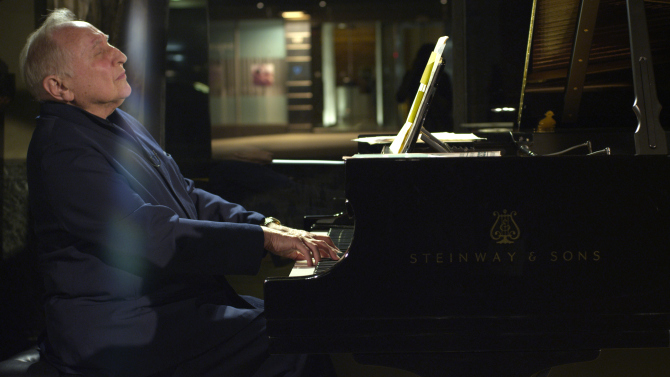
Anyone who knows pianos will not be surprised to see the prime placement for American Steinway in “Seymour.” As always, their concert models look and sound lovely. It is also cool to see that they still consider Bernstein a Steinway artist 30-some years after his last public performance. Fittingly, Hawke coaxes Bernstein into a return performance in the Steinway Rotunda on 57th Street, which naturally serves as the closing sequence for the film. Obviously, he still has his touch.

“Seymour: An Introduction” has surely received considerably more attention because of Hawke’s involvement than it otherwise would have, but that is a fine way for him to spend some of his accrued “Boyhood” and “Before Midnight” capital in a way that will generate further good will. It is a very refined and civilized film that will probably have a number of viewers checking out YouTube for Bernstein’s original compositions. (He has a number of them posted, including “The Hawke.”)

Respectfully recommended for classical connoisseurs, Hawke fans, and Steinway admirers, the Salingerishly titled “Seymour: An Introduction” opens this Friday, March 13, in New York at the IFC Center.

From ‘Seymour’: Ethan Hawke Makes an Introduction.

What George Gershwin’s Piano Teaches Us About Technology

gershwinpiano

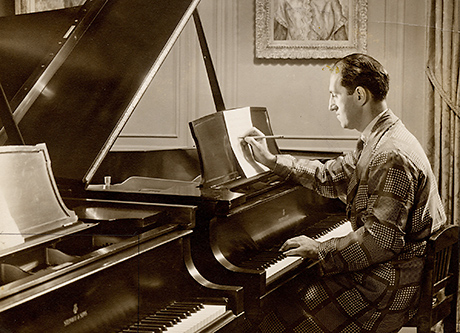
The Gershwin family donated the Steinway to the University as part of the George and Ira Gershwin initiative that is focused on research and study of the brothers’ music.

According to Marc Gershwin, George and Ira’s nephew, “I wanted the instrument to be accessible to the students and faculty who would be preserving the legacy of George and Ira Gershwin’s music… I’m delighted that the piano will once again be in regular use [by students and faculty], and am thrilled that it has been restored to performance condition.” [Two other Gershwin Steinways are in museums.]

From what I know of George he would have wanted it this way. Unlike some composers George was a gifted pianist. He had a rich social life and enjoyed playing his music for anyone who would listen.

There’s a lesson in that thought. If you have something valuable, sometimes it becomes more valuable – or at least more appreciated – when people can see it and use it. If you look at the piano as an instrument of technology that is it, then it makes sense that organizations give people access to technology – as well as resources – to do their work.

Adapted from  What George Gershwin’s Piano Teaches Us About Technology.

The Piano: A 300 Year Old Legaley [sic] Still Going Strong | Free Press Journal

steinway-old


The piano market is booming in India. Experts in the music instrument retail business say that the piano market is expected to see further growth over the next decade says NERITA D’CRUZ.

The lobby of a popular luxury hotel in South Mumbai resonates to the sound of melodious piano music, post 7.00 pm every evening. A Steinway boudoir grand piano stands in the middle of the lobby adding a classy look to the place. The pianist plays popular tunes which instantly lights up the ambience of the hotel, while guests at the hotel sit back in the lobby a few minutes longer to enjoy the music. Afterall, the piano is a classy music instrument known for its soothing and relaxing sound.

The hype associated with the piano is such that dealers in the piano retail business say that there has been a huge growth in the piano market in India over the last decade. “Over the last ten years there has been 300 to 400 percent growth in the piano market. The market share for pianos is high and there is expected to be a healthy growth for the next ten years,” says Anthony Gomes, Partner at B.X Furtados and Sons, which operates music instrument retail stores across India.

Read the entire article at  The Piano: A 300 Year Old Legaley Still Going Strong | Free Press Journal.

Love for piano remains many decades later – Community – The News

piano-old

At 90 years of age, she has recently cut back a bit on her musical engagements, but she is still the official pianist for Club 55+ and happily plays hymns and old favourites for residents in her seniors’ complex in New Glasgow.

“My parents were both great singers and we had a piano at home, so I was anxious to play. I was sent for eight lessons and that is the full extent of my musical education.”

She was nine or ten when she travelled by horse and sleigh from Iron Ore to Stellarton with an uncle who brought butter, eggs and vegetables to town to sell on Saturday mornings.

“He dropped me at Langston Miller’s on Rundle Street and that’s where I learned all the notes. After that, it was just practice. I still play a lot by ear.”

Read the entire article at Love for piano remains many decades later – Community – The News.