Why is Theory Important for Piano Students?

Music_Theory


Students at the O’Connor Music Studio know that music theory is always a part of lessons.  I strongly believe that theory is needed so that students understand what they are playing and why.

To me, theory work is just as important as playing.  A firm knowledge of musical structure makes playing everything easier.

Music knowledge learned through piano lessons transfers easily to other  musical activities.  Students in Fairfax County Public Schools, students learn to play recorder.  Students are sometimes surprised to learn that they already know all the notes – from their piano lessons!

When you sing in a choir, harmonize with Sweet Adelines, play an instrument in your school or community band/orchestra, join your church’s handbell choir (note:  Pender UMC has an excellent Handbell program), teach yourself guitar – theory will help in every instance. By learning to read, write, and understand this musical language, many more musical opportunities will be made available the rest of your life.

Most piano methods come with a theory book that matches page by page what concepts are being learned in the lesson books.  I actually recommend that students do the theory first when they get home, while the concepts are still fresh in their minds.

If the student is not in a piano method, I’m starting to use the Theory Time series.  Book One covers music alphabet, introduction to keyboard and staff, stem rule, steps & skips on a keyboard and staff, repeated notes, dynamics, treble clef lines & spaces, bass clef lines & spaces, quarter note & rest, half note & rest, whole note & rest, dotted half note, bar lines, double bar line, measures, time signatures, rhythm drill, vocabulary, ear training and a review test. Free ear training videos for each ear training exercise are hosted on the Theory Time YouTube channel. The Grade One workbook is appropriate for beginning 1st, 2nd or 3rd grade students. This workbook includes 51 pages, 13 lessons and 8 Fun Sheets.

For adults and more advanced students, I have a copy of All About Music Theory: A Fun and Simple Guide to Understanding Music which can be used as a review or a “try before buy”.

Stop procrastinating and go do your theory!

Piano Recitals, Thanks to Liszt!

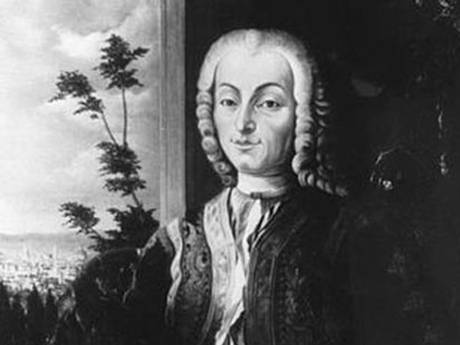
Last year, Google’s homepage ran a picture to celebrate the 360th birthday of Bartolomeo Cristofori, inventor of the piano and keeper of instruments for the Medicis in Florence. The instrument Cristofori invented was originally called a “harpsichord with soft and loud” even though the distinction between the two is large (the harpsichord produces sound by plucking strings, the piano by striking them with a hammer). Only three of the newfangled instruments he made – all of them dating from the 1720s – survive.

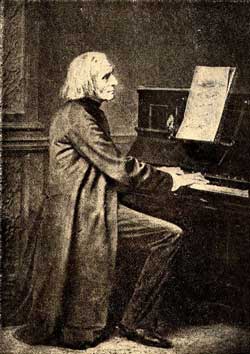
liszt-recitalMore than a century later the piano recital was devised. It was Liszt who first decided to have the whole stage to himself, and set the fashion for dispensing with the mixture of celebrities and supporting acts that had prevailed up to that time. As he wrote about his audacity to a friend: “Le concert, c’est moi!” And he called his appearance at the Hanover Square Rooms in London in June 1840 not a concert but a recital.

The composer-pianists of the day concentrated on their own works. Liszt set a marker in this regard, too, choosing music that ranged from Bach through Beethoven and up to Chopin. He set the pattern for playing from memory, and cemented the platform layout we know today by turning the then-conventional position of the instrument on the stage through 90 degrees. He was what we would now call a sex symbol as well as a star musician, and the new arrangement allowed the audience to see his impressive profile as well as to hear the instrument more clearly. The standards he set have survived without significant alteration right up to the present.

via Liszt is dead, long live the piano recital.

May 8 in Music History

mothers-day-38


OCMS  1829 ~ Louis Moreau Gottschalk, American pianist and composer
Listen to Gottschalk’s music
More information on Gottschalk

• 1948 ~ Oscar Hammerstein I, Playwright, producer

• 1910 ~ Mary Lou Williams, American jazz pianist, composer and arranger

• 1911 ~ Robert Johnson, Blues Hall of Fame, singer, songwriter, guitarist, inducted into Rock and Roll Hall of Fame in 1986

• 1941 ~ Anita O’Day recorded Let Me Off Uptown on Okeh Records with Gene Krupa and his band.

• 1943 ~ Toni Tennille, Singer

• 1944 ~ Gary Glitter (Paul Gadd), Singer

• 1945 ~ Keith Jarrett, American jazz pianist and composer


Play Piano While Floating on a River Raft in Chichén Itzá?

Of course, The Piano Guys have done this.

They say:

The quest to serenade the Seven Wonders continues…

A few years back we set what seemed at the time an impossible goal: to film music videos on all Seven Wonders of the World. Now we are nearly half-way there. We started by scaling the Great Wall of China, performing in feng shui fashion “Kung Fu Panda” in harmony with Chopin:

Next we paid homage to the Christ Redeemer Statue in Rio, Brazil, dedicating “Gabriel’s Oboe” (from “The Mission” soundtrack) coupled with the beloved hymn “How Great Thou Art:”

And now we present the third Wonder, Chichén Itzá.

Thus far our tradition has been to mix timeless classical music with contemporary film scores. We also love infusing local and historical culture in our arrangements. For this Wonder we wanted to stay true to this tradition while simultaneously nailing “jungle harmony,” as a famous cartoon bear once coined in…Disney’s Jungle Book! But in this decision we were confronted with an entangling challenge — to effectively blend the cacophony of Disney Jazz, classical music, Mayan heritage, all while making it epic enough to be filmed in front of a massively-historic, world-renowned stone temple!

First, it was vital that we carefully, thoughtfully pay proper respect to the “wonder” of “El Castillo,” its surrounding artifacts, and the Mayan spirit that pervades Chichén Itzá. The Mayans were an incredible people — adept astronomers, unprecedented builders, and incomparable artisans. Their ability to use architecture in an acoustic way especially impresses us. For instance, you can stand upon a step at one end of the plaza and be heard clearly on a step at the opposite end. The Mayans also used instrumental music in…read more here: http://thepianoguys.com/portfolio/jun…

Filming it in just the right vein was just as challenging. We wish to sincerely express our deepest gratitude to the National Archeology and History Institute (http://www.inah.gob.mx) and Cultur Yucatan (http://www.culturyucatan.com) for allowing us the profound privilege of filming at Chichén Itzá. Were it not for them and their warm hospitality this video shoot would not have been possible.

When visiting Chichén Itzá, we recommend staying here: http://mayaland.com

We also wish to thank our second filming location, Xcaret (where we filmed the jungle river and stage scenes). Xcaret is a fun-filled family friendly park built right in the middle of the jungle that immerses you in cultural food, entertainment, and adventure. Check it out here:
Mexico’s Majestic Paradise: https://www.youtube.com/watch?v=7m80Q…
Facebook: https://www.facebook.com/enxcaretpark
Website: http://www.xcaret.com
https://twitter.com/xcaretpark

Steve is playing the most recent addition to his cello family, “Maya,” hand painted in Mayan hieroglyphic style by Juleez (Julie Borden) just for this video. Her uniquely creative masterpieces are only matched by her equally vibrant spirit and enthusiasm for musically influenced art. See more of her instrument artwork here: http://www.juleez.com. Thank you, Julie!

Happy Birthday Bartolomeo Cristofori!

The inventor of the piano, Bartolomeo Cristofori, is celebrated in last year’s Google Doodle.

Born on 4 May, 1655 in Padua, northern Italy, Cristofori initially worked making harpsichords and clavichords and was employed by Prince Ferdinando de Medici, son of the duke of Tuscany.

He is believed to have started work on what would become a piano in the 1690s and the first one is thought to have been made in 1709.

In a harpsichord the strings are plucked, so it is not possible to play the notes softer or louder. Cristofori managed to design a mechanism that transferred the pressure placed on the keys to the hammers that hit the strings.

He called his invention a “gravecembalo col piano e forte” – a clavichord with soft and loud. The name was shortened to pianoforte and then simply piano.

Francesco Mannucci, a musician at the Medici court, described one early version as “a large ‘Arpicembalo’ [the name of a type of harpsichord] by Bartolomeo Cristofori, of new invention that produces soft and loud, with two sets of strings at unison pitch, with soundboard of cypress without rose”.

Bartolomeo Cristofori

Bartolomeo Cristofori di Francesco was an Italian maker of musical instruments, generally regarded as the inventor of the piano.

While other musical instrument makers had attempted to solve the same problem with the harpsichord, Cristofori’s invention is generally regarded as the first real piano.

However, the piano was not popular at first and many felt it was too difficult to play. Cristofori died largely uncelebrated for an invention that would later change the musical world in 1731 – a year before the first sheet music for the piano appeared.

via Who invented the piano? Bartolomeo Cristofori’s birthday celebrated in today’s Google doodle – News – Gadgets and Tech – The Independent.

April 30 in Music History

today

. 1717 ~ Guillaume Gommaire Kennis, composer

. 1792 ~ Johann Friedrich Schwencke, composer

. 1837 ~ Alfred Gaul, composer

. 1852 ~ Anton Rubinstein’s opera “Dmitri Donskoi”, premiered in St Petersburg

OCMS 1870 ~ Franz Lehar, Austrian composer of operettas. He achieved worldwide recognition for “The Merry Widow”.
More information about Lehar

. 1883 ~ David John de Lloyd, composer

. 1884 ~ Albert Israel Elkus, composer

. 1885 ~ The Boston Pops Orchestra forms

. 1885 ~ Luigi Russolo, composer

. 1886 ~ Frank Merrik, composer

. 1900 ~ Train engineer Casey Jones was killed when trying to save the Cannonball Express as it highballed its way through Vaughn, MS. The famous song about Jones is based on this train accident.

. 1903 ~ Victor Records made its first Red Seal recording this day. The premiere disk featured Ada Crossley, an opera contralto.

. 1916 ~ Robert Shaw, American conductor, Robert Shaw Chorale; music director of Atlanta Symphony Orchestra and Chorus

. 1923 ~ Percy Heath, Jazz musician: bass: founder of Modern Jazz Quartet, The Heath Brothers

. 1933 ~ Willie Nelson, American country-music singer, songwriter and guitarist

. 1940 ~ Jimmy Dorsey and his band recorded the bandleader’s signature song, Contrasts, for Decca Records. The song went on to become one of the most familiar big band themes of the era.

. 1941 ~ Johnny Farina, Musician: rhythm guitar with Santo & Johnny

. 1943 ~ Bobby Vee (Velline), Singer

. 1944 ~ Richard Schoff, Singer with The Sandpipers

. 1953 ~ Frank Sinatra and Nelson Riddle became a team this day at Capitol Records in Hollywood. Sinatra’s new musical style, under Riddle’s direction, brought the crooner to the top of the record world for the second time in his illustrious career.

. 1953 ~ Merrill Osmond, Singer with The Osmonds: Alan, Donny, Jay, Marie, Wayne,Jimmy

. 1954 ~ Darius Milhaud’s Fourth Concerto for piano and orchestra premiered in Haifa

. 1956 ~ Richard Farina, folk singer: Reflections in a Crystal Wind

. 1983 ~ Muddy Waters (McKinley Morganfield) passed away.  He was an American blues musician.

. 1987 ~ Three more compact discs of music by The Beatles went on sale for the first time. The discs were Help!, Rubber Soul and Revolver. All became hits again for the Fab Four.

. 2000 ~ Bill Woods, a band leader who helped Buck Owens, Merle Haggard and other country music stars launch their careers, died. He was 76. In the 1950s, Woods ran The Blackboard country music club in Bakersfield. The club attracted many country music stars and helped develop what became known as the Bakersfield Sound. Woods also could play many instruments, including piano, guitar, fiddle, drums, and the banjo.

. 2000 ~ Jonah Jones, a Grammy award-winning jazz trumpet player who began his career on a Mississippi riverboat and became a star playing with Cab Calloway, died at the age of 90.

. 2001 ~ Herman “Rock” Johnston, a musician known for his innovative work on steel drums, died of prostate cancer. He was 63. Johnston gained acclaim in the early 1960s with an innovation that stretched the musical range of the instrument from 24 to 36 notes. During his career, the Trinidad native appeared at the United Nations, Lincoln Center and Radio City Musical Hall in New York City, and with the Boston Symphony at its summer festival in Tanglewood. His repertoire spanned rock, spiritual, classical, show tunes and Caribbean folk music.

. 2003 ~ Bill Napier, a clarinetist who rose to prominence with the premier San Francisco jazz bands of the 1940s and 50s, died. He was 76. Napier helped create a catchy West Coast style with a Dixieland sound and a San Francisco vibe. He played with jazz stars including trombonist Turk Murphy, Lu Watters and Bob Scobey’s Frisco Jazz Band. Though he took some lessons, Napier essentially taught himself to play. His talent, and his love of music, brought him to an eclectic mix of venues – from cable car turnabouts to halftime of Harlem Globetrotters’ games to Silicon Valley soirees at the height of the dot-com boom. His last show was December 30, 2002.

Steinway just released an iPad-controlled piano

steinway-new


Steinway was so adamant about getting the technology right that in 2014 it bought Live Performance, a company founded by music engineer Wayne Stahnke. Lauded as the creator of the first mass market computer-controlled player piano able to simulate the nuances of a human performer (the Bosendorfer 290 SE), the former NASA engineer opened Live Performance in 1992 to commercialize his four decade’s worth of experimentations in “high resolution” electronic reproducing pianos.
At its new Manhattan showroom, Steinway president Ron Losby showed Quartz how the Spirio can be played manually like a regular piano, but can also “accompany” a singer in the absence of a pianist. In theory, a sophisticated self-playing piano can work well in any number of live events such as a ballet recital, a church choir performance, a party—or perhaps just to give the pianist a break.

Read the entire article at http://qz.com/658430/steinway-just-released-an-ipad-controlled-piano/

How to Behave at a Recital

recital

Student recitals can be lots of fun and create valuable experiences for pianists. Unfortunately, they can also be a source of anxiety or stress if students aren’t ready and/or guidelines aren’t followed.

There are guidelines and rules of behavior all performers and audience members should follow during recitals, concerts or other performances.

Audience members must remember the reason for their visit to the recital hall – to listen quietly, actively and appreciatively to the music being offered by the performers.

For the performer:

1.  Dress appropriately. Performers being nicely dressed (or following the recital theme) shows respect for the audience, the teacher and themselves!

Girls in knee-length or longer skirts/dresses or slacks.  No spaghetti straps, no platform shoes, flip-flops, bedroom slippers or athletic footwear.

Do not wear dangling, jingling jewelry – especially bracelets.  You may need to remove rings if they twist around easily.

Boys in dress pants and buttoned dress shirts with ties preferred, or suits.

IMPORTANT: Remember to practice several times in your outfit, shoes included.  You don’t want to get to the recital and find that you can’t use the pedal properly because of your shoes.

2. Clean hands!  Dirty, sticky, or oily fingers can hurt your performance and bother the next pianist. If you complete a long piece and notice some keys are slippery with sweat (a very common issue), notify your instructor so they can clean the keyboard before the next performer.

2. When it is your turn, stand quickly and walk up to the stage. Do not run!

Bow before you perform to acknowledge the applause. Audiences used to know that it was appropriate to clap for the musician who was entering the stage to perform. This now isn’t always the case (I will start clapping if it doesn’t happen automatically). Students should bow to their applauding audience before they sit down at the bench (not acknowledging applause is generally considered to be rude).

2.  Enter the bench from the side furthest from your audience. This was a biggie for my former piano teacher and I’m reminded of it every time I see a student slink in from the “front side”… or climb over the top. I used to think this was awfully stuffy – but when you see a student do it, it just looks right.

3.  Hands in your lap before you begin. I use this with my students to give them a moment to hear the first few measures in their mind before they begin.  Once fingers are on the keys it means you’re  ready to play. If the bench needs adjusting it should be done first… and then  hands should be placed in your lap before beginning to play.

Play the scale of the piece in your head and think over tempo, markings, etc. Then  arch your hands onto the piano and position  feet on the pedals or flat on the floor–NEVER under the stool. Proceed to play!

3. Should you make a mistake while performing, you should try to continue playing without starting over or repeating. This makes sufficient practice before the recital very Very VERY important!

If playing more than one piece, you should acknowledge applause in between with a nod or smile.

4.  Hands in lap after you finish. So many piano students are already lifting themselves off the bench as they play the final note (perhaps really eager to return to their seat in the audience!?) Learning to place your hands in your lap after finishing gives the audience a moment to truly relish what they just heard.

5.  Rise and stand at the edge of the piano (with left hand on the wood). Bow from the hips,  don’t curtsey. Bowing nicely takes practice!  In handbells, we bow towards the table and say silently “I love handbells”.  The same can be said in piano recitals – “I LOVE Piano”.

6.  Walk calmly off the stage or away from the piano.  No running… no matter how badly you want to get back to your seat!

For the audience:

Recitals are a special occasion and so it is customary to dress nicely.

• Please arrive a little early in order to find a comfortable place to sit.

• Make sure all your invited guests understand the importance of arriving on time. If they arrive late, it makes it difficult for those performing.

• Please invite as many friends and family members as you’d like. Our recital hall has lots of room, and can accomodate likely as many as you’d like to invite. And if not, then a standing room only crowd would be a fantastic crowd to have, and a wonderful problem to deal with!

• Turn off all cell phones and any electrical devices that may produce sound.

• Once the recital begins, please listen and be quiet. Crying babies should be taken out. They are not happy, and neither is the audience or the performer!

• If you arrive late, please wait to enter between pieces when you hear applause. Do not enter the recital hall or switch seats while someone is performing.

• The soloist will bow and your response is to applaud politely!

• No whistling, yelling, or other loud methods of congratulation. While boisterous congratulations are meant to show support for the performer, it may actually cause unintended problems instead. The best way to show appreciation for the performance is with thunderous applause, and an occasional “bravo” at the end of an especially great performance.

• Compositions that have movements or suites are, in general, performed without applause in the middle.

• Respect the performers. Unnecessary noise from whispering, talking, candy wrappers, etc. during a program is not acceptable. Reading, studying, and writing letters during a program are also inappropriate.

• Please stay until the performance or event is completely over. Attending a recital so that other families will serve as audience to your student, and then leaving before the other performers have finished is rude, inconsiderate and unacceptable. If you have other obligations or matters to attend to before the recital is over, please do not attend.

• Flash photography is not appropriate during a performance. The flash can disrupt the performer’s concentration.

• Enjoy! Your presence is the greatest affirmation!

For Everyone:

No Perfume!  Your perfume or cologne will linger around the piano after you leave the stage (especially under hot lights), and it might give the next pianist some sinus or eye irritation; or, at the very least, create a distraction that can prevent them from getting “in the zone.”

Parts of this article adapted from It’s The Little Things That Count… Piano Etiquette and Your Piano Students | Teach Piano Today

April 9 in Music History

today

. 1886 ~ Enrique Granados, Spanish pianist and composer, performed his debut piano concert in Barcelona.

. 1888 ~ Sol Hurok, Impresario

OCMS 1890 ~ Efram Zimbalist, Russian-born American violinist and composer
More information about Zimbalist

. 1898 ~ Paul Robeson, American bass. Known for his sympathy for Russia he had his passport revoked for many years. The song Ole Man River, whose words he changed to fit his views, became his signature song.

. 1906 ~ Antal Dorati, Hungarian-born American conductor and composer. He was the first conductor to record all of Haydn’s symphonies.

. 1916 ~ Julian Dash, Jazz musician, tenor sax

. 1928 ~ Tom Lehrer, Songwriter

. 1932 ~ Carl Perkins, early American rock ‘n’ roll figure who originally recorded Blue Suede Shoes. Inducted into the Rock and Roll Hall of Fame in 1987

. 1940 ~ Jimmy Dorsey and his orchestra, along with singer Helen O’Connell, recorded Six Lessons from Madame La Zonga for Decca Records.

. 1950 ~ Bob Hope hosted a Star-Spangled Review on NBC-TV. Hope became the highest- paid performer for a single show on TV. The Star-Spangled Review was a musical special.

. 1970 ~ Paul McCartney sought a High Court writ to wind up the Beatles business partnership, effectively ending the group’s career.

. 1977 ~ The Swedish pop group Abba made its debut at number one on the American pop charts, as Dancing Queen became the most popular record in the U.S.

. 1988 ~ Brook Benton passed away.  He was an American singer and songwriter who was popular with rock and roll, rhythm and blues, and pop music audiences.

. 2001 ~ Graziella Sciutti, an Italian soprano and opera director best known for her interpretations of Mozart, died at the age of 68. Born in Turin, northern Italy, in 1932, Sciutti made her first operatic appearance at the Aix-en-Provence Festival in France in 1951. She went on to perform under Herbert von Karajan at Milan’s La Scala. She was lead soprano at a smaller theatre at La Scala called La Piccola Scala for eight years from its inception in 1955. She became a member of the Vienna State Opera in 1960 and the following year made her debut in San Francisco in one of her most celebrated roles, as Susanna in The Marriage of Figaro. She began her directing career at Covent Garden in London and at the Glyndebourne Festival in England, where she directed and performed in Poulenc’s La Voix Humaine in 1977. She then went on to direct in Canada and for the opera companies in San Francisco, Chicago, New York, Dallas and Miami, as well as in Britain, Germany and Italy. She joined London’s Royal College of Music in the mid 1980s and continued to teach there until shortly before her death.

April 3 in Music History

today

. 1859 ~ Reginald De Koven, Composer

. 1895 ~ Mario Castelnuovo-Tedesco, Italian-born American composer

. 1897 ~ Johannes Brahms, German composer and pianist, died. He wrote four symphonies as well as concerti for piano and violin and highly-esteemed chamber works.

. 1924 ~ Doris Day, Singer

. 1942 ~ Wayne Newton, American singer of popular music

. 1944 ~ Tony Orlando, Singer, Tony Orlando and Dawn

. 1948 ~ Garrick Ohlsson, American pianist, winner of Poland’s Frederic Chopin piano competition in 1970. More about this competition.

. 1949 ~ Dean Martin and Jerry Lewis debuted on radio in an NBC program that ran until 1952.

. 1950 ~ Kurt Weil, German composer, died, best known for his “Threepenny Opera” and for his collaboration with actress and singer Lotte Lenya whom he married in 1926.

. 1952 ~ Harry Belafonte recorded his first songs for RCA Victor at Manhattan Center in New York City.

. 1952 ~ Hugo Winterhalter backed up the singer with an 18-piece orchestra. Among the sides recorded were Dogs A-Roving and Chimney Smoke.

. 1955 ~ Fred Astaire appeared on television for the first time on The Toast of the Town, with host, Ed Sullivan. Already an established dancer in films, Astaire was quick to become a TV sensation as well.

. 1965 ~ Bob Dylan appeared on the pop music charts for the first time. Subterranean Homesick Blues entered the Top 40 at number 39. The song stayed on the charts for eight weeks. Dylan would chart a total of 12 singles on the pop charts between 1965 and 1979. He appeared in the films Don’t Look Back, Eat the Document and Pat Garrett and Billy the Kid. He made the film Renaldo and Clara in 1978. Dylan co-starred in the film Hearts of Fire in 1987. He became a member of the Traveling Wilburys and was inducted into the Rock and Roll Hall of Fame in 1988. Dylan won the Grammy’s Lifetime Achievement Award in 1991.

. 1986 ~ For the first time in six years, major record companies decided to raise prices – between three and five percent.

. 1986 ~ Peter Pears, British operatic tenor, died. He was a collaborator with composer Benjamin Britten and first interpreter of many of Britten’s works, notably “Peter Grimes.”

. 1990 ~ Sarah Vaughan passed away

. 1999 ~ Lionel Bart, British composer of the musical “Oliver!,” died aged 68.

. 2001 ~ Lester “Big Daddy” Kinsey, a blues singer-guitarist known for his croaky voice, died of prostate cancer. He was 74. Kinsey and his sons, Kenneth, Donald and Ralph, became known as “Big Daddy” Kinsey and His Fabulous Sons. The sons now form the Gary-based Kinsey Report and record for Alligator Records, a Chicago blues label. The Kinsey Report has toured with the likes of the Allman Brothers Band. In the early ’90s, the elder Kinsey experienced one of his career highlights with I Am the Blues, a major-label release on Polygram. The album boasted a host of blues standouts backing up Kinsey, including Buddy Guy, James Cotton, Sugar Blue and Pinetop Perkins.

2015 ~ Andrew Porter died.  He was a renowned music critic and scholar and translator of opera.