The Funeral March of a Marionette (Marche funèbre d’une marionnette) is a short piece by Charles Gounod. It was written in 1872 for solo piano and orchestrated in 1879. It is perhaps best known as the theme music for the television program Alfred Hitchcock Presents, which originally aired from 1955 to 1965.
In 1871-72, while residing in London, Gounod started to write a suite for piano called “Suite Burlesque”. After completing one movement, the Funeral March of a Marionette, he abandoned the suite and had the single movement published by Goddard & Co. In 1879 he orchestrated the piece. The instrumentation is: piccolo, flute, 2 oboes, 2 clarinets in A, 2 bassoons, 2 horns in D, 2 trumpets in A, 3 trombones, ophicleide, timpani, bass drum, triangle, strings. The work is in the key of D minor, with a central section in D major. Various arrangements by other hands exist.
There is a program underlying the Funeral March of a Marionette: The Marionette has died in a duel. The funeral procession commences (D minor). A central section (D major) depicts the mourners taking refreshments, before returning to the funeral march (D minor).
The score contains the following inscriptions in appropriate places:
La Marionnette est cassée!!! (The Marionette is broken!!!)
Murmure de regrets de la troupe (Murmurs of regret from the troupe)
Le Cortège (The Procession)
Ici plusieurs des principaux personnages de la troupe s’arrêtent pour sa rafrâichir (Here many of the principal personages stop for refreshments)
Retour a la maison (Return to the house). (Wikipedia)
Download this music in several versions from IMSLP. Click on Arrangements and Transcriptions. There are also some arrangements for piano at the O’Connor Music Studio.
On Alfred Hitchcock:
From Faber Piano Adventures Performance Book Level 3B No.7 (Also available in the OCMS Library):
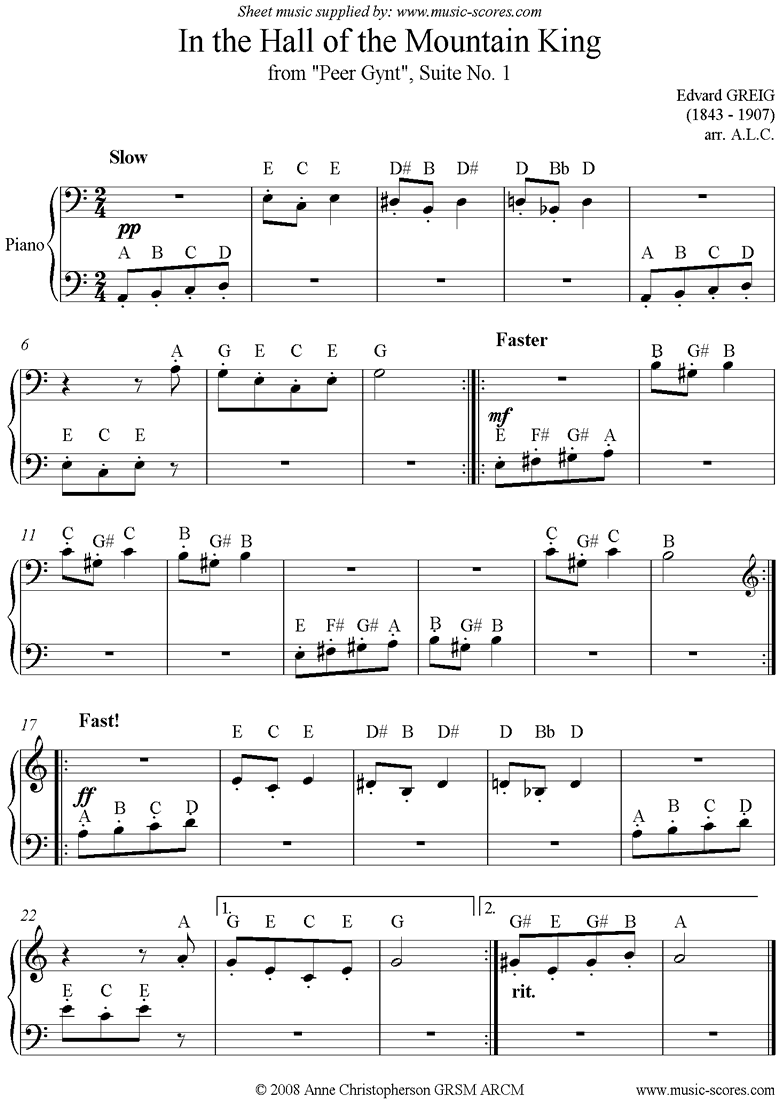
“In the Hall of the Mountain King” is a piece of orchestral music composed for the sixth scene of act 2 in Henrik Ibsen’s 1867 play Peer Gynt. It was originally part of Opus 23 but was later extracted as the final piece of Peer Gynt, Suite No. 1, Op. 46. Its easily recognizable theme has helped it attain iconic status in popular culture, where it has been arranged by many artists, including for the piano.
Borrow a copy of the sheet music from the O’Connor Music Studio. I have this arranged for piano, duet, 2-piano, simplified…
8 part vocal orchestra (plus a tiny pair of cymbals)
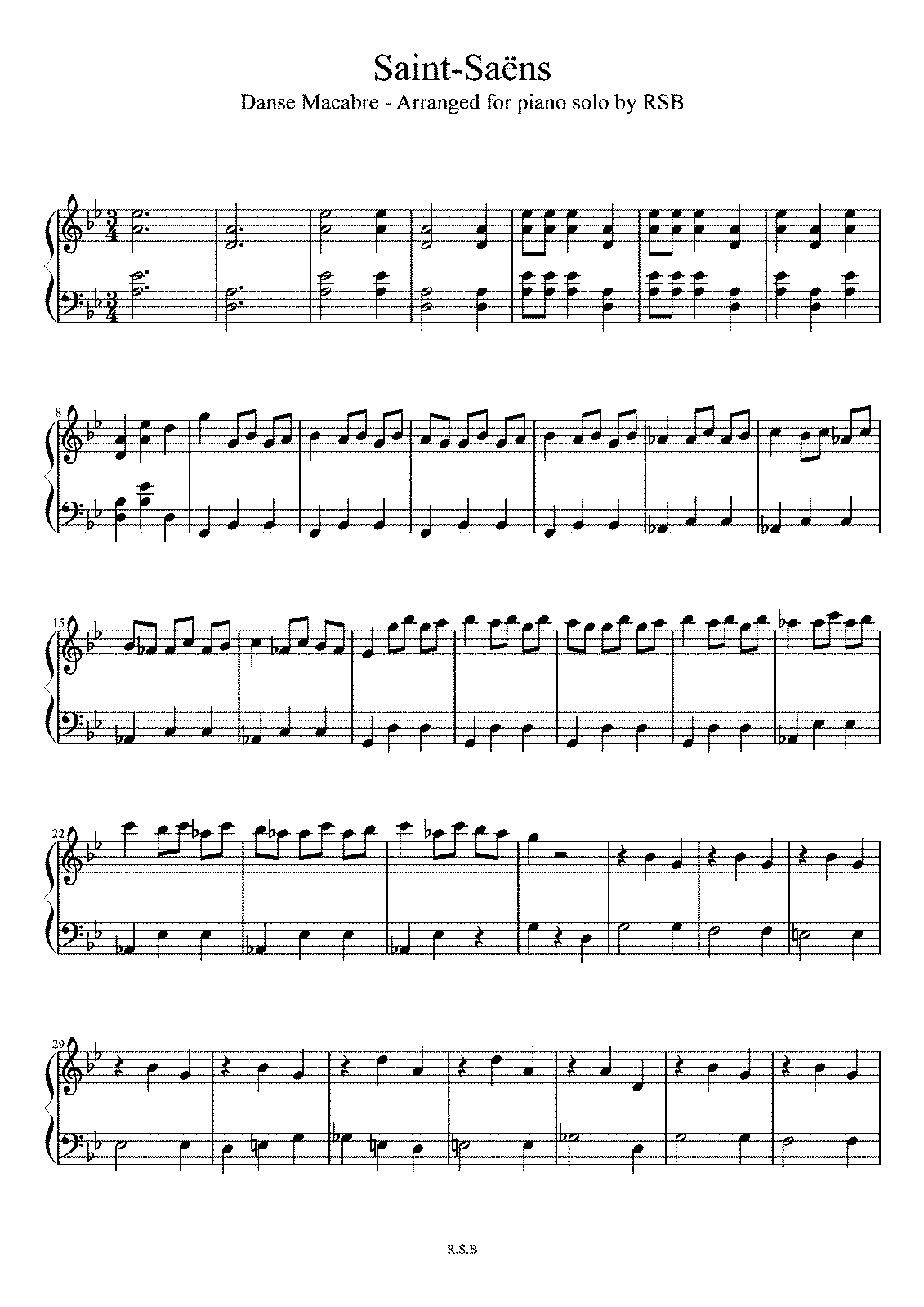
Danse macabre, Op. 40, is a tone poem for orchestra, written in 1874 by French composer Camille Saint-Saëns. It started out in 1872 as an art song for voice and piano with a French text by the poet Henri Cazalis, which is based on an old French superstition. In 1874, the composer expanded and reworked the piece into a tone poem, replacing the vocal line with a solo violin.
Get a free copy of the sheet music at IMSLP (Look for Arrangements and Transcriptions) or borrow a copy from the O’Connor Music Studio. I have this arranged for organ, piano, duet, simplified…
Amazon has a great Dover edition for solo piano. This splendid compilation features a variety of the composer’s best piano works, all reproduced from authoritative sources. Taking its title from the popular orchestral work “Danse Macabre” (presented here in the brilliant arrangement by Liszt), this collection also includes “Allegro appassionato,” “Album” (consisting of six pieces), “Rhapsodie d’Auvergne,” “Theme and Variations,” plus six etudes, three waltzes, and six etudes for left hand alone.
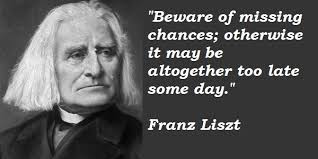
Franz Liszt was born in Raiding, near Ödenburg, October 22, 1811 and died in Bayreuth, July 31, 1886. He was a Hungarian composer and pianist who was a major influence during the romantic period. Liszt was an outstanding pianist at seven, composed at eight and made concert appearances at nine. In addition to being a piano virtuoso, he was also a critic, conductor, city music director, literary writer and transcriber of the works of other composers. He transcribed Beethoven’s Symphonies for the piano.
Franz Liszt began his career as the outstanding concert pianist of the century, who, along with the prodigious violinist Niccoló Paganini (1782-1840), created the cult of the modern instrumental virtuoso. To show off his phenomenal and unprecedented technique, Liszt composed a great deal of music designed specifically for this purpose, resulting in a vast amount of piano literature laden with dazzling, and other technical marvels. In this vein, Liszt composed a series of virtuosic rhapsodies on Hungarian gypsy melodies, the best-known being the all too familiar Hungarian Rhapsody no. 2. Liszt developed the rhapsody as a form of serious music. This kind of music is worlds apart from the generally more introspective, poetic music of pianist-composer Frédéric Chopin.
Liszt was wildly handsome and hugely talented. He was extremely popular in Paris during the 1830’s. It is said that women actually fainted at his piano recitals. He was the first to position the piano so that its lid reflected the sound and the audience could see his profile as he performed.
Liszt was the first to write a tone poem, which is an extended, single-movement work for orchestra, inspired by paintings, plays, poems or other literary or visual works, and attempting to convey the ideas expressed in those media through music. Such a work is Les Préludes, based on a poem in which life is expressed as a series of struggles, passions, and mysteries, all serving as a mere prelude to . . .what? The Romantic genre of the symphonic poem, as well as its cousin the concert overture, became very attractive to many later composers, including Saint-Saëns, Tchaikovsky, Dvorák, Sibelius, and Richard Strauss.
Listen to Liszt’s transcription of Meyerbeer’s Hellish Waltz from Robert du Diable, which probably caused more public commotion than any other piano piece in history.
I have purchased a set of Shades of Sound Listening & Coloring Book: Halloween for the studio.
Each week, I will print out some of the pages for your student and put them in his/her notebook. After listening to the music on YouTube, the student may color the pages.
After they are colored, please return them to the notebook so that there will be a complete book when finished.
If you are an adult and want to listen and color, too, just let me know and I’ll print you a set.
The Shades of Sound Listening and Coloring Books are a great way to encourage students to listen to great piano and orchestral repertoire. Students of all ages will love coloring the fun pictures while listening to and learning from the music of the great composers.
This Shades of Sound Halloween edition includes 13 spooky pieces of piano and orchestral literature, ranging from the Baroque to the Modern period. By spending just 5-10 minutes per day listening for just a few days per week, students can listen to and complete the whole book in a few weeks.
Aspiring pianists need to know the literature, hear the greats perform, and be inspired and excited by the great music that is available! Just as writers need to read, read, read, pianists need to listen! Through this fun curriculum, students will learn about the musical periods and the great composers and their works. Listening repertoire selected includes selections from the standard solo piano literature, as well as solo piano and orchestra literature and orchestral works.
My hope is that students can add just 5-10 minutes of listening per day to their normal practicing. Listening to great music will change their understanding of music and will vastly increase their music history knowledge. It will excite and inspire them, encourage further study and listening, give them new pieces to add to their own repertoire wish list, infuse more great music into their lives, homes and families, and will boost their musicianship and expression to the next level.
The Halloween Shades of Sound book includes 13 different pieces, including:
Totentanz by Liszt
Le Cimetiere, from Clairs de Lune by Abel Decaux
Graceful Ghost Rag by William Bolcom
Night on Bald Mountain by Mussorgsky/Rimsky-Korsakov
Tarantelle, from Music for Children Op. 65 No. 4 by Prokofiev
Tarantella by Albert Pieczonka
In the Hall of the Mountain King by Grieg
Toccata and Fugue in D minor, BWV 565 by Bach
Funeral March, from Piano Sonata No. 2 in B-flat minor by Chopin
Danse Macabre by Saint-Saens
The Banshee by Henry Cowell
Scarbo, from Gaspard de la nuit by Ravel
The Sorcerer’s Apprentice by Paul Dukas
Students may use The Playful Piano – Halloween Listening YouTube playlist to listen along with their book using quality recordings. The playlist is ordered to go right along with the book, and also includes 5 extra pieces (some pages include optional “Further Listening” examples students may listen to).
Today, since it’s a “teaching day”, I’m thankful for my piano studio, my students, and my piano 🙂
When I was growing up, my dad was a minister, meaning we lived in whatever parsonage the church chose to let us live in. The one we had in Pawcatuck, CT had an upright piano that someone had put out in the sunroom. Not the best place for a piano, but I digress.
Since we had the piano already, someone – probably my mom – decided that I would take lessons. We had the organist from the Baptist church just across the river in Westerly, RI
Apparently, Clara Pashley was fondly remembered at the church (now Central Baptist Church) since she was mentioned in an article from 2010.
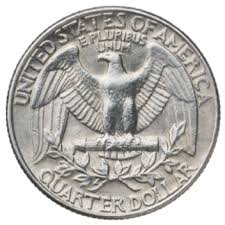
Miss Pashley walked to our house each week and taught me (and my mom who was always listening in) piano for the grand sum of 25 cents.
I started with Ada Richter’s classic Teaching Little Fingers to Play, which has now been morphed into the John Thompson library.
From there, it was the Michael Aaron series, and some sheet music.
There was no music store in our town, so I have no idea where any of this music came from – but I still have it all.
My parents did very well for their quarter a week investment, especially since my mom paid good attention and was able to beef up lessons she’d had as a child. Later on, she played well enough that she was church organist for a local Roman Catholic Church.
But I digress…
In those days, kids couldn’t do a whole lot of activities, so in 6th grade, I decided I wanted to be a Girl Scout. Bye, bye Clara.
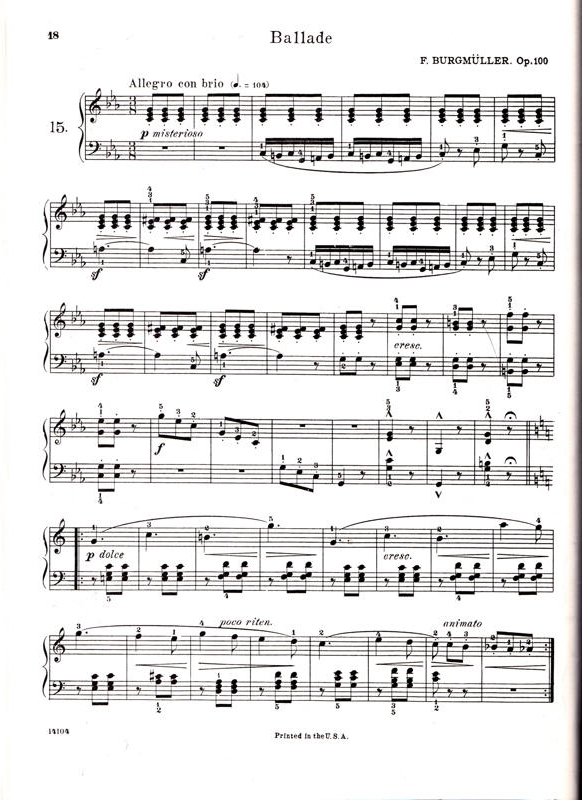
Girl Scouts didn’t last long but I did play piano in a talent show. I remember, I carefully cut Burgmüller’s Ballade out of my Michael Aaron book and made a nice construction paper cover. (I still have this, too)
I doubt that I played this well but here’s what it was supposed to sound like:
A few years intervened and we moved to Springfield, MA. The parsonage piano there was in terrible shape and in the dark, never-used basement. But I decided to make it mine and cleared up the area around it and started “practicing”.
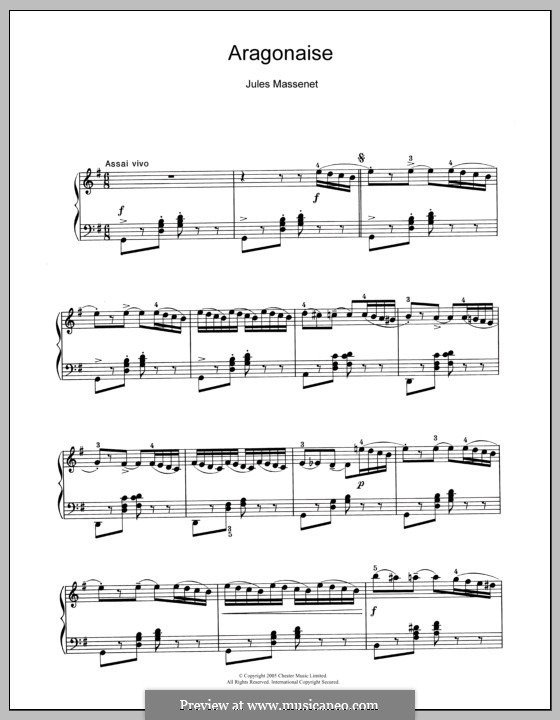
My Junior or Senior year of High School I decided I wanted to major in music in college. I decided to learn, on my own, a piano arrangement of Aragonnaise by Jules Massenet. I have no idea why or where that sheet music came from but I started working furiously on this piece.
Hopefully, at some point, it should have sounded like this:
I started pedaling (no pun intended!) my music to the Universities of Connecticut and Massachusetts and ended up at UMass Amherst since we were state residents.
Early morning gym classes (usually swimming), then wet hair traipsing across campus to music theory in winter 5 days a week. AARRGGH!
But I stuck it out.
My wonderful piano teacher, Howard Lebow, was killed in a car accident my sophomore year and I was devastated. There was about him in a post on January 26, 2018 here: https://atomic-temporary-44596882.wpcomstaging.com
I took yet another break from piano lessons – but I kept playing.
After DH graduated, we moved to Milwaukee, WI for his graduate school. Besides working 2 jobs, I found time to commandeer the practice rooms at the University of Wisconsin. I also found a teacher at the Schaum School of Music. She was amazed that I had no piano at home to practice on.
When we later moved to Alexandria, VA my DH gave me a choice of new car or piano. So, I found a used piano. The owner had acquired it in a divorce and wanted it gone. Yesterday. She even paid to move it out of her apartment.
The new-to-me piano took up half our living room. When my parents came to visit, their feet were under my piano as they slept on cots.
I found yet another new piano teacher and she is still my best friend to this day.
That piano moved to several locations before I bought a brand new Yamaha grand piano. The movers accidentally brought in the wrong one and I made them return it. The people who lived in an apartment were probably unhappy when they had to return my piano and take their own new baby grand back.
I started teaching as a traveling piano teacher in Silver Spring, Maryland. I continued that in Wilmington, DE.
When we got to Fairfax, VA I decided no more traveling. Students would come to me. And so they have since 1973.
What is supposed to be our living room is filled with music books, electric keyboards, the grand piano, 2 organs, 2 violins, 2 clarinets, a hand-made (by me!) dulcimer and other musical “stuff”.
Piano playing has gotten me through the worst times of my life. Teaching has been a lifeline for me, as well.
I am so thankful for the students who have stayed with me over the years.
iOS: Learning to play the piano can be difficult, and even moreso if you don’t have someone there to help you fix your errors and learn good tempo. Simply Piano can do both of those things, and all it takes is your iPhone or iPad. Best of all, it’s free.
Like many “piano-learning” apps, Simply Piano teaches you various pieces of music by essentially displaying sheet music in front of you to play, guiding you to the right keys on your piano or keyboard, and showing you the right order in which to press them and when — that’s all great, and not terribly unique, even if it works well. Where the app shines however is its listening feature. Simply put the phone down near the keyboard, and Simply Piano will “listen” to you play.
As you play, the app identifies what you’re playing and gives you feedback on how to improve. Maybe you need to pick up the tempo, or maybe you missed a few notes here or there — whatever it is, the app can give you a few tips, and encourages you to try again, all while it listens and tries to help.
Simply Piano is free, and available now. It comes bundled with a ton of songs to learn (including classical and pop songs you’ll probably recognise), and is geared to all skill levels — and keyboard types, so you don’t need a fancy piano just to use the app, any keyboard will do. Hit the link below to try it out.
• 1812 ~ Fanny Perisiani, Italian coloratura soprano
• 1881 ~ The player piano was invented by Edward Leveaux of Sussex, England, who received a patent for it this day. There were many player piano inventions going on throughout the world during this time. Leveaux happened to be the lucky chap who received the patent England was handing out.
• 1929 ~ Leroy Van Dyke, Singer
• 1939 ~ A barber from Canonsburg (near Pittsburgh), PA, who had quite a singing voice, recorded That Old Gang of Mine with the Ted Weems Orchestra. That singer was the feature of the Weems band for many years before going solo as a radio, TV and stage star. You know him as ‘The Incomparable Mr. C.’, Perry Como. His string of hits for RCA Victor spans four decades. He was an NBC mainstay for years and years.
• 1943 ~ Is You is or is You Ain’t My Baby? was the musical question by Louis Jordan and His Tympany Five on this day on Decca Records.
• 1947 ~ James Fielder, Bass with these groups: Buffalo Springfield, Mothers of Invention and Blood, Sweat & Tears
• 1948 ~ Gordon MacRae hosted the premiere of a radio classic. The Railroad Hour debuted on ABC radio. The theme song was I’ve Been Working on the Railroad and the show was sponsored by….America’s Railroads.
• 1949 ~ John Aler, American tenor
• 1959 – Chris Lowe, Keyboards with Pet Shop Boys
• 1966 ~ It was, indeed, a Sunny Day for singer Bobby Hebb, who received a shiny gold record award for his song.
• 1970 ~ Janis Joplin died from a drug overdose. She was 27. Joplin, known for her passionate, bluesy, vocal style, was the lead singer of Big Brother and the Holding Company. She became a superstar with hits like, Down on Me, Pearl (her nickname) and Every Little Piece of My Heart; but Me and Bobby McGee was her only certified top 40 hit. The Bette Midler movie, The Rose, was based on Joplin’s life.
• 1999 ~ Art Farmer passed away
• 2000 ~ International diplomat and Newport Music Festival director David Meredith Evans died at the age of 64.
• 2001 ~ Irmgard Farden Aluli, considered the most prolific female Hawaiian composer since Queen Liliuokalani, died after suffering complications from colon cancer surgery. She was 89. Aluli, affectionately nicknamed “Aunty”, became the first living member to be inducted into the Hawaiian Music Hall of Fame in 1998. In August, the Prince Kuhio Hawaiian Civic Club honored her as a cultural living treasure. She wrote more than 200 songs, including Boy from Laupahoehoe and E maliu Mai. Aluli began performing publicly after graduating from St. Andrew’s Priory in 1929. She was a member of the Annie Kerr Trio in the 1930s. In the late 1960s, Aluli, her daughters and a niece formed the group Puamana.
• 2001 ~ Jazz guitarist John Collins, who played with Nat King Cole for over a decade, died at the age of 83. Collins was born in Montgomery, Ala., and grew up in Chicago. His mother, Georgia Gorham, was a pianist and bandleader. Collins briefly played clarinet before switching to guitar and moving to New York, where he played with prominent jazzmen such as pianist Art Tatum. Collins accompanied singer Billie Holiday and saxophonist Lester Young in the 1940s and played in bands led by Benny Carter and Fletcher Henderson. He served in the Army during World War II, and played in Army bands. Esquire magazine gave Collins its New Star award as best guitarist of 1947, his lone jazz poll honor. Collins’ 14-year association with Cole began in 1951, when he replaced guitarist Oscar Moore. Collins played with Cole until the latter’s death in 1965. Collins went on to tour Europe with his own group. He played occasionally around Southern California in the 1990s but worked mainly as a private teacher.
There will be $1.6 million worth of piano on stage at the City Recital Hall on Friday night. With their legs and lids removed for transport, eight Steinway grand pianos will be trucked to the venue.
There they will be reassembled on stage and tuned, ready for eight of Australia’s finest classical pianists.
In The Steinway Spectacular 16 hands and 80 fingers will play some of classical music’s greatest hits.
Conducted by Guy Noble, the pianists will work as an ensemble to perform works by composers such as Ravel, Saint-Saens and George Gershwin. ”It’s a very large affair,” says Noble. ”Logistically, it’s a nightmare.” The piano technician Ara Vartoukian will spend hours tuning the instruments.
For past concerts in Melbourne the process sometimes took all night. ”The pianos all, in essence, sound the same, so they have to be absolutely in tune with each other.”
Even after the most careful tuning, things can go awry.
The pianists – Anthony Halliday, Roger Heagney, Clemens Leske, Tamara Smolyar, Mikhail Solovei, Evgeny Ukhanov, Gerard Willems and Alexey Yemtsov – usually perform as soloists. Every now and again, Noble says, one of them ”goes rogue”.
”One will suddenly break out and play their own thing,” he says. ”I have to herd them back into the pride, glaring at them with eyes of death. It’s one of the hardest things I’ve ever had to conduct. It’s like herding cats.”
There is no repertoire for an ensemble of pianists, so Noble has created new arrangements.
His favourite is a rendition of the children’s staple Chopsticks. ”That just goes wild,” he says.
The segment titled So You Think You Can Play Scales is also a crowd pleaser. ”It’s like Piano Idol. People get voted off if they go off the rails.”
Other pieces will feature the organist Calvin Bowman and the soprano Shu-Cheen Yu. Bowman, who usually plays above the stage in a loft, will join the other performers on stage on an electronic organ.
”It’s a relief for him to be down on stage because he suffers terribly from vertigo,” Noble says. ”He’s been terrified in organ lofts all over Australia.”
More boisterous extravaganza than a recital for purists, the performance will appeal to an eclectic crowd.
”We get classical music lovers, as well as people who are just curious. It’s pure fun and enjoyment.”
The Steinway Spectacular is at the City Recital Hall on Friday.
• 1763 ~ An instrument named the spinet was mentioned in The Boston Gazette newspaper on this day. John Harris made the spinet, a small upright piano with a three to four-octave range. There is no verifiable evidence to support the rumor that a man named Spinetti made the first spinet.
• 1809 ~ The Theatre Royal at Covent Garden re-opened after being destroyed by fire the year before. The Theatre Royal at Covent Garden began in Bow Street in 1732. It was designed by E.M. Barry in classical style. He also built for the theatre’s management the Floral Hall next door in glass and iron, meant to be a straightforward rival to the Bedford’s flower market. Both of Barry’s buildings are now part of the rebuilt Royal Opera House at Covent Garden complex.
• 1838 ~ Emil Scaria, Austrian bass-baritone
• 1910 ~ Josef Tal, Polish-born Israeli composer and pianist
• 1917 ~ The Honolulu Ad Club registered a patent for the ukulele.
• 1927 ~ The Columbia Broadcasting System was born on this day, although its rival, NBC, had been on the air for some time. The Tiffany Network, as CBS was called, broadcast an opera, The King’s Henchman, as its first program. William S. Paley put the network together, purchasing a chain of 16 failing radio stations. The controlling interest cost between $250,000 and $450,000. The following year, the 27-year-old Paley became President of CBS. It only took one more year for him to profit 2.35 million dollars as the network grew to over 70 stations. In 1978 Paley received the First Annual ATAS (Academy of Television Arts and Sciences) Governor’s Award as Chairman of the Board of CBS.
• 1929 ~ Teddi King, Singer
• 1933 ~ Jimmie Rodgers, Singer
• 1939 ~ Frankie (Frances) Avalon (Avellone), American rock-and-roll singer
• 1947 ~ Country singers Ernest Tubb and Roy Acuff performed at Carnegie Hall in New York City. It was the first country show for the NYC venue.
• 1948 ~ The Original Amateur Hour returned to radio on ABC, two years after the passing of the program’s originator and host, Major Bowes. Bowes brought new star talent into living rooms for 13 years. Ted Mack, the new host, had also started a TV run with The Original Amateur Hour on the DuMont network in January of 1948.
• 1949 ~ Kerry Livgren, Guitar, keyboards with Kansas
• 1952 ~ Dee Dee Ramone (Douglas Colvin), Drummer with The Ramones
• 1955 ~ What had been The Toast of the Town on CBS Television (since 1948) became The Ed Sullivan Show. This “rilly big shew” remained a mainstay of Sunday night television until June 6, 1971. Sullivan was a newspaper columnist/critic before and during the early years of this pioneering TV show.
• 1957 ~ The Big Record, hosted by ‘the singing rage’, Miss Patti Page, debuted on CBS-TV. The Big Record was a live musical showcase featuring established artists singing their big songs. The Big Record lasted one big season.
• 1962 ~ Joanne Catherall, Singer with Human League
• 1967 ~ Ricky Bell, Singer with New Edition
• 1969 ~ Tiptoeing through late night TV, Tiny Tim announced his engagement to Miss Vicki Budinger. Johnny Carson, host of The Tonight Show, was so enthralled with the falsetto-voiced singer that he invited the couple to get married on the show. They did on December 17, 1969 and TV history was made.
• 1970 ~ Rock radio mourned the loss of rock music legend, Jimi Hendrix. He died at age 27 of an overdose of sleeping pills. His Purple Haze and Foxy Lady became anthems for a generation at war in Vietnam.
• 1985 ~ “Song & Dance” opened at Royale Theater NYC for 474 performances







 MaryO'Studio