• 1596 ~ Nicola Amati, Italian violin maker, teacher of Guarneri and Stradivari
• 1729 ~ Padre Antonio Francisco Javier Jose Soler, Spanish composer whose works span the late Baroque and early Classical music eras. He is best known for his keyboard sonatas, an important contribution to the harpsichord, fortepiano and organ repertoire.
• 1876 ~ Hermann Goetz died. He was a German composer.
1883 ~ Anton Webern, Austrian composer and conductor
Read quotes by and about Webern
More information about Webern
• 1907 ~ Connie (Connee) Boswell, Singer Connie or Connee (a spelling she preferred later in life), who also played several musical instruments, arranged vocals for herself and her two sisters. Although she was stricken with polio and worked from her wheelchair, she never let this get in the way of being part of her jazz-singing trio. The Boswell Sisters’ talent was quickly recognized and by the time Connee was 24 years old, the sisters were doing vaudeville, radio, playing New York’s Paramount Theatre, recording with the Dorsey Brothers: You Oughta Be in Pictures; making films and appearing on the U.S.A.’s first public TV broadcast. One thing led to another and Connie went solo, entertaining World War II troops, making films, appearing on Broadway and recording with big names like Woody Herman’s; even a duet classic with Bing Crosby: Basin Street Blues. Her musical influence spanned many generations and music styles. If you’d have asked Ella Fitzgerald, she would have told you, “They just don’t make ’em like Connee Boswell anymore.”
1923 ~ Maria Callas (Calogeropoulous), American soprano
More information about Callas Read quotes by and about Callas
• 1925 ~ The first jazz concerto for piano and orchestra was presented at Carnegie Hall in NYC. Commissioned by Walter Damrosch, American composer GeorgeGershwin presented Concerto In F, and was also the featured soloist playing a flugelhorn in a slow, bluesy style as one of his numbers.
• 1927 ~ Phyllis Curtin, Singer: soprano with the New York City Opera, MetropolitanOpera, Vienna Staatsoper, La Scala, Teatro Colon; coordinator of Voice Dept and Opera at Yale School of Music, Dean Emerita of Boston Univ School for the Arts
• 1927 ~ Ferlin Husky (aka: Simon Crum, Terry Preston), Singer
• 1930 ~ Andy (Howard Andrew) Williams, American Emmy Award-winning entertainer, singer
• 1931 ~ Jaye P. (Mary Margaret) Morgan, Singer, performer
• 1944 ~ Frank Sinatra was in the Columbia Records studio recording Old Man River.
• 1948 ~ Ozzy (John) Osbourne, Songwriter, singer
• 1949 ~ Mickey Thomas, Singer with Jefferson Starship
• 1953 ~ Kismet opened on Broadway in New York. The show ran for 583 performances.
• 1955 ~ Elvis Presley’s first release on RCA Victor Records was announced. No, it wasn’t Hound Dog or Heartbreak Hotel. The first two sides were actually purchased from Sam Phillips of Sun Records: Mystery Train and I Forgot to Remember to Forget. Elvis was described by his new record company as “The most talked about personality in recorded music in the last 10 years.”
• 1960 ~ Camelot opened at the Majestic Theatre in New York City. Richard Burton and Julie Andrews played the leading roles in the musical written by Lerner and Loewe. Robert Goulet got rave reviews for his songs, If Ever I Would Leave You, Then You May Take Me to the Fair and How to Handle a Woman, among others. Camelot had a run of 873 performances. Broadway went Hollywood in the 1967 film version of Camelot. Its run was not quite as successful.
• 1968 ~ The O’Kaysions received a gold record for Girl Watcher. The song had a promotional reprise in the 1990s as a theme for Merv Griffin’s Wheel of Fortune, with the revamped lyrics, I’m a Wheel Watcher…
• 1977 ~ After 29 weeks in the #1 position on the album charts (a record, literally…), Rumours, by Fleetwood Mac, was replaced at the top spot by the album Simple Dreams, sung by Linda Ronstadt.
• 2000 ~ Kevin Mills, a member of the Christian rock groups Newsboys and White Heart, died after a motorcycle accident in Hollywood. He was 32. Mills, of Louisville, Ky., was a singer and bass player, his family said. He also was a member of the Screen Actors Guild and appeared on TV in “An Inconvenient Woman” in 1991. White Heart started in 1982. Newsboys, an Australian band now based near Nashville, was formed four years later. Newsboys have sold nearly 3 million records and earned three Grammy nominations on the religious rock circuit.
• 2002 ~ Rich Dangel, credited with creating the opening guitar chords of garage band staple Louie Louie, died of an aneurysm at his home. He was 60. Dangel was a member of the seminal Northwest rock band the Wailers, who introduced the nation to the Northwest sound – raw, unpolished and catchy. He may be best known for coming up with the power chords that opened the Wailers’ 1961 regional hit, Louie, Louie, written by rhythm-and-blues singer Richard Berry and taken to the top of the national charts by another Northwest band, the Kingsmen from Portland, Ore. Dangel co-wrote his first chart hit, “Tall Cool One” with fellow Wailer John Greek when he was still in high school. The song resulted in the group’s first album, “The Fabulous Wailers,” a cross-country tour and a 1959 appearance on Dick Clark’s “American Bandstand.”
Johann Sebastian Bach’s towering monument of organ music, with its deep sense of foreboding, will forever be associated with Halloween.
Get a free copy of the sheet music at IMSLP or borrow a copy from the O’Connor Music Studio. I have this arranged for organ, piano, duet, 2-piano, simplified…
The Funeral March of a Marionette (Marche funèbre d’une marionnette) is a short piece by Charles Gounod. It was written in 1872 for solo piano and orchestrated in 1879. It is perhaps best known as the theme music for the television program Alfred Hitchcock Presents, which originally aired from 1955 to 1965.
In 1871-72, while residing in London, Gounod started to write a suite for piano called “Suite Burlesque”. After completing one movement, the Funeral March of a Marionette, he abandoned the suite and had the single movement published by Goddard & Co. In 1879 he orchestrated the piece. The instrumentation is: piccolo, flute, 2 oboes, 2 clarinets in A, 2 bassoons, 2 horns in D, 2 trumpets in A, 3 trombones, ophicleide, timpani, bass drum, triangle, strings. The work is in the key of D minor, with a central section in D major. Various arrangements by other hands exist.
There is a program underlying the Funeral March of a Marionette: The Marionette has died in a duel. The funeral procession commences (D minor). A central section (D major) depicts the mourners taking refreshments, before returning to the funeral march (D minor).
The score contains the following inscriptions in appropriate places:
La Marionnette est cassée!!! (The Marionette is broken!!!)
Murmure de regrets de la troupe (Murmurs of regret from the troupe)
Le Cortège (The Procession)
Ici plusieurs des principaux personnages de la troupe s’arrêtent pour sa rafrâichir (Here many of the principal personages stop for refreshments)
Retour a la maison (Return to the house). (Wikipedia)
Download this music in several versions from IMSLP. Click on Arrangements and Transcriptions. There are also some arrangements for piano at the O’Connor Music Studio.
On Alfred Hitchcock:
From Faber Piano Adventures Performance Book Level 3B No.7 (Also available in the OCMS Library):
Any piano student can tell you that their instrument has a total of 88 keys, but that isn’t always the case. While working on transcriptions of Bach organ works for the piano, composer and pianist Ferruccio Busoni found that the standard keyboard was unsatisfactory.
In order to mimic the sound of the largest organ pipes, Busoni worked with Ludwig Bösendorfer of the eponymous piano factory to create an instrument with an extended the piano’s lower register. The result was the Model 290 Imperial, a 97-keyed piano that encompasses eight full octaves.
The first prototype was built in 1909. Its extraordinary sound inspired major composers, including Bartók, Debussy and Ravel. Several music pieces composed require an Imperial to ensure that they are played true to the original.
Garrick Ohlsson once called it the “Rolls Royce of pianos.”
Each year on May 22 we observe National Buy a Musical Instrument Day. The day is all about playing music. If you are a musician, it might be time for a new instrument. Maybe you can learn to play a second or third one. If you have never played an instrument before, National Buy A Musical Instrument Day might be the motivation you need to start.
Naturally, here at the O’Connor Music Studio, a piano, keyboard or organ is recommended but this day is for all types of instruments and is for people of all ages. Grandpa can play his ukulele while the grandkids play the drums, trombone, and flute. Together they can all make terrific music!
. 1934 ~ Shirley Boone (Foley), Singer, married to singer Pat Boone since 1953
. 1934 ~ Shirley MacLaine, Entertainer, Academy Award-winning actress, sister of actor Warren Beatty
. 1934 ~ Laurens Hammond, in Chicago, IL, announced news that would be favored by many churches across the United States. The news was the development of the pipeless organ — and a granting of a U.S. patent for same.
Read more about the Hammond Organ
. 1936 ~ Benny Goodman and his trio recorded China Boy for Victor Records. GeneKrupa, Teddy Wilson and Goodman recorded the session in Chicago.
. 1937 ~ Joe Henderson, Musician, composer. He played live in sextet at San Francisco’s Keystone Korner and also played with Blood Sweat and Tears
. 1942 ~ John Williams, Guitarist
. 1942 ~ Barbra Streisand, American actress and singer of popular music, GrammyAward-winning Best Female Pop Vocalist (1963-1965, 1977, 1986), Best Songwriter in 1977, Academy Award-winning Best Actress, Oscar for Best Song (Evergreen in 1976)
Read a news item about Barbra Streisand
. 1943 ~ Richard Sterban, Musician: bass, singer with The Oak Ridge Boys
. 1945 ~ Doug Clifford, Drummer with Creedence Clearwater Revival
. 1954 ~ Billboard magazine, the music industry trade publication, headlined a change to come about in the music biz. The headline read, “Teenagers Demand Music with a Beat — Spur Rhythm and Blues” … a sign of times to come. Within a year, R&B music by both black and white artists became popular.
. 1959 ~ Your Hit Parade ended after a nine-year run on television and many more years on radio. The show debuted in 1935. On the final show, these were the top five songs on Your Hit Parade:
1 Come Softly to Me
2 Pink Shoelaces
3 Never Be Anyone Else but You
4 It’s Just a Matter of Time
5 I Need Your Love Tonight
. 1965 ~ Game of Love, by Wayne Fontana and The Mindbenders, made it to the top spot on the Billboard music chart. Game of Love stayed for a short visit of one week, before Peter Noone and Herman’s Hermits took over the top spot with Mrs. Brown You’ve Got a Lovely Daughter.
. 1968 ~ Climaxing his birthday celebration, the Who’s drummer, Keith Moon, accidentally drove a Lincoln Continental into a hotel swimming pool in Flint, Mich.
. 1969 ~ The singing family, The Cowsills, received a gold record for their hit single, Hair, from the Broadway show of the same name.
. 2000 ~ Singer and pianist George Paoa, whose smooth voice and mellow style introduced generations of tourists to Hawaiian music, died. He was 65. For more than 40 years, Paoa entertained vacationers at isle hotels with a repertoire of old Hawaiian standards, light jazz and hapa-haole music, a tourist favorite with its blend of English lyrics and Hawaiian melodies. Paoa played with the jazz recording star Martin Denny in the 1960s and two of his children sang on his 1994 album, “Walking in the Sand.”
. 2001 ~ Jazz singer Al Hibbler, who was known for his rich baritone and exaggerated phrasing, died at the age of 85. Hibbler is best remembered as one of Duke Ellington’s most colorful vocalists. Hibbler went solo in the 1950s, and enjoyed his biggest hit,Unchained Melody. Another of his hit songs was After the Lights Go Down Low. The Mississippi native, who was blind from birth, joined Ellington’s band in 1943 and became popular for singing tunes with the band that included Do NothingTill You Hear From Meand I’m Just a Lucky So and So. Hibbler’s penchant for distorted vocal effects were described by Ellington as “tonal pantomime.” Hibbler started his professional singing career in the 1930s, after vocal studies at the Conservatory for the Blind in Little Rock, Ark. After winning amateur concerts in Memphis, Tenn., he led a group in Texas and toured with Kansas City bandleader Jay McShann in 1942. Hibbler went on to record with Ellington’s son, Mercer Ellington, Billy Taylor, Count Basie, Gerald Wilson and Rahsaan Roland Kirk. He sang When the Saints GoMarching In at Louis Armstrong’s funeral.
I’ve been thinking a bit about shoes lately, specifically organ shoes. Many people probably don’t know that organists usually use special shoes to help them play the pedals on an organ. When I was learning a new piece, I would play barefoot to help feel where my feet should go but when playing in church I always had my Organmaster shoes on.
Organmaster Shoes began in 1976 when an organist, Carol Carlson, struggled to find shoes that would work for organ.
Organmaster Shoes began in 1976 when an organist, Carol Carlson, struggled to find shoes that would work for organ pedaling. She knew that many organists, like herself, were playing in bare feet or slippers. Normal dress shoes did not allow the organist to FEELwhat note the foot was touching and were too slippery on the pedals. After years of searching, she finally decided to design the perfect organ shoes and sell them herself!
Her shoes for Toe-Heel Pedal Technique have a FULL HEEL providing solid contact with the pedals and 1 ¼ inches high to avoid injuring a leg muscle.
The shoes are very secure on the foot while playing the pedals. The women’s shoe has an elasticized strap with a buckle and the men’s shoe is a lace-up dress oxford.
However, it is the SUEDE LEATHER SOLES on the bottom of the shoes which make her shoes so special and which her customers rely on to tell what note the foot is touching. The shoes slide over the pedals, but don’t slip off because the suede provides just the right amount of grip allowing the organist to FEEL his or her way across the pedal board. The shoes also play silently on the pedals.
The shoes were an immediate hit producing an overwhelming response by organists. Very soon the shoes were being shipped all over the world. Many organ teachers tell us they require their students to wear our shoes as well.
Organ legend Virgil Fox took organ shoes to the extreme when he studded the heels with diamonds so that they would sparkle as he was playing Bach’s Gigue Fugue, or as he said “…when I dance the gigue.”
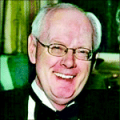
Anyway, shortly after Thanksgiving 2010 our church organist, Bob Chiralo AKA “Mr. Bob” to the kids, learned that he had cancer. During his surgery and treatment, his organ shoes sat neatly behind the organ and I would see them every week at choir rehearsal and Sunday services.
His shoes being there always gave me the hope that he might be back to use them soon.
Tuesday, April 12, 2011, Bob lost his battle with cancer and at choir rehearsal I noticed that his shoes were gone, too. That struck me as so final.
Bob won’t be back with us but I’m sure he’s putting those shoes to good use playing in heaven.
Thanks for all those years of service you provided to our church!
Robert Philip Chiralo died on April 12, 2011 of brain cancer. His wife was at his side, as was Father Alexander Drummond, who administered the Sacraments of the Church and a dear family friend, Jeanne Dalaba.
Bob was born on May 8, 1949 in Reading, Pennsylvania. He was an honor student throughout his school years there and began studying piano at age 8. At age 16, he was certified by the Lutheran Church to serve as an Organist/Choir Director. He continued his organ studies through his undergraduate years and was a lifetime member of the American Guild of Organists, serving in various capacities in that organization. In his deep devotion as a church musician he continuously served at various churches in Pennsylvania, California and most recently as organist at Pender UMC in Fairfax, Virginia.
He was an active Republican grassroots pro-life volunteer, member of the Fairfax County Republican Committee and spent several years as a tour guide at Manassas Battlefield Park. He was a student of world history, particularly military history.
Bob Chiralo had over thirty-five years of technical, management, and business development experience in intelligence and defense with the Federal Government. This began with his early work at the Aerospace Corporation, continued through his employment at Logicon Geodynamics and Logicon Ultrasystems (both now part of TASC, Inc.), and led to his current position at SRI International. Bob established a professional reputation as a pioneer in the area of Measurement and Signature Intelligence, especially in applying the science of sensors to the growing field of overhead sensing systems support for our national security and intelligence communities. This included extensive involvement in the evaluation of new remote sensing and hyperspectral detection technologies and culminating in his role in helping establish the Spectral Information Technology Applications Center (SITAC) to better formalize the evaluation of various new methods in these arenas. Bob’s expertise also led to one of the more interesting assignments of his professional career, his service as a technical advisor on imagery processing in connection with the House of Representatives 1978 investigation of the assassination of President John F. Kennedy.
Bob joined the Washington Office of SRI in 1998 as Intelligence Community Program Development Manager; his responsibilities included support of the company’s business development efforts and Intelligence Community Program Development, including project and program management spanning nearly the entire spectrum of the intelligence and national security communities. He was also quite active professionally. He was a founding member of the Measurement and Signature Intelligence Association, and an officer and past Chairman of the organization, and played a key role in its 2008 reorganization as the Advanced Technical Intelligence Association (ATIA). He was also an active member of the Institute for Electrical and Electronic Engineers (IEEE), the American Society of Photogrammetry and Remote Sensing (ASPRS), the North American Remote Sensing Industries Association (NARSIA) and the National Military Intelligence Association (NMIA). He held a B.A. in Physics from Wittenberg University (1971) and an MS in Electrical Engineering from the University of Pennsylvania (1973) in addition to other ongoing professional studies connected to his work.
He is survived by his wife of 30 years, Monica Dolle Chiralo of Centreville, VA; daughter and son-in-law Monette and Michael Johnstone with grandchildren Melissa Mae and Maxfield Alexander Johnstone of Seattle, WA; parents Anthony Philip and Mary Jane Chiralo of Reading, PA; and brother Joel Anthony Chiralo of Carney, MD.
The Funeral Mass will be held at Saint Andrew the Apostle Catholic Church in Clifton, VA on Monday morning, April 18 at 11:30 with burial following in the Garden of the Blessed Mother at Fairfax Memorial Park. A celebration of his life and music ministry will follow at Pender United Methodist Church in Fairfax. In lieu of flowers, it was his desire that donations be made toThe Jeanne Bussard Center, 555 South Market St., Frederick, MD 21701. This is a facility which serves mentally and physically handicapped adults. It was dear to his heart.
~~
Addendum:
1) Monica says:
“Bob is, indeed, using them (his shoes) – because he is wearing them, with his black cassock, a rosary in his hands and a Phillies’ hat on his head. Sure hope St. Peter isn’t a Yankees fan!”
2) This interview Virgil Fox shows his shoes even better in the first few minutes.
11200137D HOUSE JOINT RESOLUTION NO. 5031Offered April 25, 2011
Celebrating the life of Robert Philip Chiralo.
———-Patron– Hugo———-Unanimous consent to introduce———-WHEREAS, Robert Philip Chiralo of Centreville, a highly respected professional who played a pioneering role in the development of measurement and signature intelligence, died on April 12, 2011; and
WHEREAS, a native of Pennsylvania, Robert “Bob” Chiralo received a bachelor’s degree from Wittenberg University and a master’s degree from the University of Pennsylvania; and
WHEREAS, Bob Chiralo enjoyed a successful career that spanned more than three decades and involved technical, management, and business development work in intelligence and defense with the federal government; and
WHEREAS, Bob Chiralo began his distinguished career at the Aerospace Corporation before moving to Logicon Geodynamics and Logicon Ultrasystems (both now part of TASC, Inc.); in 1998 he joined the Washington Office of SRI International; and
WHEREAS, a brilliant innovator, Bob Chiralo recognized the role that the science of sensors could play in the growing field of overhead sensing systems support for the national security and intelligence communities; and
WHEREAS, Bob Chiralo became actively involved in the evaluation of new remote sensing and hyperspectral detection technologies, eventually helping to establish the Spectral Information Technology Applications Center; and
WHEREAS, highly regarded for his technical expertise, Bob Chiralo proudly served his country in a variety of ways, including working as a technical advisor on imagery processing during the investigation of the assassination of President John F. Kennedy; and
WHEREAS, Bob Chiralo made numerous contributions to his profession through his affiliation with different organizations; he was a founding member of the Measurement and Signature Intelligence Association and played a key role in its 2008 reorganization as the Advanced Technical Intelligence Association; and
WHEREAS, Bob Chiralo was also an active member of the Institute for Electrical and Electronics Engineers, the American Society of Photogrammetry and Remote Sensing, the North American Remote Sensing Industries Association, and the National Military Intelligence Association; and
WHEREAS, Bob Chiralo was a gifted musician who learned to play the organ as a young boy; at the age of 16, he received certification from the Lutheran church as an organist/choir director and continued his organ studies as an undergraduate; and
WHEREAS, a lifetime member of the American Guild of Organists, Bob Chiralo took great pride in serving as a church musician, most recently at Pender United Methodist Church in Fairfax; and
WHEREAS, an active member of the community, Bob Chiralo was a stalwart member of the Fairfax County Republican Committee and spent several years as a tour guide at Manassas National Battlefield Park; and
WHEREAS, a devoted family man, Bob Chiralo will be greatly missed by his wife of 30 years, Monica; daughter, Monette and her family, including two grandchildren; parents, Anthony Philip and Mary Jane; and numerous other family members, friends, and admirers; now, therefore, be it
RESOLVED by the House of Delegates, the Senate concurring, That the General Assembly hereby note with great sadness the loss of a pioneering leader in the intelligence community and respected community supporter, Robert Philip Chiralo; and, be it
RESOLVED FURTHER, That the Clerk of the House of Delegates prepare a copy of this resolution for presentation to the family of Robert Philip Chiralo as an expression of the General Assembly’s respect for his memory.
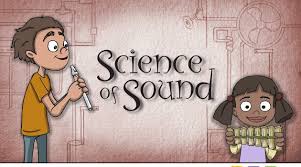
A quirky animated film for children showing the principles and inner workings of the mighty pipe organ, taking as its example the unique Klais organ resident in Birmingham’s Symphony Hall. Commissioned by Town Hall Symphony Hall as part of their ‘Science of Sound’ educational program.
• 1842 ~ The Philharmonic Society of New York, the first permanent orchestra in the U.S., held its first concert. Despite uncomfortable seating, the event was a huge success. They performed works of Beethoven.
1863 ~ Pietro Mascagni, Italian composer and conductor
More information about Mascagni
• 1887 ~ Ernst Toch, Austrian-born American composer
• 1911 ~ Louis Prima, Trumpeter, bandleader with Louis Prima and His New Orleans Gang, Gleeby Rhythm Orchestra; songwriter, singer, married to Keely Smith
• 1931 ~ Bobby Osborne, Musician, mandolin, singer with the duo – Osborne Brothers
• 1942 ~ Harry Chapin, American folk-rock singer and songwriter, Recipient of Special Congressional Gold Medal, Worldwide Humanitarian for the Hungry, Needy and Homeless
• 1948 ~ NBC presented Horace Heidt’s Youth Opportunity Program for the first time. The talent show earned Dick Contino, an accordionist, the $5,000 prize as the program’s first national winner.
• 1949 ~ Tom Waits, Singer, songwriter, playwright, married to Kathleen Brennan
• 1954 ~ Mike Nolan, Singer with Bucks Fizz
• 1957 ~ Pat Boone was at the top of the pop charts for the first of six weeks withApril Love. His other number one hits included Ain’t That a Shame, I Almost Lost My Mind, Don’t Forbid Me and Love Letters in the Sand.
• 1984 ~ Michael Jackson was in Chicago to testify that the song, The Girl is Mine, was exclusively his and he didn’t swipe the song, Please Love Me Now. It was a copyright infringement case worth five million dollars. He won.
• 1596 ~ Nicola Amati, Italian violin maker, teacher of Guarneri and Stradivari
• 1729 ~ Padre Antonio Francisco Javier Jose Soler, Spanish composer whose works span the late Baroque and early Classical music eras. He is best known for his keyboard sonatas, an important contribution to the harpsichord, fortepiano and organ repertoire.
• 1876 ~ Hermann Goetz died. He was a German composer.
1883 ~ Anton Webern, Austrian composer and conductor
Read quotes by and about Webern
More information about Webern
• 1907 ~ Connie (Connee) Boswell, Singer Connie or Connee (a spelling she preferred later in life), who also played several musical instruments, arranged vocals for herself and her two sisters. Although she was stricken with polio and worked from her wheelchair, she never let this get in the way of being part of her jazz-singing trio. The Boswell Sisters’ talent was quickly recognized and by the time Connee was 24 years old, the sisters were doing vaudeville, radio, playing New York’s Paramount Theatre, recording with the Dorsey Brothers: You Oughta Be in Pictures; making films and appearing on the U.S.A.’s first public TV broadcast. One thing led to another and Connie went solo, entertaining World War II troops, making films, appearing on Broadway and recording with big names like Woody Herman’s; even a duet classic with Bing Crosby: Basin Street Blues. Her musical influence spanned many generations and music styles. If you’d have asked Ella Fitzgerald, she would have told you, “They just don’t make ’em like Connee Boswell anymore.”
1923 ~ Maria Callas (Calogeropoulous), American soprano
More information about Callas Read quotes by and about Callas
• 1925 ~ The first jazz concerto for piano and orchestra was presented at CarnegieHall in NYC. Commissioned by Walter Damrosch, American composer GeorgeGershwin presented Concerto In F, and was also the featured soloist playing a flugelhorn in a slow, bluesy style as one of his numbers.
• 1927 ~ Phyllis Curtin, Singer: soprano with the New York City Opera, MetropolitanOpera, Vienna Staatsoper, La Scala, Teatro Colon; coordinator of Voice Dept and Opera at Yale School of Music, Dean Emerita of Boston Univ School for the Arts
• 1927 ~ Ferlin Husky (aka: Simon Crum, Terry Preston), Singer
• 1930 ~ Andy (Howard Andrew) Williams, American Emmy Award-winning entertainer, singer
• 1931 ~ Jaye P. (Mary Margaret) Morgan, Singer, performer
• 1944 ~ Frank Sinatra was in the Columbia Records studio recording Old Man River.
• 1948 ~ Ozzy (John) Osbourne, Songwriter, singer
• 1949 ~ Mickey Thomas, Singer with Jefferson Starship
• 1953 ~ Kismet opened on Broadway in New York. The show ran for 583 performances.
• 1955 ~ Elvis Presley’s first release on RCA Victor Records was announced. No, it wasn’t Hound Dog or Heartbreak Hotel. The first two sides were actually purchased from Sam Phillips of Sun Records: Mystery Train and I Forgot to Remember to Forget. Elvis was described by his new record company as “The most talked about personality in recorded music in the last 10 years.”
• 1960 ~ Camelot opened at the Majestic Theatre in New York City. Richard Burton and Julie Andrews played the leading roles in the musical written by Lerner and Loewe. Robert Goulet got rave reviews for his songs, If Ever I Would Leave You,Then You May Take Me to the Fair and How to Handle a Woman, among others. Camelot had a run of 873 performances. Broadway went Hollywood in the 1967 film version of Camelot. Its run was not quite as successful.
• 1968 ~ The O’Kaysions received a gold record for Girl Watcher. The song had a promotional reprise in the 1990s as a theme for Merv Griffin’s Wheel of Fortune, with the revamped lyrics, I’m a Wheel Watcher…
• 1977 ~ After 29 weeks in the #1 position on the album charts (a record, literally…), Rumours, by Fleetwood Mac, was replaced at the top spot by the album Simple Dreams, sung by Linda Ronstadt.
• 2000 ~ Kevin Mills, a member of the Christian rock groups Newsboys and White Heart, died after a motorcycle accident in Hollywood. He was 32. Mills, of Louisville, Ky., was a singer and bass player, his family said. He also was a member of the Screen Actors Guild and appeared on TV in “An Inconvenient Woman” in 1991. White Heart started in 1982. Newsboys, an Australian band now based near Nashville, was formed four years later. Newsboys have sold nearly 3 million records and earned three Grammy nominations on the religious rock circuit.
• 2002 ~ Rich Dangel, credited with creating the opening guitar chords of garage band staple Louie Louie, died of an aneurysm at his home. He was 60. Dangel was a member of the seminal Northwest rock band the Wailers, who introduced the nation to the Northwest sound – raw, unpolished and catchy. He may be best known for coming up with the power chords that opened the Wailers’ 1961 regional hit, Louie, Louie, written by rhythm-and-blues singer Richard Berry and taken to the top of the national charts by another Northwest band, the Kingsmen from Portland, Ore. Dangel co-wrote his first chart hit, “Tall Cool One” with fellow Wailer John Greek when he was still in high school. The song resulted in the group’s first album, “The Fabulous Wailers,” a cross-country tour and a 1959 appearance on Dick Clark’s “American Bandstand.”


 1883 ~ Anton Webern, Austrian composer and conductor



 Hanukkah
  MaryO'Studio