In Memory of Bob Chiralo, OrganMaster

From https://pendernews.org/2013/04/12/bob-chiralo-organmaster/

I’ve been thinking a bit about shoes lately, specifically organ shoes. Many people probably don’t know that organists usually use special shoes to help them play the pedals on an organ. When I’m learning a new piece, I play barefoot to help feel where my feet should go but when playing in church I always have my Organmaster shoes on.

The About Us page of the Organmaster website says in part:

Organmaster Shoes began in 1976 when an organist, Carol Carlson, struggled to find shoes that would work for organ.  Organmaster Shoes began in 1976 when an organist, Carol Carlson, struggled to find shoes that would work for organ pedaling. She knew that many organists, like herself, were playing in bare feet or slippers. Normal dress shoes did not allow the organist to FEEL what note the foot was touching and were too slippery on the pedals. After years of searching, she finally decided to design the perfect organ shoes and sell them herself!

Her shoes for Toe-Heel Pedal Technique have a FULL HEEL providing solid contact with the pedals and 1 ¼ inches high to avoid injuring a leg muscle.

The shoes are very secure on the foot while playing the pedals. The women’s shoe has an elasticized strap with a buckle and the men’s shoe is a lace-up dress oxford.

However, it is the SUEDE LEATHER SOLES on the bottom of the shoes which make her shoes so special and which her customers rely on to tell what note the foot is touching. The shoes slide over the pedals, but don’t slip off because the suede provides just the right amount of grip allowing the organist to FEEL his or her way across the pedal board. The shoes also play silently on the pedals.

The shoes were an immediate hit producing an overwhelming response by organists. Very soon the shoes were being shipped all over the world. Many organ teachers tell us they require their students to wear our shoes as well.

Organ legend Virgil Fox took organ shoes to the extreme when he studded the heels with diamonds so that they would sparkle as he was playing Bach’s Gigue Fugue, or as he said “…when I dance the gigue.”

Anyway, shortly after Thanksgiving 2010 our church organist, Bob Chiralo AKA “Mr. Bob” to the kids, learned that he had cancer. During his surgery and treatment, his organ shoes sat neatly behind the organ and I would see them every week at choir rehearsal and Sunday services.

His shoes being there always gave me the hope that he might be back to use them soon.

Tuesday, April 12, 2011, Bob lost his battle with cancer and at choir rehearsal I noticed that his shoes were gone, too. That struck me as so final.

Bob won’t be back with us but I’m sure he’s putting those shoes to good use playing in heaven.

Thanks for all those years of service you provided to our church!

From Bob Chiralo’s online obituary:
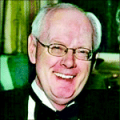
bob-chiraloRobert Philip Chiralo died on April 12, 2011 of brain cancer. His wife was at his side, as was Father Alexander Drummond, who administered the Sacraments of the Church and a dear family friend, Jeanne Dalaba.

Bob was born on May 8, 1949 in Reading, Pennsylvania. He was an honor student throughout his school years there and began studying piano at age 8. At age 16, he was certified by the Lutheran Church to serve as an Organist/Choir Director. He continued his organ studies through his undergraduate years and was a lifetime member of the American Guild of Organists, serving in various capacities in that organization. In his deep devotion as a church musician he continuously served at various churches in Pennsylvania, California and most recently as organist at Pender UMC in Fairfax, Virginia.

He was an active Republican grassroots pro-life volunteer, member of the Fairfax County Republican Committee and spent several years as a tour guide at Manassas Battlefield Park. He was a student of world history, particularly military history.

Bob Chiralo had over thirty-five years of technical, management, and business development experience in intelligence and defense with the Federal Government. This began with his early work at the Aerospace Corporation, continued through his employment at Logicon Geodynamics and Logicon Ultrasystems (both now part of TASC, Inc.), and led to his current position at SRI International. Bob established a professional reputation as a pioneer in the area of Measurement and Signature Intelligence, especially in applying the science of sensors to the growing field of overhead sensing systems support for our national security and intelligence communities. This included extensive involvement in the evaluation of new remote sensing and hyperspectral detection technologies and culminating in his role in helping establish the Spectral Information Technology Applications Center (SITAC) to better formalize the evaluation of various new methods in these arenas. Bob’s expertise also led to one of the more interesting assignments of his professional career, his service as a technical advisor on imagery processing in connection with the House of Representatives 1978 investigation of the assassination of President John F. Kennedy.

Bob joined the Washington Office of SRI in 1998 as Intelligence Community Program Development Manager; his responsibilities included support of the company’s business development efforts and Intelligence Community Program Development, including project and program management spanning nearly the entire spectrum of the intelligence and national security communities. He was also quite active professionally. He was a founding member of the Measurement and Signature Intelligence Association, and an officer and past Chairman of the organization, and played a key role in its 2008 reorganization as the Advanced Technical Intelligence Association (ATIA). He was also an active member of the Institute for Electrical and Electronic Engineers (IEEE), the American Society of Photogrammetry and Remote Sensing (ASPRS), the North American Remote Sensing Industries Association (NARSIA) and the National Military Intelligence Association (NMIA). He held a B.A. in Physics from Wittenberg University (1971) and an MS in Electrical Engineering from the University of Pennsylvania (1973) in addition to other ongoing professional studies connected to his work.

He is survived by his wife of 30 years, Monica Dolle Chiralo of Centreville, VA; daughter and son-in-law Monette and Michael Johnstone with grandchildren Melissa Mae and Maxfield Alexander Johnstone of Seattle, WA; parents Anthony Philip and Mary Jane Chiralo of Reading, PA; and brother Joel Anthony Chiralo of Carney, MD.

The Funeral Mass will be held at Saint Andrew the Apostle Catholic Church in Clifton, VA on Monday morning, April 18 at 11:30 with burial following in the Garden of the Blessed Mother at Fairfax Memorial Park. A celebration of his life and music ministry will follow at Pender United Methodist Church in Fairfax. In lieu of flowers, it was his desire that donations be made to The Jeanne Bussard Center, 555 South Market St., Frederick, MD 21701. This is a facility which serves mentally and physically handicapped adults. It was dear to his heart.

~~

Addendum:
1) Monica says:

“Bob is, indeed, using them (his shoes) – because he is wearing them, with his black cassock, a rosary in his hands and a Phillies’ hat on his head. Sure hope St. Peter isn’t a Yankees fan!”

2) This interview Virgil Fox shows his shoes even better in the first few minutes.

Addendum 2

From http://lis.virginia.gov/cgi-bin/legp604.exe?112+ful+HJ5031

Virginia’s Legislative Information System

2011 SPECIAL SESSION I

11200137D
HOUSE JOINT RESOLUTION NO. 5031Offered April 25, 2011

Celebrating the life of Robert Philip Chiralo.

———-Patron– Hugo———-Unanimous consent to introduce———-WHEREAS, Robert Philip Chiralo of Centreville, a highly respected professional who played a pioneering role in the development of measurement and signature intelligence, died on April 12, 2011; and

WHEREAS, a native of Pennsylvania, Robert “Bob” Chiralo received a bachelor’s degree from Wittenberg University and a master’s degree from the University of Pennsylvania; and

WHEREAS, Bob Chiralo enjoyed a successful career that spanned more than three decades and involved technical, management, and business development work in intelligence and defense with the federal government; and

WHEREAS, Bob Chiralo began his distinguished career at the Aerospace Corporation before moving to Logicon Geodynamics and Logicon Ultrasystems (both now part of TASC, Inc.); in 1998 he joined the Washington Office of SRI International; and

WHEREAS, a brilliant innovator, Bob Chiralo recognized the role that the science of sensors could play in the growing field of overhead sensing systems support for the national security and intelligence communities; and

WHEREAS, Bob Chiralo became actively involved in the evaluation of new remote sensing and hyperspectral detection technologies, eventually helping to establish the Spectral Information Technology Applications Center; and

WHEREAS, highly regarded for his technical expertise, Bob Chiralo proudly served his country in a variety of ways, including working as a technical advisor on imagery processing during the investigation of the assassination of President John F. Kennedy; and

WHEREAS, Bob Chiralo made numerous contributions to his profession through his affiliation with different organizations; he was a founding member of the Measurement and Signature Intelligence Association and played a key role in its 2008 reorganization as the Advanced Technical Intelligence Association; and

WHEREAS, Bob Chiralo was also an active member of the Institute for Electrical and Electronics Engineers, the American Society of Photogrammetry and Remote Sensing, the North American Remote Sensing Industries Association, and the National Military Intelligence Association; and

WHEREAS, Bob Chiralo was a gifted musician who learned to play the organ as a young boy; at the age of 16, he received certification from the Lutheran church as an organist/choir director and continued his organ studies as an undergraduate; and

WHEREAS, a lifetime member of the American Guild of Organists, Bob Chiralo took great pride in serving as a church musician, most recently at Pender United Methodist Church in Fairfax; and

WHEREAS, an active member of the community, Bob Chiralo was a stalwart member of the Fairfax County Republican Committee and spent several years as a tour guide at Manassas National Battlefield Park; and

WHEREAS, a devoted family man, Bob Chiralo will be greatly missed by his wife of 30 years, Monica; daughter, Monette and her family, including two grandchildren; parents, Anthony Philip and Mary Jane; and numerous other family members, friends, and admirers; now, therefore, be it

RESOLVED by the House of Delegates, the Senate concurring, That the General Assembly hereby note with great sadness the loss of a pioneering leader in the intelligence community and respected community supporter, Robert Philip Chiralo; and, be it

RESOLVED FURTHER, That the Clerk of the House of Delegates prepare a copy of this resolution for presentation to the family of Robert Philip Chiralo as an expression of the General Assembly’s respect for his memory.

Addendum 3 Monica Chrialo died on January 6, 2023.

Monica Dolle Chiralo Major completed her journey to Our Lord on Jan 6th, 2023, after a lengthy battle with Carcinoid Cancer and Chronic Lymphocytic Leukemia (CLL) since 1999. She is the daughter of the late John Arnold Dolle and Lova Lea Reynolds Dolle. She is survived by her husband Arthur Major, daughter Monette Claire Northcutt Johnstone and grandson Maxfield Alexander Johnstone of Seattle, Washington, and sister Merrielea Zabia Dolle of Hawaii; also, stepchildren Jason Major, James Major, and Lisa Krebs and step grandson Roland Krebs. She is the widow of Robert Chiralo, who preceded her in death after 31 years of marriage.

She was born in Santa Monica, CA, in 1948 and graduated with a history major from California State University Dominguez Hills and attended Notre Dame Graduate School majoring in theology and eventually settled in Virginia, then later, Arizona. She had hundreds of books, was a voracious reader and was fluent in three languages; was an accomplished flute and guitar player, dancer, singer, and pianist. She taught piano, guitar, and flute lessons to dozens and maintained close friendships with many of her former students and their families. She was a clothing designer, knitter, and seamstress, making many items for friends and family and designed unique patterns and products which she sold under the “Miss Monette” label; and excelled at photography with many framed pictures around her home. Monica had a spirited personality and many fascinating life experiences including a brief time in the USAF, working at the US embassy in Nigeria, and much overseas travel and cruises.

She was a dedicated and determined volunteer in the Virginia Republican Party at the county and state levels, always willing to work for the causes she held dear and sponsoring many events which proved vital to her party’s success. She was an enthusiastic and devout communicant of the Roman Catholic church, had an amazing – comprehensive knowledge of scripture, high standards, and always demonstrated Christian values as a role model. She touched a lot of people, both directly and indirectly by thoughtful contributions and personal interactions with many including countless strangers. This was purposeful on her part – in her 60’s she completed two years of Spanish language lessons at a community college just so she could communicate with, and better help, the immigrant community. She was the dearest of friends, a perceptive listener, and a caring and loving advisor who will be sorely missed by many.

A Mass of Christian Burial will be held at 11 a.m. on Wednesday, January 25, 2023 at St. Benedict Catholic Church, 300 N Sheppard St., Richmond, VA 23221. A reception will follow after Mass at 12:30 p.m. at Bliley’s – Central, 3801 Augusta Ave., Richmond, VA 23230. Interment will be held at 1 p.m. on Thursday, January 26, 2023 at Fairfax Memorial Park, 9900 Braddock Rd., Fairfax, VA 22032. A memorial service will be announced at a later date and time in Sun City, Az.

In lieu of flowers please contribute “In honor of Monica Dolle Major” at “https://www.carcinoid.org/about/contributing-to-our-foundation/

Christmas Cantata


The PUMC Sanctuary Choir (including MrsO!) and Orchestra provided a Christmas Cantata during traditional worship service on December 18 at 9:00.

The music included: Bethlehem Christmas Sanctus Joy Has Dawned Tell Out My Soul (Soprano—Laura Connors; Baritone-Brian Stevenson) I Saw Three Ships And selections by the Orchestra.

The Cantata was live-streamed and individual pieces will be posted soon..


Pender UMC
12401 Alder Woods Drive
Fairfax, VA US 22033

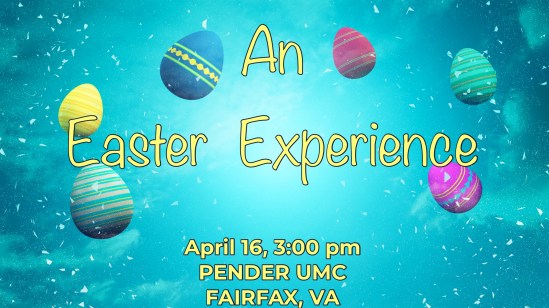
Tomorrow! An Easter Experience


This is a family-friendly event with the little ones in mind. Adults and children are invited to walk to Jerusalem along with Jesus. There will be crafts and fun activities that will help the kids understand Easter.

Join us in The Gathering Place rain or shine! The event will run from 3:00 to 5:00 PM

Learn about the Seder, Decorate an Easter Egg, Stories of Jesus, Make a “God’s Eye”, Veggie Tales: “The Night Before Easter”, Decorate the Cross and Pray in the Garden of Gethsemane.

Pender UMC
12401 Alder Woods Drive,
Fairfax, VA US 22033

A Pender Christmas Eve


A Pender Christmas Eve
~Livestream~
6:30pm “Christmas Concert”
Our concert features a variety of styles, as well as both familiar and new Christmas music.
7pm “Fireside Worship”
A service that will include lessons, carols, sermon, and candlelight.
Watch on following platforms!
website:  www.penderumc.org
YouTube:  Pender UMC
Live Nativity Drive Through
From 8:30pm – 9:30pm at our campus located at 12401 Alder Woods Drive in Fairfax, VA.
On a looped course through our church’s parking lot, you’re invited to drive past a Nativity scene of Pender UMC members, staff, and friends.
This drive through event is a safe and fun way to experience the joy of the Savior’s birth.


Local Pumpkin Fun


Join us for some Fall Fun!  Activities to include pumpkin carving, a pumpkin contest, and a costume contest!
Please bring your own pumpkin!  We will provide carving tools and trash bags and cleanup stations!
Costumes are encouraged!
We will keep you safe while enjoying time together.  Masks are required.  Upon arrival, you will check in, answer some quick health check questions and be given your designated space for your family so that you can be safely social distanced from others.
Reminders and more details will be sent 2 days prior to this event.
Although a signup is required, this is a free event.
Pender UMC is at 12401 Alder Woods Drive, Fairfax, VA US 22033

January 4 in Music History


National Spaghetti Day on January 4 recognizes that long, thin cylindrical pasta of Italian and Sicilian origin.

Who can forget


OCMS 1710 ~ Giovanni Battista Pergolesi, Italian Composer
More information about Pergolesi

. 1720 ~ Johann Friedrich Agricola, German organist and composer

. 1809 ~ Louis Braille, Inventor of the Braille system which enables the blind to read words and music. When he was only 3, Louise Braille, was permanently blinded in an accident with a leatherworking awl in his father’s saddlemaking shop in Coupvray, France. Several years later, he was admitted to a school for the blind, the Institution Nationale des Jeunes Aveugles. Later, as a teacher at the school, he worked at adapting Charles Barbier’s system of writing with points. Ironically, his method centered around using an awl-like stylus to punch marks in paper that could be felt and interpreted by the blind, allowing them to “read” with their fingertips. Braille’s work went unnoticed until after his death, in poverty, in 1852.

. 1874 ~ Josef Suk, Czech violinist and composer
More information about Suk

. 1924 ~ Alfred Grünfeld, Austrian pianist and composer, died

. 1928 ~ NBC radio debuted one of radio’s first variety shows. “The Dodge Victory Hour” starred Will Rogers, Paul Whiteman and his Orchestra and singer Al Jolson. The cost to produce this one show was $67,600.

. 1932 ~ NBC Red presented “The Carnation Contented Hour”. The show continued on network radio for 19 years as a showcase for top singers and musicians.

. 1933 ~ Ray Starling, Arranger for Stan Kenton

. 1935 ~ Bert Ambrose and his orchestra recorded the song that became the group’s theme song. It was titled Hors-d’oeuvres and was cut in London for Decca Records.

. 1935 ~ Bob Hope was first heard on network radio as part of “The Intimate Revue” with Jane Froman, James Melton and the Al Goodman Orchestra.

. 1936 ~ The first pop music chart based on national sales was published by “Billboard” magazine this day. Joe Venuti, jazz violinist, was at the top of the chart with a little ditty called Stop! Look! Listen!.

. 1937 ~ Grace Bumbry, American mezzo-soprano
More information about Bumbry

. 1942 ~ John McLaughlin, Rock guitarist

. 1944 ~ Arthur Conley, Singer

. 1950 ~ RCA Victor announced that it would manufacture long-playing (LP) records. This news came two years after Columbia Records debuted the ‘album’.

. 1954 ~ Elvis Presley strolled into the Memphis Recording Service and put $4 on the counter. He recorded Casual Love and I’ll Never Stand in Your Way, two songs that so impressed record executive Sam Phillips that he had Elvis record his first professional sides for Sun Records the following August.

. 1956 ~ Barney Sumner (Bernie Albrecht) (Dicken), Guitarist, singer

. 1960 ~ Michael Stipe, Grammy Award-winning singer

. 1964 ~Bobby Vinton topped the pop charts with the last #1 single of the pre-Beatles era – “There! I’ve Said Again”

. 1965 ~ The Fender Guitar Company was sold to CBS for $13 million.

. 1979 ~ With a new interest in Beatles music on this day, the Star Club reopened in Hamburg, Germany. None of The Beatles returned to their beginnings to attend the gala opening.

. 2000 ~ Fantasia 2000 Hit Imax Record

. 2001 ~ Les Brown, whose Band of Renown scored a No. 1 hit with Sentimental Journey during America’s big band era of the 1930s and ’40s, died of lung cancer at the age of 88. A conductor-clarinetist whose smooth arrangements of swing melodies transcended changes in musical tastes, Brown was cited in 1996 by the Guinness Book of Records recognized him as the leader of the longest lasting musical organization in pop music history. He started his professional career in 1936, and his Band of Renown was still performing about 60 dates a year as recently as five months ago, often conducted by son Les Brown Jr. Brown formed his Band of Renown in 1936. In the 1940s heyday of swing, Brown never achieved the greatness of Tommy Dorsey, Glenn Miller or Benny Goodman. But the band scored two hit records – Sentimental Journey, with Doris Day as vocalist, and the instrumental I’ve Got My Love to Keep Me Warm. Sentimental Journey, co-written with Ben Homer and Bud Green, became a theme for soldiers returning home from World War II. “The happiest times in my life were the days when I was traveling with Les and his band,” Day said. “I loved Les very much, I am going to miss his phone calls.” Brown’s career included a close association with Bob Hope. In 1950, he joined Hope for the first of 18 Christmas tours to entertain American troops at military bases around the world. Day also participated. “The world has lost a great musician,” Hope said. “I have lost my music man, my sideman, my straight man and a special friend.” As the first president of the Los Angeles chapter of the Academy of Recording Arts and Sciences, Brown helped make the Grammy Awards a televised event. He convinced Hope, Frank Sinatra and Bing Crosby to participate in the first telecast.

. 2004 ~ Jake Hess, a four-time Grammy winner who sang with some of the premier quartets in gospel music and influenced the career of Elvis Presley, died. He was 76. Hess, whose career spanned more than 60 years, is best known to contemporary audiences as a regular member of Bill Gaither’s Homecoming Friends, on various Christian and country music cable channels, including TBN and TNN. Hess joined The John Daniel Quartet in 1943 and reached stardom with The Statesmen Quartet. He was founder of The Imperials and sang with The Masters V. Each of these groups is enshrined in the Southern Gospel Music Hall of Fame, as is Hess. He is also a member of the Alabama Music Hall of Fame. As a teen, Elvis Presley was a regular at Statesmen concerts. Later, Hess was a backup singer on several of Presley’s Grammy-winning albums. When Presley died in 1977, Hess sang at his funeral, as he had at the funeral of country legend Hank Williams in 1953. Peter Guralnick, author of a two-volume biography of Presley, said the rock star always wanted to emulate the voices of Hess and crooner Roy Hamilton.

. 2018 ~ Ray Thomas, English rock vocalist and flautist (Moody Blues-Legend Of A Mind), died at the age of 76
Born in 1941, Thomas founded The Moody Blues in 1964 with fellow musicians including Mike Pinder and Denny Laine.


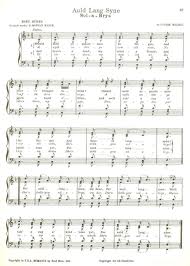
2019 Christmas Countdown Conclusion: Auld Lang Syne

Auld Lang Syne

“Auld Lang Syne” is a Scots poem written by Robert Burns in 1788 and set to the tune of a traditional folk song. It is well known in many countries, especially in the English-speaking world; its traditional use being to celebrate the start of the New Year at the stroke of midnight. By extension, it is also sung at funerals, graduations and as a farewell or ending to other occasions. The international Boy Scout youth movement, in many countries, uses it as a close to jamborees and other functions.

The song’s Scots title may be translated into English literally as “old long since”, or more idiomatically, “long long ago”, “days gone by” or “old times”. Consequently “For auld lang syne”, as it appears in the first line of the chorus, might be loosely translated as “for (the sake of) old times”.

Auld Lang Syne is one of Scotland’s gifts to the world, recalling the love and kindness of days gone by, but in the communion of taking our neighbours’ hands, it also gives us a sense of belonging and fellowship to take into the future.

It is one of the many folk songs from the great Lowland Scots tradition collected and fashioned by the pen of one of the world’s greatest songwriters. Burns devoted the last years of his life to the song tradition, and often a mere fragment from some old ballad was transformed by his alchemy into a memorable love song or Scots poem. With Auld Lang Syne, though, the brilliance was already there; this is the Bard’s first mention of it in a letter to Mrs Dunlop in 1788:

“… Light be the turf on the breast of the heaven inspired Poet who composed this glorious fragment.”

One of the most interesting facts is that the Auld Lang Syne tune which is sung from Times Square to Tokyo, and has conquered the world, is not the one Robert Burns put the original words to. The older tune though is still sung by traditional singers. It has a more douce, gentle, nostalgic feel to it than the popular tune a mood evoked by the subtle use of the traditional air sung by Mairi Campbell in the first Sex and the City movie. However, whichever tune it is sung to, and wherever in the world it is sung, Auld Lang Syne retains the great emotional resonance of the original traditional song of the Scottish people of those days in the distant past. Lets leave the last word to Burns himself:

“… is not the Scots phrase, ‘Auld Lang Syne’, exceedingly expressive – there is an old song and tune which has often thrilled thro’ my soul”.

Fancy singing along yourself? Here are the verses of the words to Auld Lang Syne:

Should auld acquaintance be forgot,
And never brought to mind?
Should auld acquaintance be forgot,
And auld lang syne.

Chorus:

For auld lang syne, my jo,
For auld lang syne,
We’ll tak a cup o’ kindness yet,
For auld lang syne,

And surely ye’ll be your pint-stowp!
And surely I’ll be mine!
And we’ll tak a cup o’ kindness yet,
For auld lang syne.

Chorus

We twa hae run about the braes
And pu’d the gowans fine;
But we’ve wander’d mony a weary foot
Sin auld lang syne.

Chorus

We twa hae paidl’d i’ the burn,
Frae mornin’ sun till dine;
But seas between us braid hae roar’d
Sin auld lang syne.

Chorus

And there’s a hand, my trusty fiere!
And gie’s a hand o’ thine!
And we’ll tak a right guid willy waught,
For auld lang syne.

Chorus

Should old acquaintance be forgot,
And never brought to mind?
Should old acquaintance be forgot,
And long, long ago.

Chorus

And for long, long ago, my dear
For long, long ago,
We’ll take a cup of kindness yet,
For long, long ago

And surely youll buy your pint-jug!
And surely I’ll buy mine!
And we’ll take a cup of kindness yet,
For long, long ago.

Chorus

We two have run about the hills
And pulled the daisies fine;
But we’ve wandered manys the weary foot
Since long, long ago.

Chorus

We two have paddled in the stream,
From morning sun till dine;
But seas between us broad have roared
Since long, long ago.

Chorus

And there’s a hand, my trusty friend!
And give us a hand of yours!
And we’ll take a deep draught of good-will
For long, long ago.

Chorus

Here is an old kinescope from over 50 years ago!! For 100 years, the slow drop of a lighted glass ball on New Year’s Eve from atop One Times Square in New York City has become an American tradition. A huge crowd gathers every year to welcome in the New Year.

Beginning in 1956, Guy Lombardo & His Royal Canadians entertained the US on New Year’s Eve with a combination of music and the live “ball drop” at Midnight. Guy continued this tradition until his death in 1977. His band still played on at CBS Television on New Years for an additional 2 years. (Dick Clark’s Rockin New Years Eve began in 1972 on ABC and still broadcasts annually.) This broadcast began right after the 15-minute news and ran for an hour. Guy plays the music and newsman Robert Trout announces the beginning of the New Year.

If you look closely, you’ll see acerbic television personality Henry Morgan in the crowd. TV was very primitive 50 years ago. Harsh lighting, a cheap office clock and a World War II searchlight scans the crowd below.

I hope you’ll enjoy ringing in the New Year – 1958! Recorded: December 31, 1957


Auld Lang Syne played on bagpipes (as it should be)


This is from the 2015 Edinburgh Tattoo which we attended:

And, in history:

2019 Christmas Countdown: The Alfred Burt Carols

Alfred Burt Carols


I could have turned the Alfred Burt Carols into the next 15 parts of this series but I decided that was a bit too easy on me!

I love this story – it’s a wonderful family tradition from the Burt family.

Starting in 1922, Alfred Burt’s father created a Christmas card for family members and parishioners. On these cards were original Christmas carols, with both the words and music by the Reverend Bates Burt. For the family Christmas card in 1942, Bates asked his son to write the music for that year’s carol, “Christmas Cometh Caroling.”

From then on, Alfred would write the music for the family’s Christmas cards, and the “Alfred Burt carols” were born.

Over the next several years, and as the Burts’ circle of friends grew, the Christmas card list grew from 50 to 450 people. But still, the Alfred Burt Carols remained unknown outside the Burts’ growing mailing list.

That changed with the 1952 carol, “Come, Dear Children”. Burt finished writing the music during a rehearsal with the Blue Reys, the vocal group with Alvino Rey’s orchestra. He asked them to sing it so he could make sure the harmonies worked; they liked it so much that they asked Burt if they could sing it at the annual King Sisters Christmas party. It proved to be a hit among the partygoers, and served to introduce Burt’s carols to Hollywood, California.

More about the Burt family and the Christmas Carol tradition: http://www.alfredburtcarols.com/

Alfred Burt’s Carols:

  1. “Christmas Cometh Caroling” (1942)
  2. “Jesu Parvule” (1943)
  3. “What Are the Signs” (1944)
  4. “Ah, Bleak and Chill the Wintry Wind” (1945)
  5. “All on A Christmas Morning” (1946)
  6. “Nigh Bethlehem” (1947)
  7. “Christ in the Stranger’s Guise” (1948)
  8. “Sleep Baby Mine” (1949)
  9. “This Is Christmas” (also known as “Bright, Bright, the Holly Berries”) (1950)
  10. “Some Children See Him” (1951)
  11. “Come, Dear Children” (1952)
  12. “O, Hearken Ye” (1953)
  13. “Caroling Caroling” (1954)
  14. “We’ll Dress the House” (1954)
  15. “The Star Carol” (1954)

Burt finished the last of his carols, “The Star Carol”, on February 5, 1954. He died less than 24 hours later, at the age of 33.

One of the best known of these today is Caroling Caroling (lyrics by the church organist at his father’s church, Wihla Hutson)

Caroling Caroling

The Salt Lake Vocal Artists perform 2 carols; “Caroling, Caroling” and “We’ll Dress the House” by Alfred Burt live in concert on December 17, 2011 in Holy Family Catholic Church, South Ogden, Utah under the direction of Dr. Brady Allred.

What’s your Christmas tradition?

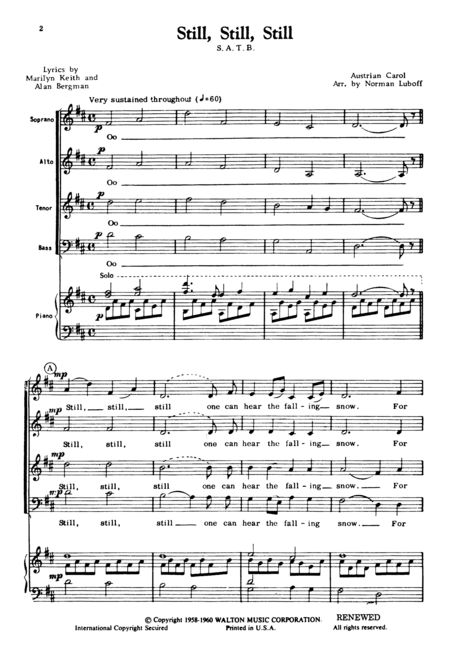
2019 Christmas Countdown: Still, Still, Still

Still, Still, Still

Still, Still, Still is an Austrian Christmas carol and lullaby. In German its first line is “Still, still, still, weil’s Kindlein schlafen will!” (Hush, hush, hush, for the little child wants to sleep!)

The melody is a folk tune (authorship unknown) from the State of Salzburg. The tune appeared for the first time in 1865 in a folksong collection of Maria Vinzenz Süß (1802-1868), founder of the Salzburg Museum; it has changed slightly over the years but remains attributed to G. Götsch.

The words, which run to six verses in German, describe the peace of the infant Jesus and his mother as they sleep. There are various English translations.  This is one version:

Still, still, still,
One can hear the falling snow.
For all is hushed,
The world is sleeping,
Holy Star its vigil keeping.
Still, still, still,
One can hear the falling snow.

Sleep, sleep, sleep,
‘Tis the eve of our Saviour’s birth.
The night is peaceful all around you,
Close your eyes,
Let sleep surround you.
Sleep, sleep, sleep,
‘Tis the eve of our Saviour’s birth.

Dream, dream, dream,
Of the joyous day to come.
While guardian angels without number,
Watch you as you sweetly slumber.
Dream, dream, dream,
Of the joyous day to come.

2019 Christmas Countdown: O Come, O Come Emmanuel


O Come, O Come Emmanuel

O Come, O Come Emmanuel

O come, O come, Emmanuel is the mid-19th-century translation by John Mason Neale and Henry Sloane Coffin of the Ecclesiastical Latin text “Veni, veni, Emmanuel”.

The text is based on the Biblical prophecy from Isaiah 7:14 that states that God will give Israel a sign that will be called Emmanuel (Literally: God with us). Matthew 1:23 states fulfillment of this prophecy in the birth of Jesus of Nazareth.

O come, O come, Emmanuel
And ransom captive Israel
That mourns in lonely exile here
Until the Son of God appear
Rejoice! Rejoice! Emmanuel
Shall come to thee, O Israel.

O come, Thou Rod of Jesse, free
Thine own from Satan’s tyranny
From depths of Hell Thy people save
And give them victory o’er the grave
Rejoice! Rejoice! Emmanuel
Shall come to thee, O Israel.

O come, Thou Day-Spring, come and cheer
Our spirits by Thine advent here
Disperse the gloomy clouds of night
And death’s dark shadows put to flight.
Rejoice! Rejoice! Emmanuel
Shall come to thee, O Israel.

O come, Thou Key of David, come,
And open wide our heavenly home;
Make safe the way that leads on high,
And close the path to misery.
Rejoice! Rejoice! Emmanuel
Shall come to thee, O Israel.

O come, O come, Thou Lord of might,
Who to Thy tribes, on Sinai’s height,
In ancient times did’st give the Law,
In cloud, and majesty and awe.
Rejoice! Rejoice! Emmanuel
Shall come to thee, O Israel.