Pender Music Camp, July 10-14, 12:30-3:30 pm (This is why MrsO doesn’t teach in the afternoon this week!)
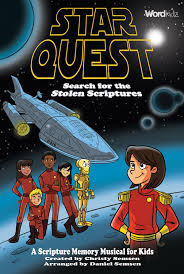
The theme for this summer’s Pender UMC music camp will be “Star Quest.” We will be exploring music that expresses the goodness of God’s creation and tells of the truth of His word in the Bible.
Children will be rotating through handbell, Orff, drumming and craft classes. In addition to these “out-of-this-world” classes, we will be preparing and presenting excerpts from the musical “Star Quest – The Search for the Stolen Scriptures.”
Join us this year as we blast off to fun and song! For ages rising 2nd grade – rising 6th grade.
Invite your friends and family and join us this Sunday at Pender UMC and enjoy our Christmas Cantata at all 3 services — 8:15, 9:30 & 11am. (MaryO singing!)
Wondering where to take your children? Below is a summary. More detailed information is available at the Welcome desk located in the main lobby and here.
NURSERY CARE ~ Birth through 2 years, 9:30 am – 12:15 pm
SUNDAY SCHOOL 1 ~ 2 yrs. – Adults, 9:30 am – 10:40 am
SUNDAY SCHOOL 2 ~ Grades 4 – Adults, 10:45 am – 12:15 pm
CHERUB CHURCH ~ 3 yrs.- Kindergarten, 10:45 am – 12:15 pm
JUNIOR FELLOWSHIP ~ Grades 1-3, 10:45 am – 11:30 am
“Invitation to a Miracle: A Cantata for Christmas” by Joseph Martin
Presented by: The Pender UMC Sanctuary Choir and Orchestra
Sunday, December 4 at 8:15 am, 9:30 am and 11:00 am
Joyful sounds abound in this colorful Christmas gift for choirs. Through poetic narration, scripture passages and creatively arranged carols, the timeless story of the birth of Christ is presented. Gathered around the wonders that accompanied Jesus’ birth, this cantata journeys from the miracle of prophecy to the incarnation and proclamation of this most significant moment.
• 1918 ~ Henryk Szeryng, Polish-born Mexican violinist
• 1926 ~ William O. Smith, American composer and jazz clarinetist
• 1930 ~ Joni James (Joan Carmello Babbo), Singer
• 1937 ~ Red Norvo and his orchestra recorded the Russian Lullaby on the Brunswick label. Norvo did more famous work at a later date, recording with a singer named Dinah Shore.
• 1941 ~ Anna Tomowa-Sintow, Bulgarian soprano
• 1943 ~ Singer Kate Smith finished her War Bond radio appeal. For 13 continuous hours Smith had stayed on the air, collecting a whopping $39 million dollars in bond pledges.
• 1951 ~ David Coverdale, Singer with Deep Purple
• 1954 ~ Shari Belafonte, Actress, TV cohost, singer Harry Belafonte’s daughter
• 1956 ~ Debby Boone, Grammy Award-winning singer: Best New Artist in 1977, sang with The Boone Family; daughter of singers Pat and Shirley Boone
• 1962 ~ It was a hootenanny of a good time in, of all places, New York’s famed Carnegie Hall. The cast included newcomer Bob Dylan making his first appearance at Carnegie Hall.
• 1964 ~ In the tradition of the Broadway stage, the lights lowered, the curtain rose and Zero Mostel stepped into the spotlight as the fiddler played. “Tra-a–a- dition”, he sang, as he began the first of 3,242 performances of Fiddler on the Roof. The musical opened on Broadway this day. The story of Tevye (brilliantly played by Mostel), a poor Jewish milkman with five daughters, takes place in a small Russian village in the late 1890s. He sings and dances his way through the tragedies and comedies of a father fighting for tradition in a changing world. “To life”, he sang, as the music of Jerry Bock and Sheldon Harnick made the stories by Sholem Aleichem come alive. And he brought tears to audiences eyes with the poignant, Sunrise, Sunset, and laughter, too, with the memorable, If I were a Rich Man — which surely made Zero Mostel a wealthy man.
• 1980 ~ John Lennon signed with Geffen Records. The Lennon LP, Double Fantasy, was released on Geffen. (Lennon was assassinated on December 8, 1980.)
• 1985 ~ The poor of America’s Heartland … the financially troubled farmers of Middle America … got help from their friends in the music biz. Singing stars Willie Nelson,Neil Young and John Cougar Mellencamp held a benefit concert to raise funds. The stars came out and so did the money. The Farm Aid concert raised ten million dollars.
• 2001 ~ Isaac Stern, the master violinist who saved Carnegie Hall from the wrecking ball, died at the age of 81. Stern, one of the last great violinists of his generation, helped advance the careers of a new generation, including Itzhak Perlman, Pinchas Zukerman and Yo-Yo Ma. He played well over 175 performances at Carnegie Hall, America’s musical temple renown for its acoustics. The hall opened in 1891. As the city was planning Lincoln Center in the 1950s, a builder proposed an office building to replace Carnegie Hall. Using his prestige and his contacts among fellow artists and benefactors, Stern rallied the opposition, eventually securing legislation that enabled the city to acquire the building in 1960 for $5 million. On Jan. 8, 1943, he made his Carnegie Hall debut in a recital produced by the impresario Sol Hurok. Performing with pianist Alexander Zakin, who became his longtime accompanist, Stern played Mozart, Bach, Szymanowski, Johannes Brahms and Wieniawski. The performance attracted the attention of composer-critic Virgil Thomson. Writing in the New York Herald Tribune, Thomson proclaimed him “one of the world’s master fiddle players.” At his peak, Stern would perform more than 200 concerts a year. Stern boycotted Germany for years because of the Holocaust, but taught a nine-day seminar there in 1999.
Wondering where to take your children? Below is a summary. More detailed information is available at the Welcome desk located in the main lobby and here.
NURSERY CARE ~ Birth through 2 years, 9:30 am – 12:15 pm
SUNDAY SCHOOL 1 ~ 2 yrs. – Adults, 9:30 am – 10:40 am
SUNDAY SCHOOL 2 ~ Grades 4 – Adults, 10:45 am – 12:15 pm
CHERUB CHURCH ~ 3 yrs.- Kindergarten, 10:45 am – 12:15 pm
JUNIOR FELLOWSHIP ~ Grades 1-3, 10:45 am – 11:30 am
• 1918 ~ Henryk Szeryng, Polish-born Mexican violinist
• 1926 ~ William O. Smith, American composer and jazz clarinetist
• 1930 ~ Joni James (Joan Carmello Babbo), Singer
• 1937 ~ Red Norvo and his orchestra recorded the Russian Lullaby on the Brunswick label. Norvo did more famous work at a later date, recording with a singer named Dinah Shore.
• 1941 ~ Anna Tomowa-Sintow, Bulgarian soprano
• 1943 ~ Singer Kate Smith finished her War Bond radio appeal. For 13 continuous hours Smith had stayed on the air, collecting a whopping $39 million dollars in bond pledges.
• 1951 ~ David Coverdale, Singer with Deep Purple
• 1954 ~ Shari Belafonte, Actress, TV cohost, singer Harry Belafonte’s daughter
• 1956 ~ Debby Boone, Grammy Award-winning singer: Best New Artist in 1977, sang with The Boone Family; daughter of singers Pat and Shirley Boone
• 1962 ~ It was a hootenanny of a good time in, of all places, New York’s famed Carnegie Hall. The cast included newcomer Bob Dylan making his first appearance at Carnegie Hall.
• 1964 ~ In the tradition of the Broadway stage, the lights lowered, the curtain rose and Zero Mostel stepped into the spotlight as the fiddler played. “Tra-a–a- dition”, he sang, as he began the first of 3,242 performances of Fiddler on the Roof. The musical opened on Broadway this day. The story of Tevye (brilliantly played by Mostel), a poor Jewish milkman with five daughters, takes place in a small Russian village in the late 1890s. He sings and dances his way through the tragedies and comedies of a father fighting for tradition in a changing world. “To life”, he sang, as the music of Jerry Bock and Sheldon Harnick made the stories by Sholem Aleichem come alive. And he brought tears to audiences eyes with the poignant, Sunrise, Sunset, and laughter, too, with the memorable, If I were a Rich Man — which surely made Zero Mostel a wealthy man.
• 1980 ~ John Lennon signed with Geffen Records. The Lennon LP, Double Fantasy, was released on Geffen. (Lennon was assassinated on December 8, 1980.)
• 1985 ~ The poor of America’s Heartland … the financially troubled farmers of Middle America … got help from their friends in the music biz. Singing stars Willie Nelson,Neil Young and John Cougar Mellencamp held a benefit concert to raise funds. The stars came out and so did the money. The Farm Aid concert raised ten million dollars.
• 2001 ~ Isaac Stern, the master violinist who saved Carnegie Hall from the wrecking ball, died at the age of 81. Stern, one of the last great violinists of his generation, helped advance the careers of a new generation, including Itzhak Perlman, Pinchas Zukerman and Yo-Yo Ma. He played well over 175 performances at Carnegie Hall, America’s musical temple renown for its acoustics. The hall opened in 1891. As the city was planning Lincoln Center in the 1950s, a builder proposed an office building to replace Carnegie Hall. Using his prestige and his contacts among fellow artists and benefactors, Stern rallied the opposition, eventually securing legislation that enabled the city to acquire the building in 1960 for $5 million. On Jan. 8, 1943, he made his Carnegie Hall debut in a recital produced by the impresario Sol Hurok. Performing with pianist Alexander Zakin, who became his longtime accompanist, Stern played Mozart, Bach, Szymanowski, Johannes Brahms and Wieniawski. The performance attracted the attention of composer-critic Virgil Thomson. Writing in the New York Herald Tribune, Thomson proclaimed him “one of the world’s master fiddle players.” At his peak, Stern would perform more than 200 concerts a year. Stern boycotted Germany for years because of the Holocaust, but taught a nine-day seminar there in 1999.
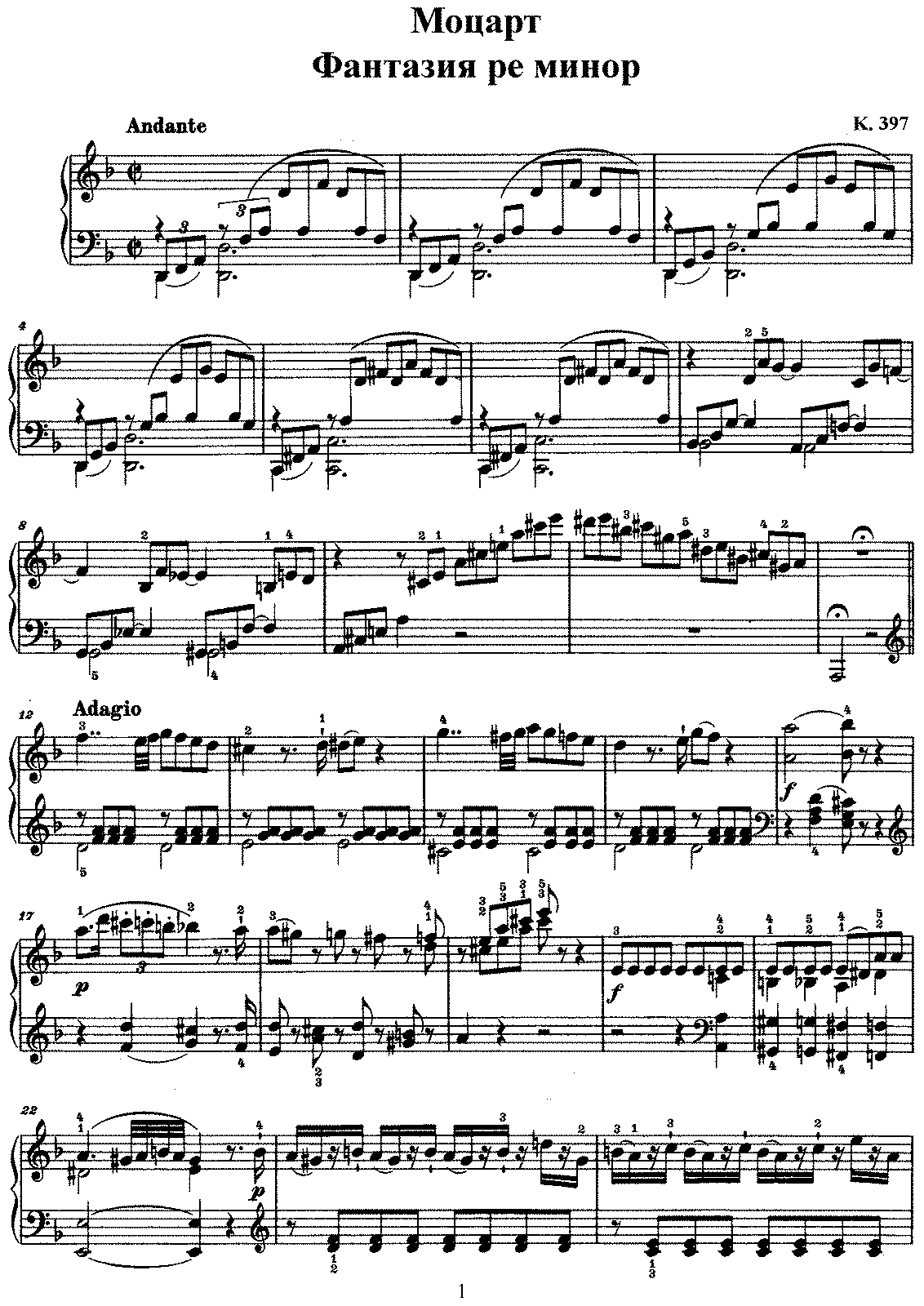
I have always really enjoyed playing Mozart’sFantasia in d minor and when I was asked to play for the new piano dedication service at my church a couple years ago I knew what I would “dust off” to perform.
The Grove’s Dictionary of Music and Musicians defines the genre of musical fantasia as “a piece of instrumental music owning no restriction of formal construction, but the direct product of the composer’s impulse.”
The Fantasia in d minor has somewhat unusual rhythm, constantly changing tempo (seven different tempi occur throughout the piece), three cadenzas and its apparent lack of any recognizable musical form (as indicated by the “Fantasy” title). Although it begins in d minor, the final section is in D Major.
Mozart composed this, his third and final, Fantasia in 1782 and it was unfinished at the time of his death in 1791. Even Mozart’s sister, “Nannerl”, who came across the work in 1807, was astounded to have discovered a previously unknown composition of such quality.
In its original form this Fantasia was probability only a fragment of what was to be a larger work. The closing bars which are most frequently performed today originated from an unauthorized print believed to have been composed in 1806 by August Eberhard Müller, one of Mozart’s admirers.
Because it was unfinished, many of the dynamic and pedal markings are nonexistant and left for the performer to choose.
As you can see from these videos, there is a wide range of tempi and interpretation from Frederich Gulda’s 4 minute, 36 second rendition
to Glenn Gould’s version which lasts for 8 minutes, 22 seconds
Both these composers have added their own ornamentation to Mozart’s original work.
I will be playing from a G. Henley Verlagurtext edition instead of one of the many edited versions available. I prefer to make my own musical decisions wherever possible.
People, especially students, are often surprised that I still take piano lessons. There seems to be a consensus that adults, especially piano teachers, know everything already. Well, no. There is always more to learn.
Each pianist and teacher has different ideas and techniques to share. Anyone who has seen my music library knows that I couldn’t possibly have played, let alone mastered, each piece of music I own. One year, I had claimed so much music on my income taxes, that an IRS agent was dispatched to my studio to disclaim my claims in an audit. I won!
I am reviving an older piece that I played sometime in the past. I know that because of all the color coding!
Here, Murray Perahia plays Mendelssohn’s Trois Fantaisies ou Caprices, Op. 16. Nr. 1: Andante con moto.
My son and I are working on Capriol by Peter Warlock, to be played June 7, 2015 at Steinway Hall.
I don’t know who is performing in this video but I hope to have a video of our performance to post later:
I’m also sightreading a variety of ragtime pieces and will choose one to work on in the next few days. In the running are Zez Confrey and William Bolcom. We’ll see!







 MaryO'Studio
