Friday, October 9 at 8:00pm
First Baptist Church, Alexandria (2932 King Street, Alexandria, VA)
Beloved piano virtuoso and ASO favorite Thomas Pandolfi returns to play a special benefit concert this Friday. Works by Chopin, Rachmaninov, popular songs from the Great American Songbook and an original arrangement by Thomas himself. Reception immediately following with refreshments and opportunity to meet the artist.
In his second concert of the season, Jeffrey Siegel presents music of two of the most popular composers of the Romantic era in a performance of engaging melodies and nationalistic pride! Edvard Grieg was known as “the Chopin of the North” and put Norway on the classical music map in the same way Chopin celebrated his Polish heritage and homeland.
This delightful program features Chopin’s exhilirating [sic] Polonaises, Op. 22 and a group of his soulful Mazurkas, as well as Grieg’s zesty Norwegian Dances, and his heartbreaking, narrative Ballade. Part artist, part educator, and part entertainer, Jeffrey Siegel has enchanted Center audiences for nearly a quarter century with his brilliant artistry, massive pianotechnique, and a remarkable gift for making the audience a part of the classical music experience. “Siegel lit the stage…piano playing to delight the ears.” (San Diego Evening Tribune)
In addition to the remaining two Keyboard Conversations performances at the Center for the Arts, Mr. Siegel will also be performing at the Hylton Performing Arts Center in Manassas on March 6, 2016. Take a look.
$40, $34, $24. 2 Free Student Tickets Available with Mason ID on October 13, 2015
In New Haven, CT: Faculty pianist presents multimedia performance of Debussy’s “The Toy Box”
The Horowitz Piano Series at the Yale School of Music opens its season with a recital by Boris Berman on Wednesday, October 7 at 7:30 pm.
Professor Berman, who serves as artistic director of the Horowitz Piano Series, will perform works by Brahms and Chopin, as well as Debussy’s La boîte à joujoux (The Toy Box) which features narration and projected images by André Hellé.
The program’s most substantial work, Debussy’s whimsical children’s ballet La boîte à joujoux was written for children or marionettes based on a story by children’s book illustrator André Hellé, whose illustrations will be displayed throughout the performance. YSM graduate John Taylor Ward, baritone, will be the narrator.
Also on the program are Chopin’s Barcarolle, Op. 60, one of the composer’s last major compositions, written only three years before his death, as well as Brahms’ Piano Pieces, Op. 76.
The concert takes place in Morse Recital Hall, located in Sprague Memorial Hall (470 College Street, New Haven). Tickets start at $13, $7 with student ID. For more information or to purchase tickets, the public should visit music.yale.edu, contact the Yale School of Music concert office at 203 432-4158, or visit the box office at 470 College Street.
Redditor NeokratosRed had an idea: depict the hands of great composers and pianists, according to the characteristics of their music. He shared it on the social media site, and also punted for suggestions of more. It has since received over 300,000 images views, and lots of further suggestions from fellow Redditors and piano geeks.
Whisks for Chopin’s elegant pianistic souffles, feather dusters for the gentle impressionism of Debussy, instruments of trade for the composer of the thunderous Hammerklavier sonata.
Piano, and the internet – top marks to the both of you.
The Piano Puzzlers book is available in the O’Connor Music Studio library if you’d like to give any a try. Piano Puzzlers as heard on American Public Media’s “Performance Today.” Includes 32 tunes with songs by Gershwin, Berlin, Arlen, Porter, Rodgers, Fats Waller, Lennon & McCartney, and others disguised in the styles of Bach, Handel, Haydn, Mozart, Beethoven, Brahms, Schubert, Schumann, Chopin, Janacek, Debussy, Ravel, Rachmaninoff, Stravinsky, Prokofiev, Bartok, and Copland.
Includes an introduction by Fred Child, host of “Performance Today” as well as background info by Bruce Adolphe. “Bruce Adolphe has taken a common musician’s party game and elevated it to high art and truly funny musical slapsticks. The Piano Puzzlers are a unique combination of extraordinary insight into the styles of many composers subtle, expert workmanship and great, great fun!”
If you’re a music geek (like me), I have a program for you. Now, let me be clear, to fully qualify as a music geek…you must have a fond appreciation for classical music (no, Poison, Quiet Riot, and Zepplin do not count as classical music). So, if you’re a “music geek” without an appreciation for classical music…well, I hate to burst your bubble…but, you’re not truly a music geek. Instead, you’re a music appreciator, but not a geek. So, if you just listen to indie music and scowl at anything on a label larger than Matador…don’t bother following the link I’ll provide…the fun will be lost on you…And, you probably won’t have a chance.
Every Wednesday night, on my way home from WNL, I turn on my local NPR station to listen to Piano Puzzlers on Performance Today. It’s absolutely incredible. A pianist/composer (Bruce Adolphe) takes a familiar folk or pop tune and sets it inside a classical masterpiece (or in the style of a particular composer). Sometimes it’s easy…sometimes it’s ridiculously difficult. There are days when I say, “got it” on the first pass. Then there are days when I say, “what the heck?” And, more often than not, I’m able to get either the popular/folk tune or the composer.
This is sad to admit, but there are nights when I’ll slow down on the drive home or sit in the car in the driveway to finish an episode. In fact, I get a little worked up if someone stops me after WNL…as I might miss the beginning of Piano Puzzlers (it usually hits around 8:20pm on our local station).
Take a listen to some of the archives and see if you can figure it out! It’s really cool…but probably only appreciated by music geeks (the kind of people that listen to NPR for their musical programs and not just the snipets of cool indie rock between segments on All Things Considered…which is a great show too).
Classical piano pieces by such composers as Beethoven, Mozart and Chopin likely sounded much different when the masters first performed those works than they do today. Pianos themselves have changed considerably — but so, too, has technique.
Over the past decade, a growing number of musicologists have begun to take a closer look at how technique shapes not just the sound of music, but also the audience’s emotional response to it.
“Music has one foot in physics and one foot in aesthetics,” said Rolf Inge Godoy, a professor of musicology at the University of Oslo. “Body motion is essential for shaping the outcome of the sound, both in terms of what you actually hear and in terms of the visual impact on an audience.”
Dr. Godoy uses optical motion capture — also employed by the animation industry — to study the physics of musical movement. Infrared cameras capture light from reflective markers placed on a cellist’s hands or a percussionist’s body, recording the performer’s motion at up to 500 frames per second and at an accuracy to one-third of a millimeter.
Computer algorithms then make associations between the motion data, what is heard and what listeners say they felt.
Recently Dr. Godoy turned the technology on a fascinating question: How were such classical pieces as Mozart’s Variation K. 500 and Hummel’s Etudes, Opus 125, originally played, and how might that have made a difference in sound and in audience reaction?
To find out, Dr. Godoy struck up a collaboration with Christina Kobb, a doctoral candidate at the Norwegian Academy of Music and head of theory at Barratt Due Institute of Music in Oslo. Ms. Kobb has developed an unusual expertise: She has learned how to play the piano according to techniques described nearly 200 years ago.
As a visiting student at Cornell University in 2010, she researched 19th-century pedagogical piano treatises — essentially, instruction manuals for piano playing. The techniques that they described, she realized, differed drastically from those she had been taught.
“I was not following even the most basic instructions given to beginners at the time,” Ms. Kobb said. “I wondered, ‘Would this make a difference in my playing?’ ”
For the next three years, she gradually replaced her modern way of playing with 19th-century technique, gleaned from around 20 treatises. Most were written in Vienna in the 1820s, while a few were published in France and England. Her primary source, however, was “A Complete Theoretical and Practical Course of Instructions on the Art of Playing the Piano Forte,” the seminal 465-page treatise published in 1827 by Johann Nepomuk Hummel, one of Mozart’s students.
“It’s hard enough learning how to play once,” she said. “I had to become conscious of every motion in my hands and fingers, things that normally I would do automatically, by habit.”
While modern players tend to hunch over the keys and hold their forearms nearly perpendicular to the keyboard, 19th-century style dictated that pianists sit bolt upright. The posture prevented players from bringing their weight to bear on the keyboard, instead forcing them to rely on smaller finger movements. The elbows were held firmly against the body, with forearms sloping down and hands askew.
As Ms. Kobb became more fluent in this approach, she found that certain movements — jumping quickly between disparate chords, for example — became swifter and more fluid. “The elbow against your body serves as a sort of GPS, so you always know where you are,” she said.
Chords and scales sound smoother and can be played faster, Ms. Kobb also found, and dramatic pauses between notes — often a matter of physical necessity rather than of style — are lessened. The old style also allows the performer to be more discriminatory and subtle in choosing which notes to stress, Ms. Kobb learned, producing a performance that is subdued by today’s standards.
“There’s a different physical feeling to playing, as well as a different outcome,” she said.
To identify the sources of those differences, Dr. Godoy and his colleagues recently attached 46 pieces of reflective material to Ms. Kobb’s fingers and arms, and then filmed her playing on an electric piano. After analyzing her movements, the researchers will be able to tell precisely which differences in technique account for each variation in the music as it is played in the old and modern styles.
“The correlation between bodily effort and sound output is really what we’re aiming to find out, but in order to do that we need to perform extensive statistical analysis, which is tremendously time-consuming,” Dr. Godoy said. He expects the results of the data analysis in three to four months.
“We are exploring those connections to get a better understanding of what music is,” Dr. Godoy added. “What is its power, and why do people respond so strongly to it?”
For her part, Ms. Kobb now plans to delve deeper into the repertoire of Romantic composers. “It’s time to restore the early techniques to try to bring us even closer to the way music sounded at the time of Beethoven,” she said.
Piano teacher Leila Viss isn’t only about Bach, Beethoveen and Chopin. For her, it’s also about easing her students into using the iPad application “Piano Maestro.”
Viss, a piano performance and pedagogy graduate of University of Denver, first set up a studio in her home after she graduated in 1990. Ever since, she’s blossomed into a teacher who incorporates a different kind of approach in her lessons.
It all began with her mentor, Elaine Emeigh, who’s a piano teacher in Littleton.
“I wanted to continue her legacy, so I started having labs during my private lessons,” Viss said.
The Centennial resident’s students are now urged to stay for an extra 30 minutes after each lesson to spend time doing something on the computer — whether it be reviewing concepts, studying piano history or reinforcing lessons, she said.
“When I graduated, the Internet was just coming around. Now I have my own website, blog, and my whole idea of how I communicate has completely changed. It was a hassle over the years using technology; you were booting up the computer, putting in a CD-ROM, and then when the iPad came along, it made everything so much easier,” Viss said.
Her book, “The iPad Piano Studios, Keys to Unlocking the Power of Apps,” came out in 2013 and reflects her appetite for using apps to practice note names, inspire creativity and compose with her students. Viss considers herself to be a writer and also contributes to the Clavier Companion, a nationally known premiere piano magazine.
The owners of private applications company, JoyTunes, contacted Viss after reading her blog a year ago.
With more than 4 million users, the company’s apps are a hit, Viss said.
“Joytunes is changing the face of music education by transforming the way people learn music, enabling anyone to play a musical instrument,” JoyTunes head of brand Nadia Hitman said. “By combining music methodologies with the latest in gaming features and instant feedback, the learning process is significantly shortened for millions of children, adults and teachers already using the apps.”
Hitman said all of their applications recently became free for teachers and their students, and many of the apps are still available for purchase to anyone.
“Speaking on their (JoyTunes’) behalf, and mobile technology — Piano Maestro is unbelievably amazing,” Viss said. “You set it up on the piano (doesn’t have to be digital) and choose from like 2,000 songs in the library. You press play and the student follows along with the piano. After that, you get evaluated and receive immediate feedback. You can get up to three gold stars.
Here are 8 bits of wisdom from Play It Again that remind us that it is possible to make time for what matters most in the face of life’s demands and stresses.
Own Your Stress
Rusbridger is completely clear-eyed about just how stressful his job is, and by confronting — rather than denying — the reality of his stress, he’s able to seek out ways to reduce it. Being editor of the Guardian is “one of those jobs which expands infinitely to fill the time and then spill beyond it,” he writes. “An editor, particularly within a modern global media company, is never truly off duty.”
A typical day in the life of a newspaper editor, he writes, means “a hum of low-level stress much of the time, with periodic eruptions of great tension.”
Find Your Metaphor
When Rusbridger felt frustration and self-doubt — which was nearly all the time — he found it helpful to think of people who took on great challenges in different fields. This helped put his own project in perspective, and also let him feel solidarity with others who had taken on great challenges. He compares learning Chopin to climbing the Matterhorn, the forbidding mountain in the Alps.
He writes: “Jerry R. Hobbs, an American computational linguistics expert and amateur climber, described the mountain as ‘just about the hardest climb and ordinary person can do’, which, apropos the G minor Ballade, sounds familiar.”
You’re Not Alone
Rusbridger supplements his piano practice with lots of reading. One book in particular, Arnold Bennett’s 1910 How to Live on 24 Hours a Day, reminds him that the sense of having not enough time to do all we want to do is universal, and not exactly new.
As Bennett writes: “We never shall have any more time. We have, and we have always had, all the time there is.”
There’s Power In A Morning Routine
Rusbridger learns quickly that his daily 20 minutes have to happen in the morning, before the unpredictable demands of work kick in. Here is how he describes his routine:
“I get up half an hour earlier. I fit in ten minutes of yoga listening to the Todayprogramme – not exactly meditative. Then breakfast and the papers with more Today programme all at the same time. Then I slip upstairs to the sitting room to play before driving into work.”
Pursuing Your Passion Is An Investment
Even though his morning piano practice is a solitary activity, he undertakes it knowing that it will have social benefits. After all, when he was a child, his mother told him that playing the piano would help him make friends. She’s right, and he finds her message echoed in the pages of Charles Cooke’s book Playing the Piano for Pleasure: “The better you play, the more your circle of friends will expand. You can count on this as confidently as you can count on the sun rising. Music is a powerful magnet which never fails to attract new, congenial, long-term friends.”
Mortality Is A Good Motivator
When Rusbridger’s former girlfriend gets in touch to tell him that her breast cancer has returned, he finds himself reflecting on mortality, and thinking of other friends more or less his age who are undergoing treatment for various serious diseases. Each brush with illness or mortality strengthens his determination to lean the Ballade. “In terms of getting on with life’s ambitions,” he writes, “I’m hit by more than a tinge of carpe diem.”
“Amateur” Is Not An Insult
Rusbridger has no illusions or intentions about becoming a professional pianist. He’s a dedicated amateur from the start, and his conversations and meetings with other music lovers — both professional and amateur — is a reminder that “amateur” isn’t a value judgment (i.e. worse than a professional), but a worthy end in itself. In fact, it’s probably a good deal more enjoyable and less stressful than being a pro.
In conversation with Rusbridger, the New York Times music critic Michael Kimmelman talks about the perks of being an amateur. “You have another life, it’s a full and interesting life, but you decide to add this life as well because music gives you something that you can’t get from this other life. It isn’t about having a career and making a living from it, it’s about something that only music-making will give you.”
It’s Never Too Late
As he improves and comes closer to learning the entire Ballade, no one is as surprised as Rusbridger himself. “It’s a funny thing to discover about yourself in your mid-50s — that you spent the previous forty years not doing something on the assumption that you couldn’t do it, when all along you could.”
He is astonished to learn, after memorizing complex passages of the Ballade, just how powerful his own memory is. “Back in the summer of 2010 I had no idea of just how capable a 56-year-old brain was of learning new tricks,” he writes. “So it’s heartening to know that, quite well into middle age, the brain is plastic enough to blast open hitherto unused neural pathways and adapt to new and complicated tasks. So, no, it’s not too late.”
Listening to music can help you while you’re studying for your exams.
This is 3.5 Hours of the Best Classical Music – Mozart, Beethoven, Bach, Chopin – Beautiful Piano, Violin & Orchestral Masterpieces by the greatest composers of all time.
On Monday, Google’s homepage ran a picture to celebrate the 360th birthday of Bartolomeo Cristofori, inventor of the piano and keeper of instruments for the Medicis in Florence. The instrument Cristofori invented was originally called a “harpsichord with soft and loud” even though the distinction between the two is large (the harpsichord produces sound by plucking strings, the piano by striking them with a hammer). Only three of the newfangled instruments he made – all of them dating from the 1720s – survive.
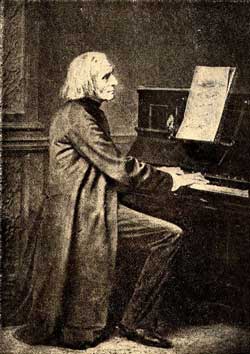
More than a century later the piano recital was devised. It was Liszt who first decided to have the whole stage to himself, and set the fashion for dispensing with the mixture of celebrities and supporting acts that had prevailed up to that time. As he wrote about his audacity to a friend: “Le concert, c’est moi!” And he called his appearance at the Hanover Square Rooms in London in June 1840 not a concert but a recital.
The composer-pianists of the day concentrated on their own works. Liszt set a marker in this regard, too, choosing music that ranged from Bach through Beethoven and up to Chopin. He set the pattern for playing from memory, and cemented the platform layout we know today by turning the then-conventional position of the instrument on the stage through 90 degrees. He was what we would now call a sex symbol as well as a star musician, and the new arrangement allowed the audience to see his impressive profile as well as to hear the instrument more clearly. The standards he set have survived without significant alteration right up to the present.

 The Horowitz Piano Series at the Yale School of Music opens its season with a recital by Boris Berman on Wednesday, October 7 at 7:30 pm.


 MaryO'Studio