October 22 ~ On This Day in Music

today

OCMS 1811 ~ Franz Liszt, Hungarian composer and pianist
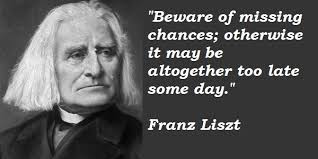
Read quotes by and about Franz Liszt
More information about Liszt

• 1885 ~ Giovanni Martinelli, Opera singer, tenor with Metropolitan Opera for 30 seasons

• 1904 ~ Paul Arma, Hungarian composer and theorist

• 1917 ~ Leopold Stokowski led the Philadelphia Orchestra in its first recording session, for Victor Records.

• 1930 ~ Dory Previn, Songwriter with André Previn

• 1939 ~ Ray Jones, Bass with Billy J. Kramer & The Dakotas

• 1943 ~ Paul Zukofsky, American violinist

• 1943 ~ Bobby Fuller, Singer, guitarist with Bobby Fuller Four

• 1945 ~ Leslie West (Weinstein), Singer, musician, guitarist with Mountain

• 1945 ~ Eddie Brigati, Singer, a musician with The (Young) Rascals

• 1959 ~ “Take Me Along” opened on Broadway and quickly became an American classic. Walter Pidgeon starred along with Jackie Gleason.

• 1966 ~ The Supremes rocketed to the top of the pop album charts with “Supremes A’ Go-Go”. They were the first all-female vocal group to hit the top of the LP chart.

• 1969 ~ Giovanni Martinelli passed away on his birthday

• 1969 ~ Michael Tilson Thomas, the 25-year-old assistant conductor of the Boston Symphony Orchestra, took over for ailing conductor William Steinberg in the symphony’s appearance in New York City.

• 1971 ~ Folk singer Joan Baez received a gold record for her hit, The Night They Drove Old Dixie Down. It turned out to be her biggest hit, peaking at #3 on the charts on October 2, 1971.

• 1979 ~ Nadia Boulanger, French composer and conductor (1st woman to conduct Boston Symphony), died at the age of 92

• 1983 ~ Celebrating its 100th anniversary, New York’s Metropolitan Opera featured a daylong concert with some of the world’s greatest opera stars. On stage at the Met were Dame Joan Sutherland, Placido Domingo and Luciano Pavarotti.

• 2001 ~ Tom Baker, one of Australia’s most respected jazz musicians, died of a heart attack while touring in the Netherlands. He was 49. Baker, a native of California, took up residence in Australia 30 years ago. He was a regular at Sydney’s famous jazz club, The Basement. Willie Qua, drummer and co-founder of one of Australia’s best-known jazz bands, Galapagos Duck, said Baker had often played as “a part-time member” of the band and was an icon of the Sydney jazz scene. Baker formed his first band, Tom Baker’s San Francisco Jazz Band, in 1975, earning himself a reputation as one of Australia’s very best jazz musicians. Recently he toured extensively through Europe and America.

Happy Birthday, Franz Liszt!

liszt-quote

Franz Liszt was born in Raiding, near Ödenburg, October 22, 1811 and died in Bayreuth, July 31, 1886. He was a Hungarian composer and pianist who was a major influence during the romantic period. Liszt was an outstanding pianist at seven, composed at eight and made concert appearances at nine. In addition to being a piano virtuoso, he was also a critic, conductor, city music director, literary writer and transcriber of the works of other composers. He transcribed Beethoven’s Symphonies for the piano.

Franz Liszt began his career as the outstanding concert pianist of the century, who, along with the prodigious violinist Niccoló Paganini (1782-1840), created the cult of the modern instrumental virtuoso. To show off his phenomenal and unprecedented technique, Liszt composed a great deal of music designed specifically for this purpose, resulting in a vast amount of piano literature laden with dazzling, and other technical marvels. In this vein, Liszt composed a series of virtuosic rhapsodies on Hungarian gypsy melodies, the best-known being the all too familiar Hungarian Rhapsody no. 2. Liszt developed the rhapsody as a form of serious music. This kind of music is worlds apart from the generally more introspective, poetic music of pianist-composer Frédéric Chopin.

Liszt was wildly handsome and hugely talented. He was extremely popular in Paris during the 1830’s. It is said that women actually fainted at his piano recitals. He was the first to position the piano so that its lid reflected the sound and the audience could see his profile as he performed.

Liszt was the first to write a tone poem, which is an extended, single-movement work for orchestra, inspired by paintings, plays, poems or other literary or visual works, and attempting to convey the ideas expressed in those media through music. Such a work is Les Préludes, based on a poem in which life is expressed as a series of struggles, passions, and mysteries, all serving as a mere prelude to . . .what? The Romantic genre of the symphonic poem, as well as its cousin the concert overture, became very attractive to many later composers, including Saint-Saëns, TchaikovskyDvorák, Sibelius, and Richard Strauss.


Liszt’s birthday

anniversary of Liszt’s death

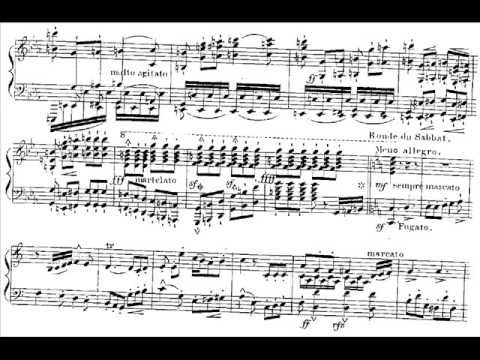
Listen to Liszt’s transcription of Meyerbeer’s Hellish Waltz from Robert du Diable, which probably caused more public commotion than any other piano piece in history.


Read quotes by and about Liszt

Liszt was the first recitalist

In Praise of Pianos and the Artists Who Play Them

History of the Piano

Franz Liszt

Music for Halloween: Dreams of a Witches’ Sabbath from Symphonie fantastique

berlioz-symphony-fantastique
The final movement is the best known part of the symphony, thanks to its use in the Julia Roberts movie, Sleeping With The Enemy. It features a four-part structure, which Hector Berlioz described in his own program notes from 1845 as follows:

“He sees himself at a witches’ Sabbath, in the midst of a hideous gathering of shades, sorcerers and monsters of every kind who have come together for his funeral. Strange sounds, groans, outbursts of laughter; distant shouts which seem to be answered by more shouts. The beloved melody appears once more, but has now lost its noble and shy character; it is now no more than a vulgar dance tune, trivial and grotesque: it is she who is coming to the Sabbath… Roar of delight at her arrival… She joins the diabolical orgy… The funeral knell tolls, burlesque parody of the Dies irae, the dance of the witches. The dance of the witches combined with the Dies irae.”

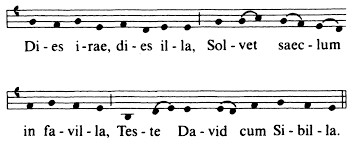
The Dies irae melody is one of the most-quoted in musical literature, appearing in the works of many diverse composers.

The traditional Gregorian melody has also been used as a theme or musical quotation in a number of  classical compositions, notable among them:

Free sheet music from IMSLP for the basic Dies irae

Free sheet music from IMSLP for the basic Symphonie fantastique (look under Arrangements and Transcriptions)

The basic Gregorian Chant

An animated version of the  Dreams of a Witches’ Sabbath from Symphonie fantastique.  Can you hear the Dies irae in this?  It starts around 3:18.

Leonard Bernstein conducts the “Orchestre National de France” in Berlioz’s Symphonie Fantastique
5th Movement

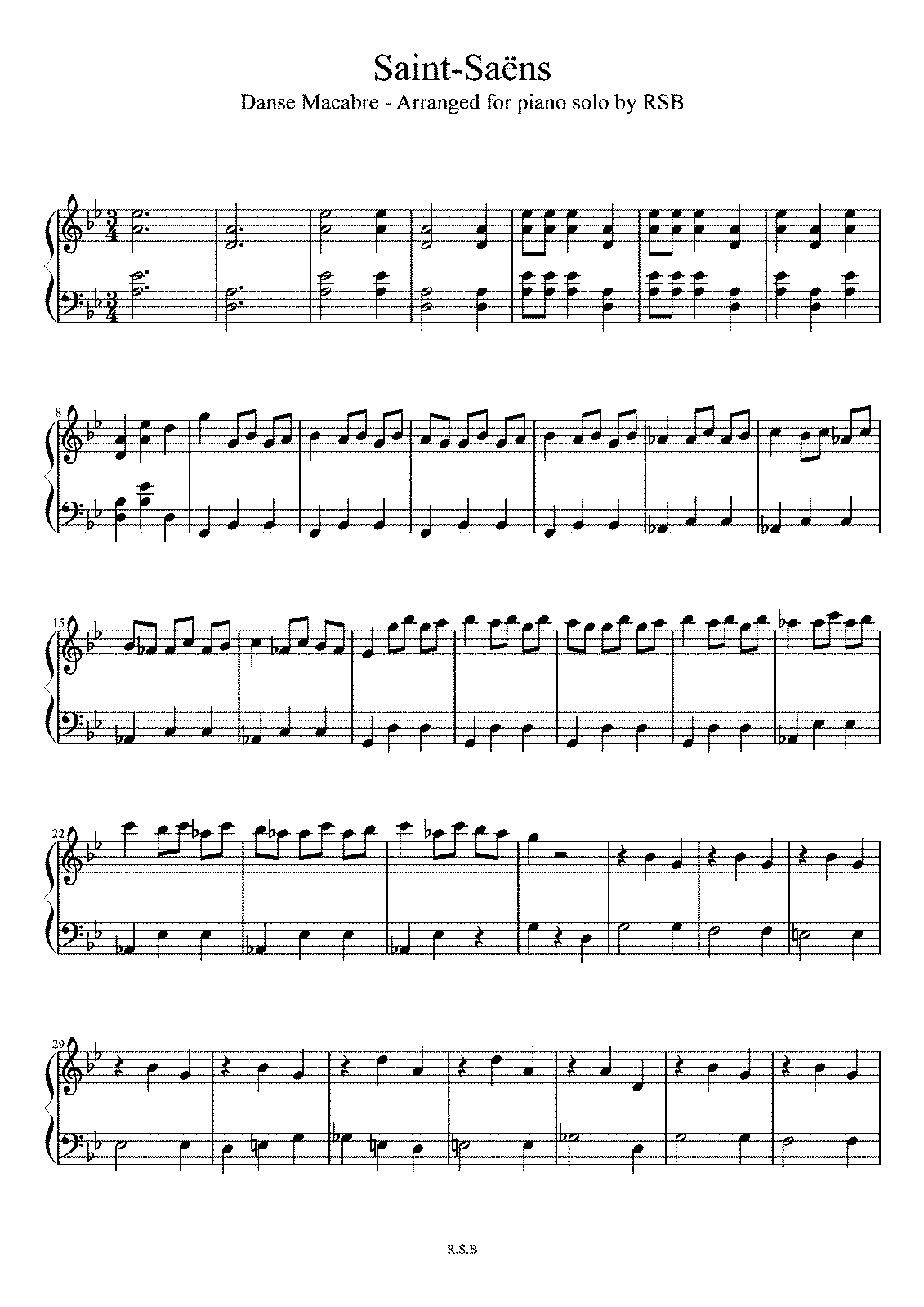
Arranged for piano

A listening guide

Fall 2025 Listening and Coloring Pages


I have purchased a set of Shades of Sound Listening & Coloring Book: Halloween for the studio.

Each week, I will print out some of the pages for your student and put them in his/her notebook.  They are also available in your Parent/Student Portal.   After listening to the music on YouTube, the student may color the pages.

After they are colored, please return them to the notebook so that there will be a complete book when finished.

If you are an adult and want to listen and color, too, just let me know and I’ll print you a set.

From the website:

The Shades of Sound Listening and Coloring Books are a great way to encourage students to listen to great piano and orchestral repertoire. Students of all ages will love coloring the fun pictures while listening to and learning from the music of the great composers.

This Shades of Sound Halloween edition includes 13 spooky pieces of piano and orchestral literature, ranging from the Baroque to the Modern period. By spending just 5-10 minutes per day listening for just a few days per week, students can listen to and complete the whole book in a few weeks.

Aspiring pianists need to know the literature, hear the greats perform, and be inspired and excited by the great music that is available! Just as writers need to read, read, read, pianists need to listen! Through this fun curriculum, students will learn about the musical periods and the great composers and their works. Listening repertoire selected includes selections from the standard solo piano literature, as well as solo piano and orchestra literature and orchestral works.

My hope is that students can add just 5-10 minutes of listening per day to their normal practicing. Listening to great music will change their understanding of music and will vastly increase their music history knowledge. It will excite and inspire them, encourage further study and listening, give them new pieces to add to their own repertoire wish list, infuse more great music into their lives, homes and families, and will boost their musicianship and expression to the next level.

The Halloween Shades of Sound book includes 13 different pieces, including:

  • Totentanz by Liszt
  • Le Cimetiere, from Clairs de Lune by Abel Decaux
  • Graceful Ghost Rag by William Bolcom
  • Night on Bald Mountain by Mussorgsky/Rimsky-Korsakov
  • Tarantelle, from Music for Children Op. 65 No. 4 by Prokofiev
  • Tarantella by Albert Pieczonka
  • In the Hall of the Mountain King by Grieg
  • Toccata and Fugue in D minor, BWV 565 by Bach
  • Funeral March, from Piano Sonata No. 2 in B-flat minor by Chopin
  • Danse Macabre by Saint-Saens
  • The Banshee by Henry Cowell
  • Scarbo, from Gaspard de la nuit by Ravel
  • The Sorcerer’s Apprentice by Paul Dukas

Students may use The Playful Piano – Halloween Listening YouTube playlist to listen along with their book using quality recordings. The playlist is ordered to go right along with the book, and also includes 5 extra pieces (some pages include optional “Further Listening” examples students may listen to).


Happy Birthday, Clara Schumann!

cschumann

Clara Schumann (1819-96) was much more than the wife of composer Robert Schumann. She was, quite simply, one of the greatest pianists of all time. A child prodigy, her technique and musicianship as a mature artist led to her being regarded as the equal of giants of the keyboard such a Franz Liszt, Sigismond Thalberg and Anton Rubinstein.

And from her girlhood until the end of her marriage she composed wonderful music, mostly solo piano music, but other works as well, including a concerto, a large number of songs and a sublime piano trio.

In her later years, she was an internationally famous teacher, and her performing career lasted more than six decades. She was, quite simply, a phenomenon.

Infographic: Hands According to Pianists.

pianist-hands

Redditor NeokratosRed had an idea: depict the hands of great composers and pianists, according to the characteristics of their music. He shared it on the social media site, and also punted for suggestions of more. It has since received over 300,000 images views, and lots of further suggestions from fellow Redditors and piano geeks.

Whisks for Chopin’s elegant pianistic souffles, feather dusters for the gentle impressionism of Debussy, instruments of trade for the composer of the thunderous Hammerklavier sonata.

Piano, and the internet – top marks to the both of you.

via This infographic of composers’ hands is painfully (and hilariously) accurate | Classic FM.

Pianists Hands

pianist-hands

Redditor NeokratosRed had an idea: depict the hands of great composers and pianists, according to the characteristics of their music. He shared it on the social media site, and also punted for suggestions of more. It has since received over 300,000 images views, and lots of further suggestions from fellow Redditors and piano geeks.

Whisks for Chopin’s elegant pianistic souffles, feather dusters for the gentle impressionism of Debussy, instruments of trade for the composer of the thunderous Hammerklavier sonata.

Piano, and the internet – top marks to the both of you.

via This infographic of composers’ hands is painfully (and hilariously) accurate | Classic FM.

Daily Listening Assignments ~ August 1

Today’s piece is a favorite in cartoons as you’ll see below.   Hungarian Rhapsody number 2 by Franz Liszt is the second in a set of 19 Hungarian Rhapsodies and is by far the most famous of the set. They are all based on Hungarian folk tunes, or what Liszt assumed were Hungarian folk tunes. Even though Liszt’s nationality was Hungarian, he wasn’t familiar with the language.

So he ended up making some assumptions. Some of these Hungarian Rhapsodies were not actually gypsy folk tunes at all, but tunes composed by middle-and-upper-class folk, which the gypsies integrated into their own music.

These Rhapsodies are very difficult for pianists since Liszt was a virtuoso musician and liked to compose pieces only he could play.

From the cartoons

For sort-of real

For real

Orchestra

Follow along

July 31: On This Day in Music

today

Be sure your student reads and listens to Today’s Daily Listening Assignment

• 1828 ~ François Auguste Gevaert, Belgian composer, musicologist, conductor and organist

• 1845 ~ The French Army introduced the saxophone to its military band. The musical instrument was the invention of Adolphe Sax of Belgium.

• 1847 ~ Ignacio Cervantes, Pianist

• 1886 ~ Franz Liszt, Hungarian composer and pianist died. Originator of the symphonic poem, he was a prolific teacher and a huge influence on Richard Wagner and Richard Strauss

• 1911 ~ George Liberace, Violinist, conductor; administrator of Liberace Museum; brother of pianist/entertainer Liberace

• 1918 ~ Jan La Rue, American musicologist

• 1918 ~ Hank Jones, Pianist. He accompanied Billy Eckstine and Ella Fitzgerald. He led the Hank Jones Trio

• 1919 ~ Mornam Del Mar, British conductor

• 1923 ~ Ahmet Ertegun, Recording Executive

• 1939 ~ John West, Musician, guitarist with Gary Lewis and the Playboys

• 1942 ~ Harry James and his band recorded the classic I’ve Heard that Song Before, for Columbia Records. Helen Forrest sang on the million-seller.

• 1943 ~ Lobo, Singer

• 1946 ~ Gary Lewis (Levitch), Singer with Gary Lewis and the Playboys, entertainer Jerry Lewis’ son

• 1946 ~ Bob Welch, Guitarist and singer with Fleetwood Mac

• 1947 ~ Karl Green, Musician, guitar and harmonica with Herman’s Hermits

• 1964 ~ Jim Reeves, popular U.S. country music singer, died in an air crash near Nashville.

• 1985 ~ Prince was big at the box office with the autobiographical story of the Minneapolis rock star, Purple Rain. The flick grossed $7.7 million in its first three days of release on 917 movie screens. The album of the same name was the top LP in the U.S., as well.

• 2019 ~ Hal (Harold Smith) Prince died at the age of 91, He was an American theatrical producer and director associated with many of the best-known Broadway musical productions of the 20th century.

Over the span of his career, he garnered 21 Tony Awards, more than any other individual, including eight for directing, eight for producing the year’s Best Musical, two as Best Producer of a Musical, and three special awards.

Daily Listening Assignments ~ July 8

Today, we’ll listen to the Symphony No. 5 in C minor, Op. 67, of Ludwig van Beethoven.  It was written between 1804–1808. It is one of the best-known compositions in classical music, and one of the most frequently played symphonies. As is typical of symphonies in the classical period, Beethoven’s Fifth Symphony is in four movements.

I’m sure you’ve heard the first 8 notes before…

Since it was written for orchestra, each instrument has its own line:

A piano version, transcribed by Liszt

From Disney’s Fantasia 2000:

Pink learns to play the violin, and interrupts a performance of Beethoven’s Fifth Symphony with the Pink Panther theme played on various instruments.

Beethoven’s Wig:

Arrangements of Beethoven’s Fifth Symphony can be found in Piano Maestro and lots of books including Piano Pronto’s Movement 2, Movement 5 (Victory Theme) and Beethoven: Exploring His Life and Music.